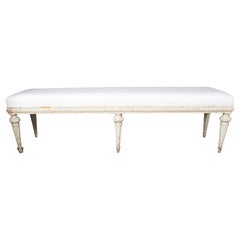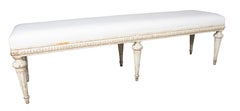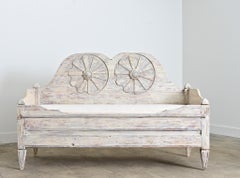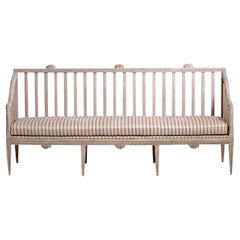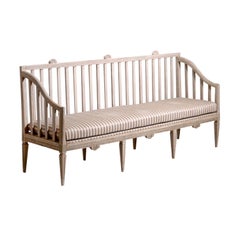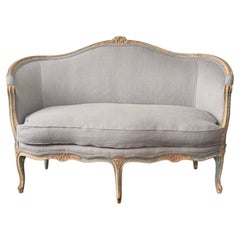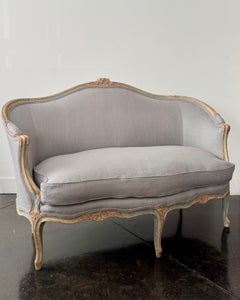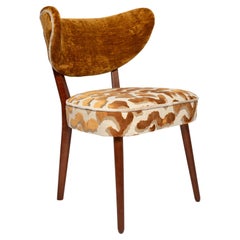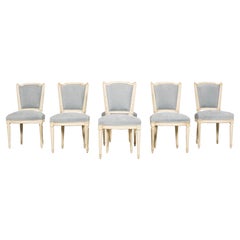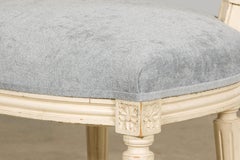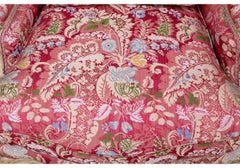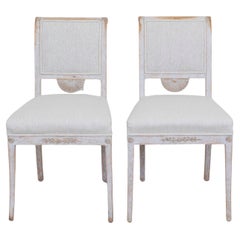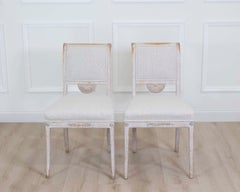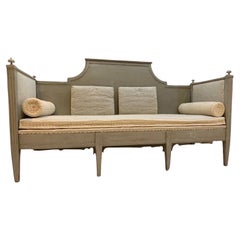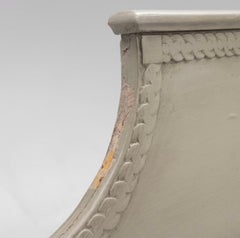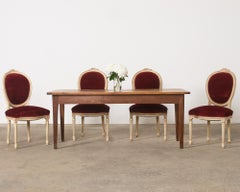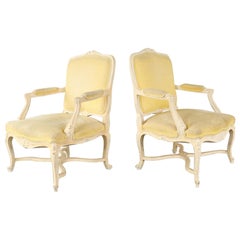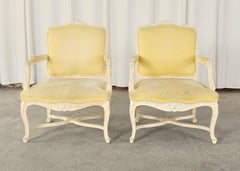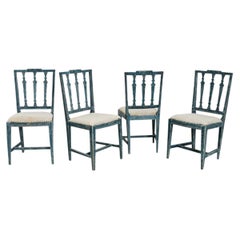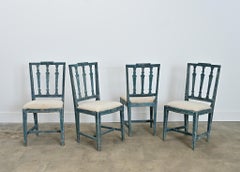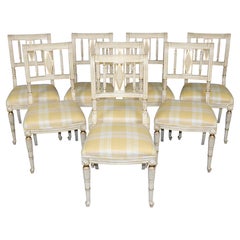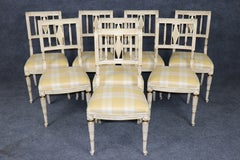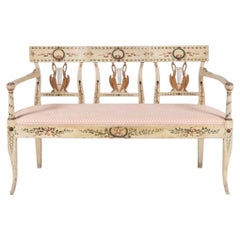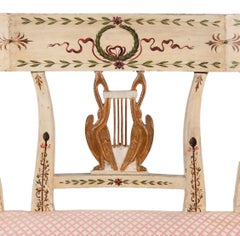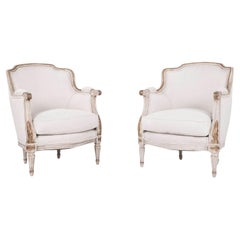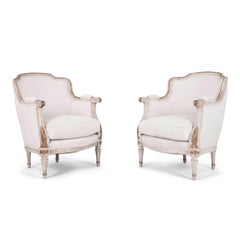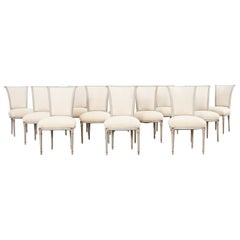
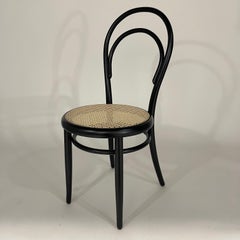
This Swedish Gustavian-style painted wood tub chair dates to the late 19th century and showcases curving lines, carved campanula friezes, and waterleaf motifs. Crafted in Sweden during the final decade of the 1800s, the chair features Neoclassical elegance with delicately carved details. Its curving back and rectangular seat are designed for reupholstery, while the apron is adorned with a delicate campanula frieze running on three sides.
The chair is raised on two cylindrical, tapering front legs carved with waterleaves, paired with two saber legs in the back. Accented with carved rosettes on the knees, the piece is painted in a soft, muted color typical of Swedish taste—light palettes that brighten rooms during the region’s dark winters.
The Gustavian style draws inspiration from the Louis XVI era. In 1771, Swedish King Gustav III visited Paris during the early stages of the Louis XVI movement and was captivated by French art and fashion. Upon returning to Sweden, he sought to introduce a similar aesthetic, leveraging the country’s skilled craftsmen to create a refined, harmonious style. The result was the Gustavian style, which remains beloved for its elegance and simplicity—especially in England, France, and the USA.

With its graceful lines and intricate carvings, this Gustavian tub chair...
Category
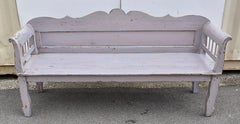
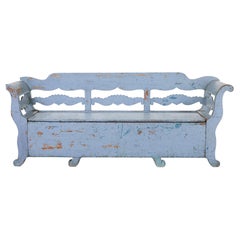
Late 19th Century Swedish Gustavian Antique Painted Seating