9 results for "santos & retablos"

to
8
1
6
2
1
1
1
1
1
1
Peruvian Retablo from the Evelyn Ackerman Estate

Peruvian Retablo from the Evelyn Ackerman Estate

By Evelyn Ackerman

Located in Los Angeles, CA

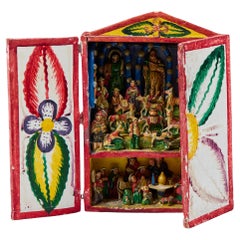
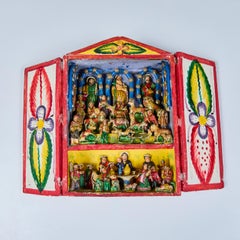
Peruvian retablo purchased from the Evelyn Ackerman estate. This colorful piece features two hinged doors with floral paintings. The interior showcases small ceramic figurines in wha...

Category

Mid-20th Century Peruvian Folk Art Religious Items

Materials

Wood, Ceramic

18th Century Spanish Baroque Period Christ Crucified Altar Sculpture

18th Century Spanish Baroque Period Christ Crucified Altar Sculpture

By Juan De Mesa

Located in Forney, TX

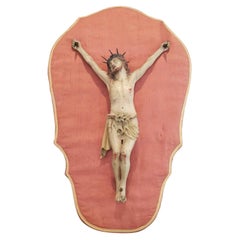
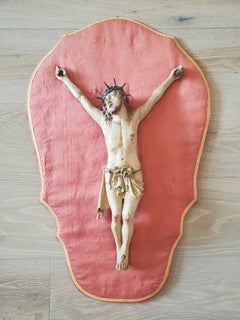
A scarce Baroque Period Spanish altarpiece retablo / reredo, by (attributed) Luis Salvador Carmona (1708-1767), depicting thorn crowned Christ crucified / Cristo crucificado hand carved, polychromed wood with forged iron nails, mounted on later plaque. This rare antique religious work / object of art, circa 1750, most likely commissioned by the Catholic Church of Spain, destined to be prominently displayed as an altarpiece / retablo or as part of a much larger reredo, directly behind the main altar at a Spanish or Continental European Catholic Church (French, Italian, Iberian, Portuguese) The Crucified Christ, displayed mounted on a later faded red fabric upholstered shaped backboard plaque with textured gilt border. The exceptional hand sculpted, carved, gessoed, polychrome painted figure depicting bloodied Jesus, with crown of thorns atop his head, only wearing a undulating shaped cloth around his loin, arms extended and feet crossed, spear head form iron nails through both. The verso covered in an old paper printed backing with metal hook hardware at top for wall hanging. Dimensions (approx): Overall: 22" High, 14.5" Wide, 3.25" Deep Figure only: 16" High, 10" Wide, 3" Deep Historical background: Artist: (attrib) Luis Salvador Carmona (1708, Nava del Rey – 1767, Madrid) was a Spanish Baroque sculptor who came from a family of artists, including uncle of Manuel Salvador Carmona. He was sent to be trained in Madrid in the workshop of Juan Alonso...

Category

Antique 18th Century Spanish Baroque Religious Items

Materials

Iron

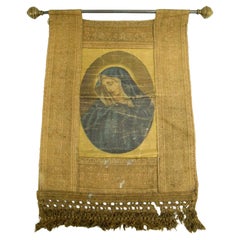
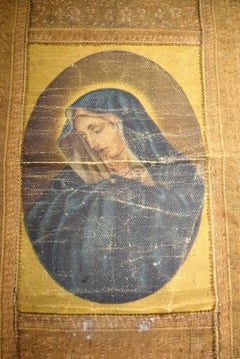
Antique Italian Religious Banner Mary Our Lady Sorrows Oleograph Wall Tapestry

Antique Italian Religious Banner Mary Our Lady Sorrows Oleograph Wall Tapestry

Located in Forney, TX

A wonderful 19th Century Italian religious textile banner with beautifully colored Our Lady Of Sorrows Mary, Mother of Jesus oleograph, original backing, rod, rope, fringe and tassel...

Category

Antique 19th Century Italian Baroque Tapestries

Materials

Metal

Escuela española - Óleo sobre tabla - San Domingo Guzmán

Escuela española - Óleo sobre tabla - San Domingo Guzmán

Located in Sant Celoni, ES

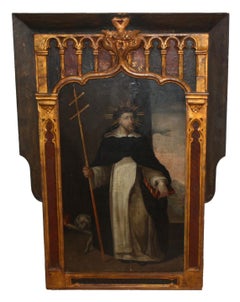
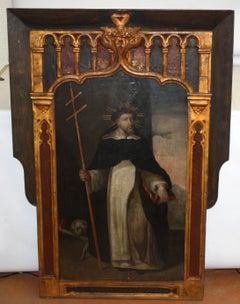
La obra es de autor anónimo. El retablo va muy bien enmarcado con un marco neogótico del siglo xix en madera estofada y policromada. Medidas del retablo: 88 cm. altura x 56 cm. anc...

Category

17th Century Baroque Figurative Paintings

Materials

Oil

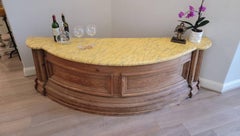
Antique Church Altar Table

Antique Church Altar Table

Located in Forney, TX

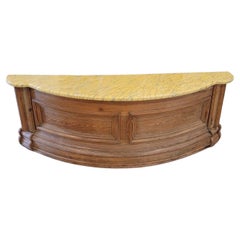
A scarce, likely one-of-a-kind Spanish Colonial church altar, repurposed as a sideboard server or console. Hand-crafted in Mexico in the 19th century, having a shaped demilune marbleized - faux marble painted wooden top, over substantial solid pine bowfront base with hand carved detailing and decorative molded paneling. Provenance: Prior owner purchased from Horse of a Different Color Antiques, San Antonio, Texas. Acquisition: Acquired from highly reputable auction house Austin Auction Gallery, est. 1983, Austin, Texas. Three Day Estates Event February 22 catalog. Dimensions: (approx) 28" High, 84" Long, 22" Deep As warm and attractive as it is functional, having the ideal size and proportions for a variety of different uses, including as a dining room buffet, credenza - media stand, sofa table or hall console, dry bar, or placed in a palatial foyer as a stunning and historical entry statement piece! Condition: Good original antique condition. Presents well. Strong, sturdy, stable, and structurally sound. Nicely aged mellow warm patina. Wear consistent with age and indicative of use, including scattered losses to the paint, old repairs and touchups throughout, and various other antique character marks that add to the overall display, authenticity, and rustic old world charm. Please note, at the time of writing this, we have a similarly styled baptismal font likely from the same church available. We here at Lynx Hollow Antiques absolutely love religious antiques! Retaining spiritual significance, beautiful artistic depth, rich cultural and historical interest, they make for the perfect decorative object! Please be sure to check our other listings for architectural salvaged building elements to ornamental temple figures, tabernacle cabinets...

Category

Antique 19th Century Mexican Spanish Colonial Tables

Materials

Pine, Paint
Monumental 19th Century Dutch Church Painted Wood Cross

Monumental 19th Century Dutch Church Painted Wood Cross

Located in Forney, TX

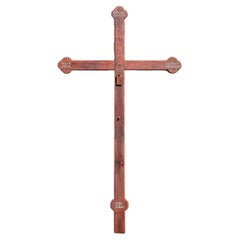
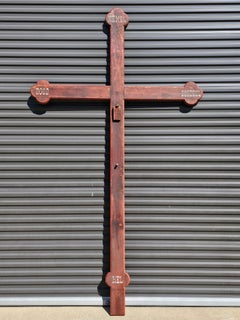
A massive nearly 10 foot tall by 5.5 foot wide antique Dutch ecclesiastical wooden cross. Hand-crafted in the Netherlands in the 19th century, very large sculptural Celtic cross for...

Category

Antique 19th Century Dutch Folk Art Religious Items

Materials

Iron

Related Items
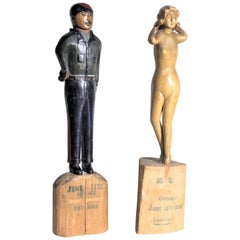
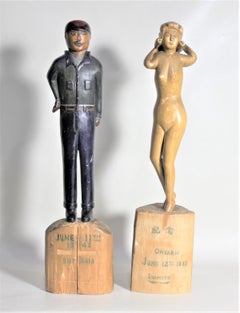
Pair of Canadian Folk Art Carved Japanese Internment Camp Figures or Sculptures

Pair of Canadian Folk Art Carved Japanese Internment Camp Figures or Sculptures

Located in Hamilton, Ontario

This pair of Folk Art carved figures is believed to have been made by a Japanese immigrant to Canada either while or after being interned by the Canadian government during the Second World War. The male carved figure is hand painted in vibrant colors and the base reads: June 11, 1942" and "Ontario" underneath. The nude female carving...

Category

Mid-20th Century Canadian Folk Art Sculptures and Carvings

Materials

Softwood

Art Deco Styled Chrome Lighted Airplane Smoker's Ashtray Stand or Accent Table

Art Deco Styled Chrome Lighted Airplane Smoker's Ashtray Stand or Accent Table

Located in Hamilton, Ontario

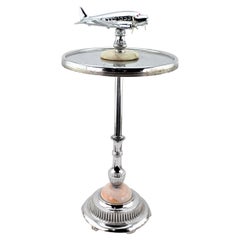
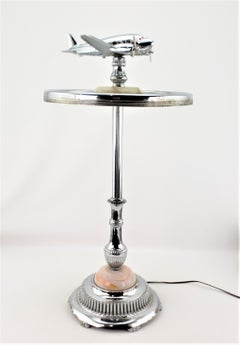
This very unique lighted smoker's stand is unsigned, but presumed to have been made in North America, likely the United States, in approximately 1950 in an Art Deco style. This smoke...

Category

Mid-20th Century American Art Deco Tobacco Accessories

Materials

Metal

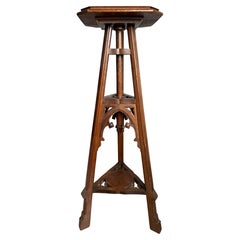
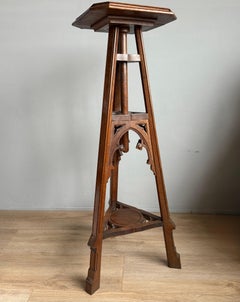
Antique Carved Oak Church, Gothic Revival Studio Easel Display Stand or Pedestal

Antique Carved Oak Church, Gothic Revival Studio Easel Display Stand or Pedestal

Located in Lisse, NL

Unique Gothic Revival two shelf sculpture stand with a beautiful patina. This impressive and adjustable Gothic stand dates from circa 1890. To find this rare and sizeable antique mo...

Category

Antique Late 19th Century French Gothic Revival Pedestals

Materials

Wood, Oak

Santa Rita Retablo
Santa Rita Retablo

Santa Rita Retablo

$1,450

H 14 in W 10 in D 0.07 in

Santa Rita Retablo

Located in Santa Monica, CA

This late 19th century Mexican Folk Art devotional painting depicts St. Rita of Casia, the patron saint of lost and improbable causes. Wishing to join an Augustinian convent ...

Category

Antique 19th Century Mexican Spanish Colonial Religious Items

Materials

Tin

Portrait of Catherine II, Baroque Oil on Canvas, 18th Century, Framed

Portrait of Catherine II, Baroque Oil on Canvas, 18th Century, Framed

Located in Berlin, DE

The picture is oil on canvas. baroque picture Catherine II the Great (born Sophie Auguste Friederike von Anhalt-Zerbst-Dornburg, in Orthodoxy Yekaterina Alekseyevna, April 21 [May ...

Category

18th Century Baroque Figurative Paintings

Materials

Oil

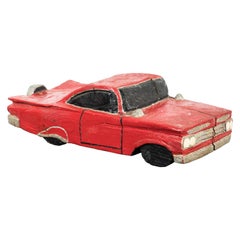
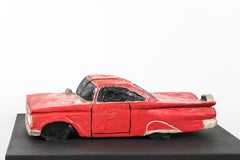
Wood Carved American Folk Art Muscle Car

Wood Carved American Folk Art Muscle Car

$1,400

H 7 in W 21 in D 11 in

Wood Carved American Folk Art Muscle Car

Located in Santa Monica, CA

Hand carved Folk Art American Muscle car. Wood carved with original paint surface.

Category

Vintage 1950s Folk Art Sculptures and Carvings

Materials

Wood

Baroque Italian painter - 17/18th century figure painting - Franciscan friar

Baroque Italian painter - 17/18th century figure painting - Franciscan friar

Located in Varmo, IT

Italian painter (17th–18th century) - Seated Franciscan friar writing (preparatory sketch). 14 x 16.5 cm (without frame) - 19 x 21.5 cm (with frame). Oil on panel, in wooden frame ...

Category

Late 17th Century Baroque Figurative Paintings

Materials

Oil, Panel

17th Century French New Testament Religious Tapestry, Marriage of Mary & Joseph

17th Century French New Testament Religious Tapestry, Marriage of Mary & Joseph

Located in New York, NY

A French religious tapestry from Paris, circa 17th century, size 11' H x 11' W. This magnificent handwoven wool and silk wall hanging envisions the marriage of the New Testament figures, Mary and Joseph, with the High Priest flanked by Mary and Joseph at center and a dove above them, and with the central figures attended by a noblewoman and a group of men, and with a mother and child seated in the right foreground. The central scene is enclosed within a border that is characterized by upper and lower central cartouches, supported by putti. It contains a star above, and the armorial of Pierre Guischard below. Six additional cartouches containing the symbols of the Evangelists run through the rest of the border, interspersed with fruiting and flowering elements, decorative swags, and birds. Pierre Guischard (1614-1701) was doctor of Theology of the Holy Faculty of Paris and Great Master of the College of Navarre in Paris, Advisor, Chaplain and King Louis 14th...

Category

Antique 17th Century French Tapestries

Materials

Wool, Silk

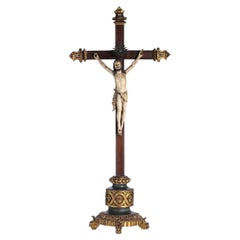
JESUS CHRIST CRUCIFIED  Indo-Portuguese sculpture from the 18th Century

JESUS CHRIST CRUCIFIED Indo-Portuguese sculpture from the 18th Century

Located in Madrid, ES

JESUS CHRIST CRUCIFIED Indo-Portuguese sculpture from the 18th Century in ivor..... The figure is represented in agony, with cendal draped around the waist. Cross in rosewood wood ...

Category

Antique Early 18th Century Portuguese Baroque Religious Items

Materials

Wood

American Legion Baseball and Basketball Folk Art Paintings

American Legion Baseball and Basketball Folk Art Paintings

Located in Santa Monica, CA

Pair of baseball and basketball paintings found in a Midwestern American Legion hall. These were proudly displayed behind the legion hall bar. Grea...

Category

Vintage 1940s American Folk Art Paintings

Previously Available Items
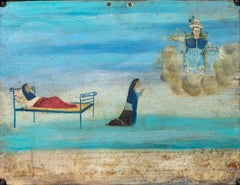
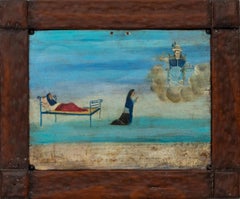
Mexican Ex-Voto Retablo of Gall Bladder Healing, Oil on Tin Folk Art

Mexican Ex-Voto Retablo of Gall Bladder Healing, Oil on Tin Folk Art

Located in Denver, CO

A rare Mexican ex-voto retablo commemorating a miraculous recovery from gall bladder illness, hand-painted in oil on tin by an anonymous folk artist. Created as an offering of gratit...

Category

1930s Folk Art Figurative Paintings

Materials

Metal

Mexican Retablo Exvotos - "Farmer Bitten by Boar" oil on tin

Mexican Retablo Exvotos - "Farmer Bitten by Boar" oil on tin

Located in Milwaukee, WI

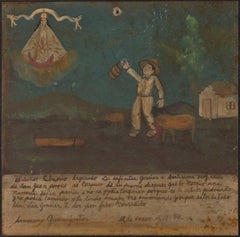
This retablo, created with oil paint on tin, was created by an unknown artist. It depicts a farmer giving thanks to the Virgin of San Juan after she healed his leg after being bitten by a boar. 8 1/2" x 8 1/2" art 13 1/2" x 13 1/2" frame The Spanish word retablo was derived from the Latin term retro tabula or “behind the altar” (retro for back and tabula for board, tablet; the Latin tabulum means table). It was originally used to designate elaborate wooden screens placed behind the main altar displaying sculptures, paintings, or both, of the main patron saints and other images of devotion. However, in nineteenth-century Mexico, sacred images painted on tin and displayed as an integral part of home altars were also referred to as retablos. The main function of displaying retablos in the Mexican home altars was the belief that a saint or deity would intervene in the life of the devotee, bringing good health, prosperity and protection against life’s ills. Paintings on tin plates are categorized according to the type of image represented, their purpose, location of display, function and artistic characteristics. Retablo Santo refers to depictions of different images of devotion such as those of patron saints, Jesus Christ and the many advocations of the Virgin Mary displayed in home altars for private worship. Contrary to retablo santo, the votive objects known as Retablo Ex-voto, are meant to be displayed in major pilgrimage sites as public testimonies for graces received. The retablo santo follow the canons of European art and Catholic iconography leaving very limited freedom for individual creativity. However, the retablo ex-voto depends primarily on the artist’s ingenuity and spontaneity. The Latin term ex-voto meant “the promise of,” “from a vow,” “out of vow,” or the “miracle of.” This concept of asking for favors and using art as payment and propaganda for received graces dates back to pre-historical times. It refers to the payment of a vow, made in a moment of distress, by offering to the divine figure by the intercessor, a painting or various other objects related to the grace received, in specific pilgrimage centers. They are of particular interest in recording the history and faith of the people. The ex-voto consists of three components. Most of the upper section of the composition contain the two of the three components: a painted scene depicting a miracle and, higher in this same space, the image of the invoked saint or deity. Often, at the bottom section, there is a written testimony of how the miracle occurred. The name of the artist is seldom included in the painting. The devotee commissions the retablo to a specialized artist called retablero (retablo maker) or milagrero (miracle maker). Hundreds and thousands of retablo ex-votos are left in shrines all over Mexico. The proliferation of religious centers and pilgrimage sites was established along the ancient Camino Real. Each of those sanctuaries were dedicated to a specific advocations to the Virgin Mary and Jesus Christ, where pilgrims could visit and make their offerings. Among the most famous sanctuaries are: Nuestra Señora de Guadalupe in Mexico City; El Señor de Chalma in the State of Mexico; Nuestra Señora del Patrocinio in Cerro de la Bufa, Zacatecas; Nuestra Señora de Ocotlán in Tlaxcala; San Juan de los Lagos in Jalisco; and Santo Niño de Atocha...

Category

1940s Mixed Media

Materials

Oil

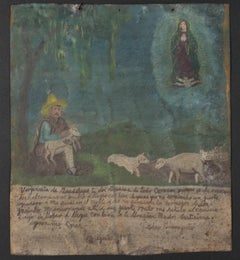
"Retablo: Shepherd with Vision of Virgin of Guadalupe" by Jeronimo Crus

"Retablo: Shepherd with Vision of Virgin of Guadalupe" by Jeronimo Crus

By Jeronimo Crus

Located in Milwaukee, WI

This Retablo, "Shepherd with Vision of Virgin of Guadalupe" is an original oil painting on tin created by Jeronimo Crus, a Mexican folk artist. It translates roughly to: "I give thanks to the Virgin of Guadalupe with all my heart because I was able to find my way home after being lost in a rain storm. She sent me a lightning bolt which illuminated the road to my village." It depicts a farmer holding a lamb as the Virgin of Guadalupe hovers in the air in front of him. 10 1/4" x 8 7/8" art 15" x 13 3/4" frame The Spanish word retablo was derived from the Latin term retro tabula or “behind the altar” (retro for back and tabula for board, tablet; the Latin tabulum means table). It was originally used to designate elaborate wooden screens placed behind the main altar displaying sculptures, paintings, or both, of the main patron saints and other images of devotion. However, in nineteenth-century Mexico, sacred images painted on tin and displayed as an integral part of home altars were also referred to as retablos. The main function of displaying retablos in the Mexican home altars was the belief that a saint or deity would intervene in the life of the devotee, bringing good health, prosperity and protection against life’s ills. Paintings on tin plates are categorized according to the type of image represented, their purpose, location of display, function and artistic characteristics. Retablo Santo refers to depictions of different images of devotion such as those of patron saints, Jesus Christ and the many advocations of the Virgin Mary displayed in home altars for private worship. Contrary to retablo santo, the votive objects known as Retablo Ex-voto, are meant to be displayed in major pilgrimage sites as public testimonies for graces received. The retablo santo follow the canons of European art and Catholic iconography leaving very limited freedom for individual creativity. However, the retablo ex-voto depends primarily on the artist’s ingenuity and spontaneity. The Latin term ex-voto meant “the promise of,” “from a vow,” “out of vow,” or the “miracle of.” This concept of asking for favors and using art as payment and propaganda for received graces dates back to pre-historical times. It refers to the payment of a vow, made in a moment of distress, by offering to the divine figure by the intercessor, a painting or various other objects related to the grace received, in specific pilgrimage centers. They are of particular interest in recording the history and faith of the people. The ex-voto consists of three components. Most of the upper section of the composition contain the two of the three components: a painted scene depicting a miracle and, higher in this same space, the image of the invoked saint or deity. Often, at the bottom section, there is a written testimony of how the miracle occurred. The name of the artist is seldom included in the painting. The devotee commissions the retablo to a specialized artist called retablero (retablo maker) or milagrero (miracle maker). Hundreds and thousands of retablo ex-votos are left in shrines all over Mexico. The proliferation of religious centers and pilgrimage sites was established along the ancient Camino Real. Each of those sanctuaries were dedicated to a specific advocations to the Virgin Mary and Jesus Christ, where pilgrims could visit and make their offerings. Among the most famous sanctuaries are: Nuestra Señora de Guadalupe...

Category

1940s Figurative Paintings

Materials

Metal

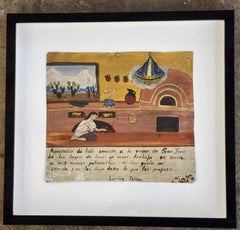
Thanks to the Virgen of San Juan, Ex-Voto, Retablo, Painting on Metal, Mexico

Thanks to the Virgen of San Juan, Ex-Voto, Retablo, Painting on Metal, Mexico

Located in Houston, TX

This retablo was purchased by the gallery in Mexico City. I knew the family that sold the retablo to me. It is dated 1853 because the story on the retablo was passed down for generations and a relative of Lourdes painted it in her memory. The description on the ex-voto reads: "Thanks to the Virgen of San Juan de los Lagos that I have a new job with my new bosses. That they like my food and they don't mind what I prepare for them. " It is in excellent condition. It is framed behind conservatorship glass. The framed size is 14" x 15". The class should only be cleaned with ammonia free cleaner. An ex-voto is a votive offering to a saint or to a divinity; the term is usually restricted to Christian examples. It is given in fulfillment of a vow (hence the Latin term, short for ex voto suscepto, "from the vow made") or in gratitude or devotion. Ex-votos are placed in a church or chapel where the worshiper seeks grace or wishes to give thanks. The destinations of pilgrimages often include shrines decorated with ex-votos. Ex-votos can take a wide variety of forms. They are not only intended for the helping figure, but also as a testimony to later visitors of the received help. As such they may include texts explaining a miracle attributed to the helper, or symbols such as a painted or modeled reproduction of a miraculously healed body part, or a directly related item such as a crutch given by a person formerly lame. There are places where a very old tradition of depositing ex-votos existed, such as Abydos in ancient Egypt. Especially in the Latin world, there is a tradition of votive paintings...

Category

1950s Folk Art Interior Paintings

Materials

Metal

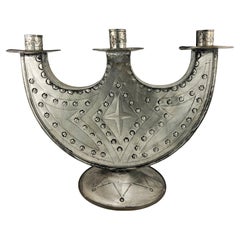
Mexican Tin Candleholder Hand-Punched Folk Art from the Jonathan Parks Estate

Mexican Tin Candleholder Hand-Punched Folk Art from the Jonathan Parks Estate

Located in Oklahoma City, OK

An exceptional mid-century Mexican tin candleholder, featuring three arms and intricate hand-punched star and dot motifs typical of folk tinwork from Oaxaca and central Mexico. The symmetrical, crescent-shaped form is elevated on a pedestal base, giving the piece both architectural structure and sculptural presence. The underside bears the simple stamped mark “MEXICO,” confirming its origin. This piece was sourced from the Jonathan Parks estate in Santa Fe, known for his discerning eye for Southwestern and Latin American art and design. The geometric punching patterns and domed detailing echo traditional “hojalata” (tin art) techniques that Mexican artisans developed in the 19th and 20th centuries—originally inspired by Spanish colonial metalwork traditions. Condition Excellent vintage condition with age-appropriate wear, light surface oxidation, and minor irregularities consistent with handcraftsmanship. The piece retains a soft, silvery patina that highlights its intricate texture and history. Styling Ideas - Display as a centerpiece on a rustic farmhouse or desert-modern dining table, flanked by pottery or woven textiles. - Style on a mantel, console, or altar table alongside santos figures, retablos, or other Mexican tinwork. - Perfect for interiors that celebrate Santa Fe style, Hacienda revival, or old-world craftsmanship — blending beautifully with both European and Southwestern antiques...

Category

Mid-20th Century Mexican Folk Art Candelabras

Materials

Tin

Large Antique Mexican Architectural Religious Niche Altar

Large Antique Mexican Architectural Religious Niche Altar

Located in Forney, TX

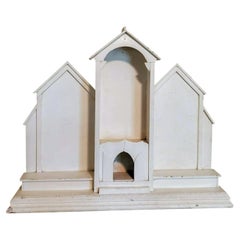
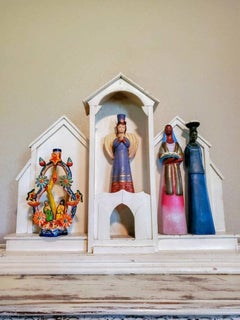
An antique Mexican hand-crafted architectural church cathedral carved, distressed painted white wooden religious folk art niche - altarpiece from the early 20th century. Use for home shrines, votive offerings, display Retablo, Santo figures, candles. Very good quality and craftsmanship. Rustic, elegantly aged, some chippy paint. No figures are included, we have some available separately as well as other religious relics...

Category

Early 20th Century Folk Art Religious Items

Materials

Wood, Paint
Recommended For You