

Christmas Turkey
Located in Fort Washington, PA
Advertisement for the Interwoven Stocking Company, New Brunswick, NJ.
Category
1920s Art by Medium: Gouache
Materials
Gouache
Christmas Turkey
Located in Fort Washington, PA
Advertisement for the Interwoven Stocking Company, New Brunswick, NJ.
Gouache


$852Sale Price|29% Off
“Bowl of Fruit”
By Jonas Lie
Located in Southampton, NY
The artwork is mainly oil pastel with several touches of gouache and is a still life of a bowl of fruit. The artwork is done on heavy archival paper. The artist is Jonas Lie...
Oil Pastel, Archival Paper, Gouache

Japanese Contemporary Art by Miyuki Takanashi - Pearl's Fantasy
Located in Paris, IDF
Mixed media (acrylic, gouache,oil) on canvas Miyuki Takanashi is a Japanese artist born in 1961 who lives & works in Sapporo in Japan. She is graduated from Hokkaido University of E...
Canvas, Mixed Media, Oil, Acrylic, Gouache

Lanvin of Paris c1920s Original Fashion Illustration in Gouache
Located in Bristol, CT
9 1/2"H x 6 1/2"W
Gouache
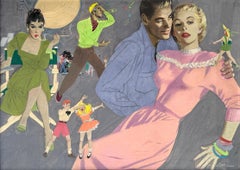
Mid-Century Cosmopolitan Illustration Surreal Family Narrative
By Jon Whitcomb
Located in Miami, FL
A complex story is portrayed in one picture. American Glamour Illustrator Jon Whitcomb interprets a Mid-Century Cosmopolitan story about a beautiful blond actress who, on set, appea...
Gouache, Illustration Board


$14,400Sale Price|20% Off
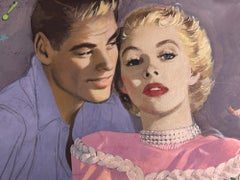
Love Story Couple in Romantic Bliss Illustration - Mid Century
By Joe Bowler
Located in Miami, FL
A handsome man and a beautiful woman are depicted in a rapturous pose. Their bodies are intertwined with each other and with the surrounding floral elements. This masterfully render...
Gouache, Pencil, Graphite
$10,000
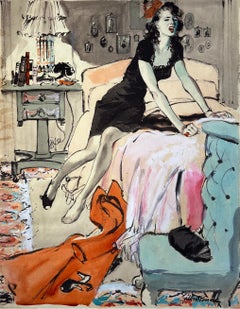
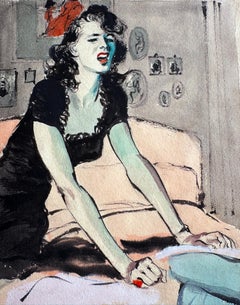
Love Hurts Mid Century Woman's Magazine Illustration Cosmopolitan Magazine
Located in Miami, FL
Love hurts. A young, attractive woman is captured in a moment of peak drama. She is leaning on her bed in her room, crying, her face grim with despair. A tear drop is seen below he...
Paper, Watercolor, Gouache, Pencil


'Seated Nude', Paris, Louvre, Salon d'Automne, Académie Chaumière, LACMA, SFAA
Located in Santa Cruz, CA
Painted circa 1955 by Victor Di Gesu (American, 1914-1988) and stamped, verso, with Victor di Gesu estate stamp. Winner of the Prix Othon Friesz, Victor di Gesu first attended the L...
Paper, Watercolor, Gouache


$1,159
Fine Antique French Impressionist Painting Canal Tow Path with Children & Boats
Located in Cirencester, Gloucestershire
The artist: Henri Aime Duhem (1860-1941) French *see notes below, signed Title: The Canal Medium: gouache on paper, loosely laid over card, unframed ...
Gouache

$573Sale Price|30% Off
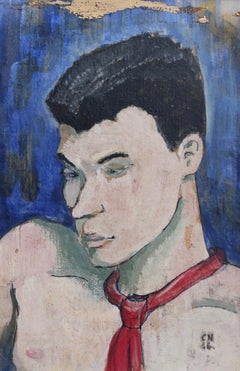
'Portrait of a Young Man in a Red Tie' French School (1956)
Located in London, GB
'Portrait of a Young Man in a Red Tie', gouache and ink on art paper, French School (1956). Step into the world of mid-20th century European art with a striking portrait that capture...
Paper, Ink, Gouache
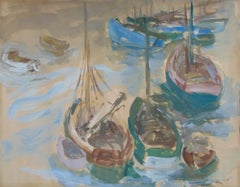
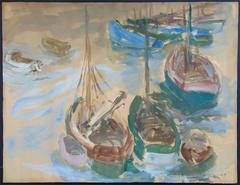
Boats in the Harbour - Seaside Maritime
By Mane Katz
Located in London, GB
MANE KATZ [Katz Emmanuel] 1894-1962 Kremenchug, Ukraine 1894-1962 Tel Aviv (Russian / Ukrainian / French / Israeli) Title: Boats in the Harbour, circa 1938 Technique: Original...
Gouache
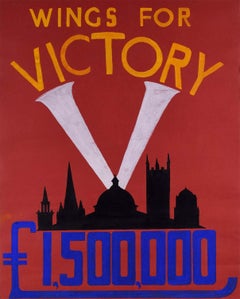
WW2 Oxford Wings for Victory Original Vintage Poster Design Gouache World War II
Located in London, GB
To see our other Home Front British World War 2 posters scroll down to 'view all from this seller' and search for propaganda. Anonymous Ox...
Gouache

Abstract in White Mid-Century Gouache Painting Clifford Ellis Modern British Art
Located in London, GB
We acquired a series of paintings from Clifford and Rosemary Ellis's studio. To find more scroll down to "More from this Seller" and below ...
Gouache
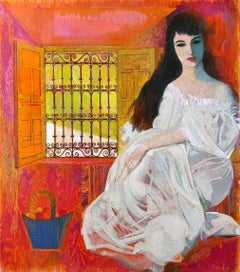
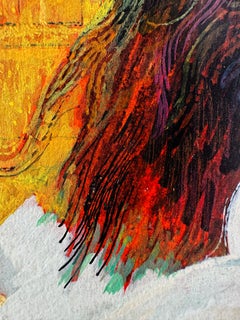
Almond-Eyed Brunette by Window, Watercolor on Board, Circa 1960
Located in Miami, FL
An almond-eyed brunette is depicted sitting pensively next to a window. She looks Mediterranean, perhaps Italian or Greek, and has a captivating face that one can fall in love with. ...
Mixed Media, Watercolor, Gouache, Illustration Board, Pencil
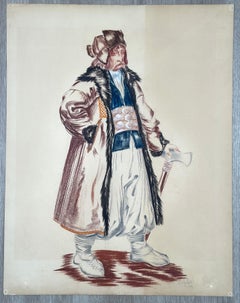
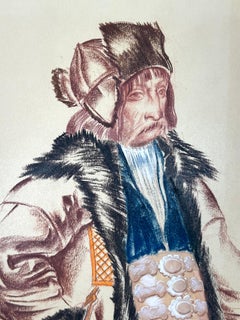
16th-century Traditional Historical Polish Male Dress Peasant Attire
Located in Wilton Manors, FL
Boleslaw Cybis (1895-1957). Polish Peasant, 16th-century Attire, 1939. Conte and gouache with pencil on paper, sheet measures 18 x 23 inches. Signed by the artist and dated bottom...
Paper, Crayon, Gouache, Pencil


$773Sale Price|20% Off
Original 70's Hand Painted Textile Design Gouache a botanical Style White Paper
Located in ALCOY/ALCOI, ES
Abstract Expressionist design. Sealed on the back with the design studio name and number . Ilegible signature We offer a small number of these original illustration designs by this ...
Paper, Gouache

1930s Original Gouache Design for Moss Bros Horses Riding Formal Outfit
Located in London, GB
To see our other Commercial Designs - and many original vintage posters too, scroll down to "More from this Seller" and below it click on "See all from this Seller." Anonymous Moss ...
Gouache

$520
Japanese Contemporary Art by Miyuki Takanashi - The Seedsof the Heart Blossom
Located in Paris, IDF
Mixed media (acrylic, gouache,oil) on canvas Miyuki Takanashi is a Japanese artist born in 1961 who lives & works in Sapporo in Japan. She is graduated from Hokkaido University of E...
Canvas, Mixed Media, Oil, Acrylic, Gouache

Japanese Contemporary Art by Miyuki Takanashi - Traveling Penguin
Located in Paris, IDF
Mixed media (acrylic, gouache,oil) on canvas Miyuki Takanashi is a Japanese artist born in 1961 who lives & works in Sapporo in Japan. She is graduated from Hokkaido University of E...
Canvas, Mixed Media, Oil, Acrylic, Gouache

Japanese Contemporary Art by Miyuki Takanashi - KIMN-KAMUI Mountain God
Located in Paris, IDF
Mixed media (acrylic, gouache,oil) on canvas Miyuki Takanashi is a Japanese artist born in 1961 who lives & works in Sapporo in Japan. She is graduated from Hokkaido University of E...
Canvas, Mixed Media, Oil, Acrylic, Gouache
$1,964Sale Price|40% Off
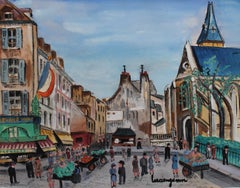
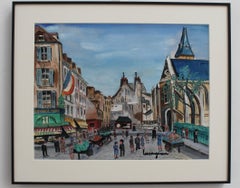
View of Saint-Médard Church, Gouache on Paper, Framed, Circa 1930s
By Lucien Génin
Located in London, GB
A 'View of Saint-Médard Church, Paris', gouache on art paper, by Lucien Génin (circa 1930s). As viewed from the Rue Mouffetard, the church, which dates from the mid-1400s, continues ...
Paper, Gouache
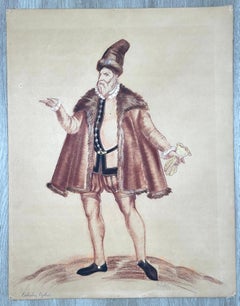
16th-century Traditional Historical Polish Male Dress Attire
Located in Wilton Manors, FL
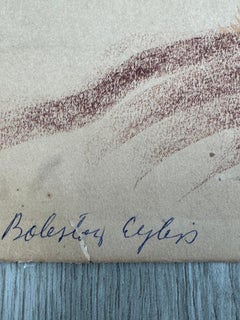
Boleslaw Cybis (1895-1957). Polish Merchant, 16th-century Attire, 1939. Conte and gouache with pencil on paper, sheet measures 18 x 23 inches. Signed by the artist and dated botto...
Paper, Gouache, Pencil, Crayon
$491
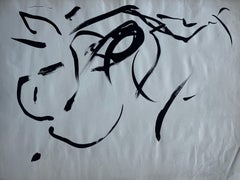
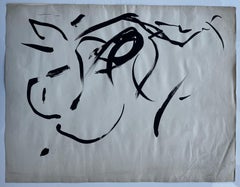
Mid Century French Abstract Expressionist Black Ink Calligraphic Painting
Located in Cirencester, Gloucestershire
Title: Mid Century French Abstract Expressionist Black Ink Calligraphic Painting Medium: Black ink/ gouache painting on paper, unframed French, circa 1950's Size: 19.75 inches x 25.7...
Paper, Ink, Gouache
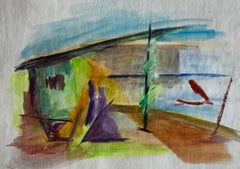
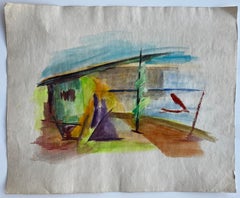
Modernist Coastal Interior Figures Abstract Gouache Painting
By Guy Nicod
Located in Cirencester, Gloucestershire
Modernist Coastal Interior with Figures French Abstract Gouache Painting By Guy Nicod (French, 1923–2021) Gouache and watercolour on artist's paper, unframed. 15.75 × 19.25 inches (h...
Watercolor, Gouache
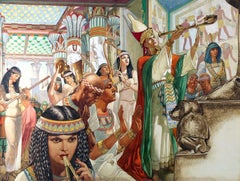
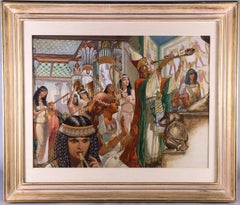
Nero's Temple On The Nile
By Willy Pogany
Located in Fort Washington, PA
Medium: Gouache on Illustration Board Signature: Signed Middle Right Sight Size 20.50" x 27.00;" Framed 30.25" x 35.00" Framed and matted under glass in antique gold painted art deco...
Gouache, Illustration Board
$25,000
Judy Pfaff - Abstract environmental art collage Andre Emmerich Gallery, Signed
By Judy Pfaff
Located in New York, NY
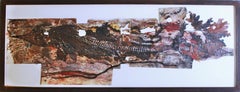
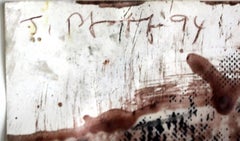
Judy Pfaff Untitled, 1994 Collage, Mixed media, Gouache and Leaves on paper, in Artist's Frame. Signed with Andre Emmerich & Bellas Artes Gallery Labels - accompanied by original...
Mixed Media, Gouache
$1,800
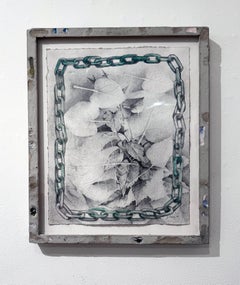
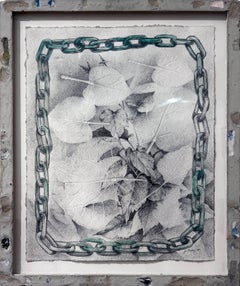
Chain
By Jack Henry
Located in Jersey City, NJ
Chain by Jack Henry is a contemporary mixed-media work on paper combining graphite and gouache on embossed archival paper, presented in a handmade cement and found-object frame. The...
Concrete
$2,400
Jean Marais, Cocteau's Muse, Master of Stage Design: Curtain for Sleeping Beauty
By Jean Marais
Located in Norwich, GB
Jean Marais (1913–1998) is immortalised as the face of French cinema's golden age—the hero of Beauty and the Beast, the swashbuckler of Le Bossu, and the muse of Jean Cocteau. Yet, t...
Paper, Gouache


1940s San Francisco Bay Area Figurative - Original Gouache Painting, Signed
Located in Soquel, CA
1940s San Francisco Bay Area Figurative - Original Gouache Painting, Signed Vibrant figurative scene by Turkish-American artist Ömer Şahingil (Turkish/American, 1915-1976.) A man st...
Paper, Gouache


Pajama Party
By Victor Kalin
Located in Fort Washington, PA
Signature: Signed Lower Right Medium: Gouache on Board
Gouache, Board


SET OF 4 - ORIGINAL 1970'S FRENCH ABSTRACT BLACK & WHITE PAINTINGS
Located in Cirencester, Gloucestershire
Artist: Claude Lagouche (French 1943-2020) Claude Lagouche was born January 2, 1943 in Naves, died January 16, 2020. He quickly gained recognition for his talent and his work, exh...
Gouache


Two Semi Nude Men in Embrace Original Contemporary French Painting
Located in Cirencester, Gloucestershire
The Embrace French, 21st century gouache painting on artist paper, framed Glass covering framed: 13 x 10.5 inches board: 12 x 9 inches condition: very good provenance: private collec...
Gouache


Baton Twirlers Leave the Field, Saturday Evening Post Cover
By Thorton Utz
Located in Fort Washington, PA
Baton Twirlers leaving the field after a football game at the University of Florida. Cover of The Saturday Evening Post, November 17, 1962 The editors' description of the cover rea...
Gouache


Fashion Illustration of Elegant woman in Bob Mackie dress perhaps for Cher
Located in Miami, FL
Most likely done for Cher. Gouache and watercolor on Arches paper. There is some minor undulation of the paper suface but only visible under raking light. Nicely framed and read...
Watercolor, Gouache


Cubist mid-century abstract expressionist painting
Located in Wilton Manors, FL
Bernard Segal (1907-1986). Cubist painting, ca. 1960. Gouache and watercolor on paper, sheet measures 9 x 12.25 inches. Unsigned. Estate stamp on verso side. Excellent condition. N...
Paper, Gouache

S.S. Arankola in Rangoon, Early 20th Century British Watercolour
Located in London, GB
Frank Henry Mason 1875 – 1965 Steamship in Asia Gouache on paper, unsigned Image size: 8 x 15 inches Acid free mount and hand made gilt frame Original artwork for a carriage print...
Gouache


$7,505
Grey/Pink, from Study for Larger Tri Motif Series, 1977 - Gouache, Watercolour
By Gordon House
Located in Kingsclere, GB
Gordon House was born in 1932 in Pontardawe, South Wales. Early exposure to art on trips to the Glynn Vivian Art Gallery as a young boy inspired House towards creative endeavors and ...
Ink, Watercolor, Gouache

Lanvin of Paris c1920s Original Fashion Illustration in Gouache
Located in Bristol, CT
9 3/4"H x 6 3/4"W
Gouache


Arrangement Four - Contemporary Figurative Animal Botanical Shapes, 2024
By June Glasson
Located in Kent, CT
This contemporary painting in ink, gouache and pencil on archival paper, is composed of solid shapes, botanical, animal and figurative shapes suggesting strong female characters. Av...
Archival Ink, Gouache, Archival Paper, Pencil

Girl at the Beach with wide Brim Hat
By Bernie Fuchs
Located in Miami, FL
Wonderful 60's chic is on full display in this beach scene. It's masterfully designed. The beautiful model horizontally fills the center space while supporting players fill background spaces. The style is very flat with lots of gray muting the colors and defining the artist's palette. Fuch's was a giant talent who is overlooked by today's art world participants. His style could be described as a post-post impressionist. This particular work is so deftly designed and exhibits the most intriguing positive and negative spaces. The model is rendered with loose, quick and authoritative brush strokes which give an air of chic confidence. Most of all, it's her dreamy blue eyes that truly captivate the viewer. All parts of the eye ( Iris, Pupil, Sclera ) are composed of a soft robin's egg blue which is in counterpoint the pink day-glow color on her lips. She looks at you. You look back and the process is repeated and repeated. Fuch's not just a great painter, designer, academic artist but a brilliant and innovative colorist as well. To demonstrate how great this simple work is, out of a world population of 7.2 billion people, as a betting man, I would say there may be no other artist who could render a scene this good. An artist such as Peter Doig, who does nice and beautiful work, may come close to the talent of Fuchs. Bernard Fuchs American, 1932 - 2009 Girl at the Beach...
Gouache
$278Sale Price|52% Off
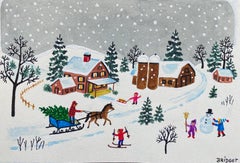
“Christmas Season”
Located in Southampton, NY
Original illustration artwork composed of watercolor and gouache on archival paper by Bridget used as a Christmas greeting card by the Fravessi Ca...
Watercolor, Gouache, Archival Paper


$3,070Sale Price|50% Off
Dinosaur Me & Baby, Abstract Mixed Media on Board, Framed, 2018
By Erez Yardeni
Located in London, GB
'Dinosaur Me & Baby' abstract composition, mixed media on soft board, Japanese ink, oil, pencil and gouache by Erez Yardeni (2018). The scribblings of a c...
Ink, Oil, Gouache, Board, Pencil
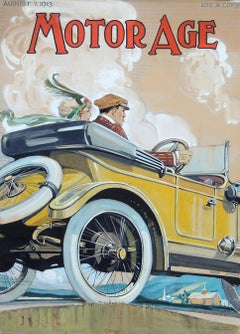
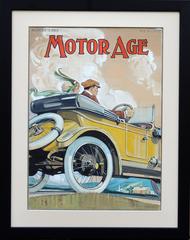
Original 1913 Motor Age Magazine Cover Art Illustration
By Clinton Pettee
Located in Fort Washington, PA
Date: 1913 Medium: Gouache on Paper Dimensions: 19.75" x 14.50" Signature: Signed Lower Right Original 1913 Motor Age Magazine Cover Art Illustrati...
Paper, Gouache
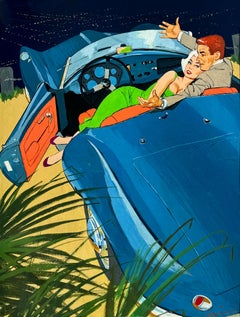
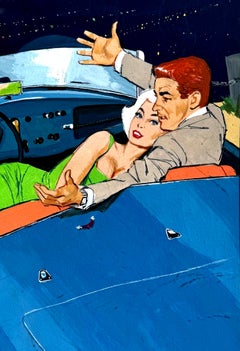
Hot Girls. Hot Cars. Arnolt Bristol - Blue Sports Car Mid-Century - Playboy
By Ben Denison
Located in Miami, FL
The punchline on many of these 1950s cartoons fades, but the visuals more than hold up - they shine. The sleek, graphic style of painting with flat, broad areas of color shows that ...
Gouache, Illustration Board


Untitled 1937 Gouache Painting, Framed, Abstract, 16.5x13.5 in
By Carl Holty
Located in New York, NY
Carl Holty 1900 – Germany - 1973 Untitled 1937 Gouache on paper 8 ¾ x 12 ½ inches (22.2 x 31.7 cm) Framed: 13 ½ x 16 ½ inches (34 x 42 cm) Signed and dated verso: CWH ‘37 Provenan...
Gouache, Paper


Impressionist Floral Still Life Painting with Roses
Located in Wilton Manors, FL
Joseph Margulies (1896-1984). Blue Vase with Roses, ca. 1950. Gouache on paper, image measures 19 x 23 inches. Measuring 26.5 x 30.5 inches framed. Signed lower right. Double-...
Paper, Gouache

$1,159
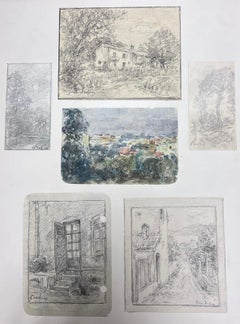
Fine Antique French Impressionist Painting Landscape Combination of Six Drawings
Located in Cirencester, Gloucestershire
The artist: Henri Aime Duhem (1860-1941) French *see notes below, signed Title: Medium: signed gouache on paper, loosely laid over card, unfram...
Gouache
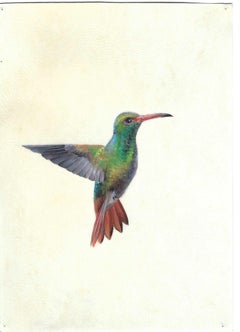

Hummingbird in Flight, Colorful Miniaturist Realist Painting on Parchment
By Dina Brodsky
Located in New York, NY
A captivating miniature painting by renowned artist Dina Brodsky, known for her masterful technique in gouache and watercolor. This exquisite work, painted on authentic animal parchm...
Parchment Paper, Watercolor, Gouache


Original Ronald Shap figure drawing, signed
By Ronald Shap
Located in Las Vegas, NV
Original gouache and oil pastel figure drawing by celebrated, twentieth-century California impressionist landscape painter, Ronald Shap. Crouching nude man with a mustache...
Oil Pastel, Gouache
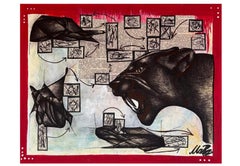
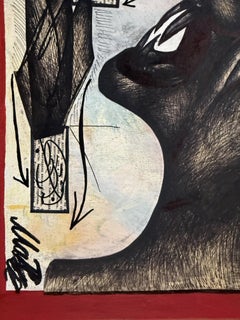
Presence
Located in Edinburgh, GB
For me, the panther in this work represents presence, strength, and inner composure. I did not want to depict the animal simply as a literal subject or a decorative central figure. I...
Mixed Media, Acrylic, Gouache


$1,296
Mid-20th Century Post-Cubist Gouache Painting Man Mending Nets
Located in Cirencester, Gloucestershire
Mending the Nets by Laure Noetzin-Azam (French 1929-2024) pupil of André LHOTE gouache on artist paper stuck on card, unframed overall size: 26.5 x 31 inches painting: 20 x 25 inches...
Gouache
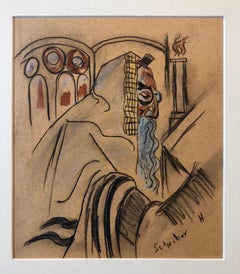
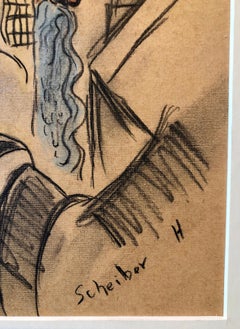
Rare Modernist Hungarian Rabbi Pastel Drawing Gouache Painting Judaica Art Deco
Located in Surfside, FL
Hugó Scheiber (Hungarian, 1873–1950) Rabbi at Prayer (Rabbi in Synagogue) wearing tallit and tefillin Gouache, pastel, and charcoal on paper 15.75 x 14.5 inches (sight) Signed lower right: “Scheiber H” A deeply moving and masterfully executed work on paper by Hugó Scheiber — one of the most important Hungarian Jewish modernist painters of the twentieth century, championed by Herwarth Walden’s legendary Der Sturm Gallery in Berlin, exhibited through Katherine Dreier’s Société Anonyme in New York alongside Marcel Duchamp and Wassily Kandinsky, and included in the landmark Paris-Berlin 1900–1930 exhibition at the Centre Georges Pompidou. This exceptional work depicts an elderly rabbi in profile, draped in a traditional tallit (prayer shawl) with its characteristic dark stripes, wearing a tefillin (phylactery) on his head, and absorbed in deep prayer or Torah study before an open Torah scroll or prayer book. Behind him, the arched windows of the synagogue interior are rendered in Scheiber’s distinctive stylized manner — the circular and arched stained glass motifs filled with warm russet and grey tones — while to his right a lit candle or lamp flickers, casting the scene in an atmosphere of sacred warmth and quiet devotion. The figure’s full grey-blue beard, rendered in Scheiber’s signature fluid, rhythmic line, flows downward in a cascade of expressive marks that capture both the physical presence of the man and the spiritual weight of the moment. The work exemplifies everything that makes Scheiber’s Judaica subjects among the most sought-after of his entire output — his ability to combine the emotional intensity of German Expressionism with the decorative elegance of Art Deco, the fluid economy of his line with the richness of his color palette, and his deep, personally felt engagement with the world of Eastern European Jewish religious life. The composition connects Scheiber directly to the great tradition of Jewish subject painters including Marc Chagall — whose depictions of rabbis and Jewish life in the shtetl share Scheiber’s combination of spiritual reverence and modernist formal language — as well as Isidor Kaufmann and Maurycy Gottlieb, the nineteenth century masters of Jewish genre painting whose work Scheiber both absorbed and transformed. The work is signed in Scheiber’s characteristic hand — “Scheiber H” — lower right, with the “H” monogram that appears on many of his most important works on paper. The warm buff paper ground, the combination of charcoal line with gouache and pastel color accents, and the overall condition are entirely consistent with Scheiber’s mature working method of the 1920s and 1930s — the period of his greatest international recognition and his most sustained engagement with Jewish religious subjects. Scheiber’s rabbi and synagogue subjects are among the most actively collected works in the entire canon of Jewish art, and appear regularly at Sotheby’s, Christie’s, Bonhams, and specialist auction houses. A rare and important opportunity to acquire a major Judaica work by one of the defining figures of interwar Hungarian Jewish modernism. Hugó Scheiber (1873–1950) Hungarian Jewish Modernist Painter German Expressionism Futurism Art Deco Der Sturm Gallery Berlin Société Anonyme Judaica Art Gouache Pastel Tempera Hugó Scheiber (September 29, 1873 – March 7, 1950) was one of the most important and internationally connected Hungarian Jewish modernist painters of the twentieth century — a largely self-taught master of gouache, pastel, tempera, and oil whose dynamic, color-saturated paintings of urban nightlife, jazz musicians, dancers, acrobats, café scenes, and Jewish subjects placed him at the intersection of German Expressionism, Italian Futurism, and Art Deco, and whose career brought him into direct contact with the most significant figures of the European and American avant-garde. Championed by Herwarth Walden’s legendary Der Sturm Gallery in Berlin, exhibited through Katherine Dreier’s Société Anonyme in New York alongside Marcel Duchamp, Man Ray, and Wassily Kandinsky, and included in the landmark Paris-Berlin 1900–1930 exhibition at the Centre Georges Pompidou, Scheiber is one of the great rediscovered figures of interwar European modernism — and one of the most collectible Jewish artists of the twentieth century. Early Life: Budapest, Vienna, and the Sign Painter’s Son Born on September 29, 1873, in Budapest, Hungary, Scheiber came from a working-class Jewish family. At the age of eight he moved with his family to Vienna, where his father worked as a sign painter for the famous Prater Theater — Vienna’s largest entertainment venue — and where the young Scheiber absorbed his earliest visual education in the world of popular entertainment, spectacle, and commercial art that would define his subjects for the rest of his career. The family returned to Budapest in 1898, where Scheiber worked during the day and studied painting in the evenings at the School of Design (also referred to as the Commercial Art School and College of Applied Arts) under Henrik Papp, completing his studies in 1900. He did not graduate, and remained essentially self-taught — a fact that gave his work an instinctive, unacademic energy entirely at odds with the conservative Hungarian art establishment of his era and entirely in sympathy with the spirit of the European avant-garde. Marinetti, Futurism, and the Modernist Turn In the 1910s Scheiber’s style began to evolve decisively away from the Impressionist landscapes and still lifes of his early career toward the energetic, stylized world of German Expressionism. In 1915 he met Filippo Tommaso Marinetti — the Italian poet and founder of Futurism, one of the most electrifying figures in the European avant-garde — and the two became close friends. Marinetti invited Scheiber to join the Futurist Movement, and Scheiber’s subsequent work absorbed the Futurists’ celebration of speed, dynamism, modern city life, and the energy of the machine age, combining it with the emotional intensity and expressive distortion of German Expressionism to create a uniquely personal hybrid style. In 1933 Scheiber was invited by Marinetti to participate in the Mostra Nazionale d’Arte Futurista — the great gathering of the Futurists held in Rome — where he was received with great enthusiasm, cementing his place within the international Futurist canon. Vienna and the Hungarian Avant-Garde In 1919 Scheiber and his close friend and fellow Hungarian Jewish painter Béla Kádar held an exhibition organized by art critic Max Hevesi at the Hevesy Salon in Vienna — a landmark event for the Hungarian avant-garde and the first exhibition to bring serious attention to Scheiber’s work. The success of the Vienna show was such that the Budapest Art Museum purchased works from it — one of the few institutional recognitions Scheiber would receive in his own country. The Hungarian avant-garde was at this moment divided between two camps: the politically committed Constructivists, led by Lajos Kassák — whom Scheiber painted in a celebrated 1930 portrait — who believed art should serve social revolution; and independent modernists like Scheiber and Kádar who pursued aesthetic and humanist idealism. Scheiber belonged firmly to the latter camp, and it was Kassák who provided a letter of recommendation that would open the most important door of Scheiber’s career: an introduction to Herwarth Walden. Der Sturm Gallery, Berlin, and the European Avant-Garde In 1921 Herwarth Walden — founder of Der Sturm, Germany’s leading avant-garde periodical and gallery, and the most powerful champion of the European avant-garde in the Weimar Republic era — discovered Scheiber’s work and became his most important patron and promoter. Walden moved Scheiber to Berlin in 1922, provided him financial support, and began reproducing his work regularly in the pages of Der Sturm magazine alongside the work of Paul Klee, Wassily Kandinsky, Franz Marc, Marc Chagall, and Oskar Kokoschka. Scheiber’s solo exhibitions at the Der Sturm Gallery followed in 1924, 1925, and 1927, and he was included in major group exhibitions at the gallery alongside artists from more than twenty-three countries — placing him at the very center of Weimar-era Berlin’s dynamic international art world. Scheiber’s move to Berlin coincided with the great exodus of Hungarian artists to the German capital, including László Moholy-Nagy and Sándor Bortnyik — figures who would go on to shape the Bauhaus and international Constructivism. Together, the Hungarian émigrés formed one of the most significant artistic communities in Berlin, and Scheiber was among the most celebrated of them. Katherine Dreier, the Société Anonyme, and New York In 1926 another major turning point arrived: Katherine Dreier — the American artist and collector who, with Marcel Duchamp and Man Ray, had founded the Société Anonyme, the first organization in America dedicated to promoting modern art — organized a landmark international exhibition in New York in which Scheiber was included alongside artists from more than twenty-three countries. The Société Anonyme’s mission was to bring the best of the European avant-garde to American audiences, and its roster included Wassily Kandinsky, Paul Klee, Kurt Schwitters, Piet Mondrian, Alexander Archipenko, and Francis Picabia. Scheiber’s inclusion placed him firmly within this constellation of international modernism. Through Dreier’s connections, Scheiber’s work was subsequently exhibited in London (Rehearsal Theatre, Poplar Town Hall), New York (Brooklyn Museum, Anderson Gallery, Little Review), and Rome. Works from the Société Anonyme collection — including Scheiber’s — were later donated to the Yale University Art Gallery, where the Collection of the Société Anonyme exhibition was mounted in 1950. Artistic Style: Expressionism, Futurism, and Art Deco Scheiber’s mature style is one of the most distinctive and instantly recognizable in interwar European art. Working primarily in gouache, pastel, tempera, and oil on paper and board, he depicted the cosmopolitan modern world — jazz musicians, dancers, acrobats, singers, musicians, café scenes, cabarets, nightlife, street scenes, horse-drawn carriages, and the energy of the modern city — in a style that combines the emotional intensity of German Expressionism with the dynamism of Futurism and the decorative elegance of Art Deco. His palette is characteristically bold and saturated — deep blues, vivid reds, electric greens, and warm yellows — and his figures are rendered in fluid, rhythmic lines that capture movement and gesture with extraordinary economy and verve. Critics have compared his international Art Deco manner to that of Erté — the celebrated Russian-French artist whose theatrical, stylized figures share Scheiber’s sense of glamour and movement — while his Expressionist intensity connects him to Ernst Ludwig Kirchner, Egon Schiele, and the broader tradition of German and Austrian Expressionism. Among his most celebrated and collected subjects are his depictions of Jewish religious life — rabbis, synagogue scenes, Jewish musicians, and Shabbat subjects — which represent a deeply felt engagement with the world of Eastern European Jewish culture and place him within the tradition of Jewish artists such as Marc Chagall, Maurycy Gottlieb, and Isidor Kaufmann who made Jewish life and spirituality central subjects of modern art. Return to Budapest and Late Career With the rise of Nazism in Germany, the Hungarian artists in Berlin gradually returned home. Béla Kádar left Berlin around 1932, and Scheiber followed in 1934. Back in Budapest, he continued to exhibit and remained remarkably prolific — he was known as an extremely fast-working artist who produced an enormous body of work across his long career. Despite his international recognition, his work remained largely ignored by the conservative Hungarian art establishment throughout his lifetime. Major Exhibitions Scheiber’s exhibition record spans the most important venues of European and American modernism: Der Sturm Gallery, Berlin (solo 1924, 1925, 1927; group exhibitions through 1928); Brooklyn Museum, New York; Anderson Gallery, New York; Little Review, New York (all through the Société Anonyme); London (Rehearsal Theatre, Poplar Town Hall); Mostra Nazionale d’Arte Futurista, Rome (1933); The Nell Walden Collection, Kunsthaus Zürich (1945), Kunsthaus Aarau (1957), and Kunstmuseum Bern (1967); Collection of the Société Anonyme, Yale University Art Gallery, New Haven (1950); Hugó Scheiber: A Commemorative Exhibition, Hungarian National Museum, Budapest (1964); Ungarische Avantgarde, Galleria del Levante, Munich (1971); Paris-Berlin 1900–1930, Centre Georges Pompidou, Paris (1978) — one of the landmark exhibitions of twentieth century art history; L’Art en Hongrie 1905–1930, Musée d’Art et l’Industrie, Saint-Etienne (1980) and Musée d’Art Moderne de la Ville de Paris (1981); Ungarische Avantgarde in der Weimarer Republik, Marburg (1986); Futurismo & Futurismi, Palazzo Grassi, Venice (1986), organized by Pontus Hulten; Modernizmus, Eresz & Maklary Gallery, Budapest (2006); Hugó Scheiber & Béla Kádár, Galerie le Minotaure, Paris and Tel Aviv (2007); and A Storm in Europe: Béla Kádar, Hugó Scheiber and Der Sturm in Berlin, Ben Uri Gallery and Museum, London (2003). Museum Collections Hugó Scheiber’s paintings and works on paper are held in the permanent collections of the Hungarian National Museum, Budapest; the Janus Pannonius Museum, Pécs; the Kunstmuseum Bern; and museum collections in Vienna and New York, as well as the Yale University Art Gallery through the Collection of the Société Anonyme. Legacy Hugó Scheiber died in Budapest on March 7, 1950 — largely unrecognized in his own country despite his extraordinary international career. His rediscovery in the late twentieth century has established him as one of the most significant Jewish modernist painters of the interwar period — a Hungarian-born artist who moved between Vienna, Berlin, and the international art world with remarkable ease and whose work encapsulates the energy, glamour, and tragedy of European Jewish modernism in the years between the wars. His paintings and works on paper appear regularly at Sotheby’s, Christie’s, Bonhams, and specialist auction houses, and are actively collected by institutions and private collectors worldwide, particularly among collectors of Jewish art, Hungarian modernism, German Expressionism, Art Deco, and interwar European painting. Keywords: Hugo Scheiber, Hugó Scheiber, Hugo Scheiber painting, Hugo Scheiber gouache, Hugo Scheiber pastel, Hungarian Jewish artist, Hungarian modernist painter, Jewish art, Judaica art, Der Sturm Gallery Berlin, Herwarth Walden, Société Anonyme, Katherine Dreier, Béla Kádar, Filippo Tommaso Marinetti, Futurism, German Expressionism, Art Deco, László Moholy-Nagy, Marc Chagall, Erté, interwar European painting, Hungarian avant-garde, Weimar Republic art, Ben Uri Gallery, Centre Georges Pompidou Paris-Berlin, Yale University Art Gallery, Jewish modernism, nightlife painting, jazz painting, café scene painting...
Paper, Charcoal, Pastel, Watercolor, Gouache


$100
My 80's Heart "Token 4" 2019, gouache, acrylic, graphite, panel, yellow, orange
Located in Jersey City, NJ
My 80's Hart "Token 4" 2019, gouache, acrylic, graphite, panel, yellow, orange
Acrylic, Gouache, Panel, Wood Panel, Graphite


$1,015
"Columbine Flower Double Sided, " Ink & Gouache on Paper by Sylvia Spicuzza
Located in Milwaukee, WI
"Columbine Flower Double Sided" is an original ink and gouache painting on paper by Sylvia Spicuzza. The Columbine flower is known for attracting humm...
Ink, Gouache

Parisian Women's c1920s Fashion Gouache
Located in Bristol, CT
Art Sz: 9 3/4"H x 6 3/4"W
Gouache


"To the Brim" - Original Gouache Landscape Painting on Paper
By Judd Mercer
Located in Denver, CO
“To the Brim” is a plein air painting by Judd Mercer, created on location in Morrison, Colorado, USA. The piece captures the sunlit red rock formations and surrounding foothills of t...
Paper, Gouache


Still Life, Red and Yellow Flowers by Peter Potworowski, c.1955
Located in Kingsclere, GB
Still Life, Red and Yellow Flowers
Gouache
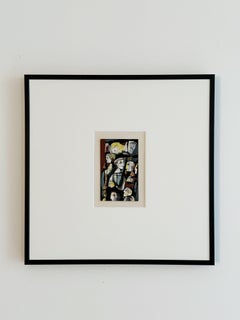
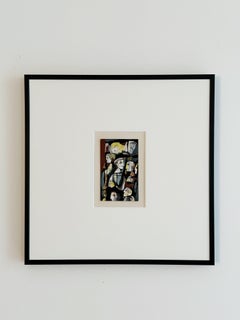
Mathieu ROSIANU (1897-1969), untitled, circa 1945, gouache
Located in PARIS, FR
Mathieu (Matei) ROSIANU (1897-1969) Untitled, circa 1945 Gouache on card stock Stamped on the reverse side 4 x 3 inch frame : 11,8 × 11,8 inch Born in Bucharest in 1897 to a father...
Gouache


$625
Two in a boat , not counting the dog . Original gouache painting. Contemporary.
Located in Oslo, NO
A serene moment unfolds upon a mirror-like surface. Two figures drift in a small blue boat. One wears a vibrant orange shirt. The other rests in quiet contemplation. Their reflection...
Canvas, Gouache
$15,000
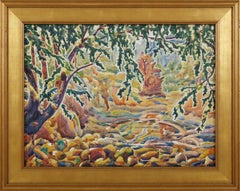
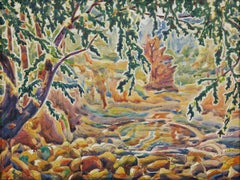
Abstracted Summer Landscape, Creek in the Forest, Cleveland School Artist
Located in Beachwood, OH
August Frederick Biehle American, 1885-1979 Creek in the Forest, c. 1949 Gouache, watercolor and litho crayon on board Signed lower right, dated lower left 18 x 24 inches 23.25 x 29....
Crayon, Watercolor, Gouache