1980s Art

18,341 Results
to
2,647
5,587
3,469
5,088
2,827
2,387
Overall Width
to
Overall Height
to
7,680
21,630
167,155
236,776
2,167
2,370
4,749
6,541
6,030
15,986
21,398
26,804
19,421
14,206
5,491
4,648
3,146
2,380
1,751
681
504
314
234
199
157
67
45
39
9,593
8,256
909
8,168
4,115
3,174
2,666
1,983
1,571
1,329
1,324
1,241
1,126
1,043
1,008
861
796
568
479
460
432
418
411
3,949
3,913
3,734
1,942
1,931
1,505
303
208
193
177
3,360
8,088
11,995
6,990
Period: 1980s
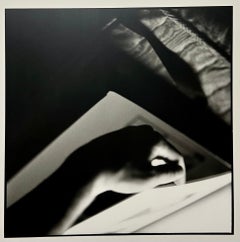
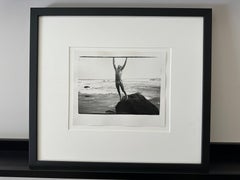
Vintage Street Photography Bruce Cratsley Photo Silver Gelatin Print Photograph

Vintage Street Photography Bruce Cratsley Photo Silver Gelatin Print Photograph

By Bruce Cratsley

Located in Surfside, FL

Bruce Cratsley, American (1944-1998) Vintage gelatin silver print Lifting Hand (Scot) Chez Moi A surrealist image of a hand with a light study Hand signed, titled and dated 1986-1988 verso image (each): 15 1/4 x 15 1/4 inches, matted to 24 X 20 inches Provenance: From the collection of AGFA Graphics Corporation David Bruce Cratsley (1944 - 1998) was an American photographer specialized in still lifes, portraits of friends, and life in New York City. He had a reputation of master of light and shadow. Bruce Cratsley attended Swarthmore College, graduating in 1966, and then, in the early 1970s, The New School for Social Research, studying under Lisette Model. Cratsley worked for many years as a gallerist at Marlborough Gallery before quitting in 1986 to become a full-time photographer. As "Bruce Cratsley", he exhibited in various New York galleries, like: Laurence Miller Gallery, Howard Greenberg Gallery and Witkin Gallery. Cratsley was represented by Yancey Richardson Gallery, a dealer of fine art photography based in SoHo. He was photographed by Elsa Dorfman who shot many luminaries including, Allen Ginsberg, Denise Levertov, Anaïs Nin and more. In 1978 Cratsley contributed the photo sequences for the musical The Class, performed by The New Ballet School at the New York City Center. In 1980, Cratsley showed his work, Atlantic City, 1977, an August beach scene, at the 11th Anniversary show at the Witkin Gallery. In 1989 Cratsley was awarded with the Guggenheim Fellowship for Photography, US & Canada. Cratsley documented gay life in NYC including his life with David Waine, who died in 1991. "I'd been photographing David since long before he became sick [...] at some point I realized that this was an extraordinary thing that was happening, and that I had an intimate relationship to it. I photographed David just a few hours before he died, not knowing what was about to happen [...] David was very spiritual [...] My pictures are a poetic, spiritualized look at AIDS". In 1995 Cratsley was included together with Barbara Norfleet, Olivia Parker and John Sturges in the list of bestselling photographer at Robert Klein Gallery...

Category

American Modern 1980s Art

Materials

Silver Gelatin

Duet #2, Large Art Deco Painting by Erik Freyman

Duet #2, Large Art Deco Painting by Erik Freyman

By Erik Freyman

Located in Long Island City, NY

"Duet #2" is an original painting on canvas measuring 48 x 36 inches by Erik Freyman. The artist is best known for his 80's style which draws heavily on Art Deco and Cubism. Frey...

Category

Art Deco 1980s Art

Materials

Canvas, Acrylic

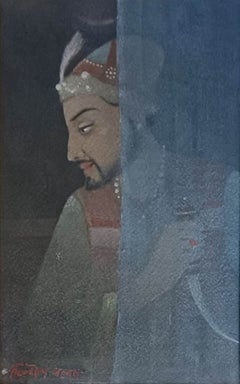
Untitled, Wash Painting on Paper by Indian Modern Artist "In Stock"

Untitled, Wash Painting on Paper by Indian Modern Artist "In Stock"

Located in Kolkata, West Bengal

Dilip Banerjee - Untitled Wash Painting on Paper 9 x 6 inches, 1987 (Framed & Delivered) Untitled by Dilip Banerjee is a delicate wash painting on paper from 1987, portraying a male...

Category

Modern 1980s Art

Materials

Paper, Mixed Media

CY Twombly Paris 1986 (announcement)

CY Twombly Paris 1986 (announcement)

By Cy Twombly

Located in NEW YORK, NY

CY Twombly Paris 1986: Vintage 1980s announcement card published on the occasion of Cy Twombly Yvon Lambert Paris, September 20th - November 6th, 1986. Medium: Offset printed anno...

Category

Contemporary 1980s Art

Materials

Offset

Des Troupeaux de Moutons, Lithograph, H.C., Signed, Ed. of 200, 1989

Des Troupeaux de Moutons, Lithograph, H.C., Signed, Ed. of 200, 1989

By Bernard Buffet

Located in New York, NY

"Painting, we do not talk about it, we do not analyse it, we feel it." - Bernard Buffet About the Artist: (10 July 1928 – 4 October 1999) was a French painter of Expressionism and a member of the anti-abstract art group L'homme Témoin (the Witness-Man) Certificate of Provenance: Each individual work of art carefully curated by Mourlot Editions comes with a Certificate of Provenance, signed, dated, stamped, and numbered by Eric Mourlot...

Category

Expressionist 1980s Art

Materials

Lithograph

David Blackburn 'Light and Landscape' 1989- Offset Lithograph

David Blackburn 'Light and Landscape' 1989- Offset Lithograph

Located in Brooklyn, NY

Paper Size: 30 x 20 inches ( 76.2 x 50.8 cm ) Image Size: 24.25 x inches ( 61.595 x cm ) Framed: No Condition: B: Very Good Condition, with signs of handling or age Supplemental ...

Category

1980s Art

Materials

Offset

Kaleidoscope III, Pop Art Screenprint by John Grillo

Kaleidoscope III, Pop Art Screenprint by John Grillo

By John Grillo

Located in Long Island City, NY

Artist: John Grillo, American (1917 - 2014) Title: Kaleidoscope III Year: 1980 Medium: Screenprint, signed and numbered in pencil Edition: 200 Image Size: 22 x 30 inches Size: ...

Category

Pop Art 1980s Art

Materials

Screen

Port of Saint-Malo Oil Painting on Canvas, French Modern School, 1984

Port of Saint-Malo Oil Painting on Canvas, French Modern School, 1984

Located in London, GB

'Port of Saint-Malo', oil on canvas affixed to board, French Modern School (1984). Although the artist dated this painting '84, it depicts a nostalgic view of the port of Saint-Malo in Western France's, Brittany in 1884 judging by the clothing worn by the characters depicted. The crowd on the shoreline is watching a sailboat regatta starting just inside the port's breakwater. A rather rare sunny day in Brittany brought out the parasols of the sitting ladies on the edge of the old ramparts. The walled city...

Category

Modern 1980s Art

Materials

Canvas, Oil, Board

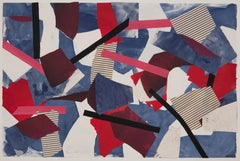
Lanzorate, Large Abstract Collage, New York Artist

Lanzorate, Large Abstract Collage, New York Artist

By Joseph Glasco

Located in Beachwood, OH

Joseph Glasco (American, 1925-1996) Lanzorate, 1985 Monotype with fabric collage and mixed media on paper Signed and dated lower right, 1/1, titled lower left 31.5 x 48 inches 37 x 5...

Category

Abstract 1980s Art

Materials

Fabric, Paper, Monotype

Large Abstract Silkscreen by Raymond Parker

Large Abstract Silkscreen by Raymond Parker

By Raymond Parker

Located in Long Island City, NY

Artist: Raymond Parker, American (1922 - 1990) Title: Untitled 14 Year: 1980 Medium: Silkscreen, signed and numbered in pencil Edition: 70 Image Size: 31 x 36 inches Size: 32 x 37.5 ...

Category

Abstract Expressionist 1980s Art

Materials

Screen

Antique Victorian Doll Portrait Painting Spanish Figurative Oil on Canvas

Antique Victorian Doll Portrait Painting Spanish Figurative Oil on Canvas

By José Antonio Palanca Ruiz

Located in Sitges, Barcelona

Antique Victorian Doll Portrait Painting Spanish Figurative Oil on Canvas Artist: José Antonio Palanca Ruiz (1934–2020) Title: Antique Dolls Year: circa 1980 Medium: Oil on canvas S...

Category

Modern 1980s Art

Materials

Canvas, Oil

The Italian Actress Alessandra Martines  - Vintage Photo - 1980s

The Italian Actress Alessandra Martines - Vintage Photo - 1980s

Located in Roma, IT

Vintage Photo. The actress and dancer Alessandra Martines dancing in a television ballet. Photo by Italian news agency S.P.A.

Category

Contemporary 1980s Art

Materials

Photographic Paper

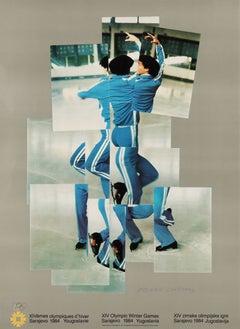
Hand-Signed 1984 Sarajevo Olympic Winter Games

Hand-Signed 1984 Sarajevo Olympic Winter Games

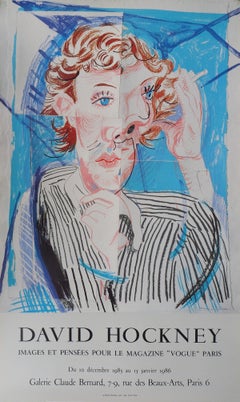
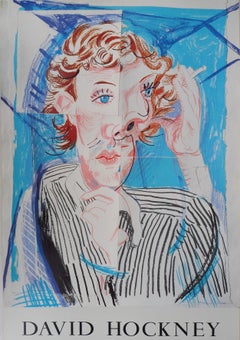
By David Hockney

Located in London, GB

1983 Offset lithographic poster in colours on wove 85 x 62cm Hand-signed in blue ballpoint pen Published by Petersburg Press, London and New York Very good condition David Hockney (...

Category

Contemporary 1980s Art

Materials

Lithograph

Second Version, Triptych 1944

Second Version, Triptych 1944

By Francis Bacon

Located in Toronto, Ontario

Francis Bacon (1909-1992) is one of the most distinctive, provocative, and influential painters of the 20th century. He is a true disrupter in the canon of Art History. His singul...

Category

Modern 1980s Art

Materials

Lithograph

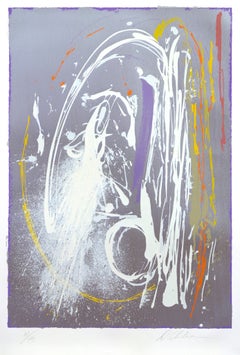
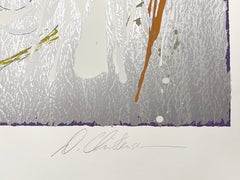
"Untitled" by Dan Christensen (Silver, Abstract, Metallic, Expressionist, Print)

"Untitled" by Dan Christensen (Silver, Abstract, Metallic, Expressionist, Print)

By Dan Christensen

Located in New York, NY

This large, abstract image celebrates the 13th Annual Community Holiday Festival, 1983 at Lincoln Center. It is signed and numbered by the artist from the edition of 144 (plus 18 APs) and was printed at Fine Creations, NY. This print comes directly from the publisher, Lincoln Center Editions...

Category

Abstract 1980s Art

Materials

Screen

"Changing Seasons" - Red Over Blue Tribute to Mark Rothko in Acrylic on Paper

"Changing Seasons" - Red Over Blue Tribute to Mark Rothko in Acrylic on Paper

By Ricardo de Silva

Located in Soquel, CA

"Changing Seasons" - Red Over Blue Tribute to Mark Rothko in Acrylic on Paper A bright abstract painting by California-based artist, Ricardo de Silva (American/Brazil, 20th C). Draw...

Category

Abstract Expressionist 1980s Art

Materials

Paper, Acrylic

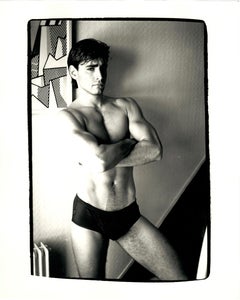
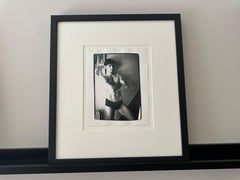
Male Model Torso
Male Model Torso

Male Model Torso

By Andy Warhol

Located in Beverly Hills, CA

From The Jon Gould Collection of Andy Warhol Photographs Photograph of an unknown male model, possibly in Paris, 1980 This work is not signed by the artist, however, each photo is...

Category

Pop Art 1980s Art

Materials

Silver Gelatin

Modern Mixed Media Textured Kimono in Neutral Blush, Collagraph Master Plate #2

Modern Mixed Media Textured Kimono in Neutral Blush, Collagraph Master Plate #2

By Patricia A. Pearce

Located in Soquel, CA

Modern Mixed Media Textured Kimono in Neutral Blush, Collagraph Master Plate #2 This one-of-a-kind, highly textured, modern mixed media piece of a kimono in blush, warm neutrals is ...

Category

Contemporary 1980s Art

Materials

Gesso, Cotton, Masonite, Ink, Acrylic

Quebec Landscape
Quebec Landscape

Quebec Landscape

By Armand Tatossian

Located in Westmount, QC

Armand Tatossian, Canadian, 1948-2012 Untitled (Fall Forest Landscape) Oil on canvas 24 x 20 in (size unframed) Signed on the lower left

Category

1980s Art

Materials

Oil

Statue of Liberty, Huge Original Acrylic Painting, Pop Art, Framed, 1989, Signed

Statue of Liberty, Huge Original Acrylic Painting, Pop Art, Framed, 1989, Signed

By Peter Max

Located in Aventura, FL

Original acrylic painting on canvas. Hand-signed in acrylic on front by Peter Max. Canvas size 71.75 x 35.75 inches. Custom framed with hand painted filet. Frame size approx 86 x 50 inches. Max studio catalog number and year on verso. Artwork is in excellent condition. All reasonable offers will be considered. About the Artist: Peter Max (American, born 1937) is a German artist known for his unique brand of rainbow-hued prints and paintings, which he has created since the early 1960s. Employing painterly strokes, his illustrations incorporate a wide spectrum of colors and patterns as seen in his Umbrella Man series. “I'm just wowed by the universe. I'm just glad to do something I love to do. I love color, I love painting, I love shapes...

Category

Pop Art 1980s Art

Materials

Acrylic, Canvas

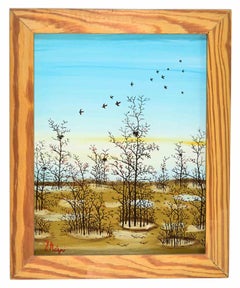
Main Coastal Landscape

Main Coastal Landscape

Located in Douglas Manor, NY

6165 Maine costal landscape Set in a brack frame with gold trime Image size 13.5x10.5" Signed on verso

Category

1980s Art

Materials

Acrylic

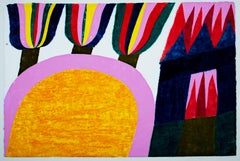
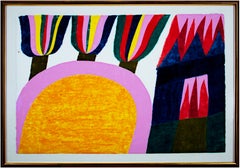
"Ravanna's Palace Burning, " Woodcut Landscape signed by Carol Summers

"Ravanna's Palace Burning, " Woodcut Landscape signed by Carol Summers

By Carol Summers

Located in Milwaukee, WI

"Ravanna's Palace Burning" is a woodcut signed by Carol Summers. The image combines landscape and architecture, which is typical of the works Summers produced during the 1980s and '90s. In the image, a dark building stands burning, bright red flames licking from the windows and rooftop. It stands beside an orange field framed in pink, probably representing a plaza. Beyond the plaza are multicolored trees, their branches reaching upward like the flames on the building. The playfulness of the image is enhanced by Summers' signature printmaking technique, which allows the ink from the woodblock to seep through the paper, blurring the edges of each form. Art: 24.5 x 37.25 in Frame: 30 x 42.75 in Numbered 53 of the edition of 125 Carol Summers (1925-2016) has worked as an artist throughout the second half of the 20th century and into the first years of the next, outliving most of his mid-century modernist peers. Initially trained as a painter, Summers was drawn to color woodcuts around 1950 and it became his specialty thereafter. Over the years he has developed a process and style that is both innovative and readily recognizable. His art is known for it’s large scale, saturated fields of bold color, semi-abstract treatment of landscapes from around the world and a luminescent quality achieved through a printmaking process he invented. In a career that has extended over half a century, Summers has hand-pulled approximately 245 woodcuts in editions that have typically run from 25 to 100 in number. His talent was both inherited and learned. Born in 1925 in Kingston, a small town in upstate New York, Summers was raised in nearby Woodstock with his older sister, Mary. His parents were both artists who had met in art school in St. Louis. During the Great Depression, when Carol was growing up, his father supported the family as a medical illustrator until he could return to painting. His mother was a watercolorist and also quite knowledgeable about the different kinds of papers used for various kinds of painting. Many years later, Summers would paint or print on thinly textured paper originally collected by his mother. From 1948 to 1951, Carol Summers trained in the classical fine and studio arts at Bard College and at the Art Students League of New York. He studied painting with Steven Hirsh and printmaking with Louis Schanker. He admired the shapes and colors favored by early modernists Paul Klee (Sw: 1879-1940) and Matt Phillips (Am: b.1927- ). After graduating, Summers quit working as a part-time carpenter and cabinetmaker (which had supported his schooling and living expenses) to focus fulltime on art. That same year, an early abstract, Bridge No. 1 was selected for a Purchase Prize in a competition sponsored by the Brooklyn Museum. In 1952, his work (Cathedral, Construction and Icarus) was shown the first time at the Museum of Modern Art in New York City in an exhibition of American woodcuts. In 1954, Summers received a grant from the Italian government to study for a year in Italy. Woodcuts completed soon after his arrival there were almost all editions of only 8 to 25 prints, small in size, architectural in content and black and white in color. The most well-known are Siennese Landscape and Little Landscape, which depicted the area near where he resided. Summers extended this trip three more years, a decision which would have significant impact on choices of subject matter and color in the coming decade. After returning from Europe, Summers’ images continued to feature historical landmarks and events from Italy as well as from France, Spain and Greece. However, as evidenced in Aetna’s Dream, Worldwind and Arch of Triumph, a new look prevailed. These woodcuts were larger in size and in color. Some incorporated metal leaf in the creation of a collage and Summers even experimented with silkscreening. Editions were now between 20 and 50 prints in number. Most importantly, Summers employed his rubbing technique for the first time in the creation of Fantastic Garden in late 1957. Dark Vision of Xerxes, a benchmark for Summers, was the first woodcut where Summers experimented using mineral spirits as part of his printmaking process. A Fulbright Grant as well as Fellowships from the Louis Comfort Tiffany Foundation and the Guggenheim Foundation followed soon thereafter, as did faculty positions at colleges and universities primarily in New York and Pennsylvania. During this period he married a dancer named Elaine Smithers with whom he had one son, Kyle. Around this same time, along with fellow artist Leonard Baskin, Summers pioneered what is now referred to as the “monumental” woodcut. This term was coined in the early 1960s to denote woodcuts that were dramatically bigger than those previously created in earlier years, ones that were limited in size mostly by the size of small hand-presses. While Baskin chose figurative subject matter, serious in nature and rendered with thick, striated lines, Summers rendered much less somber images preferring to emphasize shape and color; his subject matter approached abstraction but was always firmly rooted in the landscape. In addition to working in this new, larger scale, Summers simultaneously refined a printmaking process which would eventually be called the “Carol Summers Method” or the “ Carol Summers Technique”. Summers produces his woodcuts by hand, usually from one or more blocks of quarter-inch pine, using oil-based printing inks and porous mulberry papers. His woodcuts reveal a sensitivity to wood especially its absorptive qualities and the subtleties of the grain. In several of his woodcuts throughout his career he has used the undulating, grainy patterns of a large wood plank to portray a flowing river or tumbling waterfall. The best examples of this are Dream, done in 1965 and the later Flash Flood Escalante, in 2003. In the majority of his woodcuts, Summers makes the blocks slightly larger than the paper so the image and color will bleed off the edge. Before printing, he centers a dry sheet of paper over the top of the cut wood block or blocks, securing it with giant clips. Then he rolls the ink directly on the front of the sheet of paper and pressing down onto the dry wood block or reassembled group of blocks. Summers is technically very proficient; the inks are thoroughly saturated onto the surface of the paper but they do not run into each other. The precision of the color inking in Constantine’s Dream in 1969 and Rainbow Glacier in 1970 has been referred to in various studio handbooks. Summers refers to his own printing technique as “rubbing”. In traditional woodcut printing, including the Japanese method, the ink is applied directly onto the block. However, by following his own method, Summers has avoided the mirror-reversed image of a conventional print and it has given him the control over the precise amount of ink that he wants on the paper. After the ink is applied to the front of the paper, Summers sprays it with mineral spirits, which act as a thinning agent. The absorptive fibers of the paper draw the thinned ink away from the surface softening the shapes and diffusing and muting the colors. This produces a unique glow that is a hallmark of the Summers printmaking technique. Unlike the works of other color field artists or modernists of the time, this new technique made Summers’ extreme simplification and flat color areas anything but hard-edged or coldly impersonal. By the 1960s, Summers had developed a personal way of coloring and printing and was not afraid of hard work, doing the cutting, inking and pulling himself. In 1964, at the age of 38, Summers’ work was exhibited for a second time at the Museum of Modern Art. This time his work was featured in a one-man show and then as one of MOMA’s two-year traveling exhibitions which toured throughout the United States. In subsequent years, Summers’ works would be exhibited and acquired for the permanent collections of multiple museums throughout the United States, Europe and Asia. Summers’ familiarity with landscapes throughout the world is firsthand. As a navigator-bombardier in the Marines in World War II, he toured the South Pacific and Asia. Following college, travel in Europe and subsequent teaching positions, in 1972, after 47 years on the East Coast, Carol Summers moved permanently to Bonny Doon in the Santa Cruz Mountains in Northern California. There met his second wife, Joan Ward Toth, a textile artist who died in 1998; and it was here his second son, Ethan was born. During the years that followed this relocation, Summers’ choice of subject matter became more diverse although it retained the positive, mostly life-affirming quality that had existed from the beginning. Images now included moons, comets, both sunny and starry skies, hearts and flowers, all of which, in one way or another, remained tied to the landscape. In the 1980s, from his home and studio in the Santa Cruz mountains, Summers continued to work as an artist supplementing his income by conducting classes and workshops at universities in California and Oregon as well as throughout the Mid and Southwest. He also traveled extensively during this period hiking and camping, often for weeks at a time, throughout the western United States and Canada. Throughout the decade it was not unusual for Summers to backpack alone or with a fellow artist into mountains or back country for six weeks or more at a time. Not surprisingly, the artwork created during this period rarely departed from images of the land, sea and sky. Summers rendered these landscapes in a more representational style than before, however he always kept them somewhat abstract by mixing geometric shapes with organic shapes, irregular in outline. Some of his most critically acknowledged work was created during this period including First Rain, 1985 and The Rolling Sea, 1989. Summers received an honorary doctorate from his alma mater, Bard College in 1979 and was selected by the United States Information Agency to spend a year conducting painting and printmaking workshops at universities throughout India. Since that original sabbatical, he has returned every year, spending four to eight weeks traveling throughout that country. In the 1990s, interspersed with these journeys to India have been additional treks to the back roads and high country areas of Mexico, Central America, Nepal, China and Japan. Travel to these exotic and faraway places had a profound influence on Summers’ art. Subject matter became more worldly and nonwestern as with From Humla to Dolpo, 1991 or A Former Life of Budha, 1996, for example. Architectural images, such as The Pillars of Hercules, 1990 or The Raja’s Aviary, 1992 became more common. Still life images made a reappearance with Jungle Bouquet in 1997. This was also a period when Summers began using odd-sized paper to further the impact of an image. The 1996 Night, a view of the earth and horizon as it might be seen by an astronaut, is over six feet long and only slightly more than a foot-and-a-half high. From 1999, Revuelta A Vida (Spanish for “Return to Life”) is pie-shaped and covers nearly 18 cubic feet. It was also at this juncture that Summers began to experiment with a somewhat different palette although he retained his love of saturated colors. The 2003 Far Side of Time is a superb example of the new direction taken by this colorist. At the turn of the millennium in 1999, “Carol Summers Woodcuts...

Category

Contemporary 1980s Art

Materials

Woodcut

Sleeping Man (portrait)

Sleeping Man (portrait)

Located in Wilton Manors, FL

Douglas Martenson (b.1960). Sleeping Man, 1982. Pencil on paper. Sheet measuring 11 x 15 inches. Framed measurement: 12 x 16 inches. Mahogany custom frame. Signed with artist i...

Category

Realist 1980s Art

Materials

Paper, Pencil

Andy Warhol record cover art 1986 (Warhol album art)

Andy Warhol record cover art 1986 (Warhol album art)

By Andy Warhol

Located in NEW YORK, NY

Andy Warhol John Lennon Record Cover Art: Offset illustrated by Andy Warhol shortly before his death in 1986 for the estate of John Lennon. Literature/references: Andy Warhol: The Co...

Category

Pop Art 1980s Art

Materials

Lithograph, Offset

My hotel room, Valencia, Spain

My hotel room, Valencia, Spain

By Nan Goldin

Located in Toronto, Ontario

Nan Goldin (b. 1953) is unquestionably one of the most influential photographers of the 20th century. A successor to Diane Arbus and William Egglestone, her aesthetic and creative ap...

Category

Contemporary 1980s Art
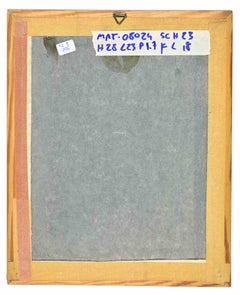
Daydreaming, Psychedelic Art Lithograph by Peter Max

Daydreaming, Psychedelic Art Lithograph by Peter Max

By Peter Max

Located in Long Island City, NY

Peter Max, German/American (1937 - ) - Daydreaming, Year: 1980, Medium: Lithograph, signed and dedicated in marker, Image Size: 18 x 23.5 inches, Size: 21.5 x 27 in. (54.61 x 6...

Category

Pop Art 1980s Art

Materials

Lithograph

Keith Haring Museumjournaal 1982 (announcement)

Keith Haring Museumjournaal 1982 (announcement)

By Keith Haring

Located in NEW YORK, NY

Keith Haring 1982: A rare printed announcement card offset illustrated by Keith Haring to promote the Dutch art publication, Museumjournaal. Medium: offset printed announcement card...

Category

Pop Art 1980s Art

Materials

Lithograph, Offset