1990s Art

to
1,863
4,327
3,056
2,874
1,824
2,011
Overall Width
to
Overall Height
to
7,517
21,459
165,341
237,276
2,107
2,325
4,674
6,515
5,936
15,484
20,972
26,365
19,208
14,182
5,352
5,025
1,801
1,792
1,073
496
300
196
147
89
72
66
20
19
4
7,254
5,232
1,004
5,230
2,701
1,823
1,699
1,314
1,250
959
893
737
725
724
638
604
574
392
347
320
311
309
308
4,460
3,634
2,017
1,655
1,535
499
220
176
112
102
2,570
3,962
9,417
4,476
Period: 1990s
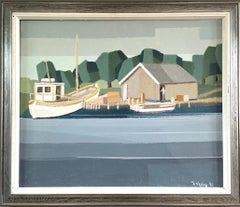
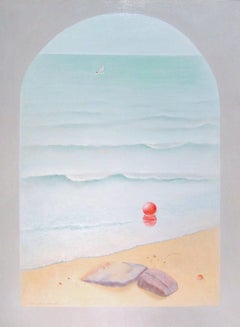
1991 Modernist Vintage Swedish Original Landscape Oil Painting - The Boathouse

1991 Modernist Vintage Swedish Original Landscape Oil Painting - The Boathouse

Located in Bristol, GB

THE BOATHOUSE Size: 65 x 77 cm (including frame) Oil on canvas A large and serene modernist painting that captures a quiet waterfront scene with minimalistic charm, executed in oil ...

Category

Modern 1990s Art

Materials

Oil, Canvas

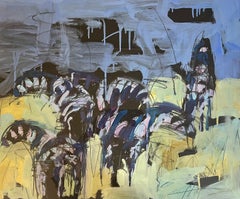
Necco Zebra Dr. #18

Necco Zebra Dr. #18

By Theodore Waddell

Located in Bozeman, MT

Waddell's paintings are a combination of rough marks, thick paint, transparent elegant strokes, and, on a few occasions a slow, hard line scratched into the canvas. You can feel the ...

Category

Contemporary 1990s Art

Materials

Canvas, Encaustic, Oil

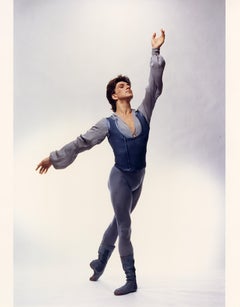
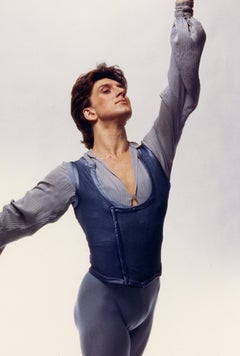
Argentine ballet dancer Julio Bocca

Argentine ballet dancer Julio Bocca

By Jack Mitchell

Located in Senoia, GA

11 x 14" Chromogenic silver halide color print (Kodak Professional Paper) Argentine ballet dancer Julio Bocca photographed in 1991. Comes directly from the Jack Mitchell Archives wit...

Category

Modern 1990s Art

Materials

Color

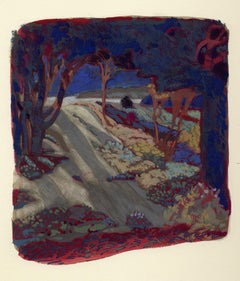
NIGHT GROVE, SPRING GREEN

NIGHT GROVE, SPRING GREEN

Located in New York, NY

oil painting on gessoed paper. trees, nature, green, landscape

Category

Contemporary 1990s Art

Materials

Gesso, Oil, Archival Paper

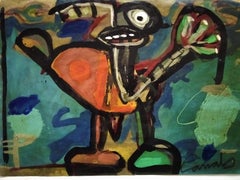
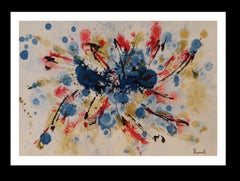
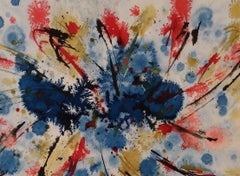
Untitled
Untitled

Untitled

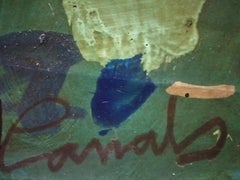
By Juan Canals

Located in Barcelona, CT

The painting is being offered with a work and authenticity certificate

Category

Conceptual 1990s Art

Materials

Mixed Media

Narcissus, paper, watercolor, 48x47 cm

Narcissus, paper, watercolor, 48x47 cm

By Dzidra Bauma

Located in Riga, LV

Dzidra Bauma (1930) Dzidra Bauma works in watercolor technique. She paint figural compositions, portraits, landscapes, flowers and still life. She is one of the most productive wate...

Category

Realist 1990s Art

Materials

Paper, Pastel, Watercolor

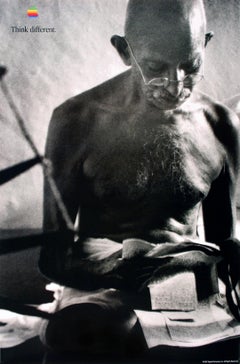
Think Different Poster Apple Computer Original 1998 - Pablo Picasso

Think Different Poster Apple Computer Original 1998 - Pablo Picasso

Located in Boca Raton, FL

Steve Jobs had just returned to the struggling company, Apple Computer in 1997. Jobs and Lee Clow had collaborated back in 1984 to launch the MacIntosh. Now was the time to recover t...

Category

1990s Art

Materials

Lithograph

Self-Posession
Self-Posession

Self-Posession

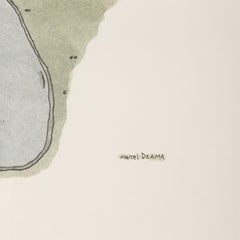
By Marcel Dzama

Located in Toronto, Ontario

With his unmistakable version of contemporary Surrealism, as comical as it is otherworldly, Marcel Dzama is one of Canada's most internationally successful artists. Born in Winnipeg...

Category

Surrealist 1990s Art

Materials

Watercolor

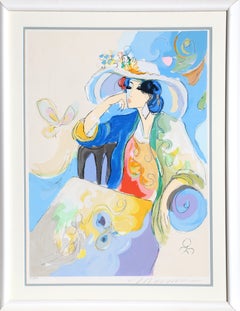
Marie, Contemporary Screenprint by Isaac Maimon

Marie, Contemporary Screenprint by Isaac Maimon

By Isaac Maimon

Located in Long Island City, NY

Marie by Isaac Maimon, Israeli/French (1951) Date: circa 1994 Screenprint, signed and numbered in pencil Edition of 201/ 275 Image Size: 28 x 20.5 inches Size: 31.5 in. x 23.5 in. (8...

Category

Contemporary 1990s Art

Materials

Screen

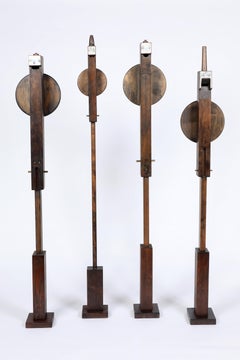
Four Wooden Sculptures 1990 German Artist Rolf Hans "Four Abstract Birds"

Four Wooden Sculptures 1990 German Artist Rolf Hans "Four Abstract Birds"

By Rolf Hans

Located in Eltville am Rhein, DE

Rolf Hans Frankfurt 1938 - 1996 Basel Set of 4 bird sculptures, 1990 Wood, paint Each signed on the underside 131/121 x 20 x 11.5cm The sculpture comes with a catalog about the artist. Provenance: Estate of the artist Authenticity confirmed in writing At the beginning of the 1970s, Rolf Hans began designing objects for the first time. These were small sculptures that he assembled from iron pipes with round or square profiles. With these, he sought to create a new, three-dimensional reality of experience, parallel to his paintings, which he was creating at the same time. In 1987, Hans returned to the medium of sculpture. He no longer regarded the working process as conscious construction, but rather as allowing himself to be guided by what was already there. And as with his paintings, his objects now arose from an inner necessity, not to fill an intellectual vacuum. "This compulsion has had a hold on me for decades, and for a few years now I have been trying to appease it with the cycle 'Poesie der Dinge' (Poetry of Things). The intellectual climate was ripe." So Hans concentrated on working on the sculpture cycle in the last decade of his life. And as if in a frenzy, he drew on the new possibilities offered to him by the design of the objects: "The poetry of things grows, it swallows up all my time, many things are neglected, hardly any letters, the diary is largely silent, concert visits are limited to the essentials. A compulsion arises, and yet it began as a game, but experiments were always a serious matter that demanded the whole man. [...] The objects have crept into my rational mind, cautiously and unnoticed, claiming their place, taking it, becoming part of myself." "It's a difficult thing with art. Looking at your predecessors, you try to find your way, the spirit of the times and its aesthetics influence the direction, you know about the dissatisfaction in which you move. Now, in the midst of the 'poetry of things', there is a feeling of freedom, yet closely connected to much that came before. There is no program, only a title that allows each work its freedom." But despite the role models before his eyes, Hans succeeds from the outset in finding his own unique ways of expression with his object cycle. What connects him to Max Ernst, Brancusi, and Duchamp is solely the source material: found objects. These are very mundane things from everyday life—once necessary, useful, and practical items such as tools, utensils, and devices—that have been stripped of their function and now serve as a gateway to the artist's imagination. In this way, Hans strips things of their previous, traditional function or archaic purpose and transports them into a different, new reality in order to breathe new life into them. In doing so, he does not want to deny the found form without aestheticizing it. By making only minor changes to their 'innate' structure, signs of wear, and color, he seeks to emphasize their meaning and purpose as form and to redefine their inherent charisma. The objects are worked on, forced to reveal their unique characteristics in their struggle with the artist and to make new statements in connection with other objects. In this way, Hans presents the abstract symmetries of the wood and metal objects without any artificiality and places them on a pedestal in accordance with artistic tradition. Furthermore, he integrates the pedestal into the work. As the lowest component, the pedestal not only prepares the viewer for the sculpture, but also loosens, loosens, or strengthens its connection to the earth. By raising them up, he gives the sculptures a further life of their own, a second existence, so to speak, and also gives them a new identity with a new name. "They show their personality, some more, some less, as is the case in life, or in art." What they all have in common is their influence from the past into the here and now. In doing so, they reveal their original beauty and the mysticism that fires our imagination. However ambivalent the sculptures and objects by Rolf Hans may appear to us, they never do so in a loud or exalted manner. With their balanced and simple appearance, they quietly and calmly, but decisively, enter into contact with us. In an unsettling way, they repeatedly prompt us to ask questions: Who am I? Where do I come from? Where am I going? They offer us no clues that might help us answer these questions. Instead, they give us all the more scope for associations and imagination. They appeal to our subconscious. They invite us to linger and meditate: it is the familiar beginning and the unconscious departure into the mysteries of creation. Exhibitions (selection) 2023 Kunsthandel Draheim, position berlin art fair 2023 Galerie Jörg Schuhmacher, Frankfurt am Main "Rolf Hans-Farbenspiel" 2022 Galerie Michael Blaszczyk, Bad Homburg, Rolf Hans, "Einblicke Hommage & Reflexion" 2021 Jörg Schumacher Gallery, Frankfurt am Main "Rolf Hans-Farbwelten" 2021 Michael Blaszczyk Gallery, Bad Homburg "Sprache der Farben-Das Baseler Kabinett" 2020 Malte Ueckermann Art Dealers, Berlin, Kanalidarte, Brescia "Che cosa avrebbe detto Hegel_ROLF HANS... e la Poesia della cose," Italy Kunsthandel Draheim "art Karlsruhe," "Poesie der Dinge" 2019 Jörg Schuhmacher Gallery, Frankfurt am Main, Blaszczyk Gallery, Bad Homberg 2018 Art Karlsruhe, Kunsthandel Draheim, Wiesbaden, Color Fields 2018 Galerie Dekker, Baden-Baden, Retrospective Galerie Blaszczyk, Bad Homburg 2017 Gallery Eklektik, Monte Carlo, Monaco 2016 Galerie Schuhmacher, Frankfurt am Main 2016 Galerie Cerny & Partner, Wiesbaden (Language of Colors) Art Karlsruhe, Kunsthandel Draheim, Wiesbaden (Tachist Painting + Iron Sculptures) Galerie Rainer Klimczak, Viersen Galerie Schuhmacher, Frankfurt am Main (Black on White) 2015 Galerie Blaszczyk, Bad Homburg art Karlsruhe, one Artist show (Galerie Cerny und Partner) Gallery Eklektik, Monte Carlo, Monaco 2014 Jörg Schuhmacher Gallery, Frankfurt am Main (A Retrospective-1) Tristan Lorenz Gallery, Frankfurt am Main (A Retrospective-2) Hellhof Gallery, Kronberg im Taunus (Works from 1960–1980) Art Fair, Cologne, Monochrome Painting (Draheim Gallery & Art Dealers, Wiesbaden) 2013 Kunsthandel Thole Rotermund, Hamburg (In the Force Field of Color) + catalog Galerie & Kunsthandel Draheim, Wiesbaden (Painting & Sculpture 1970–1990) 2012 art KARLSRUHE, one Artist show (Galerie & Art Dealers Draheim, Wiesbaden) 2011 Gallery & Art Dealers Draheim, Wiesbaden (In the Rush of Colors – Works from the 1960s) 2009 Ketterer Kunst, Berlin (Rolf Hans – Painting and Sculpture) Art Dealers Michael Draheim, Wiesbaden (Rolf Hans – Poetry of Things) 2008 Galerie Art Mayence, Mainz (Rolf Hans – Language of Colors) Galerie Jörg Schuhmacher, Frankfurt am Main (Rolf Hans) Galerie Winterberg, Munich (Rolf Hans – The Language of Colors) Galerie Jörg Schuhmacher, Frankfurt am Main, Art Karlsruhe (Rolf Hans – One Artist Show) 2007 Galerie Jörg Schuhmacher, Frankfurt am Main ("Rolf Hans in the Field of Tension of the 'Quadriga'") 2001 Kunstraum Aare, Olten ("Rolf Hans – Paintings, Sculptures, Photographs") 1999 'Kunst im Liebrüti', Kaiseraugst ("Martin Frigg and Rolf Hans") 1992 Kommunale Galerie, Schlangenbad ("Gabriele Schmolk-Hieber, Paintings – Rolf Hans, Objects") 1991 Museum Schloß Salder, Salzgitter ("Poetry of Things") 1990 Galerie Brechbühl, Grenchen ("Poetry of Things") 1985 1985 Toni Brechbühl Gallery, Grenchen ("Two Friends, Ho-Kan, Milan – Rolf Hans, Basel") Toni Brechbühl Gallery, Grenchen ("Rolf Hans – Oil...

Category

Abstract 1990s Art

Materials

Wood

A Song. Wood Sculpture

A Song. Wood Sculpture

By Saint Clair Cemin

Located in Miami Beach, FL

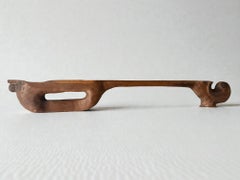
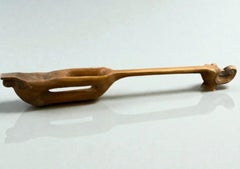
The sculpture has a long, horizontal shape that defies easy categorization, appearing simultaneously as an abstract, fluid form and a recognizable, albeit unconventional, object. The...

Category

Contemporary 1990s Art

Materials

Wood

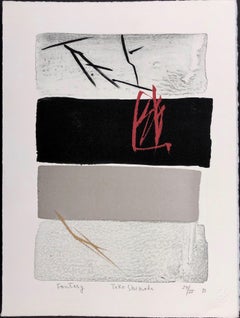
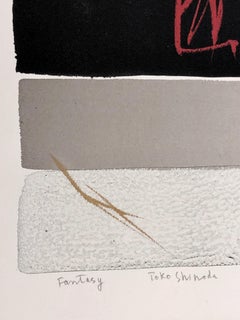
Fantasy, Japanese, limited edition lithograph, black, white, red, signed, titled

Fantasy, Japanese, limited edition lithograph, black, white, red, signed, titled

By Toko Shinoda

Located in Santa Fe, NM

Fantasy, Japanese, limited edition lithograph, black, white, red, signed, titled Shinoda's works have been collected by public galleries and museums, including the Museum of Modern Art, Solomon R. Guggenheim Museum, Brooklyn Museum and Metropolitan Museum (all in New York City), the National Museum of Modern Art in Tokyo, the British Museum in London, the Art Institute of Chicago, Arthur M. Sackler Gallery of the Smithsonian in Washington, D.C., the Singapore Art Museum, the National Museum of Singapore, the Kröller-Müller Museum in Otterlo, Netherlands, the Albright–Knox Art Gallery in Buffalo, New York, the Cincinnati Art Museum, and the Yale University Art Gallery in New Haven, Connecticut. New York Times Obituary, March 3, 2021 by Margalit Fox, Alex Traub contributed reporting. Toko Shinoda, one of the foremost Japanese artists of the 20th century, whose work married the ancient serenity of calligraphy with the modernist urgency of Abstract Expressionism, died on Monday at a hospital in Tokyo. She was 107. Her death was announced by her gallerist in the United States. A painter and printmaker, Ms. Shinoda attained international renown at midcentury and remained sought after by major museums and galleries worldwide for more than five decades. Her work has been exhibited at, among other places, the Metropolitan Museum of Art and the Museum of Modern Art in New York; the Art Institute of Chicago; the British Museum; and the National Museum of Modern Art in Tokyo. Private collectors include the Japanese imperial family. Writing about a 1998 exhibition of Ms. Shinoda’s work at a London gallery, the British newspaper The Independent called it “elegant, minimal and very, very composed,” adding, “Her roots as a calligrapher are clear, as are her connections with American art of the 1950s, but she is quite obviously a major artist in her own right.” As a painter, Ms. Shinoda worked primarily in sumi ink, a solid form of ink, made from soot pressed into sticks, that has been used in Asia for centuries. Rubbed on a wet stone to release their pigment, the sticks yield a subtle ink that, because it is quickly imbibed by paper, is strikingly ephemeral. The sumi artist must make each brush stroke with all due deliberation, as the nature of the medium precludes the possibility of reworking even a single line. “The color of the ink which is produced by this method is a very delicate one,” Ms. Shinoda told The Business Times of Singapore in 2014. “It is thus necessary to finish one’s work very quickly. So the composition must be determined in my mind before I pick up the brush. Then, as they say, the painting just falls off the brush.” Ms. Shinoda painted almost entirely in gradations of black, with occasional sepias and filmy blues. The ink sticks she used had been made for the great sumi artists of the past, some as long as 500 years ago. Her line — fluid, elegant, impeccably placed — owed much to calligraphy. She had been rigorously trained in that discipline from the time she was a child, but she had begun to push against its confines when she was still very young. Deeply influenced by American Abstract Expressionists like Jackson Pollock, Mark Rothko and Robert Motherwell, whose work she encountered when she lived in New York in the late 1950s, Ms. Shinoda shunned representation. “If I have a definite idea, why paint it?,” she asked in an interview with United Press International in 1980. “It’s already understood and accepted. A stand of bamboo is more beautiful than a painting could be. Mount Fuji is more striking than any possible imitation.” Spare and quietly powerful, making abundant use of white space, Ms. Shinoda’s paintings are done on traditional Chinese and Japanese papers, or on backgrounds of gold, silver or platinum leaf. Often asymmetrical, they can overlay a stark geometric shape with the barest calligraphic strokes. The combined effect appears to catch and hold something evanescent — “as elusive as the memory of a pleasant scent or the movement of wind,” as she said in a 1996 interview. Ms. Shinoda’s work also included lithographs; three-dimensional pieces of wood and other materials; and murals in public spaces, including a series made for the Zojoji Temple in Tokyo. The fifth of seven children of a prosperous family, Ms. Shinoda was born on March 28, 1913, in Dalian, in Manchuria, where her father, Raijiro, managed a tobacco plant. Her mother, Joko, was a homemaker. The family returned to Japan when she was a baby, settling in Gifu, midway between Kyoto and Tokyo. One of her father’s uncles, a sculptor and calligrapher, had been an official seal carver to the Meiji emperor. He conveyed his love of art and poetry to Toko’s father, who in turn passed it to Toko. “My upbringing was a very traditional one, with relatives living with my parents,” she said in the U.P.I. interview. “In a scholarly atmosphere, I grew up knowing I wanted to make these things, to be an artist.” She began studying calligraphy at 6, learning, hour by hour, impeccable mastery over line. But by the time she was a teenager, she had begun to seek an artistic outlet that she felt calligraphy, with its centuries-old conventions, could not afford. “I got tired of it and decided to try my own style,” Ms. Shinoda told Time magazine in 1983. “My father always scolded me for being naughty and departing from the traditional way, but I had to do it.” Moving to Tokyo as a young adult, Ms. Shinoda became celebrated throughout Japan as one of the country’s finest living calligraphers, at the time a signal honor for a woman. She had her first solo show in 1940, at a Tokyo gallery. During World War II, when she forsook the city for the countryside near Mount Fuji, she earned her living as a calligrapher, but by the mid-1940s she had started experimenting with abstraction. In 1954 she began to achieve renown outside Japan with her inclusion in an exhibition of Japanese calligraphy at MoMA. In 1956, she traveled to New York. At the time, unmarried Japanese women could obtain only three-month visas for travel abroad, but through zealous renewals, Ms. Shinoda managed to remain for two years. She met many of the titans of Abstract Expressionism there, and she became captivated by their work. “When I was in New York in the ’50s, I was often included in activities with those artists, people like Mark Rothko, Jackson Pollock, Motherwell and so forth,” she said in a 1998 interview with The Business Times. “They were very generous people, and I was often invited to visit their studios, where we would share ideas and opinions on our work. It was a great experience being together with people who shared common feelings.” During this period, Ms. Shinoda’s work was sold in the United States by Betty Parsons, the New York dealer who represented Pollock, Rothko and many of their contemporaries. Returning to Japan, Ms. Shinoda began to fuse calligraphy and the Expressionist aesthetic in earnest. The result was, in the words of The Plain Dealer of Cleveland in 1997, “an art of elegant simplicity and high drama.” Among Ms. Shinoda’s many honors, she was depicted, in 2016, on a Japanese postage stamp. She is the only Japanese artist to be so honored during her lifetime. No immediate family members survive. When she was quite young and determined to pursue a life making art, Ms. Shinoda made the decision to forgo the path that seemed foreordained for women of her generation. “I never married and have no children,” she told The Japan Times in 2017. “And I suppose that it sounds strange to think that my paintings are in place of them — of course they are not the same thing at all. But I do say, when paintings that I have made years ago are brought back into my consciousness, it seems like an old friend, or even a part of me, has come back to see me.” Works of a Woman's Hand Toko Shinoda bases new abstractions on ancient calligraphy Down a winding side street in the Aoyama district, western Tokyo. into a chunky white apartment building, then up in an elevator small enough to make a handful of Western passengers friends or enemies for life. At the end of a hall on the fourth floor, to the right, stands a plain brown door. To be admitted is to go through the looking glass. Sayonara today. Hello (Konichiwa) yesterday and tomorrow. Toko Shinoda, 70, lives and works here. She can be, when she chooses, on e of Japans foremost calligraphers, master of an intricate manner of writing that traces its lines back some 3,000 years to ancient China. She is also an avant-garde artist of international renown, whose abstract paintings and lithographs rest in museums around the world. These diverse talents do not seem to belong in the same epoch. Yet they have somehow converged in this diminutive woman who appears in her tiny foyer, offering slippers and ritual bows of greeting. She looks like someone too proper to chip a teacup, never mind revolutionize an old and hallowed art form She wears a blue and white kimono of her own design. Its patterns, she explains, are from Edo, meaning the period of the Tokugawa shoguns, before her city was renamed Tokyo in 1868. Her black hair is pulled back from her face, which is virtually free of lines and wrinkles. except for the gold-rimmed spectacles perched low on her nose (this visionary is apparently nearsighted). Shinoda could have stepped directly from a 19th century Meji print. Her surroundings convey a similar sense of old aesthetics, a retreat in the midst of a modern, frenetic city. The noise of the heavy traffic on a nearby elevated highway sounds at this height like distant surf. delicate bamboo shades filter the daylight. The color arrangement is restful: low ceilings of exposed wood, off-white walls, pastel rugs of blue, green and gray. It all feels so quintessentially Japanese that Shinoda’s opening remarks come as a surprise. She points out (through a translator) that she was not born in Japan at all but in Darien, Manchuria. Her father had been posted there to manage a tobacco company under the aegis of the occupying Japanese forces, which seized the region from Russia in 1905. She says,”People born in foreign places are very free in their thinking, not restricted” But since her family went back to Japan in 1915, when she was two, she could hardly remember much about a liberated childhood? She answers,”I think that if my mother had remained in Japan, she would have been an ordinary Japanese housewife. Going to Manchuria, she was able to assert her own personality, and that left its mark on me.” Evidently so. She wears her obi low on the hips, masculine style. The Porcelain aloofness she displays in photographs shatters in person. Her speech is forceful, her expression animated and her laugh both throaty and infectious. The hand she brings to her mouth to cover her amusement (a traditional female gesture of modesty) does not stand a chance. Her father also made a strong impression on the fifth of his seven children:”He came from a very old family, and he was quite strict in some ways and quite liberal in others.” He owned one of the first three bicycles ever imported to Japan and tinkered with it constantly He also decided that his little daughter would undergo rigorous training in a procrustean antiquity. “I was forced to study from age six on to learn calligraphy,” Shinoda says, The young girl dutifully memorized and copied the accepted models. In one sense, her father had pushed her in a promising direction, one of the few professional fields in Japan open to females. Included among the ancient terms that had evolved around calligraphy was onnade, or woman's writing. Heresy lay ahead. By the time she was 15, she had already been through nine years of intensive discipline, “I got tired of it and decided to try my own style. My father always scolded me for being naughty and departing from the traditional way, but I had to do it.” She produces a brush and a piece of paper to demonstrate the nature of her rebellion. “This is kawa, the accepted calligraphic character for river,” she says, deftly sketching three short vertical strokes. “But I wanted to use more than three lines to show the force of the river.” Her brush flows across the white page, leaving a recognizable river behind, also flowing.” The simple kawa in the traditional language was not enough for me. I wanted to find a new symbol to express the word river.” Her conviction grew that ink could convey the ineffable, the feeling, "as she says, of wind blowing softly.” Another demonstration. She goes to the sliding wooden door of an anteroom and disappears in back of it; the only trace of her is a triangular swatch of the right sleeve of her kimono, which she has arranged for that purpose. A realization dawns. The task of this artist is to paint that three sided pattern so that the invisible woman attached to it will be manifest to all viewers. Gen, painted especially for TIME, shows Shinoda’s theory in practice. She calls the work “my conception of Japan in visual terms.” A dark swath at the left, punctuated by red, stands for history. In the center sits a Chinese character gen, which means in the present or actuality. A blank pattern at the right suggests an unknown future. Once out of school, Shinoda struck off on a path significantly at odds with her culture. She recognized marriage for what it could mean to her career (“a restriction”) and decided against it. There was a living to be earned by doing traditional calligraphy:she used her free time to paint her variations. In 1940 a Tokyo gallery exhibited her work. (Fourteen years would pass before she got a second show.)War came, and bad times for nearly everyone, including the aspiring artist , who retreated to a rural area near Mount Fuji and traded her kimonos for eggs. In 1954 Shinoda’s work was included in a group exhibit at New York City’s Museum of Modern Art. Two years later, she overcame bureaucratic obstacles to visit the U.S.. Unmarried Japanese women are allowed visas for only three months, patiently applying for two-month extensions, one at a time, Shinoda managed to travel the country for two years. She pulls out a scrapbook from this period. Leafing through it, she suddenly raises a hand and touches her cheek:”How young I looked!” An inspection is called for. The woman in the grainy, yellowing newspaper photograph could easily be the on e sitting in this room. Told this, she nods and smiles. No translation necessary. Her sojourn in the U.S. proved to be crucial in the recognition and development of Shinoda’s art. Celebrities such as actor Charles Laughton and John Lewis of the Modern Jazz Quartet bought her paintings and spread the good word. She also saw the works of the abstract expressionists, then the rage of the New York City art world, and realized that these Western artists, coming out of an utterly different tradition, were struggling toward the same goal that had obsessed her. Once she was back home, her work slowly made her famous. Although Shinoda has used many materials (fabric, stainless steel, ceramics, cement), brush and ink remain her principal means of expression. She had said, “As long as I am devoted to the creation of new forms, I can draw even with muddy water.” Fortunately, she does not have to. She points with evident pride to her ink stone, a velvety black slab of rock, with an indented basin, that is roughly a foot across and two feet long. It is more than 300 years old. Every working morning, Shinoda pours about a third of a pint of water into it, then selects an ink stick from her extensive collection, some dating back to China’s Ming dynasty. Pressing stick against stone, she begins rubbing. Slowly, the dried ink dissolves in the water and becomes ready for the brush. So two batches of sumi (India ink) are exactly alike; something old, something new. She uses color sparingly. Her clear preference is black and all its gradations. “In some paintings, sumi expresses blue better than blue.” It is time to go downstairs to the living quarters. A niece, divorced and her daughter,10,stay here with Shinoda; the artist who felt forced to renounce family and domesticity at the outset of her career seems welcome to it now. Sake is offered, poured into small cedar boxes and happily accepted. Hold carefully. Drink from a corner. Ambrosial. And just right for the surroundings and the hostess. A conservative renegade; a liberal traditionalist; a woman steeped in the male-dominated conventions that she consistently opposed. Her trail blazing accomplishments are analogous to Picasso’s. When she says goodbye, she bows. --by Paul Gray...

Category

Contemporary 1990s Art
Materials

Lithograph

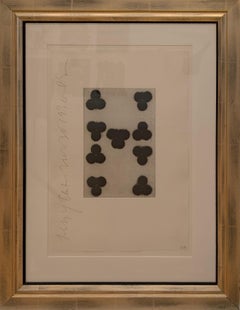
Playing Cards (9 of Clubs) Artist Proof Print, Contemporary, 1990s

Playing Cards (9 of Clubs) Artist Proof Print, Contemporary, 1990s

By Donald Sultan

Located in Vancouver, CA

Donald Sultan Playing Card Prints - Artist Proofs (APs) We are excited to offer a rare collection of Artist Proof (AP) prints from Donald Sultan's acclaimed playing card series. Lim...

Category

Contemporary 1990s Art
Materials

Handmade Paper, Carbon Pencil, Aquatint

Evolution of Man
Evolution of Man

Evolution of Man

By Marcel Dzama

Located in Toronto, Ontario

With his unmistakable version of contemporary Surrealism, as comical as it is otherworldly, Marcel Dzama is one of Canada's most internationally successful artists. Dzama's works ar...

Category

Surrealist 1990s Art

Materials

Ink, Mixed Media

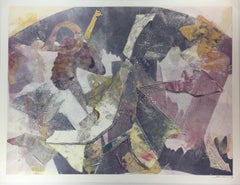
Geometric Patchwork in Plum and Ochre

Geometric Patchwork in Plum and Ochre

By Kismine Varner

Located in Houston, TX

An exceptional and intricately layered original mixed-media abstract work on paper by American modern artist Kismine Varner, signed and dated by the artist in the lower right corner....

Category

1990s Art

Materials

Paper, Acrylic

Untitled
Untitled

Untitled

Located in Washington, DC

A Sculptor's Full Circle, Yoichi Tamaki at Alex - Washington Post (April 1, 1999). Judging from his lively exhibition at Alex Gallery, Yoichi Tamaki wo...

Category

1990s Art

Materials

Sandstone

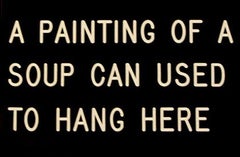
A Painting of a Soup Can Used to Hang Here

A Painting of a Soup Can Used to Hang Here

By William Anastasi

Located in Phoenix, AZ

silkscreen, unframed, edition 231 of 250 In 1968 Andy Warhol exhibited at the Philadelphia Museum of Fine Arts. Since Warhol's show was seminal in the development of Pop Art, there was a lingering presence that could not be denied, even after the work was no longer in the space. Anastasi went to a sign maker and had a plaque made that read, "A Painting of a Soup Can Used to Hang Here". The reference to the soup can and the fact the sign was not made by the artist was the development of Warhol’s subject matter as well as a Duchamp reference. It was pure genius. An edition of this work was produced years later. William Anastasi is one of the founders of both Conceptual and Minimal Art. A “classmate” of Andy Warhol, Sol LeWitt, and Hans Haacke...

Category

1990s Art

Materials

Screen

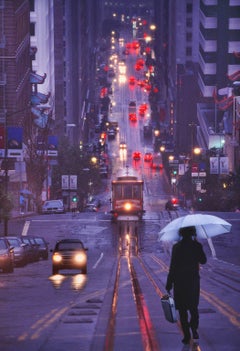
San Francisco Nocturne

San Francisco Nocturne

By Mitchell Funk

Located in Miami, FL

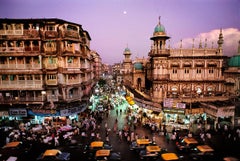
The joy of photography is on full display as Mitchell Funk captures the moody blues and reds of San Francisco's California street . Signed and dated on lower right, numbered on vers...

Category

Impressionist 1990s Art

Materials

Archival Ink, Archival Paper, Archival Pigment

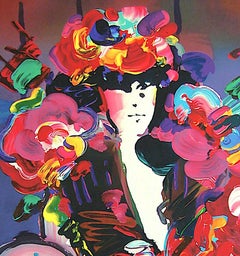
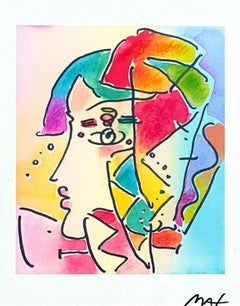
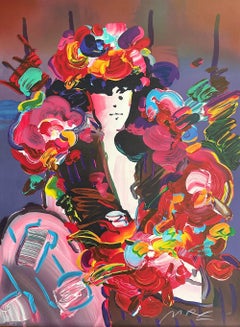
Lady Profile, Peter Max

Lady Profile, Peter Max

By Peter Max

Located in Fairfield, CT

Artist: Peter Max (1937) Title: Lady Profile Year: 1998 Medium: Lithograph and acrylic on Coventry Smooth paper Size: 8.5 x 6.5 inches Condition: Excellent Inscription: Signed and by...

Category

Pop Art 1990s Art

Materials

Mixed Media, Acrylic, Lithograph

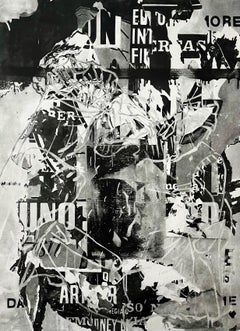
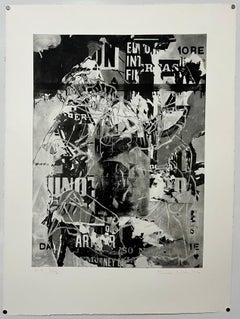
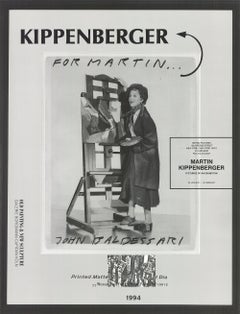
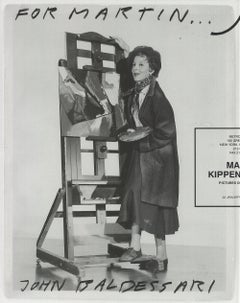
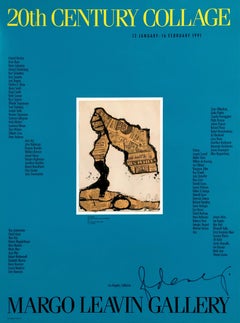
1994 Martin Kippenberger Offset Print Exhibition Poster, Contemporary

1994 Martin Kippenberger Offset Print Exhibition Poster, Contemporary

By Martin Kippenberger

Located in Brooklyn, NY

Paper Size: 35.25 x 27 inches ( 89.535 x 68.58 cm ) Image Size: 35.25 x 27 inches ( 89.535 x 68.58 cm ) Framed: NoCondition: A-: Near Mint, very light signs of handling Additional Details: Original exhibition poster for Martin Kippenberger...

Category

Contemporary 1990s Art
Materials

Offset

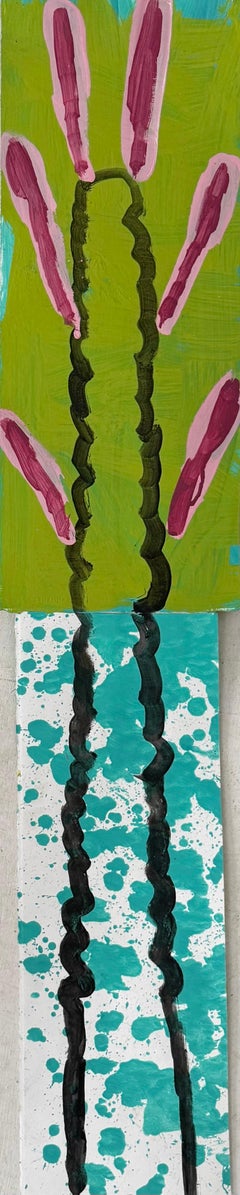
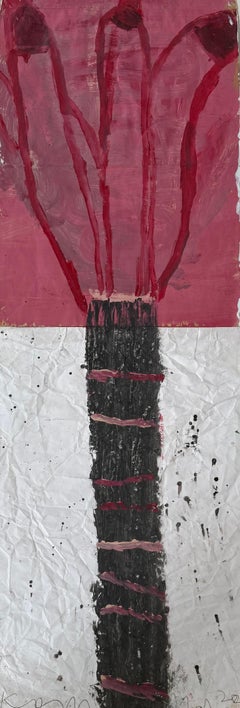
Loosha

Loosha

By Gary Komarin

Located in Fairfield, CT

Mixed media on paper 34 x 12 in. Work is currently unframed. Framing is additional

Category

Contemporary 1990s Art

Materials

Paper, Mixed Media

American Female Abstract painter Modernist Still Life w/ Fruits GALLERY LABEL

American Female Abstract painter Modernist Still Life w/ Fruits GALLERY LABEL

By Peri Schwartz

Located in New York, NY

Peri Schwartz (born October 4, 1951, Brooklyn, New York) is an American painter and printmaker. She was born in Brooklyn, New York and raised in Far Rockaway, New York. She received her BFA from Boston University College of Fine Arts in 1973 and an MFA from Queens College in 1975. Up for sale is a wonderful Still Life with fruits Painting...

Category

Abstract Expressionist 1990s Art

Materials

Charcoal, Pastel, Mixed Media, Gouache

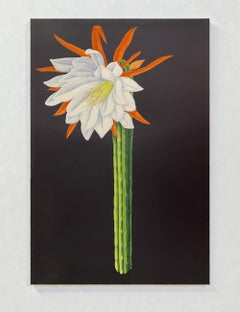
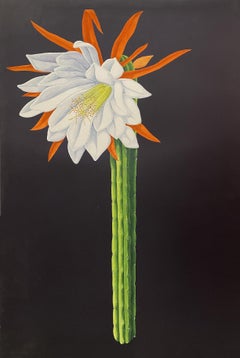
Trichocereus
Trichocereus

Trichocereus

By Miguel Angel Ríos

Located in Miami Beach, FL

In the late nineties, and after traveling to regions as diverse as the Amazon basin and the Chihuahua desert, Ríos began to develop a body of work through which he addressed the mean...

Category

Contemporary 1990s Art
Materials

Canvas, Oil

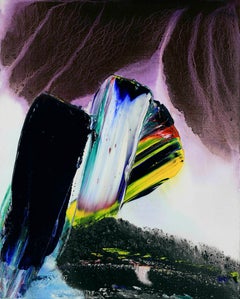
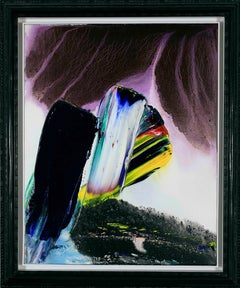
Phenomena Celtic Fire Torc by Paul Jenkins - Abstract painting

Phenomena Celtic Fire Torc by Paul Jenkins - Abstract painting

By Paul Jenkins

Located in London, GB

Phenomena Celtic Fire Torc by Paul Jenkins (1923-2012) Acrylic on canvas 76 x 61 cm (29⁷/₈ x 24 inches) Signed lower left Paul Jenkins Signed, dated and titled on the reverse Executed in 1995 Provenance Private collection, Germany Biography Born at Kansas City in Missouri (USA), the multi-media artist, poet and playwright Paul Jenkins studied at the Kansas City Art Institute and the Art Students League in New York City. After his discharge from military service at the end of February 1946, he briefly studied playwriting with dramatist George McCalmon at the Carnegie Institute of Technology in Pittsburgh. Thereafter, Jenkins spent four years studying with Japanese American artist Yasuo Kuniyoshi in New York City. His first solo exhibitions were held at Studio Paul Facchetti in Paris in 1954 and the Martha Graham Gallery in New York City in 1956. Over the past thirty years, numerous retrospectives have been curated across the globe and Jenkins’ work can found in national collections from Europe and the United States to Israel, Australia and Japan. The diversity of his work springs from Jenkins’ wealth of eclectic influences. Some of his earliest works included what he called "interior landscapes" influenced by ancient natural forms like the caves he visited in the Ozark Mountains in his native-Missouri. Frequent student visits to the Frick Collection in New York fostered a love of the great masters: Bellini, Holbein, Vermeer, Rembrandt, de la Tour, Turner and Goya. In compliment, lingering student visits to the renowned Eastern collection of the Nelson-Atkins Museum of Art in Kansas City evoked powerful sympathy for a monumental Chinese fresco...

Category

Abstract Expressionist 1990s Art

Materials

Canvas, Acrylic

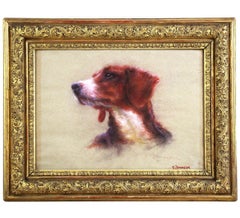
Hunting Dog Portrait Pastel On Paper By Catherine Dammeron

Hunting Dog Portrait Pastel On Paper By Catherine Dammeron

Located in Gavere, BE

The artist Catherine Dammeron was born in 1976 in Wissembourg in Alsace. She made her passion for pastel drawing her job. Artist going against the current, this resident of Yonne fav...

Category

Academic 1990s Art

Materials

Gold Leaf

Waterwings, by Art Werger

Waterwings, by Art Werger

By Art Werger

Located in Palm Springs, CA

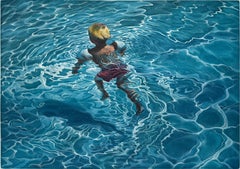
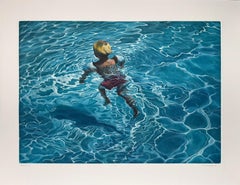
In Waterwings, Art Werger captures the ever-shifting surface of a swimming pool as a young child is seen seen from above, the child’s blond hair glows in the sun, with red swim trunk...

Category

Contemporary 1990s Art
Materials

Etching, Aquatint

BAZURTO Hand Drawn Lithograph, Signed, Afro-Colombian Still-Life, 1992

BAZURTO Hand Drawn Lithograph, Signed, Afro-Colombian Still-Life, 1992

By Ana Mercedes Hoyos

Located in Union City, NJ

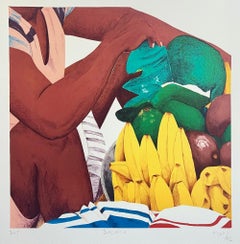
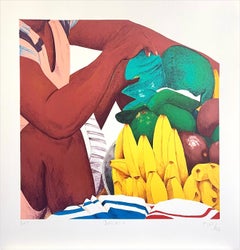
BAZURTO is an original hand drawn lithograph by renowned Colombian woman artist Ana Mercedes Hoyos, (b.1942-2014) printed using traditional hand lithography techniques on archival printmaking paper, 100% acid free. Hoyos' colorful lithograph, Bazurto, is a creative combination of a female figure and still-life composition depicting a seated woman beside a bowl of fresh fruit - green avocados, yellow bananas, brown coconuts and tropical green leaves. Ana Mercedes Hoyos is most known and recognized for her explosive use of color and rhythm in expressing the culture of the Afro-Colombian community. Her work is part of major Museums as well as important private collections throughout the world. Print size - 30.5 x 29 inches, unframed, excellent condition, hand signed, titled and dated in pencil by Ana Mercedes Hoyos, unique 1992 B.A.T Proof (Bon á tirer proof) Ana Mercedes Hoyos (29 September 1942 – 5 September 2014) was a Colombian painter...

Category

Contemporary 1990s Art
Materials

Lithograph

Canadian Modernist Abstract Expressionist Painting Color Field Claude Vermette

Canadian Modernist Abstract Expressionist Painting Color Field Claude Vermette

By Claude Vermette

Located in Surfside, FL

Claude Vermette R.C.A. is a Canadian ceramicist and painter who was born in Montreal, Quebec, August 10, 1930 and who died in Sainte-Agathe-des-Monts, April 21, 2006. Artist of international reputation, he made important contributions to the ceramic arts in Canada As a ceramist who worked in the architecture field, Claude Vermette is a pioneer in Québec and in Canada with regards to this type of artistic expression. The bursts of colours of his wall size mural ceramics, the warmth of their hues and the play of their textures brought a human dimension in architectural spaces that were often grey and frigid. In his abstract paintings as well as in his prints and watercolours, Claude Vermette pursued this bold approach while constantly renewing and expanding the possibilities of colour and light. His work works with gradations of color field and shifting light. A native of Montreal, Quebec, Claude Vermette studied art under the guidance of Brother Jerome, c.s.c. at Notre-Dame College while also attending the Collège Saint-Laurent and the college of the Clercs de Saint-Viateur for his academic studies. Through his contact with Brother Jerome, he met Paul-Emile Borduas and joined the Automatiste group of emerging artists. They were influenced by Surrealism and its theory of automatism. Members included Marcel Barbeau, Roger Fauteux, Claude Gauvreau, Jean-Paul Riopelle, Pierre Gauvreau, Fernand Leduc, Jean-Paul Mousseau, Marcelle Ferron and Françoise Sullivan...

Category

Abstract Expressionist 1990s Art

Materials

Canvas, Oil

Ibis

Ibis

By Gary Komarin

Located in Fairfield, CT

Mixed media on paper 34 x 12 in. Work is currently unframed. Framing is additional

Category

Contemporary 1990s Art
Materials

Paper, Mixed Media

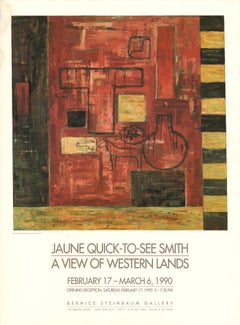
Jaune Quick-to-See Smith 'Gifts of Red Cloth' 1990

Jaune Quick-to-See Smith 'Gifts of Red Cloth' 1990

By Jaune Quick-to-See Smith

Located in Brooklyn, NY

“Gifts of Red Cloth” by Quick-to-See Smith – Bernice Steinem Gallery, NYC (1990) This work by celebrated Native American and African American artist Jaune Quick-to-See Smith was feat...

Category

1990s Art
Materials

Offset

Street Musicians Oil on Canvas Board, Modern Figurative, Signed, 1990s

Street Musicians Oil on Canvas Board, Modern Figurative, Signed, 1990s

By Albert Roca

Located in Sitges, Barcelona

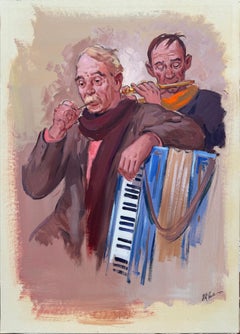
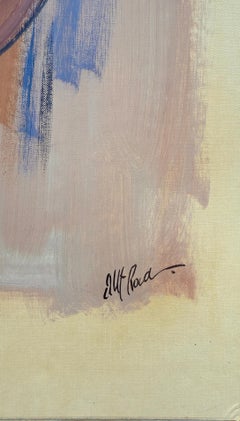
Title: Street Musicians Artist: Albert Roca i Cama (Palamós, 1945 – 2023) Technique: Oil on canvas board Dimensions: 71 x 51 cm (27.95 x 20.08 in) Support: Canvas board Signature: Signed in the lower right corner as “214 Roca” Approximate date: Late 20th – early 21st century Condition: Very good Framing: Unframed Description of the work: The painting depicts two street musicians in a profoundly expressive scene. In the foreground, a man rests his arm on an accordion, his gaze lost in thought and a contemplative expression on his face, while holding a straw or toothpick between his lips. Behind him, another figure plays a transverse flute with closed eyes, fully immersed in his music. The composition conveys serenity and weariness, presenting an intimate moment imbued with urban lyricism. The brushwork is loose yet confident, reinforcing the emotional depth of the characters. The color palette blends warm tones with hints of grey and blue, emphasizing the introspective and street-like atmosphere. The overall impression is of a moment suspended in time, where music and life intertwine in the silent dignity of their expressions. Artist biography: Albert Roca i Cama was born in Palamós in 1945 and passed away in 2023. He was a Catalan painter associated with expressive realism, known for his energetic strokes and mastery of color. From an early age, he showed artistic inclination and worked in Barcelona alongside comic artist García...

Category

Modern 1990s Art
Materials

Canvas, Oil