Expressionist Prints and Multiples

EXPRESSIONIST STYLE

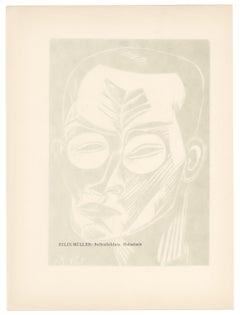
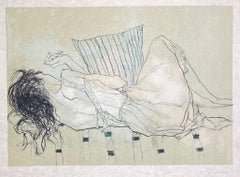
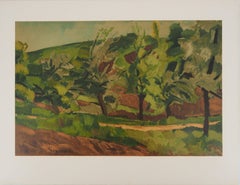
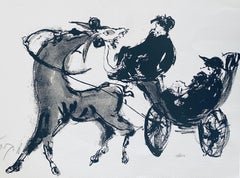
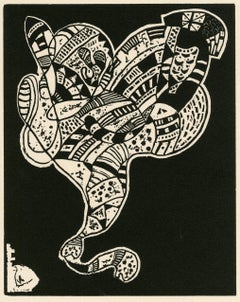
While “expressionist” is used to describe any art that avoids naturalism and instead employs a bold use of flattened forms and intense brushwork, Expressionist art formally describes early-20th-century work from Europe that drew on Symbolism and confronted issues such as urbanization and capitalism. Expressionist artists experimented in paintings and prints with skewed perspectives, abstraction and unconventional, bright colors to portray how isolating and anxious the world felt rather than how it appeared. 

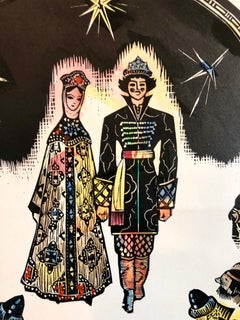
Between 1905 and 1920, Austrian and German artists, in particular, were inspired by Postimpressionists such as Paul Gauguin and Vincent van Gogh in their efforts to strive for a new authenticity in their work. In its geometric patterns and decorative details, Expressionist art was also marked by eclectic sources like German and Russian folk art as well as tribal art from Africa and Oceania, which the movement’s practitioners witnessed at museums and world’s fairs.

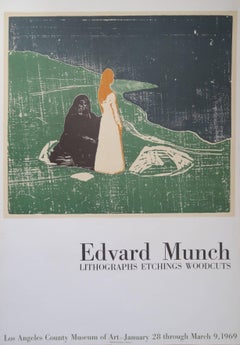
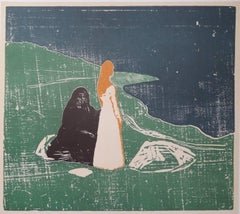
Groups of artists came together to share and promote the themes now associated with Expressionism, such as Die Brücke (The Bridge) in Dresden, which included Erich Heckel, Ernst Ludwig Kirchner and Karl Schmidt-Rottluff and investigated alienation and the dissolution of society in vivid color. In Munich, Der Blaue Reiter (The Blue Rider), a group led by Wassily Kandinsky and Franz Marc, instilled Expressionism with a search for spiritual truths. In his iconic painting The Scream, prolific Norwegian painter Edvard Munch conveyed emotional turmoil through his depiction of environmental elements, such as the threatening sky.

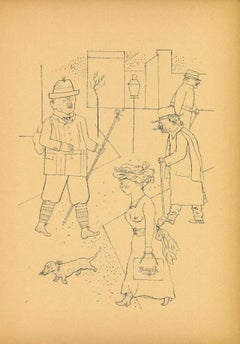
Expressionism shifted around the outbreak of World War I, with artists using more elements of the grotesque in reaction to the escalation of unrest and violence. Printmaking was especially popular, as it allowed artists to widely disseminate works that grappled with social and political issues amid this time of upheaval. Although the art movement ended with the rise of Nazi Germany, where Expressionist creators were labeled “degenerate,” the radical ideas of these artists would influence Neo-Expressionism that emerged in the late 1970s with painters like Jean-Michel Basquiat and Francesco Clemente.

​​Find a collection of authentic Expressionist paintings, sculptures, prints and more art on 1stDibs.

to
490
765
322
252
90
41
Overall Width
to
Overall Height
to
21,281
18,466
10,559
6,249
5,251
2,704
1,561
1,198
936
932
410
365
195
210
51
46
45
38
1
30
1,335
111
93
113
261
47
12
111
189
127
154
36
1
986
470
12
821
474
378
324
288
257
182
144
107
50
44
37
33
31
30
28
26
23
23
20
821
218
216
105
70
145
238
1,177
238
Style: Expressionist
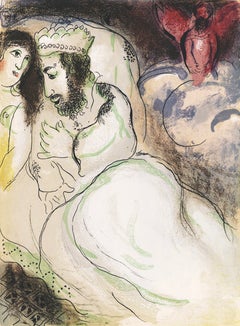
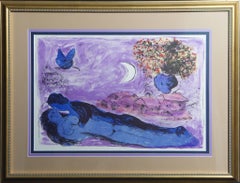
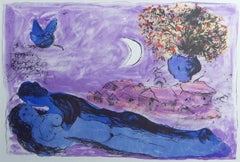
Chagall-The Lovers II 1929-House Collect GSY Studio circa 2005-MoMa discontinue

Chagall-The Lovers II 1929-House Collect GSY Studio circa 2005-MoMa discontinue

By Marc Chagall

Located in London, GB

It is the One of One edition in our collection. measurement including the frame is 84.5 H x 64 W x 4.8D CM, this special frame is a limited production of premium hard wood frame; it ...

Category

1920s Expressionist Prints and Multiples

Materials

Wood, Adhesive, Ink, Varnish, Giclée

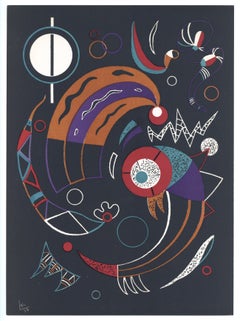
"Stars" original lithograph

"Stars" original lithograph

By Wassily Kandinsky

Located in Henderson, NV

Medium: original lithograph. Printed in 1938 and published in Paris by Teriade for the art revue Verve (volume 1, number 2). Kandinsky was invited to contribute an original compositi...

Category

1930s Expressionist Prints and Multiples

Materials

Lithograph

Marc Chagall, The Celebration, from Homer, The Odyssey, 1989 (after)

Marc Chagall, The Celebration, from Homer, The Odyssey, 1989 (after)

By Marc Chagall

Located in Southampton, NY

This exquisite lithograph after Marc Chagall (1887–1985), titled Das Fest (The Celebration), from Homer, Die Odyssee (The Odyssey), originates from the 1989 German-language folio published by Daco-Verlag Gunter Blase, Stuttgart, and printed by Lichtdruck AG, Zurich, Dielsdorf, September 1989. This authorized edition, issued under the direction of Vava Chagall, presents one of Chagall’s most joyful and expressive interpretations of Homer’s epic. In Das Fest, Chagall transforms the revelry of ancient feasts into a luminous vision of human connection, music, and harmony, rendered with his signature lyricism and dreamlike color palette. Executed on 250 g/m² Butten Papierwerke Miliani AG, Fabriano paper, this lithograph measures 14.88 x 11.69 inches. Unsigned and unnumbered, as issued. The edition exemplifies the exceptional quality and precision of Lichtdruck AG’s craftsmanship, reproducing the depth and richness of Chagall’s original lithographs with remarkable fidelity. Artwork Details: Artist: After Marc Chagall (1887–1985) Title: Das Fest (The Celebration), from Homer, Die Odyssee (The Odyssey), 1989 Medium: Lithograph on 250 g/m² Butten Papierwerke Miliani AG, Fabriano paper Dimensions: 14.88 x 11.69 inches Inscription: Unsigned and unnumbered, as issued Date: 1989 Publisher: Daco-Verlag Gunter Blase, Stuttgart Printer: Lichtdruck AG, Zurich, Dielsdorf Condition: Well preserved, consistent with age and medium Provenance: From the folio Homer, Die Odyssee (The Odyssey), Daco-Verlag Gunter Blase, Stuttgart, 1989 Notes: Excerpted from the folio (translated from German), Imprint—The French edition, L'Odyssée, with the original lithographs by Marc Chagall was published in 1974/75 in a CCL-example edition by Fernand Mourlot, Paris. In 1989, with the authorization of Mrs. Vava Chagall, the German-language edition of the Odyssey in two volumes was published by Daco-Verlag Gunter Blase, Stuttgart. Volume I contains the songs I - XII with XX color plates, including IV on double pages and XIX gray printed reproductions in the text. Volume II contains the songs XIII - XXIV with XXIII color plates, including II on double pages and XX gray printed reproductions in the text. For the German text, the prose translation by Wolfgang Schadewaldt was chosen with the permission of Rowohlt Taschenbuch Verlag, Reinbek near Hamburg. Set design in the Berthold Garamond Antiqua by F+M Bauer...

Category

1980s Expressionist Prints and Multiples

Materials

Lithograph

"Begrüssung" original etching

"Begrüssung" original etching

By Käthe Kollwitz

Located in Henderson, NV

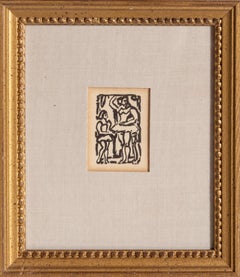
Medium: original etching. Catalogue reference: Klipstein 10. A very rich impression on cream wove paper of this Kollwitz etching, with plate tone. Plate size: 118 x 88mm (4 5/8 x 3 1...

Category

1890s Expressionist Prints and Multiples

Materials

Etching

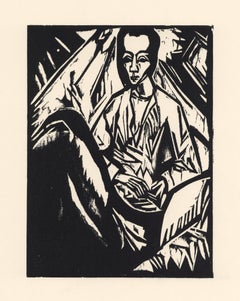
"Raskolnikow" original linocut

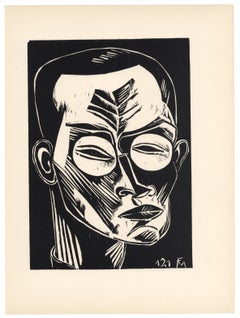
"Raskolnikow" original linocut

Located in Henderson, NV

Medium: original linoleum cut. Printed in 1920 for Das Kunstblatt, and published in Berlin by Verlag Gustav Kiepenheuer. Image size: 6 1/4 x 4 1/4 inches (160 x 105mm). Sheet size: 1...

Category

1920s Expressionist Prints and Multiples

Materials

Linocut

Marc Chagall, Sun Over the City, from XXe siecle, 1973

Marc Chagall, Sun Over the City, from XXe siecle, 1973

By Marc Chagall

Located in Southampton, NY

This exquisite lithograph by Marc Chagall (1887–1985), titled Soleil sur la ville (Sun Over the City), from the album Chagall Monumental Works, Special Issue of the XXe Siecle Review...

Category

1970s Expressionist Prints and Multiples

Materials

Lithograph

Marc Chagall, Paradise I, from Drawings for the Bible, 1956

Marc Chagall, Paradise I, from Drawings for the Bible, 1956

By Marc Chagall

Located in Southampton, NY

This exquisite lithograph by Marc Chagall (1887–1985), titled Paradis I (Paradise I), from Marc Chagall, Dessins Pour La Bible (Drawings for the Bible), Verve: Revue Artistique et Litteraire, Vol. VIII, No. 33–34, originates from the September 1956 issue published by Editions de la revue Verve, Paris, under the direction of Teriade, Editeur, Paris, and printed by Mourlot Freres, Paris, 1956. This radiant and dreamlike composition envisions the Garden of Eden as a symbol of divine harmony and innocence, where life, color, and spirit coexist in perfect unity. Through lyrical forms and glowing tonal contrasts, Chagall expresses a vision of creation that transcends narrative, merging spiritual wonder with emotional warmth. Paradis I embodies the artist’s enduring fascination with the sacred origins of life and the poetic balance between the earthly and the eternal. The piece forms part of Chagall’s celebrated series of lithographs and drawings created for Dessins Pour La Bible, a monumental project uniting art, scripture, and mysticism in one of the artist’s most important achievements. Executed as a lithograph on velin du Marais paper, this work measures 14 x 10.5 inches (35.56 x 26.67 cm). Unsigned and unnumbered as issued. The edition exemplifies the superb craftsmanship of the Mourlot Freres atelier, renowned for its collaborations with the greatest modern masters of the 20th century. Artwork Details: Artist: Marc Chagall (1887–1985) Title: Paradis I (Paradise I), from Marc Chagall, Dessins Pour La Bible (Drawings for the Bible), Verve: Revue Artistique et Litteraire, Vol. VIII, No. 33–34, September 1956 Medium: Lithograph on velin du Marais paper Dimensions: 14 x 10.5 inches (35.56 x 26.67 cm) Inscription: Unsigned and unnumbered as issued Date: 1956 Publisher: Editions de la revue Verve, Paris, under the direction of Teriade, Editeur, Paris Printer: Mourlot Freres, Paris Catalogue raisonne references: Cain, Julien, and Fernand Mourlot. Chagall Lithographe. Andre Sauret, Editeur, 1960, illustrations 117–46. Cramer, Patrick, and Meret Meyer. Marc Chagall: Catalogue Raisonne Des Livres Illustrés. P. Cramer ed., 1995, illustration 25. Condition: Well preserved, consistent with age and medium Provenance: From Marc Chagall, Dessins Pour La Bible (Drawings for the Bible), Verve: Revue Artistique et Litteraire, Vol. VIII, No. 33–34, published by Editions de la revue Verve, Paris, 1956 Notes: Excerpted from the album (translated from French), This double issue of Verve is dedicated to the full reproduction in heliogravure of the one hundred-five plates etched by Marc Chagall, between 1930 and 1955, for the illustration of the Bible. The artist composed especially for the present work, sixteen lithographs in color and twelve in black, as well as the cover and the title page. This volume was completed and printed on September 10, 1956, by the Master Printers Draeger Freres for heliogravure, and by Mourlot Freres for lithography. About the Publication: Marc Chagall, Dessins Pour La Bible (Drawings for the Bible), published as Verve Vol. VIII, No. 33–34 in September 1956, represents one of the crowning achievements of Chagall’s lifelong dialogue with the sacred. Conceived and directed by the visionary publisher Teriade and printed by the master lithographers Mourlot Freres, the issue features thirty-four color lithographs and numerous black-and-white drawings inspired by biblical figures and stories. Chagall’s works for this edition unite text and image in a luminous meditation on divine creation, moral struggle, and spiritual renewal, imbued with his signature dreamlike symbolism and radiant color. Produced in postwar Paris, this landmark publication reaffirmed the enduring union of art and faith, establishing Dessins Pour La Bible as one of the most important illustrated works of the 20th century. About the Artist: Marc Chagall (1887–1985) was a Belarus-born French painter, printmaker, and designer whose visionary imagination, radiant color, and deeply poetic symbolism made him one of the most beloved and influential artists of the 20th century. Rooted in the imagery of his Jewish heritage and the memories of his childhood in Vitebsk, Chagall’s art wove together themes of faith, love, folklore, and fantasy with a dreamlike modern sensibility. His unique style—merging elements of Cubism, Fauvism, Expressionism, and Surrealism—defied categorization, transforming ordinary scenes into lyrical meditations on memory and emotion. Influenced by Russian icon painting, medieval religious art, and the modern innovations of artists such as Pablo Picasso, Henri Matisse, and Georges Braque, Chagall developed a profoundly personal visual language filled with floating figures, vibrant animals, musicians, and lovers that symbolized the transcendent power of imagination and love. During his early years in Paris, he became an integral part of the Ecole de Paris circle, forming friendships with Amedeo Modigliani, Fernand Leger, and Sonia Delaunay, and his creative spirit resonated with that of his peers and successors—Alexander Calder, Alberto Giacometti, Salvador Dali, Joan Miro, Wassily Kandinsky, Marcel Duchamp, and Man Ray—artists who, like Chagall, sought to push the boundaries of perception, emotion, and form. Over a prolific career that spanned painting, printmaking, stained glass, ceramics, and stage design, Chagall brought an unparalleled poetic sensibility to modern art, infusing even the most abstract subjects with human warmth and spiritual depth. His works are held in the most prestigious museums around the world, including the Museum of Modern Art, the Centre Pompidou, the Tate, and the Guggenheim, where they continue to inspire generations of artists and collectors. The highest price ever paid for a Marc Chagall artwork is approximately $28.5 million USD, achieved in 2017 at Sotheby’s New York for Les Amoureux (1928). Marc Chagall Paradis...

Category

1950s Expressionist Prints and Multiples

Materials

Lithograph

Marc Chagall, The Candelabrum, from The Jerusalem Windows, 1962

Marc Chagall, The Candelabrum, from The Jerusalem Windows, 1962

By Marc Chagall

Located in Southampton, NY

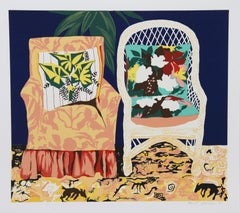
This exquisite lithograph by Marc Chagall (1887–1985), titled Le Chandelier (The Candelabrum), from the album Marc Chagall, The Jerusalem Windows, originates from the 1962 edition pu...

Category

1960s Expressionist Prints and Multiples
Materials

Lithograph

Marc Chagall, Paradise II, from Drawings for the Bible, 1956

Marc Chagall, Paradise II, from Drawings for the Bible, 1956

By Marc Chagall

Located in Southampton, NY

This exquisite lithograph by Marc Chagall (1887–1985), titled Paradis II (Paradise II), from Marc Chagall, Dessins Pour La Bible (Drawings for the Bible), Verve: Revue Artistique et Litteraire, Vol. VIII, No. 33–34, originates from the September 1956 issue published by Editions de la revue Verve, Paris, under the direction of Teriade, Editeur, Paris, and printed by Mourlot Freres, Paris, 1956. This luminous composition portrays the splendor of Paradise, filled with light, harmony, and divine presence. Through his poetic use of line and ethereal symbolism, Chagall evokes the spiritual unity between humanity and the divine, capturing the purity and joy of creation. Paradis II reflects the artist’s enduring belief in love and beauty as transcendent forces, transforming a biblical vision into a universal celebration of faith and imagination. The work forms part of Chagall’s celebrated series of lithographs and drawings created for Dessins Pour La Bible, a monumental project uniting art, scripture, and mysticism in one of the artist’s most important achievements. Executed as a lithograph on velin du Marais paper, this work measures 14 x 10.5 inches (35.56 x 26.67 cm). Unsigned and unnumbered as issued. The edition exemplifies the superb craftsmanship of the Mourlot Freres atelier, renowned for its collaborations with the greatest modern masters of the 20th century. Artwork Details: Artist: Marc Chagall (1887–1985) Title: Paradis II (Paradise II), from Marc Chagall, Dessins Pour La Bible (Drawings for the Bible), Verve: Revue Artistique et Litteraire, Vol. VIII, No. 33–34, September 1956 Medium: Lithograph on velin du Marais paper Dimensions: 14 x 10.5 inches (35.56 x 26.67 cm) Inscription: Unsigned and unnumbered as issued Date: 1956 Publisher: Editions de la revue Verve, Paris, under the direction of Teriade, Editeur, Paris Printer: Mourlot Freres, Paris Catalogue raisonne references: Cain, Julien, and Fernand Mourlot. Chagall Lithographe. Andre Sauret, Editeur, 1960, illustrations 117–46. Cramer, Patrick, and Meret Meyer. Marc Chagall: Catalogue Raisonne Des Livres Illustrés. P. Cramer ed., 1995, illustration 25. Condition: Well preserved, consistent with age and medium Provenance: From Marc Chagall, Dessins Pour La Bible (Drawings for the Bible), Verve: Revue Artistique et Litteraire, Vol. VIII, No. 33–34, published by Editions de la revue Verve, Paris, 1956 Notes: Excerpted from the album (translated from French), This double issue of Verve is dedicated to the full reproduction in heliogravure of the one hundred-five plates etched by Marc Chagall, between 1930 and 1955, for the illustration of the Bible. The artist composed especially for the present work, sixteen lithographs in color and twelve in black, as well as the cover and the title page. This volume was completed and printed on September 10, 1956, by the Master Printers Draeger Freres for heliogravure, and by Mourlot Freres for lithography. About the Publication: Marc Chagall, Dessins Pour La Bible (Drawings for the Bible), published as Verve Vol. VIII, No. 33–34 in September 1956, represents one of the crowning achievements of Chagall’s lifelong dialogue with the sacred. Conceived and directed by the visionary publisher Teriade and printed by the master lithographers Mourlot Freres, the issue features thirty-four color lithographs and numerous black-and-white drawings inspired by biblical figures and stories. Chagall’s works for this edition unite text and image in a luminous meditation on divine creation, moral struggle, and spiritual renewal, imbued with his signature dreamlike symbolism and radiant color. Produced in postwar Paris, this landmark publication reaffirmed the enduring union of art and faith, establishing Dessins Pour La Bible as one of the most important illustrated works of the 20th century. About the Artist: Marc Chagall (1887–1985) was a Belarus-born French painter, printmaker, and designer whose visionary imagination, radiant color, and deeply poetic symbolism made him one of the most beloved and influential artists of the 20th century. Rooted in the imagery of his Jewish heritage and the memories of his childhood in Vitebsk, Chagall’s art wove together themes of faith, love, folklore, and fantasy with a dreamlike modern sensibility. His unique style—merging elements of Cubism, Fauvism, Expressionism, and Surrealism—defied categorization, transforming ordinary scenes into lyrical meditations on memory and emotion. Influenced by Russian icon painting, medieval religious art, and the modern innovations of artists such as Pablo Picasso, Henri Matisse, and Georges Braque, Chagall developed a profoundly personal visual language filled with floating figures, vibrant animals, musicians, and lovers that symbolized the transcendent power of imagination and love. During his early years in Paris, he became an integral part of the Ecole de Paris circle, forming friendships with Amedeo Modigliani, Fernand Leger, and Sonia Delaunay, and his creative spirit resonated with that of his peers and successors—Alexander Calder, Alberto Giacometti, Salvador Dali, Joan Miro, Wassily Kandinsky, Marcel Duchamp, and Man Ray—artists who, like Chagall, sought to push the boundaries of perception, emotion, and form. Over a prolific career that spanned painting, printmaking, stained glass, ceramics, and stage design, Chagall brought an unparalleled poetic sensibility to modern art, infusing even the most abstract subjects with human warmth and spiritual depth. His works are held in the most prestigious museums around the world, including the Museum of Modern Art, the Centre Pompidou, the Tate, and the Guggenheim, where they continue to inspire generations of artists and collectors. The highest price ever paid for a Marc Chagall artwork is approximately $28.5 million USD, achieved in 2017 at Sotheby’s New York for Les Amoureux (1928). Marc Chagall Paradis...

Category

1950s Expressionist Prints and Multiples

Materials

Lithograph

Marc Chagall, The Creation, from Drawings for the Bible, 1956

Marc Chagall, The Creation, from Drawings for the Bible, 1956

By Marc Chagall

Located in Southampton, NY

This exquisite lithograph by Marc Chagall (1887–1985), titled Creation (The Creation), from Marc Chagall, Dessins Pour La Bible (Drawings for the Bible), Verve: Revue Artistique et Litteraire, Vol. VIII, No. 33–34, originates from the September 1956 issue published by Editions de la revue Verve, Paris, under the direction of Teriade, Editeur, Paris, and printed by Mourlot Freres, Paris, 1956. This visionary composition depicts the divine act of creation, evoking the genesis of light, life, and spirit through Chagall’s radiant imagination and poetic symbolism. The flowing forms and luminous harmonies reflect the unity between the divine and the natural world—a theme central to Chagall’s lifelong spiritual vision. Infused with movement and transcendence, the work transforms the biblical narrative into a lyrical meditation on the origin of existence and the creative essence of faith. The piece forms part of Chagall’s celebrated series of lithographs and drawings created for Dessins Pour La Bible, a monumental project uniting art, scripture, and mysticism in one of the artist’s most important achievements. Executed as a lithograph on velin du Marais paper, this work measures 14 x 10.5 inches (35.56 x 26.67 cm). Unsigned and unnumbered as issued. The edition exemplifies the superb craftsmanship of the Mourlot Freres atelier, renowned for its collaborations with the greatest modern masters of the 20th century. Artwork Details: Artist: Marc Chagall (1887–1985) Title: Creation (The Creation), from Marc Chagall, Dessins Pour La Bible (Drawings for the Bible), Verve: Revue Artistique et Litteraire, Vol. VIII, No. 33–34, September 1956 Medium: Lithograph on velin du Marais paper Dimensions: 14 x 10.5 inches (35.56 x 26.67 cm) Inscription: Unsigned and unnumbered as issued Date: 1956 Publisher: Editions de la revue Verve, Paris, under the direction of Teriade, Editeur, Paris Printer: Mourlot Freres, Paris Catalogue raisonne references: Cain, Julien, and Fernand Mourlot. Chagall Lithographe. Andre Sauret, Editeur, 1960, illustrations 117–46. Cramer, Patrick, and Meret Meyer. Marc Chagall: Catalogue Raisonne Des Livres Illustrés. P. Cramer ed., 1995, illustration 25. Condition: Well preserved, consistent with age and medium Provenance: From Marc Chagall, Dessins Pour La Bible (Drawings for the Bible), Verve: Revue Artistique et Litteraire, Vol. VIII, No. 33–34, published by Editions de la revue Verve, Paris, 1956 Notes: Excerpted from the album (translated from French), This double issue of Verve is dedicated to the full reproduction in heliogravure of the one hundred-five plates etched by Marc Chagall, between 1930 and 1955, for the illustration of the Bible. The artist composed especially for the present work, sixteen lithographs in color and twelve in black, as well as the cover and the title page. This volume was completed and printed on September 10, 1956, by the Master Printers Draeger Freres for heliogravure, and by Mourlot Freres for lithography. About the Publication: Marc Chagall, Dessins Pour La Bible (Drawings for the Bible), published as Verve Vol. VIII, No. 33–34 in September 1956, represents one of the crowning achievements of Chagall’s lifelong dialogue with the sacred. Conceived and directed by the visionary publisher Teriade and printed by the master lithographers Mourlot Freres, the issue features thirty-four color lithographs and numerous black-and-white drawings inspired by biblical figures and stories. Chagall’s works for this edition unite text and image in a luminous meditation on divine creation, moral struggle, and spiritual renewal, imbued with his signature dreamlike symbolism and radiant color. Produced in postwar Paris, this landmark publication reaffirmed the enduring union of art and faith, establishing Dessins Pour La Bible as one of the most important illustrated works of the 20th century. About the Artist: Marc Chagall (1887–1985) was a Belarus-born French painter, printmaker, and designer whose visionary imagination, radiant color, and deeply poetic symbolism made him one of the most beloved and influential artists of the 20th century. Rooted in the imagery of his Jewish heritage and the memories of his childhood in Vitebsk, Chagall’s art wove together themes of faith, love, folklore, and fantasy with a dreamlike modern sensibility. His unique style—merging elements of Cubism, Fauvism, Expressionism, and Surrealism—defied categorization, transforming ordinary scenes into lyrical meditations on memory and emotion. Influenced by Russian icon painting, medieval religious art, and the modern innovations of artists such as Pablo Picasso, Henri Matisse, and Georges Braque, Chagall developed a profoundly personal visual language filled with floating figures, vibrant animals, musicians, and lovers that symbolized the transcendent power of imagination and love. During his early years in Paris, he became an integral part of the Ecole de Paris circle, forming friendships with Amedeo Modigliani, Fernand Leger, and Sonia Delaunay, and his creative spirit resonated with that of his peers and successors—Alexander Calder, Alberto Giacometti, Salvador Dali, Joan Miro, Wassily Kandinsky, Marcel Duchamp, and Man Ray—artists who, like Chagall, sought to push the boundaries of perception, emotion, and form. Over a prolific career that spanned painting, printmaking, stained glass, ceramics, and stage design, Chagall brought an unparalleled poetic sensibility to modern art, infusing even the most abstract subjects with human warmth and spiritual depth. His works are held in the most prestigious museums around the world, including the Museum of Modern Art, the Centre Pompidou, the Tate, and the Guggenheim, where they continue to inspire generations of artists and collectors. The highest price ever paid for a Marc Chagall artwork is approximately $28.5 million USD, achieved in 2017 at Sotheby’s New York for Les Amoureux (1928). Marc Chagall Creation...

Category

1950s Expressionist Prints and Multiples

Materials

Lithograph

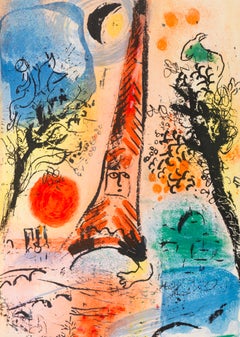
Marc Chagall, Vision of Paris, from Verve, Revue Artistique, 1953

Marc Chagall, Vision of Paris, from Verve, Revue Artistique, 1953

By Marc Chagall

Located in Southampton, NY

This exquisite lithograph by Marc Chagall (1887–1985), titled Vision de Paris (Vision of Paris), from Verve, Revue Artistique et Litteraire, Vol. VII, No. 27–28, originates from the ...

Category

1950s Expressionist Prints and Multiples

Materials

Lithograph

Marc Chagall, The Tribe of Levi, from XXe siecle, 1983 (after)

Marc Chagall, The Tribe of Levi, from XXe siecle, 1983 (after)

By Marc Chagall

Located in Southampton, NY

This exquisite lithograph after Marc Chagall (1887–1985), titled La Tribu de Levi (The Tribe of Levi), from the special issue of the XXe Siecle Review, Chagall in Jerusalem, originat...

Category

1980s Expressionist Prints and Multiples

Materials

Lithograph

Marc Chagall, Blue Horse with Couple, from Derriere le Miroir, 1982

Marc Chagall, Blue Horse with Couple, from Derriere le Miroir, 1982

By Marc Chagall

Located in Southampton, NY

This exquisite lithograph by Marc Chagall (1887–1985), titled Cheval bleu au couple (Blue Horse with Couple), originates from the historic 1982 folio Derriere le Miroir, No. 250, Hommage a Aime et Marguerite Maeght (Tribute to Aime and Marguerite Maeght). Published by Maeght Editeur, Paris, under the direction of Aime Maeght, and printed by Imprimerie Moderne du Lion, Paris, this vibrant composition reflects Chagall’s lyrical fusion of color, dream, and devotion. In Cheval bleu au couple, ethereal figures and a radiant blue horse float within a luminous space of poetic imagination, evoking love, memory, and transcendence. The image captures the artist’s timeless ability to unite fantasy and emotion within the expressive language of modernism. Executed on velin paper, this lithograph measures 15 x 11 inches (38.1 x 27.9 cm). As issued, it is unsigned and unnumbered, consistent with the authorized publication format. The edition exemplifies Chagall’s mastery of color lithography and his lifelong exploration of faith, folklore, and the human spirit. Artwork Details: Artist: Marc Chagall (1887–1985) Title: Cheval bleu au couple (Blue Horse with Couple), from Derriere le Miroir, No. 250, Hommage a Aime et Marguerite Maeght (Tribute to Aime and Marguerite Maeght), 1982 Medium: Lithograph on velin paper Dimensions: 15 x 11 inches (38.1 x 27.9 cm) Inscription: Unsigned and unnumbered, as issued Date: 1982 Publisher: Maeght Editeur, Paris Printer: Imprimerie Moderne du Lion, Paris Catalogue raisonne references: Chagall, Marc, et al. Chagall Lithographe VI, 1980–1985. Andre Sauret, Editeur, 1986, illustration 993. Cramer, Patrick, and Meret Meyer. Marc Chagall: Catalogue Raisonne Des Livres Illustres. P. Cramer ed., 1995, illustration 113. Condition: Well preserved, consistent with age and medium Provenance: From the 1982 folio Derriere le Miroir, No. 250, published by Maeght Editeur, Paris Notes: Excerpted from the folio (translated from French), This special issue of Derriere le Miroir was designed and defined by Aime Maeght in the fall of 1980. He envisioned its publication as a celebration with which artists and writers published since 1946 were to be associated. He also chose Francois Chapon, president of the Reverdy Committee, to write the presentation. This Derriere le Miroir number 250 took the form, after its disappearance on September 5, 1981, of a tribute to Aime Maeght and his wife Marguerite Maeght who died four years earlier. 24 artists agreed to create an original graphic work for this issue which includes the general table of all issues as well as excerpts from texts by 32 writers. Finished printing on June 2, 1982 on the presses of the l'Imprimerie moderne du Lion in Paris. CL examples were printed on velin d'Arches, numbered from I to CL, and some non-commercial examples constituting the original edition. About the Publication: Derriere le Miroir (translated as "Behind the Mirror") was an iconic French art periodical published from 1946 to 1982 by Maeght Editeur, one of the most influential art publishers of the 20th century. Founded by Aime Maeght in Paris, the publication was conceived as a visual and literary collaboration between leading modern artists, poets, and critics. Each issue functioned as both an exhibition catalogue and a work of art in itself—featuring original lithographs printed directly from the artists' stones or plates, alongside essays, poems, and critical commentary. Over the course of 36 years, Derriere le Miroir produced more than 250 issues and showcased an extraordinary roster of artists including Henri Matisse, Marc Chagall, Joan Miro, Georges Braque, Alexander Calder, Fernand Leger, Pierre Bonnard, Alberto Giacometti, Eduardo Chillida, Ellsworth Kelly, Francis Bacon, Paul Rebeyrolle, Claude Garache, Antoni Tapies, Bram van Velde, Pierre Alechinsky, Pol Bury, Shusaku Arakawa, and Gerard Titus-Carmel. Printed in the ateliers of Mourlot, Arte, and Imprimerie Moderne du Lion, the periodical set new standards for quality in color lithography, combining fine art printing with elegant typography and poetic text. Beyond its visual brilliance, Derriere le Miroir also became a cultural chronicle of postwar European modernism. Each issue coincided with exhibitions held at Galerie Maeght, providing a collectible and widely accessible record of groundbreaking shows. Its integration of image, text, and philosophy created a dialogue between art and literature that elevated the modern art book to new aesthetic heights. Today, Derriere le Miroir remains one of the most sought-after and historically significant art publications, prized by collectors and scholars alike for its craftsmanship, influence, and its role in defining the visual language of 20th-century modernism. The Maeght Foundation in Saint-Paul-de-Vence continues to honor this legacy through exhibitions and archival preservation of the series, affirming Derriere le Miroir's enduring place in the history of modern art and fine art publishing. About the Artist: Marc Chagall (1887–1985) was a Belarus-born French painter, printmaker, and designer whose visionary use of color and poetic symbolism made him one of the most beloved and influential artists of the 20th century. Rooted in the rich imagery of his Jewish heritage and childhood in Vitebsk, Chagall’s dreamlike compositions fused memory, folklore, faith, and romance with the expressive innovations of modern art. His work evolved alongside and in dialogue with the great modern masters—Pablo Picasso, Henri Matisse, Alexander Calder, Salvador Dali, Joan Miro, Georges Braque, Wassily Kandinsky, Marcel Duchamp, and Man Ray—artists who, like Chagall, redefined artistic language for a new century. Spanning painting, printmaking, stained glass, ceramics, stage design, and illustration, Chagall’s career reflected both his deep spirituality and his boundless imagination. His works are held in major museum collections worldwide, including the Museum of Modern Art, the Guggenheim, the Tate, and the Centre Pompidou. The highest price ever paid for a Marc Chagall artwork is approximately $28.5 million USD, achieved in 2017 at Sotheby’s New York for Les Amoureux (1928). Marc Chagall Cheval bleu au couple, Marc Chagall lithograph, Chagall Derriere le Miroir, Chagall Maeght...

Category

1980s Expressionist Prints and Multiples

Materials

Lithograph

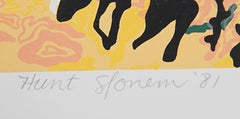
Sans titre (Cramer 61; Mourlot 434), Le plafond de l'Opéra

Sans titre (Cramer 61; Mourlot 434), Le plafond de l'Opéra

By Marc Chagall

Located in Southampton, NY

Lithograph on vélin paper. Paper Size: 13 x 9.5 inches. Inscription: Unsigned and unnumbered, as issued. Catalogue raisonné references: Cain, Julien, and Fernand Mourlot. Chagall Lit...

Category

1960s Expressionist Prints and Multiples
Materials

Lithograph

Marc Chagall, The Lovers under the Moon, from Tales of Boccaccio, 1950

Marc Chagall, The Lovers under the Moon, from Tales of Boccaccio, 1950

By Marc Chagall

Located in Southampton, NY

This exquisite lithograph by Marc Chagall (1887–1985), titled Les Amoureux sous la Lune (The Lovers under the Moon), from Contes de Boccace, peintures du manuscrit des ducs de Bourgogne, Bibliotheque de l'Arsenal (Ms. no. 5193) (Tales of Boccaccio, Paintings from the Manuscript of the Dukes of Burgundy, Library of the Arsenal), Lavis de Marc Chagall, from Verve, Revue Artistique et Litteraire, Vol. VI, No. 24, originates from the 1950 issue published by Editions de la revue Verve, Paris, under the direction of Teriade, Editeur, Paris, and printed by Draeger Freres, Maitres-Imprimeurs, Paris, 1950. This tender and poetic composition exemplifies Chagall’s lifelong fascination with love, dream, and transcendence. Les Amoureux sous la Lune radiates intimacy and serenity, its nocturnal palette and floating forms capturing the timeless romance between lovers united under the moon’s luminous gaze. Executed as a lithograph on velin du Marais paper, this work measures 14 x 10.5 inches. Unsigned and unnumbered as issued. The edition exemplifies the exquisite craftsmanship of the Draeger Freres atelier, celebrated for its precision and tonal richness in printing fine artworks. Artwork Details: Artist: Marc Chagall (1887–1985) Title: Les Amoureux sous la Lune (The Lovers under the Moon), from Contes de Boccace (Tales of Boccaccio), Verve, Revue Artistique et Litteraire, Vol. VI, No. 24, 1950 Medium: Lithograph on velin du Marais paper Dimensions: 14 x 10.5 inches Inscription: Unsigned and unnumbered as issued Date: 1950 Publisher: Editions de la revue Verve, Paris, under the direction of Teriade, Editeur, Paris Printer: Draeger Freres, Maitres-Imprimeurs, Paris Condition: Well preserved, consistent with age and medium Provenance: From Verve, Revue Artistique et Litteraire, Vol. VI, No. 24, published by Editions de la revue Verve, Paris, 1950 Notes: Excerpted from the album (translated from French), This Verve issue contains the lavis that Marc Chagall composed to illustrate Tales of Boccaccio's Decameron and the paintings on the same theme of the Manuscript of the Dukes of Burgundy preserved in the Arsenal Library. Marc Chagall executed the cover of this work which was completed printing on April 20, 1950 on the presses of Maitres-Imprimeurs, the Draeger Freres. About the Publication: This 1950 issue of Verve, Revue Artistique et Litteraire, titled Contes de Boccace (Tales of Boccaccio), was devoted to the great Italian humanist Giovanni Boccaccio and illuminated manuscripts from the 15th century, interpreted and revived through the eyes of modern artists. Under the artistic direction of Teriade, Marc Chagall contributed a series of lyrical paintings and lavis that reimagined these Renaissance themes with his signature dreamlike color, tenderness, and spiritual symbolism. The issue juxtaposed Chagall’s contemporary vision with the rich heritage of medieval illumination, bridging centuries of artistic imagination. Printed by the master craftsmen of Draeger Freres, the publication stands as a testament to Verve’s tradition of uniting art, literature, and history in one luxurious volume that celebrates the continuity of human creativity from the Middle Ages to modernity. About the Artist: Marc Chagall (1887–1985) was a Belarus-born French painter, printmaker, and designer whose visionary imagination, radiant color, and deeply poetic symbolism made him one of the most beloved and influential artists of the 20th century. Rooted in the imagery of his Jewish heritage and the memories of his childhood in Vitebsk, Chagall’s art wove together themes of faith, love, folklore, and fantasy with a dreamlike modern sensibility. His unique style—merging elements of Cubism, Fauvism, Expressionism, and Surrealism—defied categorization, transforming ordinary scenes into lyrical meditations on memory and emotion. Influenced by Russian icon painting, medieval religious art, and the modern innovations of artists such as Pablo Picasso, Henri Matisse, and Georges Braque, Chagall developed a profoundly personal visual language filled with floating figures, vibrant animals, musicians, and lovers that symbolized the transcendent power of imagination and love. During his early years in Paris, he became an integral part of the Ecole de Paris circle, forming friendships with Amedeo Modigliani, Fernand Leger, and Sonia Delaunay, and his creative spirit resonated with that of his peers and successors—Alexander Calder, Alberto Giacometti, Salvador Dali, Joan Miro, Wassily Kandinsky, Marcel Duchamp, and Man Ray—artists who, like Chagall, sought to push the boundaries of perception, emotion, and form. Over a prolific career that spanned painting, printmaking, stained glass, ceramics, and stage design, Chagall brought an unparalleled poetic sensibility to modern art, infusing even the most abstract subjects with human warmth and spiritual depth. His works are held in the most prestigious museums around the world, including the Museum of Modern Art, the Centre Pompidou, the Tate, and the Guggenheim, where they continue to inspire generations of artists and collectors. The highest price ever paid for a Marc Chagall artwork is approximately $28.5 million USD, achieved in 2017 at Sotheby’s New York for Les Amoureux (1928). Marc Chagall Les...

Category

1950s Expressionist Prints and Multiples
Materials

Lithograph

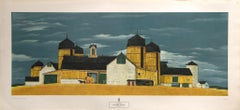
GEFALLEN (Killed in Action)

GEFALLEN (Killed in Action)

By Käthe Kollwitz

Located in Santa Monica, CA

KATHE KOLLWITZ (1867-1945) GEFALLEN (Killed in Action) 1920 (Klipstein 153 (1st state, a of c of 2 states) Lithograph on laid paper. Image 16 ¼ x 15 ¼ inches, Large Full Sheet, 25 ½...

Category

1920s Expressionist Prints and Multiples
Materials

Lithograph

"Bread" lithograph by Käthe Kollwitz

"Bread" lithograph by Käthe Kollwitz

By Käthe Kollwitz

Located in Soquel, CA

Bold lithograph titled "Bread" by Kathe Kollwitz (German, 1867-1945). This piece is one of the Lithographic reproductions of the original lithographs, plate 2 from a series of 10, pr...

Category

1940s Expressionist Prints and Multiples

Materials

Paper, Ink, Lithograph

Marc Chagall, The Lion of Judah and the Tablets of the Law, 1962

Marc Chagall, The Lion of Judah and the Tablets of the Law, 1962

By Marc Chagall

Located in Southampton, NY

This exquisite lithograph by Marc Chagall (1887–1985), titled Le lion de Juda et les Tables de la Loi (The Lion of Judah and the Tablets of the Law), from the album Marc Chagall, The...

Category

1960s Expressionist Prints and Multiples

Materials

Lithograph

Marc Chagall, Bercy Quay, from Derriere le miroir, 1954

Marc Chagall, Bercy Quay, from Derriere le miroir, 1954

By Marc Chagall

Located in Southampton, NY

This exquisite lithograph by Marc Chagall (1887–1985), titled Quai de Bercy (Bercy Quay), from the folio Derriere le miroir, No. 67–68, originates from the 1954 edition published by Maeght Editeur, Paris, and printed by Mourlot Freres, Paris, 1954. Quai de Bercy captures Chagall’s poetic vision of Paris as a dreamlike landscape where memory, color, and emotion converge. The work’s lyrical composition and radiant palette embody Chagall’s deep affection for the city that shaped his artistic identity, blending reality and reverie in perfect harmony. Executed as a lithograph on velin paper, this work measures 15 x 22 inches, with centerfold as issued. Unsigned and unnumbered as issued. The edition exemplifies the superb craftsmanship of Mourlot Freres, Paris. Artwork Details: Artist: Marc Chagall (1887–1985) Title: Quai de Bercy (Bercy Quay), from the folio Derriere le miroir, No. 67–68 Medium: Lithograph on velin paper Dimensions: 15 x 22 inches (38.1 x 55.88 cm), with centerfold as issued Inscription: Unsigned and unnumbered as issued Date: 1954 Publisher: Maeght Editeur, Paris Printer: Mourlot Freres, Paris Catalogue raisonne reference: Cramer, Patrick, and Meret Meyer. Marc Chagall: Catalogue Raisonne des Livres Illustres. Patrick Cramer Editeur, 1995, illustration 24; Mourlot, Fernand, and Marc Chagall. Chagall Lithographe I: 1922–1957. Andre Sauret, 1960, illustration 93. Condition: Well preserved, consistent with age and medium Provenance: From the folio Derriere le miroir, No. 67–68, published by Maeght Editeur, Paris; printed by Mourlot Freres, Paris, 1954 Notes: On the occasion of the ‘Paris’ exhibition, Marc Chagall created for this triple issue of Derriere Le Miroir XII pages of Lithography. About the Publication: Derriere le miroir (Behind the Mirror) was one of the most important art publications of the 20th century, created and published by Maeght Editeur in Paris from 1946 to 1982. Founded by the visionary art dealer and publisher Aime Maeght, the series served as both an exhibition catalogue and a work of art in its own right, uniting original lithographs by leading modern and contemporary artists with critical essays, poetry, and design of the highest quality. Printed by master lithographers such as Mourlot Freres and Arte, Derriere le miroir became synonymous with the artistic vanguard of postwar Europe. Each issue was devoted to a single artist or theme and published to accompany exhibitions at the Galerie Maeght in Paris, featuring works by Pablo Picasso, Henri Matisse, Georges Braque, Joan Miro, Marc Chagall, Alexander Calder, Fernand Leger, and Alberto Giacometti, among others. The publication reflected Maeght’s belief that art should be both accessible and elevated—an ideal realized through its luxurious production values, meticulous printing, and collaboration with the greatest creative minds of its time. About the Artist: Marc Chagall (1887–1985) was a Belarus-born French painter, printmaker, and designer whose visionary imagination, radiant color, and deeply poetic symbolism made him one of the most beloved and influential artists of the 20th century. Rooted in the imagery of his Jewish heritage and the memories of his childhood in Vitebsk, Chagall’s art wove together themes of faith, love, folklore, and fantasy with a dreamlike modern sensibility. His unique style—merging elements of Cubism, Fauvism, Expressionism, and Surrealism—defied categorization, transforming ordinary scenes into lyrical meditations on memory and emotion. Influenced by Russian icon painting, medieval religious art, and the modern innovations of artists such as Pablo Picasso, Henri Matisse, and Georges Braque, Chagall developed a profoundly personal visual language filled with floating figures, vibrant animals, musicians, and lovers that symbolized the transcendent power of imagination and love. During his early years in Paris, he became an integral part of the Ecole de Paris circle, forming friendships with Amedeo Modigliani, Fernand Leger, and Sonia Delaunay, and his creative spirit resonated with that of his peers and successors—Alexander Calder, Alberto Giacometti, Salvador Dali, Joan Miro, Wassily Kandinsky, Marcel Duchamp, and Man Ray—artists who, like Chagall, sought to push the boundaries of perception, emotion, and form. Over a prolific career that spanned painting, printmaking, stained glass, ceramics, and stage design, Chagall brought an unparalleled poetic sensibility to modern art, infusing even the most abstract subjects with human warmth and spiritual depth. His works are held in the most prestigious museums around the world, including the Museum of Modern Art, the Centre Pompidou, the Tate, and the Guggenheim, where they continue to inspire generations of artists and collectors. The highest price ever paid for a Marc Chagall artwork is approximately 28.5 million USD, achieved in 2017 at Sotheby’s New York for Les Amoureux (1928). Marc Chagall Quai de Bercy 1954, Chagall Derriere le miroir No. 67–68, Chagall Mourlot lithograph, Chagall Maeght...

Category

1950s Expressionist Prints and Multiples
Materials

Lithograph

Bateau-Mouche au Bouquet (Mourlot 352; Cramer 53), Marc Chagall

Bateau-Mouche au Bouquet (Mourlot 352; Cramer 53), Marc Chagall

By Marc Chagall

Located in Southampton, NY

Lithograph on Arches paper. Edition: 180, plus proofs. Inscription: unsigned and unnumbered, as issued. Good Condition; never framed or matted. Notes: Extracted from the folio, Regar...

Category

1960s Expressionist Prints and Multiples
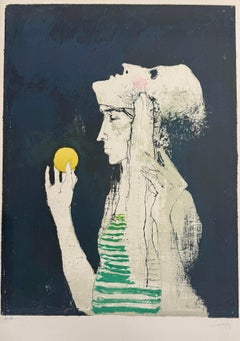
Materials

Lithograph

Faith Ringgold, Four Little Girls Bombed in a Church, 2007

Faith Ringgold, Four Little Girls Bombed in a Church, 2007

By Faith Ringgold

Located in Southampton, NY

This exquisite silkscreen by Faith Ringgold (1930–2024), titled Four Little Girls Bombed in a Church, from the folio Letter from Birmingham City Jail, originates from the 2007 editio...

Category

Early 2000s Expressionist Prints and Multiples
Materials

Screen

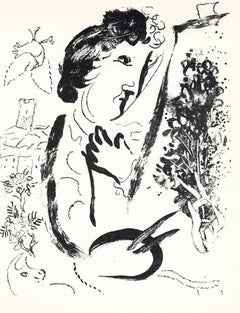
Marc Chagall, The Artist and the City, from Derriere le miroir, 1981

Marc Chagall, The Artist and the City, from Derriere le miroir, 1981

By Marc Chagall

Located in Southampton, NY

This exquisite lithograph by Marc Chagall (1887–1985), titled L’Artiste et la Ville (The Artist and the City), from the folio Derriere le miroir, No. 246, originates from the 1981 ed...

Category

1970s Expressionist Prints and Multiples
Materials

Lithograph

Male Nude, Photorealist Lithograph by Lowell Nesbitt

Male Nude, Photorealist Lithograph by Lowell Nesbitt

By Lowell Nesbitt

Located in Long Island City, NY

Artist: Lowell Blair Nesbitt, American (1933 - 1993) Titles: Male Nude 2 Year: 1979 Medium: Lithograph, signed and numbered in pencil Edition: 175 Paper Size: 44 x 30 in. (111.76 ...

Category

1970s Expressionist Prints and Multiples
Materials

Lithograph

Faith Ringgold, Montgomery Bus Boycott, Letter from Birmingham City Jail, 2007

Faith Ringgold, Montgomery Bus Boycott, Letter from Birmingham City Jail, 2007

By Faith Ringgold

Located in Southampton, NY

This exquisite silkscreen by Faith Ringgold (1930–2024), titled Montgomery Bus Boycott, from the folio Letter from Birmingham City Jail, originates from the 2007 edition published by...

Category

Early 2000s Expressionist Prints and Multiples
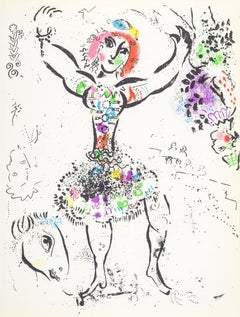
Materials

Screen

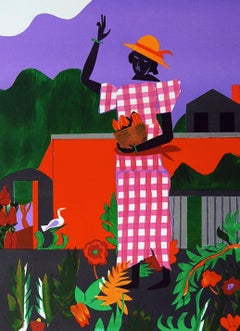
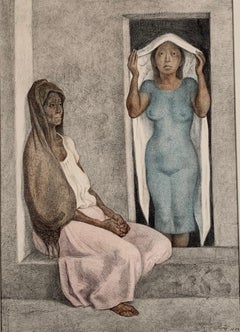
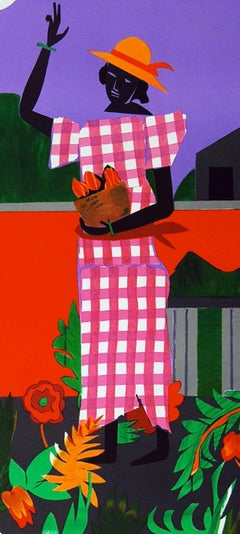
Girl in the Garden (Gelburd/Rosenberg 62), Romare Bearden

Girl in the Garden (Gelburd/Rosenberg 62), Romare Bearden

By Romare Bearden

Located in Fairfield, CT

Artist: Romare Bearden (1911-1988) Title: Girl in the Garden (Gelburd/Rosenberg 62) Year: 1979 Medium: Lithograph on vélin d’Arches paper Edition: 33/150, plus proofs Size: 28.75 x 2...

Category

1970s Expressionist Prints and Multiples
Materials

Lithograph

Chagall, Composition, Le Dur Désir de Durer (after)

Chagall, Composition, Le Dur Désir de Durer (after)

By Marc Chagall

Located in Southampton, NY

Lithograph on vélin bouffant d'Alfa paper. Inscription: unsigned and unnumbered, as issued. Good condition. Notes: From the volume, Le Dur Désir de Durer, illustré par Marc Chagall, ...

Category

1950s Expressionist Prints and Multiples
Materials

Lithograph

Elke Up Side Down : Tribute to Woman - Original etching

Elke Up Side Down : Tribute to Woman - Original etching

By Georg Baselitz

Located in Paris, IDF

Georg Baselitz (1938) Elke Up Side Down : Tribute to Woman Original etching On Rives vellum 66 x 50 cm (c. 26 x 20 in) Authenticated with Chalcographie of Louvre Museum blind stamp ...

Category

21st Century and Contemporary Expressionist Prints and Multiples
Materials

Etching

Marc Chagall, The Bride, from Derriere le miroir, 1951 (after)

Marc Chagall, The Bride, from Derriere le miroir, 1951 (after)

By Marc Chagall

Located in Southampton, NY

This exquisite lithograph after Marc Chagall (1887–1985), titled La Mariee (The Bride), from the folio Derriere le miroir, Sur Quatre Murs, No. 36-37-38, originates from the 1951 edition published by Maeght Editeur, Paris, and printed by Mourlot Freres, Paris, 1951. The composition captures Chagall’s poetic vision of love and mysticism, blending dreamlike imagery and radiant color into a lyrical meditation on devotion and imagination. Executed as a lithograph on velin paper, this work measures 15 x 11 inches. Unsigned and unnumbered as issued. The edition exemplifies the superb craftsmanship of Mourlot Freres, Paris. Artwork Details: Artist: Marc Chagall (1887–1985) Title: La Mariee (The Bride), from the folio Derriere le miroir, Sur Quatre Murs, No. 36-37-38 Medium: Lithograph on velin paper Dimensions: 15 x 11 inches (38.1 x 27.9 cm) Inscription: Unsigned and unnumbered as issued Date: 1951 Publisher: Maeght Editeur, Paris Printer: Mourlot Freres, Paris Condition: Well preserved, consistent with age and medium Provenance: From the folio Derriere le miroir, Sur Quatre Murs, No. 36-37-38, published by Maeght Editeur, Paris; printed by Mourlot Freres, Paris, 1951 About the Publication: Derriere le miroir (Behind the Mirror) was one of the most important art publications of the 20th century, created and published by Maeght Editeur in Paris from 1946 to 1982. Founded by the visionary art dealer and publisher Aime Maeght, the series served as both an exhibition catalogue and a work of art in its own right, uniting original lithographs by leading modern and contemporary artists with critical essays, poetry, and design of the highest quality. Printed by master lithographers such as Mourlot Freres and Arte, Derriere le miroir became synonymous with the artistic vanguard of postwar Europe. Each issue was devoted to a single artist or theme and published to accompany exhibitions at the Galerie Maeght in Paris, featuring works by Pablo Picasso, Henri Matisse, Georges Braque, Joan Miro, Marc Chagall, Alexander Calder, Fernand Leger, and Alberto Giacometti, among others. The publication reflected Maeght's belief that art should be both accessible and elevated—an ideal realized through its luxurious production values, meticulous printing, and collaboration with the greatest creative minds of its time. About the Artist: Marc Chagall (1887–1985) was a Belarus-born French painter, printmaker, and designer whose visionary imagination, radiant color, and deeply poetic symbolism made him one of the most beloved and influential artists of the 20th century. Rooted in the imagery of his Jewish heritage and the memories of his childhood in Vitebsk, Chagall's art wove together themes of faith, love, folklore, and fantasy with a dreamlike modern sensibility. His unique style—merging elements of Cubism, Fauvism, Expressionism, and Surrealism—defied categorization, transforming ordinary scenes into lyrical meditations on memory and emotion. Influenced by Russian icon painting, medieval religious art, and the modern innovations of artists such as Pablo Picasso, Henri Matisse, and Georges Braque, Chagall developed a profoundly personal visual language filled with floating figures, vibrant animals, musicians, and lovers that symbolized the transcendent power of imagination and love. During his early years in Paris, he became an integral part of the Ecole de Paris circle, forming friendships with Amedeo Modigliani, Fernand Leger, and Sonia Delaunay, and his creative spirit resonated with that of his peers and successors—Alexander Calder, Alberto Giacometti, Salvador Dali, Joan Miro, Wassily Kandinsky, Marcel Duchamp, and Man Ray—artists who, like Chagall, sought to push the boundaries of perception, emotion, and form. Over a prolific career that spanned painting, printmaking, stained glass, ceramics, and stage design, Chagall brought an unparalleled poetic sensibility to modern art, infusing even the most abstract subjects with human warmth and spiritual depth. His works are held in the most prestigious museums around the world, including the Museum of Modern Art, the Centre Pompidou, the Tate, and the Guggenheim, where they continue to inspire generations of artists and collectors. The highest price ever paid for a Marc Chagall artwork is approximately $28.5 million USD, achieved in 2017 at Sotheby's New York for Les Amoureux (1928). Marc Chagall La...

Category

1950s Expressionist Prints and Multiples
Materials

Lithograph

SPANISH STILL LIFE WITH GARLIC Signed Lithograph Abstract Vegetables, Black Wash

SPANISH STILL LIFE WITH GARLIC Signed Lithograph Abstract Vegetables, Black Wash

Located in Union City, NJ

SPANISH STILL LIFE WITH GARLIC by the Spanish artist Carlos Pradal, is an original hand drawn, stone lithograph printed by hand in Paris France using traditional hand lithography techniques on buff color archival printmaking paper, 100% acid free. SPANISH STILL LIFE WITH GARLIC presents a modern still life portrait depicting abstract vegetables - three round onions with a head of garlic positioned toward the center. A broad sweeping charcoal black wash dominates the background creating a dramatic staging for the red and orange vegetable shapes; the off white color of the paper forms the garlic bulb creating contrast for this expressive, energetic Spanish still life composition. Print size - 17 x 20.25 inches, unframed, very good condition, pencil signed by Pradal, inscribed E.A.(Epreuve Artiste) with personal dedication to the master printer Image size - 13 x 16.25 inches Year - c. 1974 About the artist: Carlos Pradal(1923-1988) Spanish ceramist, painter and illustrator was the son of Republican deputy Gabriel Pradal from Almeria, Andalusia. In 1939, his family was forced into exile and settled in France, in Toulouse. In 1956 he obtained a Spanish license and became an auxiliary teacher. He practiced drawing and painting at the same time, following the lessons of Raoul Bergougnan. In 1972, he moved to Paris, where he became a friend of the painters Peinado and Orlando Pelayo. When Franco died...

Category

1970s Expressionist Prints and Multiples
Materials

Lithograph

"Krankes Mädchen" original woodcut

"Krankes Mädchen" original woodcut

By Erich Heckel

Located in Henderson, NV

Medium: original woodcut. Printed in 1920 for the Deutsche Graphiker der Gegenwart portfolio, and published in Leipzig by Klinkhardt & Biermann in an edition of 500. Catalogue re...

Category

1920s Expressionist Prints and Multiples
Materials

Woodcut

Marc Chagall, The Ceiling of the Paris Opera, 1965 (after)

Marc Chagall, The Ceiling of the Paris Opera, 1965 (after)

By Marc Chagall

Located in Southampton, NY

This exquisite lithograph after Marc Chagall (1887–1985), titled Le Plafond de l’Opera de Paris (The Ceiling of the Paris Opera), from the album Le plafond de l’Opera de Paris par Ma...

Category

1960s Expressionist Prints and Multiples
Materials

Lithograph

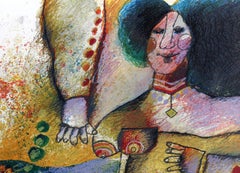
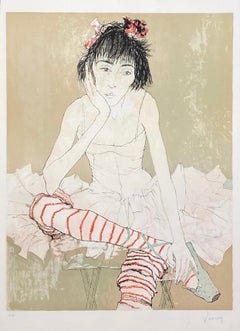
Mujere
Mujere

Mujere

By Raul Soldi

Located in San Francisco, CA

This artwork "Mujere" c.1960 is an original color silkscreen by noted Argentinian artist Raul Soldi, 1905-1994. It is hand signed and numbered 12/15 P.A in pencil by the artist. The image size is 22.75 x 17 inches, sheet size is 26.65 x 21.5 inches. It is in very good condition, colors are fresh and bright. About the artist: Raúl Soldi was born in Buenos Aire in 1905. He was an argentine plastic artist of recognized international experience. In 1920 he began drawing and painting. He makes reproductions of Quinquela Martín...

Category

Mid-20th Century Expressionist Prints and Multiples
Materials

Screen

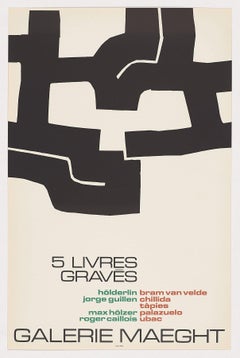
signed original etching - Artist's Proof

signed original etching - Artist's Proof

By Jack Levine

Located in Henderson, NV

Medium: original soft ground etching. Signed in pencil and annotated "Artist's Proof". Printed in 1967 for the Dreigroschen Film portfolio and published by Touchstone Publishers. Thi...

Category

1960s Expressionist Prints and Multiples
Materials

Etching

Marc Chagall, The Sunday, from Derriere le miroir, 1954

Marc Chagall, The Sunday, from Derriere le miroir, 1954

By Marc Chagall

Located in Southampton, NY

This exquisite lithograph by Marc Chagall (1887–1985), titled Le Dimanche (The Sunday), from the folio Derriere le miroir, No. 67–68, originates from the 1954 edition published by Ma...

Category

1950s Expressionist Prints and Multiples

Materials

Lithograph

"Schwartzer Fleck" original woodcut

"Schwartzer Fleck" original woodcut

By Wassily Kandinsky

Located in Henderson, NV

Medium: original woodcut. Catalogue reference Roethel 145. Printed in Paris in 1938 for the art revue XXe Siecle (issue number 3). Image size: 7 x 8 1/2 inches (170 x 218 mm). Sheet ...

Category

1930s Expressionist Prints and Multiples

Materials

Woodcut

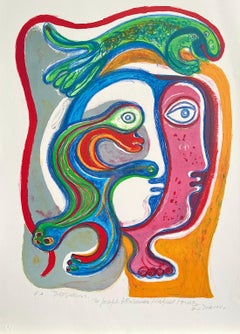
Le Pieton de Paris
Le Pieton de Paris

Le Pieton de Paris

By Théo Tobiasse

Located in San Francisco, CA

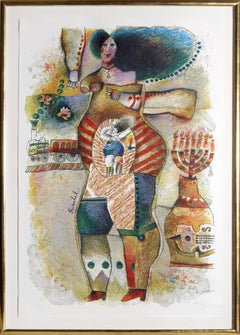
Artist: Teo Tobiasse (French/Israeli, 1927-2012) Title: "Le Pieton de Paris" Year: c.1975 Medium: Color lithograph Edition: Numbered 42/175 in pencil Paper: Japan paper Image ...

Category

Mid-20th Century Expressionist Prints and Multiples
Materials

Lithograph

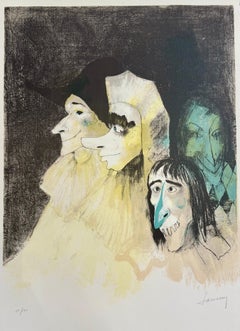
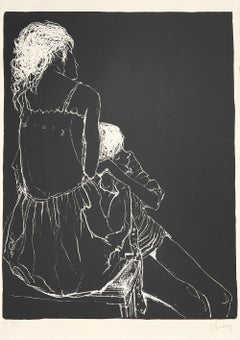
La balance romaine, 1986, original lithograph by Jean Jansem, handsigned

La balance romaine, 1986, original lithograph by Jean Jansem, handsigned

By Jean Jansem

Located in Les Acacias GE, GE

Jean Jansem (1920-2013) La balance romaine, 1986 Lithographie sur papier Japon Signée en bas à droite et justifiée Hors Commerce 50 x 65 cm / 54 x 76 cm Très rare exemplaire D'un...

Category

Late 20th Century Expressionist Prints and Multiples
Materials

Lithograph

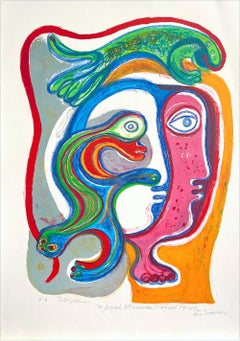
Daybreak in Alabama, Sunrise Is Coming After While

Daybreak in Alabama, Sunrise Is Coming After While

Located in Southampton, NY

Silkscreen on vélin d’Arches paper. Paper Size: 14 x 11 inches. Inscription: Unsigned and unnumbered, as issued. Notes: From the folio, Bookmarks in the Pages of Life, 1998. Published by The Limited Editions Club, New York; printed by Drexel Press, Inc. Long Island City, 1998. Excerpted from the folio, CCC examples, designed, hand-set in Monotype Perpetua, printed, and hand-bound by Michael and Winifred Bixler, Skaneateles, New York. Paper made in France at Arches. Silkscreens printed by the Drexel Press, Inc. Long Island City, New York. PHOEBE BEASLEY...

Category

1990s Expressionist Prints and Multiples
Materials

Screen

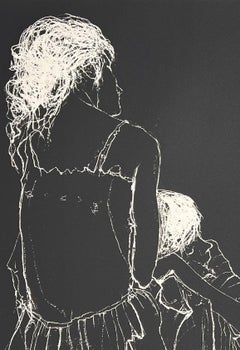
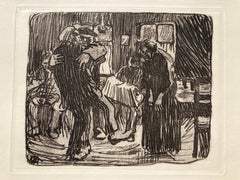
Chloé Innocente 1979 Lithograph Print, Nude Figurative, 61x84 cm

Chloé Innocente 1979 Lithograph Print, Nude Figurative, 61x84 cm

By Jean Jansem

Located in Les Acacias GE, GE

Jean Jansem (1920-2013) Chloé innocente, 1979 Lithographie sur papier Arches, justifiée Signée en bas à droite 55 x 76 cm / 61 x 84,5 cm Bibliographie: CR Jansem, 1984, n°417 "D...

Category

Late 20th Century Expressionist Prints and Multiples
Materials

Lithograph

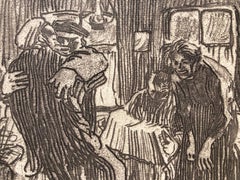
Le coffre et la lanterne, 1986, original lithograph by Jean Jansem, handsigned

Le coffre et la lanterne, 1986, original lithograph by Jean Jansem, handsigned

By Jean Jansem

Located in Les Acacias GE, GE

Jean Jansem (1920-2013) Le coffre et la lanterne, 1986 Lithographie sur papier Arches Signée en bas à droite et justifiée en bas à gauche 67 x 51 cm / 76 x 54 cm D'une édition à 30...

Category

Late 20th Century Expressionist Prints and Multiples
Materials

Lithograph

Expressionist prints and multiples for sale on 1stDibs.
Find a wide variety of authentic Expressionist prints and multiples available for sale on 1stDibs. Works in this style were very popular during the 21st Century and Contemporary, but contemporary artists have continued to produce works inspired by this movement. If you’re looking to add prints and multiples created in this style to introduce contrast in an otherwise neutral space in your home, the works available on 1stDibs include elements of orange, blue, purple, green and other colors. Many Pop art paintings were created by popular artists on 1stDibs, including Marc Chagall, Corneille, Anna Ticho, and Sandro Chia. Frequently made by artists working with Lithograph, and Paper and other materials, all of these pieces for sale are unique and have attracted attention over the years. Not every interior allows for large Expressionist prints and multiples, so small editions measuring 3 inches across are also available. Prices for prints and multiples made by famous or emerging artists can differ depending on medium, time period and other attributes. On 1stDibs, the price for these items starts at $50 and tops out at $975,000, while the average work sells for $1,005.