American Realist Art

to
337
1,115
885
866
603
591
Overall Width
to
Overall Height
to
2
116
2,399
1,578
14
59
73
172
219
374
275
330
266
110
2
116,813
63,822
56,351
28,667
14,651
9,569
6,667
5,890
4,182
3,172
2,491
2,381
2,153
608
1,894
1,502
607
1,721
738
732
638
490
400
399
289
235
232
218
216
188
187
186
183
176
158
158
150
2,096
1,538
909
751
709
563
72
47
38
33
1,324
881
3,937
138
Style: American Realist
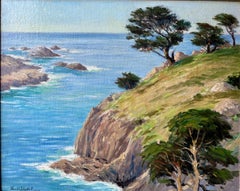
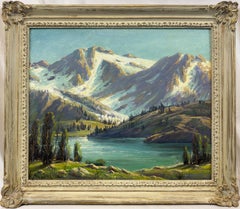
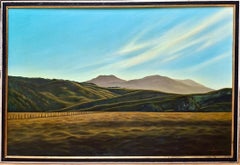
China Camp
China Camp

China Camp

By Willard Dixon

Located in Burlingame, CA

Willard Dixon is celebrated for contemporary landscapes that offer viewers a place of quiet reflection. Known for his luminous depictions of the American West, he captures space, lig...

Category

21st Century and Contemporary American Realist Art

Materials

Oil

American Clipper at Sea

American Clipper at Sea

Located in San Francisco, CA

This artwork "American Clipper at Sea" c.1990 is an oil painting on canvas by noted American artist Robert Sanders, b. 1950. It is signed at the lower r...

Category

Late 20th Century American Realist Art

Materials

Oil

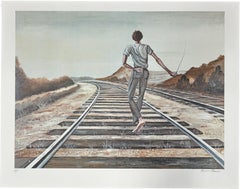
Destination Unknown, Ernie Barnes

Destination Unknown, Ernie Barnes

By Ernie Barnes

Located in Fairfield, CT

Artist: Earnie Barnes (1938-2009) Title: Destination Unknown Year: 1979 Medium: Lithograph on archival paper Size: 25 x 19.5 inches Edition: 120/300, plus proofs Condition: Good Insc...

Category

1970s American Realist Art

Materials

Lithograph

“His Last Friend, c. 1900” by Harry Roseland Old Man & Bird American Genre Scene

“His Last Friend, c. 1900” by Harry Roseland Old Man & Bird American Genre Scene

By Harry Roseland

Located in Yardley, PA

A wonderful example of Roseland’s beloved genre scenes from the turn of the 20th century. This painting depicts an elderly man seated at a cluttered table, gently interacting with a ...

Category

Early 20th Century American Realist Art

Materials

Canvas, Oil

Hydrofoil, Photorealist Lithograph by Raymond Loewy

Hydrofoil, Photorealist Lithograph by Raymond Loewy

By Raymond Loewy

Located in Long Island City, NY

Artist: Raymond Loewy, American (1893 - 1986) Title: Hydrofoil Year: 1978 Medium: Lithograph, signed and numbered in pencil Edition: 300 Image Size: 17 x 24 inches Size: 21 in. x 28 ...

Category

1970s American Realist Art

Materials

Lithograph

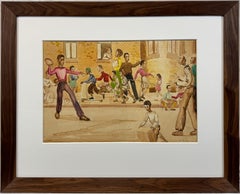
Unique Painting By Albert Pels WPA Artist!

Unique Painting By Albert Pels WPA Artist!

By Albert Pels

Located in New York, NY

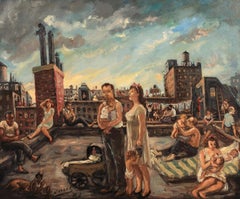
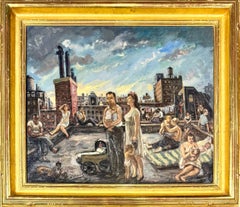
Albert Pels (1910-1998) Painting of a group of figures, c. 20th century. 12 x 16 in. Framed dimensions: 19 1/2 x 23 1/4 in. Albert Pels was an art educator and painter of figures, genre scenes, urban and rural images, and illustration. He also did murals and worked in the mediums of oil, fresco, and watercolor. He was born on May 7, 1910, in Cincinnati, Ohio and died at the age of eighty-eight on January 25, 1998 in New York City. Albert Pels was the son of Samuel and Frieda Pels. He had two children, Joan Barbara and Richard J.A. with his first wife Gertrude Ethel Jaeckel. He later married Yolanda Zemfler, a painter of impressionist art. While in Ohio, Pels attended the Cincinnati Art Academy in 1931 where he won several scholarships. After moving to New York, he continued his education at the Art Students League, Beaux Arts and the American School. At the Art Students League, Pels studied under Thomas Hart Benton, Kenneth Hayes Miller, and Alexander Brook. Under the tutelage of these mentors, Pels evolved his technique and style. Pels was a member of the National Society of Mural Painters, the Salmagundi Club, and the Society of Independent Artists. He was on the board of directors of the Arts Students League in 1939, as well as, on the board the WPA Artists...

Category

20th Century American Realist Art

Materials

Canvas, Oil

Original 1918 Tell That To The Marines vintage World War 1 poster  linen backed

Original 1918 Tell That To The Marines vintage World War 1 poster linen backed

By James Montgomery Flagg

Located in Spokane, WA

Original WWI James Montgomery Flagg Poster — “Tell That to the Marines!” (1918) — Rare Vintage Patriotic Artwork—archival linen backing and ready to frame. The poster edge was trimmed to 38.5 x 27.5 inches. Without the trim, the poster would grade as excellent (grade A), but with the trim, it is listed as B+. This is a rare and original World War I propaganda poster created by renowned American artist James Montgomery Flagg, famous for the iconic “I Want YOU for U.S. Army” Uncle Sam poster...

Category

1910s American Realist Art

Materials

Lithograph

Mid Century Original Oil Plein Air Landscape of Western Nevada

Mid Century Original Oil Plein Air Landscape of Western Nevada

Located in Soquel, CA

Original Antique Western Nevada Desert Oil Landscape by Phoebe K. Higgins A mid-century desert oil landscape of Western Nevada by Phoebe K. Higgins (American, 1895 - c 1960), circa ...

Category

1950s American Realist Art

Materials

Linen, Oil, Board

"Winter Season, Slate Hill, NY " American Landscape Oil Painting on Board Framed

"Winter Season, Slate Hill, NY " American Landscape Oil Painting on Board Framed

By Kristina Nemethy

Located in New York, NY

A fine depiction of a winter season in Slate Hill New York. For this wonderful composition, Nemethy uses a fine technique which depicts the snow filled landscape with joyful colors c...

Category

2010s American Realist Art

Materials

Oil, Board

Bolinas Lagoon
Bolinas Lagoon

Bolinas Lagoon

By Willard Dixon

Located in Burlingame, CA

Willard Dixon is celebrated for contemporary landscapes that offer viewers a place of quiet reflection. Known for his luminous depictions of the American West, he captures space, lig...

Category

21st Century and Contemporary American Realist Art

Materials

Canvas, Oil

“The Lobstermen”
“The Lobstermen”

“The Lobstermen”

By Gordon Grant

Located in Southampton, NY

Beautiful original watercolor and gouache on archival paper by the famous American marine artist, Gordon Grant. The artwork depicts two rugged lobstermen bringing their catch ashore...

Category

1930s American Realist Art

Materials

Watercolor, Gouache, Archival Paper

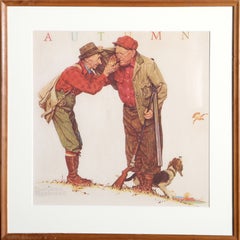
Rockwell, Snow Sculpture Snowman

Rockwell, Snow Sculpture Snowman

By After Norman Rockwell

Located in Fairfield, CT

Artist: Norman Rockwell (1894-1978) Title: Snow Sculpture Snowman Year: 1985 Edition: 350/350, plus proofs. Medium: Offset lithograph on wove paper Size: 24.5 x 18.5 inches Condition...

Category

1980s American Realist Art

Materials

Offset

America! America!
America! America!

America! America!

Located in San Francisco, CA

This artwork titled "America! America" is a color lithograph after noted American artist James Fetherolf, 1925-1994. It is hand signed at the lower rig...

Category

Late 20th Century American Realist Art

Materials

Lithograph

Ten Mile Beach Diptych, Oil on Canvas, American Realist, 21st Century

Ten Mile Beach Diptych, Oil on Canvas, American Realist, 21st Century

By Gail Chase-Bien

Located in Burlingame, CA

Gail Chase Bien paints thinly layered oil on linen over extended periods (from months to years) to complete a single work of art. Taking cues from nature’s extraordinary visual offerings — specifically, the play of light as it touches upon water and earth — her nature-inspired works bridge realism and abstraction, and they convey a thin veneer of the of human spirit. Complex, rich, and slow in the making, the paintings, with their serene simplicity, are intended to be viewed and enjoyed over time. Ten Mile Beach...

Category

21st Century and Contemporary American Realist Art

Materials

Canvas, Oil

Andrew Wyeth, Brinton’s Mill, from The Four Seasons (after)

Andrew Wyeth, Brinton’s Mill, from The Four Seasons (after)

By Andrew Wyeth

Located in Southampton, NY

This exquisite lithograph after Andrew Wyeth (1917–2009), titled Brinton’s Mill, originates from the distinguished 1962 folio The Four Seasons: Paintings and Drawings by Andrew Wyeth. Published and printed by Art in America Company, Inc., New York, the edition exemplifies Wyeth’s intimate connection to the Brandywine Valley landscape. Brinton’s Mill, a historic gristmill near Chadds Ford, Pennsylvania—later purchased and restored by Wyeth and his wife Betsy—appears here bathed in the gentle light of seasonal transition, a motif of both personal and regional significance rendered with quiet reverence and precision. Executed on velin paper, this lithograph measures 17 x 13 inches (43.2 x 33 cm). As issued, it is unsigned and unnumbered, representing the folio’s authentic format. The Four Seasons series was conceived by the editors of Art in America in collaboration with Andrew and Betsy Wyeth, who selected drawings from the artist’s studio to illustrate the cycle of renewal and passage. Each image in the series embodies Wyeth’s profound sensitivity to mood, atmosphere, and the subtle interplay between man and nature. Artwork Details: Artist: After Andrew Wyeth (1917–2009) Title: Brinton’s Mill, from The Four Seasons, Paintings and Drawings by Andrew Wyeth, 1962 Medium: Lithograph on velin paper Dimensions: 17 x 13 inches (43.2 x 33 cm) Inscription: Unsigned and unnumbered, as issued Date: 1962 Publisher: Art in America Company, Inc., New York Printer: Art in America Company, Inc., New York Condition: Well preserved, consistent with age and medium Provenance: From the 1962 folio The Four Seasons, Paintings and Drawings by Andrew Wyeth, published and printed by Art in America Company, Inc., New York Notes: Excerpted from the 1962 folio: "In 1962 the editors of Art in America proposed to Wyeth a portfolio of images of his recent dry-brush drawings. The artist and his wife suggested the theme, 'The Four Seasons,' because of the essential role played in his work by the cycle of the seasons. The drawings were selected by Andrew and Betsy Wyeth from works in the house and studio at Chadds Ford, supplemented by some owned by friends. With a few exceptions they had never been exhibited or reproduced. The plates were made directly from the originals. In these drawings Wyeth's loving concentration on the object is fully revealed. But as always in his work, this concern with the tangible is balanced by sensibility to mood, to the emotion arising from the actual. They are pervaded with a sense of the season—the exact time of year, the hour of the day, the quality of the light. To the truth and subtlety with which he captures these intangible factors, these drawings owe their poignant poetry." About the Artist: Andrew Wyeth (1917–2009) was an American visual artist and one of the best-known painters of the mid-20th century. Although he considered himself an abstractionist, Wyeth’s work is characterized by a meticulous realism imbued with psychological depth and atmosphere. He often painted the landscapes and people surrounding his homes in Chadds Ford, Pennsylvania, and Cushing, Maine, creating an intimate record of American rural life. The son of the celebrated illustrator N. C. Wyeth, Andrew trained under his father before developing his own deeply personal visual language inspired by Winslow Homer, Henry David Thoreau, and King Vidor. His wife, Betsy Wyeth, was both his muse and career manager, while his son Jamie Wyeth continued the family’s artistic legacy. Among Wyeth’s best-known works is Christina’s World (1948), housed in the Museum of Modern Art, New York—a quintessential image of 20th-century American art. His other notable series include The Helga Pictures and his window studies, each reflecting a profound meditation on solitude, memory, and perception. Wyeth was the first painter to receive both the Presidential Medal of Freedom and the Congressional Gold Medal, and was elected to the French Académie des Beaux-Arts in 1980. In 2022, Andrew Wyeth's painting Day Dream sold for USD 23.29 million at Christie’s New York, setting a world record for the artist. Andrew Wyeth lithograph...

Category

1960s American Realist Art

Materials

Lithograph

Bright Sea
Bright Sea

Bright Sea

By Willard Dixon

Located in Burlingame, CA

Willard Dixon is celebrated for contemporary landscapes that offer viewers a place of quiet reflection. Known for his luminous depictions of the American West, he captures space, lig...

Category

21st Century and Contemporary American Realist Art

Materials

Oil

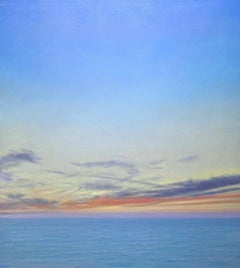
Evening Sea
Evening Sea

Evening Sea

By Willard Dixon

Located in Burlingame, CA

Willard Dixon is celebrated for contemporary landscapes that offer viewers a place of quiet reflection. Known for his luminous depictions of the American West, he captures space, lig...

Category

21st Century and Contemporary American Realist Art

Materials

Oil, Canvas

'Sketching Wisconsin' original oil painting, Signed

'Sketching Wisconsin' original oil painting, Signed

By John Steuart Curry

Located in Milwaukee, WI

John Steuart Curry "Sketching Wisconsin," 1946 oil on canvas 31.13 x 28 inches, canvas 39.75 x 36.75 x 2.5 inches, frame Signed and dated lower right Overall excellent condition Presented in a 24-karat gold leaf hand-carved wood frame John Steuart Curry (1897-1946) was an American regionalist painter active during the Great Depression and into World War II. He was born in Kansas on his family’s farm but went on to study art in Chicago, Paris and New York as young man. In Paris, he was exposed to the work of masters such as Peter Paul Rubens, Eugène Delacroix and Jacques-Louis David. As he matured, his work showed the influence of these masters, especially in his compositional decisions. Like the two other Midwestern regionalist artists that are most often grouped with him, Grant Wood (American, 1891-1942) and Thomas Hart Benton (American, 1889-1975), Curry was interested in representational works containing distinctly American subject matter. This was contrary to the popular art at the time, which was moving closer and closer to abstraction and individual expression. Sketching Wisconsin is an oil painting completed in 1946, the last year of John Steuart Curry’s life, during which time he was the artist-in-residence at the University of Wisconsin in Madison. The painting is significant in Curry’s body of work both as a very revealing self-portrait, and as a landscape that clearly and sensitively depicts the scenery of southern Wisconsin near Madison. It is also a portrait of the artist’s second wife, Kathleen Gould Curry, and is unique in that it contains a ‘picture within a picture,’ a compositional element that many early painting masters used to draw the eye of the viewer. This particular artwork adds a new twist to this theme: Curry’s wife is creating essentially the same painting the viewer is looking at when viewing Sketching Wisconsin. The triangular composition of the figures in the foreground immediately brings focus to a younger Curry, whose head penetrates the horizon line and whose gaze looks out towards the viewer. The eye then moves down to Mrs. Curry, who, seated on a folding stool and with her hand raised to paint the canvas on the easel before her, anchors the triangular composition. The shape is repeated in the legs of the stool and the easel. Behind the two figures, stripes of furrowed fields fall away gently down the hillside to a farmstead and small lake below. Beyond the lake, patches of field and forest rise and fall into the distance, and eventually give way to blue hills. Here, Curry has subverted the traditional artist’s self-portrait by portraying himself as a farmer first and an artist second. He rejects what he sees as an elitist art world of the East Coast and Europe. In this self-portrait he depicts himself without any pretense or the instruments of his profession and with a red tractor standing in the field behind him as if he was taking a break from the field work. Here, Curry’s wife symbolizes John Steuart Curry’s identity as an artist. Compared with a self-portrait of the artist completed a decade earlier, this work shows a marked departure from how the artist previously presented and viewed himself. In the earlier portrait, Curry depicted himself in the studio with brushes in hand, and with some of his more recognizable and successful canvases behind him. But in Sketching Wisconsin, Curry has taken himself out of the studio and into the field, indicating a shift in the artist’s self-conception. Sketching Wisconsin’s rural subject also expresses Curry’s populist ideals, that art could be relevant to anyone. This followed the broad educational objectives of UW’s artist-in-residence program. Curry was appointed to his position at the University of Wisconsin in 1937 and was the first person to hold any such position in the country, the purpose of which was to serve as an educational resource to the people of the state. He embraced his role at the University with zeal and not only opened the doors of his campus studio in the School of Agriculture to the community, but also spent a great deal of time traveling around the state of Wisconsin to visit rural artists who could benefit from his expertise. It was during his ten years in the program that Curry was able to put into practice his belief that art should be meaningful to the rural populace. However, during this time he also struggled with public criticism, as the dominant forces of the art market were moving away from representation. Perhaps it was Curry’s desire for public acceptance during the latter part of his career that caused him to portray himself as an Everyman in Sketching Wisconsin. Beyond its importance as a portrait of the artist, Sketching Wisconsin is also a detailed and sensitive landscape that shows us Curry’s deep personal connection to his environment. The landscape here can be compared to Wisconsin Landscape of 1938-39 (the Metropolitan Museum of Art), which presents a similar tableau of rolling hills with a patchwork of fields. Like Wisconsin Landscape, this is an incredibly detailed and expressive depiction of a place close to the artist’s heart. This expressive landscape is certainly the result of many hours spent sketching people, animals, weather conditions and topography of Wisconsin as Curry traveled around the state. The backdrop of undulating hills and the sweeping horizon, and the emotions evoked by it, are emphatically recognizable as the ‘driftless’ area of south-central Wisconsin. But while the Metropolitan’s Wisconsin Landscape conveys a sense of uncertainty or foreboding with its dramatic spring cloudscape and alternating bands of light and dark, Sketching Wisconsin has a warm and reflective mood. The colors of the foliage indicate that it is late summer and Curry seems to look out at the viewer approvingly, as if satisfied with the fertile ground surrounding him. The landscape in Sketching Wisconsin is also revealing of what became one of Curry’s passions while artist-in-residence at UW’s School of Agriculture – soil conservation. When Curry was a child in Kansas, he saw his father almost lose his farm and its soil to the erosion of The Dust Bowl. Therefore, he was very enthusiastic about ideas from UW’s School of Agriculture on soil conservation methods being used on Wisconsin farms. In Sketching Wisconsin, we see evidence of crop rotation methods in the terraced stripes of fields leading down the hillside away from the Curry’s and in how they alternate between cultivated and fallow fields. Overall, Sketching Wisconsin has a warm, reflective, and comfortably pastoral atmosphere, and the perceived shift in Curry’s self-image that is evident in the portrait is a positive one. After his rise to favor in the art world in the 1930’s, and then rejection from it due to the strong beliefs presented in his art, Curry is satisfied and proud to be farmer in this self-portrait. Curry suffered from high blood...

Category

1940s American Realist Art

Materials

Canvas, Oil

Jim Rey b.1938. CA/CO artist. Oil on canvas, "Watching the Wild Ones" 24 x 36

Jim Rey b.1938. CA/CO artist. Oil on canvas, "Watching the Wild Ones" 24 x 36

Located in Basalt, CO

Jim Rey b. 1939. Original oil on canvas painting with custom frame. 24 x 36 canvas size. This work was painted in 2004, at a most expressive time in Rey's career. From the art...

Category

Early 2000s American Realist Art

Materials

Canvas, Oil

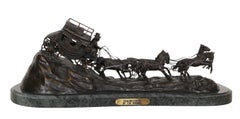
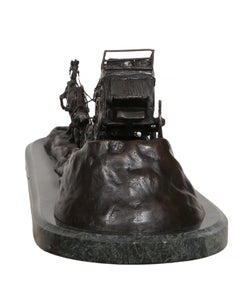
The Scalp, American Realist Bronze Sculpture after Frederic Remington

The Scalp, American Realist Bronze Sculpture after Frederic Remington

By Frederic Remington

Located in Long Island City, NY

A fine later casting of the famous Frederic Remington sculpture "The Scalp", cast in the 1970's or 1980's. Description: After Frederic Remington, American (1861 - 1909) - The Scalp...

Category

Late 20th Century American Realist Art

Materials

Bronze

Le Streghe, Grand and West Broadway

Le Streghe, Grand and West Broadway

By Stephen Magsig

Located in Fairfield, CT

When I think about the conventions of painting -- a tradition I respect immensely -- I notice that my concern has always been with the interplay of light and structure" says artist S...

Category

21st Century and Contemporary American Realist Art

Materials

Canvas, Oil

Aspen Grove Forest - Black & White Landscape Photograph

Aspen Grove Forest - Black & White Landscape Photograph

Located in Soquel, CA

The beauty of nature's rhythm is captured in this black and white landscape photograph of a forest of Aspen trees by American photographer and film maker, John Henry Johnson (America...

Category

1970s American Realist Art

Materials

Photographic Paper, Silver Gelatin

The Vera Stretz Murder Trial


The Vera Stretz Murder Trial
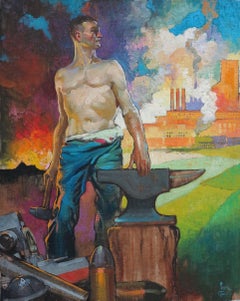
By William Sharp

Located in Fairlawn, OH

The Vera Stretz Murder Trial Lithograph, 1936 Signed in pencil lower right (see photo) Initialed W.S. in the image lower right (see photo) Dated in the image lower right (see photo) ...
Category

1930s American Realist Art

Materials

Lithograph

“Circus Yard” American Regionalist, Elephants, Tents, Performers, Clowns, Oil

“Circus Yard” American Regionalist, Elephants, Tents, Performers, Clowns, Oil

By Paul Sample

Located in Yardley, PA

“Circus Yard” by Paul Starrett Sample (American, 1896-1974). A vibrant circus scene by the noted American regionalist, Paul Starrett Sample. This work captures the lively bustle beh...

Category

Mid-20th Century American Realist Art

Materials

Canvas, Oil

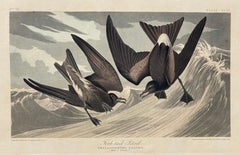
FORK -TAIL PETREL - PLATE CCLX from Audubon's Famous "THE BIRDS OF AMERICA"

FORK -TAIL PETREL - PLATE CCLX from Audubon's Famous "THE BIRDS OF AMERICA"

By After John James Audubon

Located in Santa Monica, CA

JOHN J. AUDUBON (1785 – 1851) FORK-TAIL PETREL - PLATE CCLX Audubon, John James. FORK-TAIL PETREL - PLATE CCLX OF "THE BIRDS OF AMERICA by John James Audubon. From the "Double Eleph...

Category

1830s American Realist Art

Materials

Etching, Aquatint

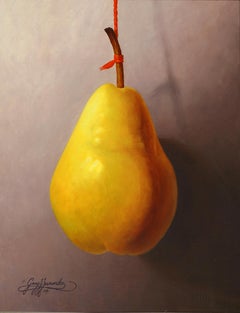
Whispered Bloom - original impressionism still life painting - contemporary art

Whispered Bloom - original impressionism still life painting - contemporary art

By James Zamora
Located in London, Chelsea
We offer complimentary worldwide shipping and cover all tariffs and import taxes for this artwork. This exceptional artwork is currently on display and available for sale at Signet C...

Category

21st Century and Contemporary American Realist Art

Materials

Canvas, Oil

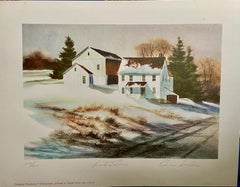
Winter's Over Lithograph, American Realist, Signed, Mid-20th Century

Winter's Over Lithograph, American Realist, Signed, Mid-20th Century

Located in Chesterfield, MI

Winter is serene in this landscape of a barn in winter as it begins to fade and head to spring. Owen Wexler is the artist; this is a limited edition lithograph signed and titled by him.

Category

Mid-20th Century American Realist Art

Materials

Lithograph

Circus Wagons
Circus Wagons

Circus Wagons

By Millard Sheets

Located in Los Angeles, CA

This watercolor is part of our exhibition America Coast to Coast: Artists of the 1930s Circus Wagons, 1927, watercolor on paper, signed and dated lower left, 10 x19 ¾ inches (sight), provenance includes Stary-Sheets Art Gallery (Gualala, CA); J. Ralph & Louis Stone Foundation; presented in a newer metal frame behind glazing About the Painting Millard Sheets was only twenty years old and in his third year of studies at the Chouinard Art Institute when he painted Circus Wagons. Despite his youth, Sheets was already an accomplished artist who had publicly exhibited his work and won prestigious prizes. Within several years, he would have his first solo exhibition at one of Los Angeles’ premiere galleries and become a painting instructor at his alma mater. In Circus Wagons we already see Sheets deft handling of the watercolor medium and his interest in the California Scene. In this case, Sheets captures a back lot view of a traveling circus, a subject he sometimes returned to, including in a color screen print in the collection of the National Gallery. Sheets made a career by painting what he knew and observed firsthand. This approach allowed Sheets to capture with authenticity the details of each narrative. Even with a narrowly limited palette and an economy of brushstrokes, Sheets effectively depicts the southern California scene with its strong and mysterious shadows, as well as the workers and circus animals. Seen through the hindsight of his six-decade long career, Circus Wagons offers a fascinating insight into the early development of California Scene painting which would by the mid-1930s become the best recognized style on the West Coast. About the Artist Millard Sheets was the dean of California watercolorists. His list of accomplishments is so extensive that his entry in Who was Who in American Art is over forty lines. Born in Pomona, California, Sheets became a painter at an early age, winning a prize at the Los Angeles County Fair in 1918. By the mid to late-1920s, Sheets became a regular at art exhibitions in the western part of the United States, winning several additional prizes before he reached the age of twenty-five. Sheets studied at the prestigious Chouinard Art Institute from 1925 through 1929 with Frank Tolles Chamberlin and Clarence Hinkle and had his first solo show with Los Angeles’ Dalzell Hatfield Gallery in 1929. During the 1930s, Sheets was invited to exhibit at almost every major American Museum and in many ways, his work came to represent the California watercolor school...

Category

1920s American Realist Art

Materials

Watercolor

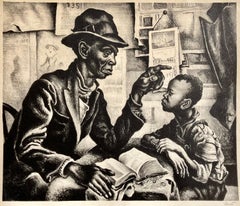
INSTRUCTION
INSTRUCTION

INSTRUCTION

By Thomas Hart Benton

Located in Santa Monica, CA

THOMAS HART BENTON (1889-1975) INSTRUCTION 1940 (Fath 41) Lithograph, signed edition of 250 as published by Associated American Artists. 10 ¼” x 12 ¼”. Full margins, deckle edges....

Category

1940s American Realist Art

Materials

Lithograph

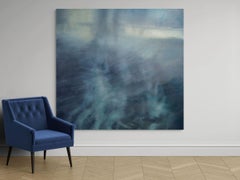
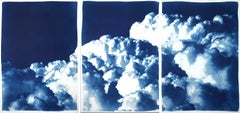
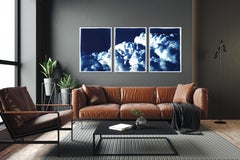
Waves of Clouds, Deep Blue Cyanotype Print, Pleasant Cloudy Sky, Large Triptych

Waves of Clouds, Deep Blue Cyanotype Print, Pleasant Cloudy Sky, Large Triptych

By Kind of Cyan

Located in Barcelona, ES

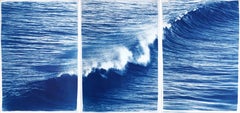
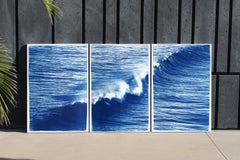
This series of cyanotype triptychs showcases the beauty of nature scenes, including stunning beaches and oceans, as well as the intricate textures of water, forests, and skies. These triptychs are large pieces that feature lush blues, making them an impressive addition to any beautifully designed space. Each triptych is printed by hand and carefully crafted to capture the unique essence of these natural environments, with a focus on the interplay of light and shadows, and the subtle nuances of tone and texture. The beach and ocean scenes depict the dynamic beauty of waves crashing against the shore, with the cyanotype process lending a dreamy, ethereal quality to the images. Similarly, the forest and wood scenes...

Category

2010s American Realist Art

Materials

Lithograph, Rag Paper

Les Gros Prunes, plums still life

Les Gros Prunes, plums still life

By Adam Lehr

Located in New York, NY

This still life of Plums is a top notch example of 19th century still life painting! Beautiful quality and striking but also spare and honest in nature which is what typified Americ...

Category

Early 1900s American Realist Art

Materials

Canvas, Oil

American Portrait of the Artist's Wife by Herman Hyneman

American Portrait of the Artist's Wife by Herman Hyneman

By Herman Hyneman

Located in New York, NY

Herman Hyneman (1849-1907) Portrait of the Artist's Wife, c. late 19th century Oil on canvas 21 1/2 x 29 1/2 in. Framed: 27 1/2 x 35 1/4 in. The following is from Peter Jung who credits "a friend named Jeff Gold on Long Island." Herman N. Hyneman (1849 - 1907) was born in 1849 to one of the most prominent Jewish families in Philadelphia. Unlike most Jewish families of the time, his embraced and encouraged his artistic talent. In 1874, Hyneman followed his first cousin Moses Ezekiel, National Academy member, to Europe to study. They first went to Germany and then to France where Hyneman began eight years of study with Leon Bonnat, the French Master. In Paris, the twenty-five year old Hyneman resided in a studio building at 75 Boulevard Clichy, with expatriates Frederic Arthur Bridgeman, Charles Sprague Pearce, Milne Ramsey, and Edwin Blashfield. Hyneman was clearly exposed to the works of these more experienced artists, as well as that of Walter Gay. In 1879, one of Hyneman's genre paintings, entitled "Desdemona", was accepted into the Paris Salon. That painting received favorable reviews both in Europe, and later in Philadlephia where it was exhibited alongside the works of other Philadelphia Artists exhibiting at the Salon that included Thomas Eakins, Pearce, Edward May...

Category

Late 19th Century American Realist Art

Materials

Oil

Belgian Contemporary Art by Hugo Pondz - Le Sens du Vent

Belgian Contemporary Art by Hugo Pondz - Le Sens du Vent

By Hugo Pondz

Located in Paris, IDF

C-Print on Argentic paper Others sizes are available upon simple request Shipping of the artwork will be done in a tube or flat in a crate with or without American box frame. Additional fees will be requested for this type of frame + shipping Hugo Pondz...

Category

2010s American Realist Art

Materials

Paper, C Print

Dorothy Vail Seated Male Figure Oil, ca. 1924

Dorothy Vail Seated Male Figure Oil, ca. 1924

Located in Astoria, NY

Dorothy Vail (American, XX), Seated Male Figure, Oil on Canvas, circa 1924, depicting man in green jacket leaning against stool, signed, marked "Art Students League" and "Dorothy Vai...

Category

1920s American Realist Art

Materials

Oil, Canvas

American Realist art for sale on 1stDibs.

Find a wide variety of authentic American Realist art available for sale on 1stDibs. Works in this style were very popular during the 21st Century and Contemporary, but contemporary artists have continued to produce works inspired by this movement. If you’re looking to add art created in this style to introduce contrast in an otherwise neutral space in your home, the works available on 1stDibs include elements of blue, purple, orange, yellow and other colors. Many Pop art paintings were created by popular artists on 1stDibs, including Slim Aarons, Willard Dixon, Nicholas Evans-Cato, and Mitchell Funk. Frequently made by artists working with Paint, and Oil Paint and other materials, all of these pieces for sale are unique and have attracted attention over the years. Not every interior allows for large American Realist art, so small editions measuring 0.99 inches across are also available. Prices for art made by famous or emerging artists can differ depending on medium, time period and other attributes. On 1stDibs, the price for these items starts at $51 and tops out at $2,750,000, while the average work sells for $2,800.