Feminist Art

to
88
210
69
91
40
107
Overall Width
to
Overall Height
to
217
300
1
3
4
6
10
131
23
26
116,631
63,745
56,604
28,175
14,617
9,485
6,639
5,846
4,155
3,128
2,525
2,356
2,130
609
237
197
16
242
174
104
76
53
42
38
34
33
31
18
17
17
16
16
15
13
11
11
11
230
197
179
177
128
34
22
19
18
9
73
23
413
73
Style: Feminist
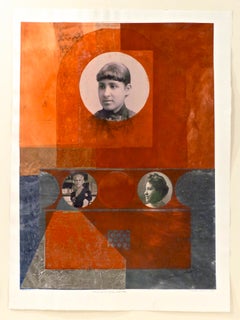
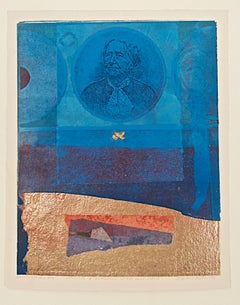
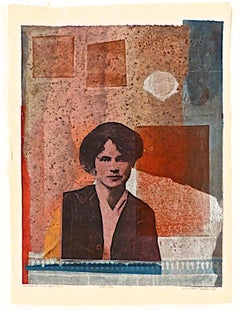
Benton_Mary Church Terrell Life Cycle_monoprint, collage, Oberlin College Women

Benton_Mary Church Terrell Life Cycle_monoprint, collage, Oberlin College Women

By Suzanne Benton

Located in Darien, CT

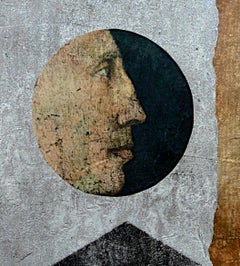
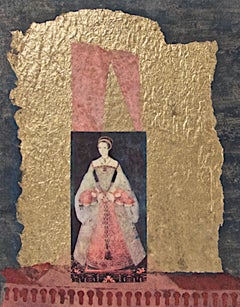
Pioneer Activists is an ongoing series of artworks by Suzanne Benton. Consisting largely of monoprints with Chine collé where the artist references suffragists, feminists, writers and educators from the 19th century and beyond. These works embody the artist’s stellar theme of bringing past to present. Mary Church Terrell Life Cycle, monoprint with Chine collé, 27 x 20 inches, 2018 (1863 – 1954) Born in Memphis, Tennessee, Mary Church Terrell was a well-known author and activist for equal rights. Terrell’s parents were freed slaves who grew to become financially successful. A part of a rising African-American upper middle class, Terrell used her position to campaign for racial equality and women’s suffrage. I In 1884, she graduated from Oberlin College...

Category

2010s Feminist Art

Materials

Laid Paper, Monoprint

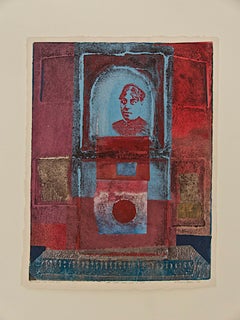
Benton, Spirit of Hope (Alice Paul) monoprint with Chine collé, PioneerActivist

Benton, Spirit of Hope (Alice Paul) monoprint with Chine collé, PioneerActivist

By Suzanne Benton

Located in Darien, CT

Pioneer Activists is an ongoing series of artworks by Suzanne Benton. Consisting largely of monoprints with Chine collé where the artist references suffragists, feminists, writers and educators from the 19th century and beyond. These works embody the artist’s stellar theme of bringing past to present. The Spirit of Hope (Alice Paul) One of the prime dedicated vocal leaders of the women’s suffrage movement in the twentieth century, Alice Paul actively campaigned for the passage of the 19th Amendment...

Category

2010s Feminist Art

Materials

Laid Paper, Monoprint

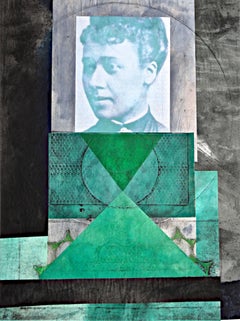
Benton, The Gaze (Dorothy Canfield Fisher) monoprint with Chine collé, Feminist

Benton, The Gaze (Dorothy Canfield Fisher) monoprint with Chine collé, Feminist

By Suzanne Benton

Located in Darien, CT

Pioneer Activists is an ongoing series of artworks by Suzanne Benton. Consisting largely of monoprints with Chine collé where the artist references suffragists, feminists, writers and educators from the 19th century and beyond. These works embody the artist’s stellar theme of bringing past to present. THE GAZE Monoprint with Chine collé, 13 ¼ x 10 inches, 1999 Dorothy Canfield Fisher 1879 –1958) Dorothy Canfield Fisherwas an educational reformer, social activist, and best-selling American author in the early 20th century. She strongly supported women's rights, racial equality, and lifelong education. Eleanor Roosevelt named her one of the ten most influential women in the United States. The Women’s Rights Historical Park exhibited Benton's growing series in 1995 during the 75th anniversary of women’s suffrage. The Oberlin College...

Category

1990s Feminist Art

Materials

Silver

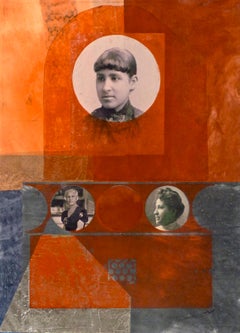
Benton_Mary Church Terrell Over Time_monoprint and collage, Oberlin College Women

Benton_Mary Church Terrell Over Time_monoprint and collage, Oberlin College Women

By Suzanne Benton

Located in Darien, CT

Pioneer Activists is an ongoing series of artworks by Suzanne Benton. Consisting largely of monoprints with Chine collé where the artist references suffragists, feminists, writers and educators from the 19th century and beyond. These works embody the artist’s stellar theme of bringing past to present. Mary Church Terrell Over Time, monoprint with Chine collé, 27 x 20 inches, 2018 (1863 – 1954) Mary Church Terrell Life Cycle, monoprint with Chine collé, 27 x 20 inches, 2018 (1863 – 1954) Born in Memphis, Tennessee, Mary Church Terrell was a well-known author and activist for equal rights. Terrell’s parents were freed slaves who grew to become financially successful. A part of a rising African-American upper middle class, Terrell used her position to campaign for racial equality and women’s suffrage. I In 1884, she graduated from Oberlin College...

Category

2010s Feminist Art

Materials

Laid Paper, Monoprint

Benton, Anna Julia Cooper, monoprint with Chine collé, Oberlin College Women

Benton, Anna Julia Cooper, monoprint with Chine collé, Oberlin College Women

By Suzanne Benton

Located in Darien, CT

Pioneer Activists is an ongoing series of artworks by Suzanne Benton. Consisting largely of monoprints with Chine collé where the artist references suffragists, feminists, writers and educators from the 19th century and beyond. These works embody the artist’s stellar theme of bringing past to present. Anna Julia Cooper, monoprint with Chine collé, 27 x 19 3/4 inches, 2020 1858-1964 An educator, administrator, and social reformer, Anna J. Haywood Cooper was born a slave in Raleigh, North Carolina, and spent fourteen years fighting to gain access to Latin and Greek classes reserved for men at St. Augustine's Normal School and Collegiate Institute, from which she graduated in 1877. She married the Reverend A. C. Cooper at St. Augustine's, where each taught, but after his death in 1881, she began the second phase of her education at Oberlin. That year she joined Mary Eliza Church (Terrell) and Ida A. Gibbs Hunt in the "gentleman's" collegiate course and graduated in 1884. One of the pioneer African-American women who earned a B.A., she returned to Oberlin for an M.A. in Mathematics, which she received in 1887. Continuing her trailblazing for race and gender issues, Cooper wrote the feminist manifesto, A Voice from the South, spoke at feminist and educational conferences, and achieved many honors such as membership in the American Negro Academy. She was a leader in the National Association of Colored Women. Aligned with DuBois's philosophy, she spoke at the 1900 Pan African Conference in London, arguing for self-determination for African-Americans and an end to colonialism in Africa and apartheid in South Africa. Anna Cooper received a Ph.D. at the Sorbonne in 1925 after a decade of study while she also maintained a full-time teaching load. Her thesis was on French policies during slavery. She had been shaping Frelinghuysen University in Washington, D.C., an interdenominational Bible college, and became its president in 1930, at the age of 72. She died in 1964 at the age of 105. In preparation for this ongoing series the artist received images from Legacy Magazine’s photo archive of 19th Century women writers, understanding that she’d obtain permission from each source to use the photos in her artworks. Permissions were received and she began the series in 1992. The Harvard/Radcliffe Schlesinger library then offered Suzanne access to relevant microfiche images that were employed in subsequent works. In addition, the library exhibited the in 1992. The collector Vivien Leone purchased and donated one to the library, and the library subsequently purchased two more. The Women’s Rights Historical Park in Seneca Falls, NY, exhibited the growing series in 1995 during the 75th anniversary of women’s suffrage. The Oberlin College...

Category

2010s Feminist Art

Materials

Monoprint, Laid Paper

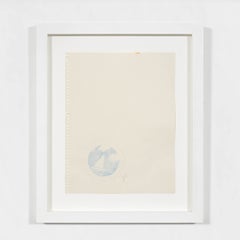
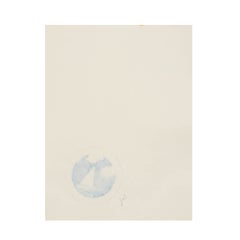
Benton, Antoinette B Blackwell and the Blue Circle, monoprint, Oberlin College

Benton, Antoinette B Blackwell and the Blue Circle, monoprint, Oberlin College

By Suzanne Benton

Located in Darien, CT

Pioneer Activists is an ongoing series of artworks by Suzanne Benton. Consisting largely of monoprints with Chine collé where the artist references suffragists, feminists, writers and educators from the 19th century and beyond. These works embody the artist’s stellar theme of bringing past to present. Antoinette B Blackwell in the Blue Circle, monoprint with Chine collé, 9 3/4 x 7 3/4 inches, 1996 (1825 –1921) Reverend Antoinette Louisa Brown Blackwell graduated from the Ladies¹Department in 1847 and returned to Oberlin to take theology courses, having been denied the right to participate as a member of the Theological Department.  When she completed the course of study in 1850, she was also denied ordination and recognition at commencement, but in 1853 was ordained in her home church in Butler New York and, despite Oberlin Collége...

Category

1990s Feminist Art

Materials

Gold Leaf

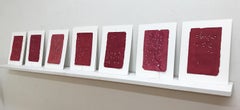
Patricia Miranda, Seeing Red Lace, 2020, egg tempera on panel

Patricia Miranda, Seeing Red Lace, 2020, egg tempera on panel

By Patricia Miranda

Located in Darien, CT

Patricia Miranda's work includes interdisciplinary installation, textile, paper and books. The textiles incorporated in these new pieces are vintage linens from her Italian and Irish grandmothers and sourced from friends and strangers around the country. Each donation is documented and integrated into the work. Textile as a form that wraps the body from cradle to grave. The role of lacemaking in the lives of women both economically and historically is packed with metaphorical potential. The relationship of craft and women’s work (re)appropriated by artists today to environmental and social issues is integral to the artist's research. Her work is process oriented; materials are submerged in natural dyes from oak gall wasp nests, cochineal insects, turmeric, indigo, and clay. She forages for raw materials, cook dyes, grind pigments, ecofeminist actions that consider environmental impacts of objects. The process is left visible as dyestuff is unfiltered in the vat and finished work. Sewn into larger works, Miranda incorporates hair, pearls, bone beads, Milagros, cast plaster. The distinct genetics and environmental and cultural history of each material asserts its voice as collaborator rather than medium. The lace inserts a visceral femininity into the pristine gallery, and exerts a ghostly trace of the history of domestic labor. The combination of earth and lace references human and environmental devastation and the conflation of nature and women’s bodies as justifications for exploitation. Mournful and solastalgic, they are lamentations to the violence against women and the earth. Patricia Miranda is an interdisciplinary artist, curator, educator, and founder of The Crit Lab, graduate-level critique seminars and Residency for artists, and MAPSpace project space. She has been Visiting Artist at Vermont Studio Center, the Heckscher Museum, and University of Utah; and been awarded residencies at I-Park, Weir Farm, Vermont Studio Center, and Julio Valdez Printmaking Studio. She received an Anonymous Was a Woman Covid19 Artist Relief Grant, an artist grant from ArtsWestchester/New York State Council on the Arts, and was part of a year-long NEA grant working with homeless youth. Miranda currently teaches graduate curatorial studies at Western Colorado University, and develops programs for K-12, museums, and institutions such as Franklin Furnace. Her work has been exhibited at ODETTA, NYC; ABC No Rio, NYC; Alexey von...

Category

2010s Feminist Art

Materials

Fabric, Plastic, Dye

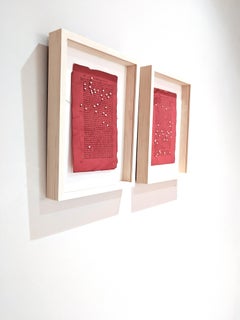
Patricia Miranda, Lamentations for Rebecca; 2020, lace, cochineal dye, thread

Patricia Miranda, Lamentations for Rebecca; 2020, lace, cochineal dye, thread

By Patricia Miranda

Located in Darien, CT

Patricia Miranda's work includes interdisciplinary installation, textile, paper and books. The textiles incorporated in these new pieces are vintage linens from her Italian and Irish grandmothers and sourced from friends and strangers around the country. Each donation is documented and integrated into the work. Textile as a form that wraps the body from cradle to grave. The role of lacemaking in the lives of women both economically and historically is packed with metaphorical potential. The relationship of craft and women’s work (re)appropriated by artists today to environmental and social issues is integral to the artist's research. Her work is process oriented; materials are submerged in natural dyes from oak gall wasp nests, cochineal insects, turmeric, indigo, and clay. She forages for raw materials, cook dyes, grind pigments, ecofeminist actions that consider environmental impacts of objects. The process is left visible as dyestuff is unfiltered in the vat and finished work. Sewn into larger works, Miranda incorporates hair, pearls, bone beads, Milagros, cast plaster. The distinct genetics and environmental and cultural history of each material asserts its voice as collaborator rather than medium. The lace inserts a visceral femininity into the pristine gallery, and exerts a ghostly trace of the history of domestic labor. The combination of earth and lace references human and environmental devastation and the conflation of nature and women’s bodies as justifications for exploitation. Mournful and solastalgic, they are lamentations to the violence against women and the earth. Patricia Miranda is an interdisciplinary artist, curator, educator, and founder of The Crit Lab, graduate-level critique seminars and Residency for artists, and MAPSpace project space. She has been Visiting Artist at Vermont Studio Center, the Heckscher Museum, and University of Utah; and been awarded residencies at I-Park, Weir Farm, Vermont Studio Center, and Julio Valdez Printmaking Studio. She received an Anonymous Was a Woman Covid19 Artist Relief Grant, an artist grant from ArtsWestchester/New York State Council on the Arts, and was part of a year-long NEA grant working with homeless youth. Miranda currently teaches graduate curatorial studies at Western Colorado University, and develops programs for K-12, museums, and institutions such as Franklin Furnace. Her work has been exhibited at ODETTA, NYC; ABC No Rio, NYC; Alexey von...

Category

2010s Feminist Art

Materials

Ceramic, Fabric, Thread, Dye, Found Objects
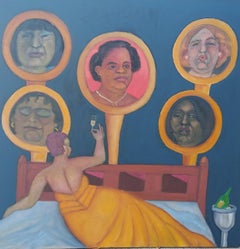
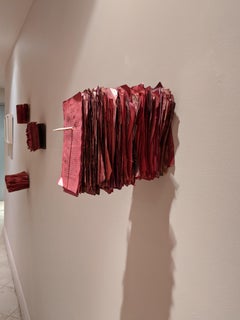
Patricia Miranda, Lamentations for Ermenegilda; 2020, lace, cochineal dye, thread

Patricia Miranda, Lamentations for Ermenegilda; 2020, lace, cochineal dye, thread

By Patricia Miranda

Located in Darien, CT

Patricia Miranda's work includes interdisciplinary installation, textile, paper and books. The textiles incorporated in these new pieces are vintage linens from her Italian and Irish grandmothers and sourced from friends and strangers around the country. Each donation is documented and integrated into the work. Textile as a form that wraps the body from cradle to grave. The role of lacemaking in the lives of women both economically and historically is packed with metaphorical potential. The relationship of craft and women’s work (re)appropriated by artists today to environmental and social issues is integral to the artist's research. Her work is process oriented; materials are submerged in natural dyes from oak gall wasp nests, cochineal insects, turmeric, indigo, and clay. She forages for raw materials, cook dyes, grind pigments, ecofeminist actions that consider environmental impacts of objects. The process is left visible as dyestuff is unfiltered in the vat and finished work. Sewn into larger works, Miranda incorporates hair, pearls, bone beads, Milagros, cast plaster. The distinct genetics and environmental and cultural history of each material asserts its voice as collaborator rather than medium. The lace inserts a visceral femininity into the pristine gallery, and exerts a ghostly trace of the history of domestic labor. The combination of earth and lace references human and environmental devastation and the conflation of nature and women’s bodies as justifications for exploitation. Mournful and solastalgic, they are lamentations to the violence against women and the earth. Patricia Miranda is an interdisciplinary artist, curator, educator, and founder of The Crit Lab, graduate-level critique seminars and Residency for artists, and MAPSpace project space. She has been Visiting Artist at Vermont Studio Center, the Heckscher Museum, and University of Utah; and been awarded residencies at I-Park, Weir Farm, Vermont Studio Center, and Julio Valdez Printmaking Studio. She received an Anonymous Was a Woman Covid19 Artist Relief Grant, an artist grant from ArtsWestchester/New York State Council on the Arts, and was part of a year-long NEA grant working with homeless youth. Miranda currently teaches graduate curatorial studies at Western Colorado University, and develops programs for K-12, museums, and institutions such as Franklin Furnace. Her work has been exhibited at ODETTA, NYC; ABC No Rio, NYC; Alexey von...

Category

2010s Feminist Art

Materials

Ceramic, Fabric, Thread, Dye, Found Objects
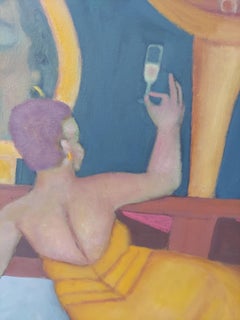
Mary Dwyer, Rachel Carson, 2017, watercolor on paper, Suffragists and Journalists

Mary Dwyer, Rachel Carson, 2017, watercolor on paper, Suffragists and Journalists

By Mary Dwyer

Located in Darien, CT

The inspiration for Mary Dwyer's work revolves around storytelling, historic events, a love of political cartoons and early portraiture paintings. An integral part of this work is research. Spurred by an innate curiosity, she creates political, historical and personal paintings. In the last few years Dwyer has been researching and painting the American Suffrage movement. In this research she discovered that the people working as both Suffragists and Abolitionists also started their own newspapers and published their own pamphlets. They became journalists, as no one was covering their story. Dwyer's paintings are a celebration of both the voter’s rights activist and the visual pageantry of the Suffrage movement. The use of color in her Suffrage paintings speak to the vibrant pageantry and the visual marketing used during the movement. Sashes, button, banners, flags and ribbons were made by women and marketed for women. The significance of free press is paramount in a free and fair society. The importance of journalist has become a theme that has continued in her present work. Recently she has been working on a Memorial Paintings...

Category

2010s Feminist Art

Materials

Acrylic, Archival Paper

Suzanne Benton, Facing Each Other, 1974, Copper, Coated Steel

Suzanne Benton, Facing Each Other, 1974, Copper, Coated Steel

By Suzanne Benton

Located in Darien, CT

In 1972, the women’s movement was in full flower. Suzanne Benton had been an early activist, a founder and organizer of NOW Chapters, CT Feminists in the Arts, Women, Metamorphosis 1 (in New Haven, CT, the first women’s art festival in the USA). She'd already been creating metal sculpted masks and working with them in mask tale performances of Women of Myth and Heritage. Her inaugural performance of Sarah and Hagar n 1972 took place at Lincoln Center in NYC. Benton then became the artistic director and producer of an evening on Broadway, Four Chosen Women (performers included herself as mask tale performer, author Anais Nin, actress Vinie Burroughs and dancer Joan Stone). The evening took place at the Edison Theatre, November 22, 1972. While developing the evening on Broadway, Benton met renowned Swedish actress and Hollywood star, Viveca Lindfors. Viveca was then working on her solo performance, I AM A WOMAN, and was looking for a unique theatre set for the show. The happenstance that brought Viveca and Suzanne together. At that same time, recent travel to Macchu Picchu inspired her with the mountain’s great stones sitting on the edge of precipices. These vast stones led her to create welded steel Seated Sculpture Works. Viveca was intrigued by the concept and let her own imagination fly. Imagining a set of welded steel sculpture, she took the leap in commissioning Suzanne with complete faith in artist's ability to fulfill her mandate. Benton created groups of welded sculptures for two theater sets. Protection is one of three sculptures in first set created in 1973. Mother and Child, Pelvic Woman, Facing Each Other are three of five works from the 1974 second set. The first toured with her shows throughout the East Coast and into Toronto, Canada. The second set, created to nest together could travel as checked baggage for international and domestic airline travel. They flew to Denmark in 1980 for her performance at the UN sponsored 1980 Women’s International Conference, Copenhagen. In addition to creating the theatre sets, Benton mounted exhibitions of her masks and sculptures in the lobbies of theatres where she performed (NYC and Northampton). Continuing on with this theme, Becoming is her 1975 Seated Sculpture Work. The theatre sets were returned at the final end of its long run. These Seated Sculpture Works have often been featured in exhibitions, including both the 2003 and 2005 retrospectives. They are part of an oeuvre of 797 sculptures and masks. What attracted her to welded sculpture? This excerpt from her book, The Art of Welded Sculpture, Van Nostrand Reinhold, 1975 speaks of its lure: "Early in my life, when I had decided to become an artist, I had had an inner vision of being able to hold the physical material of my art in such a way as to bring it into existence with my hands. In welding, I wear a mask, a heavy apron, and gloves. I heat the metal and make it bend so smoothly and gracefully; I cut the metal, rigid metal, into endless shapes; I join the pieces by causing them to flow together with the heat of the flame. Welding was a return to my adolescent vision. It was fulfillment. At that beginning time I felt that even if I went no further, this experience in itself gave me astounding satisfaction. It was as thrilling as the moment of birth. It was my birth." (Pelvic Woman and Protection are illustrated in the book): What began in 1965 became by 2017 an oeuvre of 797 sculptures and masks. The magic of the welding mask...

Category

1970s Feminist Art

Materials

Copper, Steel

Dana Kane, Kelly Girls, 1996, color print

Dana Kane, Kelly Girls, 1996, color print

By Dana Kane

Located in Darien, CT

The Kelly Girls is a treasure trove of historical importance. First is the medium, color xerox printing. For anyone who worked in the alternative photography media, color xerox had a...

Category

1990s Feminist Art

Materials

Color

Dana Kane, Kelly Girls 1, 1996, color print

Dana Kane, Kelly Girls 1, 1996, color print

By Dana Kane

Located in Darien, CT

The Kelly Girls is a treasure trove of historical importance. First is the medium, color xerox printing. For anyone who worked in the alternative photography media, color xerox had a...

Category

1990s Feminist Art

Materials

Color

Dana Kane, Kelly Girls 2, 1996, color print

Dana Kane, Kelly Girls 2, 1996, color print

By Dana Kane

Located in Darien, CT

The Kelly Girls is a treasure trove of historical importance. First is the medium, color xerox printing. For anyone who worked in the alternative photography media, color xerox had a...

Category

1990s Feminist Art

Materials

Color

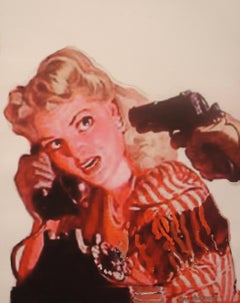
Ann Chernow, Wanted, 2015, Rag Paper, Etching

Ann Chernow, Wanted, 2015, Rag Paper, Etching

By Ann Chernow

Located in Darien, CT

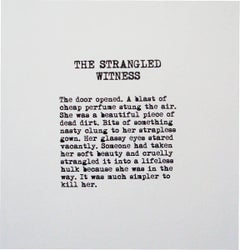
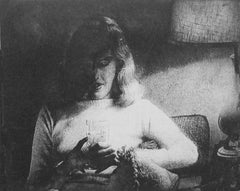
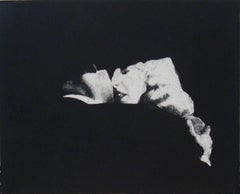
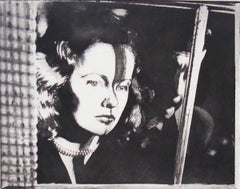
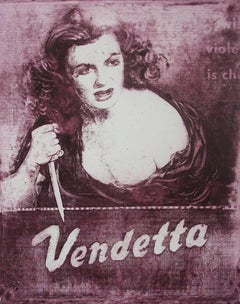
Ann Chernow’s work is based on impressions related to images from movies from the l930s and l940s. She uses film clips, studio publicity material, fan magazines and other memorabilia...

Category

2010s Feminist Art

Materials

Rag Paper, Etching

Ann Chernow, Noir II, 2016, Rag Paper, Etching

Ann Chernow, Noir II, 2016, Rag Paper, Etching

By Ann Chernow

Located in Darien, CT

Ann Chernow’s work is based on impressions related to images from movies from the l930s and l940s. She uses film clips, studio publicity material, fan magazines and other memorabilia...

Category

2010s Feminist Art

Materials

Rag Paper, Etching

Ann Chernow, Open Sesame, Rag Paper, Etching

Ann Chernow, Open Sesame, Rag Paper, Etching

By Ann Chernow

Located in Darien, CT

Ann Chernow’s work is based on impressions related to images from movies from the l930s and l940s. She uses film clips, studio publicity material, fan magazines and other memorabilia...

Category

2010s Feminist Art

Materials

Rag Paper, Etching

Figurative Oil on Canvas Painting of Farmer Woman at Well, Signed & Framed

Figurative Oil on Canvas Painting of Farmer Woman at Well, Signed & Framed

Located in Plainview, NY

A stunning large figurative painting of a working farmer woman sourcing water by a well. The painting features earthy colors in a green dark tone contrasting with the white outfit of...

Category

1990s Feminist Art

Materials

Canvas, Oil

Red Feathers #3

Red Feathers #3

Located in Red Bank, NJ

Red Feathers #3 by Carol Magnatta Painting, Women, Feminine, Feathers, Dancing, Sexy, Pastel, Provocative, Home Art, Wall Art, Home Decor, Wall Decor

Category

20th Century Feminist Art

Materials

Pastel

All Red Feathers

All Red Feathers

Located in Red Bank, NJ

All Red Feathers by carol Magnatta Painting, Women, Feminine, Feathers, Dancing, Sexy, Pastel, Provocative, Home Art, Wall Art, Home Decor, Wall Decor

Category

20th Century Feminist Art

Materials

Pastel

Lipstick
Lipstick

Adriana MarmorekLipstick, 2015

$9,280Sale Price|20% Off

Lipstick

By Adriana Marmorek

Located in New York, NY

wood, glass, tablet, electric cord and high definition video 2"11' loop

Category

2010s Feminist Art

Materials

Wood, Video

Business Women

Business Women

Located in Edinburgh, GB

Natalia Byrdina (Ukrainian, b.1984) graduated from art school, took additional courses in easel, lacquer-miniature and sculptural painting. 2020-2022 Higher school "learning environm...

Category

21st Century and Contemporary Feminist Art

Materials

Epoxy Resin, Oil

Cowgirl Tricks

Cowgirl Tricks

Located in Red Bank, NJ

Cowgirl Tricks by Carol Magnatta Painting, Feminine, Human Figure, Pastel and Oil, Wall Hanging, Wall Art, Sexy, Provocative,

Category

20th Century Feminist Art

Materials

Pastel

New tapestry Ukrainian folk art

New tapestry Ukrainian folk art

Located in Edinburgh, GB

New tapestry, my interpretation of modern, traditional Ukrainian folk art As part of the project on my idea before the war, I continue to implement my ideas, old and new. My arrival home gives me new strength and ideas. Despite the danger of living in a frontline city. My new tapestry is a modern interpretation of classic tapestries...

Category

2010s Feminist Art

Materials

Textile

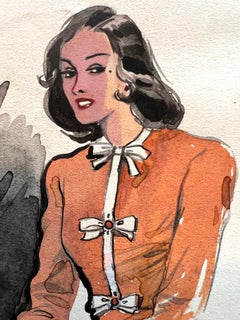
Pondering being Naked   - Sexy Girl taking off Bikini - Female Cartoonist

Pondering being Naked - Sexy Girl taking off Bikini - Female Cartoonist

Located in Miami, FL

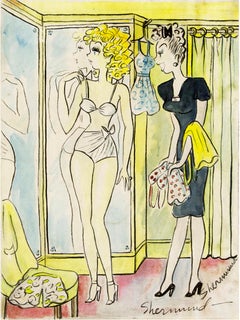
This work clearly has homosexual overtones which in the mid-'40s was as daring as showing nudity. I am not sure if this was the artist's intention but the salesgirl and the model look identical and she signs it twice Shermond. Added to this is a strobe light effect where the model's image is partly replicated giving the impression of 2 figures. She's lost in thought pondering the notion of removing the bows and seeing the consequences. Meanwhile, the sales girls ( perhaps her alta ego - perhaps an admirer ) eggs her on. Caption: "You can always remove the bows if you think they're too fussy." Cover cartoon for unknown publication - Signed "Shermund" twice in the lower right image, dated on verso, and captioned in graphite in the lower margin. Original Matte and not framed - Barbara Shermund...

Category

1940s Feminist Art

Materials

Ink, Watercolor, Graphite, Paper

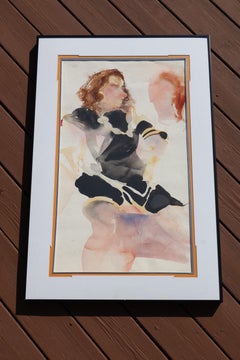
Anonymous Female Portrait Watercolor Painting, Framed, 2000-2009

Anonymous Female Portrait Watercolor Painting, Framed, 2000-2009

Located in Chesterfield, MI

An original impressionist style watercolor painting of a female portrait. It could also be viewed as abstract in style and the colors are minimal....perfect for decorating.

Category

Early 2000s Feminist Art

Materials

Watercolor

Yo Yo -  Feminist Female Illustrator

Yo Yo - Feminist Female Illustrator

By Barbara Nessim

Located in Miami, FL

The current work, Yo Yo, is rendered by a pioneering Feminist Female Illustrator a trailblazer and friend and roommate of Gloria Steinem. to include: "Yo Yo", 1967, signed and dated ...

Category

1960s Feminist Art

Materials

Ink, Watercolor, Archival Paper

SENSACIONES
SENSACIONES

SENSACIONES

Located in Barcelona, CT

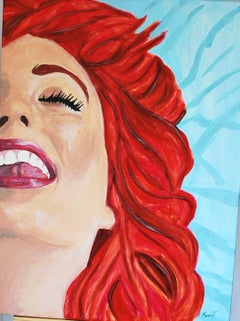
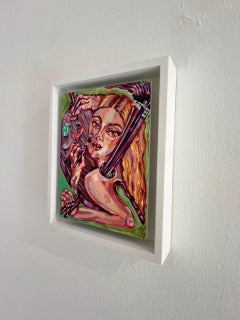
We can see the face of a woman who is very expressively feeling sensations that make her look the way we see her.

Category

2010s Feminist Art

Materials

Canvas, Acrylic

Orange Hat with Roses by Peggy Abrams

Orange Hat with Roses by Peggy Abrams

Located in Jacksonville, FL

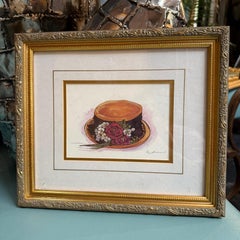
Charming original watercolor by American artist Peggy Abrams, known for her elegant and whimsical portrayals of fashion accessories. This piece features a richly detailed purple hat ...

Category

21st Century and Contemporary Feminist Art

Materials

Watercolor

MUJER CON SENSACIÓN
MUJER CON SENSACIÓN

MUJER CON SENSACIÓN

Located in Barcelona, CT

A black woman with a scarf on her head, very expressive, who looks like she is feeling something intensely.

Category

2010s Feminist Art

Materials

Canvas, Acrylic

FRAGMENTOS DE MUJER
FRAGMENTOS DE MUJER

FRAGMENTOS DE MUJER

Located in Barcelona, CT

We can see a woman's face divided by small squares that separate her and distort her face a little.

Category

2010s Feminist Art

Materials

Fabric, Canvas, Acrylic

SELF PORTRAIT WITH SCARF - Female Portrait with Muted Colors and Gold Earrings

SELF PORTRAIT WITH SCARF - Female Portrait with Muted Colors and Gold Earrings

By Olga Antonova

Located in New York, NY

Perhaps it is her skill in portraiture which renders such strength to Olga Antonova’s still life paintings. Beneath her brush, technically “inanimate” objects come alive with a vibrancy and depth of character that make a viewer want to know their history. Each curve of kettle or teacup rounds the bend, just out of sight, beckoning us nearer. Russian-born Painter Olga Antonova trained at the Repin Institute in Saint Petersburg and specializes in still life paintings of shiny kettles and porcelain china...
Category

1980s Feminist Art

Materials

Canvas, Oil

Watercolor Hat Illustration by Peggy Abrams, Framed

Watercolor Hat Illustration by Peggy Abrams, Framed

Located in Jacksonville, FL

Charming original watercolor by American artist Peggy Abrams, known for her elegant and whimsical portrayals of fashion accessories. This piece features a richly detailed purple hat ...

Category

21st Century and Contemporary Feminist Art

Materials

Watercolor

Horses, Chicken, Ducks, Rooster and  Pigs Children's Book - Female Illustrator

Horses, Chicken, Ducks, Rooster and Pigs Children's Book - Female Illustrator

Located in Miami, FL

Cover illustration for mid-century children's book publisher Merril Publishers. Signed lower right. Unframed. Retta Scott or Retta Worcester was (February 23, 1916 – August 26, 1990) was an pioneering Female Illustrator / American artist. She was the first woman to receive screen credit as an animator at the Walt Disney Animation Studios. Scott worked on storyboards to develop scenes of Bambi, his mother, and the film’s hunting dogs, on which she spent weeks to develop them into “vicious, snarling, really mean beasts.” Male artists in the company were stunned who initially assumed that only a man could create drawings with such intensity and technical skill. Her sketches caught the eye of Disney, so when the film went into production, she was assigned to animate scenes of hunting dogs chasing Faline. She worked under the film's supervising director, David D. Hand,and was tutored by Disney animator Eric Larson. This was a significant coup for the young woman, since at the 1930s-era Disney studio, women were considered only for routine tasks: "Ink and paint art was a laborious part of the animation process, and was solely the domain of women..." Her promotion to animator was in part thanks to the success of herself and other women such as Bianca Majolie, Sylvia Holland, and Mary Blair as storyboard artists. Even after receiving a promotion to animator, she and her animations continued being under appreciated in the industry. Though the most recognized Walt Disney female artist is Mary Blair, it is Retta Scott who opened up the doors for women in the animation industry. She became the first woman to receive screen credit as an animator. By the spring of 1941, Scott was also considered a "specialist in animal sketches." Scott helped produce Fantasia and Dumbo, as well as an adaptation of The Wind in the Willows that was later cancelled. She also made an appearance in The Reluctant Dragon...

Category

1950s Feminist Art

Materials

Gouache

Feminine dancer with flowers on stage illustration for Conde Nast Publications

Feminine dancer with flowers on stage illustration for Conde Nast Publications

By Carol Blanchard

Located in Miami, FL

Tapered hands and pointy-toed female figures along with the cropped legs of a stagehand are depicted in a dance performance. Blanchard was a fashion illustrator and worked for many years in the advertising department of Lord & Taylor. Work is modestly framed Stamped on back "Copyright Conde Nast...

Category

1960s Feminist Art

Materials

Board, Oil

Paquita
Paquita

Paquita

Located in London, GB

Svetlana Kalachnik’s unmistakable work expresses a mastery of the craft of painting, her art depicts situations of complicity between her characters; she takes the viewer into a worl...
Category

2010s Feminist Art

Materials

Oil

Feminist art for sale on 1stDibs.

Find a wide variety of authentic Feminist art available for sale on 1stDibs. Works in this style were very popular during the 21st Century and Contemporary, but contemporary artists have continued to produce works inspired by this movement. If you’re looking to add art created in this style to introduce contrast in an otherwise neutral space in your home, the works available on 1stDibs include elements of blue, pink, red, purple and other colors. Many Pop art paintings were created by popular artists on 1stDibs, including Cécile Plaisance, Lida Pshenichka, Suzanne Benton, and Ann Chernow. Frequently made by artists working with Fabric, and Paint and other materials, all of these pieces for sale are unique and have attracted attention over the years. Not every interior allows for large Feminist art, so small editions measuring 2.76 inches across are also available. Prices for art made by famous or emerging artists can differ depending on medium, time period and other attributes. On 1stDibs, the price for these items starts at $90 and tops out at $45,000, while the average work sells for $2,769.