Feminist Art

to
137
203
73
95
42
104
Overall Width
to
Overall Height
to
211
306
1
3
4
6
14
127
15
25
113,402
62,388
57,389
26,715
14,628
9,299
6,489
5,540
4,206
3,050
2,396
2,356
2,234
610
235
197
16
243
177
106
80
53
39
36
33
32
32
19
19
16
16
14
14
13
11
11
10
220
197
167
165
125
34
22
19
18
9
75
23
414
72
Style: Feminist
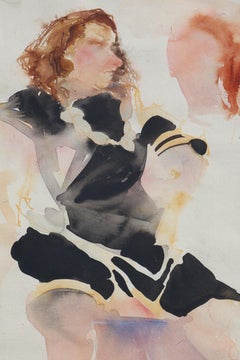
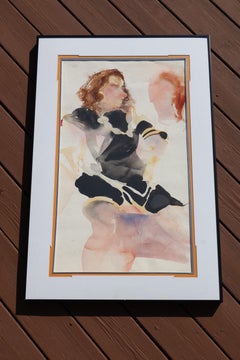
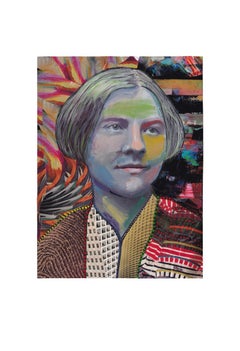
Mary Dwyer, Nellie Bly, 2017, watercolor on paper, Suffragists and Journalists

Mary Dwyer, Nellie Bly, 2017, watercolor on paper, Suffragists and Journalists

By Mary Dwyer

Located in Darien, CT

The inspiration for Mary Dwyer's work revolves around storytelling, historic events, a love of political cartoons and early portraiture paintings. An integral part of this work is research. Spurred by an innate curiosity, she creates political, historical and personal paintings. In the last few years Dwyer has been researching and painting the American Suffrage movement. In this research she discovered that the people working as both Suffragists and Abolitionists also started their own newspapers and published their own pamphlets. They became journalists, as no one was covering their story. Dwyer's paintings are a celebration of both the voter’s rights activist and the visual pageantry of the Suffrage movement. The use of color in her Suffrage paintings speak to the vibrant pageantry and the visual marketing used during the movement. Sashes, button, banners, flags and ribbons were made by women and marketed for women. The significance of free press is paramount in a free and fair society. The importance of journalist has become a theme that has continued in her present work. Recently she has been working on a Memorial Paintings...
Category

2010s Feminist Art

Materials

Acrylic, Archival Paper

Patricia Miranda, Sentinella, 2020, Battinger lace, synthetic dyes, cast plaster

Patricia Miranda, Sentinella, 2020, Battinger lace, synthetic dyes, cast plaster

By Patricia Miranda

Located in Darien, CT

Patricia Miranda's work includes interdisciplinary installation, textile, paper and books. The textiles incorporated in these new pieces are vintage linens from her Italian and Irish grandmothers and sourced from friends and strangers around the country. Each donation is documented and integrated into the work. Textile as a form that wraps the body from cradle to grave. The role of lacemaking in the lives of women both economically and historically is packed with metaphorical potential. The relationship of craft and women’s work (re)appropriated by artists today to environmental and social issues is integral to the artist's research. Her work is process oriented; materials are submerged in natural dyes from oak gall wasp nests, cochineal insects, turmeric, indigo, and clay. She forages for raw materials, cook dyes, grind pigments, ecofeminist actions that consider environmental impacts of objects. The process is left visible as dyestuff is unfiltered in the vat and finished work. Sewn into larger works, Miranda incorporates hair, pearls, bone beads, Milagros, cast plaster. The distinct genetics and environmental and cultural history of each material asserts its voice as collaborator rather than medium. The lace inserts a visceral femininity into the pristine gallery, and exerts a ghostly trace of the history of domestic labor. The combination of earth and lace references human and environmental devastation and the conflation of nature and women’s bodies as justifications for exploitation. Mournful and solastalgic, they are lamentations to the violence against women and the earth. Patricia Miranda is an interdisciplinary artist, curator, educator, and founder of The Crit Lab, graduate-level critique seminars and Residency for artists, and MAPSpace project space. She has been Visiting Artist at Vermont Studio Center, the Heckscher Museum, and University of Utah; and been awarded residencies at I-Park, Weir Farm, Vermont Studio Center, and Julio Valdez Printmaking Studio. She received an Anonymous Was a Woman Covid19 Artist Relief Grant, an artist grant from ArtsWestchester/New York State Council on the Arts, and was part of a year-long NEA grant working with homeless youth. Miranda currently teaches graduate curatorial studies at Western Colorado University, and develops programs for K-12, museums, and institutions such as Franklin Furnace. Her work has been exhibited at ODETTA, NYC; ABC No Rio, NYC; Alexey von...

Category

2010s Feminist Art

Materials

Fabric, Dye, Plastic

Patricia Miranda, Dreaming Awake, 2020, nightdress, cochineal dyes, plaster,

Patricia Miranda, Dreaming Awake, 2020, nightdress, cochineal dyes, plaster,

By Patricia Miranda

Located in Darien, CT

Patricia Miranda's work includes interdisciplinary installation, textile, paper and books. The textiles incorporated in these new pieces are vintage linens from her Italian and Irish grandmothers and sourced from friends and strangers around the country. Each donation is documented and integrated into the work. Textile as a form that wraps the body from cradle to grave. The role of lacemaking in the lives of women both economically and historically is packed with metaphorical potential. The relationship of craft and women’s work (re)appropriated by artists today to environmental and social issues is integral to the artist's research. Her work is process oriented; materials are submerged in natural dyes from oak gall wasp nests, cochineal insects, turmeric, indigo, and clay. She forages for raw materials, cook dyes, grind pigments, ecofeminist actions that consider environmental impacts of objects. The process is left visible as dyestuff is unfiltered in the vat and finished work. Sewn into larger works, Miranda incorporates hair, pearls, bone beads, Milagros, cast plaster. The distinct genetics and environmental and cultural history of each material asserts its voice as collaborator rather than medium. The lace inserts a visceral femininity into the pristine gallery, and exerts a ghostly trace of the history of domestic labor. The combination of earth and lace references human and environmental devastation and the conflation of nature and women’s bodies as justifications for exploitation. Mournful and solastalgic, they are lamentations to the violence against women and the earth. Patricia Miranda is an interdisciplinary artist, curator, educator, and founder of The Crit Lab, graduate-level critique seminars and Residency for artists, and MAPSpace project space. She has been Visiting Artist at Vermont Studio Center, the Heckscher Museum, and University of Utah; and been awarded residencies at I-Park, Weir Farm, Vermont Studio Center, and Julio Valdez Printmaking Studio. She received an Anonymous Was a Woman Covid19 Artist Relief Grant, an artist grant from ArtsWestchester/New York State Council on the Arts, and was part of a year-long NEA grant working with homeless youth. Miranda currently teaches graduate curatorial studies at Western Colorado University, and develops programs for K-12, museums, and institutions such as Franklin Furnace. Her work has been exhibited at ODETTA, NYC; ABC No Rio, NYC; Alexey von...

Category

2010s Feminist Art

Materials

Fabric, Thread, Dye, Found Objects, Plaster

Patricia Miranda, Lamentations for Rebecca; 2020, lace, cochineal dye, thread

Patricia Miranda, Lamentations for Rebecca; 2020, lace, cochineal dye, thread

By Patricia Miranda

Located in Darien, CT

Patricia Miranda's work includes interdisciplinary installation, textile, paper and books. The textiles incorporated in these new pieces are vintage linens from her Italian and Irish grandmothers and sourced from friends and strangers around the country. Each donation is documented and integrated into the work. Textile as a form that wraps the body from cradle to grave. The role of lacemaking in the lives of women both economically and historically is packed with metaphorical potential. The relationship of craft and women’s work (re)appropriated by artists today to environmental and social issues is integral to the artist's research. Her work is process oriented; materials are submerged in natural dyes from oak gall wasp nests, cochineal insects, turmeric, indigo, and clay. She forages for raw materials, cook dyes, grind pigments, ecofeminist actions that consider environmental impacts of objects. The process is left visible as dyestuff is unfiltered in the vat and finished work. Sewn into larger works, Miranda incorporates hair, pearls, bone beads, Milagros, cast plaster. The distinct genetics and environmental and cultural history of each material asserts its voice as collaborator rather than medium. The lace inserts a visceral femininity into the pristine gallery, and exerts a ghostly trace of the history of domestic labor. The combination of earth and lace references human and environmental devastation and the conflation of nature and women’s bodies as justifications for exploitation. Mournful and solastalgic, they are lamentations to the violence against women and the earth. Patricia Miranda is an interdisciplinary artist, curator, educator, and founder of The Crit Lab, graduate-level critique seminars and Residency for artists, and MAPSpace project space. She has been Visiting Artist at Vermont Studio Center, the Heckscher Museum, and University of Utah; and been awarded residencies at I-Park, Weir Farm, Vermont Studio Center, and Julio Valdez Printmaking Studio. She received an Anonymous Was a Woman Covid19 Artist Relief Grant, an artist grant from ArtsWestchester/New York State Council on the Arts, and was part of a year-long NEA grant working with homeless youth. Miranda currently teaches graduate curatorial studies at Western Colorado University, and develops programs for K-12, museums, and institutions such as Franklin Furnace. Her work has been exhibited at ODETTA, NYC; ABC No Rio, NYC; Alexey von...

Category

2010s Feminist Art

Materials

Ceramic, Fabric, Thread, Dye, Found Objects

Patricia Miranda, Lamentations for Ermenegilda; 2020, lace, cochineal dye, thread

Patricia Miranda, Lamentations for Ermenegilda; 2020, lace, cochineal dye, thread

By Patricia Miranda

Located in Darien, CT

Patricia Miranda's work includes interdisciplinary installation, textile, paper and books. The textiles incorporated in these new pieces are vintage linens from her Italian and Irish grandmothers and sourced from friends and strangers around the country. Each donation is documented and integrated into the work. Textile as a form that wraps the body from cradle to grave. The role of lacemaking in the lives of women both economically and historically is packed with metaphorical potential. The relationship of craft and women’s work (re)appropriated by artists today to environmental and social issues is integral to the artist's research. Her work is process oriented; materials are submerged in natural dyes from oak gall wasp nests, cochineal insects, turmeric, indigo, and clay. She forages for raw materials, cook dyes, grind pigments, ecofeminist actions that consider environmental impacts of objects. The process is left visible as dyestuff is unfiltered in the vat and finished work. Sewn into larger works, Miranda incorporates hair, pearls, bone beads, Milagros, cast plaster. The distinct genetics and environmental and cultural history of each material asserts its voice as collaborator rather than medium. The lace inserts a visceral femininity into the pristine gallery, and exerts a ghostly trace of the history of domestic labor. The combination of earth and lace references human and environmental devastation and the conflation of nature and women’s bodies as justifications for exploitation. Mournful and solastalgic, they are lamentations to the violence against women and the earth. Patricia Miranda is an interdisciplinary artist, curator, educator, and founder of The Crit Lab, graduate-level critique seminars and Residency for artists, and MAPSpace project space. She has been Visiting Artist at Vermont Studio Center, the Heckscher Museum, and University of Utah; and been awarded residencies at I-Park, Weir Farm, Vermont Studio Center, and Julio Valdez Printmaking Studio. She received an Anonymous Was a Woman Covid19 Artist Relief Grant, an artist grant from ArtsWestchester/New York State Council on the Arts, and was part of a year-long NEA grant working with homeless youth. Miranda currently teaches graduate curatorial studies at Western Colorado University, and develops programs for K-12, museums, and institutions such as Franklin Furnace. Her work has been exhibited at ODETTA, NYC; ABC No Rio, NYC; Alexey von...

Category

2010s Feminist Art

Materials

Ceramic, Fabric, Thread, Dye, Found Objects

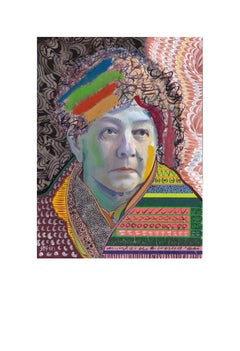
Mary Dwyer, Rachel Carson, 2017, watercolor on paper, Suffragists and Journalists

Mary Dwyer, Rachel Carson, 2017, watercolor on paper, Suffragists and Journalists

By Mary Dwyer

Located in Darien, CT

The inspiration for Mary Dwyer's work revolves around storytelling, historic events, a love of political cartoons and early portraiture paintings. An integral part of this work is research. Spurred by an innate curiosity, she creates political, historical and personal paintings. In the last few years Dwyer has been researching and painting the American Suffrage movement. In this research she discovered that the people working as both Suffragists and Abolitionists also started their own newspapers and published their own pamphlets. They became journalists, as no one was covering their story. Dwyer's paintings are a celebration of both the voter’s rights activist and the visual pageantry of the Suffrage movement. The use of color in her Suffrage paintings speak to the vibrant pageantry and the visual marketing used during the movement. Sashes, button, banners, flags and ribbons were made by women and marketed for women. The significance of free press is paramount in a free and fair society. The importance of journalist has become a theme that has continued in her present work. Recently she has been working on a Memorial Paintings...

Category

2010s Feminist Art

Materials

Acrylic, Archival Paper

Ann Chernow, Vendetta, 2015, Rag Paper, Etching

Ann Chernow, Vendetta, 2015, Rag Paper, Etching

By Ann Chernow

Located in Darien, CT

Ann Chernow’s work is based on impressions related to images from movies from the l930s and l940s. She uses film clips, studio publicity material, fan magazines and other memorabilia...

Category

2010s Feminist Art

Materials

Rag Paper, Etching

Tracey Emin, Grand Hotel I, Lithograph Print, 2016

Tracey Emin, Grand Hotel I, Lithograph Print, 2016

By Tracey Emin

Located in Dubai, Dubai

Tracey Emin, Grand Hotel I, Lithograph Print, 2016 A Polymer gravure lithograph printed on Somerset 300gsm paper From a limited edition of 100. 81/100 Hand signed, titled and numb...

Category

21st Century and Contemporary Feminist Art

Materials

Paper, Lithograph, Polymer

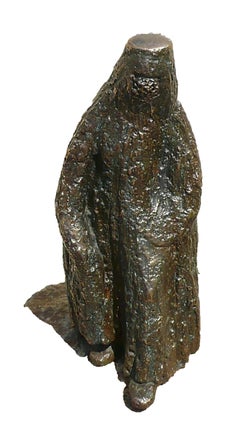
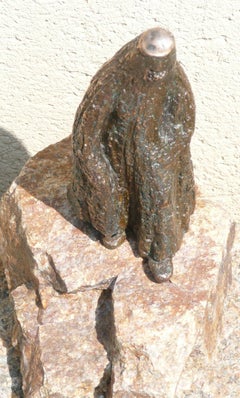
Suzanne Benton, 1974, Pelvic Woman, Copper, Coated Steel

Suzanne Benton, 1974, Pelvic Woman, Copper, Coated Steel

By Suzanne Benton

Located in Darien, CT

In 1972, the women’s movement was in full flower. Suzanne Benton had been an early activist, a founder and organizer of NOW Chapters, CT Feminists in the Arts, Women, Metamorphosis 1 (in New Haven, CT, the first women’s art festival in the USA). She'd already been creating metal sculpted masks and working with them in mask tale performances of Women of Myth and Heritage. Her inaugural performance of Sarah and Hagar n 1972 took place at Lincoln Center in NYC. Benton then became the artistic director and producer of an evening on Broadway, Four Chosen Women (performers included herself as mask tale performer, author Anais Nin, actress Vinie Burroughs and dancer Joan Stone). The evening took place at the Edison Theatre, November 22, 1972. While developing the evening on Broadway, Benton met renowned Swedish actress and Hollywood star, Viveca Lindfors. Viveca was then working on her solo performance, I AM A WOMAN, and was looking for a unique theatre set for the show. The happenstance that brought Viveca and Suzanne together. At that same time, recent travel to Macchu Picchu inspired her with the mountain’s great stones sitting on the edge of precipices. These vast stones led her to create welded steel Seated Sculpture Works. Viveca was intrigued by the concept and let her own imagination fly. Imagining a set of welded steel sculpture, she took the leap in commissioning Suzanne with complete faith in artist's ability to fulfill her mandate. Benton created groups of welded sculptures for two theater sets. Protection is one of three sculptures in first set created in 1973. Mother and Child, Pelvic Woman, Facing Each Other are three of five works from the 1974 second set. The first toured with her shows throughout the East Coast and into Toronto, Canada. The second set, created to nest together could travel as checked baggage for international and domestic airline travel. They flew to Denmark in 1980 for her performance at the UN sponsored 1980 Women’s International Conference, Copenhagen. In addition to creating the theatre sets, Benton mounted exhibitions of her masks and sculptures in the lobbies of theatres where she performed (NYC and Northampton). Continuing on with this theme, Becoming is her 1975 Seated Sculpture Work. The theatre sets were returned at the final end of its long run. These Seated Sculpture Works have often been featured in exhibitions, including both the 2003 and 2005 retrospectives. They are part of an oeuvre of 797 sculptures and masks. What attracted her to welded sculpture? This excerpt from her book, The Art of Welded Sculpture, Van Nostrand Reinhold, 1975 speaks of its lure: "Early in my life, when I had decided to become an artist, I had had an inner vision of being able to hold the physical material of my art in such a way as to bring it into existence with my hands. In welding, I wear a mask, a heavy apron, and gloves. I heat the metal and make it bend so smoothly and gracefully; I cut the metal, rigid metal, into endless shapes; I join the pieces by causing them to flow together with the heat of the flame. Welding was a return to my adolescent vision. It was fulfillment. At that beginning time I felt that even if I went no further, this experience in itself gave me astounding satisfaction. It was as thrilling as the moment of birth. It was my birth." (Pelvic Woman and Protection are illustrated in the book): What began in 1965 became by 2017 an oeuvre of 797 sculptures and masks. The magic of the welding mask...

Category

1970s Feminist Art

Materials

Copper, Steel

Patricia Dahlman, No_Trump, 2017, pencil, fabric, paper, thread, collage, banner

Patricia Dahlman, No_Trump, 2017, pencil, fabric, paper, thread, collage, banner

By Patricia Dahlman

Located in Darien, CT

Patricia Dahlman was born in Cincinnati, Ohio and studied art at Wright State University in Dayton, Ohio and Yale University Summer School of Art and Music in Norfolk, Connecticut. Dahlman has lived and worked as an artist in Seattle, San Francisco and the New York City area. She has received a New Jersey Printmaking Fellowship to the Brodsky Center, two Geraldine R. Dodge Foundation Fellowships to attend Vermont Studio Center and Virginia Center for Creative Arts, a Puffin Foundation Grant Award for The War and Peace Print Project, a Yaddo Residency, a Gallery Aferro Studio Residency and recently was an artist in residence at SLAK Atelier in Arnhem, Netherlands. Dahlman has exhibited her work all over the United States and has been included in exhibitions at George Adams Gallery...

Category

2010s Feminist Art

Materials

Fabric, Thread, Paper, Pencil

Dana Kane, Kelly Girls, 1996, color print

Dana Kane, Kelly Girls, 1996, color print

By Dana Kane

Located in Darien, CT

The Kelly Girls is a treasure trove of historical importance. First is the medium, color xerox printing. For anyone who worked in the alternative photography media, color xerox had a...

Category

1990s Feminist Art

Materials

Color

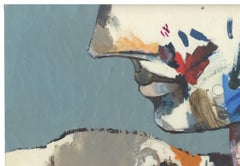
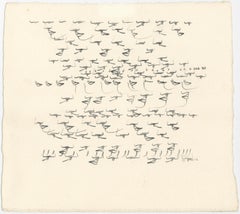
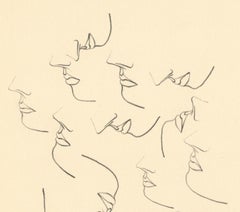
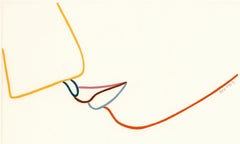
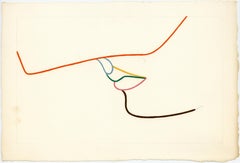
Signed Feminist LGBTQ+ Graphite on Paper Drawing - Profile Flying 446.086

Signed Feminist LGBTQ+ Graphite on Paper Drawing - Profile Flying 446.086

Located in New York, NY

Linda Stein, Profile Flying 446.086 - Signed Feminist LGBTQ+ Graphite on Paper Drawing Profile Flying 446.086 is from Linda Stein's Profiles series--drawings, collages and paintin...

Category

1970s Feminist Art

Materials

Paper, Graphite

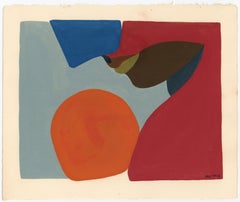
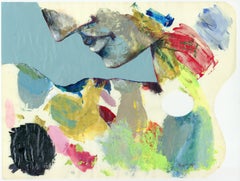
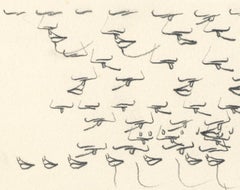
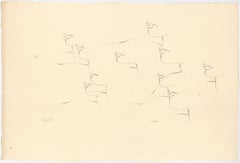
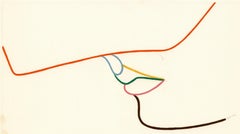
Signed Feminist LGBTQ+ Graphite on Paper Drawing - Profile Flying 446.155

Signed Feminist LGBTQ+ Graphite on Paper Drawing - Profile Flying 446.155

Located in New York, NY

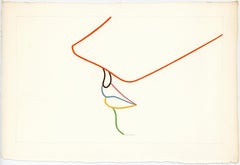
Linda Stein, Profile Flying 446.155 - Signed Feminist LGBTQ+ Graphite on Paper Drawing Profile Flying 446.155 is from Linda Stein's Profiles series--drawings, collages and paintin...

Category

1970s Feminist Art

Materials

Paper, Graphite

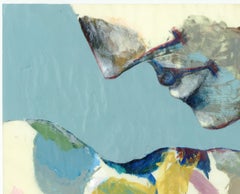
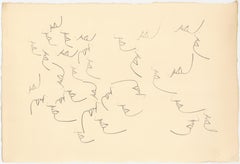
Signed Feminist LGBTQ+ Graphite on Paper Drawing - Profile Flying 446.042

Signed Feminist LGBTQ+ Graphite on Paper Drawing - Profile Flying 446.042

Located in New York, NY

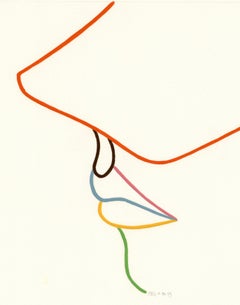
Linda Stein, Profile Flying 446.042 - Signed Feminist LGBTQ+ Graphite on Paper Drawing Profile Flying 446.042 is from Linda Stein's Profiles series--drawings, collages and paintin...

Category

1970s Feminist Art

Materials

Paper, Graphite

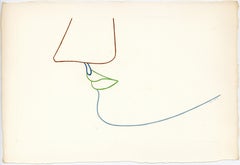
Signed Feminist LGBTQ+ Graphite on Paper Drawing - Profile Flying 446.030

Signed Feminist LGBTQ+ Graphite on Paper Drawing - Profile Flying 446.030

Located in New York, NY

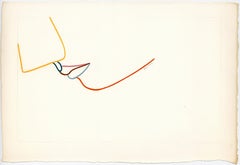
Linda Stein, Profile Flying 446.030 - Signed Feminist LGBTQ+ Graphite on Paper Drawing Profile Flying 446.030 is from Linda Stein's Profiles series--drawings, collages and paintin...

Category

1970s Feminist Art

Materials

Paper, Graphite

"Untitled (Modern Woman), " Juliette Gordon, New York Feminist Collage Art WAR

"Untitled (Modern Woman), " Juliette Gordon, New York Feminist Collage Art WAR

By Juliette Gordon

Located in New York, NY

Juliette Gordon (American, b. 1934) Untitled (Modern Woman), circa 1973 Collage on board 30 x 20 inches Provenance: Allan Stone Gallery, New York (ASG-JuG8) Sold with certificate of authenticity signed by the artist. Juliette Gordon is a witty, perceptive, and highly intelligent artist. Her most iconic works are wickedly funny and sometimes highly political photocollages that were inspired by her involvement in the women’s movement of the early 1970s. At the time, she was exhibiting with the likes of Nancy Spero and May Stevens...

Category

1970s Feminist Art

Materials

Mixed Media, Board

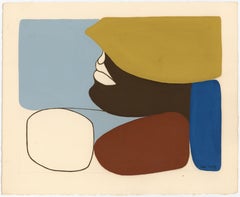
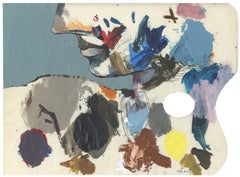
Signed Feminist LGBTQ+ Acrylic on Board Painting - Profile Landscape 438.019

Signed Feminist LGBTQ+ Acrylic on Board Painting - Profile Landscape 438.019

Located in New York, NY

Linda Stein, Profile Landscape 438.019 - Signed Feminist LGBTQ+ Acrylic on Board Painting Profile Landscape 438.019 is from Linda Stein's Profiles series--drawings, collages and pai...

Category

1970s Feminist Art

Materials

Acrylic, Board

In Her Element

In Her Element

Located in Santa Monica, CA

Digital photograph, edition of 25.

Category

2010s Feminist Art

Materials

Black and White

XV From The Red Series

XV From The Red Series

Located in Miami Beach, FL

The red series are vermilion drawings with cotton/diya baati wicks used in prayer, the fruit of the artist's longstanding preoccupation with gender, religion and rituals. The interfe...

Category

2010s Feminist Art

Materials

Cotton, Pencil, Watercolor, Acrylic, Paper

XVII From The Red Series

XVII From The Red Series

Located in Miami Beach, FL

The red series are vermilion drawings with cotton/diya baati wicks used in prayer, the fruit of the artist's longstanding preoccupation with gender, religion and rituals. The interfe...

Category

2010s Feminist Art

Materials

Cotton, Paper, Acrylic, Watercolor, Pencil

XVI From The Red Series

XVI From The Red Series

Located in Miami Beach, FL

The red series are vermilion drawings with cotton/diya baati wicks used in prayer, the fruit of the artist's longstanding preoccupation with gender, religion and rituals. The interfe...

Category

2010s Feminist Art

Materials

Cotton, Paper, Acrylic, Watercolor, Pencil

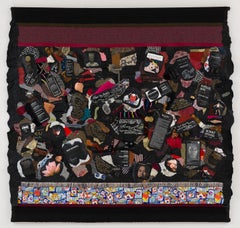
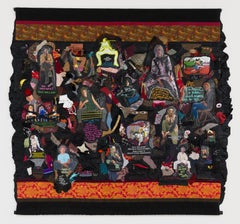
Feminist Sculptural Tapestry - 929 Growing Up Female: Jewelry, Guns, Landmines

Feminist Sculptural Tapestry - 929 Growing Up Female: Jewelry, Guns, Landmines

Located in New York, NY

Linda Stein, Growing Up Female: Jewelry, Guns, Landmines 929 - Feminist Contemporary Sculptural Tapestry Growing Up Female: Jewelry, Guns, Landmines 929 is from Linda Stein's Sexis...

Category

2010s Feminist Art

Materials

Fabric, Wood, Archival Paper, Archival Pigment

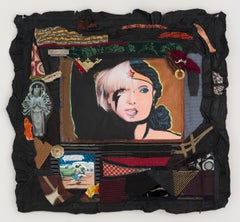
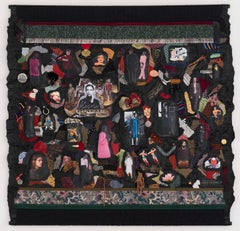
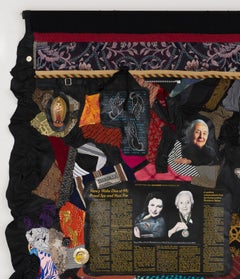
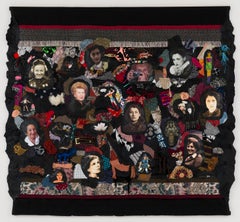
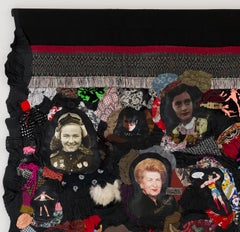
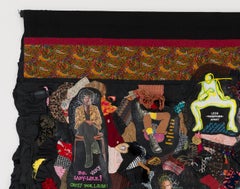
Feminist Contemporary Fabric Sculptural Wall Tapestry - Noor Inayat Khan 1131

Feminist Contemporary Fabric Sculptural Wall Tapestry - Noor Inayat Khan 1131

Located in New York, NY

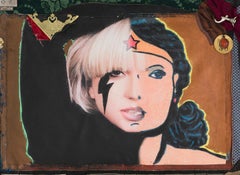
Linda Stein, Noor Inayat Khan 1131 - Feminist Contemporary Fabric Sculptural Wall Tapestry Noor Inayat Khan 1131 is from Linda Stein's Holocaust Heroes: Fierce Females series, which highlights Holocaust-era female heroes. Stein began to produce sculptural tapestries in 2013, in which she combines archival images of a subject with her pantheon of female Exemplars--Wonder Woman, Princess Mononoke, Storm, Nausicaa, Kannon, and Lady Gaga--with multiple fabrics and leather. Noor Inayat Khan 1131 features Noor Inayat Khan, a Special Operations Executive agent, who became the first female radio operator to be sent from Britain to aid the French resistance...

Category

2010s Feminist Art

Materials

Metal

Feminist art for sale on 1stDibs.

Find a wide variety of authentic Feminist art available for sale on 1stDibs. Works in this style were very popular during the 21st Century and Contemporary, but contemporary artists have continued to produce works inspired by this movement. If you’re looking to add art created in this style to introduce contrast in an otherwise neutral space in your home, the works available on 1stDibs include elements of blue, pink, red, purple and other colors. Many Pop art paintings were created by popular artists on 1stDibs, including Cécile Plaisance, Lida Pshenichka, Suzanne Benton, and Ann Chernow. Frequently made by artists working with Fabric, and Paint and other materials, all of these pieces for sale are unique and have attracted attention over the years. Not every interior allows for large Feminist art, so small editions measuring 2.76 inches across are also available. Prices for art made by famous or emerging artists can differ depending on medium, time period and other attributes. On 1stDibs, the price for these items starts at $90 and tops out at $45,000, while the average work sells for $2,769.