Feminist Art

to
42
223
70
98
43
118
Overall Width
to
Overall Height
to
218
334
1
3
4
6
10
133
24
25
117,850
64,509
56,589
28,606
14,646
9,612
6,828
6,022
4,185
3,161
2,544
2,318
2,144
601
267
200
16
253
179
107
81
54
45
38
34
33
32
20
20
20
18
17
15
15
13
12
11
241
211
181
179
152
34
26
22
19
9
79
30
421
77
Style: Feminist
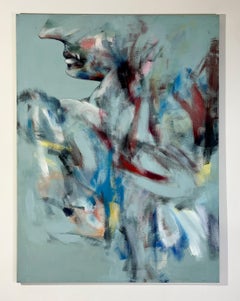
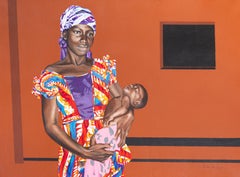
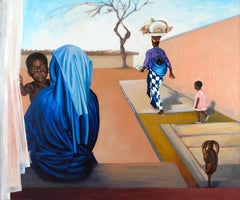
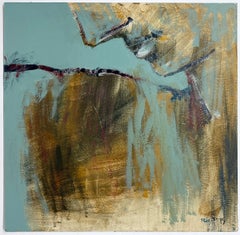
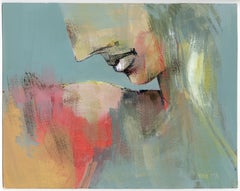
Woman IV - XXI Century Contemporary Oil & Tempera on Canvas Painting, Portrait

Woman IV - XXI Century Contemporary Oil & Tempera on Canvas Painting, Portrait

By Joanna Rusinek

Located in Warsaw, PL

Joanna Rusinek (1979) Polish contemporary painter. Diploma at the Academy of Fine Arts in Gdańsk in 2007 at the Graphics Studio under the supervision of prof. Jadwiga Okrassa. Annex...

Category

21st Century and Contemporary Feminist Art

Materials

Canvas, Oil, Tempera

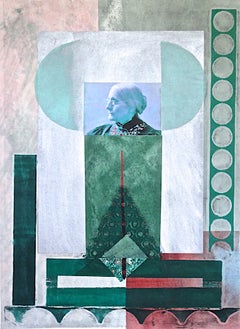
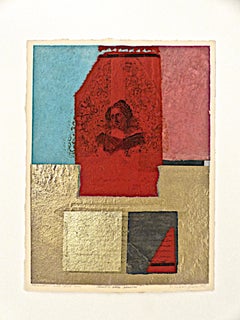
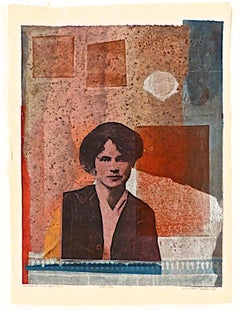
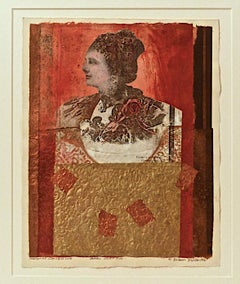
Benton, The Suffragist(Alice Pau), monoprint with Chine collé, Pioneer Activist

Benton, The Suffragist(Alice Pau), monoprint with Chine collé, Pioneer Activist

By Suzanne Benton

Located in Darien, CT

Pioneer Activists is an ongoing series of artworks by Suzanne Benton. Consisting largely of monoprints with Chine collé where the artist references suffragists, feminists, writers and educators from the 19th century and beyond. These works embody the artist’s stellar theme of bringing past to present. The Suffragist (Alice Paul) One of the prime dedicated vocal leaders of the women’s suffrage movement in the twentieth century, Alice Paul actively campaigned for the passage of the 19th Amendment to the US Constitution...

Category

2010s Feminist Art

Materials

Laid Paper, Monoprint

Patricia Dahlman, No_Trump, 2017, pencil, fabric, paper, thread, collage, banner

Patricia Dahlman, No_Trump, 2017, pencil, fabric, paper, thread, collage, banner

By Patricia Dahlman

Located in Darien, CT

Patricia Dahlman was born in Cincinnati, Ohio and studied art at Wright State University in Dayton, Ohio and Yale University Summer School of Art and Music in Norfolk, Connecticut. Dahlman has lived and worked as an artist in Seattle, San Francisco and the New York City area. She has received a New Jersey Printmaking Fellowship to the Brodsky Center, two Geraldine R. Dodge Foundation Fellowships to attend Vermont Studio Center and Virginia Center for Creative Arts, a Puffin Foundation Grant Award for The War and Peace Print Project, a Yaddo Residency, a Gallery Aferro Studio Residency and recently was an artist in residence at SLAK Atelier in Arnhem, Netherlands. Dahlman has exhibited her work all over the United States and has been included in exhibitions at George Adams Gallery...

Category

2010s Feminist Art

Materials

Fabric, Thread, Paper, Pencil

Benton, Carrie Chapman Catt, monoprint with Chine collé, Pioneer Activist

Benton, Carrie Chapman Catt, monoprint with Chine collé, Pioneer Activist

By Suzanne Benton

Located in Darien, CT

Pioneer Activists is an ongoing series of artworks by Suzanne Benton. Consisting largely of monoprints with Chine collé where the artist references suffragists, feminists, writers and educators from the 19th century and beyond. These works embody the artist’s stellar theme of bringing past to present. Carrie Chapman Catt, monoprint with Chine collé, 18 ¾ "x 12 15/16", 1992 (1859 – 1947) The women’s right to vote in the United States is owed largely to the efforts of Carrie Chapman Catt. Born in Wisconsin and educated at Iowa State, Catt left work as a high school principle and later as a newspaper editor to join the fight for women’s suffrage. Skilled as a lecturer, Catt rose rapidly to national leadership, succeeding Susan B. Anthony as president of the National/American Women’s Suffrage Association in 1900. Catt’s pressure on President Woodrow Wilson and her tireless work to secure state ratification, culminated in the Nineteenth Amendment’s adoption in 1920. Following suffrage work, Catt devoted herself to peace and disarmament issues, serving as chair of the Committee on the Cause and Cure of War. The Women’s Rights Historical Park exhibited the growing series in 1995 during the 75th anniversary of women’s suffrage. The Oberlin College...

Category

1990s Feminist Art

Materials

Gold Leaf

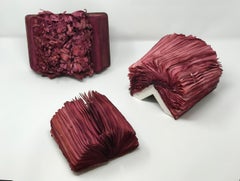
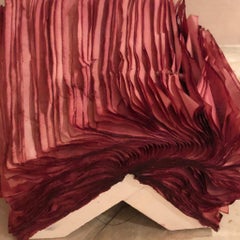
Patricia Miranda, Dreaming Awake, 2020, nightdress, cochineal dyes, plaster,

Patricia Miranda, Dreaming Awake, 2020, nightdress, cochineal dyes, plaster,

By Patricia Miranda

Located in Darien, CT

Patricia Miranda's work includes interdisciplinary installation, textile, paper and books. The textiles incorporated in these new pieces are vintage linens from her Italian and Irish grandmothers and sourced from friends and strangers around the country. Each donation is documented and integrated into the work. Textile as a form that wraps the body from cradle to grave. The role of lacemaking in the lives of women both economically and historically is packed with metaphorical potential. The relationship of craft and women’s work (re)appropriated by artists today to environmental and social issues is integral to the artist's research. Her work is process oriented; materials are submerged in natural dyes from oak gall wasp nests, cochineal insects, turmeric, indigo, and clay. She forages for raw materials, cook dyes, grind pigments, ecofeminist actions that consider environmental impacts of objects. The process is left visible as dyestuff is unfiltered in the vat and finished work. Sewn into larger works, Miranda incorporates hair, pearls, bone beads, Milagros, cast plaster. The distinct genetics and environmental and cultural history of each material asserts its voice as collaborator rather than medium. The lace inserts a visceral femininity into the pristine gallery, and exerts a ghostly trace of the history of domestic labor. The combination of earth and lace references human and environmental devastation and the conflation of nature and women’s bodies as justifications for exploitation. Mournful and solastalgic, they are lamentations to the violence against women and the earth. Patricia Miranda is an interdisciplinary artist, curator, educator, and founder of The Crit Lab, graduate-level critique seminars and Residency for artists, and MAPSpace project space. She has been Visiting Artist at Vermont Studio Center, the Heckscher Museum, and University of Utah; and been awarded residencies at I-Park, Weir Farm, Vermont Studio Center, and Julio Valdez Printmaking Studio. She received an Anonymous Was a Woman Covid19 Artist Relief Grant, an artist grant from ArtsWestchester/New York State Council on the Arts, and was part of a year-long NEA grant working with homeless youth. Miranda currently teaches graduate curatorial studies at Western Colorado University, and develops programs for K-12, museums, and institutions such as Franklin Furnace. Her work has been exhibited at ODETTA, NYC; ABC No Rio, NYC; Alexey von...

Category

2010s Feminist Art

Materials

Fabric, Thread, Dye, Found Objects, Plaster

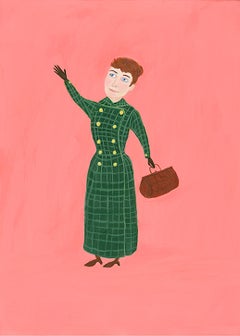
Mary Dwyer, Nellie Bly, 2017, watercolor on paper, Suffragists and Journalists

Mary Dwyer, Nellie Bly, 2017, watercolor on paper, Suffragists and Journalists

By Mary Dwyer

Located in Darien, CT

The inspiration for Mary Dwyer's work revolves around storytelling, historic events, a love of political cartoons and early portraiture paintings. An integral part of this work is research. Spurred by an innate curiosity, she creates political, historical and personal paintings. In the last few years Dwyer has been researching and painting the American Suffrage movement. In this research she discovered that the people working as both Suffragists and Abolitionists also started their own newspapers and published their own pamphlets. They became journalists, as no one was covering their story. Dwyer's paintings are a celebration of both the voter’s rights activist and the visual pageantry of the Suffrage movement. The use of color in her Suffrage paintings speak to the vibrant pageantry and the visual marketing used during the movement. Sashes, button, banners, flags and ribbons were made by women and marketed for women. The significance of free press is paramount in a free and fair society. The importance of journalist has become a theme that has continued in her present work. Recently she has been working on a Memorial Paintings...

Category

2010s Feminist Art

Materials

Acrylic, Archival Paper

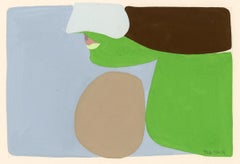
Baby's House Kitchen Interior - Woman Illustrator Mid-Century

Baby's House Kitchen Interior - Woman Illustrator Mid-Century

Located in Miami, FL

Famed Disney artist Mary Blair was also an illustrator for assignments outside Disney. The present work appears to be for a Gelolo Mchugh children's book called Baby's House. There i...

Category

1950s Feminist Art

Materials

Gouache, Illustration Board

Aries, Ink on Paper, 40x30cm, Feminist, Zodiac Series, 2024.

Aries, Ink on Paper, 40x30cm, Feminist, Zodiac Series, 2024.

By María Conejo

Located in Ciudad de México, MX

Aries, by María Conejo - Ink on Paper - 40x30cm - Feminist, Zodiac Series, c. 2024. Drawing inspiration from ancient medical texts, alchemical treatises, astrological imagery, and ...

Category

21st Century and Contemporary Feminist Art

Materials

Paper, Ink

Taurus, Ink on Paper, 40x30cm, Feminist, Zodiac Series, 2024.

Taurus, Ink on Paper, 40x30cm, Feminist, Zodiac Series, 2024.

By María Conejo

Located in Ciudad de México, MX

Taurus, by María Conejo - Ink on Paper - 40 x 30 cm - Feminist, Zodiac Series, c. 2024. Drawing inspiration from ancient medical texts, alchemical treatises, astrological imagery, ...

Category

21st Century and Contemporary Feminist Art

Materials

Paper, Ink

Patricia Miranda, Florilegium Series, 2016, cochineal dyes, antique books, pearl

Patricia Miranda, Florilegium Series, 2016, cochineal dyes, antique books, pearl

By Patricia Miranda

Located in Darien, CT

Patricia Miranda's work includes interdisciplinary installation, textile, paper and books. The textiles incorporated in these new pieces are vintage linens from her Italian and Irish grandmothers and sourced from friends and strangers around the country. Each donation is documented and integrated into the work. Textile as a form that wraps the body from cradle to grave. The role of lacemaking in the lives of women both economically and historically is packed with metaphorical potential. The relationship of craft and women’s work (re)appropriated by artists today to environmental and social issues is integral to the artist's research. Her work is process oriented; materials are submerged in natural dyes from oak gall wasp nests, cochineal insects, turmeric, indigo, and clay. She forages for raw materials, cook dyes, grind pigments, ecofeminist actions that consider environmental impacts of objects. The process is left visible as dyestuff is unfiltered in the vat and finished work. Sewn into larger works, Miranda incorporates hair, pearls, bone beads, Milagros, cast plaster. The distinct genetics and environmental and cultural history of each material asserts its voice as collaborator rather than medium. The lace inserts a visceral femininity into the pristine gallery, and exerts a ghostly trace of the history of domestic labor. The combination of earth and lace references human and environmental devastation and the conflation of nature and women’s bodies as justifications for exploitation. Mournful and solastalgic, they are lamentations to the violence against women and the earth. Patricia Miranda is an interdisciplinary artist, curator, educator, and founder of The Crit Lab, graduate-level critique seminars and Residency for artists, and MAPSpace project space. She has been Visiting Artist at Vermont Studio Center, the Heckscher Museum, and University of Utah; and been awarded residencies at I-Park, Weir Farm, Vermont Studio Center, and Julio Valdez Printmaking Studio. She received an Anonymous Was a Woman Covid19 Artist Relief Grant, an artist grant from ArtsWestchester/New York State Council on the Arts, and was part of a year-long NEA grant working with homeless youth. Miranda currently teaches graduate curatorial studies at Western Colorado University, and develops programs for K-12, museums, and institutions such as Franklin Furnace. Her work has been exhibited at ODETTA, NYC; ABC No Rio, NYC; Alexey von...

Category

2010s Feminist Art

Materials

Fabric, Thread, Plaster, Dye, Found Objects
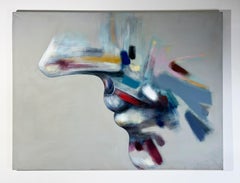
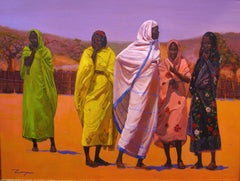
"African women"
"African women"

"African women"

By Madalena Zampassi

Located in Edinburgh, GB

The social theme of the southern life of the people of Africa. Their way of life, national costumes and the color of the clay red soil. All this creates a unique original coloring in...

Category

21st Century and Contemporary Feminist Art

Materials

Canvas, Oil

Suzanne Benton, Facing Each Other, 1974, Copper, Coated Steel

Suzanne Benton, Facing Each Other, 1974, Copper, Coated Steel

By Suzanne Benton

Located in Darien, CT

In 1972, the women’s movement was in full flower. Suzanne Benton had been an early activist, a founder and organizer of NOW Chapters, CT Feminists in the Arts, Women, Metamorphosis 1 (in New Haven, CT, the first women’s art festival in the USA). She'd already been creating metal sculpted masks and working with them in mask tale performances of Women of Myth and Heritage. Her inaugural performance of Sarah and Hagar n 1972 took place at Lincoln Center in NYC. Benton then became the artistic director and producer of an evening on Broadway, Four Chosen Women (performers included herself as mask tale performer, author Anais Nin, actress Vinie Burroughs and dancer Joan Stone). The evening took place at the Edison Theatre, November 22, 1972. While developing the evening on Broadway, Benton met renowned Swedish actress and Hollywood star, Viveca Lindfors. Viveca was then working on her solo performance, I AM A WOMAN, and was looking for a unique theatre set for the show. The happenstance that brought Viveca and Suzanne together. At that same time, recent travel to Macchu Picchu inspired her with the mountain’s great stones sitting on the edge of precipices. These vast stones led her to create welded steel Seated Sculpture Works. Viveca was intrigued by the concept and let her own imagination fly. Imagining a set of welded steel sculpture, she took the leap in commissioning Suzanne with complete faith in artist's ability to fulfill her mandate. Benton created groups of welded sculptures for two theater sets. Protection is one of three sculptures in first set created in 1973. Mother and Child, Pelvic Woman, Facing Each Other are three of five works from the 1974 second set. The first toured with her shows throughout the East Coast and into Toronto, Canada. The second set, created to nest together could travel as checked baggage for international and domestic airline travel. They flew to Denmark in 1980 for her performance at the UN sponsored 1980 Women’s International Conference, Copenhagen. In addition to creating the theatre sets, Benton mounted exhibitions of her masks and sculptures in the lobbies of theatres where she performed (NYC and Northampton). Continuing on with this theme, Becoming is her 1975 Seated Sculpture Work. The theatre sets were returned at the final end of its long run. These Seated Sculpture Works have often been featured in exhibitions, including both the 2003 and 2005 retrospectives. They are part of an oeuvre of 797 sculptures and masks. What attracted her to welded sculpture? This excerpt from her book, The Art of Welded Sculpture, Van Nostrand Reinhold, 1975 speaks of its lure: "Early in my life, when I had decided to become an artist, I had had an inner vision of being able to hold the physical material of my art in such a way as to bring it into existence with my hands. In welding, I wear a mask, a heavy apron, and gloves. I heat the metal and make it bend so smoothly and gracefully; I cut the metal, rigid metal, into endless shapes; I join the pieces by causing them to flow together with the heat of the flame. Welding was a return to my adolescent vision. It was fulfillment. At that beginning time I felt that even if I went no further, this experience in itself gave me astounding satisfaction. It was as thrilling as the moment of birth. It was my birth." (Pelvic Woman and Protection are illustrated in the book): What began in 1965 became by 2017 an oeuvre of 797 sculptures and masks. The magic of the welding mask...
Category

1970s Feminist Art

Materials

Copper, Steel

Suzanne Benton, Becoming, 1975, Copper, Coated Steel

Suzanne Benton, Becoming, 1975, Copper, Coated Steel

By Suzanne Benton

Located in Darien, CT

In 1972, the women’s movement was in full flower. Suzanne Benton had been an early activist, a founder and organizer of NOW Chapters, CT Feminists in the Arts, Women, Metamorphosis 1 (in New Haven, CT, the first women’s art festival in the USA). She'd already been creating metal sculpted masks and working with them in mask tale performances of Women of Myth and Heritage. Her inaugural performance of Sarah and Hagar n 1972 took place at Lincoln Center in NYC. Benton then became the artistic director and producer of an evening on Broadway, Four Chosen Women (performers included herself as mask tale performer, author Anais Nin, actress Vinie Burroughs and dancer Joan Stone). The evening took place at the Edison Theatre, November 22, 1972. While developing the evening on Broadway, Benton met renowned Swedish actress and Hollywood star, Viveca Lindfors. Viveca was then working on her solo performance, I AM A WOMAN, and was looking for a unique theatre set for the show. The happenstance that brought Viveca and Suzanne together. At that same time, recent travel to Macchu Picchu inspired her with the mountain’s great stones sitting on the edge of precipices. These vast stones led her to create welded steel Seated Sculpture Works. Viveca was intrigued by the concept and let her own imagination fly. Imagining a set of welded steel sculpture, she took the leap in commissioning Suzanne with complete faith in artist's ability to fulfill her mandate. Benton created groups of welded sculptures for two theater sets. Protection is one of three sculptures in first set created in 1973. Mother and Child, Pelvic Woman, Facing Each Other are three of five works from the 1974 second set. The first toured with her shows throughout the East Coast and into Toronto, Canada. The second set, created to nest together could travel as checked baggage for international and domestic airline travel. They flew to Denmark in 1980 for her performance at the UN sponsored 1980 Women’s International Conference, Copenhagen. In addition to creating the theatre sets, Benton mounted exhibitions of her masks and sculptures in the lobbies of theatres where she performed (NYC and Northampton). Continuing on with this theme, Becoming is her 1975 Seated Sculpture Work. The theatre sets were returned at the final end of its long run. These Seated Sculpture Works have often been featured in exhibitions, including both the 2003 and 2005 retrospectives. They are part of an oeuvre of 797 sculptures and masks. What attracted her to welded sculpture? This excerpt from her book, The Art of Welded Sculpture, Van Nostrand Reinhold, 1975 speaks of its lure: "Early in my life, when I had decided to become an artist, I had had an inner vision of being able to hold the physical material of my art in such a way as to bring it into existence with my hands. In welding, I wear a mask, a heavy apron, and gloves. I heat the metal and make it bend so smoothly and gracefully; I cut the metal, rigid metal, into endless shapes; I join the pieces by causing them to flow together with the heat of the flame. Welding was a return to my adolescent vision. It was fulfillment. At that beginning time I felt that even if I went no further, this experience in itself gave me astounding satisfaction. It was as thrilling as the moment of birth. It was my birth." (Pelvic Woman and Protection are illustrated in the book): What began in 1965 became by 2017 an oeuvre of 797 sculptures and masks. The magic of the welding mask...

Category

1970s Feminist Art

Materials

Copper, Steel

Feminist art for sale on 1stDibs.

Find a wide variety of authentic Feminist art available for sale on 1stDibs. Works in this style were very popular during the 21st Century and Contemporary, but contemporary artists have continued to produce works inspired by this movement. If you’re looking to add art created in this style to introduce contrast in an otherwise neutral space in your home, the works available on 1stDibs include elements of blue, pink, red, purple and other colors. Many Pop art paintings were created by popular artists on 1stDibs, including Cécile Plaisance, Lida Pshenichka, Suzanne Benton, and Ann Chernow. Frequently made by artists working with Fabric, and Paint and other materials, all of these pieces for sale are unique and have attracted attention over the years. Not every interior allows for large Feminist art, so small editions measuring 2.76 inches across are also available. Prices for art made by famous or emerging artists can differ depending on medium, time period and other attributes. On 1stDibs, the price for these items starts at $90 and tops out at $45,000, while the average work sells for $2,769.