By Joan Thorne
Located in Surfside, FL
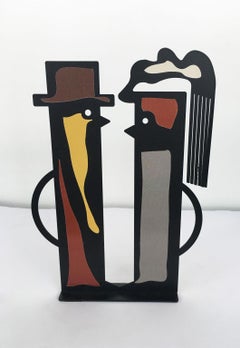
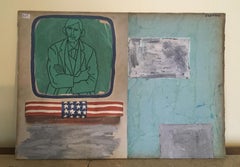
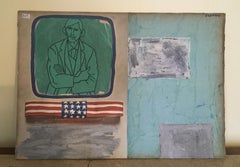
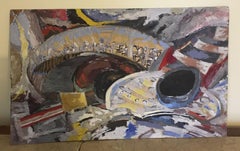
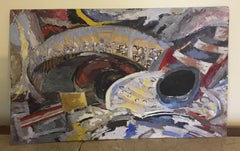
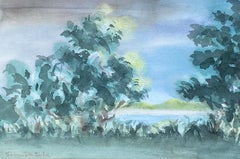
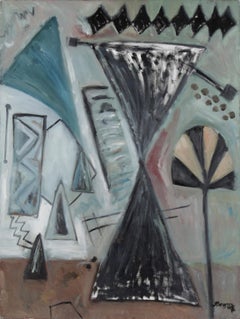
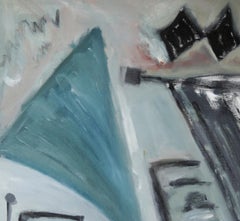
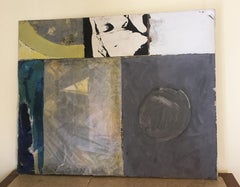
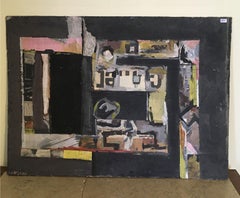
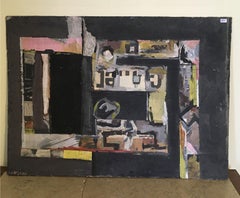
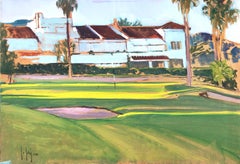
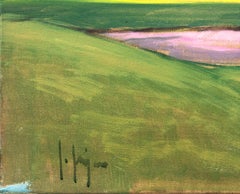
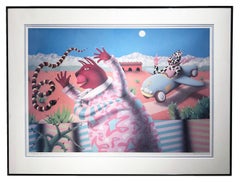
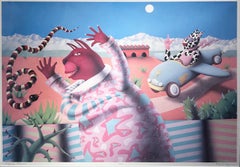
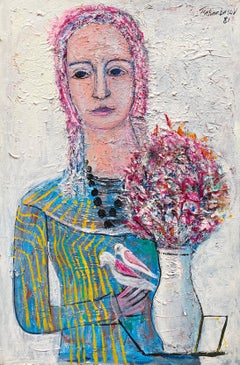
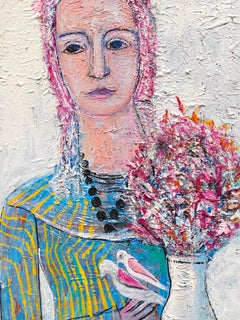
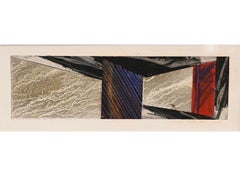
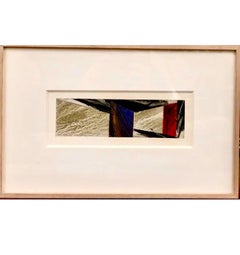
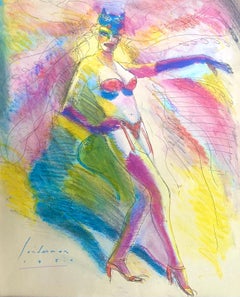
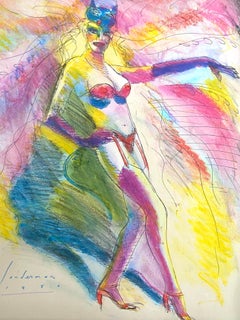
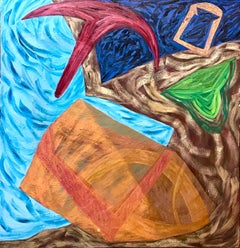
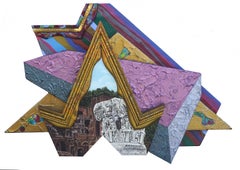
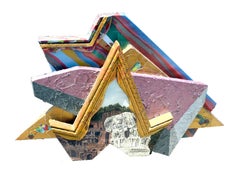
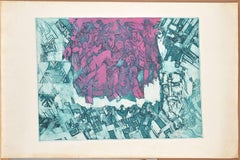
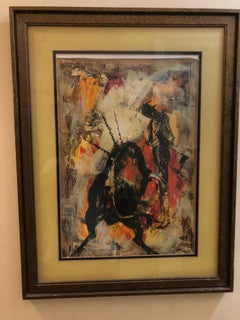
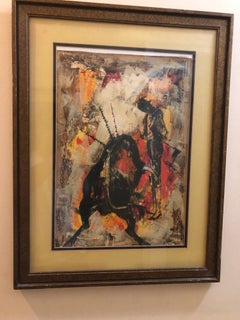
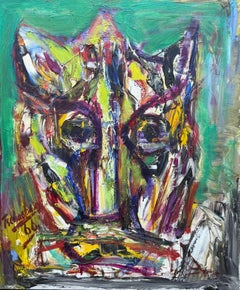
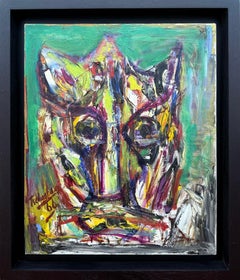
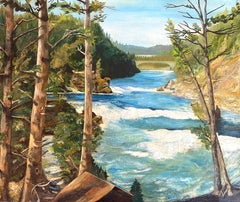
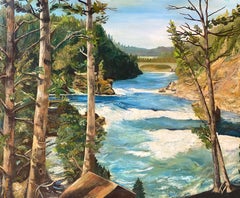
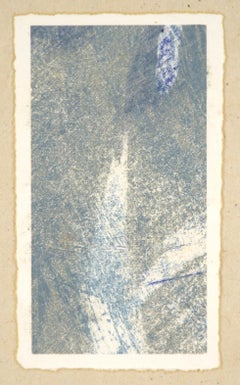
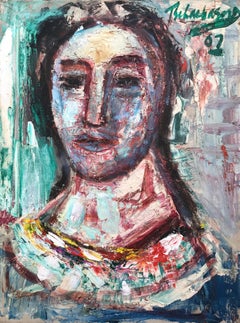
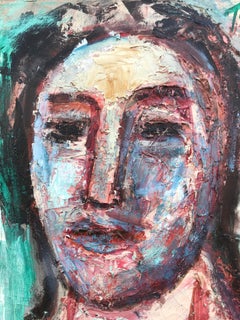
This is a large colorful, bold, vibrant original oil painting on canvas, hand signed and dated 1989.
It is titled Tango.
Joan Thorne (1943-) is a New York artist nationally and internationally recognized. A third generation Abstract Expressionist woman artist who has exhibited works over the past 30 years. Her art has been shown in the Corcoran Gallery of Art, Washington, DC, the Whitney Museum’s Annual Exhibition, the Grand Palais in Paris, and Barbara Rose’s seminal exhibition American Painting: The Eighties at New York University’s Grey Gallery.
Her recent shows in New York City have been reviewed by the New York Times, Art in America, ArtNews and The New Criterion among others. Her work has been compared to Elizabeth Murray work. It is colorful and has a 1980's, Memphis Milano feel to it.
Thorne grew up in Greenwich Village. Her mother was a Ukrainian immigrant from a musical family, who became an English teacher; her father, a surgeon. Recognizing their daughter’s artistic talents early, they enrolled her at age six in the Little Red Schoolhouse on Bleecker Street in Greenwich Village. Founded in 1921 by Elisabeth Irwin, a pioneer in educational reform, the school has continued to maintain its reputation as a progressive and nurturing catalyst for creative children. Pete Seeger, the folk singer, performed there so frequently that Thorne remembered him as if he were one of the teachers. In 1971, Thorne met Faith Ringgold (b. 1930) and joined her as a teacher at the Women’s House of Detention on Rikers Island in a new program called “Art without Walls–Free Space.” The program, which had been born from the civil rights movement, was aimed at enriching the lives of the inmates. Thorne and her peers came of age struggling against sexism in the art establishment and its attendant lack of exhibition opportunities for women. Since 1985, this issue had been loudly exposed by the public protests of the Guerrilla Girls, whose members remain a well-kept secret.
Her painting has been included in two Whitney Museum Biennials and various other museum group exhibitions both in the United States, Europe and Latin America.
She has had numerous one person shows in galleries such as: Sideshow Gallery New York, Fischbach Gallery, New York City, Corcoran Gallery of Art, Washington D.C., Willard Gallery, New York, Graham & Sons Gallery, New York, The Clocktower, New York City, and the National Arts Club among others.
Thorne has been awarded the Prix de Rome Fellowship to paint at the American Academy in Rome. She also received two National Endowment grants for painting and two Pollock Krasner Grants among others.
"Since 1973, while myriad styles, movements and mediums have flourished briefly in turn, Joan Thorne has steadfastly developed one visual language-that of painterly surface, light, color and distilled form-which she finds best suited for her artistic project: intimating dreams. intuitions and the psychic consequences of travel. "
"For there is something luxuriant and mysterious in Thorne's compositions. They have a classic modernist genealogy that encompasses Arthur Dove, Georgia O'Keeffe, Marsden Hartley, Milton Avery and Mark Tobey; yet each carries a hint of exoticism, "
--Richard Vine, Art In America, Review, June 1998
Education
Hunter College, New York, M.A.
New York University, New York, B.S.
Awards
2006 Adolf Gottlieb Foundation Grant in Painting
2003 Prize in Painting, Florence BiennaleInternazionale, Florence, Italy
2001 Pollock Krasner Foundation Grant in Painting
1986 Prix de Rome, American Academy in Rome
Pollock Krasner Foundation Grant in Painting
1983 National Endowment for the Arts, Fellowship in Painting
1980 New York State Council on the Arts, Grant for Painting
1979 National Endowment for the Arts, Fellowship in Painting
1976 Grant in Painting, Rhode Island State Council on the Arts
1975 New York State Council on the Arts, Grant for Painting
1974 Grant in Painting, Rhode Island State Council on the Arts
1972 Artist of the Year, Aldrich Foundation
Select Solo Exhibitions
2015 Black and White Into Color, National Arts Club, New York
2013 Sideshow Gallery, Williamsburg, NY
2005 Chris Winfield Gallery, Carmel, CA
2004 Klaus Steinmetz Arte Contemporaneo, San Rafael de Escazu, Costa Rica
2002 Feria de Arte International Arcale, Salamanca, España
2001 Andre Zarre Gallery, New York
2000 Retrospective: Museo Las Americas, San Juan, Puerto Rico
1998 A Retrospective: Museo Voluntariado De Las Casas Reales, Casa de Bastidas,
Santo Domingo, Dominican Republic
1990 1985 Graham Modern , New York City, NY
1989 1986 Ruth Bachofen Gallery, Santa Monica, CA
1986 William Halsey Gallery, Simon Center for the Arts, College of Charleston, Charleston, SC
1983 Lincoln Center Gallery, Lincoln Center, New York City, NY
Dart Gallery, Chicago, IL
Gloria Luria Gallery, Bay Harbor Island, FL
1982 Nina Freudenheim Gallery, Buffalo, N
1980 Willard Gallery, New York
1979 The Clocktower: Institute for Art and Urban Resources, New York City, NY
1977 Galerie Veith Turske, Cologne Art Fair, Cologne, Germany
1974 Fischbach Gallery, New York City, NY
1973 Corcoran Gallery of Art, Washington, DC
Select Group Exhibitions
2019 Art On Paper, March 2019, New York, NY
2018 Sideshow Gallery, The Greatest Show On Earth, Williamsburg, NY
2015 Outside The Lines/Modernist Drawings, National Arts Club, NY
2014 "National Arbor Day Show", National Arts Club, New York, NY
ArtHamptons Fair, July 10-13, East Hampton, NY
Tribal and Contemporary Art, June 12 - July 28, New York, NY
2012 Art Southampton, International and Contemporary Modern Art Fair, Hollis Taggart
2010 Janet Kurnatowsky Gallery, New York
2003 Biennale Internazionale Dell' Arte Contemporanea, Florence, Italy
2002 Gallery Uno 'Spazio Su Misura, Milan, Italy
1991 Andre Emmerich Gallery, "Abstract Painting of the 90's", curated by Barbara Rose.
New York Stock Exchange, Invitational
1989 Graham Modern, "Synthesis"
1986 Graham Modern, "Diptychs, Triptychs, Polyptychs"
Sidney Janis Gallery, "American Women Artists", New York City, NY
Nina Freudenheim Gallery, Buffalo, NY
N.Y.C.W.C.A., "Abstract Painting: Painting by Women Artists...
Category
1980s Post-Modern Art
MaterialsCanvas, Acrylic Polymer, Oil