Figurine Art

to
302
1,661
543
415
176
228
Overall Width
to
Overall Height
to
98
412
813
1,699
53
29
49
57
21
13
39
43
79
89
34
1,084
186
98
92
39
37
35
23
7
6
4
2
1
1
74
38
10
3,025
155,873
81,999
51,071
42,708
37,485
35,842
30,803
27,215
25,519
25,051
21,059
18,287
15,961
14,643
14,066
13,410
11,466
10,804
10,381
1,916
1,793
373
323
227
53
32
29
27
27
37
86
1,642
1,112
Art Subject: Figurine
Singing
Singing

Singing

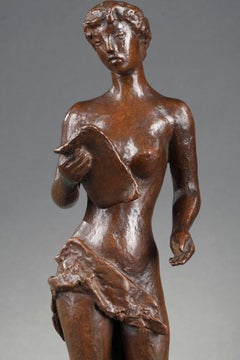
By Hubert Yencesse 1

Located in PARIS, FR

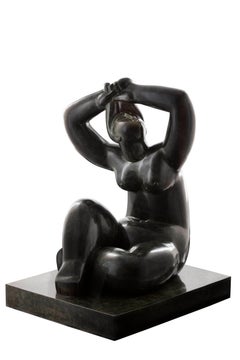
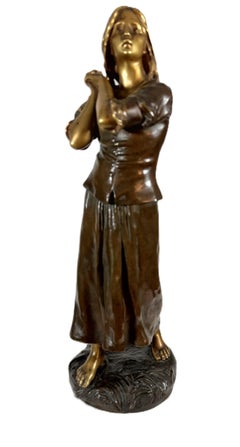
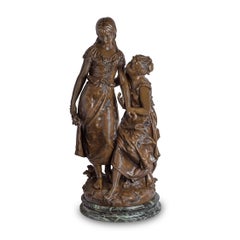
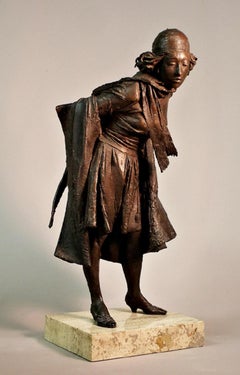
Singing by Hubert YENCESSE (1900-1987) A bronze sculpture with a nuanced brown patina signed on the base " H. Yencesse " cast by " A. Rudier fondeur Paris " (with the foundry mark) ...

Category

1930s French School Figurative Sculptures

Materials

Bronze

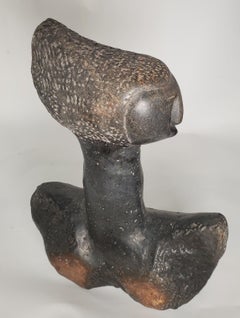
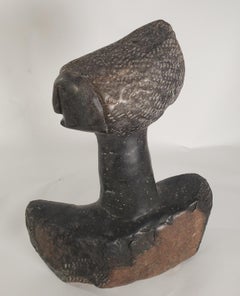
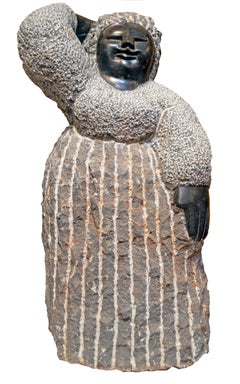
Woman with Long Neck

Woman with Long Neck

Located in Saratoga Springs, NY

Signed underneath. This carved stone sculpture by Bernard Takawira (1948 - 1997) is from a private collection. The family owns a quality collection o...

Category

Late 20th Century Other Art Style Figurative Sculptures

Materials

Stone

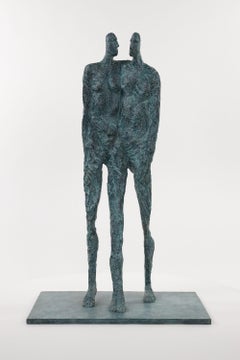
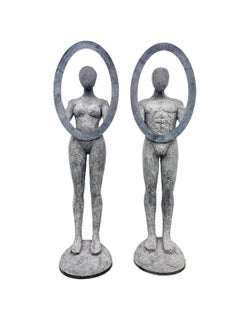
"Observers"
"Observers"

"Observers"

By Astian Rey

Located in Edinburgh, GB

The sculptures were made in a circulation of 10 copies. Each piece is made by hand and has its own unique textures and shades. The sculptures are made from concrete, by hand-sculptin...

Category

21st Century and Contemporary Figurative Sculptures

Materials

Concrete, Metal

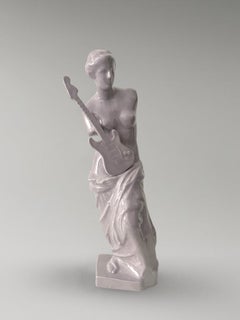
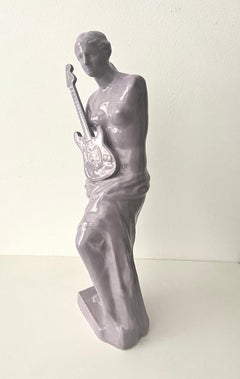
Rock Venus. From Venus Nostalgia series

Rock Venus. From Venus Nostalgia series

By Paloma Castello

Located in Miami Beach, FL

The series "Venus Nostalgia" is a collection of sculptures inspired by the famous Venus de Milo, an emblematic work in the history of art that has had a great impact on Castello's wo...

Category

2010s Contemporary Figurative Sculptures

Materials

Ceramic, Glaze

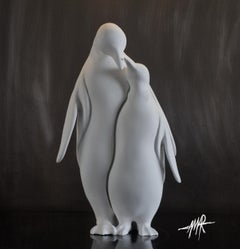
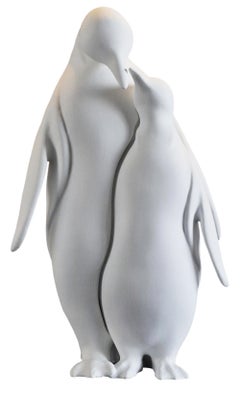
"Tendresse", Penguins Resin with Gesso Sculpture by Thierry Amar

"Tendresse", Penguins Resin with Gesso Sculpture by Thierry Amar

Located in Atlanta, GA

In the quiet presence of the material, a gesture older than language takes shape. Two beings lean toward one another—not to possess, but to recognize. The larger form opens like a re...

Category

2010s Modern Figurative Sculptures

Materials

Resin

Niemand (UE)
Niemand (UE)

Niemand (UE)

Located in Denver, CO

In German, the meaning of the word "niemand" ranges from nobody, none, and no one to anybody. Apply that to Viktor's unique sculptures and a dose of humorous social commentary meets...

Category

2010s Contemporary Sculptures

Materials

Polyurethane

Untitled
Untitled

Untitled

By Bill Nebeker

Located in Palm Desert, CA

"Untitled" is a bronze sculpture by Bill Nebeker. Signed on reverse base "Bill Nebeker CA 6/30". The full size is 23 1/2 x 18 1/4 x 8 1/2 inches. Bill Nebeker is an American artist ...

Category

Late 20th Century American Realist Figurative Sculptures

Materials

Bronze

Two Women
Two Women

Robert LohmanTwo Women, 1950

$2,000Sale Price|20% Off

Two Women

By Robert Lohman

Located in Indianapolis, IN

Lohman studied at John Herron Art Institute, and Cranbrook and Yale for graduate work. Assisted Carl Milles at Cranbrook Academy before becoming Director of Fine Arts there from 1947...

Category

1950s Modern Nude Sculptures

Materials

Wood

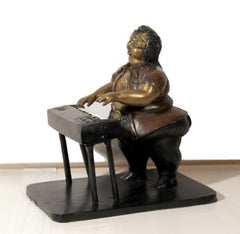
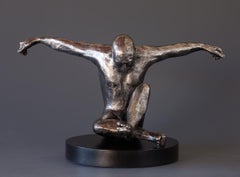
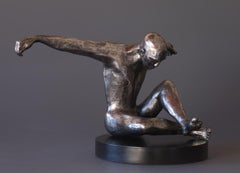
Sitting Man
Sitting Man

Sitting Man

By Lydia Da Silva

Located in Somerset West, WC

Sitting Man is a limited edition bronze sculpture plated in nickel.

Category

21st Century and Contemporary Nude Sculptures

Materials

Bronze

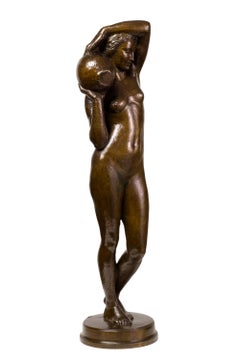
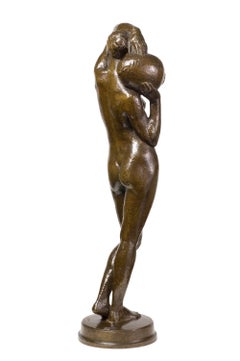
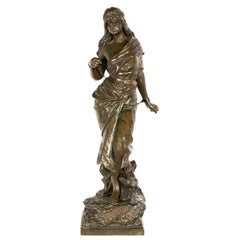
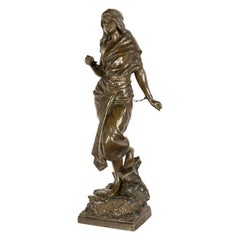
La Source (The Stream)

La Source (The Stream)

Located in New York, NY

A superb smaller version of a large scale commission work that stands in Bordeaux at the Hotel Fruges! Lovely patina - a lighter but rich and warm brown tone that is rare to see in ...

Category

1920s Modern Figurative Sculptures

Materials

Bronze

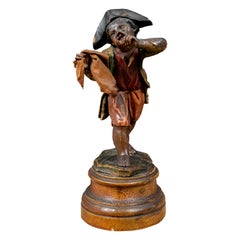
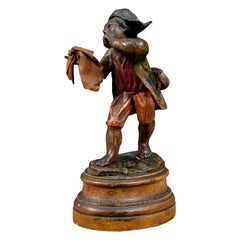
Venetian sculptor - 18th century carved polychrome wood - Dancing boy

Venetian sculptor - 18th century carved polychrome wood - Dancing boy

Located in Varmo, IT

Venetian sculptor (18th century) - Dancing Boy. 9 x 12 cm x h 25 cm (with base). Full figure in carved, lacquered and painted wood, with fabric insert. The sculpture depicts a boy...

Category

Mid-18th Century Rococo Figurative Sculptures

Materials

Wood, Oil

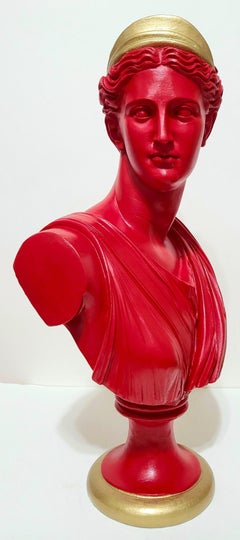
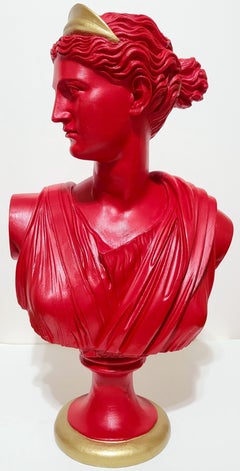
Artemis Bust /// Jack Graves Greek Mythology Goddess Painting Sculpture Classics

Artemis Bust /// Jack Graves Greek Mythology Goddess Painting Sculpture Classics

By Jack Graves III

Located in Saint Augustine, FL

Artist: Jack Graves III (American, 1988-) Title: "Artemis Bust" Series: Sculpture *Signed, titled, and dated by Graves on bottom Year: 2026 Medium: Original Acrylic and Enamel Painte...

Category

2010s Contemporary Figurative Sculptures

Materials

Cast Stone, Marble, Enamel

Europe

Europe

By Boldi

Located in PARIS, FR

Boldi is a Hungarian sculptor who creates works that express a balance between reason and emotion. His sculptures reveal not only the true form of human figures but also the emotions...

Category

2010s Contemporary Figurative Sculptures

Materials

Bronze

Sculpture
Sculpture

Sculpture

By Albert Thiry 1

Located in PARIS, FR

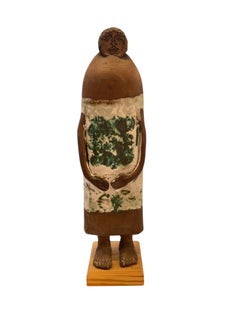
A vertical ceramic figure, rendered in a refined and monolithic style.

Category

20th Century Modern Figurative Sculptures

Materials

Ceramic

Charlie - Mixed Media Sculpture, Contemporary Style, 2010s

Charlie - Mixed Media Sculpture, Contemporary Style, 2010s

By Paul Duval

Located in Bloomfield, ON

Quebec artist Paul Duval has captured the essence of human characters with his uniquely charming series of table top sculptures. Charlie stands tall and lean, hand-formed in wire and...

Category

2010s Contemporary Sculptures

Materials

Mixed Media

Ducks
Ducks

Ducks

Located in PARIS, FR

Ducks by Josette HEBERT-COEFFIN (1906-1973) Sculpture made in stone signed on the base "J. H. Coëffin" France circa 1930 height 10 cm width 16,5 cm depth 14,1 cm Biography : Jose...

Category

1930s French School Figurative Sculptures

Materials

Limestone

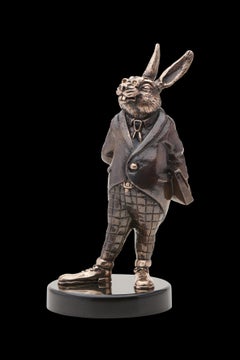
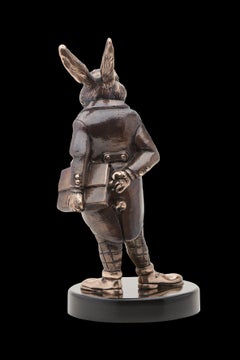
Sculpture "Financer"

Sculpture "Financer"

By Brand Vizuri

Located in Edinburgh, GB

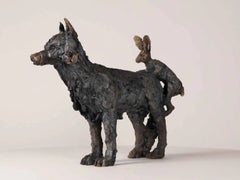
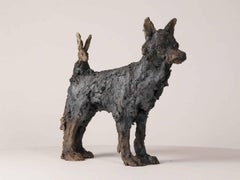
Financer is an elegant and ironic sculptural interpretation of the modern businessman, rendered through the image of a rabbit—an animal traditionally associated with agility, alertne...

Category

21st Century and Contemporary Symbolist Figurative Sculptures

Materials

Stone, Bronze, Enamel

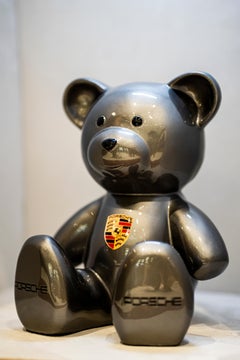
NAOR - 35cm Porsche Tribute Teddy

NAOR - 35cm Porsche Tribute Teddy

By Naor

Located in PARIS, FR

Naor is a French artist from Lyon born in 1988. Completely anchored in his time, he has always traveled a lot around the world. If travels form youth, Naor was inspired by it. From ...

Category

21st Century and Contemporary Pop Art Sculptures

Materials

Resin

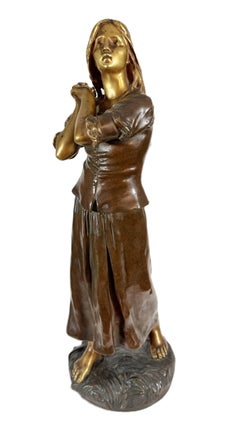
Raoul Fançois Larche Patinated bronze figure of a woman

Raoul Fançois Larche Patinated bronze figure of a woman

Located in Berlin, DE

FRANCOIS-RAOUL LARCHE 1860 SAINT-ANDRÉ-DE-CUBZAC - 1912 PARIS Signed on the base with "RAOUL LARCHE," foundry mark "SIOT DECAUVILLE PARIS FONDEUR," and number "R 276." Total height...

Category

Early 1900s Jugendstil Figurative Sculptures

Materials

Bronze

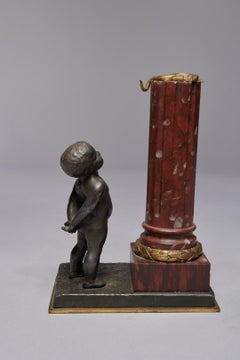
19th Century Bronze & Marble of Boy w/ Lizard and Column

19th Century Bronze & Marble of Boy w/ Lizard and Column

Located in Beachwood, OH

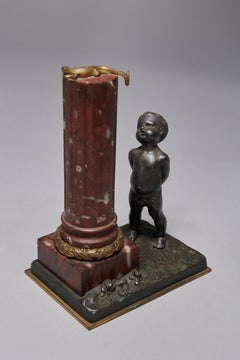
Louis Kley (French, 1833-1911) The Lizard, 19th Century Gilt bronze and marble Signed to base 6.25 x 4.5 x 3 inches In Greco-Roman times, the lizard represented good fortune and reg...

Category

19th Century Figurative Sculptures

Materials

Marble, Bronze

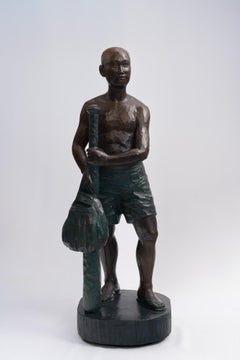
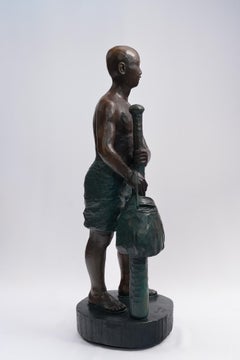
Who Wants to Play Baseball? Contemporary Bronze Figure Sculpture

Who Wants to Play Baseball? Contemporary Bronze Figure Sculpture

Located in Taichung, TW

Who Wants to Play Baseball? is a lighthearted and playful work that captures the simple joy of childhood. Cheng-Hsiung Chen uses refined carving techniques to highlight textures, fro...

Category

Late 20th Century Contemporary Figurative Sculptures

Materials

Bronze

MUMUYE FIGURE
MUMUYE FIGURE

MUMUYE FIGURE

Located in Three Oaks, MI

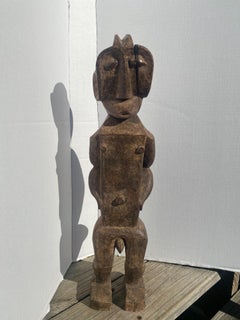
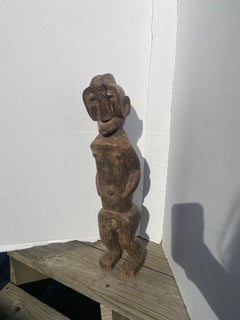
Within Nigeria's Benue River Valley region, such representations have been associated with a range of functions, including reinforcement of the status of male elders and used by heal...

Category

Early 20th Century Tribal Figurative Sculptures

Materials

Wood

Art Nouveau bust “Boy”, patinated bronze by Crannrey Franceschi, Art Nouveau

Art Nouveau bust “Boy”, patinated bronze by Crannrey Franceschi, Art Nouveau

Located in Valladolid, ES

A spectacular patinated bronze bust of a boy, signed by Marie-Anne CRANNEY-FRANCESCHI (née en 1883) , a French sculptor of the Art Nouveau period. Its composition, facial features, ...

Category

Early 1900s Art Nouveau Figurative Sculptures

Materials

Bronze

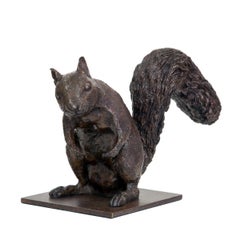
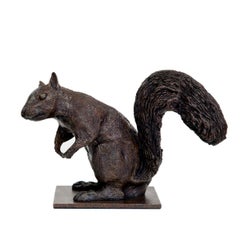
Squirrel II with Base

Squirrel II with Base

By Antonio Da Silva

Located in Somerset West, WC

Squirrel II is a limited edition bronze sculpture. Created with the lost wax casting process.

Category

21st Century and Contemporary Figurative Sculptures

Materials

Bronze

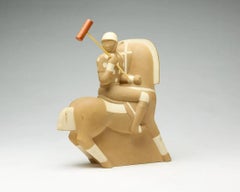
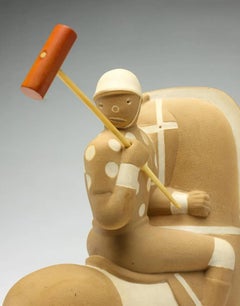
Early 20th Century Ceramic Sculpture of a Polo Player and Horse

Early 20th Century Ceramic Sculpture of a Polo Player and Horse

By Waylande Gregory

Located in Beachwood, OH

Waylande Gregory (American, 1905-1971) Polo Player, c. 1930s Ceramic Inscribed signature on bottom 11 x 8.5 inches Waylande Gregory was considered a major American sculptor during the 1930's, although he worked in ceramics, rather than in the more traditional bronze or marble. Exhibiting his ceramic works at such significant American venues for sculpture as the Whitney Museum of American Art in New York City and at the venerable Pennsylvania Academy of the Fine Arts in Philadelphia, he also showed his ceramic sculptures at leading New York City galleries. Gregory was the first modern ceramist to create large scale ceramic sculptures, some measuring more than 70 inches in height. Similar to the technique developed by the ancient Etruscans, he fired his monumental ceramic sculptures only once. Gregory was born in 1905 in Baxter Springs, Kansas and was something of a prodigy. Growing up on a ranch near a Cherokee reservation, Gregory first became interested in ceramics as a child during a native American burial that he had witnessed. He was also musically inclined. In fact, his mother had been a concert pianist and had given her son lessons. At eleven, he was enrolled as a student at the Kansas State Teacher's College, where he studied carpentry and crafts, including ceramics. Gregory's early development as a sculptor was shaped by the encouragement and instruction of Lorado Taft, who was considered both a major American sculptor as well as a leading American sculpture instructor. In fact, Taft's earlier students included such significant sculptors as Bessie Potter Vonnoh and Janet Scudder. But, Taft and his students had primarily worked in bronze or stone, not in clay; and, Gregory's earliest sculptural works were also not in ceramics. In 1924, Gregory moved to Chicago where he caught the attention of Taft. Gregory was invited by Taft to study with him privately for 18 months and to live and work with him at his famed "Midway Studios." The elegant studio was a complex of 13 rooms that overlooked a courtyard. Taft may have been responsible for getting the young man interested in creating large scale sculpture. However, by the 1920's, Taft's brand of academic sculpture was no longer considered progressive. Instead, Gregory was attracted to the latest trends appearing in the United States and Europe. In 1928 he visited Europe with Taft and other students. "Kid Gregory," as he was called, was soon hired by Guy Cowan, the founder of the Cowan Pottery in Cleveland, Ohio, to become the company's only full time employee. From 1928 to 1932, Gregory served as the chief designer and sculptor at the Cowan Pottery. Just as Gregory learned about the process of creating sculpture from Taft, he literally learned about ceramics from Cowan. Cowan was one of the first graduates of Alfred, the New York School of Clayworking and Ceramics. Alfred had one of the first programs in production pottery. Cowan may have known about pottery production, but he had limited sculptural skills, as he was lacking training in sculpture. The focus of the Cowan Pottery would be on limited edition, table top or mantle sculptures. Two of the most successful of these were Gregory's "Nautch Dancer," (fig. 1) and his "Burlesque Dancer," (fig. 2). He based both sculptures on the dancing of Gilda Gray, a Ziegfield Follies girl. Gilda Gray was of Polish origin and came to the United States as a child. By 1922, she would become one of the most popular stars in the Follies. After losing her assets in the stock market crash of 1929, she accepted other bookings outside of New York, including Cleveland, which was where Gregory first saw her onstage. She allowed Gregory to make sketches of her performances from the wings of the theatre. She explained to Gregory, "I'm too restless to pose." Gray became noted for her nautch dance, an East Indian folk dance. A nautch is a tight, fitted dress that would curl at the bottom and act like a hoop. This sculpture does not focus on Gray's face at all, but is more of a portrait of her nautch dance. It is very curvilinear, really made of a series of arches that connect in a most feminine way. Gregory created his "Burlesque Dancer" at about the same time as "Nautch Dancer." As with the "Nautch Dancer," he focused on the movements of the body rather than on a facial portrait of Gray. Although Gregory never revealed the identity of his model for "Burlesque Dancer," a clue to her identity is revealed in the sculpture's earlier title, "Shimmy Dance." The dancer who was credited for creating the shimmy dance was also Gilda Gray. According to dance legend, Gray introduced the shimmy when she sang the "Star Spangled Banner" and forgot some of the lyrics, so, in her embarrassment, started shaking her shoulders and hips but she did not move her legs. Such movement seems to relate to the "Burlesque Dancer" sculpture, where repeated triangular forms extend from the upper torso and hips. This rapid movement suggests the influence of Italian Futurism, as well as the planar motion of Alexander Archipenko, a sculptor whom Gregory much admired. The Cowan Pottery was a victim of the great depression, and in 1932, Gregory changed careers as a sculptor in the ceramics industry to that of an instructor at the Cranbrook Academy in Bloomfield Hills, Michigan. Cranbrook was perhaps the most prestigious place to study modern design in America. Its faculty included the architect Eliel Saarinen and sculptor Carl Milles. Although Gregory was only at Cranbrook for one and one half years, he created some of his finest works there, including his "Kansas Madonna" (fig. 3). But, after arriving at Cranbrook, the Gregory's had to face emerging financial pressures. Although Gregory and his wife were provided with complimentary lodgings, all other income had to stem from the sale of artworks and tuition from students that he, himself, had to solicit. Gregory had many people assisting him with production methods at the Cowan Pottery, but now worked largely by himself. And although he still used molds, especially in creating porcelain works, many of his major new sculptures would be unique and sculpted by hand, as is true of "Kansas Madonna." The scale of Gregory's works were getting notably larger at Cranbrook than at Cowan. Gregory left the surface of "Kansas Madonna" totally unglazed. Although some might object to using a religious title to depict a horse nursing its colt, it was considered one of Gregory's most successful works. In fact, it had a whole color page illustration in an article about ceramic sculpture titled, "The Art with the Inferiority Complex," Fortune Magazine, December, 1937. The article notes the sculpture was romantic and expressive and the sculpture was priced at $1,500.00; the most expensive sculpture in the article. Gregory was from Kansas, and "Kansas Madonna" should be considered a major sculptural document of Regionalism. Gregory and his wife Yolande moved to New Jersey in the summer of 1933. And the artist began construction on his new home in the Watchung Mountains of Bound Brook (Warren today) in 1938. His enormous, custom kiln was probably constructed at the start of 1938. Gregory's new sculptures were the largest ceramic sculptures in western art, in modern times. To create these works of ceramic virtuosity, the artist developed a "honeycomb" technique, in which an infrastructure of compartments was covered by a ceramic "skin." Science and atomic energy were a theme in Gregory's most significant work, the "Fountain of the Atom" (fig. 4), at the 1939 New York's World Fair. This major work included twelve monumental ceramic figures at the fairground entrance from the newly constructed railway entrance, giving the work great visibility and prominence. The framework of the fountain itself was of steel and glass bricks. It consisted of a bluish green pool which was sixty five feet in diameter. Above it were two concentric circular tiers, or terraces, as Gregory called them; the first wider than the second. On the first terrace were eight "Electrons," comprised of four male and four female terra cotta figures, each approximately 48 inches high. These relate to the valance shell of the atom. Above them on a narrower terrace, were the much larger and heavier terra cotta figures depicting the four elements, each averaging about 78 inches in height and weighing about a ton and a half. Of the four, "Water" and "Air" were male, while "Earth" and "Fire" were female. This terrace represents the nucleus of the atom. In the center of the fountain, above the "Elements," was a central shaft comprised of sixteen glass tubes from which water tumbled down from tier to tier. At the top, a colorful flame burned constantly. The glass block tiers were lit from within, the whole creating a glowing and gurgling effect. Since the fair was temporary, the figures could be removed after its closing. But the credit for the design of the structure of the fountain belongs to collaborator Nembhard Culin, who was responsible for several other structures on the fair grounds as well. Although Gregory created a figure of "Fire" for the "Fountain of the Atom," he also executed a second, slightly smaller but more defined version which he exhibited at various locations (including Cranbrook, Baltimore Museum, etc.) in 1940-1941, during the second year of the fair (fig.5). Measuring 61 inches in height, "Fire" may be a metaphor for sexual energy, as well as atomic energy. Gregory stated, "Fire is represented by an aquiline female figure being consumed in endless arabesques of flame." Portraiture was also a significant focus of Gregory's sculpture. Gregory produced many commissioned portraits of local people as well as celebrities. He created Albert Einstein's portrait from life (fig. 6, ca. 1940) after Einstein had seen Gregory's "Fountain of the Atom." He also sculpted some of the leading figures in entertainment, including 2 sculptures of Henry Fonda, who became a personal friend. Gregory also sculpted a series of idealized female heads, both in terra cotta and in porcelain. These include "Girl with Olive" (ca. 1932) and "Cretan Girl;"(ca. 1937) both are very reductive and almost abstract works that call to mind Constantine Brancusi's "Mademoiselle Pogany" (1912, Philadelphia Museum of Art). But perhaps one of his most original female heads is "Head of a Child" (fig. 7, ca. 1933), a sensitive white glazed terra cotta portrayal with elaborately crafted braded hair, was originally created as one of a pair. Gregory also produced sculptural works for the Works Progress Administration. The WPA was a work relief project that greatly helped artists during the great depression. Founded by the Federal Government in 1935, an estimated 2500 murals were produced. Among these public works were the iconic post office murals. But, among the painted murals were also sculptural relief murals including Gregory's "R.F.D.," 1938, for the Columbus, Kansas Post Office. But, Gregory's largest WPA relief...

Category

1930s Figurative Sculptures
Materials

Ceramic

Going Out
Going Out

Going Out

By Bruno Lucchesi

Located in Greenwich, CT

Bruno Lucchesi Biography Italian, b. 1926 Born in 1926 in the village of Fibbiano Montanino, Lucca, Italy, Bruno Lucchesi has been called “the last of the Renaissance sculptors.” A...

Category

1970s Realist Figurative Sculptures

Materials

Bronze

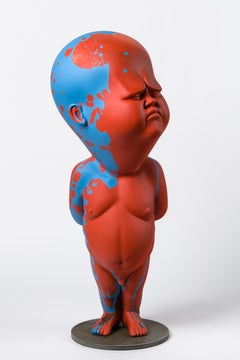
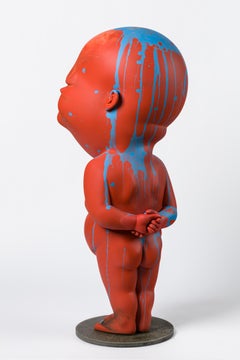
XoX Kiddo Walker - sculpture, resin and paint

XoX Kiddo Walker - sculpture, resin and paint

By Viktor Mitic

Located in Bloomfield, ON

"This colourful indoor figurative pop art sculpture is by Viktor Mitic. Playful, colourful and imaginative, Viktor Mitic’s series of small sculptures appears to merge pop art with s...

Category

21st Century and Contemporary Sculptures

Materials

Mixed Media

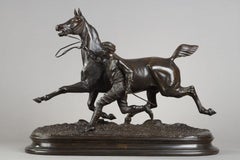
Horse training with its stable lad

Horse training with its stable lad

Located in PARIS, FR

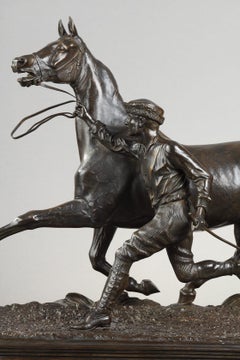
Horse training with its stable lad by Arthur Marie Gabriel comte du Passage (1838-1909) A bronze group with nuanced dark brown patina Signed on the base " Cte du Passage " Period ca...

Category

Late 19th Century French School Figurative Sculptures

Materials

Bronze

First Steps, Early 20th Century Bronze Sculpture, Cleveland School

First Steps, Early 20th Century Bronze Sculpture, Cleveland School

By William Zorach

Located in Beachwood, OH

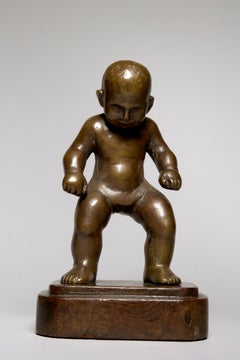
William Zorach (American 1891-1966) First Steps, 1918 Bronze 8.5 x 5 x 4 inches, including base Born in 1887 in Lithuania, William Zorach immigrated with his family to the United States when he was just four years old, settling in Cleveland, Ohio. Zorach displayed an exceptional artistic talent at a young age and, at the recommendation of his seventh-grade teacher, began studying lithography at night at the Cleveland School of Art. It was not long before he was apprenticing at a lithography company in Cleveland. It was there that he realized he wanted to become an artist - to escape the commercial end of the field in which he was suddenly immersed. In 1907, Zorach saved enough money to move to New York and study art at the National Academy of Design, where he received several awards for his paintings and drawings. He continued his studies in Paris in 1910 at La Palette. This year abroad would turn out to be quite fruitful because in Paris he was greatly influenced by the Cubist and Fauvist movements and had several paintings exhibited at the Salon d'Automme. This influence and subsequent success fueled his career back in the states where he was honored with his first one-man exhibition. Due to this new-found stability, he married a young woman he met at school in Paris, and they moved to New York and set up a studio. Shortly after, their work was accepted into the famous 1913 Armory Show. For the next nine years, Zorach continued to think of himself as a painter, although he had already begun to experiment in sculpting. He was experiencing modest success with his painting and was therefore reluctant to abandon it completely. However, he was impelled toward sculpting, and in 1922, he painted his last oil. Zorach's involvement with sculpture began largely be accident. While he was working on a series of wood-block prints, Zorach suddenly became more interested in the butternut panel than the print and turned the panel into a carved relief. With no formal training as a sculptor, Zorach's first sculptures were of wood and his carving tools were primitive, such as a jack-knife. I n fact, his early works have a certain stylized look, suggesting the influence of various primitive arts such as African and American folk. Zorach found his sculptural direction by instinct, but was not unaware of what other sculptors were doing, both here and abroad. He soon allied himself with a growing number of modern sculptors who believed in the esthetic necessity of carving their own designs directly in the block of stone or wood rather than modeling them in clay. From the beginning he found a deep satisfaction in the slow and patient process of freeing the image from its imprisoning block, watching the forms emerge and appear. "The actual resistance of tough material is a wonderful guide," Zorach said in a lecture on direct sculpture in 1930. The sculptor "cannot make changes easily, there is no putting back tomorrow what was cut away today. His senses are constantly alert. If something goes wrong there is the struggle to right the rhythm. And slowly the vision grows as the work progresses." Zorach also found that the material itself had a constantly modifying effect on the artist's vision. The grain of the wood, the markings in the stone, the shape of the log or boulder all set limits and suggested possibilities. He was always sensitive to the characteristic qualities of his material and occasionally let them play a major role in determining his forms. In works such as these, the feel of the original material is preserved in the finished piece and is often heightened by leaving parts of the original surface untouched and other areas roughly marked by the sculptors tools...

Category

1910s Figurative Sculptures
Materials

Bronze

Richard MacDonald Red Dress Half Life 41” Signed Bronze Sculpture Edition of 90

Richard MacDonald Red Dress Half Life 41” Signed Bronze Sculpture Edition of 90

By Richard MacDonald

Located in Minneapolis, MN

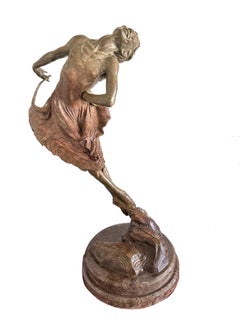
Artist: Richard MacDonald Title: Red Dress Medium: Patina on Bronze Sculpture Year: 2001 Size: 40.75" x 27.5" x 18.5" Inscription: Signed, dated and numbered on base Edition: Half Li...

Category

21st Century and Contemporary Sculptures

Materials

Bronze

The Voice From Without

The Voice From Without

By Deborah Ballard

Located in Dallas, TX

From Memories of Egypt Series. The figure has always been Deborah Ballard’s muse in her sculptures. Ballard works in bronze, cast stone, and plaster; her figures ranging from life-s...

Category

2010s Contemporary Sculptures

Materials

Plaster, Wax, Pigment

White Marble Sculpture Statue of a Nymph

White Marble Sculpture Statue of a Nymph

Located in New York, NY

A. BATACCHI Italian, (XIX-XX) Nymph Italian Carrara marble. H 10.50 in. x W 17 in. x D 31.50 in. Signed A. Battachi, Florence in verso. Note: Batacchi was active in Flore...

Category

Late 19th Century Figurative Sculptures
Materials

Marble

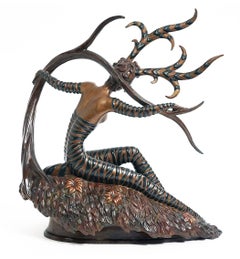
The Hunting, Bronze Sculpture, Art Deco, Signed, Edition of 375, 1985

The Hunting, Bronze Sculpture, Art Deco, Signed, Edition of 375, 1985

By Erté

Located in Aventura, FL

Bronze sculpture. Incised Erte signature with stamped numbered edition, foundry and date. From the edition of 375. Size: 15 x 12 x 6 inches. Published by Fine Art Acquisitions. C...

Category

1980s Art Deco Figurative Sculptures
Materials

Bronze

Lovers

Lovers

By Dan Chen

Located in Colorado Springs, CO

Edition #12/26 - Original bronze sculpture by Dan Chen. Signed on bronze sculpture.

Category

21st Century and Contemporary Realist Sculptures

Materials

Bronze

Fleet Moment
Fleet Moment

Fleet Moment

By Doris Caesar

Located in Greenwich, CT

Featured in the Doris Caesar catalog by Martin H. Bush, page 110.

Category

1950s Expressionist Figurative Sculptures
Materials

Bronze

Lupine

Lupine

By Jane DeDecker

Located in Greenwich, CT

Edition of 17 American, b. 1961 Jane DeDecker’s energetic and dynamic bronze sculptures serve as a reflection of her own life experiences and those of her closely-knit family. Her ...

Category

2010s American Impressionist Figurative Sculptures
Materials
Bronze