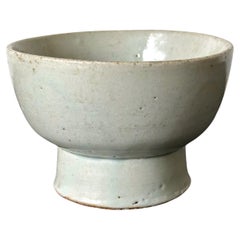
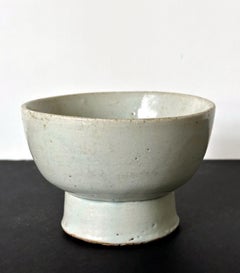
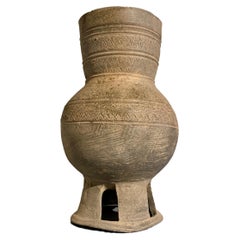
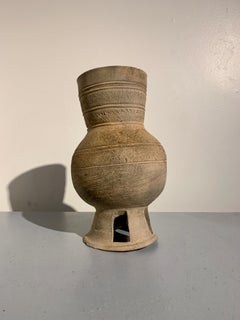
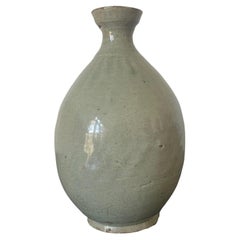
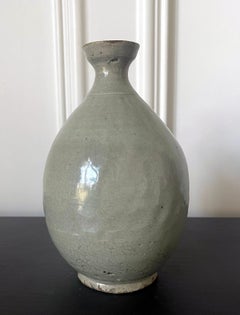
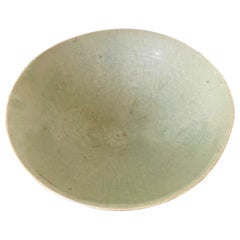
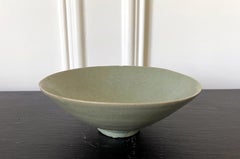
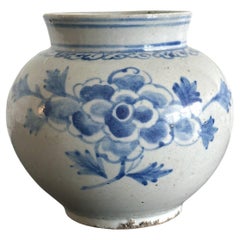
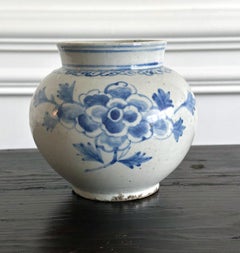
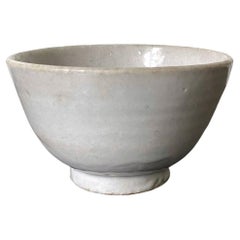
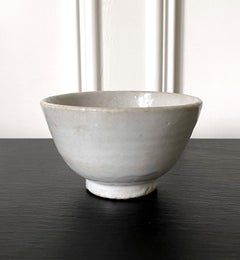
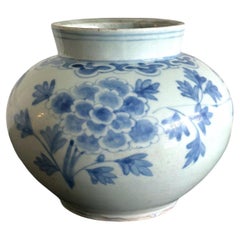
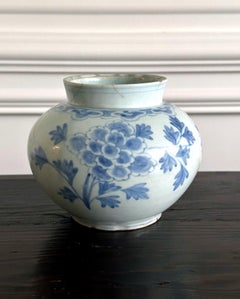
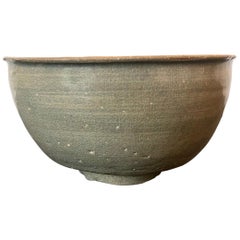
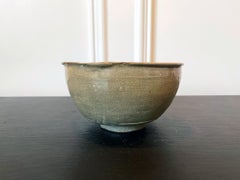
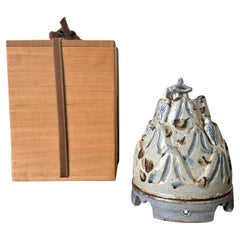
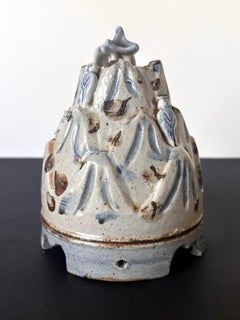
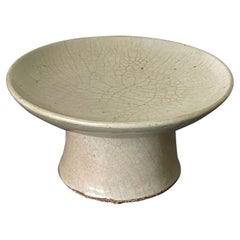
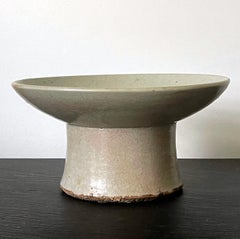
A ceramic dish with high cylindrical foot in white glaze from Korea, circa 19th century Joseon Dynasty. By shape, this piece is most likely a ceremonial vessel that was used to make offerings on the altar. Although without inscription, we can't rule out that it could be a household item for occasions that were less formal. Such as a private shrine in the household. During Joseon dynasty, the social morals were largely centered on the principles of Confucianism that originated from China. Many ritual ceramic wares were produced for rituals and worships on all level of the society. The ware were often modeled after the archaic bronze ware that elevated them from the aesthetic of daily use pieces. High foot dish like this were made in both round and square shape to suite different use but they were all distinguished with the inscription for their exclusive ceremonial purpose.
Of elegant form and harmonious proportion, this stem dish...
Category
19th Century Archaistic Antique Australian Ceramics