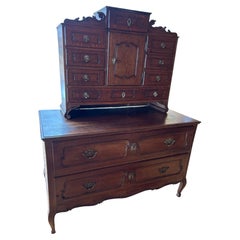
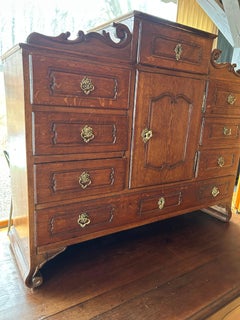
Baroque secretary
Located in Kraków, Małopolska
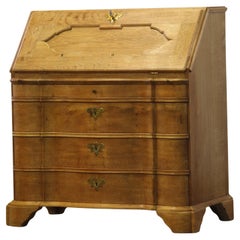
Baroque secretary from the 18th century, in very good condition.
Category
Antique 1770s German Renaissance Desks
Materials
Oak
Baroque secretary
Located in Kraków, Małopolska
Baroque secretary from the 18th century, in very good condition.
Oak
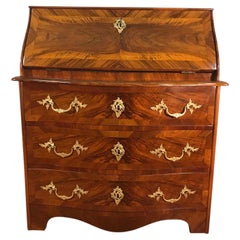
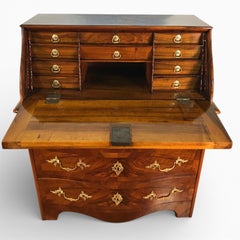
Baroque Secretary Desk, Switzerland 1750
Located in Belmont, MA
Baroque Secretary Desk, Switzerland, Circa 1750 A refined mid-18th century Swiss Baroque secretary
Walnut
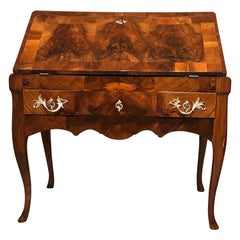
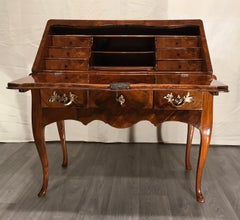
Baroque Secretary Desk, Switzerland 1750, Walnut
Located in Belmont, MA
Baroque secretary desk, Switzerland, 1750. This gorgeous baroque secretary desk stands out for its
Walnut
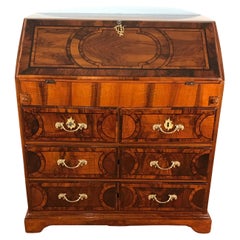
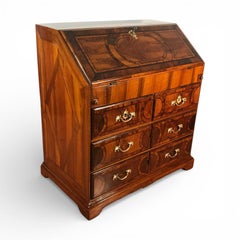
German Baroque Secretary Desk, 1750
Located in Leimen, DE
German Baroque Secretary Desk, Circa 1750 A rare mid-18th century German Baroque secretary desk of
Walnut

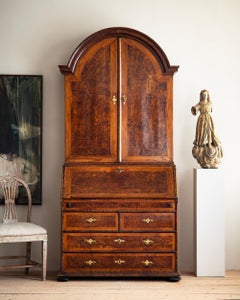
Fine 18th Century Swedish Baroque Secretary Cabinet
Located in Allerum, SE
Fine 18th century Swedish Baroque secretary cabinet in burled root grain veneer in an great
Pine, Burl
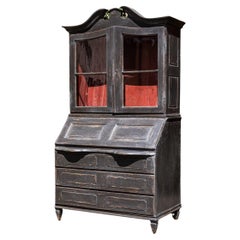
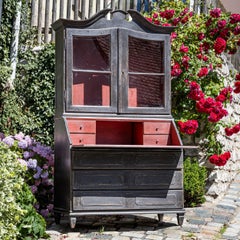
Dark Gray Baroque Secretary, 18th Century
Located in Greding, DE
Baroque secretary cabinet featuring a two-door glazed display hutch above and a lower section with
Glass, Wood, Softwood
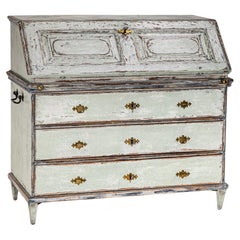
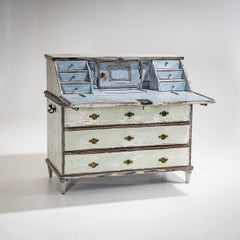
Hand-Painted Baroque Secretary, 18th Century
Located in Greding, DE
Baroque secretary with three drawers and slant-front writing flap decorated with recessed panels
Brass, Iron
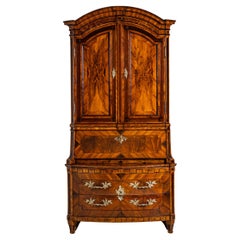
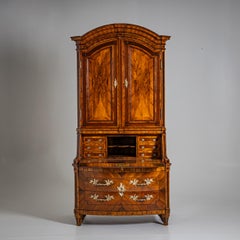
Baroque Secretary, Dresden, Mid-18th Century
Located in Greding, DE
Impressive Baroque secretary from Dresden, featuring a two-drawer, slightly bombé commode base
Bronze
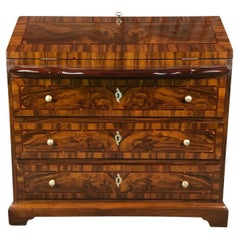
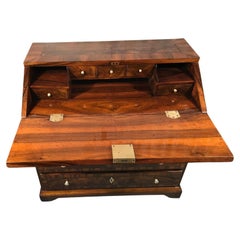
$8,929Sale Price|20% Off
H 36.62 in W 35.83 in D 25.2 in
Original Antique Baroque Secretary Desk, Germany 18th century, Walnut
Located in Leimen, DE
Original Antique Baroque Secretary Desk, Germany, 1750 This exquisite antique Baroque secretary
Walnut
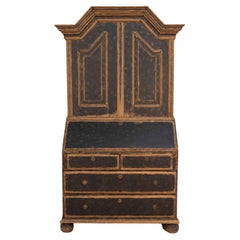
$9,950
H 81.125 in W 47 in D 23.5 in
Baroque Secretary with Black Exterior and Blue Interior, Circa 1760
Located in Atlanta, GA
An impressive period Baroque secretary dating to circa 1760. This substantial piece has been
Wood
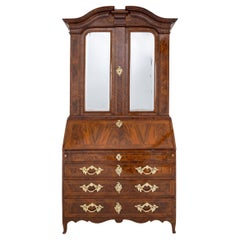
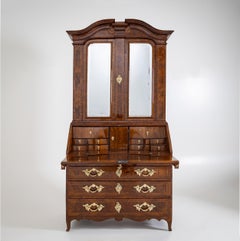
Mid-18th Century Baroque Secretary Cabinet in Walnut Veneer
Located in Greding, DE
An elegant Baroque secretary cabinet from Saxony, crafted in the mid-18th century. The lower
Walnut
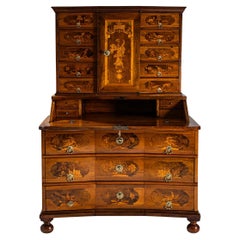
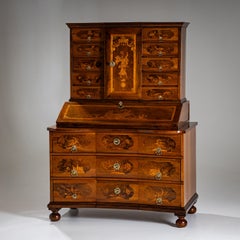
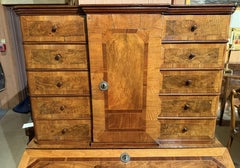
Baroque Secretary à Trois Corps in Walnut, Mid-18th Century
Located in Greding, DE
Impressive Baroque secretary in three sections ("à trois corps"), raised on compressed bun feet and
Walnut
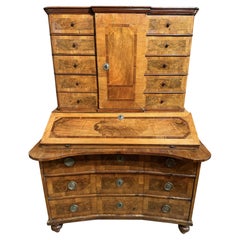
$4,600
H 67.5 in W 47 in D 31.5 in
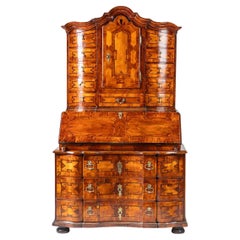
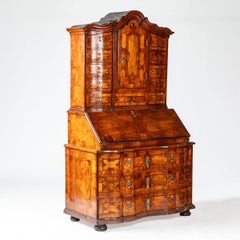
18th Century Three Part German Baroque Secretary Desk in Walnut & Fruitwood
Located in Milford, NH
A wonderful form three part German Baroque secretary desk in walnut & fruitwood, its upper case
Brass, Iron
$21,045
H 80.71 in W 48.04 in D 23.63 in
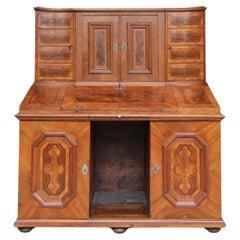
Austrian Baroque Secretary Cabinet in Walnut with Marquetry, ca. 1700–1730
Located in Kastrup, DK
A highly impressive and architecturally refined Austrian Baroque secretary cabinet from the first
Brass, Iron
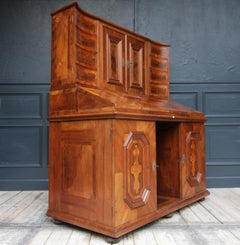
18th Century Baroque Secretary or Writing Desk in Walnut
Located in Dusseldorf, DE
Exceptional Baroque secretary or writing desk, probably from southern Germany, around 1760. The
Nutwood, Walnut, Pine
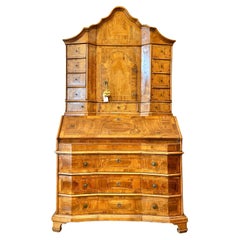
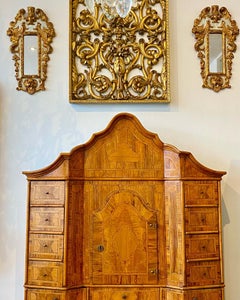
Magnificent Italian Baroque Secretary, circa 1700
Located in Los Angeles, CA
The upper case with swept pediment and stepped molded edge fitted with 11 drawers and an arched door. The lower case with a slant front opening over a well above three long drawers e...
Maple, Olive
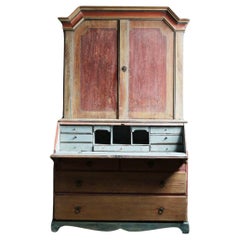
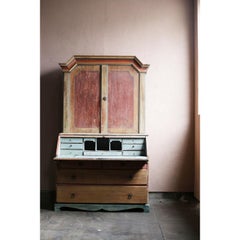
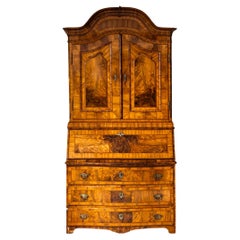
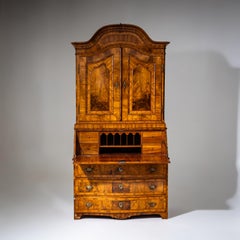
18th Century Antique Swedish Red Painted Baroque Secretary
Located in Sammu-shi, Chiba
A two-tiered wooden cabinet from the 18th century Swedish Gustavian period. The top door opens to reveal a decorative top shelf and three other shelves. The top of the bottom shelf c...
Wood
$7,989
H 94.1 in W 47.25 in D 25.6 in
Baroque Secretary with Upper Cabinet in Walnut, 18th/19th Century
Located in Greding, DE
Baroque fall-front secretary veneered in walnut, featuring a commode base with three drawers and a
Bronze
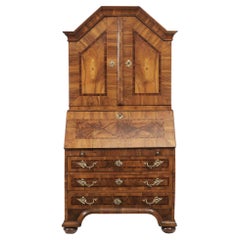
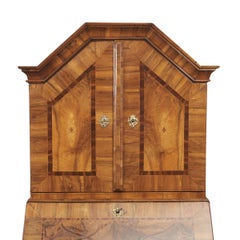
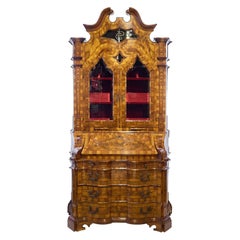
Walnut and plum Baroque Secretary à deux corps around 1760
Located in Münster, DE
Secretary à deux corps Baroque around 1760 Walnut and plum veneered on softwood, lower part with
Wood, Nutwood
$12,900
H 99 in W 51 in D 22.5 in
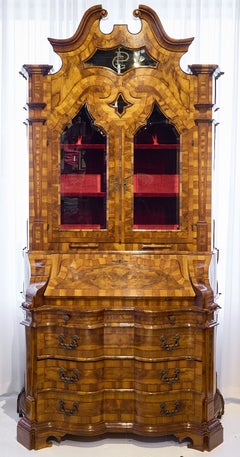
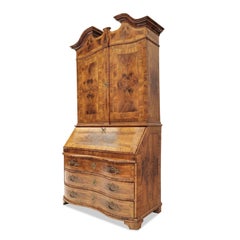
Northern Italian Baroque Secretary, lined in red velvet, Venice Circa 1900
Located in Atlanta, GA
Exquisite Baroque Venetian Secretary of Northern Italy made of burl walnut and having intricate
Brass
$19,739
H 93.71 in W 47.25 in D 26.78 in
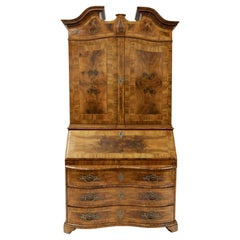
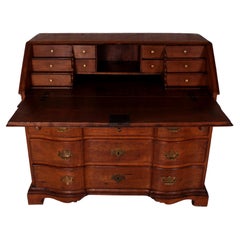
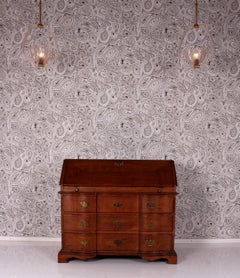
Walnut and walnut burl Baroque Secretary à deux corps Saxony around 1760
Located in Münster, DE
Secretary à deux corps Baroque, Saxony c. 1740, walnut and walnut burl veneer, sloping lid, 2-door
Wood, Nutwood
$2,655
H 39.77 in W 44.49 in D 23.63 in
Viennese Baroque Secretary Slant Door Bureau ar 1860 Straight & Heavy Solid Oak
Located in Landshut, BY
This rather straight, very heavy solid oak Viennese baroque folding desk has been carefully
Brass, Iron
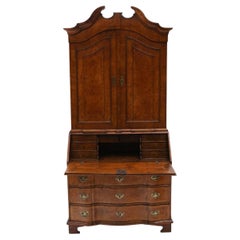
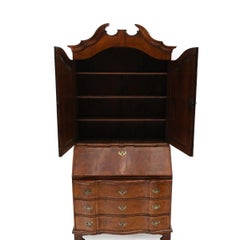
Baroque Bureau / Secretary in Walnut
Located in Kastrup, DK
Beautiful baroque secretary desk with finely mirror-cut oak veneer and walnut root veneer. The desk
Brass
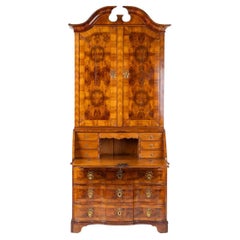
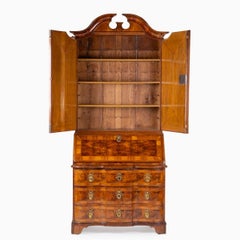
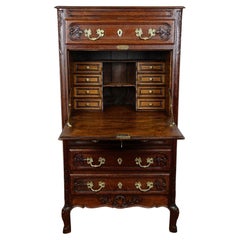
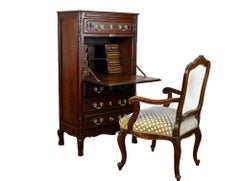
Baroque Bureau / secretary In Walnut from Northern Germany
Located in Kastrup, DK
An elegant and architecturally refined 18th-century Baroque secretary desk crafted in oak and
Brass
$7,700
H 51.97 in W 27.56 in D 16.14 in
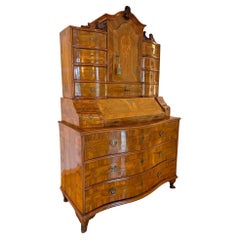
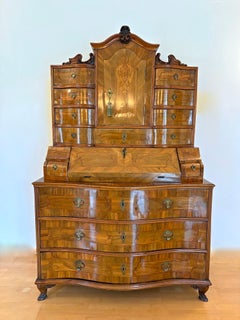
19th Century Baroque Revival Secretaire Cabinet, Oak Handcarved, AT ca. 1870
Located in Lichtenberg, AT
beautiful dark nutwood tone. This secretary cabinet from the so-called "second Baroque" - impresses with its
Brass
$19,900
H 81.1 in W 51.18 in D 25.59 in
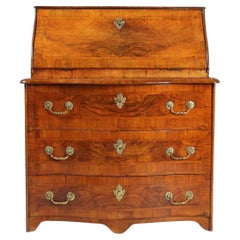
18th Century Austrian Baroque Secretaire/ Bureau Cabinet, Nutwood, AT ca. 1770
Located in Lichtenberg, AT
look of this over 250 year old masterpiece of a baroque secretary/ tabernacle or bureau cabinet.
Brass
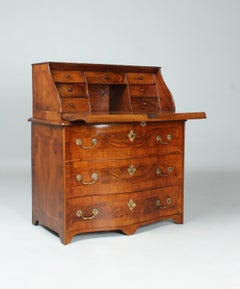
$9,164
H 42.92 in W 36.62 in D 23.63 in
Small Swiss Louis XV Secretaire, Walnut, Writing Chest, circa 1760
Located in Greven, DE
SmallLouis XV or Baroque Secretary Switzerland (Bern) Walnut Baroque around 1760
Walnut
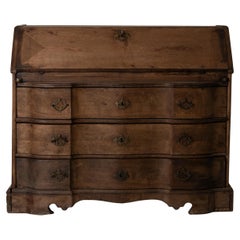
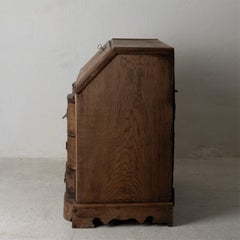
Secretary Baroque Sweden
Located in New York, NY
A secretary made during the baroque period 1650 - 1750 in Sweden. Made from oak. All original
Oak
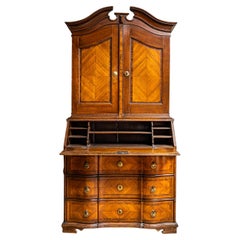
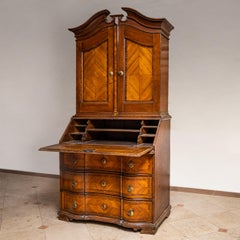
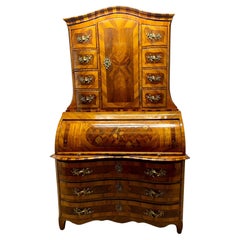
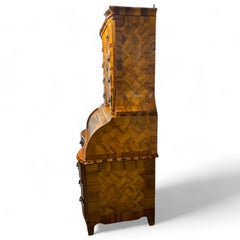
Baroque Slant-Front Secretary Desk, Mid-18th Century
Located in Greding, DE
Baroque slant-front secretary desk crafted from oak and cherry, featuring a three-drawer lower
Brass
$9,211Sale Price|20% Off
H 84.65 in W 51.97 in D 33.08 in
Baroque Cabinet with Secretary Desk, Germany 1760-70
Located in Leimen, DE
Baroque cabinet with Secretary desk, coming from Southern Germany and dating back to end of the
Walnut
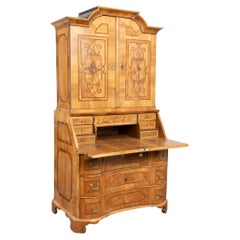
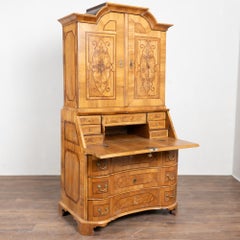
18th Century German Baroque Inlaid Marquetry Secretary Bureau
Located in Round Top, TX
18th-century German secretary or "bureau" crafted from walnut, featuring extensive marquetry. The
Brass
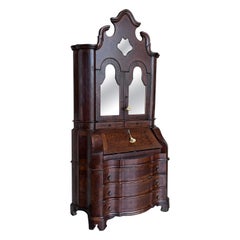
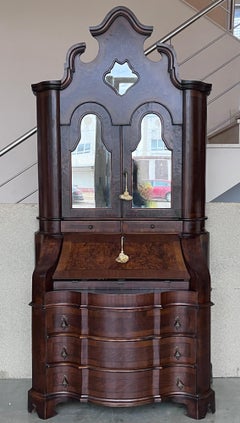
Antique Italian Baroque Style Burl Walnut Secretary Cabinet
Located in Miami, FL
Italian Baroque style walnut veneer secretary cabinet, early 20th century. The top part of the
Mirror, Walnut
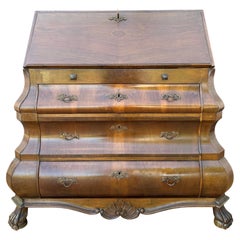
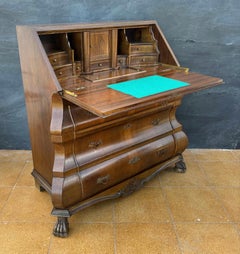
Baroque Style Bombe Secretary Desk, Mid-20th Century
Located in BÉTERA, ES
Elegant baroque style bureau desk featuring a distinctive bombe front and a drop-front writing
Hardwood
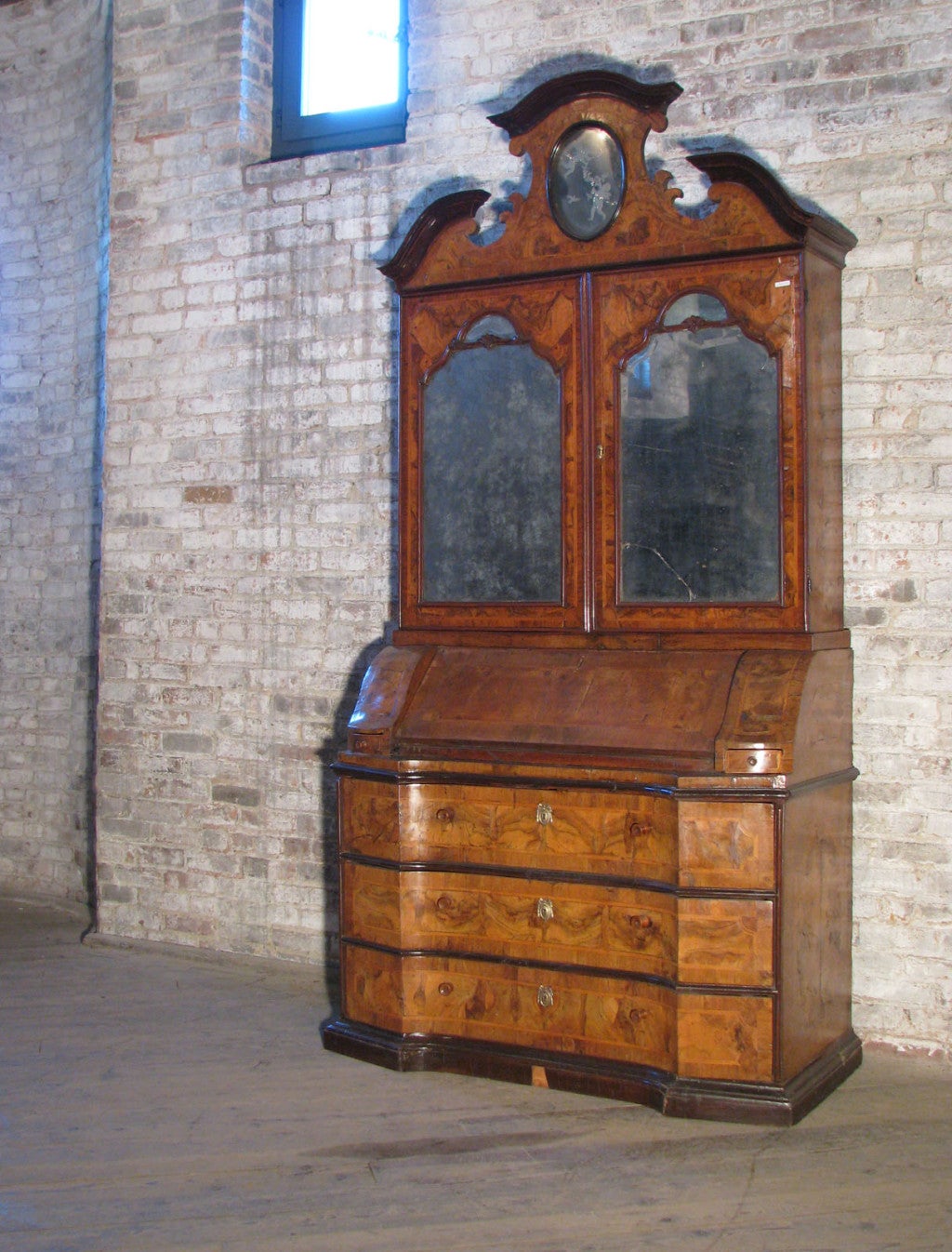
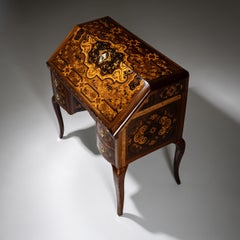
Italian Early 18th Century Baroque Walnut Secretary-Bookcase
Located in Troy, NY
Italian Early 18th Century Baroque Walnut Secretary-Bookcase with beautiful, thick walnut radica
Walnut, Mirror
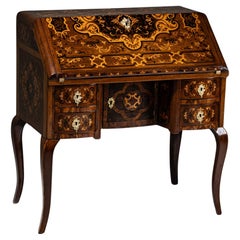
$14,099
H 38.19 in W 37.01 in D 21.26 in
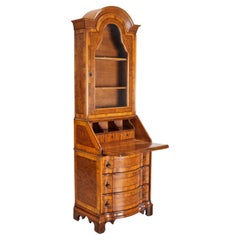
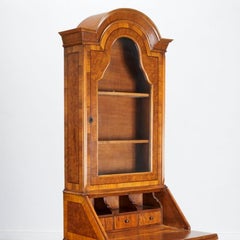
Baroque Fall-Front Secretary with Marquetry Surface, 18th Century
Located in Greding, DE
Small Baroque fall-front secretary on elegantly curved S-shaped legs, featuring four drawers and a
Bronze
$2,250
H 72 in W 24 in D 17 in
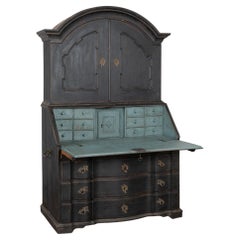
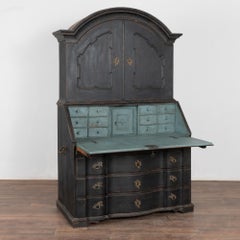
Vintage Italian Baroque Style Burl Veneer Secretary Bookcase, 20th Century
Located in Morristown, NJ
An elegant Italian Baroque-style secretary bookcase, 20th century, crafted in richly figured burl
Metal
$9,450
H 79 in W 50.25 in D 25.5 in
Black Painted Baroque Swedish Oak Secretary Bureau, circa 1780-1810
Located in Round Top, TX
This striking oak secretary is an elegant statement piece crowned with a curved bonnet. Note the
Brass
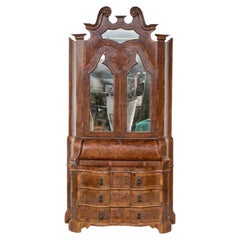
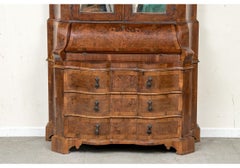
Italian Baroque Style Burl Walnut Secretary Desk Cabinet
Located in Bridgeport, CT
A fine Italian baroque burl walnut secretary desk with a cartouche form mirrored panel beneath a
Brass
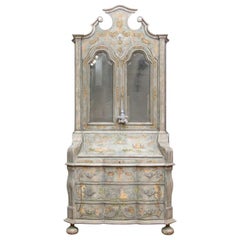
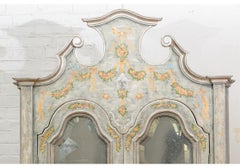
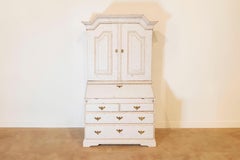
Fine Paint Decorated Baroque Style Armoire Secretary/ Desk
Located in Bridgeport, CT
A tall custom Venetian baroque shaped frame, the double doors with inset beveled antiqued mirrors
Wood

$9,560Sale Price|20% Off
H 80.25 in W 47 in D 21.75 in
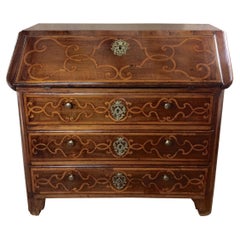
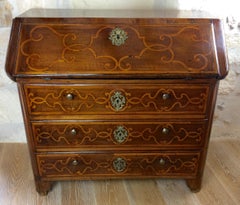
Swedish 1770s Baroque Period Light Gray Painted Secretary with Slant Front Desk
Located in Atlanta, GA
A Swedish Baroque tall secretary from circa 1770, with slant front desk, light Gustavian gray
Glass, Wood
$8,500
H 36.63 in W 42 in D 21.5 in
18th Century Italian Baroque Inlaid Walnut Drop-Front Secretary Desk / Commode
Located in Miami, FL
18th Century Italian Baroque Inlaid Walnut Drop-Front Secretary Desk / Commode, Antique Italian
Brass
$7,343
H 90.56 in W 44.89 in D 16.93 in
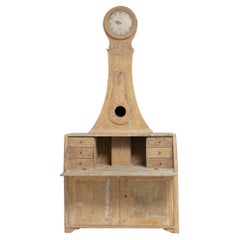
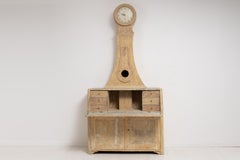
Antique Swedish Baroque Pine Clock Cabinet or Secretary with Authentic Patina
Located in Kramfors, SE
Antique northern Swedish secretary clock cabinet from the mid 1800s. The cabinet is dated 1863 but
Pine
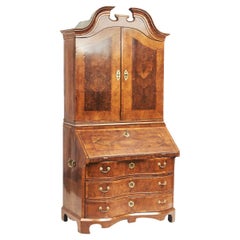
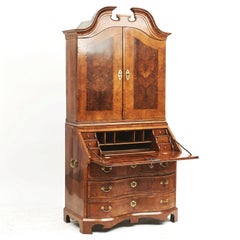
Bureau / Secretary In Burl Walnut
Located in Kastrup, DK
Early 18th century burl walnut veneered bureau cabinet. The upper section with swan neck top over double doors, the lower section with a sloping-front opening to reveal a cupboard an...
Brass
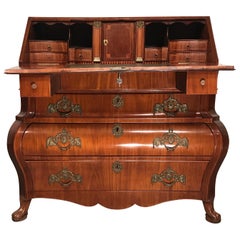
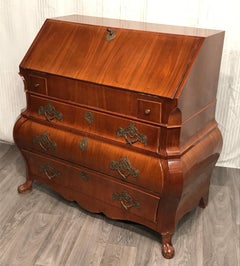
Dutch Secretary Desk, Around 1800, Mahogany
Located in Belmont, MA
Dutch secretary desk, Netherlands, around 1800. This elegantly curved secretary desk has three
Mahogany
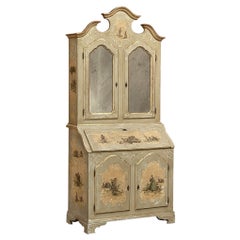
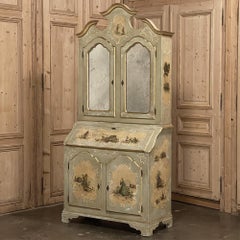
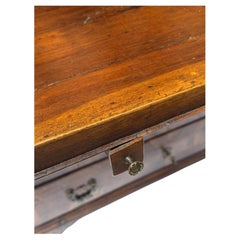
19th Century Italian Painted Secretary, Bookcase
Located in Dallas, TX
19th Century Italian painted secretary ~ bookcase is a fanciful and marvelous expression of the
Wood

$8,200
H 44.1 in W 46.86 in D 23.63 in
Exceptional 18th-Century Italian Slant-Front Bureau / Secretary
Located in Rio De Janeiro, BR
Exceptional 18th-Century Italian Slant-Front Bureau / Secretary This remarkable Italian bureau
Wood
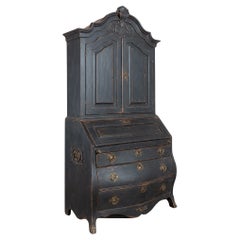
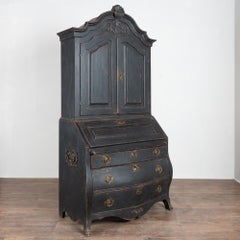
19th Century Danish Black Painted Oak Secretary Bureau
Located in Round Top, TX
19th-century baroque oak secretary with a newer professionally applied black painted exterior
Brass
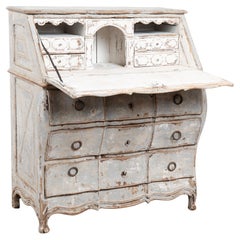
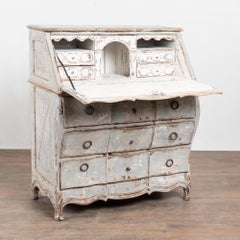
19th Century Swedish Oak Ladies’ Writing Desk Secretary
Located in Round Top, TX
Swedish oak ladies’ writing desk or secretary featuring a Bombay-curved lower chest with three
Iron
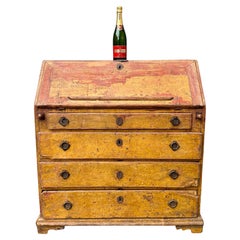
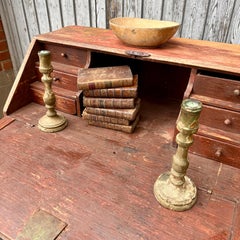
18th Century Original Painted Writing Desk Secretary, Sweden
Located in Haddonfield, NJ
A late 18th Century Folk Art Baroque Scandinavian original painted writing desk secretary. This
Bronze
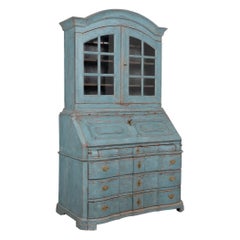
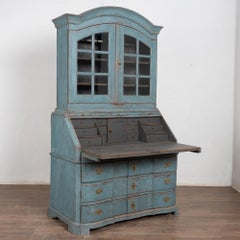
Early 19th Century Danish Blue Painted Pine Secretary Bureau
Located in Round Top, TX
Early 19th-century Danish pine secretary with newer professionally applied layered blue painted
Pine
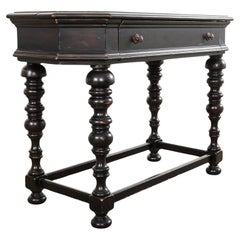
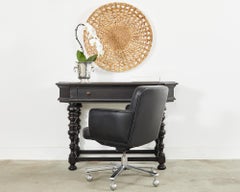
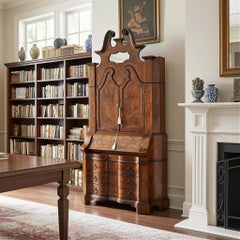
Portuguese Style Ebonized Spinet Secretary Desk by Tommy Bahama
By Tommy Bahama
Located in Rio Vista, CA
Handsome Portuguese style secretary writing table or desk by Tommy Bahama. The spinet or piano
Brass
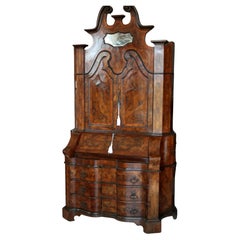
$6,048
H 104.34 in W 55.12 in D 23.63 in
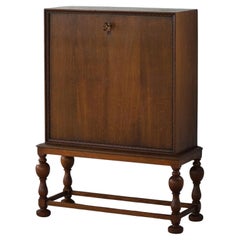
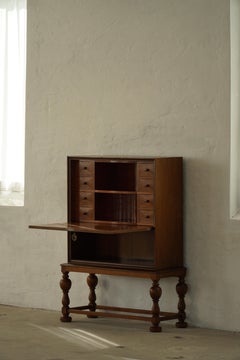
Original Italian Lombard trumeau in walnut, 19th century, northern Italy
Located in Sant'Arsenio, Campania
This original Lombard trumeau, dating from the 19th century and made of fine walnut and walnut burl, is a masterpiece of northern Italian craftsmanship. The wavy body has an elegant ...
Silk, Nutwood
$6,800
H 52.76 in W 35.44 in D 13.19 in
Danish Modern, Unique Handcrafted Oak Secretary Cabinet, Mid 20th Century
Located in Odense, DK
An elegant rare Danish oak secretary cabinet in Baroque style, crafted in the 1930s by a skilled
Oak
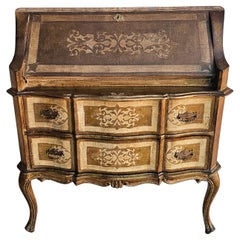
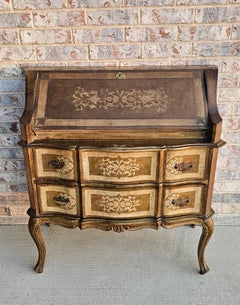
Italian Florentine Giltwood Bureau Secretary Butlers Desk Chest
Located in Forney, TX
XV influenced Venetian Baroque taste, featuring cream paint and gold gilded finish lightweight wood
Brass
$2,195
H 75.5 in W 41 in D 17 in
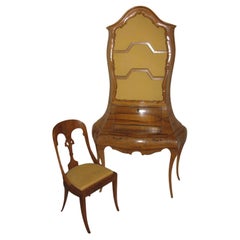
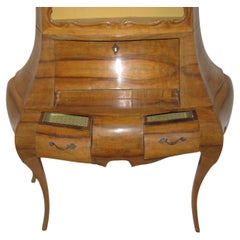
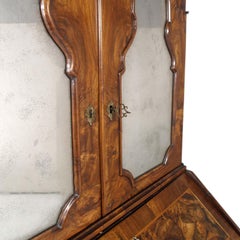
Italian Olive Burl Wood Bombe Secretary Vanity with Display Top & Matching Chair
Located in Port Jervis, NY
Fabulous Italian bombe drop front secretary cabinet in olive wood with the matching chair. Bookcase
Brass
$32,898
H 91.74 in W 39.38 in D 21.66 in
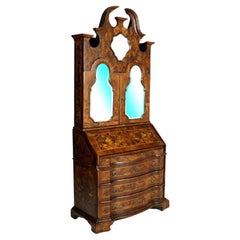
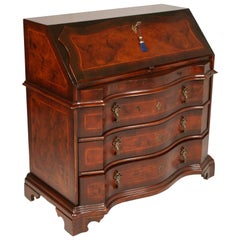
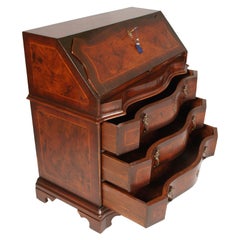
Original 18th Century Venetian Secretary Desk Bookcase burled walnut with inlaid
By Bassano's Ebanisteria
Located in Vigonza, Padua
What makes this piece unique and special is its originali twist to the characteristic Secretaire, a must-have object among Venetian aristocratic families that could not be missing in...
Walnut
$6,344
H 41.34 in W 41.74 in D 21.66 in
1920s Lombard Secretary Desk Commode in Walnut & Burl Veneer, Threaded Maple
Located in Vigonza, Padua
Early 20th Century Lombard Secretary Desk Commode in Walnut & burl Veneer, Threaded of Maple
Walnut, Burl
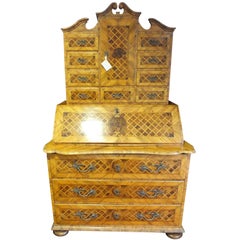
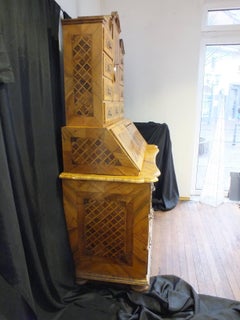
Tabernacle Baroque Secretary; 1870, Germany
Located in Homburg, DE
Tabernacle Baroque secretary - circa 1870 South Germany - Nutwood veneered on oakwood - Very
Brass, Bronze
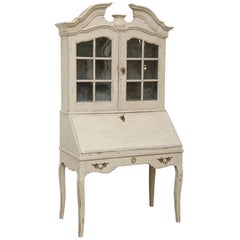
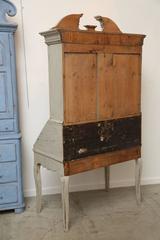
Unavailable
H 78.13 in W 39.75 in D 22.5 in
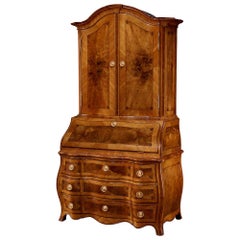
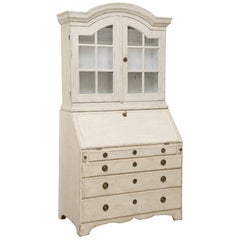
Antique Swedish Baroque Secretary Display Cabinet Late 18th Century
Located in West Palm Beach, FL
Antique Swedish baroque secretary display cabinet late 18th century The Secretary is in two
Wood
Unavailable
H 86.62 in W 46.46 in D 27.56 in
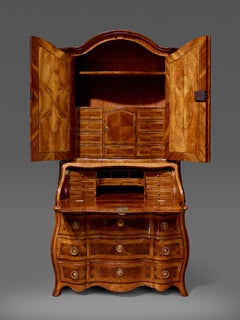
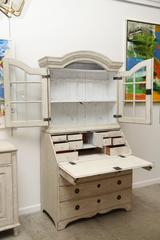
Courtly Baroque Secretary Johann Jakob Kieser, Mannheim, around 1760
Located in Bamberg, DE
Courtly Baroque secretary Johann Jakob Kieser, Mannheim, around 1760 This exquisitely crafted
Wood
Unavailable
H 82.63 in W 42 in D 22.5 in
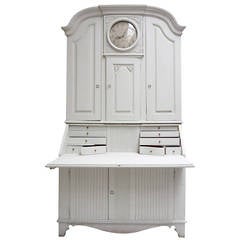
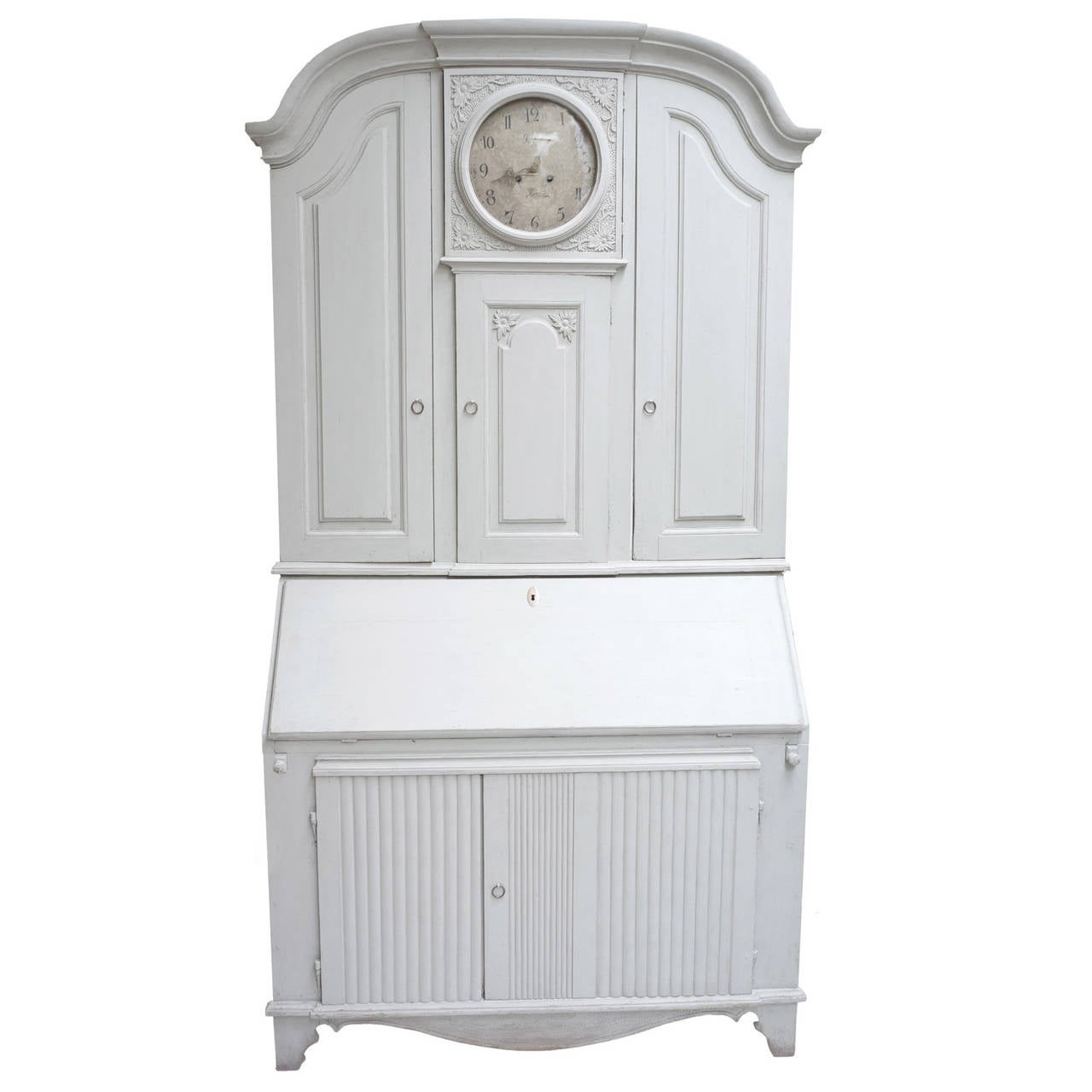
Swedish Baroque Secretary Display Cabinet Painted White, Late 18th Century
Located in West Palm Beach, FL
Antique Swedish Baroque Secretary with glass doors, painted Swedish distressed white/cream color
Wood
Unavailable
H 85 in W 46 in D 20 in
Swedish Baroque Secretary Desk with Built-In, Signed Mora Clock, circa 1760
Located in Carmel, CA
This period Swedish Baroque secretary-desk Circa 1760, has a built in Mora clock with original
Wood
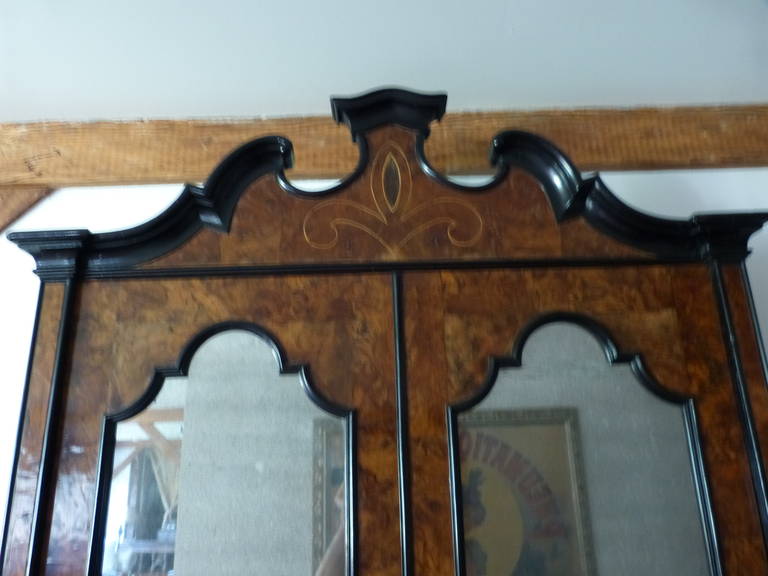
Italian 18th Century Baroque Secretary
Located in Bantam, CT
A fine North Italian Baroque 18th century olivewood and ebonized secretary bookcase with serpentine
Olive
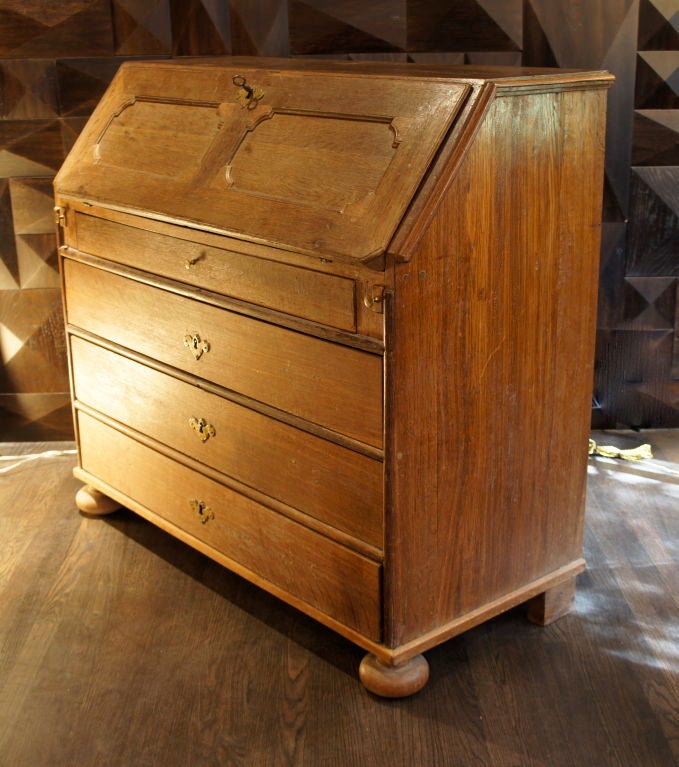
DANISH BAROQUE SECRETARY, 18th Century
Located in Los Angeles, CA
Danish Baroque Secretaire. Quarter-sawn oak with drop front, fully-fitted interior, bun feet
Oak
Unavailable
H 88.98 in W 48.04 in D 23.43 in
German Baroque Secretary with Mirror and Silver Plated Fittings from 1730/35
Located in Heiligenberg, DE
Two-piece baroque secretary with mirrored doors, exceptional original silvered fittings with
Walnut
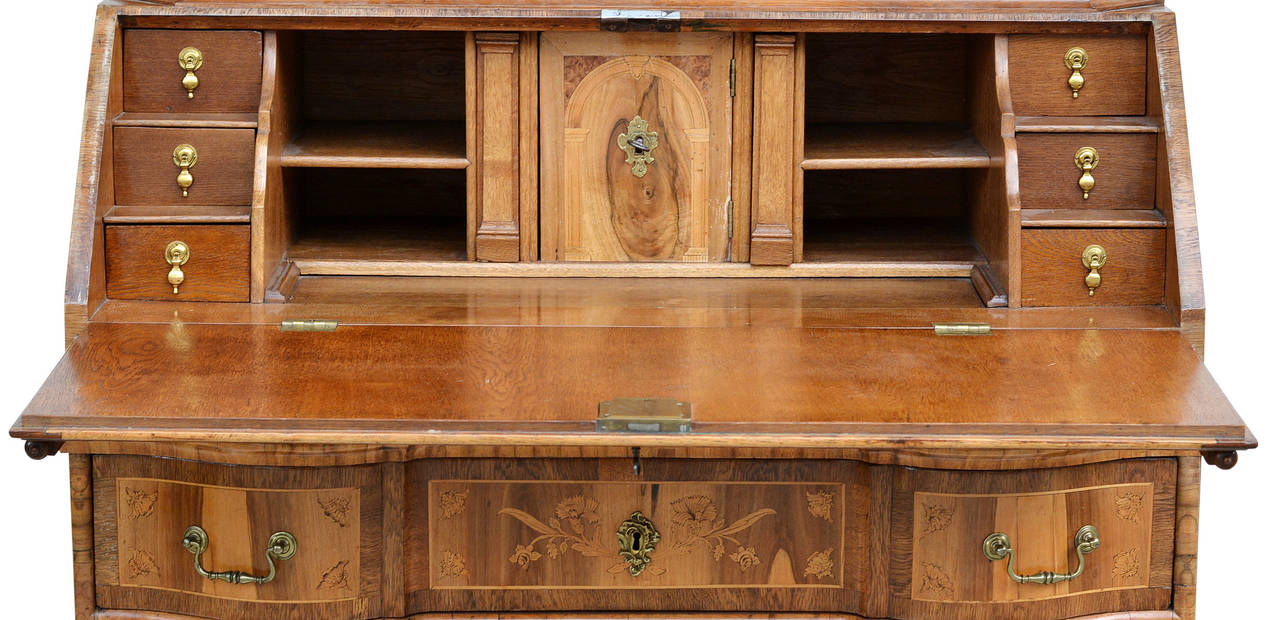
Baroque Compound Secretary, Brunswick, 1750s
Located in Kiel, Schleswig-Holstein
Baroque Compound Secretary, Brunswick. Made of walnut, oak, and other real woods. 1750s. This
Oak, Walnut
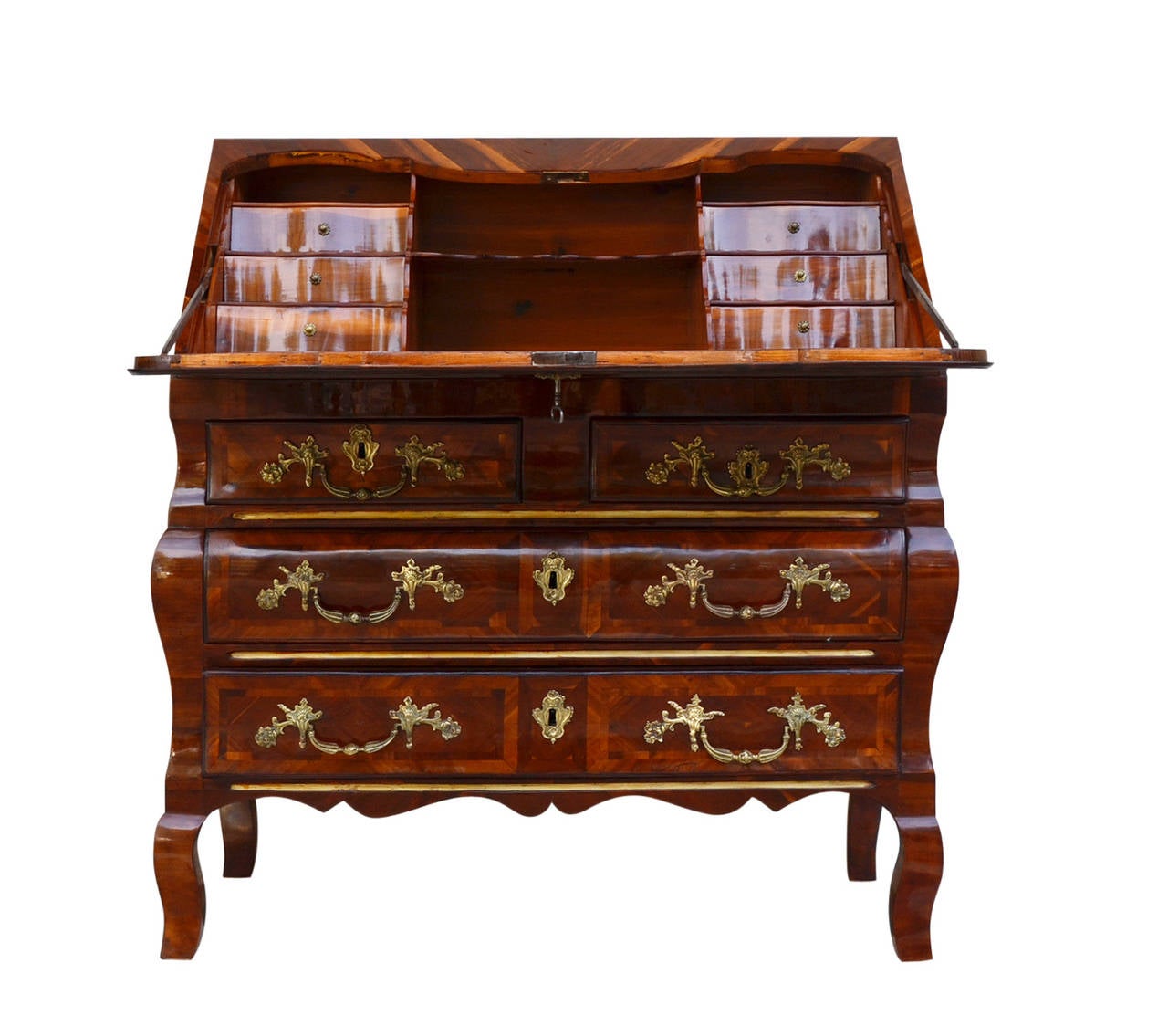
Baroque Period Lady's Secretary, France, late 1750s
By Jean-Baptiste Fromageau
Located in Kiel, Schleswig-Holstein
Baroque Period Lady's Secretary, France, late 1750s. Made of walnut and other precious wood
Walnut
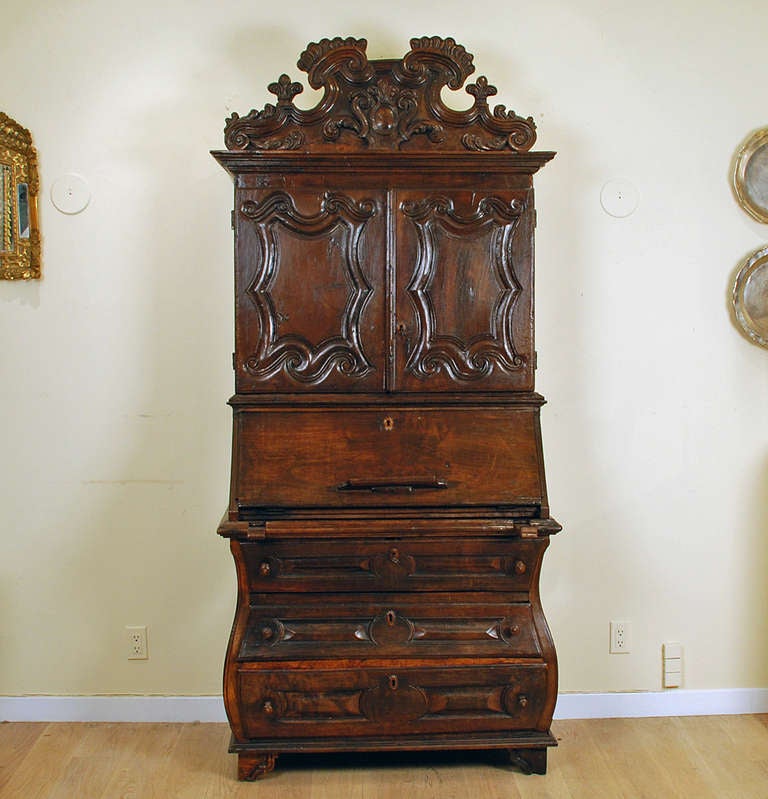
A Rare 18th Century Iberian Baroque Walnut Secretary
Located in San Francisco, CA
A fine and rare 18th century Iberian baroque period walnut secretary with molded crown over two
Walnut
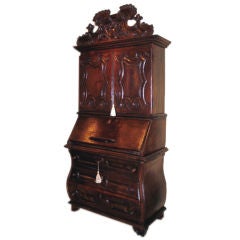
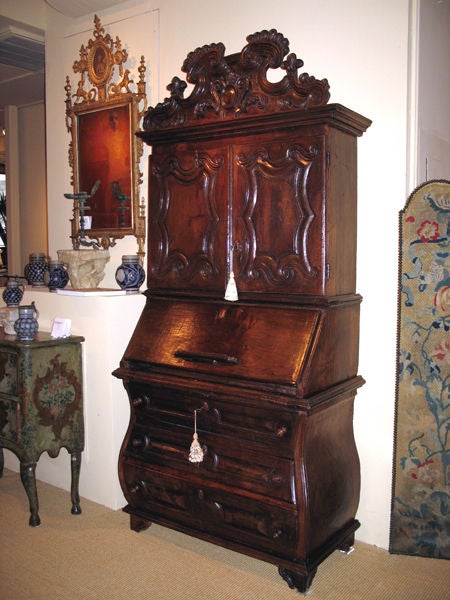
SPANISH COLONIAL BAROQUE PERIOD CHESTNUT SECRETARY
Located in San Francisco, CA
the leafy-carved and scrolling molded pediment over two scroll-carved doors opening to reveal a shelf above two carved short drawers; above a slant front opening to reveal a single-d...
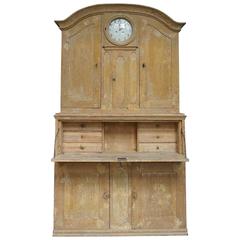
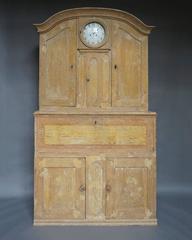
Period Secretary with Clock from Hälsingland
Located in Sheffield, MA
Period secretary from Hälsingland with integral Mora clock and with original paint, Sweden, circa
Glass, Wood
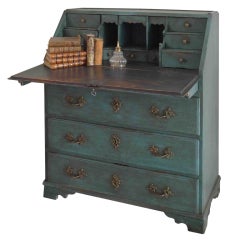
Swedish Baroque Secretary
Located in New York, NY
A beautiful Baroque secretary in a greenish blue color. Original hardware. Open depth: 31.5 in
Wood

Swedish Tall Baroque Secretary
Located in New York, NY
A tall Swedish Baroque Secretary with top of glass doors on a chest of drawer base.
Brass
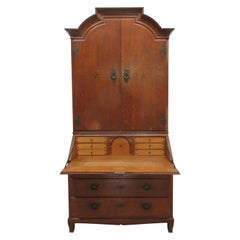
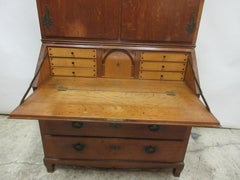
Swedish Baroque Secretary Hutch
Located in Hollywood, FL
This is a Swedish Baroque secretary hutch. It was found at an Estate Auction in Uppsala, Sweden.
Wood
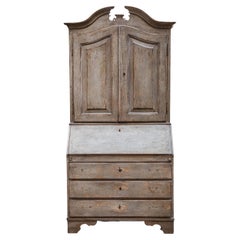

Baroque Secretary in Provençal Style, 18th Century
Located in Greding, DE
Hand-painted baroque secretary, featuring a three-drawer commode base, slant-front writing flap
Wood
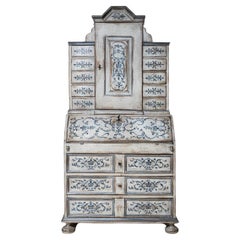

Hand-Painted Baroque Secretary Desk, 18th Century
Located in Greding, DE
Magnificent 18th-century Baroque secretary desk with an impressive architectural structure. The
Wood
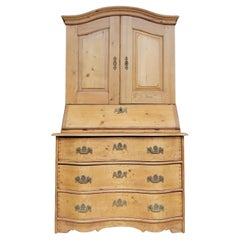

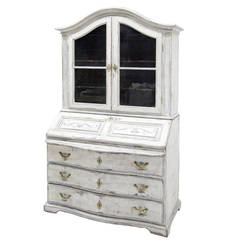
18th Century German Pine Baroque Secretary
Located in Dusseldorf, DE
German provincial baroque secretary à deux corps from around 1750. Solid made in pine wood
Pine

Sold
H 81.89 in W 46.07 in D 26.78 in
Northwest German Baroque Secretary Bookcase from the 18th Century
Located in Greding, DE
Splendid north-west-German baroque Secretary Bookcase from the 18th Century Display case with
Oak
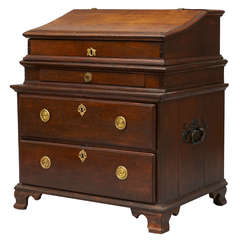

Swedish Baroque Secretary
Located in New York, NY
MAde in oak during Baroque period ca 1700.
Brass
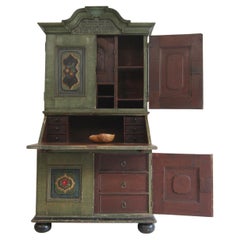
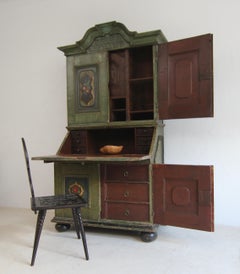
18th Century Original Painted Baroque Secretary
Located in Dusseldorf, DE
German provincial Baroque secretary à deux corps from the 2nd half of the 18th century. Solid oak
Oak
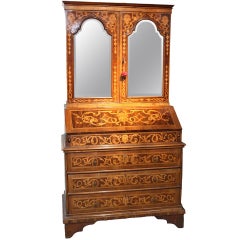
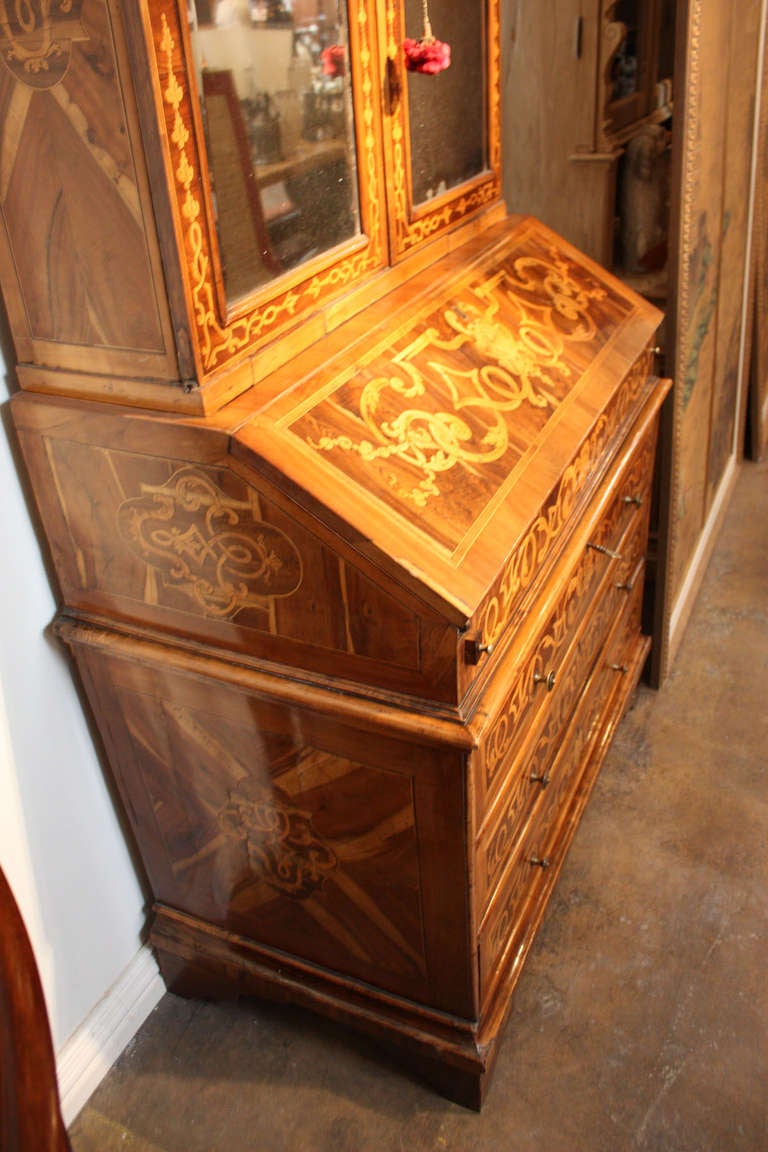
Italian Baroque secretary-bookcase
Located in Dallas, TX
18th century Italian secretary in excellent condition circa 1720. Very properly fitted, this
Walnut
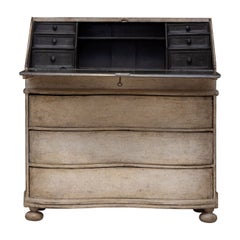

Gray painted Baroque Secretary, 18th century
Located in Greding, DE
Baroque slanted-flap bureau on pressed ball feet with three drawers and curved front. Behind the
Wood, Softwood
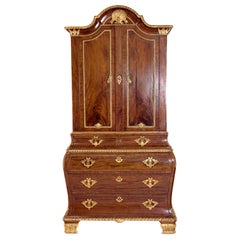

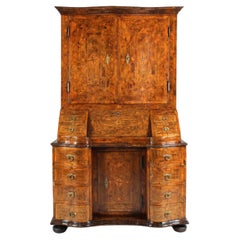
Continental Baroque Secretary, Mahogany & Parcel-Gilt
Located in Dallas, TX
A very good quality early 20th century Continental mahogany and parcel-gilt rococo style secretary
Wood, Giltwood

Sold
H 83.08 in W 50.01 in D 25.6 in
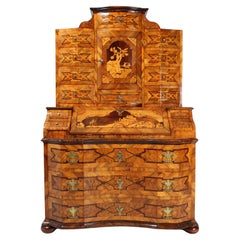
18th Century German Baroque Secretary with Marquetry and Patina, circa 1750
Located in Greven, DE
Baroque secretary with impressive marquetry Southwest Germany Walnut a.o. around 1750 Dimensions
Fruitwood, Maple, Walnut

Sold
H 75.6 in W 52.37 in D 29.53 in
18th Century Baroque Secretary, Tabernacle, Walnut, Plum, Maple, Austria c. 1750
Located in Greven, DE
Baroque tabernacle secretary with figural marquetry Austria Walnut, plum, maple Baroque around
Maple, Walnut

Sold
H 73.75 in W 44.13 in D 20.38 in
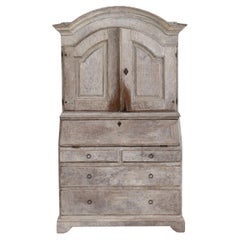
18th C. Swedish Baroque Secretary with Library in Original Gray Paint
Located in Wichita, KS
A Swedish slant-front secretary from the 18th century in two parts with arched cornice and bracket
Wood, Paint

Sold
H 42 in W 44.25 in L 42 in
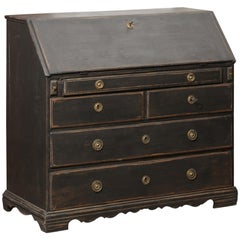
Swedish Baroque Period 1760s Black Painted Slant-Front Secretary with Drawers
Located in Atlanta, GA
A Swedish Baroque period slanted front black-painted secretary from the mid-18th century, with
Wood
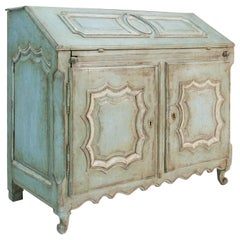

Baroque Secretaire, 18th Century
Located in Greding, DE
Baroque secretary with a hinged flap and a wavy apron on low volute feet. The fronts and sides are
Wood, Paint
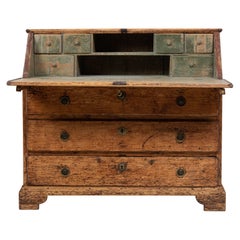

Late 18th Century Swedish Baroque Pine Secretary Desk
Located in Kramfors, SE
Baroque secretary desk from northern Sweden made during the late 1700s. The secretary is pine and
Pine
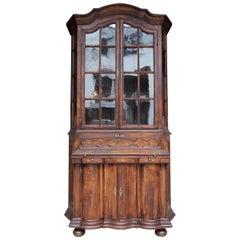

19th Century Large German Baroque Style Secretary a Deux Corps
Located in Dusseldorf, DE
Large German Provincial Baroque secretary a Deux corps from the Eifel region. Probably a one-off
Hardwood, Maple, Pine, Oak
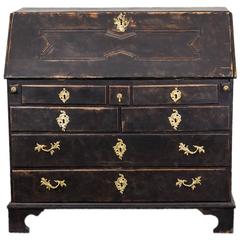
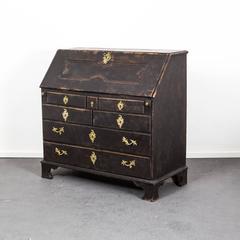
Secretary Baroque Period Sweden
Located in New York, NY
A stunning low secretary with original brass hardware. Interior with several compartments and
Oak
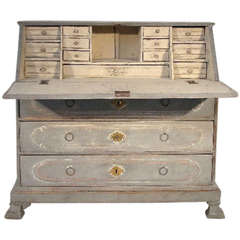
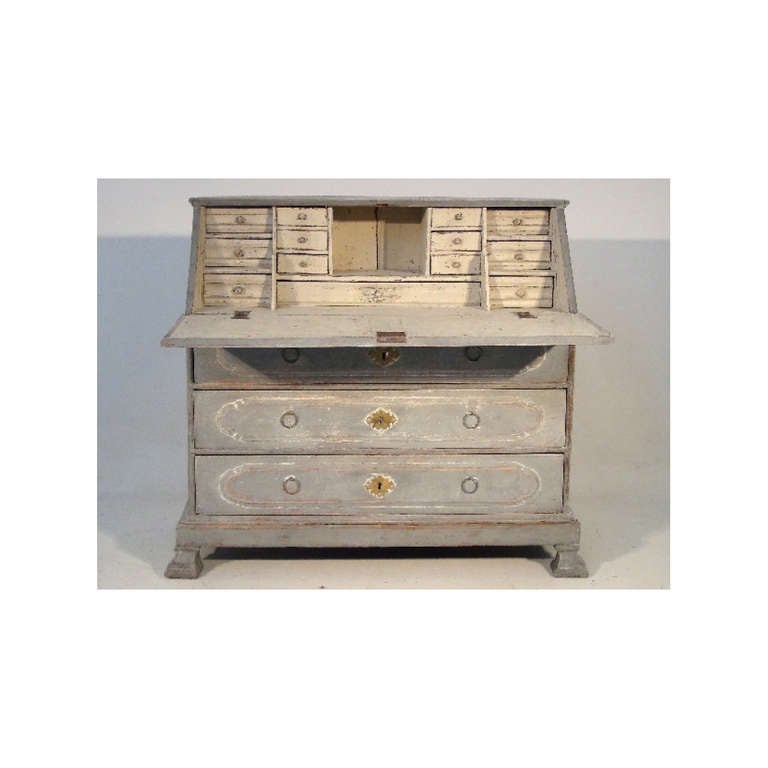
18th Century Baroque Period Secretary
Located in Wichita, KS
A richly carved Baroque period bureau / secretary with carvings typical of the period. The interior
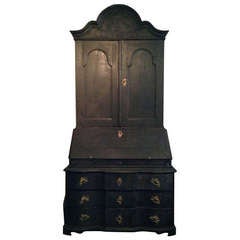
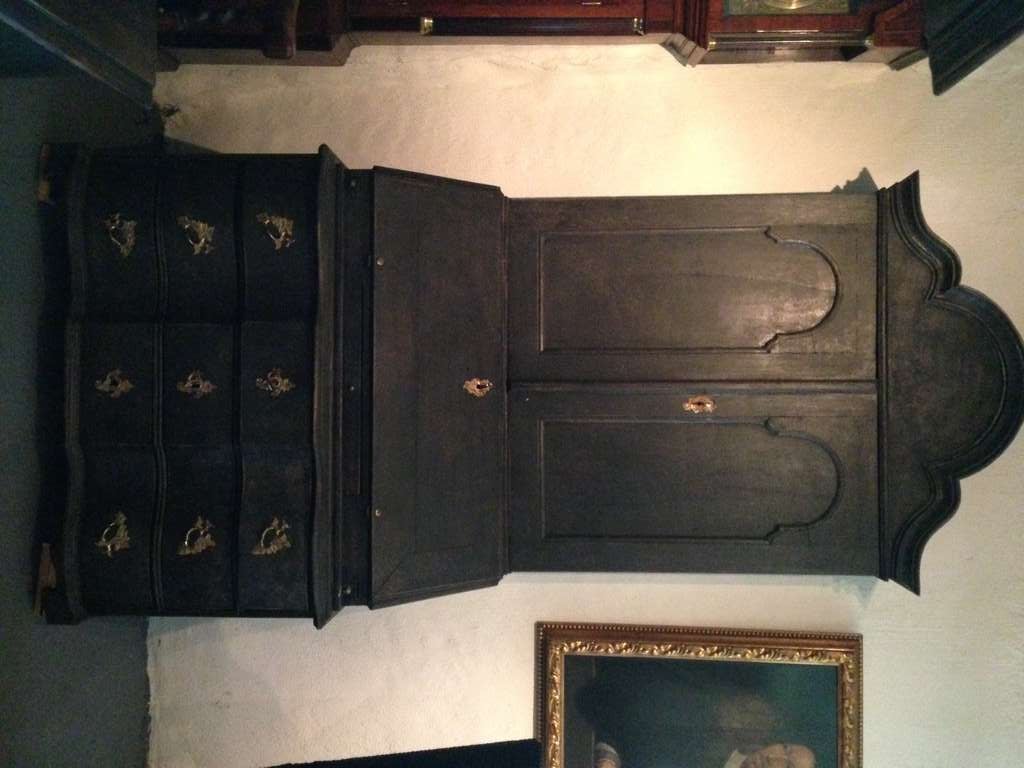
Black Painted Baroque Swedish Secretary
Located in New York, NY
A gorgeous black painted secretary made during the baroque period 1650-1750 in Sweden. Cabinet top
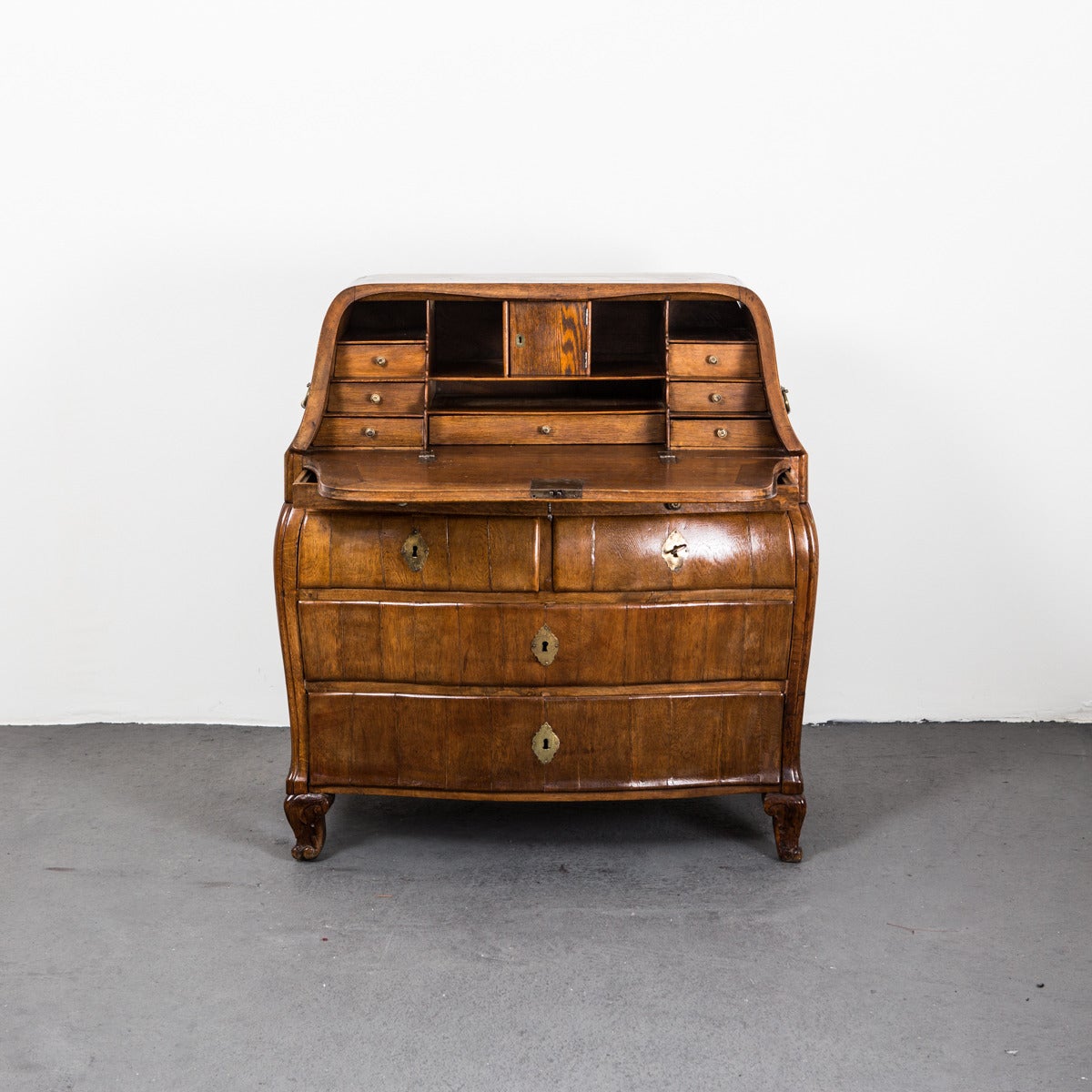
Swedish Baroque Period Secretary in Oak
Located in New York, NY
A secretary made in oak during the Rococo period 1750-1775 in Sweden. Original hardware in brass
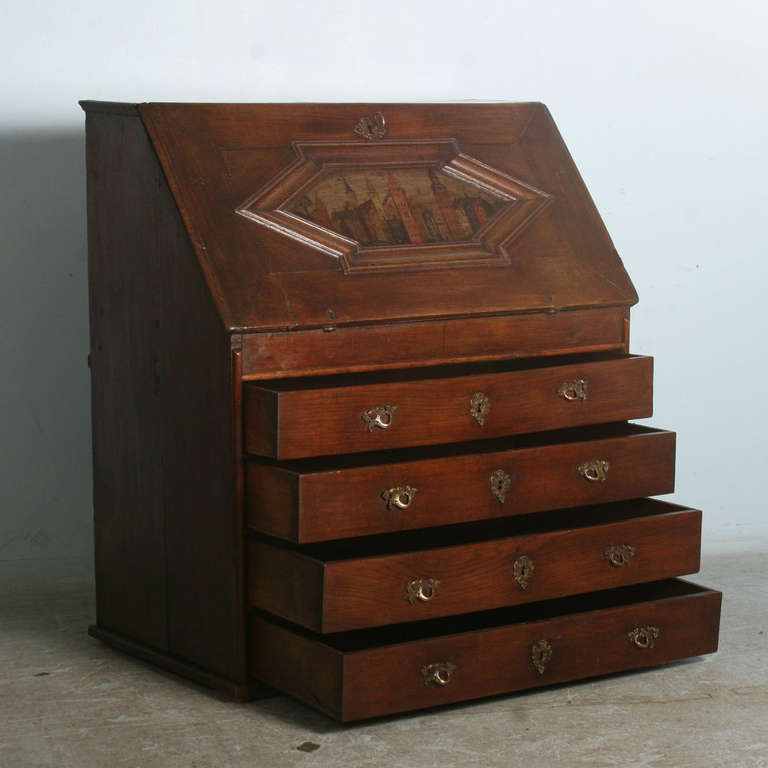
Antique Baroque 18th Century Oak Secretary
Located in Round Top, TX
Classic styling is the mark of this handsome secretary from the 1700's. The original painted mural
Oak, Paint
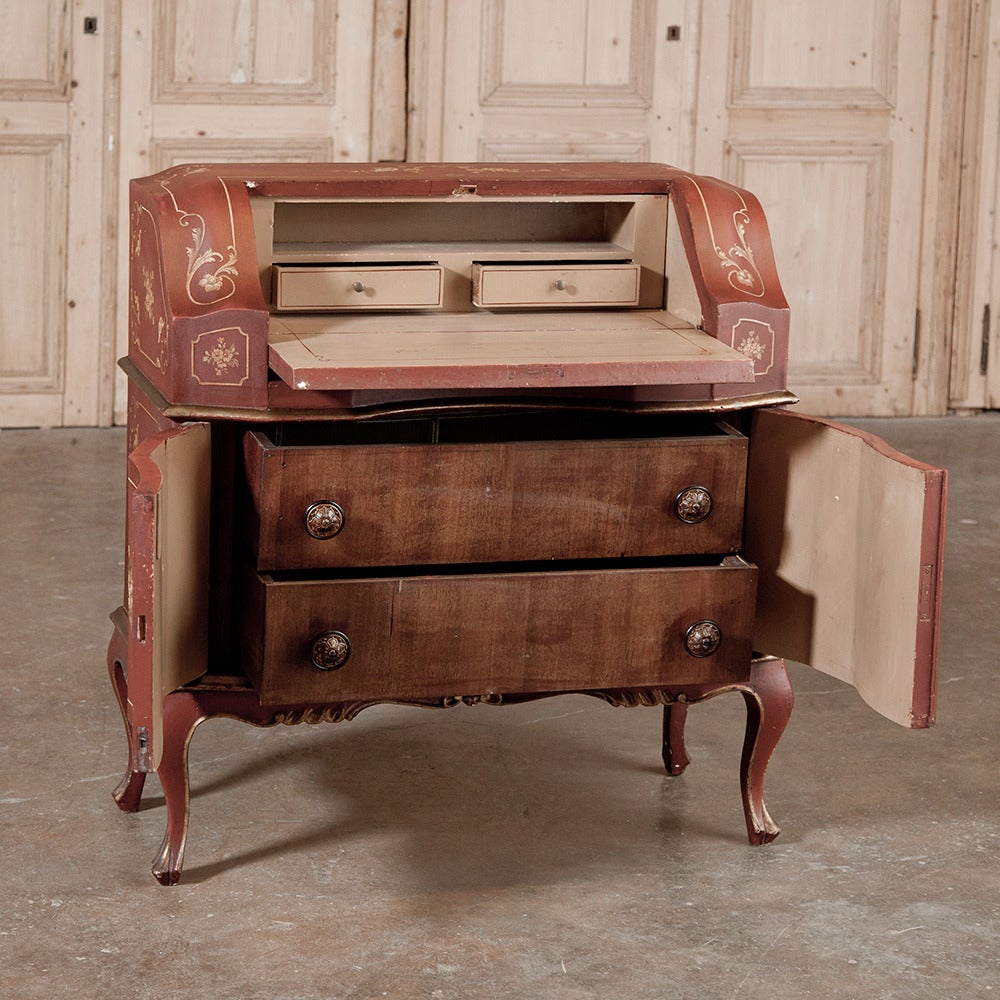
Italian Early 1900s Baroque Painted Secretary
Located in Dallas, TX
This intriguing desk is a testament to the ingenuity and stylistic flair of Italian artisans and boasts its original painted finish! circa 1900-1910. Measures: 39 H x 36.5 W x 16 D...
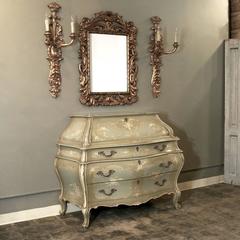
Antique Italian Baroque Hand-Painted Bombe Secretary
Located in Dallas, TX
, this Antique Italian Baroque bombe secretary features original artwork on all three gracefully curved
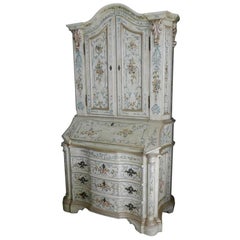

Italian Baroque Style Painted Secretary, 20th Century
Located in Savannah, GA
Mid-20th century Italian Baroque style painted secretary with display cabinet, pull-out desk and
Paint
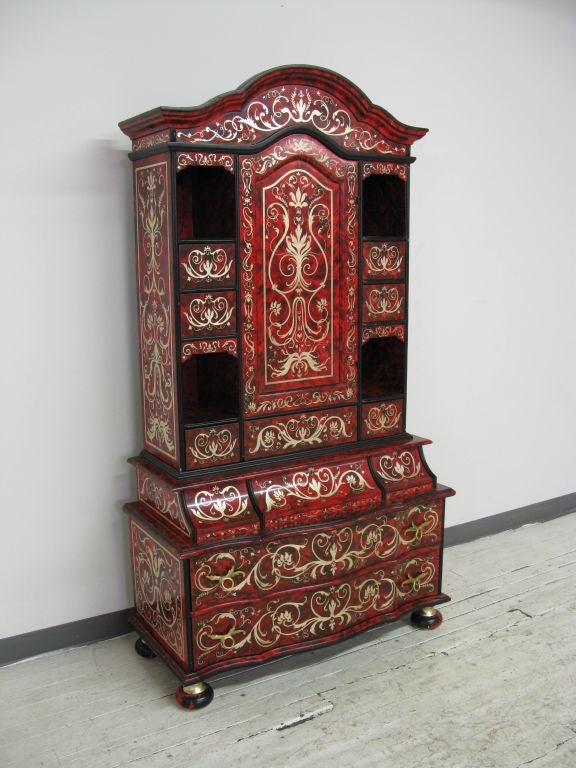
Stunning Dutch Baroque Style Secretary
By Isabel O'neil
Located in Brooklyn, NY
Striking two part Dutch Baroque style secretary. Cabinet decorated with faux turtle shell and
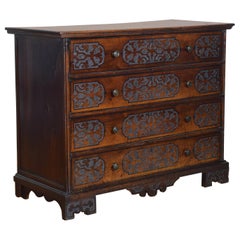

Italian Late Baroque Carved Walnut Secretary Commode
Located in Atlanta, GA
Likely from the Umbria region of Italy, the rectangular top above a conforming case, the top drawer with a flip front and concealing smaller drawers and a writing surface, having car...
Walnut
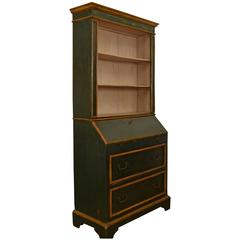

Sicilian Baroque Style Painted Wood Secretary Bookcase
Located in Atlanta, GA
Having original green paint trimmed in gold, the shallow upper section with a molded edge top and having three shelves, the lower section with a slant front folding desk housing two ...
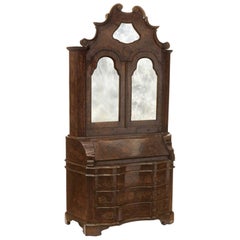

Antique Italian Baroque Style Burl Walnut Secretary Cabinet
Located in Cypress, CA
Antique Italian Baroque style burl walnut secretary cabinet.
Burl, Walnut
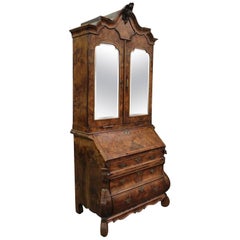

18th Century Dutch Baroque Burl Walnut Secretary Cabinet
Located in Cypress, CA
Fine 18th century Dutch Baroque burl walnut veneered secretary cabinet. The intricately carved
Walnut
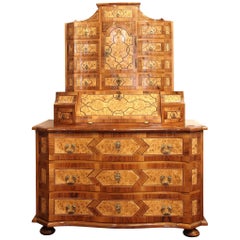

18th Century Baroque Tabernacle Secretary Desk from Austria
Located in Darmstadt, DE
The tabernacle secretary desk stands on low round feet and is richly decorated with noble wood
Birdseye Maple, Mahogany, Walnut
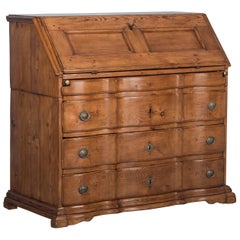

Antique Danish Baroque Drop Front Bureau Secretary, circa 1770
Located in Round Top, TX
secretary, also known as a bureau, from the late 18th century. The curved large 3 lower drawers reflect the
Pine
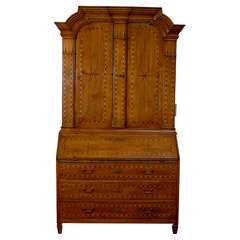
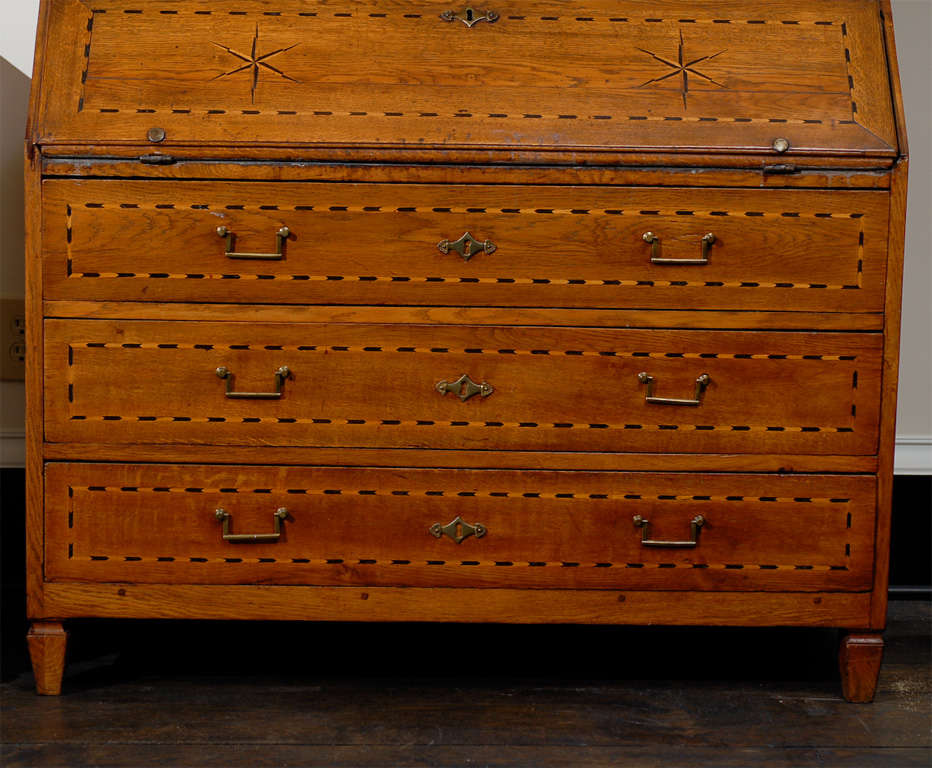
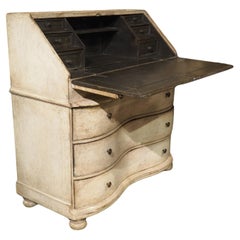
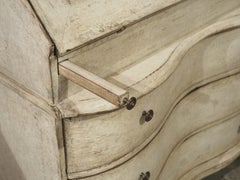
Pair of Mid-18th Century Swedish Period Baroque Tall Secretaries
Located in Atlanta, GA
A pair of Swedish mid-18th century period Baroque tall slant-front secretaries with exquisite
Wood
Sold
H 45.25 in W 42 in D 34 in
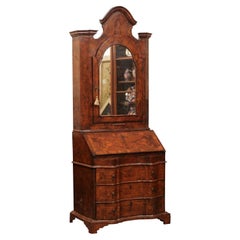
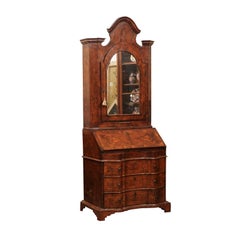
19th Century Painted Baroque Style Secretary Commode from Southern Germany
Located in Dallas, TX
This wonderful Baroque-style secretary commode features a wavy serpentine chest of drawers
Wood, Paint
Sold
H 90 in W 38 in D 24.5 in
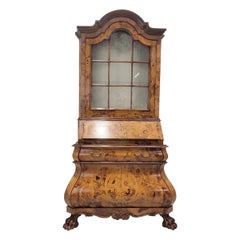
Early 18th C Italian Baroque Figured Walnut Secretary w/ Architectural Pediment
Located in Atlanta, GA
Early 18th Century Italian Baroque Figured Walnut Secretary with Architectural Pediment, Arched
Walnut

Sold
H 83 in W 43 in D 19 in
Vintage Italian Baroque Style Marquetry Inlay Flip-Up Secretary Display Cabinet
Located in Chicago, IL
Vintage Italian Baroque Style Marquetry Inlay Carved Flip-Down Secretary Display Cabinet A
Glass, Wood

Sold
H 86 in W 52.5 in D 18 in
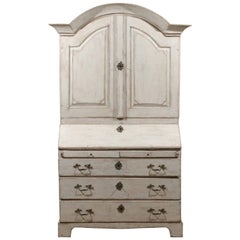
Baroque Style 1840s Swedish Tall Secretary with Slant-Front Desk and Drawers
Located in Atlanta, GA
A Swedish painted wood Baroque style secretary with bonnet top, upper cabinet, slant-front desk
Wood
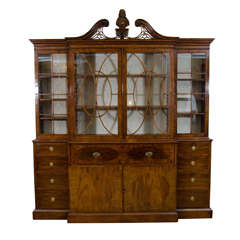
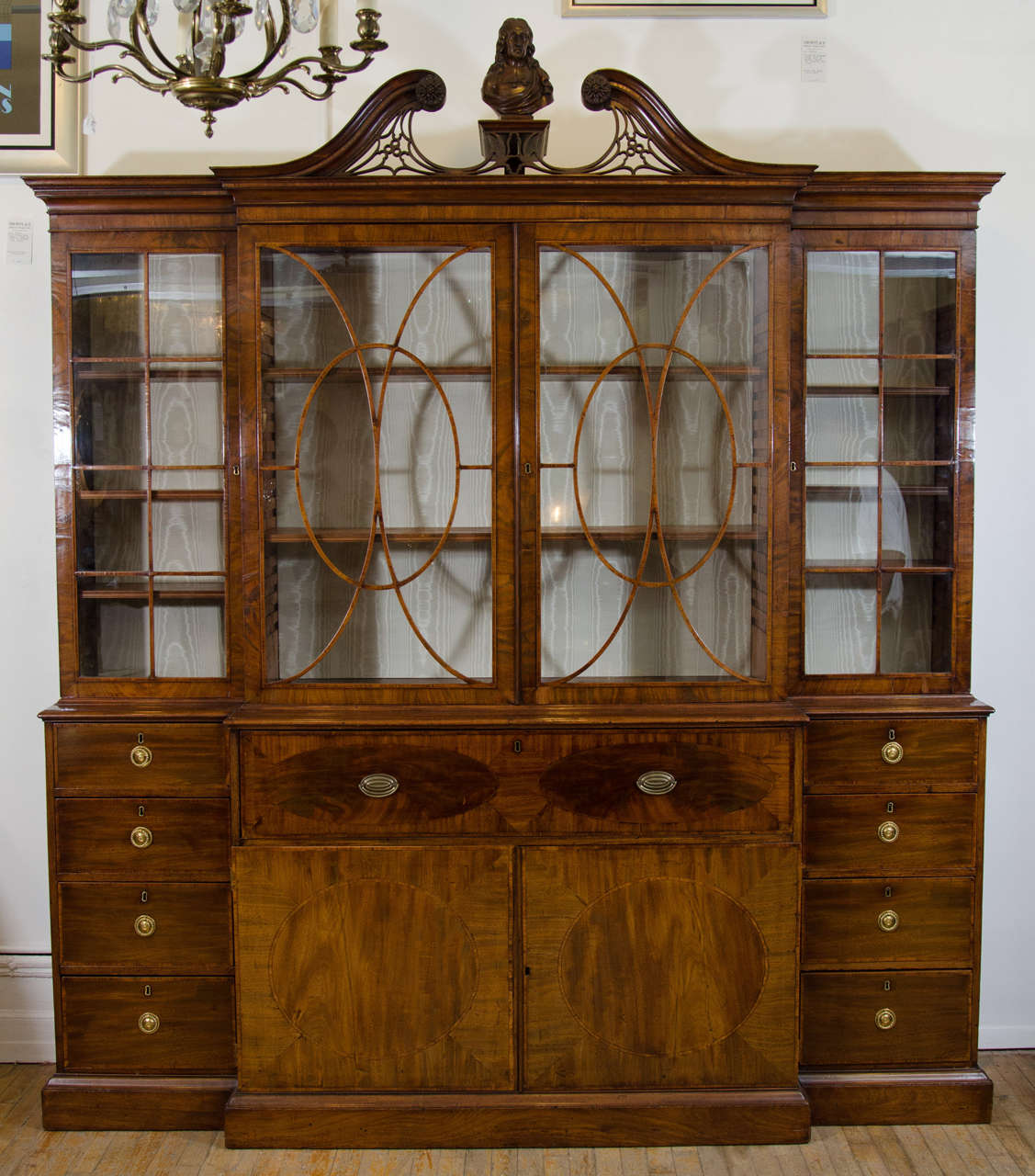
A 19th Century George III Baroque Mahogany Breakfront Secretary
Located in Astoria, NY
A George III mahogany breakfront secretary with drop front that opens to reveal small inlaid secret
Glass, Wood
Sold
H 40.75 in W 37.8 in D 20.87 in
Danish Kjærnulf/Baroque style Oak Secretary Bureau, Slant Front Desk
By Henning Kjærnulf
Located in Store Heddinge, DK
This Danish oak secretary bureau is in the style of Henning Kjærnulf, crafted in the 1960s, it is a
Brass
Mid-Century Italian Baroque Carved Walnut Secretary Chest of Drawers
Located in Dallas, TX
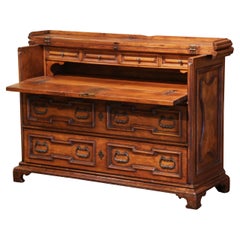
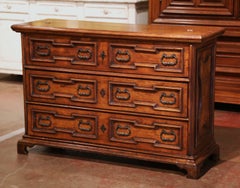
panels. The narrow and versatile baroque writing table commode is in excellent condition with a rich
Walnut
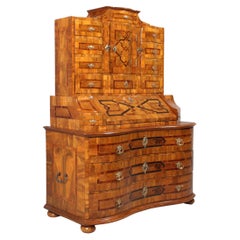

Sold
H 68.9 in W 50.79 in D 24.81 in
18th Century Southern German Baroque Tabernacle Secretary, Louis XV, c. 1750
Located in Greven, DE
Baroque tabernacle secretary in walnut with strapwork. Upper Bavaria Walnut Baroque around
Fruitwood, Walnut
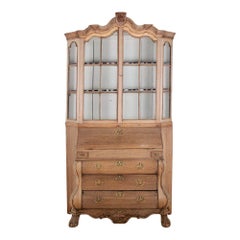
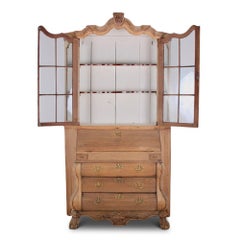
19th Century Dutch Bleached Oak Secretary
Located in Vancouver, British Columbia
A 19th century Dutch secretary bookcase in limed or bleached oak, the bonnet top upper section with
Oak
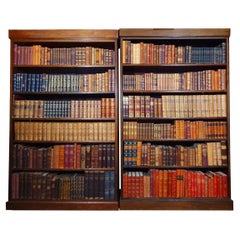
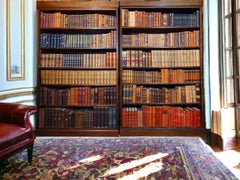
Library of Antique Leatherbound Books
Located in Brønshøj, DK
This collection consists of 400 antique decorative books, mainly dating from 1850–1950, with most published before 1920. The books are bound in leather, many with fine gold leaf embo...
Gold Leaf
$7,049Sale Price|20% Off
H 62.21 in W 44.1 in D 23.23 in
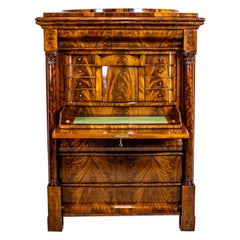
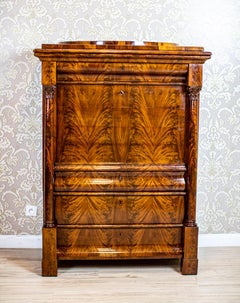
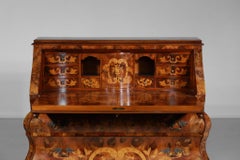
19th-Century Biedermeier Mahogany Secretary Desk in Beautiful Graining
Located in Opole, PL
19th-Century Biedermeier Mahogany Secretary Desk in Beautiful Graining We present you this piece of furniture with three drawers at the bottom, a drop front, and a narrow drawer und...
Baize, Mahogany
$5,874
H 46.07 in W 24.02 in D 51.19 in
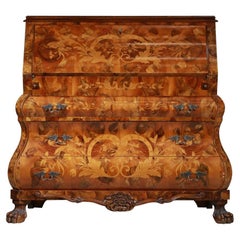
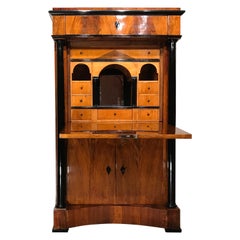
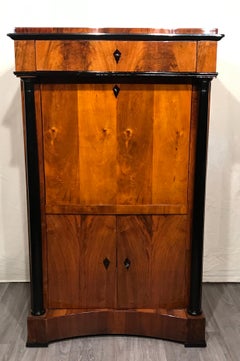
Chest of Drawers / Secretary in Dutch Style Marquetry Holland Design
Located in Ternay, Auvergne-Rhône-Alpes
Chest of drawers in Dutch style from the beginning of the century. Entirely inlaid with floral decoration, with brass handles and a lion paw shaped base. The upper part consists of...
Wood
$12,000Sale Price|20% Off
H 63.39 in W 38.19 in D 21.66 in
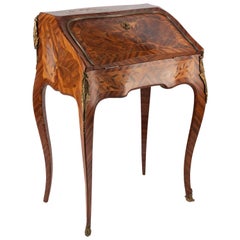
Biedermeier Secretary Desk, South German, 1820
Located in Belmont, MA
Biedermeier secretary desk, South German 1820. This unique and very beautiful secretary desk dates back to the early phase of the Biedermeier style. It has a beautiful walnut veneer ...
Elm, Walnut
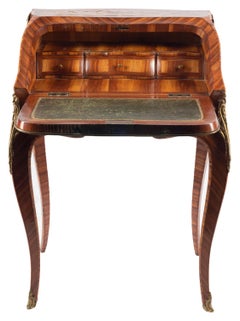
Late 19th Century French Ladies Writing Desk
Located in Brighton, Sussex
A good quality late 19th century French bureau De-Dame, having wonderful marquetry floral inlay to the fall and top, opening to reveal a shelf, drawers and a slide opening to a well....
Mahogany
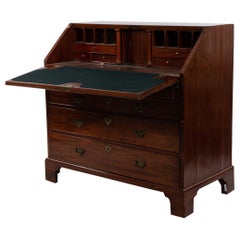
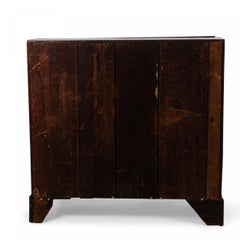
American Block Front Dropdown Mahogany Secretary Desk
Located in Queens, NY
American (18/19th Century) block front mahogany secretary desk with a slant top drop front over 3 drawers supported on ogee bracket feet.
Mahogany
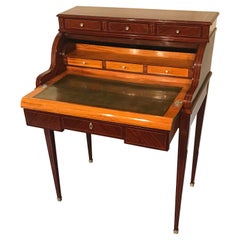
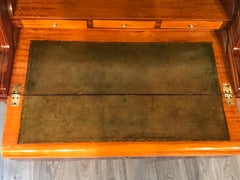
Directoire Style Desk with Cylinder Top, France, 19th Century
Located in Belmont, MA
Directoire style desk with cylinder top, France 19th century Mahogany veneer with satinwood inlays. This elegant little desk is perfect for a small working space. The writing top fo...
Mahogany, Satinwood
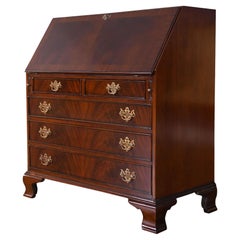
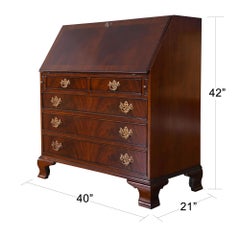
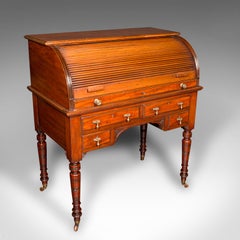
Mahogany Secretary Desk
Located in Annville, PA
This Mahogany Secretary Desk from Niagara Furniture has all the outstanding qualities of an antique original. Made of select mahogany solids and mahogany veneers, the desk has four ...
Mahogany
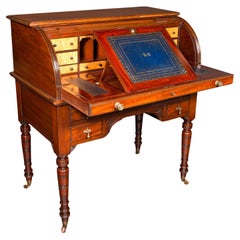
Sold|$6,121
H 39.97 in W 35.44 in D 21.66 in
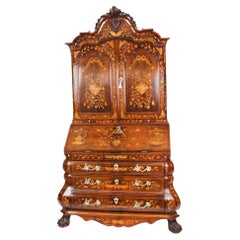
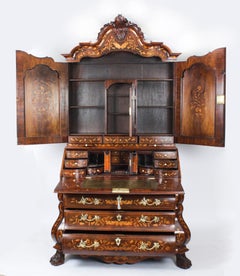
Antique Roll-Top Desk, English, Bureau, Aesthetic Period, Victorian, Circa 1880
Located in Hele, Devon, GB
This is an antique roll-top desk. An English, mahogany and leather tambour bureau in Aesthetic Period taste, dating to the late Victorian era, circa 1880. Beautifully appointed desk...
Wood
$24,921
H 94.49 in W 53.55 in D 25.99 in
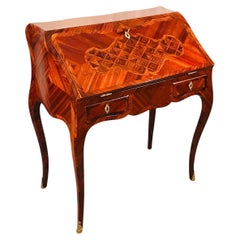
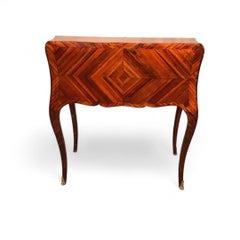
Antique Walnut Dutch Marquetry Bureau Cabinet Bookcase 18th Century
Located in London, GB
This is an important antique Dutch walnut and marquetry bureau bookcase, circa 1780 in date. It has been made from the finest burr walnut with fabulous marquetry decoration depicti...
Walnut
$11,200Sale Price|20% Off
H 31.5 in W 55.12 in D 15.75 in
Louis XV Secretary Desk, France 18th century
Located in Belmont, MA
Exquisite 18th-Century Louis XV Secretary Desk This stunning Louis XV Secretary Desk, dating back to 1770, showcases the elegance of 18th-century French craftsmanship. It features a ...
Kingwood, Rosewood
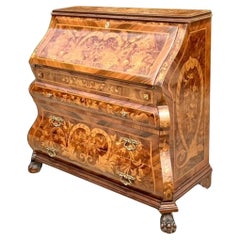
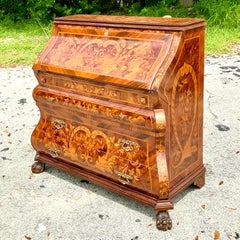
Vintage Italian Inlay Secretary Desk
Located in West Palm Beach, FL
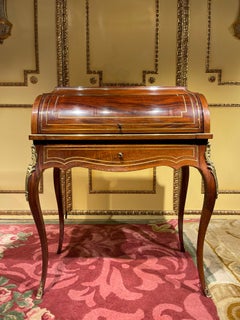
Introducing the 'Vintage Italian Inlay Secretary Desk', a masterpiece of Italian craftsmanship and timeless elegance. Adorned with intricate inlay work and rich wood tones, this desk...
Wood
$5,510
H 40.95 in W 33.47 in D 18.12 in
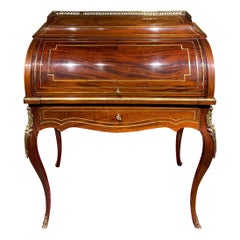
Unique French Roll-Up Secretary/Desk in the Transition Style from Around 1890
Located in Berlin, DE
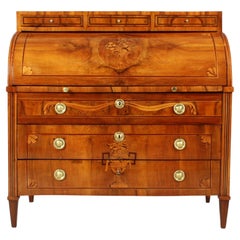
Unique French roll-up secretary/desk in the transition style from around 1890 Mahogany and brass inlays. Writing surface and compartments can be pulled out under roller closure. C...
Brass
$14,686
H 46.46 in W 45.67 in D 24.41 in
Late 18th Century German Louis XVI Secretary, Walnut, Marquetry, Cylinder Desk
Located in Greven, DE
Louis XVI cylinder desk with marquetry Germany (Westphalia) Walnut etc. Classicism around 1795 Dimensions: H x W x D: 118 x 116 x 62 cm Description: Beautiful writing fur...
Maple, Oak, Walnut
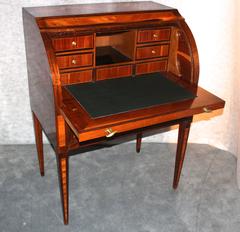
18th Century Louis XVI Cylinder Top Secretaire
Located in Belmont, MA
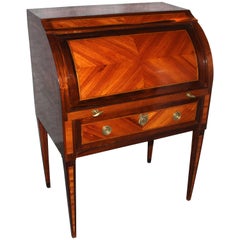
18th century Louis XVI Cylinder Top Secretaire, Paris 1780. The secretaire stands out for its elaborate kingwood and satinwood marquetry. The inside is embellished with several dra...
Kingwood
$2,772Sale Price|20% Off
H 48.04 in W 33.86 in D 20.48 in
19th-Century Louis Philippe Walnut Wood & Veneer Secretary Desk After Renovation
Located in Opole, PL
19th-Century Louis Philippe Walnut Wood & Veneer Secretary Desk After Renovation Delicately shaped and richly adorned, this 19th-century secretary desk in the style of Louis Philipp...
Wood, Walnut
The decadence of the Baroque style, in which ornate furnishings were layered against paneled walls, painted ceilings, stately chandeliers and, above all, gilding, expressed the power of the church and monarchy through design that celebrated excess. And its influence was omnipresent — antique Baroque furniture was created in the first design style that truly had a global impact.
Theatrical and lavish, Baroque was prevalent across Europe from the 17th to mid-18th century and spread around the world through colonialism, including in Asia, Africa and the Americas. While Baroque originated in Italy and achieved some of its most fantastic forms in the late-period Roman Baroque, it was adapted to meet the tastes and materials in each region. French Baroque furniture informed Louis XIV style and added drama to Versailles. In Spain, the Baroque movement influenced the elaborate Churrigueresque style in which architecture was dripping with ornamental details. In South German Baroque, furniture was made with bold geometric patterns.
Compared to Renaissance furniture, which was more subdued in its proportions, Baroque furniture was extravagant in all aspects, from its shape to its materials.
Allegorical and mythical figures were often sculpted in the wood, along with motifs like scrolling floral forms and acanthus leaves that gave the impression of tangles of dense foliage. Novel techniques and materials such as marquetry, gesso and lacquer — which were used with exotic woods and were employed by cabinetmakers such as André-Charles Boulle, Gerrit Jensen and James Moore — reflected the growth of international trade. Baroque furniture characteristics include a range of decorative elements — a single furnishing could feature everything from carved gilded wood to gilt bronze, lending chairs, mirrors, console tables and other pieces a sense of motion.
Find a collection of authentic antique Baroque tables, lighting, decorative objects and other furniture on 1stDibs.
Your antique, new or vintage secretary desk has become the (chic) saving grace of the "new normal" at home.
Simply put, a secretary desk is a multifunctional piece of furniture with a hinged writing surface that folds open or drops down. When the leaf is folded out, small inner storage compartments — pigeonholes, cubbies, recesses or drawers — are revealed.
Traditionally, a secretary is composed of two parts — a chest of drawers on the bottom and a cabinet with shelves on the top. Taking its name from the French word for the piece, secrétaire, the secretary desk dates back to the 18th century, when Paris-based cabinetmaker Jean-François Oeben, known for his exquisite marquetry and clever mechanical desks, is thought to have invented the secrétaire à abbattant, or drop-leaf desk.
While the defining drop-down feature of the secretary desk has remained constant, the materials used, as well as its configuration, size and style have evolved over time.
At first, secretaries were typically made from exotic woods, like rosewood, tulipwood and kingwood; later, hardwoods like cherry, maple, oak and mahogany were more common. The desks also became lighter, with space carved out of the lower half for the writer’s feet or with drawers replaced by legs — making them more table-like.
When open, the secretary is a dynamic, versatile Wunderkammer. When closed, it’s a sophisticated, space-saving piece of furniture.
“A fine secretary with a good provenance adds stature and credence to its owner — it is a cornerstone piece,” says antiques dealer Stanley Weiss, who specializes in 18th- and 19th-century English and American furniture. “In this disposable world, fine furniture is always passed on and speaks to who its owner is.”
No matter what style or period you choose, and no matter how you decide to use it, the timeless, flexible secretary desk is bound to become an indispensable part of your daily routine.
Browse a range of antique and vintage secretary desks on 1stDibs, including mid-century modern secretaires, Georgian secretaires and others.