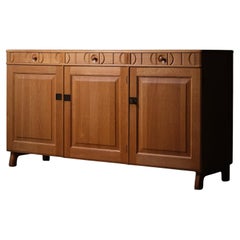
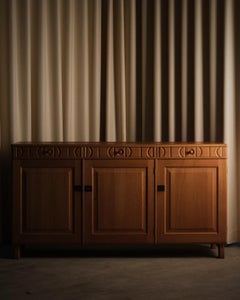
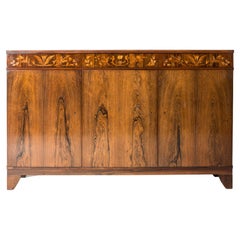
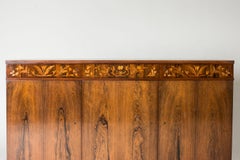
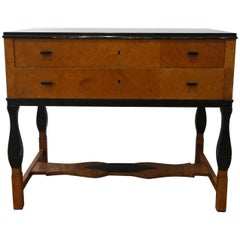
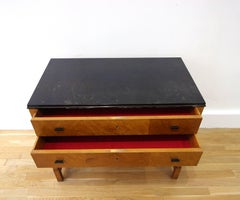
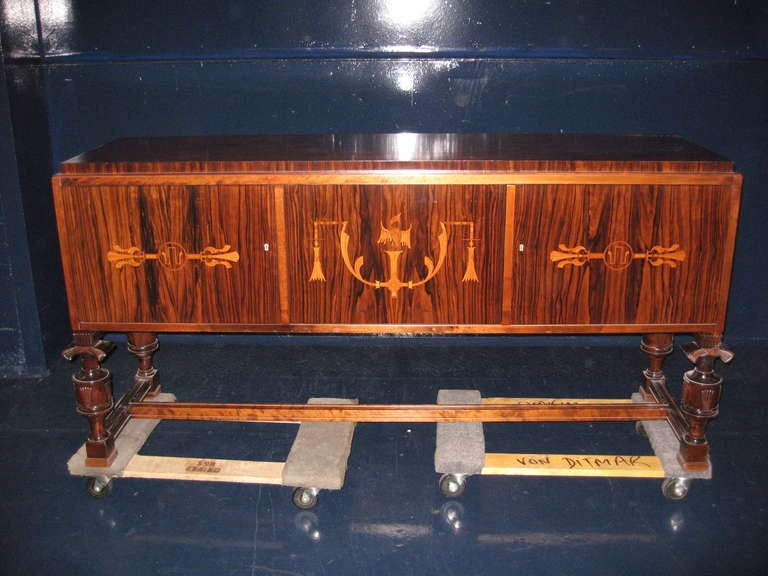
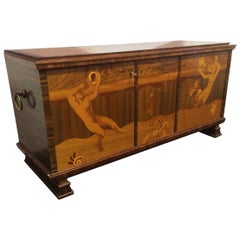
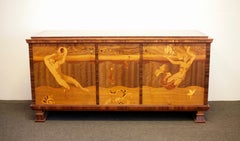
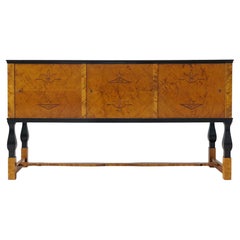
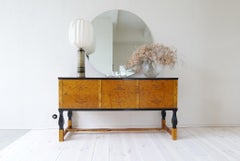
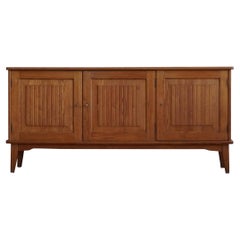
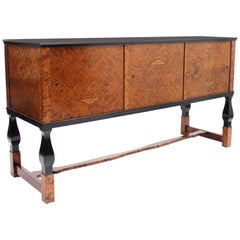
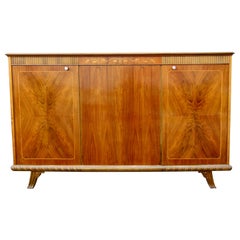
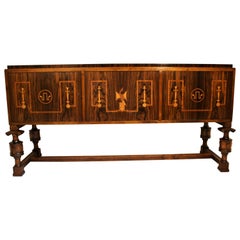
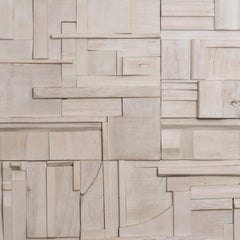
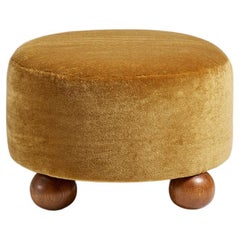
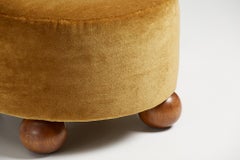
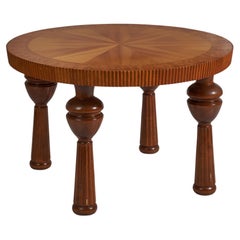
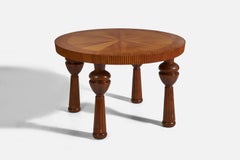
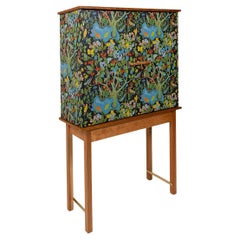
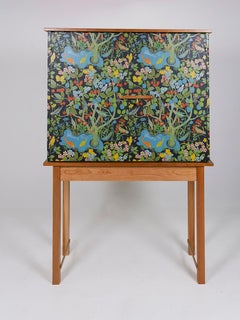
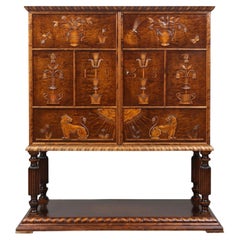
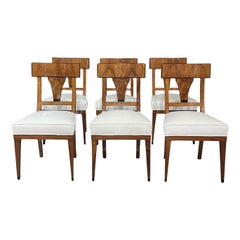
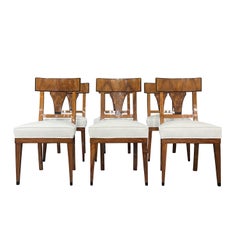
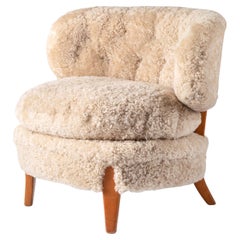
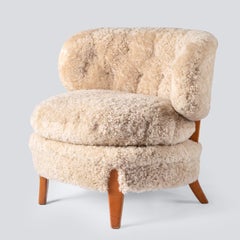
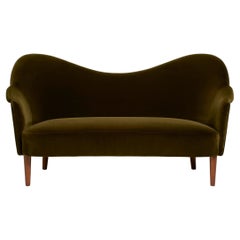
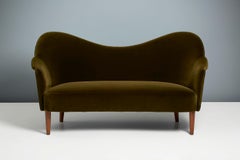
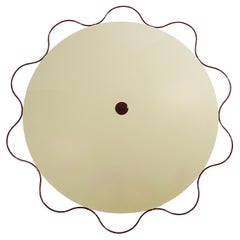
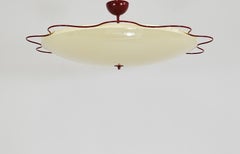
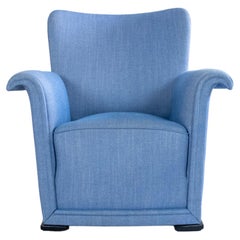
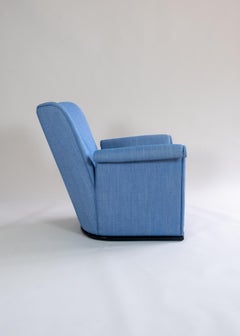
Carl Malmsten, a prominent furniture designer and educator associated with Swedish modernism, enjoyed immense popularity for his shapely sofas and armchairs in luscious color palettes. Malmsten believed that light — much like our eyes and bodies — doesn’t like to bump into sharp objects. Smooth edges, on the other hand, are kinder to the eye and and to our touch, and allow light to softly bounce off surfaces. Malmsten felt that if his furniture didn’t “serve well” in the home, it had no business being there.
Malmsten’s career essentially began in 1915, when his submissions for a competition to furnish the new Stockholm City Hall were first- and second-place prize winners. In the 1920s, his profile soared. He won a prize at the International Exhibition of Modern Decorative and Industrial Arts — the show that brought the Art Deco style to worldwide attention — and quickly became one of the most sought-after designers of commercial seating in Sweden.
Malmsten was soon contracted to design chairs, tables and other furniture for the Stockholm Concert Hall, the Swedish Institute in Rome and the Waldorf Astoria hotel in New York. His famous Art Nouveau-influenced Stadshusstolen chair, designed for Stockholm City Hall in 1916, is a highlight of the city’s recently opened Museum of Furniture Studies. Malmsten expanded into interior design and created a luxurious, well-appointed living room in the palace of then-Crown Prince Gustaf Adolf and his bride, Crown Princess Louise.
In the 1930s, Malmsten clashed with critics when he voiced his opposition to functionalism. Like Danish modernist Kaare Klint, he favored using quality local materials and prized traditional craftsmanship. Malmsten’s furniture draws on graceful neoclassical influences, and he said that extreme functionalism contributed to “sterile” interiors — while the curving contours of his work may share ground with furniture designed by Alvar Aalto or Bruno Mathsson, Malmsten differed with Bauhaus eminences and some Scandinavian modernists on their prioritization of functionalism.
For an exhibition in 1956 at the Röhsska Museum in Gothenburg, Malmsten designed furniture that was intended for mass production — and his striking designs began to make their way into middle-class Swedish homes owing to Malmsten’s partnerships with manufacturers such as O.H. Sjögren. Until then, he had built his pieces at the school he founded in the 1930s or had them made by artisans at several small local workshops.
Malmsten founded a number of schools for design and collaborated with other designers who shared his philosophy of “hand and mind in creative collaboration.” These included the esteemed textile artist Märta Måås Fjetterström, whose pieces he included in exhibits and even his own home.
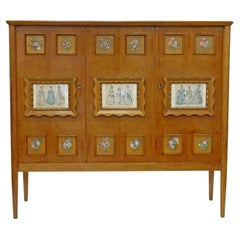
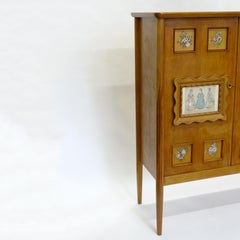
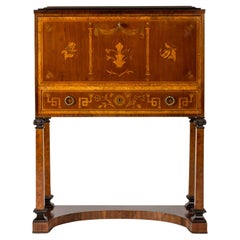
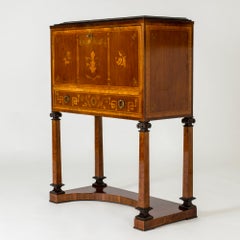
On 1stDibs, find vintage Carl Malmsten seating, tables, cabinets and more.
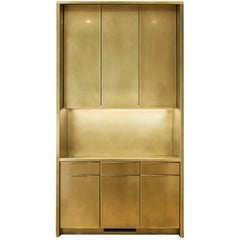
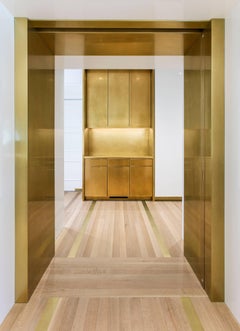
Of all the vintage storage cabinets and antique case pieces that have become popular in modern interiors over the years, dressers, credenzas and cabinets have long been home staples, perfect for routine storage or protection of personal items.
In the mid-19th century, cabinetmakers would mimic styles originating in the Louis XIV, Louis XV and Louis XVI eras for their dressers, bookshelves and other structures, and, later, simpler, streamlined wood designs allowed these “case pieces” or “case goods” — any furnishing that is unupholstered and has some semblance of a storage component — to blend into the background of any interior.
Mid-century modern furniture enthusiasts will cite the tall modular wall units crafted in teak and other sought-after woods of the era by the likes of George Nelson, Poul Cadovius and Finn Juhl. For these highly customizable furnishings, designers of the day delivered an alternative to big, heavy bookcases by considering the use of space — and, in particular, walls — in new and innovative ways. Mid-century modern credenzas, which, long and low, evolved from tables that were built as early as the 14th century in Italy, typically have no legs or very short legs and have grown in popularity as an alluring storage option over time.
Although the name immediately invokes images of clothing, dressers were initially created in Europe for a much different purpose. This furnishing was initially a flat-surfaced, low-profile side table equipped with a few drawers — a common fixture used to dress and prepare meats in English kitchens throughout the Tudor period. The drawers served as perfect utensil storage. It wasn’t until the design made its way to North America that it became enlarged and equipped with enough space to hold clothing and cosmetics. The very history of case pieces is a testament to their versatility and well-earned place in any room.
In the spirit of positioning your case goods center stage, decluttering can now be design-minded.
A contemporary case piece with open shelving and painted wood details can prove functional as a storage unit as easily as it can a room divider. Alternatively, apothecary cabinets are charming case goods similar in size to early dressers or commodes but with uniquely sized shelving and (often numerous) drawers.
Whether you’re seeking a playful sideboard that features colored glass and metal details, an antique Italian hand-carved storage cabinet or a glass-door vitrine to store and show off your collectibles, there are options for you on 1stDibs.