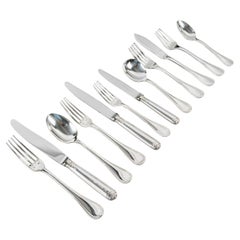
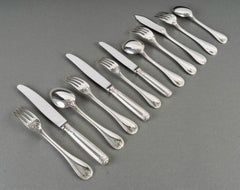
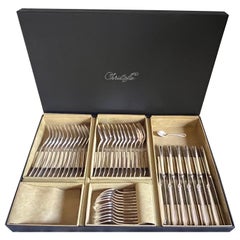
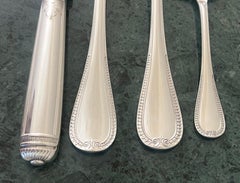
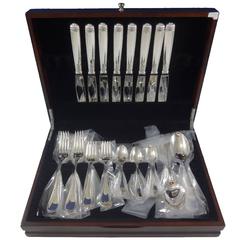
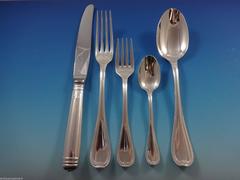
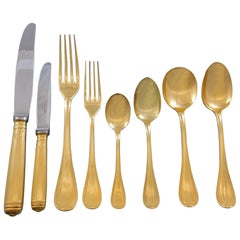
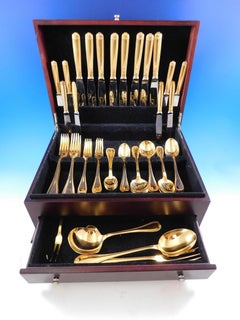
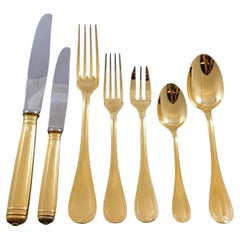
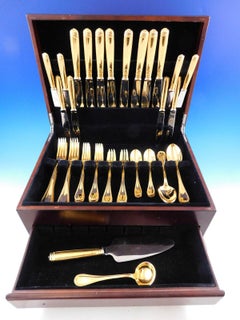
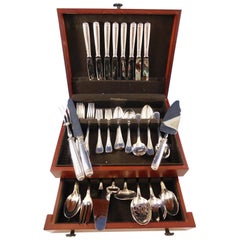
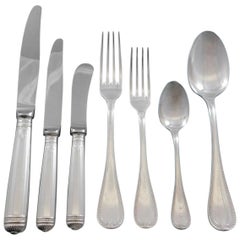
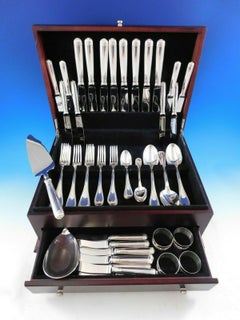
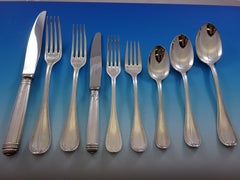
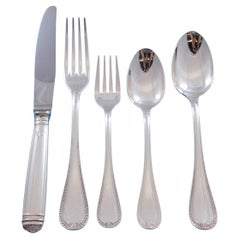
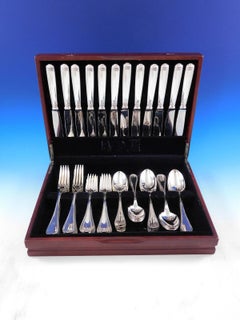
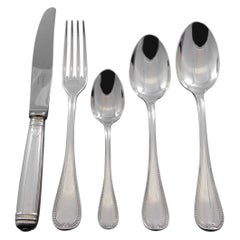
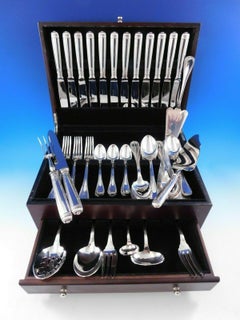
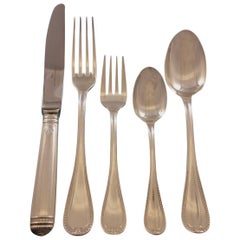
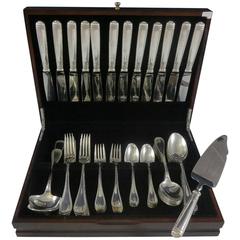
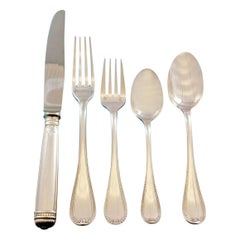
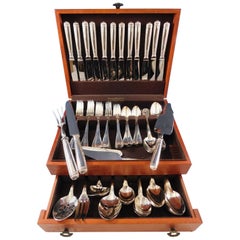
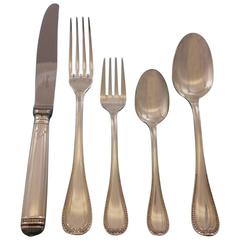
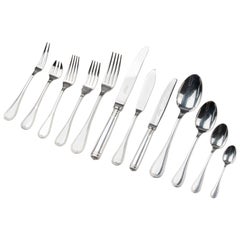
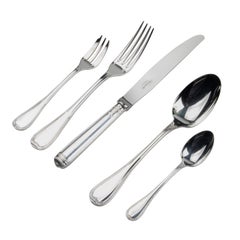
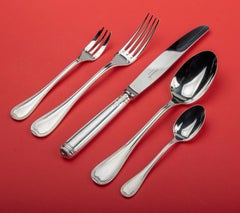
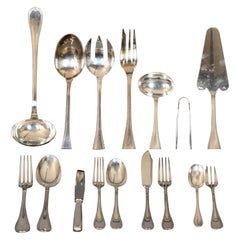
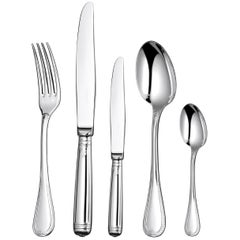
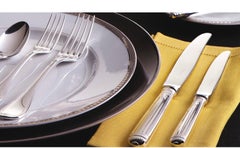
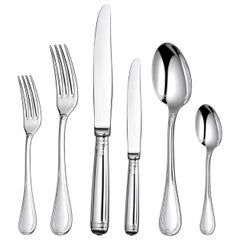
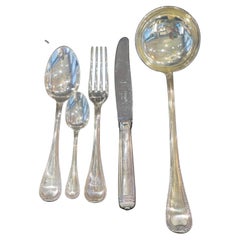
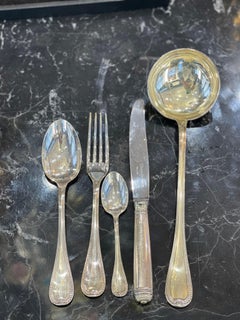
With a vast inventory of beautiful furniture at 1stDibs, we’ve got just the christofle flatware malmaison you’re looking for. Frequently made of
metal,
silver and
silver plate, every christofle flatware malmaison was constructed with great care. If you’re shopping for a christofle flatware malmaison, we have 18 options in-stock, while there are 2 modern editions to choose from as well. There are many kinds of the christofle flatware malmaison you’re looking for, from those produced as long ago as the 20th Century to those made as recently as the 21st Century. A christofle flatware malmaison is a generally popular piece of furniture, but those created in
Empire styles are sought with frequency. You’ll likely find more than one christofle flatware malmaison that is appealing in its simplicity, but
Christofle produced versions that are worth a look.
A christofle flatware malmaison can differ in price owing to various characteristics — the average selling price 1stDibs is $4,425, while the lowest priced sells for $1,500 and the highest can go for as much as $14,995.
Although he started his career as a jeweler in 1830 — after apprenticing with his copper jeweler brother-in-law years earlier — Charles Christofle (1805–63) recognized that Second Empire France had an untapped audience for luxury silverware and tableware.
Gold and silver gilt had been the high-end standard in the 18th century, yet society after the Industrial Revolution demanded a more affordable, but still refined, approach. So in the 1840s, Christofle cornered the market on electrolytic gilding and silver plating, dominating the hold on patents in the country for over a decade. His work soon attracted the attention of Louis-Philippe I and then Napoleon III, under whom he was named Fournisseur de l’Empereur, cementing the prestige of his brand.
While Christofle created decadent centerpieces and tableware for the French palaces — as well as prominent clients like the Orient Express — the company’s electroplating of silverware that was far less expensive than that made by silversmiths attained widespread popularity. At a time when many who could not afford gold or silver still used wooden utensils, Christofle was a game changer for at-home dining. An appearance at the 1893 World’s Columbian Exposition in Chicago furthered the company’s reach to American consumers who would soon rival the manufacturer’s European clientele.
The 20th century saw Christofle adapting to changing tastes in its offerings, such as the Aria collection, which debuted in 1985 with column-like lines on its flatware designed by Bernard Yot, and the playful egg-shaped silverware container introduced in 2015 that opens to reveal a full flatware set. The company also now sells barware, home accessories and even jewelry, harkening back to its roots. Now almost two centuries old, Christofle maintains its reputation as a leading flatware and silverware company under the ownership of the Chalhoub group, its utensils gracing tables in homes, hotels and restaurants all over the world.
Shop authentic Christofle serveware, ceramics, decorative objects and more on 1stDibs.
While it isn’t always top of mind for some, antique and vintage tableware can enhance even the most informal meal. It has been an intimate part of how we’ve interacted with our food for millennia.
Tableware has played a basic but important role in everyday life. Ancient Egyptians used spoons (which are classified as flatware) made of ivory and wood, while Greeks and Romans, who gathered for banquets involving big meals and entertainment, ate with forks and knives. At the beginning of the 17th century, however, forks were still uncommon in American homes. Over time, tableware has thankfully evolved and today includes increasingly valuable implements.
Tableware refers to the tools people use to set the table, including serving pieces, dinner plates and more. It encompasses everything from the intricate and elaborate to the austere and functional, yet are all what industrial product designer Jasper Morrison might call “Super Normal” — anonymous objects that are too useful to be considered banal.
There are four general categories of tableware — serveware, dinnerware, drinkware and, lastly, flatware, which is commonly referred to as silverware or cutlery. Serveware includes serving bowls, platters, gravy boats, casserole pans and ladles. Most tableware is practical, but it can also be decorative. And decorative objects count as tableware too. Even though they don’t fit squarely into one of the four categories, vases, statues and floral arrangements are traditional centerpieces.
Drinkware appropriately refers to the vessels we use for our beverages — mugs, cups and glasses. There is a good deal of variety that falls under this broad term. For example, your cheerful home bar or mid-century modern bar cart might be outfitted with a full range of vintage barware, which might include pilsner glasses and tumblers. Specialty cocktails are often served in these custom glasses, but they’re still a type of drinkware.
Every meal should be special — even if you’re using earthenware or stoneware for a casual lunch — but perhaps you’re hosting a dinner party to mark a specific event. The right high-quality tableware can bring a touch of luxury to your cuisine. Young couples, for example, traditionally add “fine china,” or porcelain, to their wedding registry as a commemoration of their union and likely wouldn’t turn down exquisite silver made by Tiffany & Co. or Georg Jensen.
It’s important to remember, however, that when you’re setting the dining room table to have fun with it. Just as you might mix and match your dining chairs, don’t be afraid to mix new and old or high and low with your tableware. On 1stDibs, find an extraordinary range of vintage and antique tableware to help elevate your meal as well as the mood and atmosphere of your entire dining room.