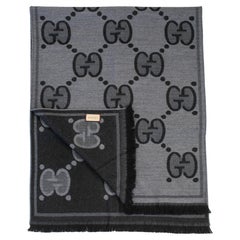
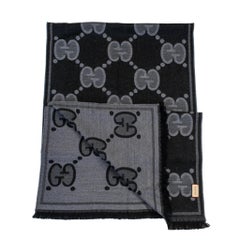
Gucci Gg Jumbo Wool Silk Jacquard Scarf in Grey and Black Cashmere Scarf
By Gucci
Located in Houston, US
Silk Jacquard Scarf In Grey And Black Cashmere Scarf. The "Gucci" trademark (or hallmark) can also be
Category
Gucci Gg Jumbo Wool Silk Jacquard Scarf in Grey and Black Cashmere Scarf
By Gucci
Located in Houston, US
Silk Jacquard Scarf In Grey And Black Cashmere Scarf. The "Gucci" trademark (or hallmark) can also be
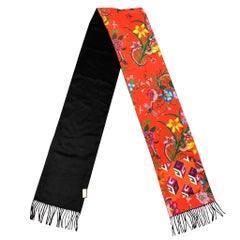
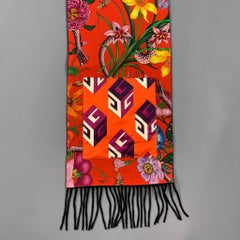
GUCCI Black & Red Silk / Cashmere Reversible Pocket Fringe Scarf
By Gucci
Located in San Francisco, CA
GUCCI scarf comes in a black & red floral silk / cashmere featuring a reversible style, pocket
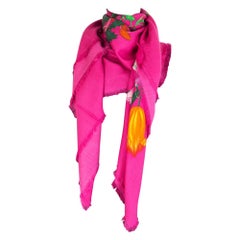
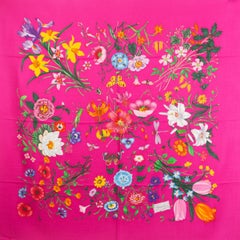
GUCCI pink cashmere silk ALL FLUO FLORA Shawl Scarf
By Gucci
Located in Zürich, CH
Gucci Flora shawl in All Fluo (fuchsia) cashmere (70%) and silk (30%) with multicolored floral
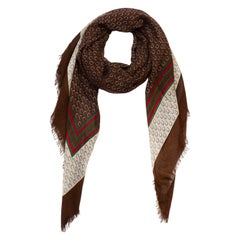
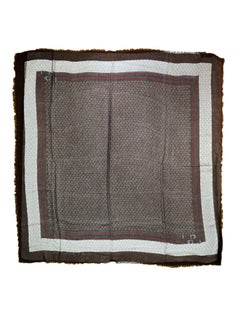
Gucci Brown Cashmere/Wool Horseshoe Print Scarf W/ Red/Green Trim
By Gucci
Located in New York, NY
Gucci Brown Cashmere/Wool Horseshoe Print Scarf W/ Red/Green Trim Made In: Italy Color: Brown
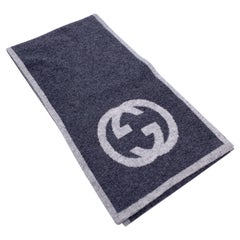
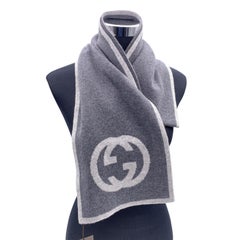
Gucci Grey Cashmere Unisex GG Logo Scarf 23 x 180 cm
By Gucci
Located in Rome, Rome
Light Grey and grey GG logo scarf by Gucci. Composition: 100% Cashmere. Width: 23 cm. Lenght: 180
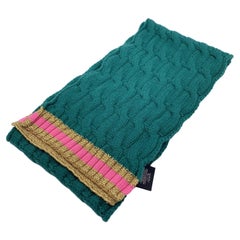

Gucci Green Cable Knit Unisex Wool and Cashmere Scarf 25 x 180 cm
By Gucci
Located in Rome, Rome
Gucci green cable knit unisex scarf with pink and gold striped hem. Composition: 71% Wool, 27
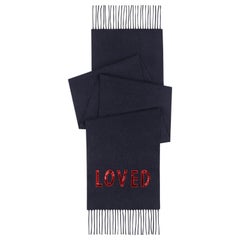

GUCCI c.2018 Navy Blue Red Sequin Embellished “Loved” Silk Cashmere Scarf NWT
By Alessandro Michele, Gucci
Located in Thiensville, WI
GUCCI c.2018 Navy Blue Red Sequin Embellished “Loved” Silk Cashmere Scarf NWT Estimated Retail
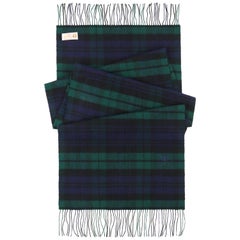

GUCCI c.1980's Navy Blue & Green Tartan Plaid Cashmere Fringe Oblong Scarf
Located in Thiensville, WI
DESCRIPTION: GUCCI c.1980's Navy Blue & Green Tartan Plaid Cashmere Fringe Oblong Scarf Circa: c
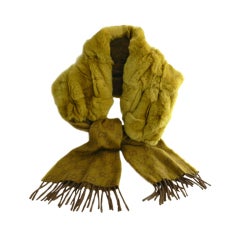
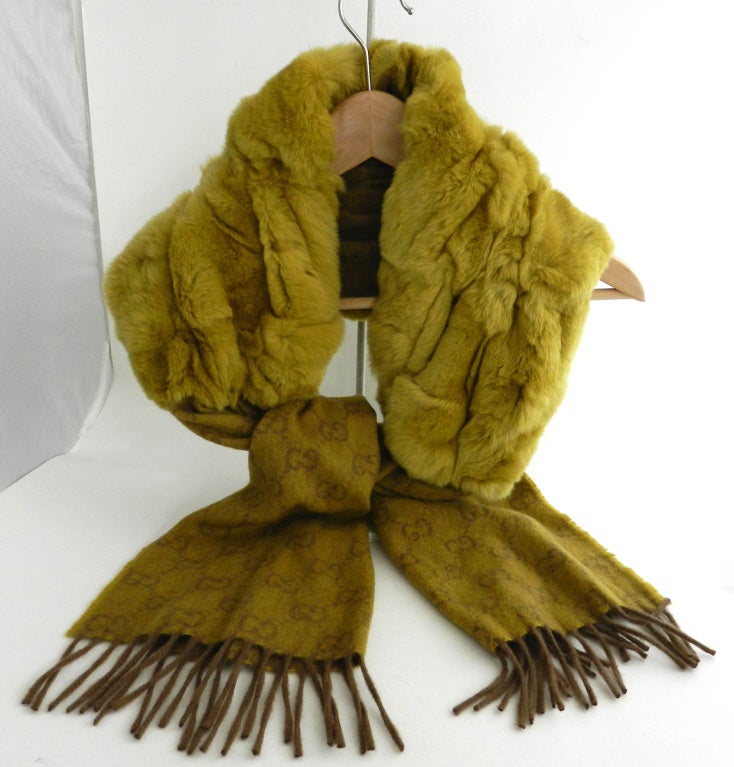
Gucci Chartreuse Cashmere & Fur Scarf
By Gucci
Located in Toronto, ON
Gucci chartreuse logo scarf. 100% cashmere wool and fur is rabbit. Excellent previously owned
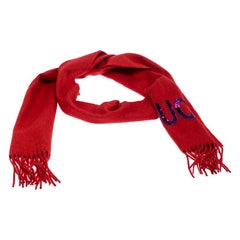

Gucci Flame Red Cashmere Silk Guccy Sequined Applique Scarf
By Gucci
Located in Dubai, Al Qouz 2
Beautifully cut from silk and cashmere, this Gucci scarf features a sequin GUCCY logo on the bright
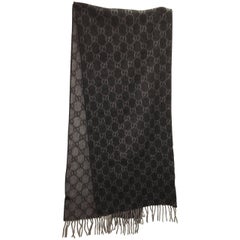

Gucci Monogram Scarf
By Gucci
Located in Bridgehampton, NY
Gucci Monogram Scarf. Two-tone grey Cashmere.
Long before trend-bucking creative director Alessandro Michele brought his hallucinatory “Utopian Fantasy” campaign to Gucci, it was a modest Italian leather shop. Today, it’s an internationally renowned luxury house with an iconic logo, and vintage Gucci clothing, handbags and shoes are among high fashion's most covetable goods.
Guccio Gucci (1881–1953) admired the stylish suitcases he saw wealthy guests arrive with at the Savoy Hotel in London, where he worked as a bellhop. So, in 1921, after a stint at Franzi, a luggage company in his hometown of Florence, he opened a leather goods shop of his own.
At first, Gucci’s Florence business specialized in equestrian accessories. But as its reputation flourished, particularly among the English aristocracy, so too did its footprint. In 1938, he brought three of his sons — Aldo, Vasco and Rodolfo — into the business and expanded it to Rome and later Milan. In the mid-1930s, a League of Nations embargo against Italy pushed Gucci to experiment with alternatives to imported leather. Its woven hemp fabric from Naples, adorned with the brand’s signature diamond print, was a hit, especially among A-list celebrities. The material was first used on suitcases before finding enduring popularity on handbags. (No list of revered designer purses would be complete without Gucci.)
In the 1950s, Elizabeth Taylor carried one of Gucci’s bamboo-handled tote bags, another adaptation to material rationing. After Jackie Kennedy was seen sporting a slouchy Gucci tote in 1961, it was renamed for the First Lady. Then Grace Kelly, on a visit to the boutique in Milan, inspired Rodolfo Gucci to work with Italian illustrator and Gucci textile designer Vittorio Accornero on the Flora print in 1966. Taking cues from Sandro Botticelli’s Primavera, with its pattern of flora and insects, it was painted entirely by hand and featured no fewer than 37 colors.
In 1953, just 15 days after opening his first store on New York’s 5th Avenue, Guccio passed away at 72. The early 1970s saw store openings in Tokyo and Hong Kong, but by the late 1980s, Gucci was floundering. Rodolfo Gucci took charge in 1982, but family drama and lawsuits ensued. In 1993, Rodolfo’s son, Maurizio, transferred his shares in the company to Investcorp, ending the family’s involvement in Gucci. Dawn Mello, then-president of Bergdorf Goodman, joined as creative director in 1989. But it was Tom Ford, who took over as creative director in 1994, who ultimately revived the brand.
Ford’s racy ads, shot by photographers such as Mario Testino, stirred controversy. And his potent vision of sexed-up femininity — with “jewel-toned satin shirts unbuttoned to there,” as Vogue described his breakthrough 1995 runway show — was wildly successful. The new millennium brought new ownership — Pinault Printemps Redoute in 2004 — and a more toned-down vision from Frida Giannini, who became sole creative director in 2006. Alessandro Michele was named creative director in 2015, and the storied brand took a giant leap forward.
Find vintage Gucci clothing and accessories on 1stDibs.
We’ve long had a love affair with vintage and designer scarves. Every glamorous go-to ensemble deserves the lightweight finishing touch that can be added with this stylish, versatile accessory.
Scarves have held a distinctive place in the evolution of formal and casual wear for centuries. And although now firmly entrenched in western culture, the origins of this neckwear are global.
Egyptian Queen Nefertiti is known to have worn a finely woven scarf with a headdress, and Emperor Cheng of the Chinese Han dynasty presided over an army of warriors whose scarves denoted their rank. The idea of scarves as status symbols still persists; for example, silk scarves, which were favored by the upper class during the reign of Queen Victoria, are an out-of-reach luxury item, cost prohibitive for many consumers. However, the increasing diversity of available materials over the years has rendered this adornment more accessible since their early days.
Luxury houses and various designers helped elevate scarves and long, flowing wraps as a desirable fashion accessory during the 20th century.
Visionary Italian designer Emilio Pucci — the first fashion designer to enter the lifestyle market — introduced abstractions and dazzling psychedelic elements to scarves, while mid-century era multidisciplinary American artist Vera Neumann drew on Japanese techniques to create exuberant textile designs based on her paintings and drawings.
Established in Paris in 1837, Hermès didn’t start creating their famously decorative scarves until 100 years later, in 1937. Before long, the Hermès scarf, then crafted from strong imported Chinese silk, became an iconic work favored by actresses such as Audrey Hepburn and Grace Kelly, a lifetime enthusiast of the family-owned brand. Hermès has produced over 2,000 different scarf designs in the decades since Robert Dumas, Émile-Maurice Hermès’s son-in-law, crafted the first one.
On 1stDibs, find a broad selection of vintage scarves that includes flamboyant and colorful accessories designed by Chanel, Yves Saint Laurent and more.