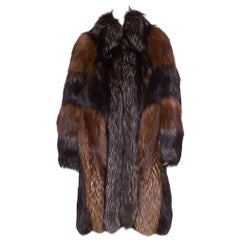
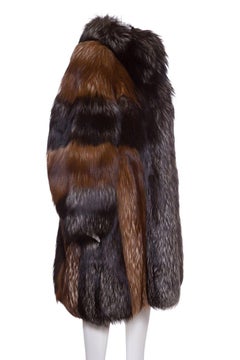
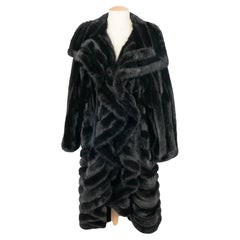
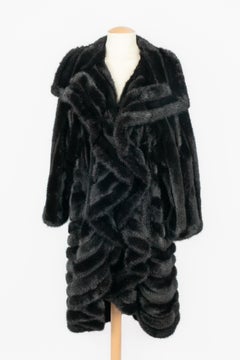
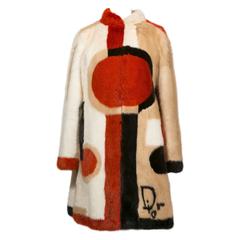
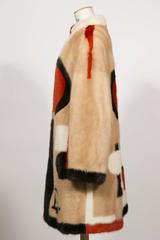
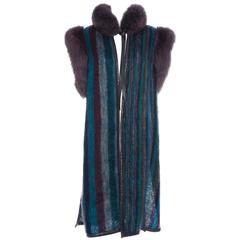
When Christian Dior launched his couture house, in 1946, he wanted nothing less than to make “an elegant woman more beautiful and a beautiful woman more elegant.” He succeeded, and in doing so the visionary designer altered the landscape of 20th century fashion. Vintage Dior bags, shoes, evening dresses, shirts and other garments and accessories are known today for their feminine and sophisticated sensibility.
Dior was born in Granville, on the Normandy coast, in 1905. His prosperous haute bourgeois parents wanted him to become a diplomat despite his interest in art and architecture. However, they agreed to bankroll an art gallery, which Dior opened in 1928 in Paris with a friend.
This was the start of Dior’s rise in the city’s creative milieu, where he befriended Pablo Picasso and Jean Cocteau. After seven years as an art dealer, Dior retrained as a fashion illustrator, eventually landing a job as a fashion designer for Robert Piguet, and in 1941, following a year of military service, he joined the house of Lucien Lelong. Just five years later, with the backing of industrialist Marcel Boussac, the ascendant Dior established his own fashion house, at 30 avenue Montaigne in Paris.
Just two years after the end of World War II, the fashion crowd and the moribund haute couture industry were yearning, comme tout Paris, for security and prosperity, desperate to discard the drab, sexless, utilitarian garb imposed by wartime deprivation. They needed to dream anew.
And Dior delivered: He designed a collection for a bright, optimistic future. “It’s quite a revolution, dear Christian!” exclaimed Carmel Snow, the prescient American editor-in-chief of Harper’s Bazaar, famously proclaiming, “Your dresses have such a new look.” The press ran with the description, christening Dior’s debut Spring/Summer haute couture collection the New Look. “God help those who bought before they saw Dior,” said Snow. “This changes everything.”
Dior’s collection definitively declared that opulence, luxury and femininity were in. His skirts could have 40-meter-circumference hems, and outfits could weigh up to 60 pounds. They were cut and shaped like architecture, on strong foundations that molded women and “freed them from nature,” Dior said. Rather than rationing, his ladies wanted reams of fabric and 19-inch waists enforced by wire corsets, and the fashion world concurred. The debut got a standing ovation.
In the subsequent decade, Paris ruled as the undisputed fashion capital of the world, and Christian Dior reigned as its king. With the luxuriously full skirts of his New Look, suits and his drop-dead gorgeous couture dresses and ball gowns worthy of any princess, Dior gave women the gift of glamour they’d lost in the miserable years of war.
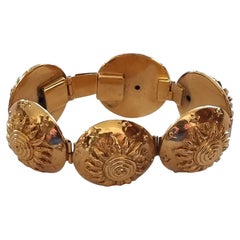
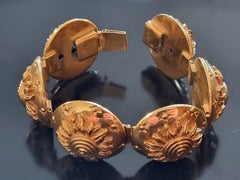
On 1stDibs, find an exquisite range of vintage Christian Dior clothing, jewelry, handbags and other items.
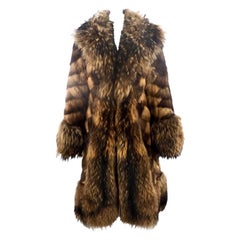
There is a stylish garment for anywhere in the universe, and on 1stDibs, finding the right vintage and designer coats and outerwear doesn’t have to feel like a journey to the ends of the earth.
Outerwear includes many types of garments aside from the standard coat. From capes, gilets, jackets and cloaks to raincoats and kimonos, fashion designers have long been preparing us for the elements, and outerwear in general has changed and evolved significantly over time.
A lot of the coat styles in our closets, such as the durable Navy-inspired peacoat, were popularized by soldiers who battled aggressive climes in their regulation field jackets and parkas — indeed, keeping troopers comfortable guided the design of the military surplus garments that have often become buzzy fashion trends. Even today, owing to the likes of Burberry, a luxury fashion house that is among the originators of the trench coat worn by British officers during World War I, the trench remains a timeless style, now available in a range of colors that can be worn throughout the year.
While women in late 1700s England donned an adaptation of a men’s jacket called a spencer — the likeness of which could be spotted in Ralph Lauren’s ready-to-wear collections hundreds of years later — designers hadn’t widely been crafting outerwear specifically for women. Generally, the outerwear of choice for the fashionable, well-heeled lady prior to the 1800s usually consisted of capes, shawls and stoles. By the mid-1800s, women were wearing overcoats with multiple layered collars popularized by men (often called a Garrick coat in England), and as women entered the workforce during the 1920s, hemlines climbed, jewelry was prominent and fashion conventions were broken across the board.
Thankfully, the 20th century’s tradition of challenging the norm continues steadfast in today’s outerwear fashions. Contemporary designers certainly find inspiration in 1960s and 1970s coats by Pierre Cardin, Yves Saint Laurent and Bonnie Cashin, but unisex options abound in modern creations that take both function and style into account. Find what inspires you in the full range of vintage and designer coats and outerwear available for sale on 1stDibs.