
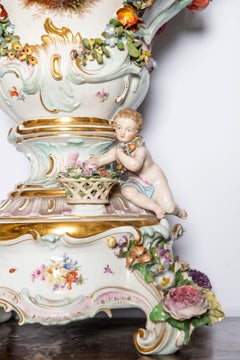
Meissen Porcelain Pot-Pourri Vase, Germany, 19th Century
By Meissen Porcelain
Located in Buenos Aires, Buenos Aires
Meissen porcelain pot-pourri vase, Germany, 19th century.
Category
Antique Late 19th Century German Rococo Vases
Materials
Porcelain
Meissen Porcelain Pot-Pourri Vase, Germany, 19th Century
By Meissen Porcelain
Located in Buenos Aires, Buenos Aires
Meissen porcelain pot-pourri vase, Germany, 19th century.
Porcelain
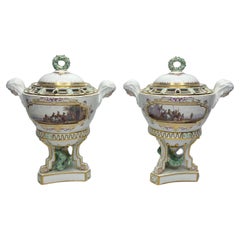
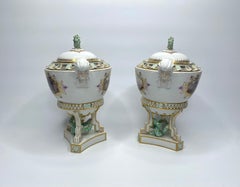
Pair of Meissen porcelain pot pourri & covers, c. 1870.
By Meissen Porcelain
Located in Gargrave, North Yorkshire
A fine pair of Meissen porcelain pot pourri and cover, c. 1870. Modelled in Marcolini Period style, each pot pourri having pierced shoulders, supported upon three angular feet, with ...
Porcelain
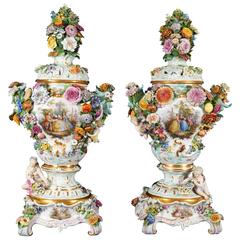
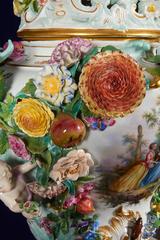
Monumental Pair of Meissen Porcelain Pot-Pourri Vases, circa 1850
By Meissen Porcelain
Located in New York, NY
A monumental pair of Meissen Porcelain Reticulated Pot-Pourri vases, covers and stands mid-late 1800s, blue crossed swords and incised model numbers, various Pressnummern In the Ro...
Porcelain
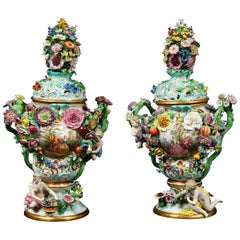
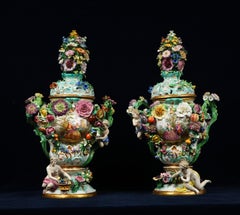
Monumental Pair of Meissen Porcelain Pot-Pourri Vases, circa 1850
By Meissen Porcelain
Located in New York, NY
A Monumental pair of Meissen Porcelain reticulated Pot-Pourri vases and covers.
Porcelain
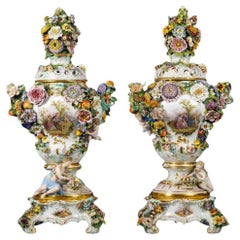
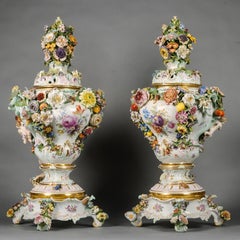
Sold
H 36.23 in W 17.72 in D 13.78 in
A Pair of Meissen Porcelain Flower-Encrusted Vases, Covers and Stands
By Meissen Porcelain
Located in Brighton, West Sussex
A Pair Of Large Meissen Porcelain Flower-Encrusted Pot-Pourri Vases and Covers On Stands.
Porcelain
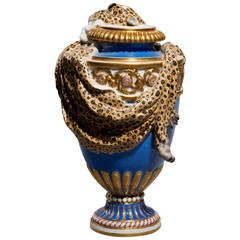

Meissen ‘Leopard Pelt’ Pot-Pourri Vase
Located in Sutton Coldfield, GB
A cobalt blue Meissen pot-pourri vase, with a pierced cover. Draped with a leopard pelt decoration, and marked with the Meissen crossed swords and star mark in underglaze-blue.
Porcelain
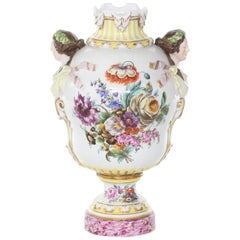
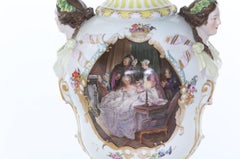
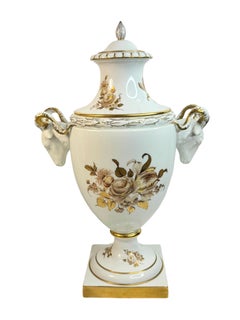
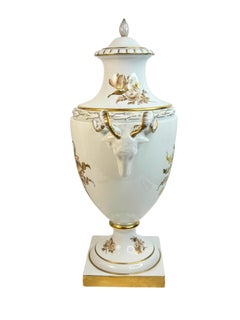
19th Century Dresden Porcelain Decorative Urn
Located in Tarry Town, NY
Mid-19th century large Dresden gold gilt with painted scene design details porcelain decorative urn / vase. The urn / vase is in good antique condition. Minor wear consistent with ag...
Gold
$860
H 18.75 in W 12.25 in D 7.75 in
Exceptional Furstenberg Lidded Vase with Flower Bouquet Vintage Germany
By Furstenberg Porcelain
Located in Nuernberg, DE
An amazing glazed hand painted lidded vase made in Germany by Furstenberg Porcelain, a well known Manufactory for extraordinary items. This is a heavy vase but you can also use it as...
Porcelain
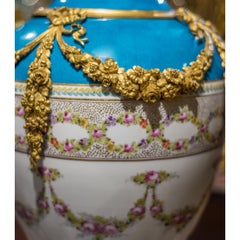
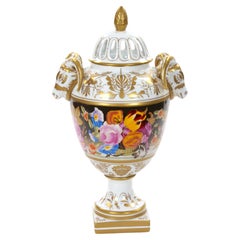
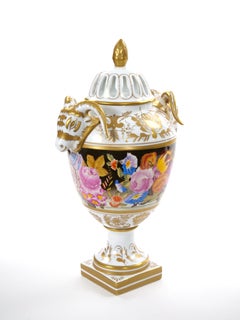
Late 19th Century French Sèvres-Style Ormolu-Mounted Porcelain Vase
Located in New York, NY
A Fine quality Sèvres-style ormolu-mounted porcelain bleu vase. The oviform vase flanked by ormolu garlands, finely painted floral design. Date: Late 19th century Origin: French ...
Ormolu
$2,560
H 14 in W 9.5 in D 9.5 in
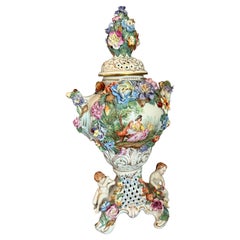
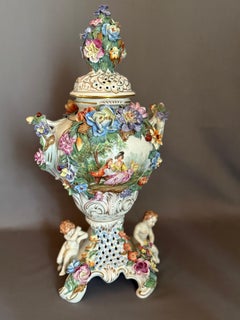
Antique German Meissen Porcelain Painted & Gilt Decorative Covered Urn
By Meissen Porcelain
Located in Tarry Town, NY
A magnificent antique German Meissen porcelain covered urn dating to the early to mid-19th century, showcasing the exceptional craftsmanship and refined decorative artistry for which...
Gold
$2,583Sale Price|20% Off
H 19.69 in Dm 11.82 in
Large Antique Dresden Porcelain Floral Urn by Carl Thieme, 1902-1918
By Carl Thieme
Located in Uppsala , SE
Large Antique Dresden Porcelain Floral Urn. With hand painted classical scenes throughout exterior. Woman and man figures dressed with a garland of flowers on the lid. Marked on bo...
Porcelain
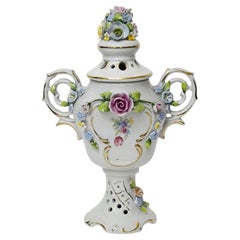
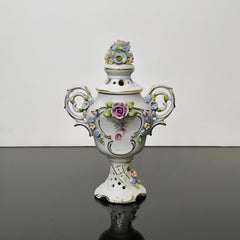
Dresden Porcelain Amphora by Orben Knabe & Co., 1940s Germany
Located in Bochum, NRW
Dresden porcelain amphora with lid by Orben Knabe & Co. Richly decor of relief flowers and leaves, openwork lid. Maker's mark under the bottom. Condition: very good. Height: 22 c...
Porcelain
$58,000
H 25.5 in W 15 in D 8 in
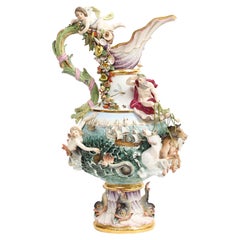
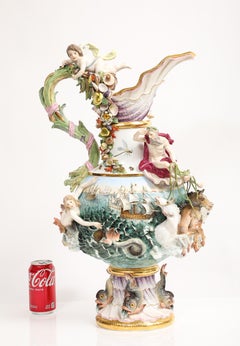
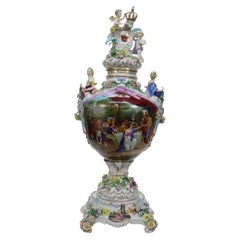
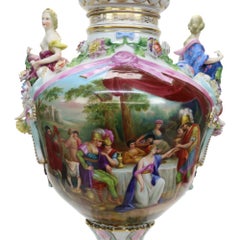
An Incredible 19th Century Meissen Porcelain “Elements” Ewer Emblematic of Water
By Meissen Porcelain
Located in New York, NY
An Incredible and Very Unusual 19th Century Meissen Porcelain “Elements” Ewer Emblematic of Water. This large porcelain ewer is modeled in flattened baluster form with a shell molde...
Porcelain
$2,360Sale Price|20% Off
H 28 in W 11.5 in D 9.5 in
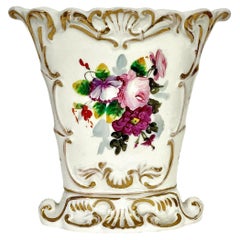
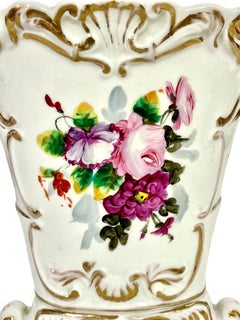
Meissen Louis XIV Style Figural & Floral Pictorial Porcelain Urn c1880
Located in Big Flats, NY
This exquisite antique Meissen porcelain lidded urn, dating to approximately 1880, is crafted in the opulent Louis XIV style. The urn features intricate figural and floral decoration...
Porcelain
$540
H 6.5 in W 6.7 in D 3.15 in
19th Century Paris Porcelain Vase by Porcelaine de Paris, Rococo Style
By Porcelaine de Paris
Located in LA CIOTAT, FR
This very pretty Paris porcelain vase dates from the 19th century, and features a beautiful enamelled floral design of wildflowers, surrounded by rococo style moulding embellished wi...
Porcelain

$158,608Sale Price|20% Off
H 48 in W 32 in D 29 in
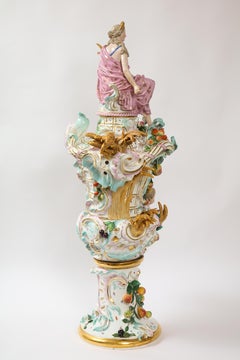
Incredible 19th Century Meissen Porcelain Covered Urn Emblematic of Autumn
By Meissen Porcelain
Located in New York, NY
An incredible and truly monumental 19th century Meissen Porcelain Covered urn emblematic of autumn. This is one of the most incredible and spectacular displays of Meissen Porcelain w...
Porcelain
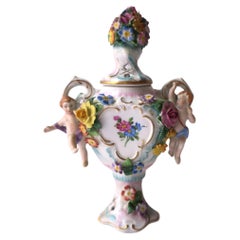
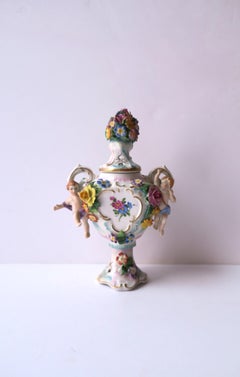
Porcelain Potpourri Urn in the Rocco Style, ca. 19th century
By Sitzendorf
Located in New York, NY
A beautiful German hand painted porcelain potpourri urn vase with flowers and putti, in the Rocco style, by Sitzendorf, circa 19th century or earlier, Germany. Piece has details flor...
Porcelain
$7,900
H 17.5 in Dm 7.5 in
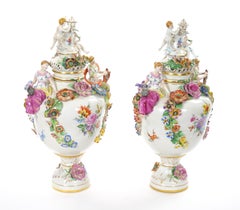
19th Century Meissen Rococo Style Flower-Encrusted Covered Urns from Germany
By Meissen Porcelain
Located in Tarry Town, NY
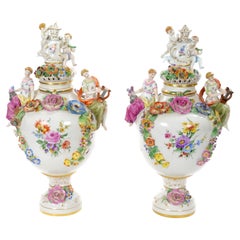
An exceptional pair of 19th century Meissen porcelain covered urns, beautifully crafted in Germany during the mid to late 19th century by the renowned Meissen porcelain manufactory, ...
Gold
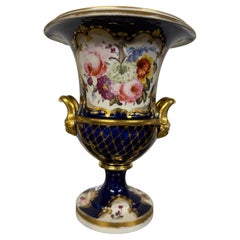
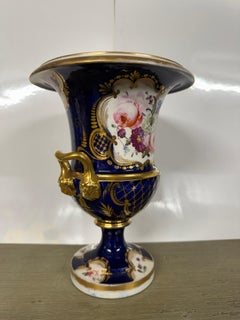
19th Century Coalport Campagna Urn, Hand-Painted Porcelain, UK, 1820
By Coalport Porcelain
Located in Basildon, GB
19th Century Coalport 'Campagna' Porcelain Urn , circa 1820, . 9.25" inches high
Porcelain
$32,760
H 28.35 in W 12.6 in D 11.42 in
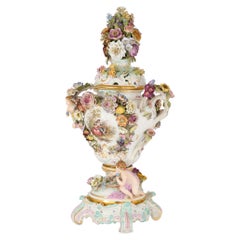
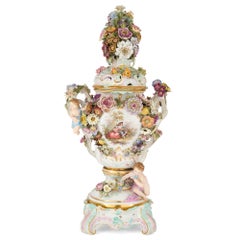
Large Meissen Flower-Encrusted Potpourri Vase in the Rococo-Style
By Meissen Porcelain
Located in London, GB
Large Meissen flower-encrusted potpourri vase in the Rococo-style German, 19th Century Height 72cm, width 32cm, depth 29cm Crafted by Meissen, the oldest porcelain manufactory in E...
Porcelain
$5,600
H 14 in W 15 in D 10 in
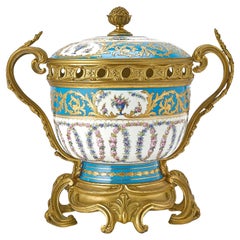
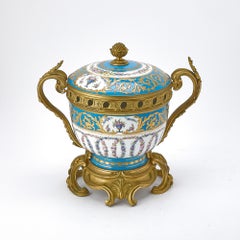
19th Century French Sèvres Porcelain Covered Decorative Potpourri / Urn
Located in Tarry Town, NY
French Sèvres turquoise-ground porcelain two-handled footed covered decorative urn / potpourri , dating to the mid 19th century. Executed in a refined classical form, the piece featu...
Bronze
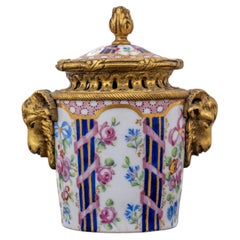
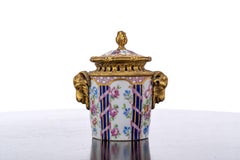
19'th century Sévres porcelain vase with ormolu mounted top
Located in Budapest, HU
19'th century Sévres porcelain vase with ormolu mounted top A fine 19th century French Sèvres porcelain box of cylindrical form, decorated with hand-painted floral sprays within alte...
Ormolu
$3,380
H 10 in Dm 10 in
Rare X-Large Amethyst Sphere with Large, Deep Purple Amethyst, Crystal Sculpture
Located in Ametista Do Sul, BR
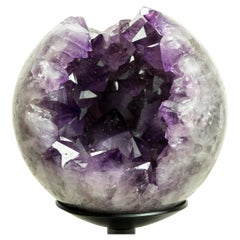
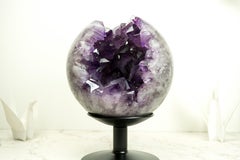
Rare Giant Amethyst Sphere with Deep Purple Crystals: A Natural Statement ▫️Description This exquisite X-Large Amethyst Sphere is a rare and extraordinary specimen that showcases t...
Crystal, Quartz, Rock Crystal
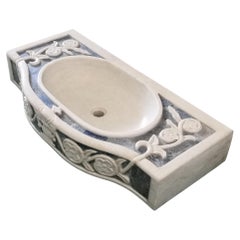
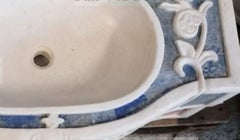
Classical Carved Marble Stone Sink Basin
Located in Cranbrook, Kent
Italian Classical Carved Sink Basin This timeless beautiful Italian classical sink is cut from one single block of white marble with added carved relief detail, these designs have no...
Marble
$240 / set
H 3.5 in W 1.5 in D 1.5 in
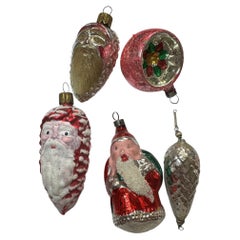
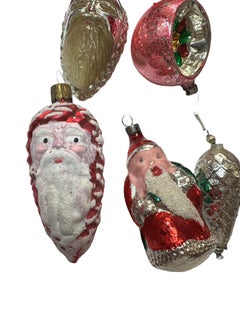
Rare Set of Five Mercury Glass Christmas Ornament Vintage, 1930s
Located in Nuernberg, DE
A rare Christmas ornament set from Germany or Austria. Each is made from mouth blown glass, these would be a great addition for your Christmas or feather tree. Size always given for ...
Wire
$24,575
H 25.6 in W 118.12 in D 118.12 in
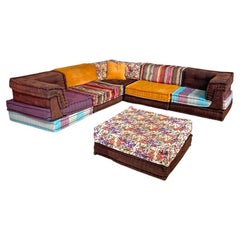
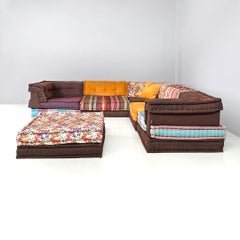
French colorful modular sofa Mah Jong by Hans Hopfer for Roche Bobois, 2000s
By Roche Bobois, Hans Hopfer
Located in MIlano, IT
French colorful modular sofa Mah Jong by Hans Hopfer for Roche Bobois, 2000s Modular sofa mod. Mah Jong composed of 12 square cushions, padded and covered in fabric with different te...
Fabric
$17,500 / set
H 38 in W 20 in D 13.5 in
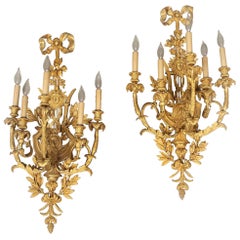
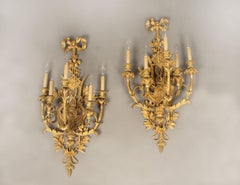
Large and Elaborate Pair of Early 20th Century Gilt Bronze Five-Light Sconces
Located in Long Island City, NY
A large and elaborate pair of early 20th century gilt bronze five-light sconces Each backplate shaped as a lyre, centered with a mask of Apollo, the top with a bow knotted ribbon,...
Bronze
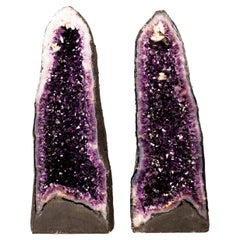
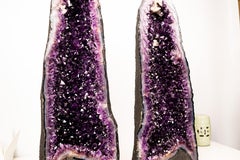
Pair of Large AAA-Grade Dark Purple Amethyst Geodes
Located in Ametista Do Sul, BR
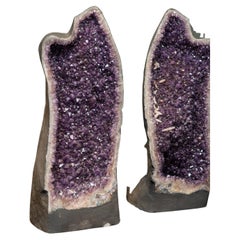
Exquisite 24-Inch Pair of Amethyst Geodes with AAA-Grade, Rich Purple Druzy ▫️ Description This stunning pair of 24-inch Amethyst Geodes is the perfect statement set to elevate you...
Crystal, Quartz, Rock Crystal
$32,597 / set
H 24.41 in W 21.86 in D 8.08 in
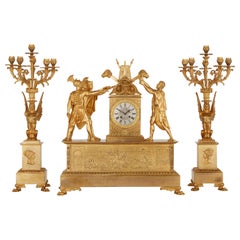
Empire Style Ormolu Clock Set Depicting the Oath of the Horatii
Located in London, GB
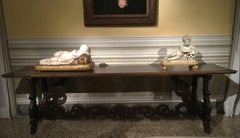
This exquisite 19th century trio is comprised of a central clock and a pair of flanking six-light candelabra. The design of the clock case is widely acknowledged to be inspired b...
Bronze
$46,810
H 16.54 in W 20.08 in D 10.24 in
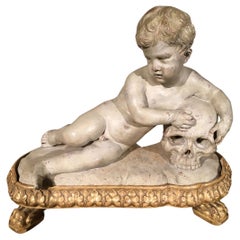
Memento Mori Late 17th Century Faux White Marble Child Skull Figure Sculpture
Located in Brescia, IT
This engaging sculpture of Memento Mori dated Late 17th Century, is part of a production of small terracotta figures for private use, which Giuseppe Maria Mazza, created throughout h...
Terracotta, Giltwood
Genuine Large (55") Amethyst Cluster Geode from Brazil
Located in New York, NY
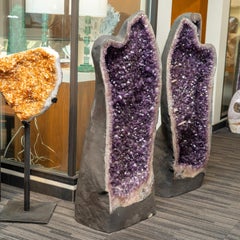
This Authentic Amethyst Cluster Geode from Brazil is a premium natural formation of gem amethyst adorned by small, smooth calcite crystals. The semi-geode cathedral decor showcases g...
Amethyst
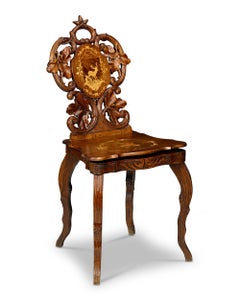
Black Forest Music Box Chair
Located in New Orleans, LA
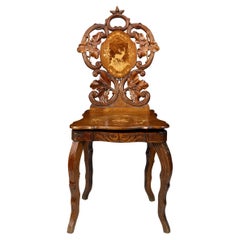
A music box hidden inside this beautifully carved Swiss chair will activate when the chair is sat upon. A remarkable example of the intricate craftsmanship and artistic innovation ch...
Walnut
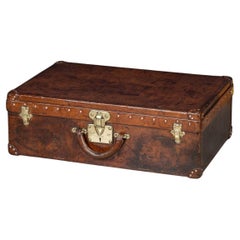
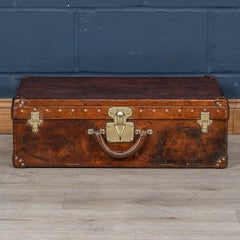
20th Century Louis Vuitton Cow Hide Suitcase, France c.1920
By Louis Vuitton
Located in Royal Tunbridge Wells, Kent
A highly unusual and exceptionally rare Louis Vuitton suitcase, originating from the early years of the 20th century, distinguishes itself not with the globally renowned monogram can...
Brass


$650 / item
H 15.56 in W 11.42 in D 3.94 in
Walt Disney's Donald Duck. The Ultimate History. Limited Edition Book
By TASCHEN, Carl Barks, Walt Disney
Located in Los Angeles, CA
Nothing succeeds like success, as the saying goes, but in the case of Donald Duck the opposite is true: the candor with which Donald reveals his weaknesses wins our hearts and stays ...
Aluminum
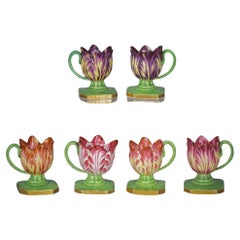
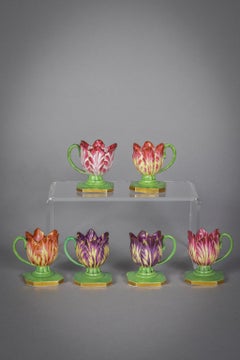
Assembled Set of Six English Porcelain Tulip-Form Syllabub Cups, Spode
Located in New York, NY
each as an open blossom on a canted square base, the stem curled as the handle.
Porcelain
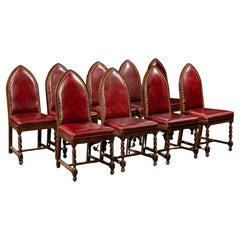
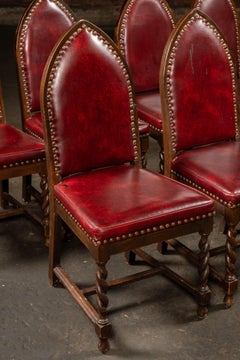
Set of Nine Gothic Revival Dining Chairs
Located in Dekalb, IL
Upholstered Victorian-inspired dining chair set. Have you ever hosted a vampire family for dinner and realized you didn't have appropriate seating? Well these Gothic Revival chairs ...
Leather, Walnut
$9,500
H 14.97 in Dm 9.85 in
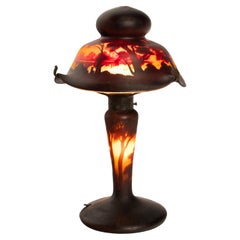
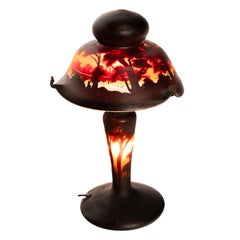
Antique French Galle Style Muller Freres Cameo Art Glass Landscape Table Lamp
By Muller Frères
Located in Portland, OR
A fine antique original, authentic, Art Nouveau French cameo glass table lamp, signed Muller Freres, circa 1900. Established in Lunéville, France, Muller Frères consisted of a group ...
Art Glass
$19,110 / set
H 24.02 in W 4.73 in D 4.73 in
Pair of Antique Elkington & Co Plated and Parcel Gilt Candelabra
By Frederick Elkington
Located in London, GB
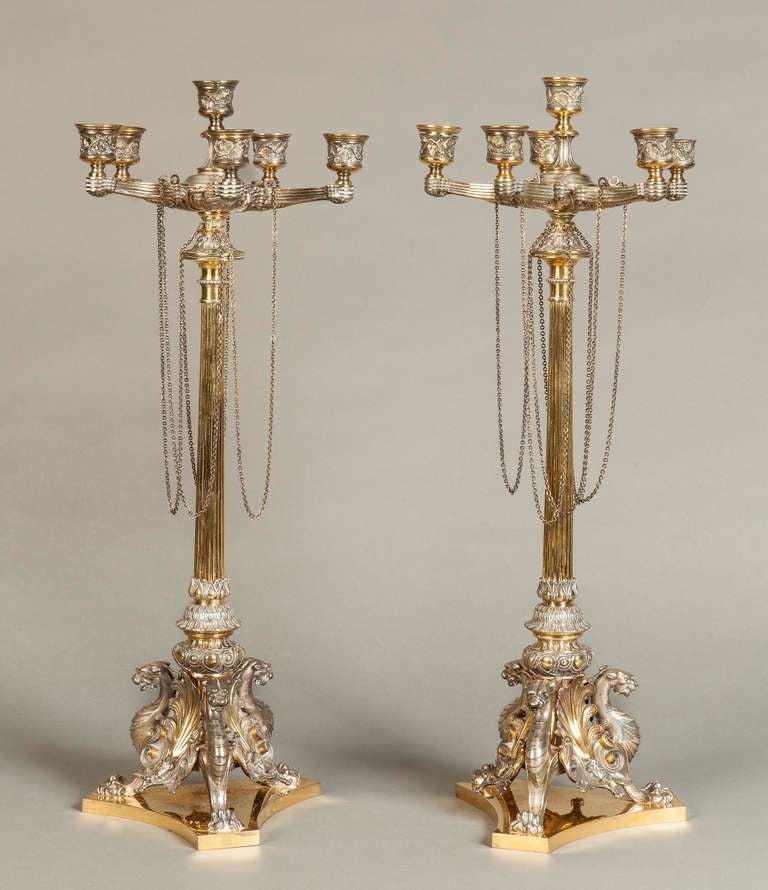
Each with six curved candle branches, the reeded column raised on a foliate shell and griffin tripartite base and decorated with hanging chains. Bearing the marks for the year 1865. ...
Silver Plate
Meissen Porcelain (Staatliche Porzellan-Manufaktur Meissen) is one of the preeminent porcelain factories in Europe and was the first to produce true porcelain outside of Asia. It was established in 1710 under the auspices of King Augustus II “the Strong” of Saxony-Poland (1670–1733), a keen collector of Asian ceramics, particularly Ming porcelain.
In pursuing his passion, which he termed his “maladie de porcelaine,” Augustus spent vast sums, amassing some 20,000 pieces of Japanese and Chinese ceramics. These, along with examples of early Meissen, comprise the Porzellansammlung, or porcelain collection, of the Zwinger Palace, in Dresden.
The king was determined, however, to free the European market from its dependence on Asian imports and to give European artisans the freedom to create their own porcelain designs. To this end, he charged the scientist Ehrenfried Walther von Tschirnhaus and aspiring alchemist Johann Friedrich Böttger with the task of using local materials to produce true, hard-paste porcelain (as opposed to the soft-paste variety European ceramists in the Netherlands, Germany, France, Italy and Spain had been producing since the late Renaissance). In 1709, the pair succeeded in doing just that, employing kaolin, or “china clay.” A year later, the Meissen factory was born.
In its first decades, Meissen mostly looked to Asian models, producing wares based on Japanese Kakiemon ceramics and pieces with Chinese-inflected decorations called chinoiserie. During the 1720s its painters drew inspiration from the works of Watteau, and the scenes of courtly life, fruits and flowers that adorned fashionable textiles and wallpaper. It was in this period that Meissen introduced its famous cobalt-blue crossed swords logo — derived from the arms of the Elector of Saxony as Arch-Marshal of the Holy Roman Empire — to distinguish its products from those of competing factories that were beginning to spring up around Europe.
By the 1730s, Meissen’s modelers and decorators had mastered the style of Asian ceramics, and Augustus encouraged them to develop a new, original aesthetic. The factory’s director, Count Heinrich von Brühl, used Johann Wilhelm Weinmann’s botanical drawings as the basis for a new line of wares with European-style surface decoration. The Blue Onion pattern (Zwiebelmuster), first produced in 1739, melded Asian and European influences, closely following patterns used in Chinese underglaze-blue porcelain, but replacing exotic flora and fruits with Western varieties (likely peaches and pomegranates, not onions) along with peonies and asters.
During the same period, head modeler Joachim Kändler (1706–75) began crafting delicate porcelain figures derived from the Italian commedia dell’arte. Often used as centerpieces on banquet tables and decorated to reflect the latest fashions in courtly dress for men and women, these figurines were popular in their day, and are still considered among Meissen’s most iconic creations. Kändler also created the Swan Service, which, with its complex low-relief surface design and minimal decoration is considered a masterpiece of Baroque ceramics.
The rise of Neoclassicism in the latter half of the 18th century forced Meissen to change artistic direction and begin producing monumental vases, clocks, chandeliers and candelabra. In the 20th century, Meissen added to its 18th-century repertoire decidedly modern designs, including ones in the Art Nouveau style. The 1920s saw the introduction of numerous animal figures, such as the popular sea otter (Fischotter), which graced an East German postage stamp in the 1960s. Starting in 1933, artistic freedom was limited at the factory under the Nazi regime, and after World War II, when the region became part of East Germany, it struggled to reconcile its elite past with the values of the Communist government. In 1969, however, new artistic director Karl Petermann reintroduced the early designs and fostered a new degree of artistic license. Meissen became one of the few companies to prosper in East Germany.
Owned by the State of Saxony since reunification, in 1990, Meissen continues to produce its classic designs together with new ones developed collaboratively with artists from all over the world. In addition, through its artCAMPUS program, the factory has invited distinguished ceramic artists, such as Chris Antemann and Arlene Shechet, to work in its studios in collaboration with its skilled modelers and painters. The resulting works of contemporary sculpture are inspired by Meissen’s rich and complex legacy.
Find a collection of authentic Meissen Porcelain on 1stDibs.
Whether it’s a Chinese Han dynasty glazed ceramic wine vessel, a work of Murano glass or a hand-painted Scandinavian modern stoneware piece, a fine vase brings a piece of history into your space as much as it adds a sophisticated dynamic.
Like sculptures or paintings, antique and vintage vases are considered works of fine art. Once offered as tributes to ancient rulers, vases continue to be gifted to heads of state today. Over time, decorative porcelain vases have become family heirlooms to be displayed prominently in our homes — loved pieces treasured from generation to generation.
The functional value of vases is well known. They were traditionally utilized as vessels for carrying dry goods or liquids, so some have handles and feature an opening at the top (where they flare back out). While artists have explored wildly sculptural alternatives over time, the most conventional vase shape is characterized by a bulbous base and a body with shoulders where the form curves inward.
Owing to their intrinsic functionality, vases are quite possibly versatile in ways few other art forms can match. They’re typically taller than they are wide. Some have a neck that offers height and is ideal for the stems of cut flowers. To pair with your mid-century modern decor, the right vase will be an elegant receptacle for leafy snake plants on your teak dining table, or, in the case of welcoming guests on your doorstep, a large ceramic floor vase for long tree branches or sticks — perhaps one crafted in the Art Nouveau style — works wonders.
Interior designers include vases of every type, size and style in their projects — be the canvas indoors or outdoors — often introducing a splash of color and a range of textures to an entryway or merely calling attention to nature’s asymmetries by bringing more organically shaped decorative objects into a home.
On 1stDibs, you can browse our collection of vases by material, including ceramic, glass, porcelain and more. Sizes range from tiny bud vases to massive statement pieces and every size in between.