Ohio - Art

1,975 Results
to
119
1,023
394
329
135
231
Overall Width
to
Overall Height
to
82
253
1,301
475
62
71
159
144
84
104
192
167
140
58
37
435
354
281
132
57
56
21
20
18
15
8
1
1
703
346
245
236
192
138
126
109
102
88
74
67
61
45
37
36
36
33
32
30
236,544
174,654

Use search to find more

58
56
46
34
32

Use search to find more

Item Ships From: Ohio
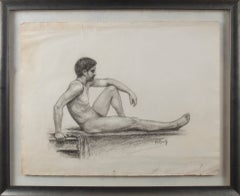
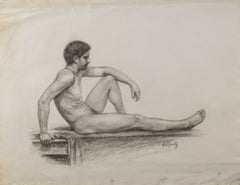
Boston Artist, Ernest M. Rantz, 1867-1944, Academic Male Nude Study

Boston Artist, Ernest M. Rantz, 1867-1944, Academic Male Nude Study

Located in Fairlawn, OH

Attributed to Ernest M. Rantz (1867-1944), Boston area Academic Male Nude Study Charcoal on fine laid paper with the Lalanne watermark, c. 1890 Signed in charcoal lower right (see ph...

Category

1890s American Realist Ohio - Art

Materials

Charcoal

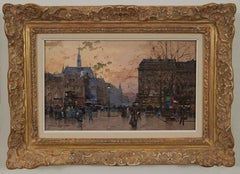
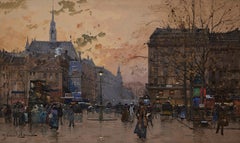
Boulevard de Strasbourg, Sunset on a Parisian Street, French Cityscape

Boulevard de Strasbourg, Sunset on a Parisian Street, French Cityscape

By Eugene Galien-Laloue

Located in Beachwood, OH

Eugène Galien Laloue (French, 1854-1941) Boulevard de Strasbourg Gouache on board Signed lower left 8 x 12.75 inches 13 x 18 inches, framed Some artists or writers are content to ha...

Category

Late 19th Century Ohio - Art

Materials

Gouache

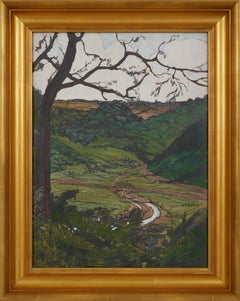
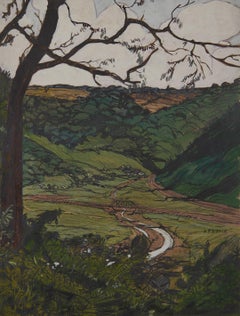
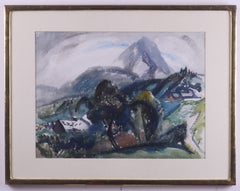
Landscape in West Virginia w/ Tree, Early 20th Century Cleveland School Artist

Landscape in West Virginia w/ Tree, Early 20th Century Cleveland School Artist

By August Biehle

Located in Beachwood, OH

August Frederick Biehle American, 1885–1979 Landscape in West Virginia, 1922 Gouache, litho crayon and graphite on paper Signed lower right 19 x 17.5 inches 29.5 x 23.5 inches, frame...

Category

1920s Modern Ohio - Art

Materials

Crayon, Gouache, Graphite

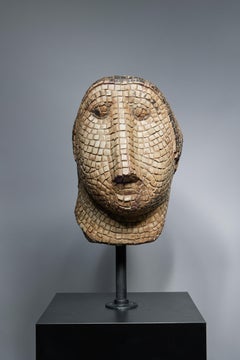
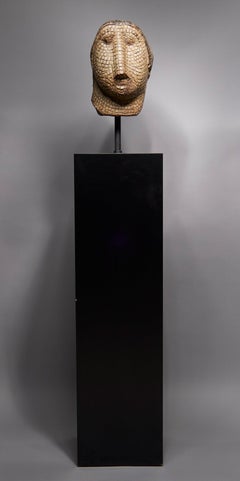
Mosaic Female Head Atop Large Pedestal, 20th Century California Artist

Mosaic Female Head Atop Large Pedestal, 20th Century California Artist

Located in Beachwood, OH

Mary T. Bowling (American, 1917-1995) Female Head Mosaic ceramic sculpture Head: 13 x 7 x 9.5 inches Overall: 59 inches tall Provenance: Fred Schmidt (American 1936-2001) Mary T. ...

Category

20th Century Ohio - Art

Materials

Ceramic, Mosaic

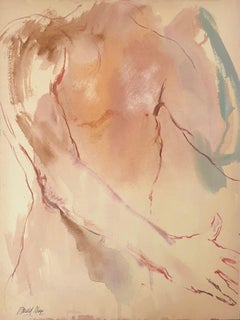
Original Ronald Shap figure drawing, signed

Original Ronald Shap figure drawing, signed

By Ronald Shap

Located in Las Vegas, NV

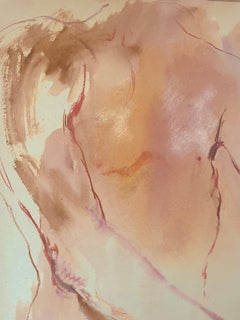
Original oil pastel and gouache figure drawing by celebrated, twentieth-century California landscape painter, Ronald Shap. Sketch of a nude male torso with washes of light aqua/sage green and accents of neon pink oil pastel. This is a part of Shap's '80s Interiors...

Category

1980s Contemporary Ohio - Art

Materials

Oil Pastel, Gouache

Old Master, Dutch, 17th entury, Jan Both, etching, 1640's, excellent impression

Old Master, Dutch, 17th entury, Jan Both, etching, 1640's, excellent impression

By Jan Both

Located in Fairlawn, OH

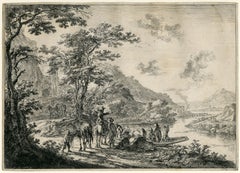
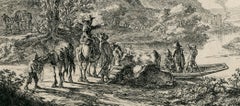
Jan Both (Dutch, Active 1636-1652) View of the Tiber in the Campagna (The Ferry) Etching, c. 1645-1652 Unsigned (as usual) in this early state Provenance and Collector's Mark verso: Petersen, Lugt 2064 verso Illustrated: Freedberg, Dutch Landscape Prints...

Category

1640s Old Masters Ohio - Art

Materials

Etching

WPA, lithograph, California, small edition, Arthur George Murphy 1906-1991

WPA, lithograph, California, small edition, Arthur George Murphy 1906-1991

Located in Fairlawn, OH

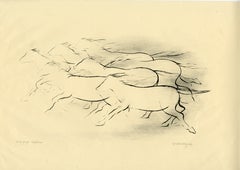
Arthur George Murphy (1906-1991) Horse Group California Lithograph on Warren's Oldestyle wove paper, 1936 Signed in pencil lower right Ttitled in pencil lower left (see photo) Signed and annotated upper left verso (see photo) Published and printed by: Works Progress Administration (WPA), Federal Art Project, San Francisco Note: This impression does NOT have the usual WPA Federal Art Project stamp on it. It is a unstamped proof that we believe was given to a family member in Ohio where Murphy was born. Edition: Probably fewer than 25 impressions; the exact number printed for this lithograph has not been documented. Published by the WPA Museums: MMA Newark Art Museum Porland Public Schools, OR Saint Louis Art Museum Weisman Art Museum Fine Arts Museums of San Francisco Fine Arts Museums of San Francisco MMA has Horse Group #18 and #19 and #8 Condition: Very slight wrinkles, two very minor tears upper edge Reference: General Services Administration (GSA) No. 500 452, 453, 495, 496, 497, 498, 499 Arthur George Murphy (1906–1991) Arthur George Murphy was an American painter, teacher, and especially prolific lithographer. Born in Tiffin, Ohio, he studied at the Cleveland School of Art and the Art Students League in New York before moving to San Francisco in 1930. His strongest body of prints grew out of the San Francisco Federal Art Project in the later 1930s. He subsequently served as a war artist in the South Pacific and settled in Connecticut after World War II. The documented WPA publication and printing credits on his lithographs confirm his participation in the project. Analysis Murphy’s lithographs range from Bay Bridge construction workers to horses, rodeo riders, dancers, and New Mexico landscapes. The bridge prints give muscular figures and steel structures comparable visual weight: workers appear embedded in the machinery they operate. In the horse and rodeo subjects, he pares forms down to quick, sweeping contours that convey movement with remarkably little detail. His Taos Plains takes a quieter approach, using broad open space and a low band of distant activity to convey scale. These are observations about the prints’ compositions, rather than claims that every impression was drawn directly from life. Murphy is significant within New Deal printmaking for that breadth. His industrial subjects celebrate skilled labor, while his animal and landscape prints show a sustained interest in motion, contour, and the American West. MoMA identifies the San Francisco WPA Federal Art Project as both publisher and printer of its impressions of Pueblo – New Mexico #2 and Citizen Dancing; it describes their editions as “probably fewer than 25.” That estimate should be applied to those catalogued works, not assumed for every Murphy lithograph. Documented museum holdings: Institution Examples in its collection record National Gallery of Art, Washington Twelve listed lithographs, including Steel Riggers – No. 3 – Bay Bridge (1936), Taos Plains (1937), Bullrider No. 1 (1937), and Bulldoggers (c. 1940). Metropolitan Museum of Art, New York Bridge Worker No. 7 (1936), Seagulls, Horse Group #19, Citizen Perplexed, and other WPA lithographs...

Category

1930s American Modern Ohio - Art

Materials

Lithograph

Stanford White, drawing, Davis Galleries, 1963 soafe, chair

Stanford White, drawing, Davis Galleries, 1963 soafe, chair

By Stanford White

Located in Fairlawn, OH

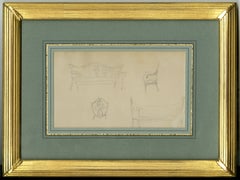
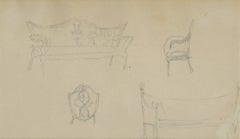
Stanford White (1853-1906) Sketches of Two Sofas and Chair Graphite on paper, c. 1890 Unsigned Provenance: Davis Galleries, 1963, New York Davis Galleries organized the important 1963 exhibition Stanford White: Works on Paper, one of the earliest concentrated presentations of White’s drawings. The firm’s own historical exhibition list confirms that show. Davis and Langdale exhibition history. Reviewed in TIME Magazine, 1963 Condition: Mounted to support sheet, slight staining Image size: 5 1/8 x 8 1/4 inches Frame size: : 10 3/4 x 14 inches Alan Wanzenberg is a distinguished New York architect and interior designer whose work emphasizes architectural proportion, craftsmanship, historic furniture and the integration of art with interiors. His ownership is particularly appropriate for a Stanford White furniture study and gives the sheet a stronger design-history provenance than an anonymous private collection would provide. “Possibly exhibited, Davis Galleries, New York, Stanford White: Works on Paper, 1963; not confirmed in the exhibition checklist.” Stanford White was born in New York City in 1853. After training in the office of Henry Hobson Richardson...

Category

1890s American Modern Ohio - Art

Materials

Graphite

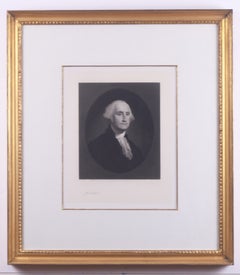
Famous Portaits of George and Martha Washington after Gilbert Stuart

Famous Portaits of George and Martha Washington after Gilbert Stuart

Located in Fairlawn, OH

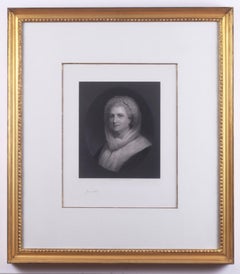
John Sartain (1808-1897) after Gilbert Stuart (1755-1828) George Washington and Martha Washington, A Pair Mezzotints, handsomely framed in period style reproduction frames with silk ...

Category

1860s American Realist Ohio - Art

Materials

Mezzotint

Qur 'An, 15th century, Qur’an 28:82, latter portion–28:88, followed by 29:1–6 an

Qur 'An, 15th century, Qur’an 28:82, latter portion–28:88, followed by 29:1–6 an

Located in Fairlawn, OH

Qur' An, Northern India, Sultanate period Qur’an 28:82, latter portion–28:88, followed by 29:1–6 and the opening word of 29:7. 15th century/early 16th century gold embellishment on h...

Category

15th Century and Earlier Other Art Style Ohio - Art

Materials

Ink

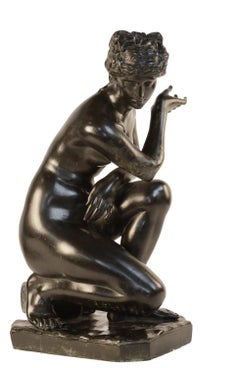
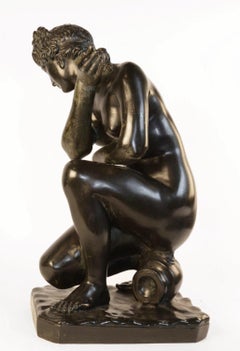
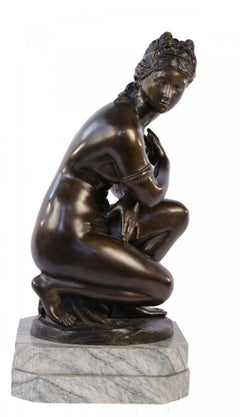
Figure of Crouching Venus/Naked Aphrodite, 19th Century Italian School Sculpture

Figure of Crouching Venus/Naked Aphrodite, 19th Century Italian School Sculpture

Located in Beachwood, OH

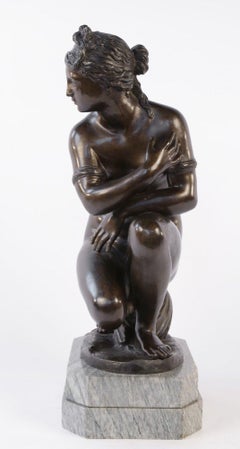
Bronze Figure of Crouching Venus, or The Naked Aphrodite, 19th Century Italian School Bronze raised on a marble base 21 in. h. x 10 in. w. x 7 in. d., overall 18 in. h. x 8.5 in. w....

Category

19th Century Ohio - Art

Materials

Marble, Bronze

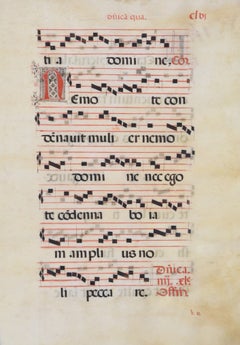
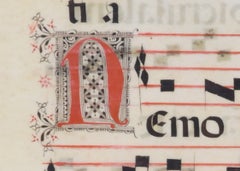
Illuminated Manuscript, 1575-1600, Northern Italy, Sexagesima and Quinquagesima

Illuminated Manuscript, 1575-1600, Northern Italy, Sexagesima and Quinquagesima

Located in Fairlawn, OH

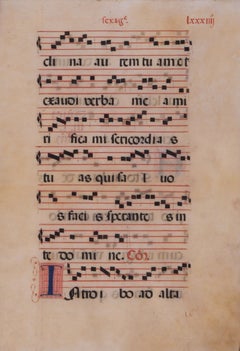
Spanish Illuminated Gradual Leaf: Sexagesima and Quinquagesima Sundays Italy, probably Northern Italy Late sixteenth century, circa 1575–1600 Latin manuscript on parchment; Gothic ro...

Category

16th Century Old Masters Ohio - Art

Materials

Ink

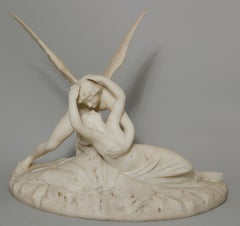
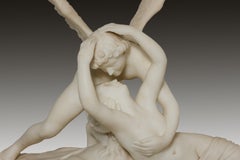
Psyche Revived by Cupid's Kiss, Large Marble Sculpture after Canova, 19th C.

Psyche Revived by Cupid's Kiss, Large Marble Sculpture after Canova, 19th C.

By Antonio Canova

Located in Beachwood, OH

After Antonio Canova (Italian, 1757-1822) Psyche Revived by Cupid's Kiss Marble 24 x 19 x 16 inches 135 lb. The love affair between Cupid and Psyche is one of the best known classic...

Category

19th Century Ohio - Art

Materials

Marble

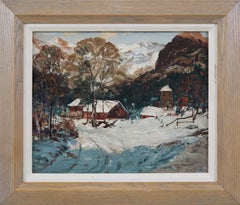
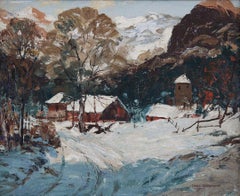
Winter Landscape w/ Red Barn, 20th Century Cleveland School Artist

Winter Landscape w/ Red Barn, 20th Century Cleveland School Artist

By Carl Frederick Gaertner

Located in Beachwood, OH

Carl Frederick Gaertner (American, 1898–1952) Red Barn Oil on canvas board Signed lower right 11 x 13.5 inches 15.5 x 17.75 inches, framed Carl Gaertner was one of the greatest pain...

Category

Early 20th Century Ohio - Art

Materials

Oil

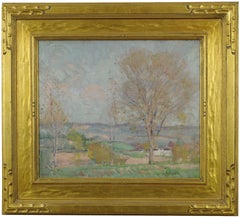
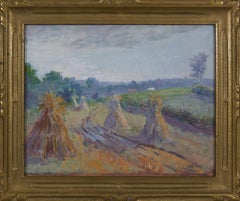
Giverny Landscape, Karl Albert Buehr, c. 1912, American Impressionism, Expatriot

Giverny Landscape, Karl Albert Buehr, c. 1912, American Impressionism, Expatriot

By Karl Albert Buehr

Located in Fairlawn, OH

Karl Albert Beuhr (1866-1952) Giverny Landscape Oil on relined canvas, c. 1912 Signed lower right: K A Buehr Condition: Canvas relined for support Image size: 13 1/4 x 15 3/8 inches Frame size: 19 5/8 x 21 7/8 inches Provenance: Gift of the artist to his wife, Mary Hess Beuhr The artist's niece, daughter of Will Hess Buehr David Saltzman Robert Henry Adams Thomas French Fine Art Mr. and Mrs. Thomas Horner, Canton, Ohio Exhibited: Canton Museum of Art, Impressionism: An American View, 1983, label on verso Karl Albert Buehr at Robert Henry Adams Fine Art, Chicago Exhibition dates The exhibition was held in 1994 at Robert Henry Adams Fine Art, 715 North Franklin Street, Chicago. Surviving provenance records describe it as the gallery’s first exhibition at its North Franklin Street location. Works documented as included include Woman on a Patio, Rocky Inlet (France), and apparently other paintings and studies acquired through David Saltzman from the family of Buehr’s wife, Mary Hess Buehr. The 1994 Karl Albert Buehr exhibition at Robert Henry Adams Fine Art represented an important act of historical recovery. Although Buehr enjoyed considerable recognition during his lifetime—as an exhibiting painter, prizewinner, and influential teacher at the School of the Art Institute of Chicago—his reputation had become less visible in the decades following his death. By bringing together paintings and works on paper that had descended through the artist’s family, the Adams exhibition helped restore Buehr to his proper position among the leading exponents of American Impressionism and the most important Chicago-trained painters working in France before the First World War. Giverny was crucial to Buehr’s mature development. American painters had been drawn to the Norman village since the late 1880s, attracted both by Monet’s presence and by the region’s gardens, river valleys, cultivated fields, and distinctive northern light. Buehr did not simply imitate Monet. His figure compositions remained grounded in the academic training he received in Chicago and Paris, but he enlivened that structure with broken brushwork, heightened complementary color, and an increasingly luminous palette. His characteristic compositions place elegantly dressed young women on terraces, beside windows, or within flowering gardens. These figures are neither conventional society portraits nor anonymous decorative accessories. They occupy a carefully balanced space between individual presence and pictorial harmony. Faces and gestures are often quietly observed, while dresses, parasols, flowers, foliage, and shifting sunlight become vehicles for color. Lavender shadows, rose and coral fabrics, emerald foliage, and brilliant passages of yellow or blue transform the garden into a chromatic environment surrounding the sitter. Works associated with the Adams exhibition illuminate the breadth of Buehr’s French production. The pastel Woman on a Patio, circa 1915, demonstrates his ability to translate Impressionist color into the immediacy of a dry medium. Pastel allowed him to place one hue directly beside another without losing intensity. The resulting surface possesses a soft atmospheric unity while retaining the energy of individual strokes. The work’s history—gifted by Buehr to Mary Hess Buehr and subsequently descending through her family—also gives it a particularly intimate character. Rocky Inlet (France) presents another aspect of Buehr’s practice. In place of the cultivated garden and poised female figure, the artist confronts a rugged coastal landscape. Yet his essential concern remains light acting upon color. Rock, water, and vegetation are constructed through abbreviated touches rather than continuous modeling. The small scale suggests direct observation, possibly an outdoor study made during Buehr’s travels in Normandy. Its provenance likewise begins with Mary Hess Buehr and passes through the family before reaching David Saltzman and Robert Henry Adams Fine Art. This family provenance was central to the significance of the 1994 exhibition. The works had not merely circulated anonymously through the market; many retained a direct association with the artist’s household. Such a group could include informal studies, experimental compositions, and personal gifts that Buehr elected to keep rather than send to public exhibitions. Together they offered a more private and exploratory view of his career. Karl Albert Buehr (1866–1952): France and the Giverny Years Karl Albert Buehr—whose surname is sometimes misspelled “Beuhr”—was a German-born American painter and influential teacher associated with the second generation of American Impressionists working at Giverny. Although his artistic identity was rooted in Chicago, the years he spent in France transformed his palette, subject matter, and approach to painting. Born on February 14, 1866, in Feuerbach, near Stuttgart, Buehr immigrated with his family to Chicago, probably in 1881. After working briefly for a commercial lithographer, he enrolled at the School of the Art Institute of Chicago in 1888. He studied with John H. Vanderpoel and graduated with honors in 1894, after which the school invited him to teach. He also served in the Illinois cavalry during the Spanish-American War and married Mary Guion Hess, one of his students and an accomplished artist in her own right. Early study in Europe Buehr’s European education unfolded in several stages. Around 1900 he settled in Paris and studied at the Académie Julian, principally under the French painter Raphaël Collin. Collin was known for idealized female figures placed in luminous outdoor settings, a combination of academic draftsmanship and Impressionist light that anticipated Buehr’s mature work. Buehr reportedly received a gold medal at the Académie in 1901. His early European paintings included portraits, landscapes, and scenes of rural labor. Visits to Holland exposed him to the restrained tonalism of the Hague School, while his travels in Italy—particularly Taormina, Sicily, during 1906 and 1907—encouraged a brighter response to Mediterranean sunlight. He also studied in London, where his contacts with Frank Brangwyn and the decorative currents of British painting strengthened his interest in broad design, rhythmic composition, and large arrangements of figures. A decisive factor in this extended European residence was the patronage of Chicago philanthropist Lydia Coonley Ward. From approximately 1906 until 1913, Ward provided Buehr with a monthly stipend, enabling the artist, his wife, and their children to remain abroad and pursue their work without the immediate pressures of the American market. Buehr at Giverny Buehr entered the Anglo-American artistic community at Giverny around 1909, probably through his friendship with Henry Salem Hubbell, another American figure painter supported by Lydia Coonley Ward. From approximately 1909 through 1912, Buehr generally spent winters in Paris and the warmer months at Giverny. In 1912 and the summer of 1913, the family reportedly lived at Sainte-Geneviève-lès-Gasny, close to Giverny. By this date Giverny was no longer merely the village in which Claude Monet lived. It had become an international artists’ colony, particularly attractive to American painters who admired Impressionist color but wished to retain firm drawing and carefully organized figure compositions. Buehr’s associates included Frederick Carl Frieseke, Richard Edward Miller, Guy Rose, Lawton Parker, Louis Ritman, Edmund Greacen, Karl Anderson, and Theodore Earl Butler. Buehr was especially close to the circle of Frieseke and Miller. These artists specialized in decorative paintings of fashionably dressed women reading, sewing, taking tea, or resting in sunlit gardens. Their figures were surrounded by flowers, patterned fabrics, parasols, and flickering passages of colored light. Buehr adopted this repertoire, but his paintings usually retained a stronger structural organization and a more assertive contrast between complementary colors. During his first months at Giverny, Buehr worked on a large decorative panel of dancing figures. The composition received an honorable mention at the Paris Salon of 1910, an important professional recognition. That summer, however, he increasingly turned toward intimate garden scenes and outdoor figure studies. The influence of Richard Miller can be detected in the decorative arrangement of the figures, while Frieseke’s example encouraged Buehr s use of brilliant sunlight, patterned surfaces, and saturated hues. Relationship with Claude Monet Claude Monet was Buehr’s artistic hero, but the extent of their personal relationship should not be overstated. Buehr’s children played with the children of Theodore Butler, Monet’s son-in-law, and they visited the Monet household. Buehr’s daughter Kathleen later recalled that Monet was gracious to the children. Nevertheless, the best available scholarship suggests that no close personal association between Buehr and Monet has been documented. Monet’s importance to Buehr was therefore primarily artistic. At Giverny, Buehr learned to regard colored light as a central subject rather than merely a means of describing objects. Shadows became violet, blue, or green; white dresses reflected the surrounding garden; and faces and arms were modeled through small strokes of warm and cool color. The enclosed garden also became a kind of outdoor studio in which human figures, flowers, fabrics, and sunlight could be orchestrated into a unified decorative design. The Giverny style Buehr became best known for paintings of young women seated or standing in gardens, often accompanied by colorful parasols. Works such as Springtime in Giverny, Under the Parasol, and related pictures of women reading or conversing exemplify his mature style. Although inspired by French Impressionism, these paintings are not spontaneous transcriptions of fleeting visual experience in the strict Monet tradition. They are carefully staged figure compositions. Buehr himself explained that the outdoor figure painter should concentrate upon the ensemble—grouping, arrangement, and color—rather than laboriously describing every feature. This principle helps distinguish his Giverny paintings...

Category

1910s American Impressionist Ohio - Art
Materials

Oil

Old Master, Mexican calendar, 52 year astrological cycle

Old Master, Mexican calendar, 52 year astrological cycle

By Bernard Picart

Located in Fairlawn, OH

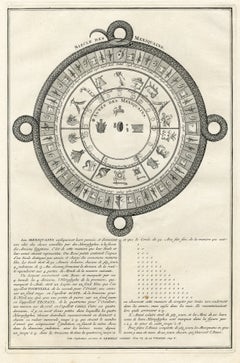
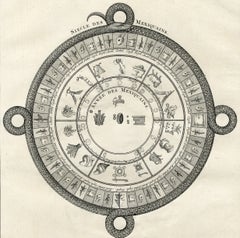
Bernard Picart (1673-1733) Siècle des Mexiquains (The Mexican Century) (Mexican calendar and astrological Etching and engraving on fine laid paper, 1723 Unsigned Designed under the ...

Category

1720s Old Masters Ohio - Art

Materials

Etching

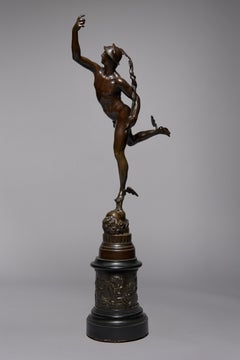
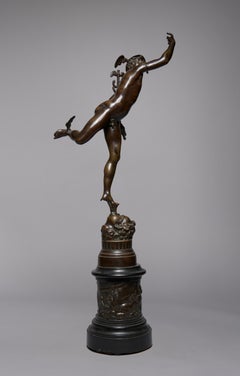
Mercury Standing on the Breath of Zeus, Antique Grand Tour

Mercury Standing on the Breath of Zeus, Antique Grand Tour

By Giambologna

Located in Beachwood, OH

After Giambologna (Italian, 1529-1608) Mercury Standing on the Breath of Zeus Bronze 27.5 x 14.25 x 5.5 inches The sculpture depicts Mercury wearing his winged helmet and sandals and holding a caduceus. Created after one of Giambologna's most celebrated sculptures in the Renaissance, Mercury, was designed as part of a fountain for the Villa Medici in Rome.The head on which Mercury steps symbolizes the figure being “exhaled, purified, unburdened.” When the Giambologna sculpture...

Category

19th Century Ohio - Art

Materials

Bronze

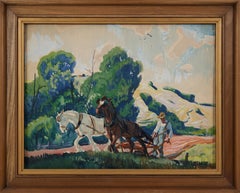
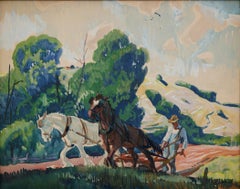
Plowman, Brecksville, Ohio, Early 20th Century Farm Landscape, Cleveland School

Plowman, Brecksville, Ohio, Early 20th Century Farm Landscape, Cleveland School

By Frank Wilcox

Located in Beachwood, OH

Frank Nelson Wilcox (American, 1887–1964) Plowman, Brecksville, Ohio, c. 1922 Watercolor on paper Signed lower right 22.5 x 27.75 inches 27.75 x 34.5 inches, framed Frank Nelson Wilcox (October 3, 1887 – April 17, 1964) was a modernist American artist and a master of watercolor. Wilcox is described as the "Dean of Cleveland School painters," though some sources give this appellation to Henry Keller or Frederick Gottwald. Wilcox was born on October 3, 1887 to Frank Nelson Wilcox, Sr. and Jessie Fremont Snow Wilcox at 61 Linwood Street in Cleveland, Ohio. His father, a prominent lawyer, died at home in 1904 shortly before Wilcox' 17th birthday. His brother, lawyer and publisher Owen N. Wilcox, was president of the Gates Legal Publishing Company or The Gates Press. His sister Ruth Wilcox was a respected librarian. In 1906 Wilcox enrolled from the Cleveland School of Art under the tutelage of Henry Keller, Louis Rorimer, and Frederick Gottwald. He also attended Keller's Berlin Heights summer school from 1909. After graduating in 1910, Wilcox traveled and studied in Europe, sometimes dropping by Académie Colarossi in the evening to sketch the model or the other students at their easels, where he was influenced by French impressionism. Wilcox was influenced by Keller's innovative watercolor techniques, and from 1910 to 1916 they experimented together with impressionism and post-impressionism. Wilcox soon developed his own signature style in the American Scene or Regionalist tradition of the early 20th century. He joined the Cleveland School of Art faculty in 1913. Among his students were Lawrence Edwin Blazey, Carl Gaertner, Paul Travis, and Charles E. Burchfield. Around this time Wilcox became associated with Cowan Pottery. In 1916 Wilcox married fellow artist Florence Bard, and they spent most of their honeymoon painting in Berlin Heights with Keller. They had one daughter, Mary. In 1918 he joined the Cleveland Society of Artists, a conservative counter to the Bohemian Kokoon Arts Club, and would later serve as its president. He also began teaching night school at the John Huntington Polytechnic Institute at this time, and taught briefly at Baldwin-Wallace College. Wilcox wrote and illustrated Ohio Indian Trails in 1933, which was favorably reviewed by the New York Times in 1934. This book was edited and reprinted in 1970 by William A. McGill. McGill also edited and reprinted Wilcox' Canals of the Old Northwest in 1969. Wilcox also wrote, illustrated, and published Weather Wisdom in 1949, a limited edition (50 copies) of twenty-four serigraphs (silk screen prints) accompanied by commentary "based upon familiar weather observations commonly made by people living in the country." Wilcox displayed over 250 works at Cleveland's annual May Show. He received numerous awards, including the Penton Medal for The Omnibus, Paris (1920), Fish Tug on Lake Erie (1921), Blacksmith Shop (1922), and The Gravel Pit (1922). Other paintings include The Trailing Fog (1929), Under the Big Top (1930), and Ohio Landscape...

Category

1920s American Modern Ohio - Art

Materials

Watercolor

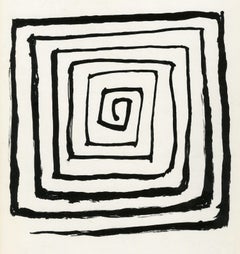
Back Cover from Derriere Le Miroir, No. 190, Fevrier 1971

Back Cover from Derriere Le Miroir, No. 190, Fevrier 1971

By Alexander Calder

Located in Fairlawn, OH

Alexander Calder Back Cover from Derriere Le Miroir, No. 190, Fevrier 1971 Color lithograph, February 1971 Published by Aime Maeght, Paris Printer: L'Imprimerie Arte, Paris Condition...

Category

1970s French School Ohio - Art

Materials

Lithograph

Manhattan, Industry, Coal, 1911, Earl Horter

Manhattan, Industry, Coal, 1911, Earl Horter

By Earl Horter

Located in Fairlawn, OH

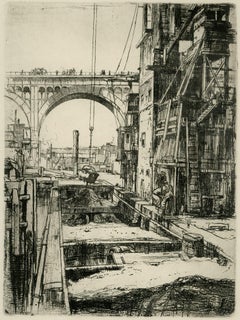
Coal Pockets and Viaduct, New York (Viaduct at 130th Street, NYC) Etching & Drypoint, 1911 Unsigned Provenance: Estate of the Artist New York Financial Institut...

Category

1910s American Realist Ohio - Art

Materials

Etching

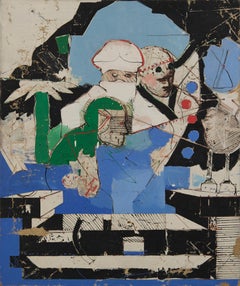
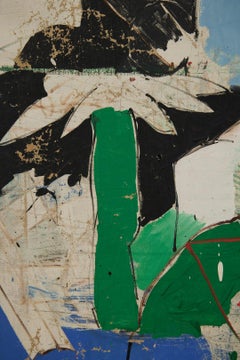
Large Figural Abstract Late 1960s Painting, Mexican American Artist

Large Figural Abstract Late 1960s Painting, Mexican American Artist

By Miguel Conde

Located in Beachwood, OH

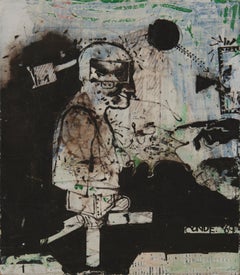
Miguel Condé (Mexican/American, b. 1939) Untitled, 1969 Oil on canvas Signed and dated lower right 39 x 33.5 inches Miguel Condé is a Mexican figurative painter, draughtsman, and pr...

Category

1960s Abstract Ohio - Art

Materials

Oil

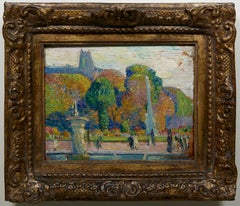
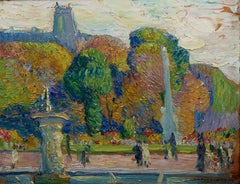
The Luxembourg Gardens, Paris, Early 20th Century Impressionist Landscape

The Luxembourg Gardens, Paris, Early 20th Century Impressionist Landscape

By Abel Warshawsky

Located in Beachwood, OH

Abel Warshawsky (American, 1883-1962) The Luxembourg Gardens, Paris, 1909 Oil on panel Signed and dated lower right, titled verso 8.5 x 10.5 inches 13.75 x 16 inches, framed Impressionist painter A.G. Warshawsky was active in Cleveland, Paris and Monterey, California. Although Warshawsky is known as a classic Impressionist, he is also known for using a realistic style in his portraiture. Warshawsky was born in 1883 in Sharon, Pennsylvania to Ezekial and Ida Warshawsky, Jewish immigrants from Poland. The family then moved to Cleveland, Ohio. His brother Alexander (Xander) also became an accomplished painter in his own right. Warshawsky graduated from the Cleveland School of Art in 1900, taught by Louis Rorimer...

Category

Early 1900s Impressionist Ohio - Art

Materials

Oil

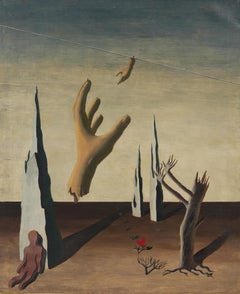
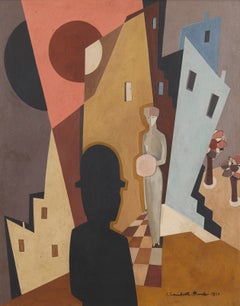
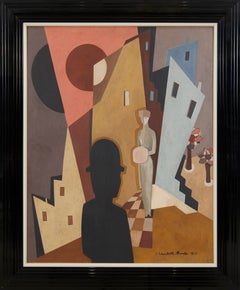
Surrealist Landscape Oil Painting, 20th Century, Framed, 30 x 24.25 in

Surrealist Landscape Oil Painting, 20th Century, Framed, 30 x 24.25 in

Located in Beachwood, OH

Surrealist Landscape Oil on canvas 'R. Lee Glenn' verso 30 x 24.25 inches 31.75 x 26.75 inches, framed Surrealism aims to revolutionize human experience. It balances a rational visi...

Category

20th Century Surrealist Ohio - Art

Materials

Oil

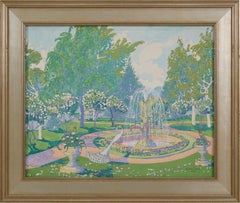
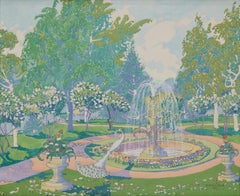
The Fountain, Milan, Ohio Park Summer Landscape w/ Peacock

The Fountain, Milan, Ohio Park Summer Landscape w/ Peacock

By Clara Deike

Located in Beachwood, OH

Clara Deike (American, 1881-1965) The Fountain, Milan, Ohio, 1915 Watercolor on paper Signed and dated lower right 18 x 22 inches 23.5 x 28 inches, framed A graduate of the Clevelan...

Category

1910s Ohio - Art

Materials

Watercolor

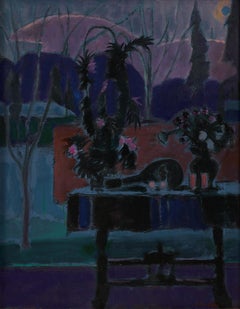
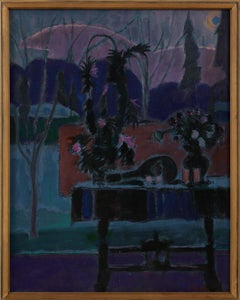
Evening Still Life, Dark 20th Century Landscape, Post Impressionism

Evening Still Life, Dark 20th Century Landscape, Post Impressionism

By Joseph O'Sickey

Located in Beachwood, OH

Joseph B. O'Sickey (American, 1918-2013) Evening Still Life Oil on canvas Signed lower right 32 x 24.5 inches 34.25 x 27.25 inches, framed Joseph O'Sickey, born in Detroit in 1918, ...

Category

Late 20th Century Post-Impressionist Ohio - Art

Materials

Oil

Large Figural Abstract Late 1960s Painting, Mexican American Artist

Large Figural Abstract Late 1960s Painting, Mexican American Artist

By Miguel Conde

Located in Beachwood, OH

Miguel Condé (Mexican/American, b. 1939) Untitled, 1968 Oil on canvas Signed and dated verso 59.5 x 49.5 inches Paint loss throughout - please reach out for a thorough condition rep...

Category

1960s Abstract Ohio - Art

Materials

Oil

Giverny, American Impressionist, Karl Albert Buehr, Expatriot, c. 1910

Giverny, American Impressionist, Karl Albert Buehr, Expatriot, c. 1910

By Karl Albert Buehr

Located in Fairlawn, OH

Karl Albert Buehr (1866-1952) Strolling in the Park Oil on canvas, relined, c. 1910 Unsigned Provenance: Gift of the Artist to his wife, Mary Hess Beuhr The artist's niece, daughter of Will Hess David Saltzman Robert Henry Adams Fine Art, Chicago, exhibited 1994 Karl Albert Buehr at Robert Henry Adams Fine Art, Chicago Exhibition dates The exhibition was held in 1994 at Robert Henry Adams Fine Art, 715 North Franklin Street, Chicago. Surviving provenance records describe it as the gallery’s first exhibition at its North Franklin Street location. Works documented as included include Woman on a Patio, Rocky Inlet (France), and apparently other paintings and studies acquired through David Saltzman from the family of Buehr’s wife, Mary Hess Buehr. The 1994 Karl Albert Buehr exhibition at Robert Henry Adams Fine Art represented an important act of historical recovery. Although Buehr enjoyed considerable recognition during his lifetime—as an exhibiting painter, prizewinner, and influential teacher at the School of the Art Institute of Chicago—his reputation had become less visible in the decades following his death. By bringing together paintings and works on paper that had descended through the artist’s family, the Adams exhibition helped restore Buehr to his proper position among the leading exponents of American Impressionism and the most important Chicago-trained painters working in France before the First World War. Giverny was crucial to Buehr’s mature development. American painters had been drawn to the Norman village since the late 1880s, attracted both by Monet’s presence and by the region’s gardens, river valleys, cultivated fields, and distinctive northern light. Buehr did not simply imitate Monet. His figure compositions remained grounded in the academic training he received in Chicago and Paris, but he enlivened that structure with broken brushwork, heightened complementary color, and an increasingly luminous palette. His characteristic compositions place elegantly dressed young women on terraces, beside windows, or within flowering gardens. These figures are neither conventional society portraits nor anonymous decorative accessories. They occupy a carefully balanced space between individual presence and pictorial harmony. Faces and gestures are often quietly observed, while dresses, parasols, flowers, foliage, and shifting sunlight become vehicles for color. Lavender shadows, rose and coral fabrics, emerald foliage, and brilliant passages of yellow or blue transform the garden into a chromatic environment surrounding the sitter. Works associated with the Adams exhibition illuminate the breadth of Buehr’s French production. The pastel Woman on a Patio, circa 1915, demonstrates his ability to translate Impressionist color into the immediacy of a dry medium. Pastel allowed him to place one hue directly beside another without losing intensity. The resulting surface possesses a soft atmospheric unity while retaining the energy of individual strokes. The work’s history—gifted by Buehr to Mary Hess Buehr and subsequently descending through her family—also gives it a particularly intimate character. Rocky Inlet (France) presents another aspect of Buehr’s practice. In place of the cultivated garden and poised female figure, the artist confronts a rugged coastal landscape. Yet his essential concern remains light acting upon color. Rock, water, and vegetation are constructed through abbreviated touches rather than continuous modeling. The small scale suggests direct observation, possibly an outdoor study made during Buehr’s travels in Normandy. Its provenance likewise begins with Mary Hess Buehr and passes through the family before reaching David Saltzman and Robert Henry Adams Fine Art. This family provenance was central to the significance of the 1994 exhibition. The works had not merely circulated anonymously through the market; many retained a direct association with the artist’s household. Such a group could include informal studies, experimental compositions, and personal gifts that Buehr elected to keep rather than send to public exhibitions. Together they offered a more private and exploratory view of his career. Condition: relined canvas and cleaned Image/Canvas size: 10 x 9 inches Frame: 16-3/4 x 15-3/4 x 1-3/4 inches Karl Albert Buehr (1866–1952): France and the Giverny Years Karl Albert Buehr—whose surname is sometimes misspelled “Beuhr”—was a German-born American painter and influential teacher associated with the second generation of American Impressionists working at Giverny. Although his artistic identity was rooted in Chicago, the years he spent in France transformed his palette, subject matter, and approach to painting. Born on February 14, 1866, in Feuerbach, near Stuttgart, Buehr immigrated with his family to Chicago, probably in 1881. After working briefly for a commercial lithographer, he enrolled at the School of the Art Institute of Chicago in 1888. He studied with John H. Vanderpoel and graduated with honors in 1894, after which the school invited him to teach. He also served in the Illinois cavalry during the Spanish-American War and married Mary Guion Hess, one of his students and an accomplished artist in her own right. Early study in Europe Buehr’s European education unfolded in several stages. Around 1900 he settled in Paris and studied at the Académie Julian, principally under the French painter Raphaël Collin. Collin was known for idealized female figures placed in luminous outdoor settings, a combination of academic draftsmanship and Impressionist light that anticipated Buehr’s mature work. Buehr reportedly received a gold medal at the Académie in 1901. His early European paintings included portraits, landscapes, and scenes of rural labor. Visits to Holland exposed him to the restrained tonalism of the Hague School, while his travels in Italy—particularly Taormina, Sicily, during 1906 and 1907—encouraged a brighter response to Mediterranean sunlight. He also studied in London, where his contacts with Frank Brangwyn and the decorative currents of British painting strengthened his interest in broad design, rhythmic composition, and large arrangements of figures. A decisive factor in this extended European residence was the patronage of Chicago philanthropist Lydia Coonley Ward. From approximately 1906 until 1913, Ward provided Buehr with a monthly stipend, enabling the artist, his wife, and their children to remain abroad and pursue their work without the immediate pressures of the American market. Buehr at Giverny Buehr entered the Anglo-American artistic community at Giverny around 1909, probably through his friendship with Henry Salem Hubbell, another American figure painter supported by Lydia Coonley Ward. From approximately 1909 through 1912, Buehr generally spent winters in Paris and the warmer months at Giverny. In 1912 and the summer of 1913, the family reportedly lived at Sainte-Geneviève-lès-Gasny, close to Giverny. By this date Giverny was no longer merely the village in which Claude Monet lived. It had become an international artists’ colony, particularly attractive to American painters who admired Impressionist color but wished to retain firm drawing and carefully organized figure compositions. Buehr’s associates included Frederick Carl Frieseke, Richard Edward Miller, Guy Rose, Lawton Parker, Louis Ritman, Edmund Greacen, Karl Anderson, and Theodore Earl Butler. Buehr was especially close to the circle of Frieseke and Miller. These artists specialized in decorative paintings of fashionably dressed women reading, sewing, taking tea, or resting in sunlit gardens. Their figures were surrounded by flowers, patterned fabrics, parasols, and flickering passages of colored light. Buehr adopted this repertoire, but his paintings usually retained a stronger structural organization and a more assertive contrast between complementary colors. During his first months at Giverny, Buehr worked on a large decorative panel of dancing figures. The composition received an honorable mention at the Paris Salon of 1910, an important professional recognition. That summer, however, he increasingly turned toward intimate garden scenes and outdoor figure studies. The influence of Richard Miller can be detected in the decorative arrangement of the figures, while Frieseke’s example encouraged Buehr s use of brilliant sunlight, patterned surfaces, and saturated hues. Relationship with Claude Monet Claude Monet was Buehr’s artistic hero, but the extent of their personal relationship should not be overstated. Buehr’s children played with the children of Theodore Butler, Monet’s son-in-law, and they visited the Monet household. Buehr’s daughter Kathleen later recalled that Monet was gracious to the children. Nevertheless, the best available scholarship suggests that no close personal association between Buehr and Monet has been documented. Monet’s importance to Buehr was therefore primarily artistic. At Giverny, Buehr learned to regard colored light as a central subject rather than merely a means of describing objects. Shadows became violet, blue, or green; white dresses reflected the surrounding garden; and faces and arms were modeled through small strokes of warm and cool color. The enclosed garden also became a kind of outdoor studio in which human figures, flowers, fabrics, and sunlight could be orchestrated into a unified decorative design. The Giverny style Buehr became best known for paintings of young women seated or standing in gardens, often accompanied by colorful parasols. Works such as Springtime in Giverny, Under the Parasol, and related pictures of women reading or conversing exemplify his mature style. Although inspired by French Impressionism, these paintings are not spontaneous transcriptions of fleeting visual experience in the strict Monet tradition. They are carefully staged figure compositions. Buehr himself explained that the outdoor figure painter should concentrate upon the ensemble—grouping, arrangement, and color—rather than laboriously describing every feature. This principle helps distinguish his Giverny paintings...

Category

1910s American Impressionist Ohio - Art
Materials

Oil

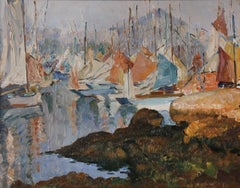
Early 20th Century Harbor Scene Seascape/Landscape Painting

Early 20th Century Harbor Scene Seascape/Landscape Painting

By Abel Warshawsky

Located in Beachwood, OH

Abel Warshawsky, American (1883-1962) Harbor Scene Oil on Canvas Signed lower right 13 x 16.25 canvas 17 x 20 inches framed Early 20th Century Harbor Scene Seascape/Landscape Pain...

Category

Early 20th Century American Impressionist Ohio - Art
Materials

Oil

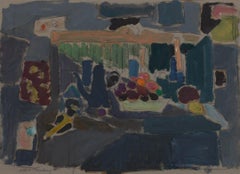
20th century abstract still life by Cleveland School artist

20th century abstract still life by Cleveland School artist

By Joseph O'Sickey

Located in Beachwood, OH

Work sold to benefit the CLEVELAND INSTITUTE OF ART Joseph B. O’Sickey (American, 1918–2013) Still Life Oil and graphite on paper Signed lower left 12.25 x 1...

Category

Late 20th Century Post-Impressionist Ohio - Art

Materials

Oil, Graphite

Abstract Landscape, large mid-century green painting, COBRA art movement

Abstract Landscape, large mid-century green painting, COBRA art movement

Located in Beachwood, OH

Erik Ortvad (Danish, 1917 - 2008) Abstract Landscape, 1946 Oil on canvas Signed and dated lower right 32 X 37.5 inches 35 x 40.5 inches, framed Born in 1917 in Copenhagen, Erik Ortvad was a surrealist painter and a founding member of the COBRA art...

Category

1940s Abstract Impressionist Ohio - Art
Materials

Oil

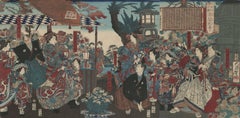
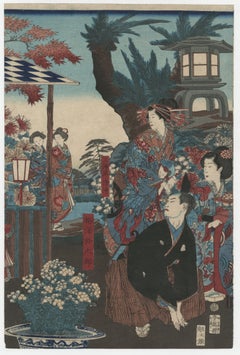
Yoshitoshi, Rare Triptych, Chrysanthemums, Court Festival, 1875

Yoshitoshi, Rare Triptych, Chrysanthemums, Court Festival, 1875

By Taiso Yoshitoshi

Located in Fairlawn, OH

Taiso Yoshitoshi (1839-1892) The Fifth of the Line — Lord Tsunayoshi (Jōken-in) Go-dai Jōken-indono Tsunayoshi-kō (五代常憲院殿綱吉公) From Annals of the Tokugawa Administration (Tokugawa chi...

Category

1870s Other Art Style Ohio - Art

Materials

Woodcut

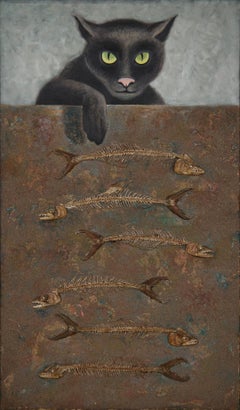
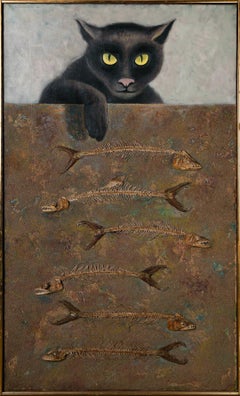
Over and Above: No. 6, Surreal Cat w/ Fish Bones, 20th Century Cleveland School

Over and Above: No. 6, Surreal Cat w/ Fish Bones, 20th Century Cleveland School

By Clarence Holbrook Carter

Located in Beachwood, OH

Clarence Holbrook Carter (American, 1904–2000) Over and Above: No. 6, 1963 Oil, sand & fish bones on canvas Signed and dated upper left 53 x 31 inches Clarence Holbrook Carter achie...

Category

1960s American Modern Ohio - Art

Materials

Oil

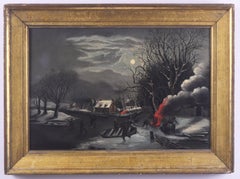
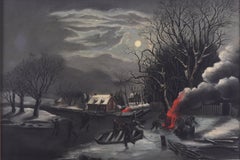
After Nathaniel Curroer, Winter Evening, 1854, period frame and canvas

After Nathaniel Curroer, Winter Evening, 1854, period frame and canvas

By Nathaniel Currier

Located in Fairlawn, OH

American, 19th Century Winter Evening Possibly the original painted model for Nathaniel Currier’s lithograph of 1854, Oil on canvas, c. 1854 Unsigned Provenance: Partial old Kennedy...

Category

1850s American Realist Ohio - Art
Materials

Oil

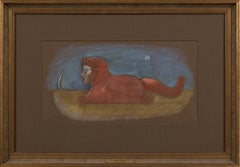
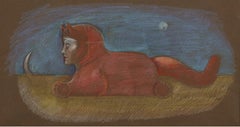
Sphinx and Moon (Self Portrait) 1980s Pastel, Cleveland School Artist

Sphinx and Moon (Self Portrait) 1980s Pastel, Cleveland School Artist

By Mary Spain

Located in Beachwood, OH

Mary Spain (American, 1934-1983) Sphinx and Moon (Self Portrait), c. 1980 Pastel on paper 9 x 16.5 inches 17. 5 x 25 inches, framed Set in a realm of fantasy, Mary Spain’s work ex...

Category

1980s Surrealist Ohio - Art
Materials

Pastel

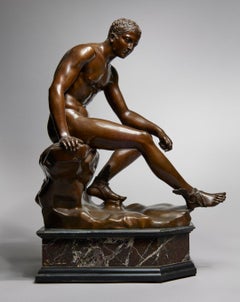
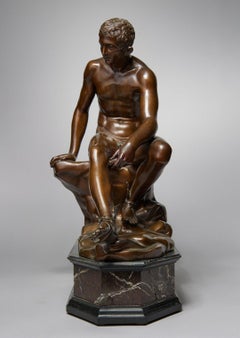
19th Century Bronze Figure of Crouching Venus or Naked Aphrodite

19th Century Bronze Figure of Crouching Venus or Naked Aphrodite

Located in Beachwood, OH

19th Century Bronze Figure of Crouching Venus or Naked Aphrodite Bronze with dark patination 22.5 x 13 x 11 inches The Crouching Venus is a Hellenisti...

Category

19th Century Ohio - Art
Materials

Bronze

Original Ronald Shap figure drawing, signed

Original Ronald Shap figure drawing, signed

By Ronald Shap

Located in Las Vegas, NV

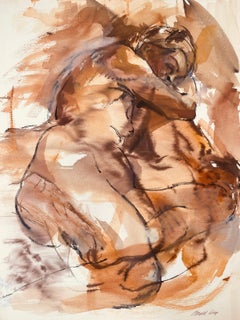
Original oil pastel, ink and gouache figure drawing by celebrated, twentieth-century California landscape painter, Ronald Shap. Sketch of nude woman reclining in a turban in washes o...

Category

1980s Contemporary Ohio - Art
Materials

Oil Pastel, Ink, Gouache

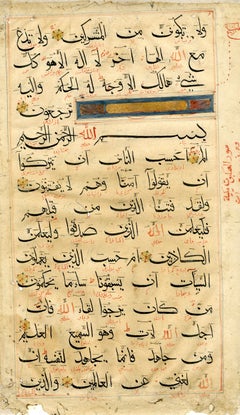
Spainish, Castille, Choir Book, c. 1575, Communion Acceptabis sacrificium

Spainish, Castille, Choir Book, c. 1575, Communion Acceptabis sacrificium

Located in Fairlawn, OH

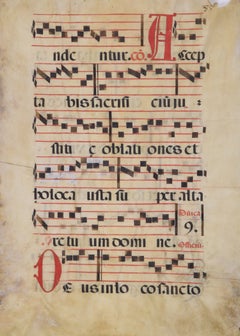
Spanish, probably Castile Leaf from a Dominican Gradual: Acceptabis sacrificium and Deus in loco sancto suo Late 16th century Ink and red pigment on parchment; square-note plainsong...

Category

16th Century Old Masters Ohio - Art
Materials

Ink

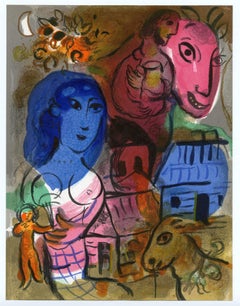
XXe Siecle-Hommage a Marc Chagall

XXe Siecle-Hommage a Marc Chagall

By Marc Chagall

Located in Fairlawn, OH

XXe Siecle-Hommage a Marc Chagall Color lithograph, 1969 Unsigned as issued by XXe Siecle From: XXe Siecle, Volume, Special Issue Marc Chagall Published by G. di San Lazzaro for A. M...

Category

1960s French School Ohio - Art
Materials

Lithograph

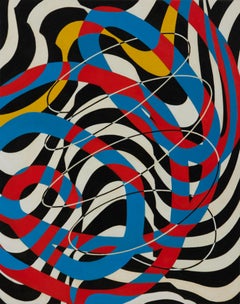
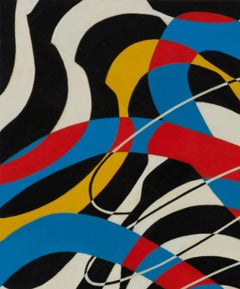
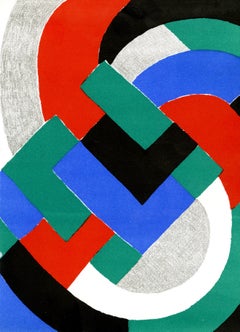
Abstract, Art Deco, Sonia Delaunay, XXe Siecle, 1969

Abstract, Art Deco, Sonia Delaunay, XXe Siecle, 1969

By Sonia Delaunay

Located in Fairlawn, OH

Sonia Delaunay (1885-1979) Composition Color lithograph, 1969 From: Panorama 69, XXe Siecle, June 1969 Published by San Lazzzaro Printer: Moulot ? Large edition, c. 1500 Unsigned (as...

Category

1960s Ohio - Art
Materials

Lithograph

Old Master, Dutch, etching, Jan Booth, excellent impression, very rare

Old Master, Dutch, etching, Jan Booth, excellent impression, very rare

By Jan Both

Located in Fairlawn, OH

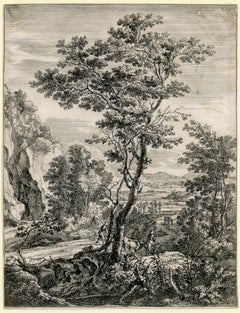
Jan Booth (Dutch, active 1636-1652) The Large Tree (Le Grand Arbre) Etching, 1640-early 1650's Signed in the plate upper right corner The Large Tree (Le Grand Arbre) From the series ...

Category

1640s Old Masters Ohio - Art
Materials

Etching

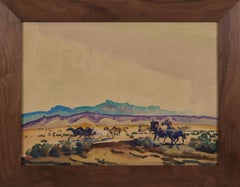
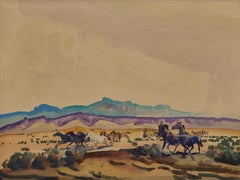
Wild Horses, Arizona, Early 20th Century Western Landscape, Cleveland School

Wild Horses, Arizona, Early 20th Century Western Landscape, Cleveland School

By Frank Wilcox

Located in Beachwood, OH

Frank Nelson Wilcox (American, 1887–1964) Wild Horses, Arizona, 1937 Watercolor on paper Signed and dated lower right, titled verso 15 x 20 inches 18 x 24 inches framed Frank Nelso...

Category

1930s American Modern Ohio - Art
Materials

Watercolor