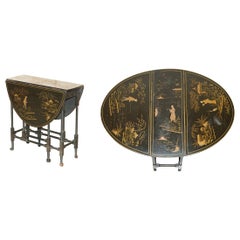
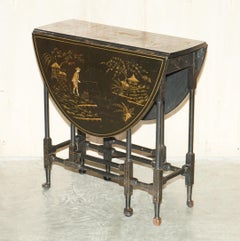
Like chinoiserie, which had emerged in Europe in the 17th century, antique Chinese Chippendale furniture was an appropriation of Asian design that often distilled it to stereotypes.
Thomas Chippendale published The Gentleman and Cabinet-Maker’s Director in 1754, and the widespread popularity of the book of furniture designs influenced a new style of furniture named for the English cabinetmaker. Artisans in England, the United States and Europe adapted the work illustrated in its pages. The publication of the pattern book included designs reflecting “Gothic, Chinese and Modern Taste,” with illustrations of “Chinese” chairs and cabinets featuring elaborate hand-carved latticework.
Pagoda-shaped flourishes and wood painted in the “japanned” finish that mimicked lacquer were common on these pieces, as were fretwork patterns on chair backs. The back of a chair is the easiest way to distinguish between Gothic, Rococo and Chinese Chippendale chairs, all of which typically feature broad seats and luxurious upholstery. Chippendale’s designs for “Chinese” chairs tend to favor more clean lines and less ornamentation than the other styles, with cutouts in the rails and the fretwork on the back evoking a European ideal of East Asian design.
Dark woods such as walnut and solid mahogany were commonly used, as were bamboo turnings. Cabinets for imported Chinese ceramics frequently were adorned with glazing bars, while small tea tables were detailed with angular fretwork. The style remained popular through the 18th century and into the decades that followed, even inspiring an entire room at Buckingham Palace.
Find antique Chinese Chippendale dining room chairs, side tables, case pieces and other furniture and decor on 1stDibs.
Antique and vintage drop-leaf and Pembroke tables are the perfect solution for those of us in the “space-conscious” category. These furnishings have long been a smart choice for homes, particularly if you’re working with an especially modest house or apartment.
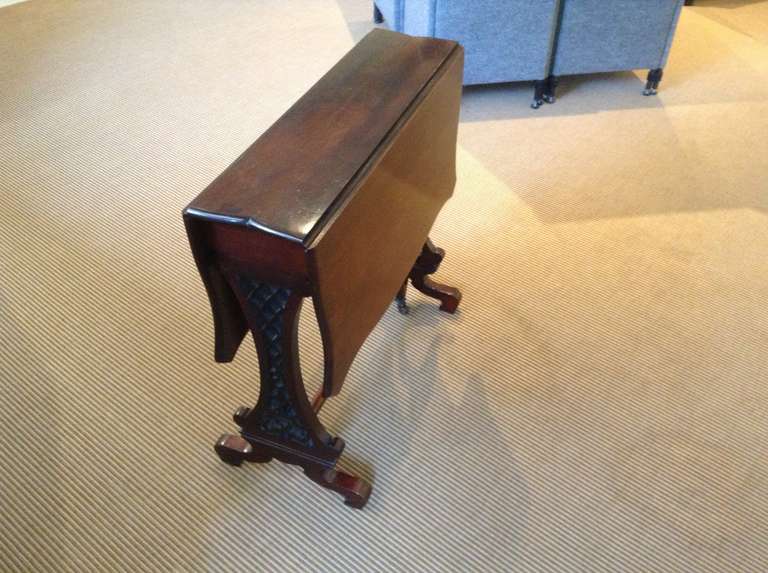
A drop-leaf table is a table with a fixed center section, but on either side of that, there are hinged leaves that can be raised or lowered according to your specific needs.
Should you need to accommodate more guests for a dinner party, a drop-leaf table’s side pieces can be raised and locked into place on their hinges, which will extend the overall surface area of the table. If you’re thinking of serving buffet-style or need a place for dinner plates and other tableware, fold one half of the table down and tuck it against the wall, console-table-style, to make more space for the guests congregating in your dining room. When your dinner companions are ready to retire to the living room for a digestif, both drop leaves can be collapsed if you need a makeshift bar cart or if you prefer to stow away the table after dinner.
The Pembroke version of these tables was a lightweight iteration that is believed to have been named for the ninth Earl of Pembroke or his wife, the countess. It is said that the countess had a drop-leaf table commissioned for their home, specifically for the purposes of serving and eating breakfast. This Georgian-era furniture had an oval or rectangular tabletop, was usually outfitted with a drawer and was frequently made of mahogany. It was a popular furnishing that was made through the Victorian and Edwardian periods.
With its convenient transformative qualities, a drop-leaf table can be put to use in every room of your home. A Pembroke nightstand would render having breakfast from the comfort of your bed easier than ever, while a casual living-room drop-leaf end table can quickly be extended in order to make room for movie-night snacks or a family game. The appeal of these tables doesn’t end at 18th-century nobility or chess enthusiasts, however.
Furniture designers of mid-century modern drop-leaf tables explored various forms and worked with a range of materials in crafting these furnishings and even integrated elements such as wheels for extra convenience. On 1stDibs, find a wide variety of vintage and antique drop-leaf and Pembroke tables that includes sleek and understated iterations crafted by Hans J. Wegner and alluring versions in teak or rosewood designed by Kurt Østervig.