Angelo Di Benedetto Art
American, 1913-1992
Angelo Di Benedetto Born New Jersey 1913
Died Central City, CO 1992
The son of Italian immigrants from the Salerno province in southern Italy, as a teenager Di Benedetto worked to study at the Cooper Union Art School in New York City (1930-34) from which he graduated with a certificate in freehand drawing. He won a scholarship to the Boston Museum Art School where he studied for three years, beginning in 1934. In 1937, he entered his first juried exhibition at the Montclair Museum in New Jersey, winning first prize and first honorable mention. In December 1938, the Royal Netherlands Steamship Line sent him on a two-month ethnological study trip to Haiti, his first exposure to a different environment outside the United States. In 1940, his Haitian paintings were exhibited at the Montross Gallery in New York – his first solo show.
Before World War II, Di Benedetto traveled extensively around the United States doing regional paintings. During the war in 1941, Di Benedetto volunteered for a secret mission based in Eritrea, Africa before the Allied invasion. Following Africa, he served as an orientation officer and aerial photographic officer in the District of Columbia. In 1945 he was assigned to a mapping unit at Buckley Airfield in Denver where he served until his discharge in 1946. Like many other servicemen stationed at the time in Colorado, Di Benedetto chose to remain in Colorado, impressed by the state’s physical grandeur and healthful climate. He settled in the old mining town of Central City in 1947.
In 1949 Di Benedetto and his wife, ceramist Lee Porzio, opened the Benpro Art School in his studio where he conducted summer art classes. In 1950, Di Benedetto teamed up with Frank Vavra to open the Denver Art Center. He and Vavra were founding members of the 15 Colorado Artists. Denver Art Center in downtown Denver only lasted about a year. Undeterred by its lack of success, Di Benedetto continued to give workshops, classes, and lectures in Denver and elsewhere. His efforts earned him an honorary doctorate from the University of Colorado in 1977.
For more than three decades he explored the circle in paint, sculpture, and shaped canvas. Because abstraction touched upon his deep feelings and spirituality, he felt he could make visible that part of life which “we feel but almost never see.” Di Benedetto died in Central City, Colorado in 1992.to
2
2
1
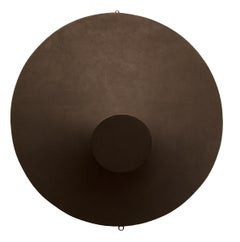
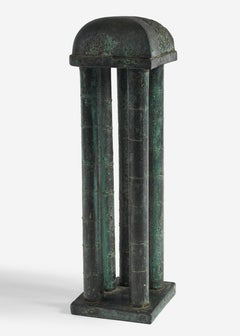
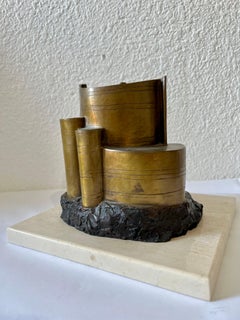
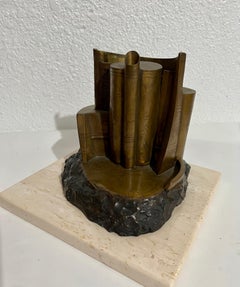
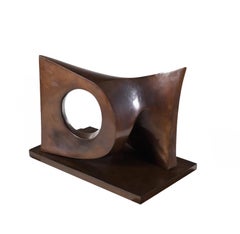
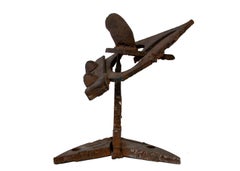
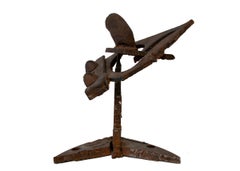
Angelo Di Benedetto Mid-Century Abstract Metal Sculpture, Signed, Brutalist Art
By Angelo Di Benedetto
Located in Denver, CO
This striking mid-century modern abstract sculpture is a rare, original work by acclaimed American artist Angelo Di Benedetto (1913–1992). Crafted in industrial metal, the piece mast...
Category
20th Century American Modern Angelo Di Benedetto Art
Materials
Metal
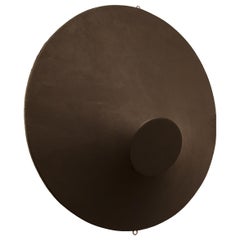
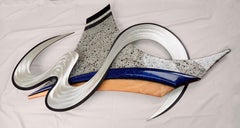
Angelo Di Benedetto 3D Abstract Painting – Shaped Canvas Mobile, c.1950
By Angelo Di Benedetto
Located in Denver, CO
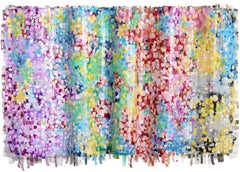
This rare and striking mid-century modern abstract painting was created circa 1950 by celebrated Denver modernist Angelo Di Benedetto (1913–1992). Painted on a shaped, three-dimensio...
Category
Mid-20th Century Abstract Angelo Di Benedetto Art
Materials
Canvas, Acrylic
Related Items
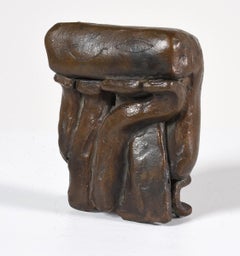
Eugene Caples "Bronze Sculpture I" Abstract Bronze Sculpture
By Eugene Caples
Located in Detroit, MI
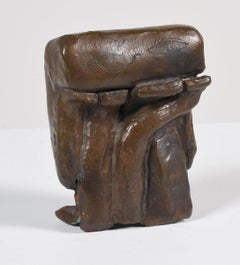
This small exquisite "Bronze Sculpture I" is in excellent condition and a perfect example of Eugene Caples craftsmanship. Although it is mainly abstract, there are bits that look figurative either an arm or a leg attempting to emerge from a fold or attempting to hold a pose such as in yoga. It cries out to be touched and held, looked at and caressed. The beautiful patina on the surface gives voice to the many hands that have done these things.
Eugene Caples is a designer and craftsman who worked in Kansas City in the 1960s and later through the early 21st century. He attended the Kansas City Art Institute, earning his Bachelors of Fine Arts in Industrial Design in 1959. In 1963 he was accepted to Cranbrook Academy of Art, Bloomfield Hills, Michigan. The Cranbrook Academy of Art was designed by architect and faculty member, Eliel Saarinen who collaborated with Charles and Ray Eames on chair and furniture design. Numerous creative artists are alumni of Cranbrook and include: Harry Bertoia, Florence Knoll, Jack Lenor Larsen, Donald Lipski, Duane Hanson, Nick Cave, Hani Rashid, George Nelson, Urban Jupena (Nationally recognized fiber artist), Artis Lane (the first African-American artist to have her sculpture, "Sojourner Truth," commissioned for the Emancipation Hall in the Capital Visitor Center in Washington DC), Cory Puhlman (televised Pastry Chef extraordinaire), Thom O’Connor (Lithographs), and Paul Evans (Created Brutalist-inspired sculpted metal furnishings.)
Gene worked...
Category
Late 20th Century American Modern Angelo Di Benedetto Art
Materials
Bronze
$1,950
H 6.5 in W 2.75 in
Large Brutalist Welded Steel Wall Sculpture by Dan Gluck - 1970s
Located in Dallas, TX
A commanding example of Brutalist artistry, this large-scale wall-mounted sculpture by Dan Gluck is composed of intricately welded steel elements arranged in a dynamic abstract compo...
Category
Mid-20th Century American Modern Angelo Di Benedetto Art
Materials
Steel
$4,800
H 39 in W 55 in D 6 in
Eugene Caples "Bronze Sculpture II" Abstract Bronze Sculpture
By Eugene Caples
Located in Detroit, MI
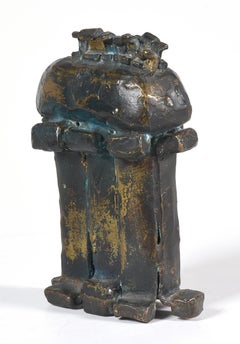
This small exquisite "Bronze Sculpture II" is in excellent condition and a perfect example of Eugene Caples craftsmanship. This is mainly abstract with some graphic or architectural elements and is so delightful that mythical creatures demand to be considered. It cries out to be touched and held, looked at and caressed. The beautiful patina on the surface gives voice to the many hands that have done these things.
Eugene Caples is a designer and craftsman who worked in Kansas City in the 1960s and later through the early 21st century. He attended the Kansas City Art Institute, earning his Bachelors of Fine Arts in Industrial Design in 1959. In 1963 he was accepted to Cranbrook Academy of Art, Bloomfield Hills, Michigan. The Cranbrook Academy of Art was designed by architect and faculty member, Eliel Saarinen who collaborated with Charles and Ray Eames on chair and furniture design. Numerous creative artists are alumni of Cranbrook and include: Harry Bertoia, Florence Knoll, Jack Lenor Larsen, Donald...
Category
Late 20th Century American Modern Angelo Di Benedetto Art
Materials
Bronze
$1,950
H 4.75 in W 4 in
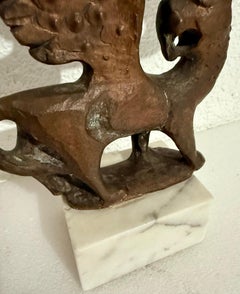
Ted Egri Taos Modernist Judaica Cubist Bronze Sculpture Rabbi & Torah WPA Artist
Located in Surfside, FL
Ted Egri (American, 1913-2010)
Bronze sculpture
Rabbi
Signed Egri and numbered 4/30 on side.
Dimensions: 12"L x 8.5"H x 6.75" D
Born in New York city in 1913 to a Hungarian Jewish emigre family (both of his parents were born in Hungary), Egri was first exposed to music later dropping that for art. He studied with Howard Giles at the Master Institute of the Roerich Museum in New York where he was introduced to Oriental arts, Chinese and Japanese art forms, and later with Hans Hofmann. He worked for the Federal Arts Project, the WPA, making mural paintings and silkscreen prints as well as easel painting. Once WWII began, Egri signed up to serve as a map maker for the Navy, and was witness to some of the fiercest battles in the Pacific. As an artist, he painted many important depictions of his wartime experiences and these works have all be donated to the U.S. Naval Museum.
Already a practicing painter and instructor at the Kansas City Art Institute, Ted Egri came to Taos, New Mexico with his wife Kit in 1950 to continue his study of painting at Ribak's Taos Valley Art School on the GI Bill. Louis Ribak quickly introduced Egri to Eulalia Emetaz, the owner of La Galleria Escondida, who gave him his first one-person show in 1951.
A prolific and versatile artist, as well as arts organizer and advocate, Egri's contributions to underserved African American, Native American, Hispanic and women were honored by two Taos mayors, with no less than two Ted Egri days during his 50-year art career in Taos. Egri remained in Taos. He became widely known for his sculpture, influenced by cubism and painting, with his style ranging from abstract to realistic. Egri had incredible draftsmanship - charcoal, pencil, pastel, watercolor, oils, mixed media, pen and ink, acrylic, gouache Over time his work gradually shifted from its focus on human struggle to an exploration of natural elements and the changes that come about as a result of living in a physical environment like Taos. "The impact of the majestic Sangre de Cristo Mountain Range and the vast spaces of the mesas directed me toward space and form. I moved into sculpture," Egri said in a 1987 interview with ARTSPACE magazine. He was included in a show at Stables Gallery along with Emil Bisttram, Louis Catusco, Edward Corbett, Lawrence Calcagno, Keith Crown, Andrew Dasburg, John De...
Category
Mid-20th Century American Modern Angelo Di Benedetto Art
Materials
Bronze
$3,600
H 12 in W 8.5 in D 6.75 in
"Reclining Figure" Louise Nevelson, Modernist, Human Form, Abstracted Body
By Louise Nevelson
Located in New York, NY
Louise Nevelson
Reclining Figure, circa 1943
Tattistone
8 inches high x 21 inches wide x 9 inches deep
With base 10 inches high x 21 3/4 inches wide x 9 1/2 inches deep
Provenance
T...
Category
1940s American Modern Angelo Di Benedetto Art
Materials
Cast Stone
$30,000
H 8 in W 21 in D 8 in
Bronze Abstract Space Age Book Sculpture LA California Modernist Charna Rickey
By Charna Rickey
Located in Surfside, FL
Charna Rickey 1923 - 2000 Mexican-American Jewish Woman artist.
Signed Bronze House of Books, Architecture Bronze sculpture, signed Charna Rickey and on the front "House of the book." It depicts an open Torah. Original patina.
Approx. dimensions: 7 in. H x 9 in. W x 8.5 in. D. Weight: 13.1 lbs.
Modernist Judaica Sculpture
Born Charna Barsky (Charna Ysabel or Isabel Rickey Barsky) in Chihuahua, Mexico, the future artist lived in Hermosillo and immigrated to Los Angeles when she was 11. She was educated at UCLA and Cal State L.A., she married furniture retailer David Rickey and explored art while raising their three daughters. Moving through phases in terra cotta, bronze, marble and aluminum, she found success later in life. Rickey became one of the original art teachers at Everywoman's Village, a pioneering learning center for women established by three housewives in Van Nuys in 1963. She also taught sculpture at the University of Judaism from 1965 to 1981.
As Rickey became more successful, her sculptures were exhibited in such venues as Artspace Gallery in Woodland Hills and the Courtyard of Century Plaza Towers as part of a 1989 Sculpture Walk produced by the Los Angeles Arts Council. Her sculptures have also found their way into the private collections of such celebrities as Sharon Stone.
Another of Rickey's international creations originally stood at Santa Monica College. In 1985, her 12-foot-high musical sculpture shaped like the Hebrew letter "shin" was moved to the Rubin Academy of Music and Dance at Hebrew University in Jerusalem. The free standing architectural Judaic aluminum work has strings that vibrate in the wind to produce sounds. Rickey also created art pieces for the city of Brea. They commissioned some amazing art pieces by Laddie John Dill, Walter Dusenbery...
Category
20th Century American Modern Angelo Di Benedetto Art
Materials
Marble, Bronze
$2,200
H 7 in W 9 in D 8.5 in
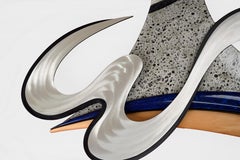
Granite Sail - Abstract Wall Sculpture in Wood, Resin, and Aluminum
Located in Soquel, CA
Granite Sail - Abstract Wall Sculpture in Wood, Resin, and Aluminum
Whimsical and fluid abstract composition by Craig French (American, b. 1959). Cast re...
Category
1990s American Modern Angelo Di Benedetto Art
Materials
Metal
$6,250
H 41 in W 65 in D 6 in
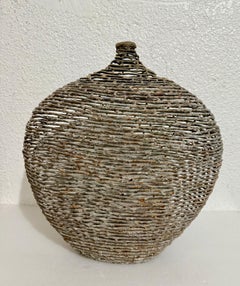
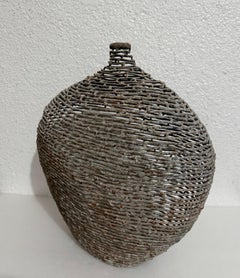
American Craft Studio Handmade Sculpture Welded Bronze Kinetic Vessel Op Art
Located in Surfside, FL
Great studio piece. It does not appear to be signed.
Welded bronze
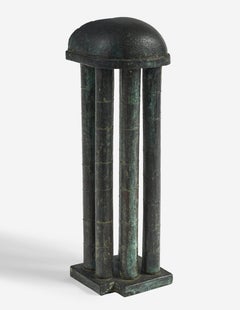
an openwork vessel or vase
Verdigris patina, might be suitable for outdoors
Dimensions: 18 X 16 X 9 inches
Provena...
Category
20th Century American Modern Angelo Di Benedetto Art
Materials
Bronze
$1,500
H 18 in W 16 in D 9 in
"Zofar" Boaz Vaadia, Human Body, Bronze and Stone, Anthropomorphic Sculpture
By Boaz Vaadia
Located in New York, NY
Boaz Vaadia
Zofar, 1997
Bronze, bluestone, and boulder
Overall 20 x 29 x 27 inches
From the edition of 7
Provenance
Elaine Baker Gallery, Boca Raton, Florida
Boaz Vaadia is the in...
Category
1990s American Modern Angelo Di Benedetto Art
Materials
Stone, Bluestone, Bronze
$40,000
H 20 in W 29 in D 27 in
Tantra 92: minimalist abstract spiritual mandala sculpture painting, red circle
By Antonio Puri
Located in Bryn Mawr, PA
Antonio Puri's "Tantra" sculptural painting is one of 100 intimately-scaled minimalist round mandala circles built from tiny seed beads adhered to canvas in a range of red hues, crea...
Category
2010s Abstract Angelo Di Benedetto Art
Materials
Canvas, Mixed Media, Acrylic
$2,400 Sale Price
20% Off
H 12 in W 12 in
"Abstract Figure with Face" Louise Nevelson, American Female, Anthropomorphic
By Louise Nevelson
Located in New York, NY
Louise Nevelson
Abstract Figure with Face, circa 1945
Incised "LN" on the reverse
Tattistone
6 inches high x 14 inches wide x 5 1/4 inches deep
Provenance
The artist
The artist's ni...
Category
1940s American Modern Angelo Di Benedetto Art
Materials
Cast Stone
$24,000
H 6 in W 14 in D 5.25 in
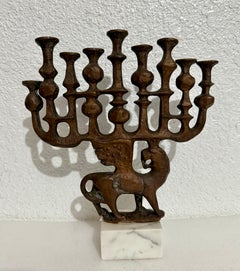
Milton Hebald Mid Century Bronze Menorah Sculpture WPA Artist Modernist Judaica
Located in Surfside, FL
Milton Hebald (American, 1917-2015)
Lion of Judah menorah
bronze on a white marble plinth base
signed in bronze
12" H x 10.5" W x 2.5" D
Milton Elting Hebald (1917 – 2015) was a s...
Category
1960s American Modern Angelo Di Benedetto Art
Materials
Marble, Bronze
$6,500
H 12 in W 10.5 in D 2.5 in
Previously Available Items
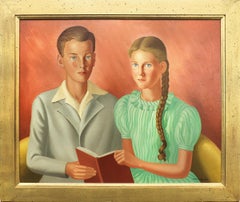
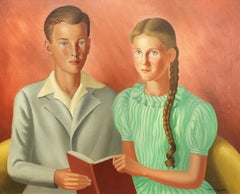
1940s Oil Painting Portrait of Two Figures, American Modernist Figurative
By Angelo Di Benedetto
Located in Denver, CO
Oil on canvas signed by artist Angelo Di Benedetto (1913-1992) featuring two young figures reading a book together while sitting from 1947. Painted in shades of green, orange, red, gray, and green. Image measures 28 x 38 inches, framed dimensions are 33 ¾ x 39 ¾ inches.
Painting is in good condition - please contact us for a detailed condition report.
About the Artist:
Born New Jersey 1913
Died Central City, CO 1992
The son of Italian immigrants from the Salerno province in southern Italy, as a teenager Di Benedetto worked to study at the Cooper Union Art School in New York City (1930-34) from which he graduated with a certificate in freehand drawing. He won a scholarship to the Boston Museum Art School where he studied for three years, beginning in 1934. In 1937, he entered his first juried exhibition at the Montclair Museum in New Jersey, winning first prize and first honorable mention. In December 1938, the Royal Netherlands Steamship Line sent him on a two-month ethnological study trip to Haiti, his first exposure to a different environment outside the United States. In 1940, his Haitian paintings were exhibited at the Montross Gallery in New York – his first solo show.
Before World War II, Di Benedetto traveled extensively around the United States doing regional paintings. During the war in 1941, Di Benedetto volunteered for a secret mission based in Eritrea, Africa before the Allied invasion. Following Africa, he served as an orientation officer and aerial photographic officer in the District of Columbia. In 1945 he was assigned to a mapping unit at Buckley Airfield in Denver where he served until his discharge in 1946. Like many other servicemen stationed at the time in Colorado, Di Benedetto chose to remain in Colorado, impressed by the state’s physical grandeur and healthful climate. He settled in the old mining town of Central City in 1947.
In 1949 Di Benedetto and his wife, ceramist Lee Porzio, opened the Benpro Art School in his studio where he conducted summer art classes. In 1950, Di Benedetto teamed up with Frank Vavra...
Category
1940s American Modern Angelo Di Benedetto Art
Materials
Canvas, Oil
H 33.75 in W 39.75 in D 3.25 in
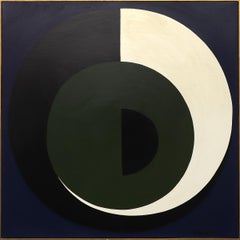
1960s Mid Century Modern Abstract Acrylic on Canvas Painting, Black Blue Green
By Angelo Di Benedetto
Located in Denver, CO
Original acrylic on canvas painting signed by artist Angelo Di Benedetto (1913-1992) from 1964. Painting features an abstract composition depicting a large circle encompassing smaller circles in blue, green, white, and black. Signed and dated by the artist in the lower right corner of the canvas. Image size measures 50 x 49 3⁄4 inches. Framed image size measures 50 3⁄4 x 50 1⁄2 x 1 1⁄4 inches.
About the Artist:
Born New Jersey 1913
Died Central City, CO 1992
The son of Italian immigrants from the Salerno province in southern Italy, as a teenager Di Benedetto worked to study at the Cooper Union Art School in New York City (1930-34) from which he graduated with a certificate in freehand drawing. He won a scholarship to the Boston Museum Art School where he studied for three years, beginning in 1934. In 1937, he entered his first juried exhibition at the Montclair Museum in New Jersey, winning first prize and first honorable mention. In December 1938, the Royal Netherlands Steamship Line sent him on a two-month ethnological study trip to Haiti, his first exposure to a different environment outside the United States. In 1940, his Haitian paintings were exhibited at the Montross Gallery in New York – his first solo show.
Before World War II, Di Benedetto traveled extensively around the United States doing regional paintings. During the war in 1941, Di Benedetto volunteered for a secret mission based in Eritrea, Africa before the Allied invasion. Following Africa, he served as an orientation officer and aerial photographic officer in the District of Columbia. In 1945 he was assigned to a mapping unit at Buckley Airfield in Denver where he served until his discharge in 1946. Like many other servicemen stationed at the time in Colorado, Di Benedetto chose to remain in Colorado, impressed by the state’s physical grandeur and healthful climate. He settled in the old mining town of Central City in 1947.
In 1949 Di Benedetto and his wife, ceramist Lee Porzio, opened the Benpro Art School in his studio where he conducted summer art classes. In 1950, Di Benedetto teamed up with Frank Vavra...
Category
1960s Abstract Angelo Di Benedetto Art
Materials
Canvas, Acrylic
H 50.75 in W 50.5 in D 1.25 in
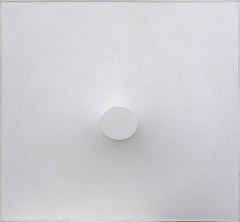
White on White #4, Large Shaped Canvas Acrylic Painting, 1965 Mid Century Modern
By Angelo Di Benedetto
Located in Denver, CO
"White on White #4" is an acrylic on shaped canvas painting by Angelo Di Benedetto (1913-1992) from December 31, 1965. Signed, titled, and dated by the artist on verso. Presented in a vintage artist made frame, outer dimensions measure 59 ⅛ x 59 ⅛ x 1 ¼ inches. Image size is 58 x 58 inches.
Provenance: Denver Art Museum - December, 1968
Gift of Mrs. John Bunker, Mrs. Samuel Gary, and Mrs. Caleb Seinberg
About the artist:
The son of Italian immigrants from the Salerno province in southern Italy, as a teenager Di Benedetto worked as a truck driver in the mornings and a bartender in the afternoons to study at the Cooper Union Art School in New York City (1930-34) from which he graduated with a certificate in freehand drawing. He won a scholarship to the Boston Museum Art School where he studied for three years, beginning in 1934, with Russian émigré painter, Alexandre Jacovleff, a member of Mir Isskustva (World of Art) in St. Petersburg before the Russian Revolution. In 1936 he painted a religious mural for St. Michael’s Grove in Paterson, New Jersey. The following year, he entered his first juried exhibition at the Montclair Museum in New Jersey, winning first prize and first honorable mention.
In December 1938, the Royal Netherlands Steamship Line sent him on a two-month ethnological study trip to Haiti, his first exposure to a different environment outside the United States. During what turned out to be an extended six-month stay, he studied and painted the life and religious customs of the island, resulting in a series of colorful, stylized paintings inspired by his immersion in the local culture. He also did scenes of Port-au-Prince and executed commissions received from prominent people in Haiti, including government officials. In 1940, his Haitian paintings were exhibited at the Montross Gallery in New York (his first solo show) and also reproduced in the January 1940 issue of Life Magazine. One of his Haitian paintings, Morning in Port-au-Prince, was owned by an American author, politician and U.S. ambassador, Clare Boothe Luce, while another image, Haiti Post Office, was acquired for the Encyclopedia Britannica Collection and later donated to Fisk University in Nashville, Tennessee.
Before World War II, Di Benedetto traveled extensively around the United States in his car and trailer doing regional paintings. In 1941, he did what is considered the first authentic version of George Washington Crossing the Delaware, a contrast to the well-known painting on the same subject (1851) by German-born painter, Emanuel Gottlieb Leutze. During the war, Di Benedetto volunteered for a secret mission to Africa in 1941 before the Allied invasion, serving as director of camouflage, foreman of native laborers, and an interpreter while based in Eritrea. The following year he received a direct commission as a Second Lieutenant in the U.S. Army Air Corps in the First Photo Mapping Squadron, leading groups as a guide and interpreter and doing ground control. During his free time in Africa, he sketched and painted the local population and his fellow servicemen.
Following Africa, he served as an orientation officer and aerial photographic officer for the 311th Photo Wing at Bolling Field, in the District of Columbia where he did a series of illustrated articles describing the natives in the different countries where the men of his organization were stationed during the war. In 1945 he was assigned to a mapping unit at Buckley Air Field in Denver where he served until his discharge in 1946. Like many other servicemen stationed at the time in Colorado, Di Benedetto chose to remain in Colorado, impressed by the state’s physical grandeur and healthful climate. After the war, he lived briefly for about a year in Rangely, a small town in northwest Colorado where he traveled and sketched. But finding it a little too remote, he settled in the old mining town of Central City in 1947, his home base for the rest of his life. He spent his first six years there transforming the old Sauder-McShane Mercantile warehouse into a giant art studio. His initial acquaintance with the town’s mining town history in 1947 resulted in a drawing, Death of a Miner, showing a male figure buried under a pile of collapsed rock in a mining tunnel.
In 1949 Di Benedetto and his wife, ceramist Lee Porzio, opened the Benpro Art School in his studio where he conducted summer art classes. The following year he teamed up with a Denver-based artist, Frank Vavra...
Category
1960s Abstract Angelo Di Benedetto Art
Materials
Canvas, Acrylic
H 59.25 in W 59.25 in D 1.25 in
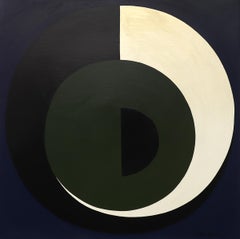
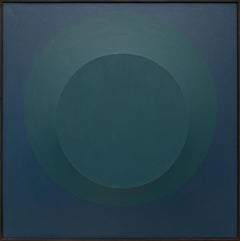
Blue On Blue #1 (Abstract Painting on Shaped 3 Dimensional Canvas, Circles)
By Angelo Di Benedetto
Located in Denver, CO
Blue On Blue #1, original vintage 1965 abstract painting by Denver artist, Angelo Di Benedetto (1913-1992). Acrylic paint in shades of blue on shaped 3 dimensional (3D) canvas with a circular form protruding from the center of square painting. Presented in a vintage/original frame, outer dimensions measure 26 ¾ x 26 ½ x 1 ¼ inches. Image size is 26 x 26 x 3 ¼ inches.
Exhibited: Whitney Museum of American Art, 1965 Annual Exhibition of Contemporary American Painting December 8, 1965 to January 30, 1966
The son of Italian immigrants from the Salerno province in southern Italy, as a teenager Di Benedetto worked as a truck driver in the mornings and a bartender in the afternoons to study at the Cooper Union Art School in New York City (1930-34) from which he graduated with a certificate in freehand drawing. He won a scholarship to the Boston Museum Art School where he studied for three years, beginning in 1934, with Russian émigré painter, Alexandre Jacovleff, a member of Mir Isskustva (World of Art) in St. Petersburg before the Russian Revolution. In 1936 he painted a religious mural for St. Michael’s Grove in Paterson, New Jersey. The following year, he entered his first juried exhibition at the Montclair Museum in New Jersey, winning first prize and first honorable mention.
In December 1938, the Royal Netherlands Steamship Line sent him on a two-month ethnological study trip to Haiti, his first exposure to a different environment outside the United States. During what turned out to be an extended six-month stay, he studied and painted the life and religious customs of the island, resulting in a series of colorful, stylized paintings inspired by his immersion in the local culture. He also did scenes of Port-au-Prince and executed commissions received from prominent people in Haiti, including government officials. In 1940, his Haitian paintings were exhibited at the Montross Gallery in New York (his first solo show) and also reproduced in the January 1940 issue of Life Magazine. One of his Haitian paintings, Morning in Port-au-Prince, was owned by an American author, politician and U.S. ambassador, Clare Boothe Luce, while another image, Haiti Post Office, was acquired for the Encyclopedia Britannica Collection and later donated to Fisk University in Nashville, Tennessee.
Before World War II, Di Benedetto traveled extensively around the United States in his car and trailer doing regional paintings. In 1941, he did what is considered the first authentic version of George Washington Crossing the Delaware, a contrast to the well-known painting on the same subject (1851) by German-born painter, Emanuel Gottlieb Leutze. During the war, Di Benedetto volunteered for a secret mission to Africa in 1941 before the Allied invasion, serving as director of camouflage, foreman of native laborers, and an interpreter while based in Eritrea. The following year he received a direct commission as a Second Lieutenant in the U.S. Army Air Corps in the First Photo Mapping Squadron, leading groups as a guide and interpreter and doing ground control. During his free time in Africa, he sketched and painted the local population and his fellow servicemen.
Following Africa, he served as an orientation officer and aerial photographic officer for the 311th Photo Wing at Bolling Field, in the District of Columbia where he did a series of illustrated articles describing the natives in the different countries where the men of his organization were stationed during the war. In 1945 he was assigned to a mapping unit at Buckley Air Field in Denver where he served until his discharge in 1946. Like many other servicemen stationed at the time in Colorado, Di Benedetto chose to remain in Colorado, impressed by the state’s physical grandeur and healthful climate. After the war, he lived briefly for about a year in Rangely, a small town in northwest Colorado where he traveled and sketched. But finding it a little too remote, he settled in the old mining town of Central City in 1947, his home base for the rest of his life. He spent his first six years there transforming the old Sauder-McShane Mercantile warehouse into a giant art studio. His initial acquaintance with the town’s mining town history in 1947 resulted in a drawing, Death of a Miner, showing a male figure buried under a pile of collapsed rock in a mining tunnel.
In 1949 Di Benedetto and his wife, ceramist Lee Porzio, opened the Benpro Art School in his studio where he conducted summer art classes. The following year he teamed up with a Denver-based artist, Frank Vavra, to open the Denver Art Center at 924 Broadway. He and Vavra were founding members of the 15 Colorado Artists who seceded in 1948 from the Denver Artists Guild because they were dissatisfied with the older organization’s underlying conservatism and the disdain of some of its members for modern art. Welcoming anyone wanting to learn how to draw or paint, the Denver Art Center in downtown Denver only lasted about a year.
Undeterred by its lack of success, Di Benedetto continued throughout his career to give workshops, classes, and lectures on art-related topics in Denver and elsewhere. Examples of topics ranged from subjects such as “African Art,” Chappell House, Denver (1945) and “University or Artistic Thought” sponsored by the Art for World Friendship Committee (1954). He also taught locally at the Jewish Community Center, Steele Community Center, International House, Southern Colorado State College-Pueblo, and lectured at the University of Denver. Beginning in 1969 he sponsored over one hundred youths at his studio in Central City to spend a summer learning about art. He also conducted classes for serious working artists. His efforts earned him an honorary doctorate from the University of Colorado in 1977.
He likewise promoted contemporary Colorado artists’ work in the 1950s, heading a committee that presented one-person exhibitions in a small gallery at the Vogue Art Cinema on South Pearl Street in Denver. His interest in promoting the arts led to his participation in numerous organizations. In the 1960s he became concerned with environmental and urban art and was the president of Art for the Cities, a Denver-based nonprofit organization. He also was the chairman of and a participant in the first annual environmental art exhibit held at Denver’s American Medical Center. In 1968 Colorado Governor John Love appointed him to the Colorado Council on the Arts and Humanities in which he remained active until 1975. He served for two consecutive years as program coordinator for the Governor’s Conference on the Arts and Humanities. At the 1969 conference, Governor Love presented him an award for his contribution to the art and artists of Colorado.
At the same time, he actively participated in the civic life of Central City. The town’s Police Magistrate (1955-56), he twice campaigned for mayor, first in 1966 and again in 1973, and ran for commissioner in 1979. He socialized with artists Ben Shahn, Herbert Bayer and Mark Rothko, as well as theatrical stars appearing at the Central City Opera House, including Helen Hayes, Mae West, and Gypsy Rose Lee. He invited them to carve their autographs on his kitchen table.
Di Benedetto worked with equal facility in a variety of media: acrylic, oil paint, watercolor, charcoal, Conte crayon, graphic arts and metal (copper, iron). Up until the early 1950s, his output was dominated by representational figure work and expressionist Colorado landscapes that were not always immune from controversy. When Life Magazine included a reproduction of his Regionalist painting, Lovers in the Cornfield (1941) in its article, “Ten Years of American Art: Life Reviews the Record of a Lively, Important Decade” (November 26, 1946, issue), three counties in Massachusetts banned the publication. Just as immediately, the painting was exhibited in Denver. He said that he liked the West because the people, despite their lack of exposure to art, were individualistic and almost “anarchistic.”
In the early 1950s he did woodcuts in a modernist style, including Remembrance, showing his two young daughters. Influenced by Abstract Expressionism at that time, he began considering the elimination of the image from his work. By the end of the decade, he had decided that “the circle – pure and simple was one of the most familiar symbols of mankind and that it metaphored into everything.” At the same time, he noted that “99% of the abstract painters shied away from using…[the circle]. When they didn’t, they slaughtered it, murdered it and buried it. So it became my motif.”
For more than three decades he explored the circle in paint, sculpture and shaped canvas. Two examples of the last-named medium are his Red CQ and Black C-1, both from 1969. Because abstraction touched upon his deep feelings and spirituality, he felt he could make visible that part of life which “we feel but almost never see.” His fascination with the circle also relates to his belief that to affect the dialogue existing between object and maker, the artist must “create archetypal shapes [that have universal appeal], not symbols…to reflect simply the intrinsic beauty of the shape itself.”
A strong advocate for public art, Di Benedetto headed Art for the Cities, Inc., which sponsored nine sculptures for Burns Park as part of the Denver Sculpture Symposium held in the Mile High City in 1968. The catalysts for the idea of the sculptures were Beverly and Bernie Rosen, who had been instrumental in the creation of the contemporary department at the Denver Art Museum. Along with Di Benedetto, the other participating sculptors were Dean Fleming, Peter Forakis, Roger Kotoske, Tony Magar, Robert Mangold, Robert Morris, Richard Van Buren and Bill Verhelst. The park project eventually served as a prototype for twenty-two states, bringing the sculpture to urban spaces. The sculptures reflected Di Benedetto’s concept of “burden-less environmental art” with no hidden meaning for the public to decipher. His goal in public art was to “create a work which, when integrated with the site, will create a tranquil oasis, a counterbalance to the modern chaotic world we experience daily.”
During the 1960s and 1970s, he received other major sculpture commissions: an 80-foot-long copper wall, Jewish Community Center, Denver (1962); sculpture garden, General Rose Hospital, Denver (1964); Fountain, First National Bank of Dallas (1966); Colorado Fuel & Iron Company, Pueblo, Colorado (1969); neighborhood park sculpture, Yonkers, New York (1971); High School Park, Northglenn, Colorado (1974); ice skating rink sculpture, Pueblo (1976).
Fate was not as kind to his mural which the Colorado Supreme Court justices commissioned him to paint in 1976 for the Colorado Judicial Building from a field of twenty-two candidates. With his former student, Phyllis Montrose as his principal assistant along with three others, he spent a year and a half executing the mural. Entitled Justice Through the Ages (aka Lawgivers), it depicted sixty individuals from ancient Babylon...
Category
1960s Abstract Angelo Di Benedetto Art
Materials
Acrylic, Canvas
Angelo Di BenedettoBlue On Blue #1 (Abstract Painting on Shaped 3 Dimensional Canvas, Circles), 1965
H 26.75 in W 26.5 in D 1.25 in
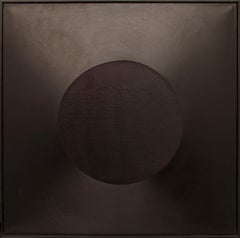
Black #1, 1965 Mid Century Modern Painting Shaped 3 Dimensional Canvas
By Angelo Di Benedetto
Located in Denver, CO
1965 abstract painting with a 3-dimensional shaped canvas a circular form protruding in the center on a square shaped canvas by Angelo Di Benedetto. Painted in black oil based acrylic. Frame measures 24 ¾ x 24 ¾ x 1 ¼ inches; canvas size is 24 x 24 x 3 ¼ inches.
Painting is in good vintage condition - please contact us for a detailed condition report.
About the Artist:
The son of Italian immigrants from the Salerno province in southern Italy, as a teenager Angelo Di Benedetto worked as a truck driver in the mornings and a bartender in the afternoons to study at the Cooper Union Art School in New York City (1930-34) from which he graduated with a certificate in freehand drawing. He won a scholarship to the Boston Museum Art School where he studied for three years, beginning in 1934, with Russian émigré painter, Alexandre Jacovleff, a member of Mir Isskustva (World of Art) in St. Petersburg before the Russian Revolution. In 1936 he painted a religious mural for St. Michael's Grove in Paterson, New Jersey. The following year he entered his first juried exhibition at the Montclair Museum in New Jersey, winning first prize and first honorable mention.
In December 1938 the Royal Netherlands Steamship Line sent him on a two-month ethnological study trip to Haiti, his first exposure to a different environment outside the United States. During what turned out to be an extended six-month stay, he studied and painted the life and religious customs of the island, resulting in a series of colorful, stylized paintings inspired by his immersion in the local culture. He also did scenes of Port-au-Prince and executed commissions received from prominent people in Haiti, including government officials. In 1940 his Haitian paintings were exhibited at the Montross Gallery in New York (his first solo show) and also reproduced in the January 1940 issue of Life Magazine. One of his Haitian paintings, Morning in Port-au-Prince, was owned by an American author, politician and U.S. ambassador, Clare Boothe Luce, while another image, Haiti Post Office, was acquired for the Encyclopedia Britannica Collection and later donated to Fisk University in Nashville, Tennessee.
Before World War II Di Benedetto traveled extensively around the United States in his car and trailer doing regional paintings. In 1941 he did what is considered the first authentic version of George Washington Crossing the Delaware, a contrast to the well-known painting on the same subject (1851) by German-born painter, Emanuel Gottlieb Leutze. During the war Di Benedetto volunteered for a secret mission to Africa in 1941 before the Allied invasion, serving as director of camouflage, foreman of native laborers and an interpreter while based in Eritrea. The following year he received a direct commission as a Second Lieutenant in the U.S. Army Air Corps in the First Photo Mapping Squadron, leading groups as a guide and interpreter and doing ground control. During his free time in Africa, he sketched and painted the local population and his fellow servicemen.
Following Africa, he served as an orientation officer and aerial photographic officer for the 311th Photo Wing at Bolling Field, in the District of Columbia where he did a series of illustrated articles describing the natives in the different countries where the men of his organization were stationed during the war. In 1945 he was assigned to a mapping unit at Buckley Air Field in Denver where he served until his discharge in 1946.
Like many other servicemen stationed at the time in Colorado, Di Benedetto chose to remain in Colorado impressed by the state's physical grandeur and healthful climate. After the war, he lived briefly for about a year in Rangely, a small town in northwest Colorado where he traveled and sketched. But finding it a little too remote, he settled in the old mining town of Central City in 1947, his home base for the rest of his life. He spent his first six years there transforming the old Sauder-McShane Mercantile warehouse into a giant art studio. His initial acquaintance with the town's mining town history in 1947 resulted in a drawing, Death of a Miner, showing a male figure buried under a pile of collapsed rock in a mining tunnel.
In 1949 Di Benedetto and his wife, ceramist Lee Porzio, opened the Benpro Art School in his studio where he conducted summer art classes. The following year he teamed up with a Denver-based artist, Frank Vavra, to open the Denver Art Center at 924 Broadway. He and Vavra were founding members of the 15 Colorado Artists who seceded in 1948 from the Denver Artists Guild because they were dissatisfied with the older organization's underlying conservatism and the disdain of some of its members for modern art. Welcoming anyone wanting to learn how to draw or paint, the Denver Art Center in downtown Denver only lasted about a year.
Undeterred by its lack of success, Di Benedetto continued throughout his career to give workshops, classes, and lectures on art-related topics in Denver and elsewhere. Examples of topics ranged from subjects such as "African Art," Chappell House, Denver (1945) and "University or Artistic Thought" sponsored by the Art for World Friendship Committee (1954). He also taught locally at the Jewish Community Center, Steele Community Center, International House, Southern Colorado State College-Pueblo, and lectured at the University of Denver. Beginning in 1969 he sponsored over one hundred youths at his studio in Central City to spend a summer learning about art. He also conducted classes for serious working artists. His efforts earned him an honorary doctorate from the University of Colorado in 1977.
He likewise promoted contemporary Colorado artists' work in the 1950s, heading a committee that presented one-person exhibitions in a small gallery at the Vogue Art Cinema on South Pearl Street in Denver. His interest in promoting the arts led to his participation in numerous organizations. In the 1960s he became concerned with environmental and urban art and was the president of Art for the Cities, a Denver-based nonprofit organization. He also was the chairman of and a participant in the first annual environmental art exhibit held at Denver's American Medical Center. In 1968 Colorado Governor John Love appointed him to the Colorado Council on the Arts and Humanities in which he remained active until 1975. He served for two consecutive years as program coordinator for the Governor's Conference on the Arts and Humanities. At the 1969 conference, Governor Love presented him an award for his contribution to the art and artists of Colorado.
At the same time, he actively participated in the civic life of Central City. The town's Police Magistrate (1955-56), he twice campaigned for mayor, first in 1966 and again in 1973, and ran for commissioner in 1979. He socialized with artists Ben Shahn, Herbert Bayer and Mark Rothko, as well as theatrical stars appearing at the Central City Opera House, including Helen Hayes, Mae West, and Gypsy Rose Lee. He invited them to carve their autographs on his kitchen table.
Di Benedetto worked with equal facility in a variety of media: acrylic, oil paint, watercolor, charcoal, Conte crayon, graphic arts and metal (copper, iron). Up until the early 1950s, his output was dominated by representational figure work and expressionist Colorado landscapes that were not always immune from controversy. When Life Magazine included a reproduction of his Regionalist painting, Lovers in the Cornfield (1941) in its article, "Ten Years of American Art: Life Reviews the Record of a Lively, Important Decade" (November 26, 1946, issue), three counties in Massachusetts banned the publication. Just as immediately, the painting was exhibited in Denver. He said that he liked the West because of the people, despite their lack of exposure to art, were individualistic and almost "anarchistic."
In the early 1950s he did woodcuts in a modernist style, including Remembrance, showing his two young daughters. Influenced by Abstract Expressionism at that time, he began considering the elimination of the image from his work. By the end of the decade, he had decided that "the circle – pure and simple was one of the most familiar symbols of mankind and that it metaphored into everything." At the same time, he noted that "99% of the abstract painters shied away from using...[the circle]. When they didn't, they slaughtered it, murdered it and buried it. So it became my motif."
For more than three decades he explored the circle in paint, sculpture and shaped canvas. Two examples of the last-named medium are his Red CQ and Black C-1, both from 1969. Because abstraction touched upon his deep feelings and spirituality, he felt he could make visible that part of life which "we feel but almost never see." His fascination with the circle also relates to his belief that to effect the dialogue existing between object and maker; the artist must "create archetypal shapes [that have universal appeal], not symbols... to reflect simply the intrinsic beauty of the shape itself."
A strong advocate for public art, Di Benedetto headed Art for the Cities, Inc., which sponsored nine sculptures for Burns Park as part of the Denver Sculpture Symposium held in the Mile High City in 1968. The catalysts for the idea of the sculptures were Beverly and Bernie Rosen, who had been instrumental in the creation of the contemporary department at the Denver Art Museum. Along with Di Benedetto, the other participating sculptors were Dean Fleming, Peter Forakis, Roger Kotoske, Tony Magar, Robert Mangold, Robert Morris, Richard Van Buren and Bill Verhelst. The park project eventually served as a prototype for twenty-two states, bringing the sculpture to urban spaces. The sculptures reflected Di Benedetto's concept of "burden-less environmental art" with no hidden meaning for the public to decipher. His goal in public art was to "create a work which, when integrated with the site, will create a tranquil oasis, a counterbalance to the modern chaotic world we experience daily."
During the 1960s and 1970s, he received other major sculpture commissions: an 80-foot-long copper wall, Jewish Community Center, Denver (1962); sculpture garden, General Rose Hospital, Denver (1964); Fountain, First National Bank of Dallas (1966); Colorado Fuel & Iron Company, Pueblo, Colorado (1969); neighborhood park sculpture, Yonkers, New York (1971); High School Park, Northglenn, Colorado (1974); ice skating rink sculpture, Pueblo (1976).
Fate was not as kind to his mural which the Colorado Supreme Court justices commissioned him to paint in 1976 for the Colorado Judicial Building from a field of twenty-two candidates. With his former student, Phyllis Montrose as his principal assistant along with three others, he spent a year and a half executing the mural. Entitled Justice Through the Ages (aka Lawgivers), it depicted sixty individuals from ancient Babylon...
Category
1960s Abstract Angelo Di Benedetto Art
Materials
Acrylic, Canvas
H 24.75 in W 24.75 in D 3.25 in
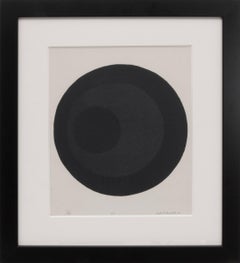
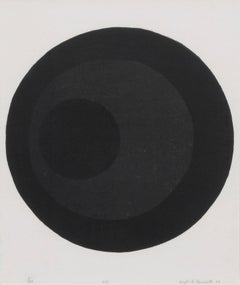
Black C-1
By Angelo Di Benedetto
Located in Denver, CO
Lithograph (1 of 24). Housed in a custom frame, outer dimensions measure 21 ¾ x 19 ½ x 1 ¼ inches. Image size is 13 ¾ x 11 ½ inches.
The son of Italian immigrants from the Salerno province in southern Italy, as a teenager Angelo Di Benedetto worked as a truck driver in the mornings and a bartender in the afternoons to study at the Cooper Union Art School in New York City (1930-34) from which he graduated with a certificate in freehand drawing. He won a scholarship to the Boston Museum Art School where he studied for three years, beginning in 1934, with Russian émigré painter, Alexandre Jacovleff, a member of Mir Isskustva (World of Art) in St. Petersburg before the Russian Revolution. In 1936 he painted a religious mural for St. Michael's Grove in Paterson, New Jersey. The following year he entered his first juried exhibition at the Montclair Museum in New Jersey, winning first prize and first honorable mention.
In December 1938 the Royal Netherlands Steamship Line sent him on a two-month ethnological study trip to Haiti, his first exposure to a different environment outside the United States. During what turned out to be an extended six-month stay, he studied and painted the life and religious customs of the island, resulting in a series of colorful, stylized paintings inspired by his immersion in the local culture. He also did scenes of Port-au-Prince and executed commissions received from prominent people in Haiti, including government officials. In 1940 his Haitian paintings were exhibited at the Montross Gallery in New York (his first solo show) and also reproduced in the January 1940 issue of Life Magazine. One of his Haitian paintings, Morning in Port-au-Prince, was owned by an American author, politician and U.S. ambassador, Clare Boothe Luce, while another image, Haiti Post Office, was acquired for the Encyclopedia Britannica Collection and later donated to Fisk University in Nashville, Tennessee.
Before World War II Di Benedetto traveled extensively around the United States in his car and trailer doing regional paintings. In 1941 he did what is considered the first authentic version of George Washington Crossing the Delaware, a contrast to the well-known painting on the same subject (1851) by German-born painter, Emanuel Gottlieb Leutze. During the war Di Benedetto volunteered for a secret mission to Africa in 1941 before the Allied invasion, serving as director of camouflage, foreman of native laborers and an interpreter while based in Eritrea. The following year he received a direct commission as a Second Lieutenant in the U.S. Army Air Corps in the First Photo Mapping Squadron, leading groups as a guide and interpreter and doing ground control. During his free time in Africa, he sketched and painted the local population and his fellow servicemen.
Following Africa, he served as an orientation officer and aerial photographic officer for the 311th Photo Wing at Bolling Field, in the District of Columbia where he did a series of illustrated articles describing the natives in the different countries where the men of his organization were stationed during the war. In 1945 he was assigned to a mapping unit at Buckley Air Field in Denver where he served until his discharge in 1946.
Like many other servicemen stationed at the time in Colorado, Di Benedetto chose to remain in Colorado impressed by the state's physical grandeur and healthful climate. After the war, he lived briefly for about a year in Rangely, a small town in northwest Colorado where he traveled and sketched. But finding it a little too remote, he settled in the old mining town of Central City in 1947, his home base for the rest of his life. He spent his first six years there transforming the old Sauder-McShane Mercantile warehouse into a giant art studio. His initial acquaintance with the town's mining town history in 1947 resulted in a drawing, Death of a Miner, showing a male figure buried under a pile of collapsed rock in a mining tunnel.
In 1949 Di Benedetto and his wife, ceramist Lee Porzio, opened the Benpro Art School in his studio where he conducted summer art classes. The following year he teamed up with a Denver-based artist, Frank Vavra, to open the Denver Art Center at 924 Broadway. He and Vavra were founding members of the 15 Colorado Artists who seceded in 1948 from the Denver Artists Guild because they were dissatisfied with the older organization's underlying conservatism and the disdain of some of its members for modern art. Welcoming anyone wanting to learn how to draw or paint, the Denver Art Center in downtown Denver only lasted about a year.
Undeterred by its lack of success, Di Benedetto continued throughout his career to give workshops, classes, and lectures on art-related topics in Denver and elsewhere. Examples of topics ranged from subjects such as "African Art," Chappell House, Denver (1945) and "University or Artistic Thought" sponsored by the Art for World Friendship Committee (1954). He also taught locally at the Jewish Community Center, Steele Community Center, International House, Southern Colorado State College-Pueblo, and lectured at the University of Denver. Beginning in 1969 he sponsored over one hundred youths at his studio in Central City to spend a summer learning about art. He also conducted classes for serious working artists. His efforts earned him an honorary doctorate from the University of Colorado in 1977.
He likewise promoted contemporary Colorado artists' work in the 1950s, heading a committee that presented one-person exhibitions in a small gallery at the Vogue Art Cinema on South Pearl Street in Denver. His interest in promoting the arts led to his participation in numerous organizations. In the 1960s he became concerned with environmental and urban art and was the president of Art for the Cities, a Denver-based nonprofit organization. He also was the chairman of and a participant in the first annual environmental art exhibit held at Denver's American Medical Center. In 1968 Colorado Governor John Love appointed him to the Colorado Council on the Arts and Humanities in which he remained active until 1975. He served for two consecutive years as program coordinator for the Governor's Conference on the Arts and Humanities. At the 1969 conference, Governor Love presented him an award for his contribution to the art and artists of Colorado.
At the same time, he actively participated in the civic life of Central City. The town's Police Magistrate (1955-56), he twice campaigned for mayor, first in 1966 and again in 1973, and ran for commissioner in 1979. He socialized with artists Ben Shahn, Herbert Bayer and Mark Rothko, as well as theatrical stars appearing at the Central City Opera House, including Helen Hayes, Mae West, and Gypsy Rose Lee. He invited them to carve their autographs on his kitchen table.
Di Benedetto worked with equal facility in a variety of media: acrylic, oil paint, watercolor, charcoal, Conte crayon, graphic arts and metal (copper, iron). Up until the early 1950s, his output was dominated by representational figure work and expressionist Colorado landscapes that were not always immune from controversy. When Life Magazine included a reproduction of his Regionalist painting, Lovers in the Cornfield (1941) in its article, "Ten Years of American Art: Life Reviews the Record of a Lively, Important Decade" (November 26, 1946, issue), three counties in Massachusetts banned the publication. Just as immediately, the painting was exhibited in Denver. He said that he liked the West because of the people, despite their lack of exposure to art, were individualistic and almost "anarchistic."
In the early 1950s he did woodcuts in a modernist style, including Remembrance, showing his two young daughters. Influenced by Abstract Expressionism at that time, he began considering the elimination of the image from his work. By the end of the decade, he had decided that "the circle – pure and simple was one of the most familiar symbols of mankind and that it metaphored into everything." At the same time, he noted that "99% of the abstract painters shied away from using…[the circle]. When they didn't, they slaughtered it, murdered it and buried it. So it became my motif."
For more than three decades he explored the circle in paint, sculpture and shaped canvas. Two examples of the last-named medium are his Red CQ and Black C-1, both from 1969. Because abstraction touched upon his deep feelings and spirituality, he felt he could make visible that part of life which "we feel but almost never see." His fascination with the circle also relates to his belief that to effect the dialogue existing between object and maker; the artist must "create archetypal shapes [that have universal appeal], not symbols…to reflect simply the intrinsic beauty of the shape itself."
A strong advocate for public art, Di Benedetto headed Art for the Cities, Inc., which sponsored nine sculptures for Burns Park as part of the Denver Sculpture Symposium held in the Mile High City in 1968. The catalysts for the idea of the sculptures were Beverly and Bernie Rosen, who had been instrumental in the creation of the contemporary department at the Denver Art Museum. Along with Di Benedetto, the other participating sculptors were Dean Fleming, Peter Forakis, Roger Kotoske, Tony Magar, Robert Mangold, Robert Morris, Richard Van Buren and Bill Verhelst. The park project eventually served as a prototype for twenty-two states, bringing the sculpture to urban spaces. The sculptures reflected Di Benedetto's concept of "burden-less environmental art" with no hidden meaning for the public to decipher. His goal in public art was to "create a work which, when integrated with the site, will create a tranquil oasis, a counterbalance to the modern chaotic world we experience daily."
During the 1960s and 1970s, he received other major sculpture commissions: an 80-foot-long copper wall, Jewish Community Center, Denver (1962); sculpture garden, General Rose Hospital, Denver (1964); Fountain, First National Bank of Dallas (1966); Colorado Fuel & Iron Company, Pueblo, Colorado (1969); neighborhood park sculpture, Yonkers, New York (1971); High School Park, Northglenn, Colorado (1974); ice skating rink sculpture, Pueblo (1976).
Fate was not as kind to his mural which the Colorado Supreme Court justices commissioned him to paint in 1976 for the Colorado Judicial Building from a field of twenty-two candidates. With his former student, Phyllis Montrose as his principal assistant along with three others, he spent a year and a half executing the mural. Entitled Justice Through the Ages (aka Lawgivers), it depicted sixty individuals from ancient Babylon...
Category
20th Century Angelo Di Benedetto Art
Materials
Lithograph
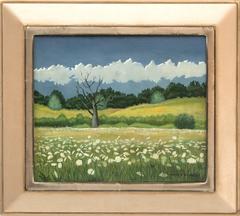
Untitled (Colorado)
By Angelo Di Benedetto
Located in Denver, CO
Housed in a custom hand-carved white gold frame; outer dimensions measure 16.25 x 18 x 1 inches. Image measures 11.25 x 13 inches.
Expedited and International Shipping is availab...
Category
20th Century American Modern Angelo Di Benedetto Art
Materials
Oil
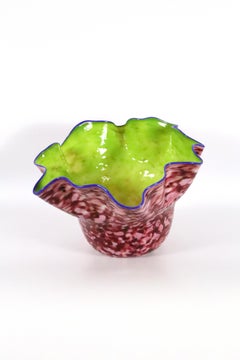
Angelo Di Benedetto art for sale on 1stDibs.
Find a wide variety of authentic Angelo Di Benedetto art available for sale on 1stDibs. If you’re browsing the collection of art to introduce a pop of color in a neutral corner of your living room or bedroom, you can find work that includes elements of blue and other colors. You can also browse by medium to find art by Angelo Di Benedetto in paint, canvas, fabric and more. Much of the original work by this artist or collective was created during the 20th century and is mostly associated with the modern style. Not every interior allows for large Angelo Di Benedetto art, so small editions measuring 12 inches across are available. Customers who are interested in this artist might also find the work of Cecil Crosley Bell, Tarmo Pasto, and Jacob Kainen. Angelo Di Benedetto art prices can differ depending upon medium, time period and other attributes. On 1stDibs, the price for these items starts at $3,750 and tops out at $19,750, while the average work can sell for $6,375.