By Coalport Porcelain
Located in Downingtown, PA
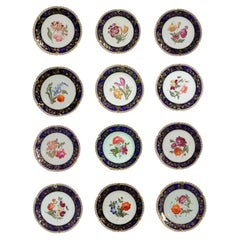
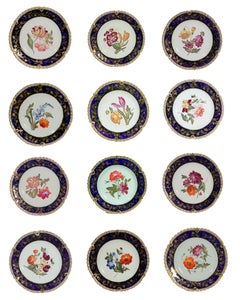
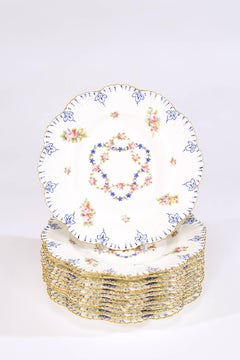
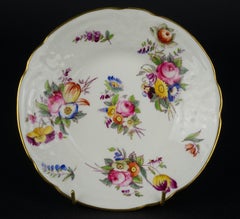
Coalport Porcelain Botanical Plates, Set of Twelve, John Rose, 1820
English, Circa 1820
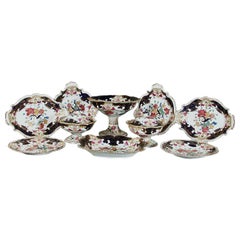
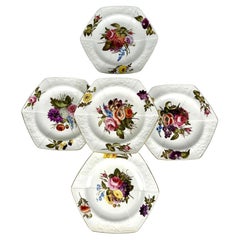
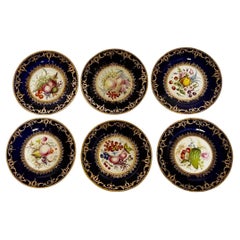
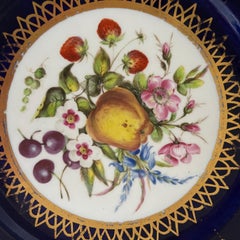
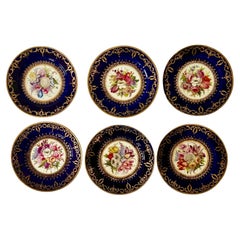
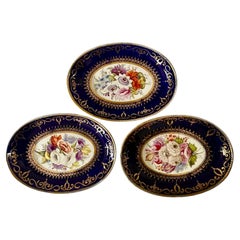
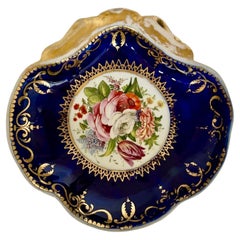
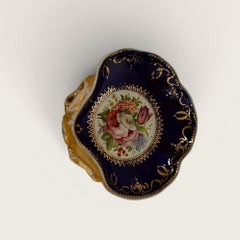
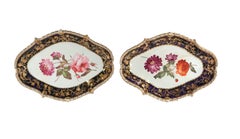
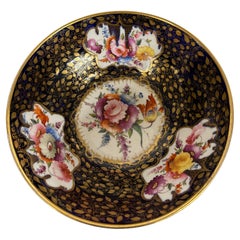
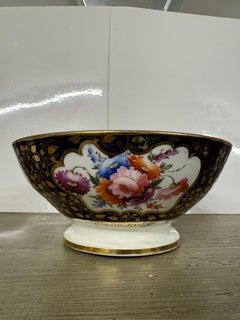
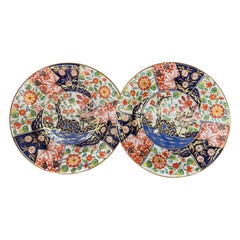
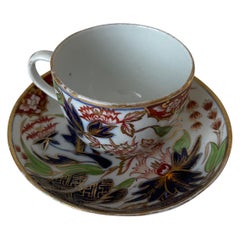
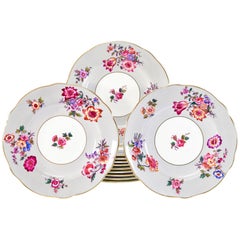
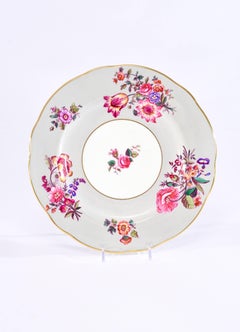
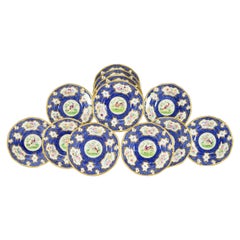
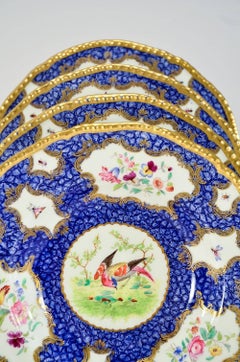
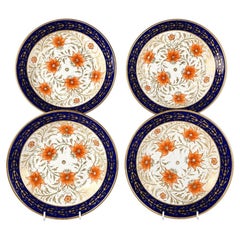
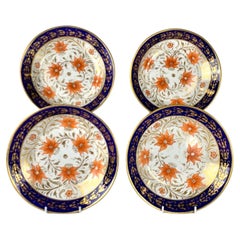
The set of twelve Coalport porcelain plates was made at John Rose’s factory at Coalport, Shropshire, each center painted with a different group of garden flowers. Across the set the groups include auriculas, ranunculus, poppies, a hyacinth, pansies, a flamed parrot tulip, crocuses, chrysanthemums, China asters and a wild rose, freely composed in the Continental manner rather than copied as named botanical specimens, so that no two plates repeat.
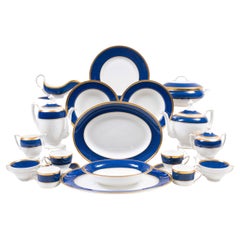
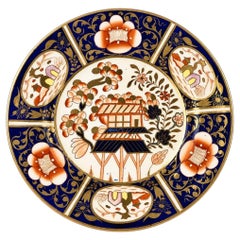
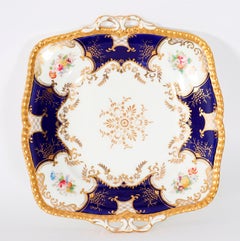
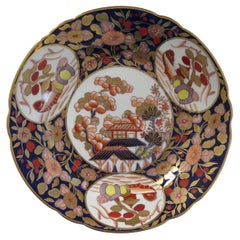
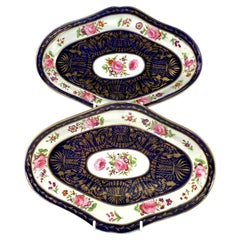
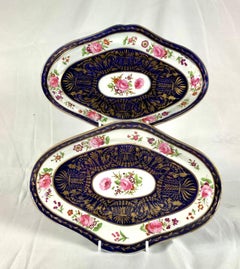
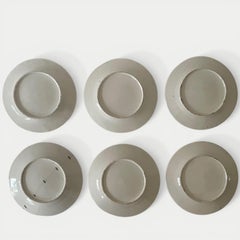
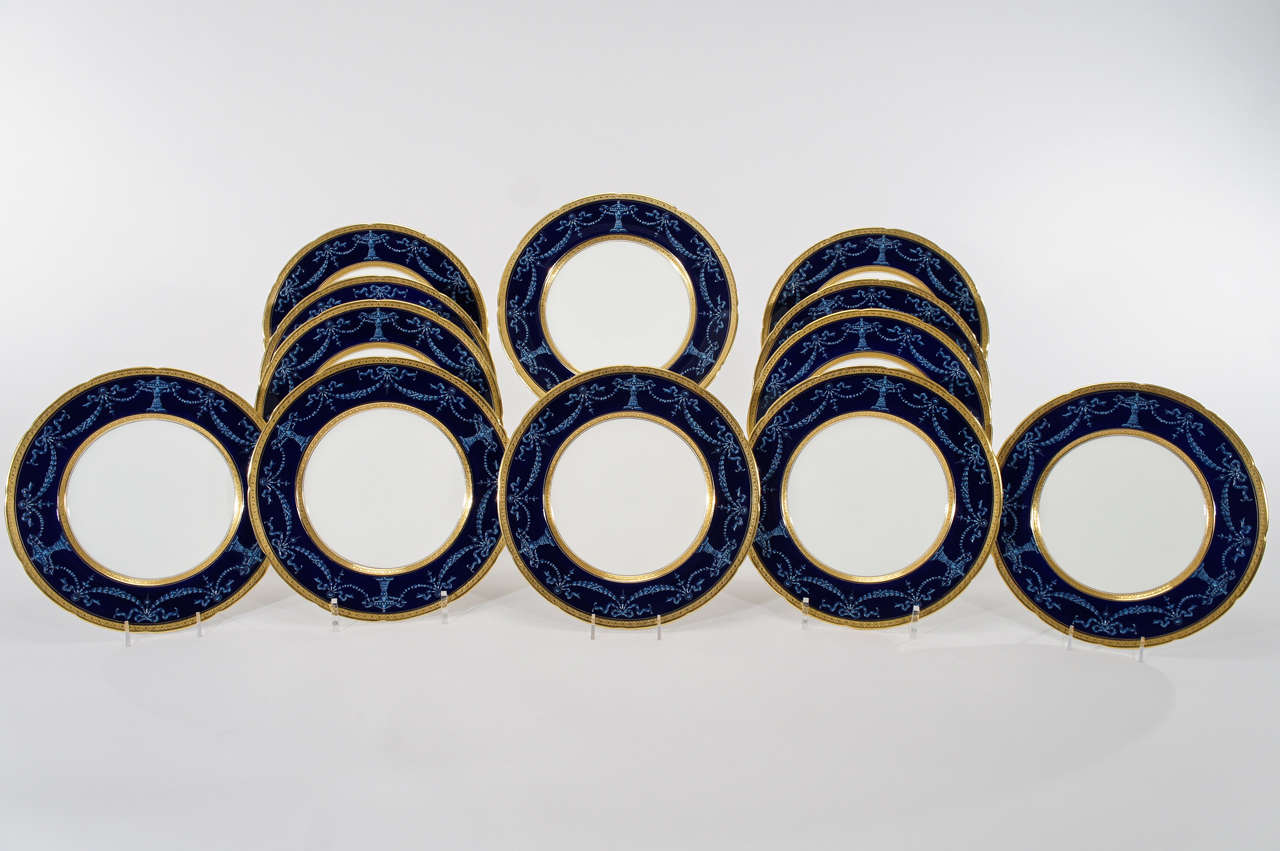
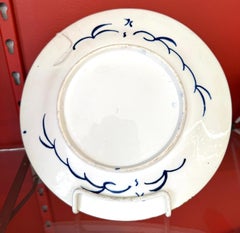
Each center is framed by an underglaze cobalt blue border gilded with a trailing fruiting grapevine, its leaves, tendrils and small bunches of grapes reserved in gold against the deep blue ground, with a wavy gilt line following the inner edge of the blue band and a fine gilt line encircling the well. The gadrooned rim is gilt and relieved at intervals by small molded scroll-and-shell thumbpieces picked out in gold. The reverses are plain.
Dimensions:
Diameter: 9½ inches (24.1 cm)
Marks:
Unmarked, as is usual for Coalport porcelain of this period.
Provenance:
Earle D. Vandekar of Knightsbridge
Condition:
Good overall, one plate with a hairline.
References:
Michael Messenger, Coalport 1795–1926 (Antique Collectors’ Club, 1995)
Geoffrey Godden, Coalport and Coalbrookdale Porcelains (Barrie & Jenkins, 1970)
Historical Context:
John Rose founded the Coalport works on the east bank of the Severn about 1796, and by 1820 the factory was among the largest porcelain manufactories in Britain. In that year the Society of Arts awarded Rose its gold medal for his improved feldspar porcelain with a leadless glaze, and William Billingsley and Samuel Walker, lately of Nantgarw, came to Coalport under an agreement with Rose — the years around 1820 mark the high point of Coalport flower...
Category
1820s English Regency Antique Coalport Porcelain Furniture