Emil Hochdanz Art

to
2
Overall Width
to
Overall Height
to
2
2
2
1
1
1
2

Use search to find more

2
11,946
2,897
2,541
1,648

Use search to find more

Artist: Emil Hochdanz
A Moorish Market Scene -

A Moorish Market Scene -

By Emil Hochdanz

Located in Roma, IT

Image dimension: 20.5 x 15.3 cm. Signed under the plate: Art Anst.v. E. Hochdanz. Dated 1866, p.34. Good conditions, except usual signs of aging and a browning of the paper. This ...

Category

1860s Emil Hochdanz Art

Materials

Etching

Related Items
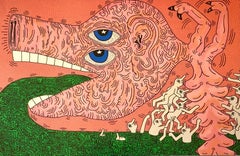
Keith Haring 1985 announcement (Keith Haring at Tony Shafarzi Leo Castelli)

Keith Haring 1985 announcement (Keith Haring at Tony Shafarzi Leo Castelli)

By (after) Keith Haring

Located in NEW YORK, NY

Keith Haring at Tony Shafrazi/Leo Castelli Gallery, New York, 1985: Rare original 1980s announcement for two Keith Haring exhibitions: Keith Haring at Tony Shafrazi Gallery, October 26...

Category

1980s Pop Art Emil Hochdanz Art

Materials

Offset, Lithograph

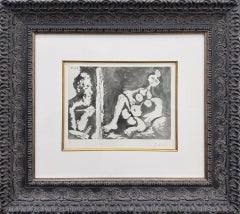
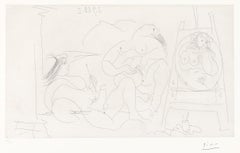
Peintre et Modèle, 43/50, circa 1964 — Pablo Picasso, Etching & Aquatint

Peintre et Modèle, 43/50, circa 1964 — Pablo Picasso, Etching & Aquatint

By Pablo Picasso

Located in Santa Monica, CA

Peintre, et Modèle Avec un Noeud Dans Les Chevaux, circa 1964, by Pablo Picasso. Original etching and aquatint on RFK Rives, edition 43/50. Published by Galerie Louise Leiris, Paris....

Category

15th Century and Earlier Emil Hochdanz Art

Materials

Archival Paper, Aquatint, Carborundum Etching

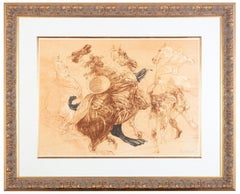
Le Picador II

Le Picador II

By Pablo Picasso

Located in New York, NY

This lithograph in 24 colors on wove paper was created in 1961. Dated twice by the artist within the original lithograph plate, unsigned as issued. Published by Andre Sauret, Monte C...

Category

20th Century Emil Hochdanz Art

Materials

Lithograph

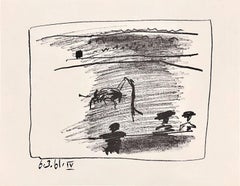
Les Banderillas

Les Banderillas

By Pablo Picasso

Located in New York, NY

This original lithograph in black ink was created by the artist in 1961. From A Los Toros avec Picasso, this lithograph is dated 6.3.61.IV in the stone and measures 10 x 13 in. (25.4...

Category

20th Century Emil Hochdanz Art

Materials

Lithograph

Jeu de la Cape

Jeu de la Cape

By Pablo Picasso

Located in New York, NY

This lithograph in black ink was created by the artist in 1961. From A Los Toros avec Picasso, this lithograph is dated 6.3.61.III in the stone and measures 10 x 13 in. (25.4 x 33 cm...

Category

20th Century Emil Hochdanz Art

Materials

Lithograph

Leo by Marcelo Martin Burgos - Lithograph, animal, childhood, imagination, wings

Leo by Marcelo Martin Burgos - Lithograph, animal, childhood, imagination, wings

By Marcelo Martin Burgos

Located in Paris, FR

Leo is a lithograph (2 colours, gold leaf on Fabriano 50% cotton 300 g paper) by contemporary artist Marcelo Martin Burgos, dimensions are 35 × 50 cm (13.8 × 19.7 in). The lithograp...

Category

2010s Contemporary Emil Hochdanz Art

Materials

Gold Leaf

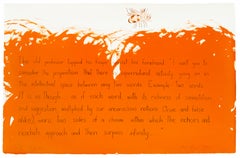
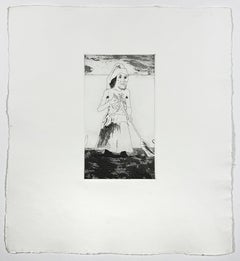
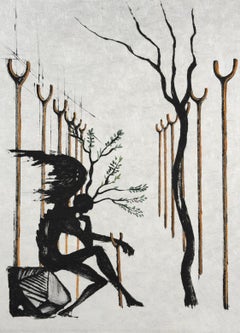
The Enchantress in her Garden David Hockney Fairy Tales from the Brothers Grimm

The Enchantress in her Garden David Hockney Fairy Tales from the Brothers Grimm

By David Hockney

Located in New York, NY

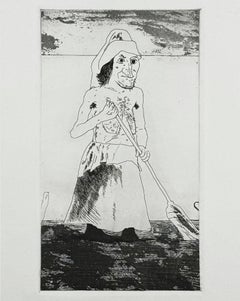
From David Hockney’s celebrated Six Fairy Tales from the Brothers Grimm portfolio, an image from the story of Rapunzel. Hockney stated: “The old woman who wants the child. In one tr...

Category

1960s Modern Emil Hochdanz Art

Materials

Etching, Aquatint

Le Christ a l'Horloge, Paris (Christ in the Clock)

Le Christ a l'Horloge, Paris (Christ in the Clock)

By Marc Chagall

Located in Missouri, MO

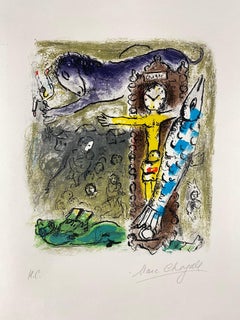
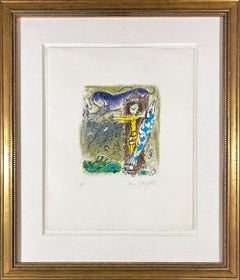
Marc Chagall "Le Christ a l'Horloge, Paris" (Christ in the Clock) 1957 (M. 196) Color Lithograph on Arches Wove Paper Signed in Pencil "Marc Chagall" Lower Right Initialed "H.C." (Hors Commerce) Lower Left, aside from numbered edition of 90 *Floated in Gold Frame with Linen Matting, UV Plexiglass Sheet Size: 18 3/4 x 14 3/4 inches (47.5 cm x 38 cm) Image Size: 9 3/4 x 8 1/2 inches Framed Size: 28.5 x 24.25 inches Marc Chagall was a man of keen intelligence, a shrewd observer of the contemporary scene, with a great sympathy for human suffering. He was born on July 7, 1887 in Vitebsk, Russia; his original name was Moishe Shagal (Segal), but when he became a foremost member of the Ecole de Paris, he adopted French citizenship and the French spelling of his name. Vitebsk was a good-sized Russian town of over 60,000, not a shtetl. His father supported a wife and eight children as a worker in a herring-pickling plant. Sheltered by the Jewish commandment against graven images, the young Chagall never saw so much as a drawing until, one day, he watched a schoolmate copying a magazine illustration. He was ridiculed for his astonishment, but he began copying and improvising from magazines. Both Chagall's parents reluctantly agreed to let him study with Yehuda Pen, a Jewish artist in Vitebsk. Later, in 1906, they allowed their son to study in St. Petersburg, where he was exposed to Russian Iconography and folk art. At that time, Jews could leave the Pale only for business and employment and were required to carry a permit. Chagall, who was in St. Petersburg without a permit, was imprisoned briefly. His first wife, Bella Rosenfeld, was a product of a rich cultivated and intellectual group of Jews in Vitebsk. Chagall was made commissar for the arts for the area, charged with directing its cultural life and establishing an art school. Russian folklore, peasant life and landscapes persisted in his work all his life. In 1910 a rich patron, a lawyer named Vinaver, staked him to a crucial trip to Paris, where young artists were revolutionizing art. He also sent him a handsome allowance of 125 francs (in those days about $24) each month. Chagall rejected cubism, fauvism and futurism, but remained in Paris. He found a studio near Montparnasse in a famous twelve-sided wooden structure divided into wedge-shaped rooms. Chaim Soutine, a fellow Russian Jew, and Modigliani lived on the same floor. To Chagall's astonishment, he found himself heralded as one of the fathers of surrealism. In 1923, a delegation of Max Ernst, Paul Eluard and Gala (later Salvador Dali's wife) actually knelt before Chagall, begging him to join their ranks. He refused. To understand Chagall's work, it is necessary to know that he was born a Hasidic Jew, heir to mysticism and a world of the spirit, steeped in Jewish lore and reared in the Yiddish language. The Hasidim had a special feeling for animals, which they tried not to overburden. In the mysterious world of Kabbala and fantastic ancient legends of Chagall's youth, the imaginary was as important as the real. His extraordinary use of color also grew out of his dream world; he did not use color realistically, but for emotional effect and to serve the needs of his design. Most of his favorite themes, though superficially light and trivial, mask dark and somber thoughts. The circus he views as a mirror of life; the crucifixion as a tragic theme, used as a parallel to the historic Jewish condition, but he is perhaps best known for the rapturous lovers he painted all his life. His love of music is a theme that runs through his paintings. After a brief period in Berlin, Chagall, Bella and their young daughter, Ida, moved to Paris and in 1937 they assumed French citizenship. When France fell, Chagall accepted an invitation from the Museum of Modern Art to immigrate to the United States. He was arrested and imprisoned in Marseilles for a short time, but was still able to immigrate with his family. The Nazi onslaught caught Chagall in Vichy, France, preoccupied with his work. He was loath to leave; his friend Varian Fry rescued him from a police roundup of Jews in Marseille, and packed him, his family and 3500 lbs. of his art works on board a transatlantic ship. The day before he arrived in New York City, June 23, 1941, the Nazis attacked Russia. The United States provided a wartime haven and a climate of liberty for Chagall. In America he spent the war years designing large backdrops for the Ballet. Bella died suddenly in the United States of a viral infection in September 1944 while summering in upstate New York. He rushed her to a hospital in the Adirondacks, where, hampered by his fragmentary English, they were turned away with the excuse that the hour was too late. The next day she died. He waited for three years after the war before returning to France. With him went a slender married English girl, Virginia Haggard MacNeil; Chagall fell in love with her and they had a son, David. After seven years she ran off with an indigent photographer. It was an immense blow to Chagall's ego, but soon after, he met Valentine Brodsky, a Russian divorcee designing millinery in London (he called her Fava). She cared for him during the days of his immense fame and glory. They returned to France, to a home and studio in rustic Vence. Chagall loved the country and every day walked through the orchards, terraces, etc. before he went to work. Chagall died on March 28, 1985 in the south of France. His heirs negotiated an arrangement with the French state allowing them to pay most of their inheritance taxes in works of art. The heirs owed about $30 million to the French government; roughly $23 million of that amount was deemed payable in artworks. Chagall's daughter, Ida and his widow approved the arrangement. Written and submitted by Jean Ershler Schatz, artist and researcher from Laguna Woods, California. Sources: Hannah Grad Goodman in Homage to Chagall in Hadassah Magazine, June 1985 Jack Kroll in Newsweek, April 8, 1985 Andrea Jolles in National Jewish Monthly Magazine, May 1985 Michael Gibson...

Category

1950s Modern Emil Hochdanz Art

Materials

Lithograph

Diane de Poitiers
Diane de Poitiers

Diane de Poitiers

By Salvador Dalí­

Located in New York, NY

Color etching with full margins. Signed by the artist and numbered 147/250 in pencil in lower right and left margins respectively. Printed and published by DeFrancony, Paris. Ca...

Category

1970s Surrealist Emil Hochdanz Art

Materials

Etching, Color

Le Vitrail
Le Vitrail

Salvador Dalí­Le Vitrail, 1968

$4,000Sale Price|20% Off

H 15 in W 11.5 in

Le Vitrail

By Salvador Dalí­

Located in Hollywood, FL

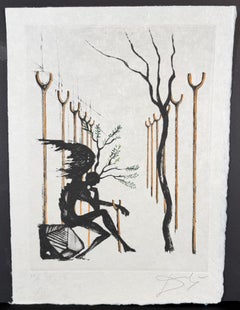
ARTIST: Salvador Dali TITLE: Le Vitrail MEDIUM: Etching SIGNED: Hand Signed by Salvador Dali PUBLISHER: Argillet Editions EDITION NUMBER: XII/C MEASUREMENTS: 15" x 11.5" YEAR:...

Category

1960s Surrealist Emil Hochdanz Art

Materials

Etching

Series 347:301 (Raphael et Fornarina VI: Enfin seuls)

Series 347:301 (Raphael et Fornarina VI: Enfin seuls)

By Pablo Picasso

Located in New York, NY

A very good impression of this etching. Signed and numbered 35/50 in pencil by Picasso. Printed by Crommelynck, Mougins. Published by Galerie Louise Leiris, Paris. From "347 Gravures...

Category

1960s Modern Emil Hochdanz Art
Materials

Etching

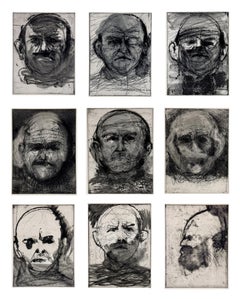
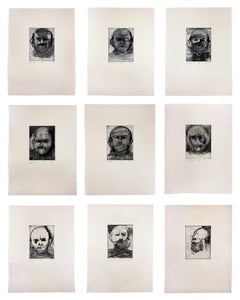
Dartmouth Portraits Jim Dine portfolio of nine self portrait etchings aquatint

Dartmouth Portraits Jim Dine portfolio of nine self portrait etchings aquatint

By Jim Dine

Located in New York, NY

The Dartmouth Portraits aer reworked plates from an earlier drypoint self portrait series done in 1971. For the second set, Dine used the same plates, the same theme and, in most cas...

Category

1970s Realist Emil Hochdanz Art

Materials

Etching, Aquatint

Twin Spires Lithograph Print, Hand Signed, AP Edition, 30 x 22 inches, 1983

Twin Spires Lithograph Print, Hand Signed, AP Edition, 30 x 22 inches, 1983

By Guillaume Azoulay

Located in Aventura, FL

Hand Signed, Titled and Numbered in Pencil. Artwork in Excellent Condition. Additional images are available upon request. Certificate of Authenticity Included. Please do not hesitate...

Category

1980s Contemporary Emil Hochdanz Art

Materials

Lithograph, Paper

Previously Available Items
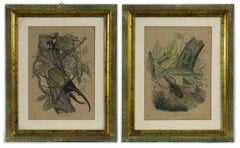
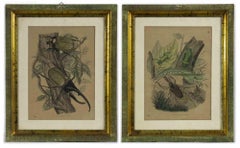
Insects - Pair of Original Lithographs by Emil Hochdanz- 1868-1869

Insects - Pair of Original Lithographs by Emil Hochdanz- 1868-1869

By Emil Hochdanz

Located in Roma, IT

Insect is an original pair of modern artwork realized in 1868-1869 by the German atist E. Hochdanz Hand watercolored lithograph. Printed on plate of both artworks: Art Anst.v E.Ho...

Category

1860s Modern Emil Hochdanz Art

Materials

Lithograph

Insects - Pair of Original Lithographs by Emil Hochdanz- 1868-1869

Insects - Pair of Original Lithographs by Emil Hochdanz- 1868-1869

By Emil Hochdanz

Located in Roma, IT

Insect is an original pair of modern artwork realized in 1868-1869 by the German atist E. Hochdanz. Hand watercolored lithograph. Printed on plate of both artworks: Art Anst.v E.H...

Category

1860s Modern Emil Hochdanz Art

Materials

Lithograph

Emil Hochdanz art for sale on 1stDibs.

Find a wide variety of authentic Emil Hochdanz art available for sale on 1stDibs. You can also browse by medium to find art by Emil Hochdanz in lithograph, etching and more. Much of the original work by this artist or collective was created during the 19th century and is mostly associated with the modern style. Not every interior allows for large Emil Hochdanz art, so small editions measuring 4 inches across are available. Customers who are interested in this artist might also find the work of Ilse Voigt, Hans Juergen Diehl, and Gustave Doré. Emil Hochdanz art prices can differ depending upon medium, time period and other attributes. On 1stDibs, the price for these items starts at $110 and tops out at $446, while the average work can sell for $418.

Artists Similar to Emil Hochdanz