Fanny Rabel Art

to
1
1
Overall Width
to
Overall Height
to
2
1
1
1
1
1
1
1
1
1
1
1
1
1
1
1
1
1
2
10,625
2,826
2,496
1,409
1
2
Artist: Fanny Rabel
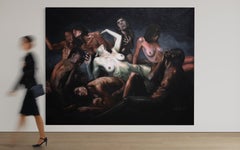
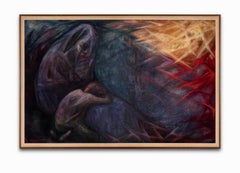
Fanny Rabel Figurative Oil Painting Soulful, Prayerful

Fanny Rabel Figurative Oil Painting Soulful, Prayerful

By Fanny Rabel

Located in Detroit, MI

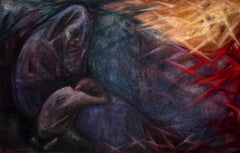
SALE ONE WEEK ONLY UNTITLED by Fanny Rabel a Mexican artist who was born in Poland in 1922 is a soul wrenching work depicting among other things, the children killed by Nazi bombing in Spain during the Second World War. The lavender and purple surrounding the seated female figure and the kneeling child suggest both grief for the innocents' deaths and the prayers being offered for an end to the carnage. The bright gold and red can be read as either explosions or the hopeful light of redemption after death. Like Picasso's Guernica from 1937, this painting from 1965 can stand as a powerful anti-war statement. Numerous key galleries and museums such as Morton Auctions, Cerro de Mayka have featured Fanny Rabel's work in the past. Her anti-Nazi and anti-Fascism politics resulted in her participation in a mural called Retrato de la Burguesía in 1940 for the Sindicato Mexicano de Electricistas building on Alfonso Caso Street in Mexico City. Rabel met a group of exiled Spaniards in Mexico along with Antonio Pujol, who invited her to take part in a mural project headed by him, David Alfaro Siqueiros, Joseph Renau, Luis Arenal, Antonio Rodríguez Luna and Miguel Prieto. The artist died in 2008. Fanny Rabel born August 27, 1922, in Poland born Fanny Rabinovich, was a Polish-born Mexican artist who is considered to be the first modern female muralist and one of the youngest associated with the Mexican muralism of the early to the mid-20th century. She and her family arrived in Mexico in 1938 from Europe and she studied art at the Escuela Nacional de Pintura, Escultura y Grabado "La Esmeralda", where she met and became friends with Frida Kahlo. She became the only female member of “Los Fridos” a group of students under Kahlo’s tutelage. She also worked as an assistant and apprentice to Diego Rivera and David Alfaro Siqueiros, painting several murals of her own during her career. The most significant of these is "Ronda en el tiempo" at the Museo Nacional de Antropología in Mexico City. She also created canvases and other works, with children often featured in her work, and was one of the first of her generation to work with ecological themes in a series of works begun in 1979. She is considered to be the first female muralist in Mexico. She was an assistant to Diego Rivera while he worked on the frescos for the National Palace and an apprentice to David Alfaro Siqueiros. Her most important mural is Ronda en el tiempo located in the Museo Nacional de Antropología, which was created from 1964 to 1965. She also created murals at the Unidad de Lavaderos Público de Tepalcatitlán (1945), Sobrevivencia, Alfabetización in Coyoacán in 1952 Sobrevivencia de un pueblo at the Centro Deportivo Israelita (1957) Hacia la salud for the Hospital Infantil de México (1982), La familia mexicana at the Registro Público de la Propiedad (1984) (which Rabel preferred to title Abolición de la propiedad privada) and at the Imprenta Artgraf. In collaboration with other artists, she participated in the creation of the murals at the La Rosita pulque bar (disappeared) and at the Casa de la Madre Soltera. She entered the Escuela Nacional de Pintura, Escultura y Grabado "La Esmeralda" shortly after it was established in 1942, taking classes with José Chávez Morado, Feliciano Peña and Frida Kahlo, with whom she became close friends. She changed her last name from Rabinovich to Rabel during her career. Rabel married urologist Jaime Woolrich and had two children Abel and Paloma Woolrich, both of whom became actors. The first exhibition of her work was in 1945 with twenty-four oils, thirteen drawings, and eight engravings at the Liga Popular Israelita with Frida Kahlo writing the presentation. In 1955, she had an individual exhibition at the Salón de la Plástica Mexicana. She had a large exhibition at the Museum of the Palacio de Bellas Artes to commemorate a half-century of her work. Her last exhibition was in 2007 at the Universidad Autónoma Metropolitana. Her work can be found in collections in over fifteen countries including those of the New York Public Library, the Library of Congress in Washington, D.C., the Royal Academy of Denmark, the National Library in Paris, the Casa de las Américas in Havana, the Benemérita Universidad Autónoma de Puebla and the Museo de Arte Moderno in Mexico City. A retrospective of her work after her death called Retrospectiva in Memoriam, Fanny Rabel (1922-2008) was held at the Museum of the Universidad Popular Autónoma del Estado de Puebla . She is considered to be the first modern female muralist in Mexico although she also did significant work in painting, engraving, drawing, and ceramic sculpture. Her work has been classified as poetic Surrealism, Neo-expressionism and is also considered part of the Escuela Mexicana de Pintura (the dominant art movement of the early to mid 20th century in Mexico) as one of the youngest muralists to be associated with it along with Arnold Belkin and José Hernández Delga. Rabel was more drawn to depicting mankind’s pain rather than happiness, sharing other Mexican muralists' concerns about social injustice. However, she stated to Leopoldo Méndez that she could not create combative works, with clenched fists and fierce faces, and she wanted to leave the Taller de Gráfica Popular. Méndez convinced her to stay, saying that more tender images are important to political struggle as well. Children with Mexican faces...

Category

1960s Expressionist Fanny Rabel Art

Materials

Oil, Canvas

Related Items
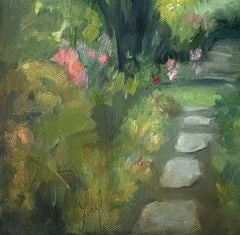
Maximilien Luce (French, 1858-1941) Femme Lavant le Linge

Maximilien Luce (French, 1858-1941) Femme Lavant le Linge

By Maximilien Luce

Located in Dallas, TX

MAXIMILIEN LUCE (French, 1858-1941) Femme Lavant le Linge Estate stamped signature 'Luce' (lower right) Oil on canvas Canvas: 16 1/4 x 13 in. (41.3 x 33.0 cm) framed: 25 1/4 x 22 x 1...

Category

1890s Expressionist Fanny Rabel Art

Materials

Canvas, Oil

Mother and Child
Mother and Child

Alessandro NastasioMother and Child, 1965

Sold|$550

H 26.5 in W 18.98 in

Mother and Child

By Alessandro Nastasio

Located in Middletown, NY

Milan: c1965. Linocut in colors on watermarked CM Fabriano white wove paper, 26 1/2 x 19 inches (673 x 482 mm)), the full sheet. Signed and numbered 62/100 in black grease pencil, a...

Category

Mid-20th Century Modern Fanny Rabel Art

Materials

Linocut

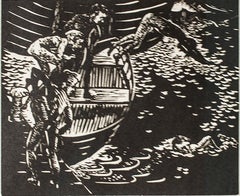
'Sisters' — Renowned Black American, Harlem Renaissance Artist

'Sisters' — Renowned Black American, Harlem Renaissance Artist

Located in Myrtle Beach, SC

James Lesesne Wells, 'Sisters', linocut, edition not stated but small, 1928. Signed, titled, and annotated 'imp' in pencil. A fine impression on off-white wove Japan paper, with wide margins (1 7/8 to 3 3/4 inches), in excellent condition. Printed by the artist. Very scarce. Matted to museum standards, unframed. Image size 8 3/16 x 6 3/4 inches (208 x 171 mm); sheet size 13 1/2 x 10 3/4 inches (343 x 273 mm). Exhibition and Literature: 'Narratives of African American Art and Identity: The David C. Driskell Collection,' The Art Gallery at the University of Maryland, extensive touring exhibition, 1998-2000. Collections: Pennsylvania Academy of the Fine Arts, Smithsonian Institution (Anacostia Community Museum). ABOUT THE ARTIST “Wells is more than an artist with a deep concern for his fellow man. He carries many of his themes a step further into an apocalyptic world, a world of revelation and shifting lights. … He works on large blocks in a bold free style. … His work has a vigor, therefore, that is not often used in the medium today.” —Jacob Kainen (painter, critic, and collector) from Richard J. Powell’s 1986 essay Phoenix Ascending: The Art of James Lesesne Wells. James Lesesne Wells was an American painter, printmaker, educator, and pioneering figure of the Harlem Renaissance, whose work established a vital connection between African heritage, modernist form, and African American cultural identity. Known for his innovative use of linoleum and woodblock printing, Wells played a key role in shaping 20th-century African American art and inspired countless students throughout his lengthy career as a teacher at Howard University. Born in Atlanta, Georgia, Wells' early exposure to the arts came through church and community, where African American cultural traditions were central. He pursued formal artistic training at Lincoln University in Pennsylvania (earning a B.A. in 1924), followed by studies at the Pennsylvania Academy of the Fine Arts and the Barnes Foundation, where he encountered European modernists as well as traditional African sculpture, which profoundly influenced his style. Wells moved to New York in the late 1920s, swiftly immersing himself in the lively artistic and intellectual scene of Harlem. There, he became associated with artists, writers, and thinkers of the Harlem Renaissance, contributing to the growth of Black cultural identity. Considered a mentor to many famed artists of the Harlem Renaissance, Wells served as director of a summer art workshop in Harlem where his assistants included Charles Alston, Jacob Lawrence, and Palmer Hayden...

Category

1920s American Modern Fanny Rabel Art

Materials

Linocut

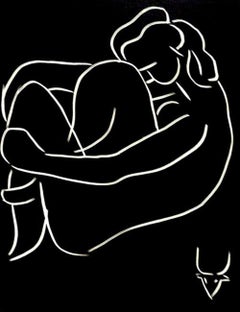
Tête de Femme (Duthuit 21), Le Poème pulvérisé, Henri Matisse

Tête de Femme (Duthuit 21), Le Poème pulvérisé, Henri Matisse

By Henri Matisse

Located in Southampton, NY

Linocut on vélin pur fil Johannot a la forme paper. Inscription: signed in pencil and unnumbered, as issued, from the edition of 50. Good condition. Notes: From the folio, Le Poème p...

Category

1940s Modern Fanny Rabel Art

Materials

Linocut

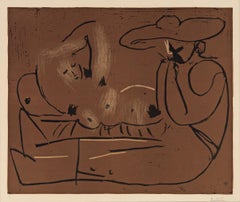
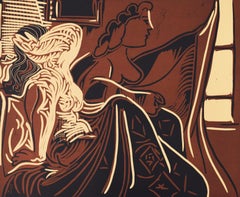
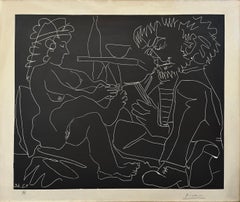
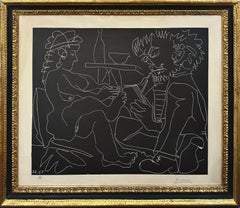
Femme Couchée et Homme au Grand Chapeau

Pablo PicassoFemme Couchée et Homme au Grand Chapeau, 1959

$28,000Sale Price|37% Off

H 21 in W 25.38 in

Femme Couchée et Homme au Grand Chapeau

By Pablo Picasso

Located in New York, NY

Color linoleum cut, 1959. Signed by Picasso and numbered 32/50 in pencil, lower margin. Printed by Arnéra, Vallauris. Published by Galerie Louise L...

Category

1950s Modern Fanny Rabel Art

Materials

Linocut, Color

Barbara Latham 1950s Modernist Linocut “Saturday Morning, Taos Plaza”

Barbara Latham 1950s Modernist Linocut “Saturday Morning, Taos Plaza”

By Barbara Latham

Located in Denver, CO

A vibrant celebration of Taos life and culture, Saturday Morning (Market, Taos Plaza, New Mexico) is a striking 1950s modernist linocut print by acclaimed New Mexico artist Barbara L...

Category

Mid-20th Century American Modern Fanny Rabel Art

Materials

Linocut

Harold E. Keeler, Water Fall

Harold E. Keeler, Water Fall

Located in New York, NY

Harold E. Keeler worked in Hollywood as a set designer. That seems especially important here because the Water Fall looks a little as though it could be a w...

Category

1930s American Modern Fanny Rabel Art

Materials

Linocut

Reclining Nude

Reclining Nude

By Irene Zevon

Located in Buffalo, NY

An original linocut print by American artist Irene Zevon. The reclining nude is one of Zevon's most coveted subject matters. This 1959 print is one of a series of ten prints.

Category

1950s American Modern Fanny Rabel Art

Materials

Linocut, Paper

Picador debout avec son cheval et une femme (Picador, Woman, and Horse), 1959

Picador debout avec son cheval et une femme (Picador, Woman, and Horse), 1959

By Pablo Picasso

Located in Palo Alto, CA

Considered to be one of Picasso’s monumental linoleum prints, Pablo Picasso Picador debout avec son cheval et une femme (Picador, Woman, and Horse), 1959 is a large-scale artwork that captures the essence of this artist’s innovation and minimalist creativity. His simple lines curve and undulated together to form the characters of the piece: the woman – feminine and robust, the horse – whimsical and characteristic, and the picador – strong and masculine. All three subjects create a triad composition making way for a harmonious and balanced piece. The entire work exudes an air of femininity and mystery, all set against a backdrop of a misty grey helping to create Picasso’s sensual environment of intrigue. Created in 1959, Pablo Picasso Picador debout avec son cheval et une femme (Picador, Woman, and Horse) is a color linocut on Arches paper hand-signed by Pablo Picasso (Malaga, 1881 – Mougins, 1973) in pencil in the lower right margin. Numbered 21/50 in pencil in the lower left margin, this work was printed by Arnéra, Vallauris and published by Galerie Louise Leiris, Paris. Catalogue Raisonné: Pablo Picasso Picador, Woman, and Horse (Picador debout avec son cheval et une femme), 1959 is fully documented and referenced in the below catalogue raisonnés and texts (copies will be enclosed as added documentation with the invoices that will accompany the sale of the work): 1. Baer, Bridgette. Picasso Peintre-Graveur, Tome V – Catalogue Raisonné de l’œuvre grave et des monotypes, Berne: Editions Kornfeld, 1989. Listed and illustrated as catalogue raisonné no. 1238. 2. Bloch, Georges. Picasso Catalogue de l'ouvre gravé et lithographié, Volume I. Kornfeld et Cie: Switzerland, 1968. Listed and illustrated as catalogue raisonné no. 913. 3. Boeck, W., intr. Pablo Picasso Linoleum...

Category

1950s Modern Fanny Rabel Art

Materials

Linocut

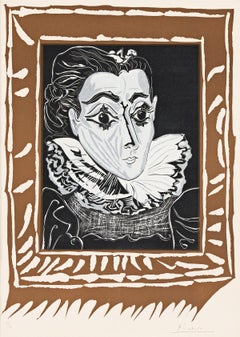
La Dame à la Collerette (Portrait de Jacqueline à la fraise)

La Dame à la Collerette (Portrait de Jacqueline à la fraise)

By Pablo Picasso

Located in New York, NY

A superb impression of this color linoleum cut. Signed and numbered 29/50 in pencil by Picasso. Printed by Arnéra, Vallauris. Published by Galerie Louise Leiris, Paris. Catalogue r...

Category

1960s Modern Fanny Rabel Art

Materials

Color, Linocut

The New Cable British Modern Mid 20th Century Vorticist European Vorticism Woman

The New Cable British Modern Mid 20th Century Vorticist European Vorticism Woman

By Sybil Andrews

Located in New York, NY

The New Cable British Modern Mid 20th Century Vorticist European Vorticism Woman Sybil Andrews CPE (British/Canadian, 1898-1992) "The New Cable," 1931 12 x 16 1/2 inches Color linocut Signed, titled, inscribed 'Second State', and numbered 13/60 in pencil Framed: 19 x 24 inches Literature: Coppel Sa17 Illustrated on page 10 of the catalog The proposed edition of the first state of the Giant Cable was 50, but only 30 impressions were pulled. Andrews removed the blue background for the second state, which was published under the title The New Cable in an edition of 60. BIO Sybil Andrews was a printmaker, painter, graphic artist and educator who was born in Bury St. Edmonds, Suffolk, England. She moved to London (England) in 1922. In 1947, she emigrated to Campbell River (Vancouver Island) British Columbia, Canada, where she worked, taught and lived for the rest of her life. She died at a hospital in Victoria (B.C.) Her mediums were the colour linocut (1) (most famous), etching, posters, pastels, ink, watercolour, monoprint and oil. Her subjects were human activity (at work, sports, travel, etc.), figures, animals, genre, allegory, architecture and landscape. Her style was Art Deco (see AskART styles), Futurism, Cubism and Vorticism (2). Her work is identified by a simple format, clean lines, distortion, vivid colours, drama and rhythm. Quote: "The colour linocut was just the medium for me, being interested in dynamics and ideas and patterns... It is impossible to be fussy with lines, you have to simplify, you are forced to simplify your idea to its fundamentals." Andrews produced 76 linocuts in her life, of which 43 were made from 1929 to 1939, which is considered to be her best period. John Hassall's art correspondence course (1918) was the beginning of her formal art education. She went from there to Heatherley's School of Fine Art (London/1922) where she studied under Henry Massey (see AskART) and met artistic partner Cyril Power (see AskART). At the same time, she studied independently with sculptor Henri Glicenstein (see AskART) who taught her drypoint etching and to draw from life. She also attended the Grosvenor School of Modern Art (1925). Iain McNab (1890-1967) was Principal and Claude Flight (3) (see AskART) an instructor who had a great influence on her choice of linocut as a primary medium. Some of his other students and her associates were Edith Lawrence (1890-1973), Lill Tschudi (1911-2001), Eileen Mayo (see AskART) and William Greengrass (1896-1970). After emigrating to Canada she taught art continuously until a month before her death. She was elected a member of the Canadian Painters - Etchers Society (after 1976 the Print and Drawing Council of Canada) in 1951. She began exhibiting her work in 1921.In 1929 she was included in "The First Exhibition of British Linocuts...

Category

1930s Modern Fanny Rabel Art

Materials

Linocut

Fanny Rabel art for sale on 1stDibs.

Find a wide variety of authentic Fanny Rabel art available for sale on 1stDibs. You can also browse by medium to find art by Fanny Rabel in canvas, fabric, linocut and more. Much of the original work by this artist or collective was created during the 20th century and is mostly associated with the modern style. Not every interior allows for large Fanny Rabel art, so small editions measuring 27 inches across are available. Customers who are interested in this artist might also find the work of David Alfaro Siqueiros, Jirayr Hamparzoom Zorthian, and Béla Kádár. Fanny Rabel art prices can differ depending upon medium, time period and other attributes. On 1stDibs, the price for these items starts at $1,275 and tops out at $24,500, while the average work can sell for $12,888.

Artists Similar to Fanny Rabel