Leon Dupin Art

French, 1898-1971
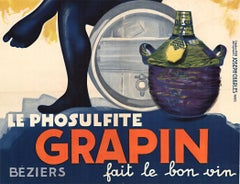
Dupin worked with printer Joseph-Charles until 1936. He became the first poster artist at Prot Brothers. in 1936, he declined an offer to go to work in the United States for the studio of Walt Disney because the idea of leaving France and having to learn English made him reject this proposal. In 1939, he participated in the founding of the Academy of the Poster.
to
3
3
1
2
Overall Width
to
Overall Height
to
6
2
3
2
3
2
2
2
2
1
1
3
3

Use search to find more

8
12,066
2,900
2,541
1,653

Use search to find more

Artist: Leon Dupin
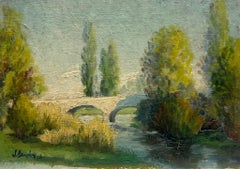
1920's French Impressionist Oil Lush Green River Bridge Oil Landscape Painting

1920's French Impressionist Oil Lush Green River Bridge Oil Landscape Painting

By Leon Dupin

Located in Cirencester, Gloucestershire

Serene River Bridge in Spring Leon Dupin, signed and dated 1920's signed oil on board, unframed Board: 8.5 x 10.5 inches Provenance: private collection, France Condition: sound condi...

Category

Mid-20th Century Impressionist Leon Dupin Art

Materials

Oil

Original Vintage French Rita Biscuits Poster 1933 by Leon Dupin

Original Vintage French Rita Biscuits Poster 1933 by Leon Dupin

By Leon Dupin

Located in Boca Raton, FL

This lively advertising poster by Léon Dupin features a cheerful chef striding forward with oversized Rita waffles tucked under his arms, transforming a simple confection into a bold...

Category

1930s Leon Dupin Art

Materials

Lithograph

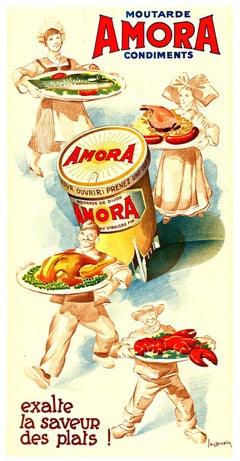
Original Moutarde AMORA Condiments vintage French antique poster linen-backed

Original Moutarde AMORA Condiments vintage French antique poster linen-backed

By Leon Dupin

Located in Spokane, WA

Original Amora Mustard Poster by Leon Dupin – Archival linen-backed French lithograph. Very fine to excellent condition. Undated, but it is presumed to be from the 1930s. No restoration or damage. Excellent colors on French antique (light crème) paper. A striking original vintage poster advertising Amora Mustard, designed by the renowned French artist Leon Dupin. This authentic piece features Dupin’s signature style and vibrant imagery, capturing the classic French culinary spirit that has made Amora a household name since the early 20th century. Art deco era. Consumed for thousands of years, mustard is a condiment known for its medicinal qualities. Around 1750, Jean-Baptiste Naigeon, the son of a master vinegar maker, revolutionized Dijon mustard by replacing vinegar with unripe grape juice. This new recipe made the mustard milder, more fragrant, and helped it last longer. In 1919, the Bizouard family, who had taken over the business, registered the 'Amora" brand. The name is credited to Armand Bizouard, who, upon tasting the mustard, is said to have exclaimed, "This is a wonderful mustard, it will be Amora!" Amora was the name of the rising sun god Ra Ora (Amon Ra). Enchanted by this divine connection, the new brand name was adopted. A striking vintage poster advertising Amora Mustard, designed by the renowned French artist Leon Dupin. This authentic piece showcases Dupin’s signature style and vibrant imagery, capturing the classic French culinary spirit that has made Amora a household name since the early 20th century. The poster is professionally archival, linen-backed, and ready to be framed to your exact specifications, ensuring preservation and stability. Condition is excellent, with vivid colors and crisp lines throughout—a testament to its careful conservation. Rarely available and with only a few copies found over the years, this piece is essential for collectors of vintage French ephemera...

Category

Mid-20th Century Art Deco Leon Dupin Art

Materials

Lithograph

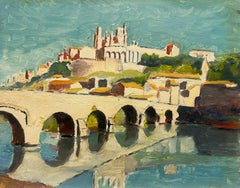
Vintage French Oil Sunlit Reflections Riverside View Historic Bridge Cityscape

Vintage French Oil Sunlit Reflections Riverside View Historic Bridge Cityscape

By Leon Dupin

Located in Cirencester, Gloucestershire

Riverside View Landscape by Leon Dupin (French (1898-1971) signed verso oil on board, unframed Board : 11.75 x 14.75 inches Provenance: private collection, France Condition: very goo...

Category

Mid-20th Century Impressionist Leon Dupin Art

Materials

Oil

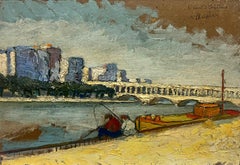
Vintage French Post Impressionist Oil Painting Anglers on River Bank French City

Vintage French Post Impressionist Oil Painting Anglers on River Bank French City

By Leon Dupin

Located in Cirencester, Gloucestershire

Riverside View Landscape Leon Dupin (1898-1971) signed verso oil on board, unframed Board : 9 x 13 inches Provenance: private collection, France Condition: very good condition For ...

Category

Mid-20th Century Impressionist Leon Dupin Art

Materials

Oil

Related Items
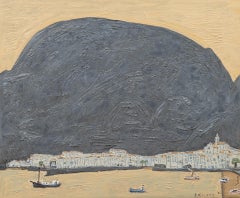
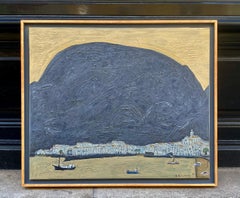
Shigeyoshi Koyama (Born in 1940). Landscape of Cadaqués, 2024. Oil on canvas.

Shigeyoshi Koyama (Born in 1940). Landscape of Cadaqués, 2024. Oil on canvas.

Located in Paris, FR

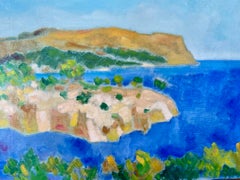
Shigeyoshi Koyama (Born in 1940) Landscape of Cadaqués, 2024 Oil on canvas Signed and dated lower right Countersigned, dated, titled, and located on the reverse 46 x 55 c...

Category

21st Century and Contemporary Impressionist Leon Dupin Art

Materials

Canvas, Oil

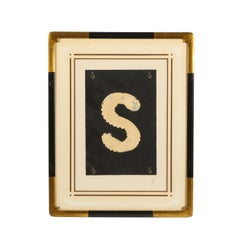
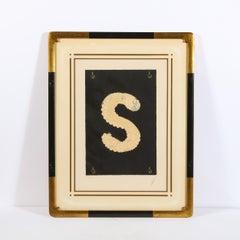
Letter "S" from Alphabet Suite (Signed Erté)

Letter "S" from Alphabet Suite (Signed Erté)

By Erté

Located in New York, NY

From the celebrated Alphabet Suite, this stunning Art Deco lithograph/serigraph was designed by the Russian-born French artist and designer known by the pseudonym Erté, and produced ...

Category

1970s Art Deco Leon Dupin Art

Materials

Lithograph

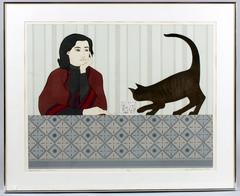
Meditation and Minou

Meditation and Minou

By Will Barnet

Located in Buffalo, NY

Artist: Will Barnet, American (1911 - 2012) Title: Meditation and Minou Year: 1980 Medium: Lithograph and Serigraph on BFK Rives, signed and numbered in pencil Edition: 40/150

Category

1970s American Realist Leon Dupin Art

Materials

Archival Paper, Lithograph

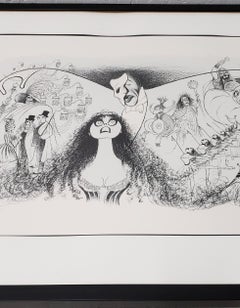
Al Hirschfeld "Phantom of the Opera" Signed Lithograph Printers Proof, c 1988

Al Hirschfeld "Phantom of the Opera" Signed Lithograph Printers Proof, c 1988

By Albert Al Hirschfeld

Located in San Francisco, CA

Al Hirschfeld "Phantom of the Opera" hand signed lithograph printers proof, circa 1988 Sarah Brightman and Michael Crawford in Phantom of the Opera. This is a rare printers proof. ...

Category

Late 20th Century Other Art Style Leon Dupin Art

Materials

Lithograph

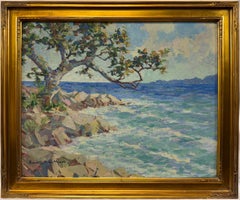
“Bermuda Coast” Henrietta Dunn Mears American Impressionist Oil on Board Signed

“Bermuda Coast” Henrietta Dunn Mears American Impressionist Oil on Board Signed

By Henrietta Dunn Mears

Located in Yardley, PA

A vibrant Bermuda seascape depicting the rocky shoreline with turquoise waters breaking against sunlit boulders beneath a sweeping tree. Mears uses bold, textured brushstrokes and a ...

Category

20th Century American Impressionist Leon Dupin Art

Materials

Oil, Board

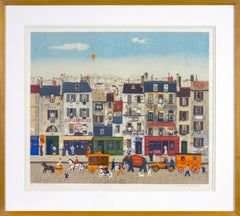
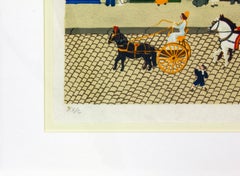
"Magic Circus" framed lithograph by Michel Delacroix hand signed and numbered

"Magic Circus" framed lithograph by Michel Delacroix hand signed and numbered

By Michel Delacroix

Located in Boca Raton, FL

"Magic Circus" lithograph by Michel Delacroix. Hand-signed MIchel Delacroix. Hand-numbered XX/C. Depicts a circus, complete with elephant and horses, traveling through a French city...

Category

20th Century Other Art Style Leon Dupin Art

Materials

Lithograph

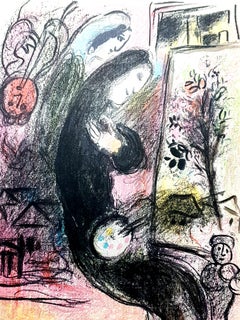
Marc Chagall - Inspiration - Original Lithograph from "Chagall Lithographe" v. 2

Marc Chagall - Inspiration - Original Lithograph from "Chagall Lithographe" v. 2

By Marc Chagall

Located in Collonge Bellerive, Geneve, CH

Marc Chagall Original Lithograph from Chagall Lithographe 1957-1962. VOLUME II. 1963 Dimensions: 32 x 24 cm From the unsigned edition of 10000 copies without margins Reference: Mourlot 398 Condition : Excellent Marc Chagall (born in 1887) Marc Chagall was born in Belarus in 1887 and developed an early interest in art. After studying painting, in 1907 he left Russia for Paris, where he lived in an artist colony on the city’s outskirts. Fusing his own personal, dreamlike imagery with hints of the fauvism and cubism popular in France at the time, Chagall created his most lasting work—including I and the Village (1911)—some of which would be featured in the Salon des Indépendants exhibitions. After returning to Vitebsk for a visit in 1914, the outbreak of WWI trapped Chagall in Russia. He returned to France in 1923 but was forced to flee the country and Nazi persecution during WWII. Finding asylum in the U.S., Chagall became involved in set and costume design before returning to France in 1948. In his later years, he experimented with new art forms and was commissioned to produce numerous large-scale works. Chagall died in St.-Paul-de-Vence in 1985. The Village Marc Chagall was born in a small Hassidic community on the outskirts of Vitebsk, Belarus, on July 7, 1887. His father was a fishmonger, and his mother ran a small sundries shop in the village. As a child, Chagall attended the Jewish elementary school, where he studied Hebrew and the Bible, before later attending the Russian public school. He began to learn the fundamentals of drawing during this time, but perhaps more importantly, he absorbed the world around him, storing away the imagery and themes that would feature largely in most of his later work. At age 19 Chagall enrolled at a private, all-Jewish art school and began his formal education in painting, studying briefly with portrait artist Yehuda Pen. However, he left the school after several months, moving to St. Petersburg in 1907 to study at the Imperial Society for the Protection of Fine Arts. The following year, he enrolled at the Svanseva School, studying with set designer Léon Bakst, whose work had been featured in Sergei Diaghilev's Ballets Russes. This early experience would prove important to Chagall’s later career as well. Despite this formal instruction, and the widespread popularity of realism in Russia at the time, Chagall was already establishing his own personal style, which featured a more dreamlike unreality and the people, places and imagery that were close to his heart. Some examples from this period are his Window Vitebsk (1908) and My Fianceé with Black Gloves (1909), which pictured Bella Rosenfeld, to whom he had recently become engaged. The Beehive Despite his romance with Bella, in 1911 an allowance from Russian parliament member and art patron Maxim Binaver enabled Chagall to move to Paris, France. After settling briefly in the Montparnasse neighborhood, Chagall moved further afield to an artist colony known as La Ruche (“The Beehive”), where he began to work side by side with abstract painters such as Amedeo Modigliani and Fernand Léger as well as the avant-garde poet Guillaume Apollinaire. At their urging, and under the influence of the wildly popular fauvism and cubism, Chagall lightened his palette and pushed his style ever further from reality. I and the Village (1911) and Homage to Apollinaire (1912) are among his early Parisian works, widely considered to be his most successful and representative period. Though his work stood stylistically apart from his cubist contemporaries, from 1912 to 1914 Chagall exhibited several paintings at the annual Salon des Indépendants exhibition, where works by the likes of Juan Gris, Marcel Duchamp and Robert Delaunay were causing a stir in the Paris art world. Chagall’s popularity began to spread beyond La Ruche, and in May 1914 he traveled to Berlin to help organize his first solo exhibition, at Der Sturm Gallery. Chagall remained in the city until the highly acclaimed show opened that June. He then returned to Vitebsk, unaware of the fateful events to come. War, Peace and Revolution In August 1914 the outbreak of World War I precluded Chagall’s plans to return to Paris. The conflict did little to stem the flow of his creative output, however, instead merely giving him direct access to the childhood scenes so essential to his work, as seen in paintings such as Jew in Green (1914) and Over Vitebsk (1914). His paintings from this period also occasionally featured images of the war’s impact on the region, as with Wounded Soldier (1914) and Marching (1915). But despite the hardships of life during wartime, this would also prove to be a joyful period for Chagall. In July 1915 he married Bella, and she gave birth to a daughter, Ida, the following year. Their appearance in works such as Birthday (1915), Bella and Ida by the Window (1917) and several of his “Lovers” paintings give a glimpse of the island of domestic bliss that was Chagall’s amidst the chaos. To avoid military service and stay with his new family, Chagall took a position as a clerk in the Ministry of War Economy in St. Petersburg. While there he began work on his autobiography and also immersed himself in the local art scene, befriending novelist Boris Pasternak, among others. He also exhibited his work in the city and soon gained considerable recognition. That notoriety would prove important in the aftermath of the 1917 Russian Revolution when he was appointed as the Commissar of Fine Arts in Vitebsk. In his new post, Chagall undertook various projects in the region, including the 1919 founding of the Academy of the Arts. Despite these endeavors, differences among his colleagues eventually disillusioned Chagall. In 1920 he relinquished his position and moved his family to Moscow, the post-revolution capital of Russia. In Moscow, Chagall was soon commissioned to create sets and costumes for various productions at the Moscow State Yiddish Theater...

Category

1960s Surrealist Leon Dupin Art

Materials

Lithograph

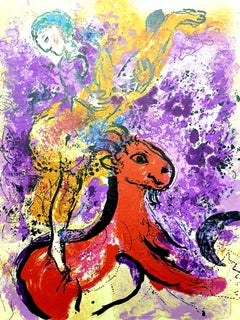
Marc Chagall - The Red Rider - Original Lithograph

Marc Chagall - The Red Rider - Original Lithograph

By Marc Chagall

Located in Collonge Bellerive, Geneve, CH

Marc Chagall - Original Lithograph The Red Rider From the unsigned, unnumbered lithograph printed in the literary review XXe Siecle 1957 See Mourlot 191 Dimensions: 32 x 24 cm Publisher: G. di San Lazzaro. Marc Chagall (born in 1887) Marc Chagall was born in Belarus in 1887 and developed an early interest in art. After studying painting, in 1907 he left Russia for Paris, where he lived in an artist colony on the city’s outskirts. Fusing his own personal, dreamlike imagery with hints of the fauvism and cubism popular in France at the time, Chagall created his most lasting work—including I and the Village (1911)—some of which would be featured in the Salon des Indépendants exhibitions. After returning to Vitebsk for a visit in 1914, the outbreak of WWI trapped Chagall in Russia. He returned to France in 1923 but was forced to flee the country and Nazi persecution during WWII. Finding asylum in the U.S., Chagall became involved in set and costume design before returning to France in 1948. In his later years, he experimented with new art forms and was commissioned to produce numerous large-scale works. Chagall died in St.-Paul-de-Vence in 1985. The Village Marc Chagall was born in a small Hassidic community on the outskirts of Vitebsk, Belarus, on July 7, 1887. His father was a fishmonger, and his mother ran a small sundries shop in the village. As a child, Chagall attended the Jewish elementary school, where he studied Hebrew and the Bible, before later attending the Russian public school. He began to learn the fundamentals of drawing during this time, but perhaps more importantly, he absorbed the world around him, storing away the imagery and themes that would feature largely in most of his later work. At age 19 Chagall enrolled at a private, all-Jewish art school and began his formal education in painting, studying briefly with portrait artist Yehuda Pen. However, he left the school after several months, moving to St. Petersburg in 1907 to study at the Imperial Society for the Protection of Fine Arts. The following year, he enrolled at the Svanseva School, studying with set designer Léon Bakst, whose work had been featured in Sergei Diaghilev's Ballets Russes. This early experience would prove important to Chagall’s later career as well. Despite this formal instruction, and the widespread popularity of realism in Russia at the time, Chagall was already establishing his own personal style, which featured a more dreamlike unreality and the people, places and imagery that were close to his heart. Some examples from this period are his Window Vitebsk (1908) and My Fianceé with Black Gloves (1909), which pictured Bella Rosenfeld, to whom he had recently become engaged. The Beehive Despite his romance with Bella, in 1911 an allowance from Russian parliament member and art patron Maxim Binaver enabled Chagall to move to Paris, France. After settling briefly in the Montparnasse neighborhood, Chagall moved further afield to an artist colony known as La Ruche (“The Beehive”), where he began to work side by side with abstract painters such as Amedeo Modigliani and Fernand Léger as well as the avant-garde poet Guillaume Apollinaire. At their urging, and under the influence of the wildly popular fauvism and cubism, Chagall lightened his palette and pushed his style ever further from reality. I and the Village (1911) and Homage to Apollinaire (1912) are among his early Parisian works, widely considered to be his most successful and representative period. Though his work stood stylistically apart from his cubist contemporaries, from 1912 to 1914 Chagall exhibited several paintings at the annual Salon des Indépendants exhibition, where works by the likes of Juan Gris, Marcel Duchamp and Robert Delaunay were causing a stir in the Paris art world. Chagall’s popularity began to spread beyond La Ruche, and in May 1914 he traveled to Berlin to help organize his first solo exhibition, at Der Sturm Gallery. Chagall remained in the city until the highly acclaimed show opened that June. He then returned to Vitebsk, unaware of the fateful events to come. War, Peace and Revolution In August 1914 the outbreak of World War I precluded Chagall’s plans to return to Paris. The conflict did little to stem the flow of his creative output, however, instead merely giving him direct access to the childhood scenes so essential to his work, as seen in paintings such as Jew in Green (1914) and Over Vitebsk (1914). His paintings from this period also occasionally featured images of the war’s impact on the region, as with Wounded Soldier (1914) and Marching (1915). But despite the hardships of life during wartime, this would also prove to be a joyful period for Chagall. In July 1915 he married Bella, and she gave birth to a daughter, Ida, the following year. Their appearance in works such as Birthday (1915), Bella and Ida by the Window (1917) and several of his “Lovers” paintings give a glimpse of the island of domestic bliss that was Chagall’s amidst the chaos. To avoid military service and stay with his new family, Chagall took a position as a clerk in the Ministry of War Economy in St. Petersburg. While there he began work on his autobiography and also immersed himself in the local art scene, befriending novelist Boris Pasternak, among others. He also exhibited his work in the city and soon gained considerable recognition. That notoriety would prove important in the aftermath of the 1917 Russian Revolution when he was appointed as the Commissar of Fine Arts in Vitebsk. In his new post, Chagall undertook various projects in the region, including the 1919 founding of the Academy of the Arts. Despite these endeavors, differences among his colleagues eventually disillusioned Chagall. In 1920 he relinquished his position and moved his family to Moscow, the post-revolution capital of Russia. In Moscow, Chagall was soon commissioned to create sets and costumes for various productions at the Moscow State Yiddish Theater, where he would paint a series of murals titled Introduction to the Jewish Theater as well. In 1921, Chagall also found work as a teacher at a school for war orphans. By 1922, however, Chagall found that his art had fallen out of favor, and seeking new horizons he left Russia for good. Flight After a brief stay in Berlin, where he unsuccessfully sought to recover the work exhibited at Der Sturm before the war, Chagall moved his family to Paris in September 1923. Shortly after their arrival, he was commissioned by art dealer and publisher Ambroise Vollard to produce a series of etchings for a new edition of Nikolai Gogol's 1842 novel Dead Souls. Two years later Chagall began work on an illustrated edition of Jean de la Fontaine’s Fables, and in 1930 he created etchings for an illustrated edition of the Old Testament, for which he traveled to Palestine to conduct research. Chagall’s work during this period brought him new success as an artist and enabled him to travel throughout Europe in the 1930s. He also published his autobiography, My Life (1931), and in 1933 received a retrospective at the Kunsthalle in Basel, Switzerland. But at the same time that Chagall’s popularity was spreading, so, too, was the threat of Fascism and Nazism. Singled out during the cultural "cleansing" undertaken by the Nazis in Germany, Chagall’s work was ordered removed from museums throughout the country. Several pieces were subsequently burned, and others were featured in a 1937 exhibition of “degenerate art” held in Munich. Chagall’s angst regarding these troubling events and the persecution of Jews in general can be seen in his 1938 painting White Crucifixion. With the eruption of World War II, Chagall and his family moved to the Loire region before moving farther south to Marseilles following the invasion of France. They found a more certain refuge when, in 1941, Chagall’s name was added by the director of the Museum of Modern Art (MOMA) in New York City to a list of artists and intellectuals deemed most at risk from the Nazis’ anti-Jewish campaign. Chagall and his family would be among the more than 2,000 who received visas and escaped this way. Haunted Harbors Arriving in New York City in June 1941, Chagall discovered that he was already a well-known artist there and, despite a language barrier, soon became a part of the exiled European artist community. The following year he was commissioned by choreographer Léonide Massine to design sets and costumes for the ballet Aleko, based on Alexander Pushkin’s “The Gypsies” and set to the music of Pyotr Ilyich Tchaikovsky. But even as he settled into the safety of his temporary home, Chagall’s thoughts were frequently consumed by the fate befalling the Jews of Europe and the destruction of Russia, as paintings such as The Yellow Crucifixion...

Category

1950s Surrealist Leon Dupin Art

Materials

Lithograph

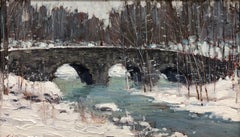
Bucks County Bridge
Bucks County Bridge

David HahnBucks County Bridge

$3,000

H 12 in W 20 in

Bucks County Bridge

Located in Greenville, DE

Outstanding work by Bucks County artist David Hahn. The winter scene is of Bucks County Bridge painted with heavy imposto.

Category

Late 20th Century Impressionist Leon Dupin Art
Materials

Masonite, Oil

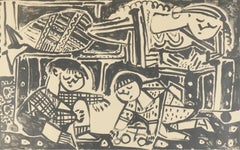
La Mère et les Enfants

Pablo PicassoLa Mère et les Enfants, 1953

$32,000

H 19.75 in W 29.25 in

La Mère et les Enfants

By Pablo Picasso

Located in New York, NY

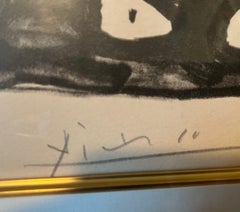
Signed by Picasso in pencil lower left. Numbered 32/50 in pencil lower right. Catalogue raisonne references: Bloch 739; Mourlot 239; Reuße 625. Framed print. Framed dimensions ...

Category

1950s Cubist Leon Dupin Art
Materials

Lithograph

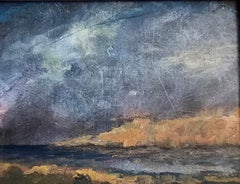
Near Santa Fe, 1932
Near Santa Fe, 1932

Catherine H HarkinsNear Santa Fe, 1932, 1932

$965

H 4.25 in W 5.25 in D 1 in

Near Santa Fe, 1932

Located in North Clarendon, VT

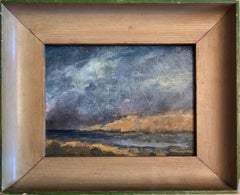
Beautiful gem of a painting capturing stormy skies over a classic Santa Fe landscape. Painted in 1932 by Catherine H. Harkins. Oil on board, 4.25" x...

Category

1930s American Impressionist Leon Dupin Art
Materials

Oil

Seaside Abstract Impressionist Painting, Oil on Canvas, 20th Century

Seaside Abstract Impressionist Painting, Oil on Canvas, 20th Century

By Lucien Durand

Located in Belgrade, MT

This painting by Lucien Durand is one of a kind and signed on the back. It is from my private collection since the 1970's.

Category

20th Century Impressionist Leon Dupin Art
Materials

Oil

“Covered Bridge, Kingston, NY, 1927” by Walter Koeniger, Snowy Winter Landscape

“Covered Bridge, Kingston, NY, 1927” by Walter Koeniger, Snowy Winter Landscape

By Walter Koeniger

Located in Yardley, PA

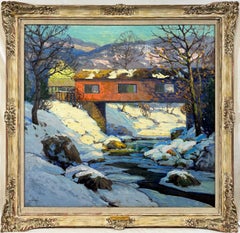
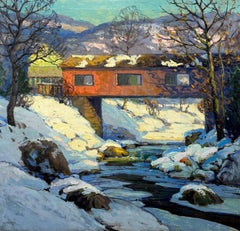
Known for his evocative, snow-covered landscapes, Koeniger brings this subject to life with his bold, confident brushwork and keen eye for natural light. The composition centers arou...

Category

1920s American Impressionist Leon Dupin Art
Materials

Canvas, Oil

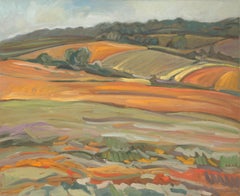
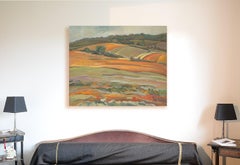
"The Naked Soil", Sweeping Ochre Farmland Impressionist Oil Painting on Canvas

"The Naked Soil", Sweeping Ochre Farmland Impressionist Oil Painting on Canvas

By Yves Calméjane

Located in Clermont-Ferrand, Auvergne-Rhône-Alpes

A deep ochre warmth spreads across this generously scaled oil on canvas, measuring H 31.9 in x W 39.4 in x D 0.8 in, pulling the eye across an undulating rural landscape that breathe...

Category

2010s Impressionist Leon Dupin Art
Materials

Canvas, Oil

Leon Dupin art for sale on 1stDibs.

Find a wide variety of authentic Leon Dupin art available for sale on 1stDibs. If you’re browsing the collection of art to introduce a pop of color in a neutral corner of your living room or bedroom, you can find work that includes elements of orange and other colors. You can also browse by medium to find art by Leon Dupin in paper, lithograph and more. Much of the original work by this artist or collective was created during the 1930s and is mostly associated with the Art Deco style. Not every interior allows for large Leon Dupin art, so small editions measuring 16 inches across are available. Customers who are interested in this artist might also find the work of Charles Turzak, Frank Henry Mason, and Jupp Wiertz. Leon Dupin art prices can differ depending upon medium, time period and other attributes. On 1stDibs, the price for these items starts at $929 and tops out at $1,575, while the average work can sell for $1,515.