Man Ray More Art

American, 1890-1976

Born Emmanuel Radnitzky, Man Ray was a famous American filmmaker, painter and photographer. His career is distinctive, above all, for the success he achieved in both the United States and Europe. First maturing at the center of American modernism in the 1910s, he made Paris his home in the 1920s and 1930s. In the 1940s, he crossed the Atlantic once again and spent periods in New York and Hollywood. 

Ray’s art spanned painting, sculpture, film, prints and poetry, and in his long career, he worked in styles influenced by Cubism, Futurism, Dada and Surrealism. He also successfully navigated the worlds of commercial and fine art and came to be a sought-after fashion photographer. Ray is perhaps most remembered for his photographs of the inter-war years, in particular, the camera-less pictures he called "Rayographs," but he always regarded himself first and foremost as a painter. Although he matured as an abstract painter, Ray eventually disregarded the traditional superiority painting held over photography and happily moved between different forms. Dada and Surrealism were important in encouraging this attitude; they also persuaded him that the idea that motivates a work of art was more important than the work of art itself. 

André Breton once described Ray as a pre-Surrealist, something which accurately describes his natural affinity for the style. Even before the movement had coalesced, in the mid-1920s, his work, influenced by Marcel Duchamp, had Surrealist undertones. He would continue to draw on the movement's ideas throughout his life. Ray's work has ultimately been very important in popularizing Surrealism.

Find original Man Ray art on 1stDibs.

to
1
1
1
Overall Width
to
Overall Height
to
2
1
1
1
1
1
1
1
94
293
226
125
117
1
1
Artist: Man Ray
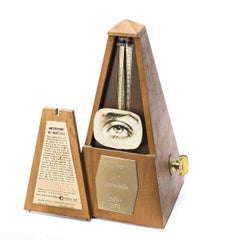
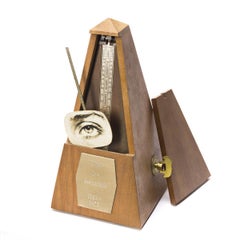
Do Not Destroy (Object Indestructable)

Do Not Destroy (Object Indestructable)

By Man Ray

Located in New York, NY

Wood and metal metronome with printed eye. Initialed and numbered 16/200 in felt tip pen and ink on printed label on bottom of object. Published by the New York Cultural center. Con...

Category

20th Century Dada Man Ray More Art

Materials

Metal
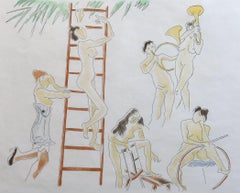
Mid Century Modern Limited Edition Etching - La Ballade des Dames Hors du Temps

Mid Century Modern Limited Edition Etching - La Ballade des Dames Hors du Temps

By Man Ray

Located in ludlow, GB

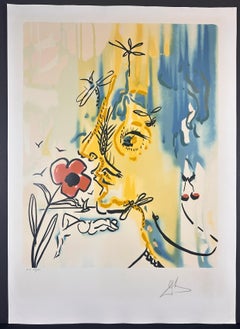
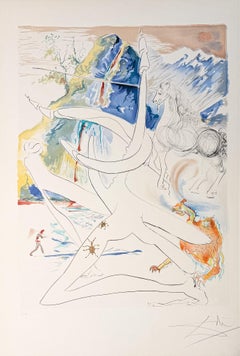
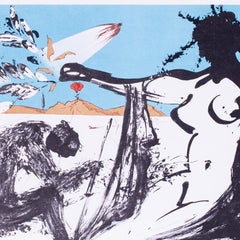
Mid Century Modern Limited Edition Etching from "La Ballade des Dames Hors du Temps". This Signed and Numbered Limited Edition Etching with Aquatint - a Proof aside from the Edition....

Category

20th Century Surrealist Man Ray More Art

Materials

Lithograph

Related Items
La Valse Hésitation - 20th Century, Surrealist, Lithograph, Figurative Print

La Valse Hésitation - 20th Century, Surrealist, Lithograph, Figurative Print

By (after) René Magritte

Located in Sint-Truiden, BE

Numbered: 138/275 Color lithograph after the 1950 oil on canvas by René Magritte, printed signature of Magritte and numbered from the edition of 275. The lithograph features the dry...

Category

20th Century Surrealist Man Ray More Art

Materials

Lithograph

RENÉ MAGRITTE - LA RECONNAISSANCE INFINIE Limited edition Lithograph. Surrealism

RENÉ MAGRITTE - LA RECONNAISSANCE INFINIE Limited edition Lithograph. Surrealism

By (after) René Magritte

Located in Madrid, Madrid

LA RECONNAISSANCE INFINIE (THE INFINITE RECOGNITION, 1963) Date of creation: 2010 Medium: Lithograph on BFK Rives Paper Edition number: 147/275 Size: 60 x 45 cm Observations: Lithogr...

Category

Mid-20th Century Surrealist Man Ray More Art

Materials

Lithograph

La Grande Guerre - 20th Century, Surrealist, Lithograph, Figurative Print

La Grande Guerre - 20th Century, Surrealist, Lithograph, Figurative Print

By René Magritte

Located in Sint-Truiden, BE

Color lithograph after the 1954 oil on canvas by René Magritte, plate-signed by Magritte and numbered from the edition of 300. The lithograph features the dry stamps of the Magritte...

Category

20th Century Surrealist Man Ray More Art

Materials

Lithograph

Les Baigneuses Lithograph, Surrealist Style, Mid-20th Century, Signed

Les Baigneuses Lithograph, Surrealist Style, Mid-20th Century, Signed

By André Marchand

Located in Belgrade, MT

This lithograph Les baigneuses ( The bathers) by Andre Marchand is part of my private collection since the 1970's. It is in very good condition, artist pencil signed in the lower lef...

Category

Mid-20th Century Surrealist Man Ray More Art

Materials

Lithograph

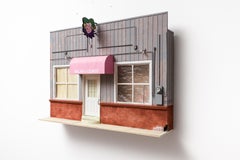
"Crossing Paths: Sunset" Hand-Crafted Origami Stars in Wall-Hanging Sculpture

"Crossing Paths: Sunset" Hand-Crafted Origami Stars in Wall-Hanging Sculpture

By Kelly Kozma

Located in Philadelphia, PA

This sculpture titled "Crossing Paths: Sunset" is an original artwork by Kelly Kozma as part of her newest exhibition, "Watch Me Backflip." This collection is made up of meticulously...

Category

21st Century and Contemporary Man Ray More Art

Materials

Metal
"Untitled Bottles" Laurence Vail, Dada, Surrealist, Modernist College Bottles

"Untitled Bottles" Laurence Vail, Dada, Surrealist, Modernist College Bottles

Located in New York, NY

Laurence Vail Untitled Bottles, circa 1942 Collaged glass bottles 8 3/4 x 5 inches, 12 1/4 x 3 3/4 inches Provenance The artist Art of the Century, New York Dwight Ripley Estate of Dwight Ripley By Descent, New York Acquired from the above, 2025 Exhibited New York, Art of This Century, Laurence Vail: Bottles, December 1942. Greenwich, CT, Bruce Museum, Connecticut Modern: Art, Design and the Avant-Garde, 1930-1960, September 23, 2023-January 7, 2024. Literature Susan Davidson, Peggy Guggenheim and Frederick Kiesler: The Story of Art of This Century, Guggenheim Museum Publications, 2004, p. 319-320. Laurence Vail was born in Paris on January 28, 1891, to American parents. His father, Eugène Vail, was a painter, renowned for his depictions of Brittany and Venice. For many years throughout his childhood, Vail accompanied his father on his travels to Venice. Having initially studied in France, he moved to England to study literature at Oxford University. Upon his return to Paris, he devoted himself to writing plays and essays, translating books from French, painting, sculpting, and creating collages. In the late 1920s he was considered a main figure of Paris's flourishing intellectual and social circles, to the extent that he became known as the "King of Bohemia." He associated with writers and artists, including Marcel Duchamp and Man Ray, who crowded the cafes of Montparnasse. In 1922 he married Peggy Guggenheim, who was, in his eyes, a young woman to whom he could teach art, life, and literature. After the birth of their first son, Sindbad, the couple travelled to Italy and Egypt. In 1926 they went to Switzerland, where their second child, Pegeen, was born. The family settled in Pramousquier in the south of France, where Vail started writing the novel Murder! Murder!, a cutting satire about his marriage, published in 1932. He also continued to paint, creating a series of works which were exhibited for the first time in 1926 at the Parisian boutique on the rue du Colisée managed by Guggenheim and her business partner, Mina Loy...

Category

1940s Dada Man Ray More Art

Materials

Glass, Paper, Mixed Media

Marc Chagall - Original Lithograph

Marc ChagallMarc Chagall - Original Lithograph, 1963

$1,495

H 9.45 in W 12.6 in D 0.04 in

Marc Chagall - Original Lithograph

By Marc Chagall

Located in Collonge Bellerive, Geneve, CH

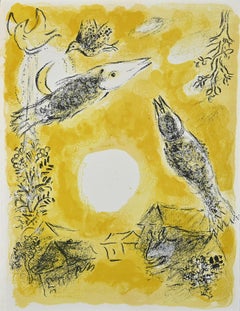
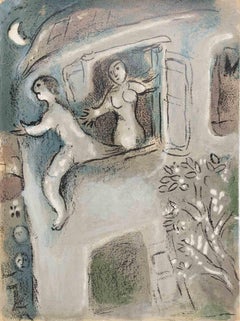
Marc Chagall Original Lithograph 1963 Dimensions: 32 x 24 cm Reference: Chagall Lithographe 1957-1962. VOLUME II. Condition : Excellent Marc Chagall (born in 1887) Marc Chagall was born in Belarus in 1887 and developed an early interest in art. After studying painting, in 1907 he left Russia for Paris, where he lived in an artist colony on the city’s outskirts. Fusing his own personal, dreamlike imagery with hints of the fauvism and cubism popular in France at the time, Chagall created his most lasting work—including I and the Village (1911)—some of which would be featured in the Salon des Indépendants exhibitions. After returning to Vitebsk for a visit in 1914, the outbreak of WWI trapped Chagall in Russia. He returned to France in 1923 but was forced to flee the country and Nazi persecution during WWII. Finding asylum in the U.S., Chagall became involved in set and costume design before returning to France in 1948. In his later years, he experimented with new art forms and was commissioned to produce numerous large-scale works. Chagall died in St.-Paul-de-Vence in 1985. The Village Marc Chagall was born in a small Hassidic community on the outskirts of Vitebsk, Belarus, on July 7, 1887. His father was a fishmonger, and his mother ran a small sundries shop in the village. As a child, Chagall attended the Jewish elementary school, where he studied Hebrew and the Bible, before later attending the Russian public school. He began to learn the fundamentals of drawing during this time, but perhaps more importantly, he absorbed the world around him, storing away the imagery and themes that would feature largely in most of his later work. At age 19 Chagall enrolled at a private, all-Jewish art school and began his formal education in painting, studying briefly with portrait artist Yehuda Pen. However, he left the school after several months, moving to St. Petersburg in 1907 to study at the Imperial Society for the Protection of Fine Arts. The following year, he enrolled at the Svanseva School, studying with set designer Léon Bakst, whose work had been featured in Sergei Diaghilev's Ballets Russes. This early experience would prove important to Chagall’s later career as well. Despite this formal instruction, and the widespread popularity of realism in Russia at the time, Chagall was already establishing his own personal style, which featured a more dreamlike unreality and the people, places and imagery that were close to his heart. Some examples from this period are his Window Vitebsk (1908) and My Fianceé with Black Gloves (1909), which pictured Bella Rosenfeld, to whom he had recently become engaged. The Beehive Despite his romance with Bella, in 1911 an allowance from Russian parliament member and art patron Maxim Binaver enabled Chagall to move to Paris, France. After settling briefly in the Montparnasse neighborhood, Chagall moved further afield to an artist colony known as La Ruche (“The Beehive”), where he began to work side by side with abstract painters such as Amedeo Modigliani and Fernand Léger as well as the avant-garde poet Guillaume Apollinaire. At their urging, and under the influence of the wildly popular fauvism and cubism, Chagall lightened his palette and pushed his style ever further from reality. I and the Village (1911) and Homage to Apollinaire (1912) are among his early Parisian works, widely considered to be his most successful and representative period. Though his work stood stylistically apart from his cubist contemporaries, from 1912 to 1914 Chagall exhibited several paintings at the annual Salon des Indépendants exhibition, where works by the likes of Juan Gris, Marcel Duchamp and Robert Delaunay were causing a stir in the Paris art world. Chagall’s popularity began to spread beyond La Ruche, and in May 1914 he traveled to Berlin to help organize his first solo exhibition, at Der Sturm Gallery. Chagall remained in the city until the highly acclaimed show opened that June. He then returned to Vitebsk, unaware of the fateful events to come. War, Peace and Revolution In August 1914 the outbreak of World War I precluded Chagall’s plans to return to Paris. The conflict did little to stem the flow of his creative output, however, instead merely giving him direct access to the childhood scenes so essential to his work, as seen in paintings such as Jew in Green (1914) and Over Vitebsk (1914). His paintings from this period also occasionally featured images of the war’s impact on the region, as with Wounded Soldier (1914) and Marching (1915). But despite the hardships of life during wartime, this would also prove to be a joyful period for Chagall. In July 1915 he married Bella, and she gave birth to a daughter, Ida, the following year. Their appearance in works such as Birthday (1915), Bella and Ida by the Window (1917) and several of his “Lovers” paintings give a glimpse of the island of domestic bliss that was Chagall’s amidst the chaos. To avoid military service and stay with his new family, Chagall took a position as a clerk in the Ministry of War Economy in St. Petersburg. While there he began work on his autobiography and also immersed himself in the local art scene, befriending novelist Boris Pasternak, among others. He also exhibited his work in the city and soon gained considerable recognition. That notoriety would prove important in the aftermath of the 1917 Russian Revolution when he was appointed as the Commissar of Fine Arts in Vitebsk. In his new post, Chagall undertook various projects in the region, including the 1919 founding of the Academy of the Arts. Despite these endeavors, differences among his colleagues eventually disillusioned Chagall. In 1920 he relinquished his position and moved his family to Moscow, the post-revolution capital of Russia. In Moscow, Chagall was soon commissioned to create sets and costumes for various productions at the Moscow State Yiddish Theater...

Category

1960s Surrealist Man Ray More Art

Materials

Lithograph

Paper Sculpture, Wall Hanging: 'Alternate Arrangement 8'

Paper Sculpture, Wall Hanging: 'Alternate Arrangement 8'

By Samuelle Green

Located in New York, NY

Samuelle Green’s work has always been multidisciplinary. Throughout all her mediums; painting, drawing, sculpture, and installation, there is a common thread of subject matter – that...

Category

2010s Contemporary Man Ray More Art

Materials

Wire

Daphnis & Chloé - Original Lithograph - platesigned - numbered

Daphnis & Chloé - Original Lithograph - platesigned - numbered

By (after) Marc Chagall

Located in Sint-Truiden, BE

Marc Chagall (1887-1985) (after) - Cycle Daphné & Chloé Original lithograph Print 131/333 copies, from 1985, guaranteed SPADEM, signed in the plate. Numbered in pencil, on Arches vel...

Category

20th Century Surrealist Man Ray More Art

Materials

Lithograph

Le Retour - 20th Century, Surrealist, Lithograph, Figurative Print

Le Retour - 20th Century, Surrealist, Lithograph, Figurative Print

By (after) René Magritte

Located in Sint-Truiden, BE

Color lithograph after the 1940 oil on canvas by René Magritte, printed signature of Magritte and numbered from the edition of 300. The lithograph features the dry stamps of the Mag...

Category

20th Century Surrealist Man Ray More Art

Materials

Lithograph

Previously Available Items
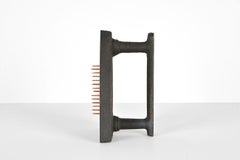
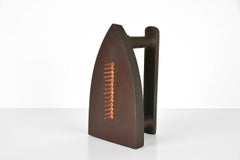
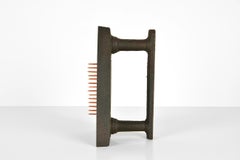
MAN RAY - Cadeau, Limited edition Sculpture - Dada, Surrealist

MAN RAY - Cadeau, Limited edition Sculpture - Dada, Surrealist

By Man Ray

Located in Madrid, Madrid

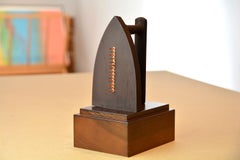
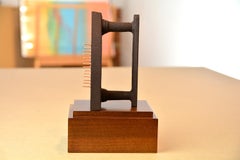
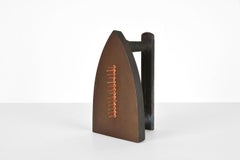
Cadeau, 1921 Later edition, published in 1974 Medium: Sculpture Media: Iron & copper nails Numbered edition: 1966/5000 Size: 16.5 x 10.2 x 8.9 cm Observations: "Cadeau" or "The Gift"...

Category

1970s Dada Man Ray More Art

Materials

Copper, Iron

MAN RAY - Cadeau, Limited edition Sculpture - Dada, Surrealist

MAN RAY - Cadeau, Limited edition Sculpture - Dada, Surrealist

By Man Ray

Located in Madrid, Madrid

Cadeau, 1921 Later edtion, published in 1974 Medium: Sculpture Media: Iron & copper nails Edition: 5000 Size: 16.5 x 10.2 x 8.9 cm Observations: "Cadeau" or "The Gift" is one of the ...

Category

1970s Dada Man Ray More Art

Materials

Copper, Iron

MAN RAY - Cadeau, Limited edition Sculpture - Dada, Surrealist

MAN RAY - Cadeau, Limited edition Sculpture - Dada, Surrealist

By Man Ray

Located in Madrid, Madrid

Cadeau, 1921 Later edtion, published in 1974 Medium: Sculpture Media: Iron & copper nails Edition: 5000 Size: 16.5 x 10.2 x 8.9 cm Observations: "Cadeau" or "The Gift" is one of the ...

Category

1970s Dada Man Ray More Art

Materials

Copper, Iron

Man Ray more art for sale on 1stDibs.

Find a wide variety of authentic Man Ray more art available for sale on 1stDibs. You can also browse by medium to find art by Man Ray in lithograph and more. Much of the original work by this artist or collective was created during the 20th century and is mostly associated with the Surrealist style. Not every interior allows for large Man Ray more art, so small editions measuring 27 inches across are available. Customers who are interested in this artist might also find the work of Jean Cocteau, Max Ernst, and Igael Tumarkin. Man Ray more art prices can differ depending upon medium, time period and other attributes. On 1stDibs, the price for these items starts at $3,196 and tops out at $3,196, while the average work can sell for $3,196.
Questions About Man Ray More Art
  • 1stDibs ExpertApril 5, 2022
    Man Ray created paintings, collages and films, but he is best known for photography. While working in his darkroom, he discovered that by moving objects around on photosensitive paper he could create unique images dubbed rayographs or photograms. Find a collection of Man Ray art on 1stDibs.
  • 1stDibs ExpertApril 5, 2022
    Man Ray, an American photographer, painter and filmmaker, was known for his revolutionary experimentation with photography, including making “cameraless” pictures by placing objects on light-sensitive paper and exposing the paper to light. Ray called these photographs “rayographs.” On 1stDibs, Shop a collection of authentic Man Ray photographs from top sellers worldwide.
  • 1stDibs ExpertOctober 15, 2024
    Man Ray, the Surrealist photographer, was born Emmanuel Radnitzky. His career is distinctive for the success he achieved in both the United States and Europe. Ray’s art spanned painting, sculpture, film, prints and poetry, and in his long career, he worked in styles influenced by Cubism, Futurism, Dada and Surrealism. He also successfully navigated the worlds of commercial and fine art and became a sought-after fashion photographer. Ray is perhaps most remembered for his photographs of the interwar years, in particular the camera-less pictures he called "Rayographs." Shop a variety of Man Ray art on 1stDibs.
  • 1stDibs ExpertApril 26, 2024
    Man Ray changed his name in response to antisemitic attitudes that were impacting his work during the early 20th century. "Man" came from his nickname, Manny, shortened from Emmanuel. For his surname, Ray took the first two and final letters of his birth name, Radnitzky. Explore a range of Man Ray art on 1stDibs.