Marcel Breuer Vitrines

American, Hungarian, 1902-1981

The architect and designer Marcel Breuer was one the 20th century’s most influential and innovative adherents of modernism. A member of the Bauhaus faculty, Breuer — like such colleagues as the architects Walter Gropius and Ludwig Mies van der Rohe, and the artists and art theoreticians László Moholy-Nagy and Josef Albers — left Europe in the 1930s to champion the new design philosophy and its practice in the United States.

Born in Hungary, Breuer became a Bauhaus student in 1920 and quickly impressed Gropius, the German school’s founder, with his aptitude for furniture design. His early work was influenced by the minimalist Dutch design movement De Stijl — in particular the work of architect Gerrit Rietveld.

In 1925, while he was head of the Bauhaus furniture workshop, Breuer realized his signature innovation: the use of lightweight tubular-steel frames for chairs, tables and sofas — a technique soon adopted by Mies and others. Breuer’s attention gradually shifted from design to architecture, and, at the urging of Gropius, he joined his mentor in 1937 on the faculty of Harvard and in an architectural practice.

In the 1940s, Breuer opened his own architectural office, and there his style evolved from geometric, glass-walled structures toward a kind of hybrid architecture — seen in numerous Breuer houses in New England — that pairs bases of local fieldstone with sleek, wood-framed modernist upper floors. In his later, larger commissions, Breuer worked chiefly with reinforced concrete and stone, as seen in his best-known design, the brutalist inverted ziggurat built in New York in 1966 as the home of the Whitney Museum of American Art.

Breuer’s most famous furniture pieces are those made of tubular steel, which include the Wassily chair — named after Wassily Kandinsky and recognizable for its leather-strap seating supports — and the caned Cesca chair.

Breuer also made several notable designs in molded plywood, including a chaise and nesting table for the British firm Isokon and a student furniture suite commissioned in 1938 for a dormitory at Bryn Mawr College. Whether in metal or wood, Breuer’s design objects are elegant and adaptable examples of classic modernist design — useful and appropriate in any environment.

Find vintage Marcel Breuer seating, storage cabinets and lighting on 1stDibs.
to
Height
to
Width
to
Depth
to
1
1
1
1
1
1
1
1
1
1
1
1
1
1
244
30
20
10
10
Creator: Marcel Breuer
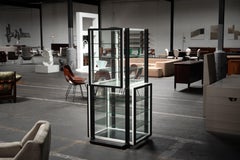
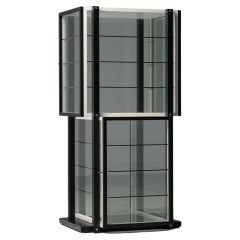
Marcel Breuer S40 cabinet for Tecta Germany 1980

Marcel Breuer S40 cabinet for Tecta Germany 1980

By Marcel Breuer

Located in Roosendaal, Noord Brabant

Rare display cabinet model S40, originally designed by Marcel Breuer in 1925. Re-editioned by Tecta Germany in the 1980s. Marcel Breuer always had a structural and architectural way ...

Category

1920s German Bauhaus Vintage Marcel Breuer Vitrines

Materials

Glass, Beech

Related Items
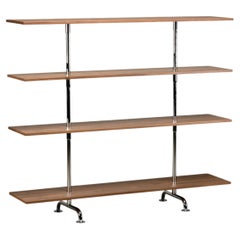
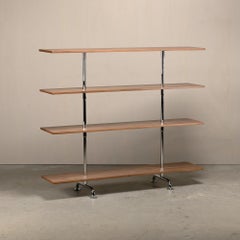
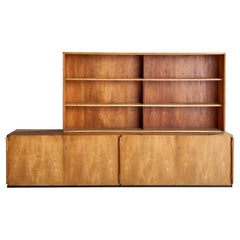
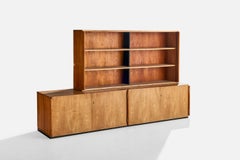
Marcel Breuer Bauhaus S44 bookshelf in chrome and walnut veneer for Tecta

Marcel Breuer Bauhaus S44 bookshelf in chrome and walnut veneer for Tecta

By Marcel Breuer

Located in Amsterdam, NL

Bookshelf original designed by Marcel Breuer in 1932 for the Clarté House in Geneva. Simple and carefully designed appearance with four height-adjustable shelves in walnut veneer sup...

Category

Early 20th Century German Bauhaus Marcel Breuer Vitrines

Materials

Metal, Chrome

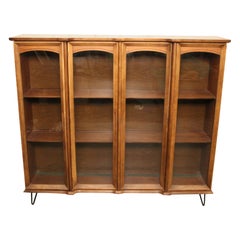
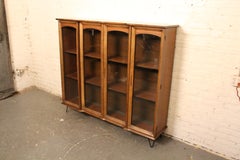
Mid-Century "Outlook" Display Cabinet by Leo Jiranek for Bassett

Mid-Century "Outlook" Display Cabinet by Leo Jiranek for Bassett

By Leo Jiranek, Bassett Furniture

Located in Brooklyn, NY

Designed by Leo Jiranek, a forefather of mid-century American Modern furniture, this vintage vitrine was created for his "Outlook" Collection made by Virginia's Bassett Furniture. Hi...

Category

Mid-20th Century American Mid-Century Modern Marcel Breuer Vitrines

Materials

Metal

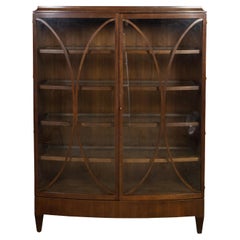
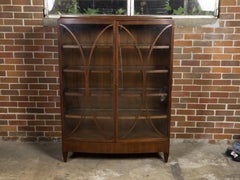
Barbara Barry for Henredon Vitrine Cabinet with Glass Doors and Shelves

Barbara Barry for Henredon Vitrine Cabinet with Glass Doors and Shelves

By Barbara Barry, Henredon

Located in Atlanta, GA

A Barbara Barry for Henredon wooden bow front vitrine cabinet from the late 20th century with oval motifs, glass doors and glass shelves. Designed by Barbara Barry for Henredon during the later years of the 20th century, this wooden cabinet features a thin curving cornice sitting above two bow-front glass doors, adorned with thin oval motifs and fitted with a single brass pull. These doors open to reveal four glass in wooden frames inner shelves offering convenient display opportunities. The ensemble is raised on four short tapered feet. The décor on the side shows great restraint as it is left bare and the back is simply planked. With its clean lines and modern design, this Barbary Barry for Henredon vintage vitrine...

Category

Late 20th Century American Modern Marcel Breuer Vitrines

Materials

Glass, Wood

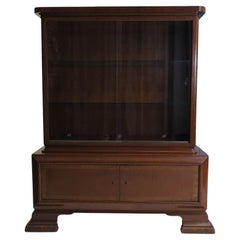
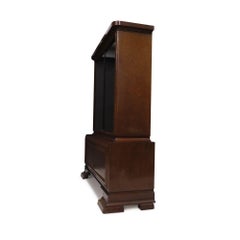
1930's German Deco China Cabinet Hutch

1930's German Deco China Cabinet Hutch

$1,400

H 66.75 in W 57.5 in D 19.5 in

1930's German Deco China Cabinet Hutch

Located in Oakland, CA

1930s German Art Deco Cabinet crafted from walnut, featuring a pair of sliding glass doors and adjustable shelves, above a cabinet with locking...

Category

Mid-20th Century German Mid-Century Modern Marcel Breuer Vitrines

Materials

Glass, Walnut

Marcel Breuer Attribution, Sideboard, Cherry, Glass, Germany, 1925

Marcel Breuer Attribution, Sideboard, Cherry, Glass, Germany, 1925

By Marcel Breuer

Located in High Point, NC

A cherry-veneered wood and glass cabinet or sideboard attributed to Marcel Breuer. Present cabinet was produced for the apartment of Fred Forbát, Zehlendorf, Berlin, Germany, c. 1925...

Category

1920s German Bauhaus Vintage Marcel Breuer Vitrines

Materials

Glass, Cherry

1980s Bassett Queen Anne-Style Walnut Vitrine or China Cabinet

1980s Bassett Queen Anne-Style Walnut Vitrine or China Cabinet

By Bassett Furniture

Located in Rancho Cucamonga, CA

A 1980s Queen Anne-style vitrine or china cabinet by Bassett Furniture. The two-part design pairs a glass-front upper display hutch with a substantial buffet base in a warm walnut to...

Category

Late 20th Century American Queen Anne Marcel Breuer Vitrines

Materials

Glass, Wood

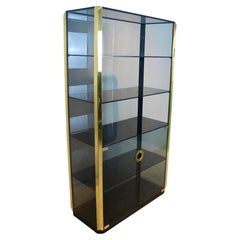
Willy Rizzo Smoked Glass Cabinet for Mario Sabot, 1970

Willy Rizzo Smoked Glass Cabinet for Mario Sabot, 1970

$3,101

H 70.87 in W 37.41 in D 16.93 in

Willy Rizzo Smoked Glass Cabinet for Mario Sabot, 1970

By Willy Rizzo, Mario Sabot

Located in Voorburg, NL

Beautiful Smoked glass cabinet designed by Willy Rizzo for Mario Sabot, 1970s. The cabinet comes with smoked glass with accenting brass hardware. The frame of the cabinet is made of ...

Category

Mid-20th Century Belgian Mid-Century Modern Marcel Breuer Vitrines

Materials

Brass, Steel

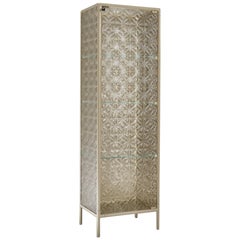
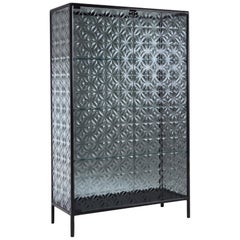
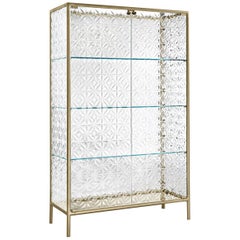
Fiam italia  Echo Showcase by Marcel Wanders Studio

Fiam italia Echo Showcase by Marcel Wanders Studio

$9,314 / item

H 68.9 in W 20.87 in D 16.15 in

Fiam italia Echo Showcase by Marcel Wanders Studio

By MARCEL WANDERS, FIAM

Located in New York, NY

Showcase with varnished aluminum profiles, available in metalized champagne or Vulcan grey finishes. Base in 6 mm thick tempered and back lacquered extra light glass of the same prof...

Category

2010s Italian Marcel Breuer Vitrines

Materials

Glass

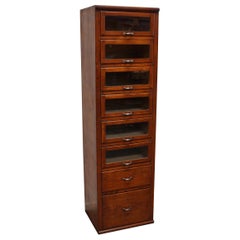
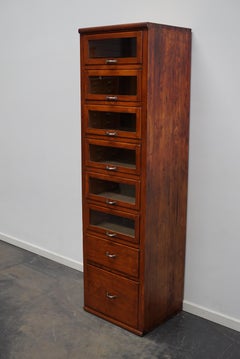
Tall Vintage German Pine Haberdashery Shop Cabinet, 1950s

Tall Vintage German Pine Haberdashery Shop Cabinet, 1950s

$2,194

H 73.23 in W 20.87 in D 16.93 in

Tall Vintage German Pine Haberdashery Shop Cabinet, 1950s

Located in Nijmegen, NL

This haberdashery cabinet was produced during the 1950s in Germany. This piece features 8 drawers in pine with glass fronts and metal handles. It was originally used in a shop for sewing supplies. The interior dimensions of the glass fronted drawers...

Category

1950s Dutch Industrial Vintage Marcel Breuer Vitrines

Materials

Pine

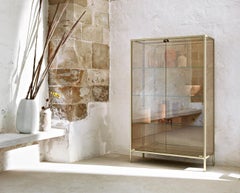
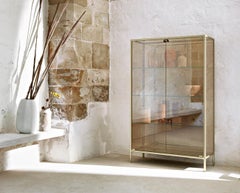
Fiam Italia Echo Showcase by Marcel Wanders Studio

Fiam Italia Echo Showcase by Marcel Wanders Studio

$10,311 / item

H 64.18 in W 39.77 in D 16.15 in

Fiam Italia Echo Showcase by Marcel Wanders Studio

By MARCEL WANDERS, FIAM

Located in New York, NY

Showcase with champagne profiles; relevant glass structure and doors in extralight glass. Showcase with varnished aluminum profiles, available in metalized champagne or Vulcan grey f...

Category

2010s Italian Marcel Breuer Vitrines

Materials

Glass

Fiam  Italia Echo Showcase by Marcel Wanders Studio

Fiam Italia Echo Showcase by Marcel Wanders Studio

$10,311 / item

H 64.18 in W 39.77 in D 16.15 in

Fiam Italia Echo Showcase by Marcel Wanders Studio

By FIAM, MARCEL WANDERS

Located in New York, NY

Showcase with varnished aluminum profiles, available in metalized champagne or Vulcan grey finishes. Base in 6 mm thick tempered and back lacquered extra light glass of the same prof...

Category

2010s Italian Marcel Breuer Vitrines

Materials

Glass

Previously Available Items
Marcel Breuer, Vintage Vitrine / Cabinet, Model "S40", Designed in 1925

Marcel Breuer, Vintage Vitrine / Cabinet, Model "S40", Designed in 1925

By Marcel Breuer

Located in Odense, DK

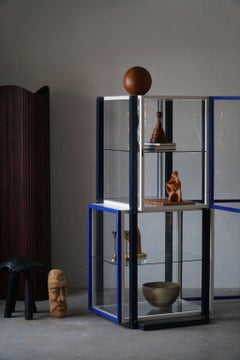
Rare vintage vitrine in glas, wood and metal. Designed by Marcel Breuer in 1925. This model is produced by Tecta on licens - a custom made model in th...

Category

Mid-20th Century European Bauhaus Marcel Breuer Vitrines

Materials

Metal

Marcel Breuer vitrines for sale on 1stDibs.
Marcel Breuer vitrines are available for sale on 1stDibs.

Questions About Marcel Breuer Vitrines

  • 1stDibs ExpertMarch 22, 2022
    Marcel Breuer was an architect and furniture designer who made a major impact on modern design by introducing new materials and emphasizing the importance of form matching function. He was born in Pécs, Hungary, in 1902, and was a part of the Bauhaus school. You’ll find a collection of Marcel Breuer furniture on 1stDibs.
  • 1stDibs ExpertMarch 22, 2022
    Marcel Breuer is known for his work as an architect and furniture designer during the 20th century. During his life, he created many famous chairs that remain popular today, including the Wassily lounge chair, the Cesca chair and the D40 cantilever chair. You’ll find a range of Marcel Breuer furniture on 1stDibs.
  • 1stDibs ExpertApril 12, 2024
    Marcel Breuer is famous for being one of 20th-century modernism’s most influential innovators. His most well-known furniture pieces were crafted of tubular steel, including the Wassily chair and the caned Cesca chair. Breuer also made several notable designs in molded plywood, including a chaise longue and nesting table for the British firm Isokon and a student furniture suite commissioned in 1938 for a dormitory at Bryn Mawr College. Breuer’s designs are elegant and adaptable examples of modernism, useful and appropriate in any environment. On 1stDibs, shop a collection of Marcel Breuer furniture.
  • 1stDibs ExpertMarch 22, 2022
    Over the course of his life, Marcel Breuer designed many things. Furniture was one of his main focuses, and he created many influential pieces, including the Wassily lounge chair, the Cesca chair and the Laccio side table. Shop a collection of Marcel Breuer furniture on 1stDibs.
  • 1stDibs ExpertMarch 22, 2022
    The Dutch art movement De Stijl inspired Marcel Breuer's early work. Artists in the movement like Piet Mondrian created art that adhered to the principles of geometry. This idea resonated with Breuer and informed his designs. Shop a selection of Marcel Breuer furniture on 1stDibs.
  • 1stDibs ExpertMarch 22, 2022
    Marcel Breuer was born in Pécs, Hungary, on May 21, 1902. He attended the Bauhaus design school in Weimar, Germany, and eventually became a part of the faculty. After the Nazis shut the school down, Breuer moved to the U.S. He died in New York City on July 1, 1981. On 1stDibs, find a variety of Marcel Breuer furniture.
  • 1stDibs ExpertMarch 22, 2022
    To pronounce Marcel Breuer, say "mar-SELL BROO-ur." The artist's first and last name both originate from the Hungarian language. Breuer was born in Pécs, Hungary, on May 21, 1902. You can shop a variety of Marcel Breuer furniture on 1stDibs.
  • 1stDibs ExpertApril 22, 2024
    Marcel Breuer designed several chairs. One of his best-known pieces is the Wassily lounge chair made of tubular steel and leather straps. Breuer named the chair after the artist Wassily Kandinsky. Among the designer's other notable chairs are the Cesca chair, the B35 lounge chair and the S 35. On 1stDibs, find a diverse assortment of Marcel Breuer chairs.
  • 1stDibs ExpertMarch 22, 2022
    Today, Marcel Breuer chairs are made in the factory locations of the furniture manufacturer Knoll, Inc. It operates production facilities in Italy and Canada, as well as in Pennsylvania and Michigan in the U.S. Find a collection of Marcel Breuer furniture on 1stDibs.
  • 1stDibs ExpertMarch 22, 2022
    Yes, Marcel Breuer taught at the Bauhaus design school in Weimar, Germany. He arrived at the institution in 1920 as a student. By 1925, his duties expanded to include teaching classes of his own and running the school's furniture shop. On 1stDibs, find a selection of Marcel Breuer furniture.
  • 1stDibs ExpertMarch 22, 2022
    To identify Marcel Breuer bar stools, start by examining the frame. Genuine models will usually feature smooth, welded ends. Most reproductions have end caps instead. You can also look for a sticker that bears the model name on the underside of the seat. On 1stDibs, find a range of expertly vetted Marcel Breuer bar stools.
  • 1stDibs ExpertMarch 22, 2022
    To reupholster a Marcel Breuer Cesca chair, first pry out the staples, remove the original upholstery and disassemble the chair. Place the new fabric on a flat surface and position the seat upside down. Fold the fabric over the edge and secure it with a staple gun. On 1stDibs, shop a selection of expertly vetted Marcel Breuer Cesca chairs.
  • 1stDibs ExpertMarch 22, 2022
    Marcel Breuer created the Cesca chair while splitting his time between Paris and Germany. He made the chair in 1928, shortly after he left the Bauhaus school, but you can clearly see the influence of the institution's design principles in the clean, simple lines of the piece. Find a range of Marcel Breuer Cesca chairs on 1stDibs.
  • 1stDibs ExpertMarch 22, 2022
    Most Marcel Breuer chair legs are made out of bent tubular steel. The designer introduced this radical new material to modern furniture design with his Wassily Model B3 lounge chair. On 1stDibs, you can shop a collection of Marcel Breuer chairs.
  • 1stDibs ExpertMarch 22, 2022
    Marcel Breuer became an apprentice and student at the Bauhaus school in 1920. He made a big impression on the school's founder, Walter Gropius, and later became the head of the institution's furniture workshop. Find a selection of Marcel Breuer furniture on 1stDibs.
  • 1stDibs ExpertMarch 22, 2022
    Marcel Breuer was associated with the Bauhaus school in Weimar, Germany. After attending classes as a student, Breuer became the head of the school's furniture shop. While working there, he created the Wassily lounge chair, introducing the use of tubular steel frames to modern furniture design. Find a variety of Marcel Breuer chairs on 1stDibs.
  • 1stDibs ExpertMarch 22, 2022
    Marcel Breuer chose a bicycle tube frame to create his Wassily lounge chair because he was impressed by the strength and weight properties of the steel. The chair was a landmark in furniture design and opened the doors to the use of tubular steel frames in many chairs, tables and sofas produced during the modern period. You’ll find a selection of Marcel Breuer furniture on 1stDibs.
  • 1stDibs ExpertMarch 22, 2022
    There are a number of ways that you can tell an original Marcel Breuer chair. One trick is to examine the frame. If you see end caps, you're likely looking at a replica. Authentic Breuer chairs featured polished, welded ends. Some chairs also feature stickers that identify the model name located under their seats. On 1stDibs, find a collection of expertly vetted Marcel Breuer chairs.
  • 1stDibs ExpertMarch 22, 2022
    Marcel Breuer introduced the material of tubular steel to modern furniture design. He employed it in many of his chairs, tables and sofas, prizing the material because it minimized the weight of pieces without sacrificing their strength. Shop a range of Marcel Breuer furniture on 1stDibs.
  • 1stDibs ExpertMarch 22, 2022
    What was most innovative about Marcel Breuer's Model B3 chair was its frame. Also known as the Wassily lounge chair, the piece featured a lightweight, sturdy tubular steel frame inspired by the artist's Adler bicycle. His use of the metal started a radical shift in furniture design. You’ll find a variety of Marcel Breuer Model B3 chairs 1stDibs.