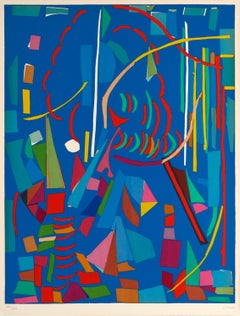
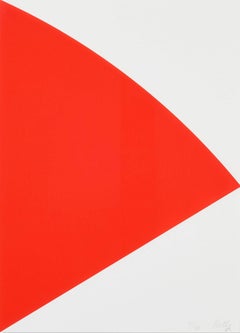
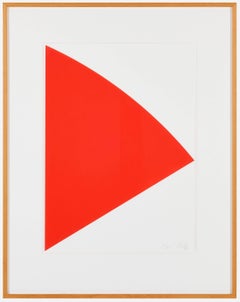
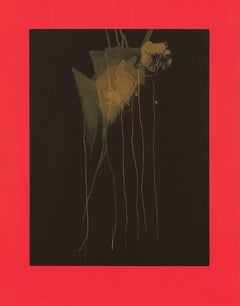
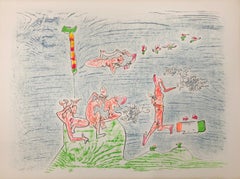
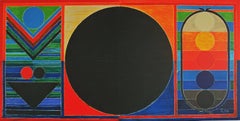
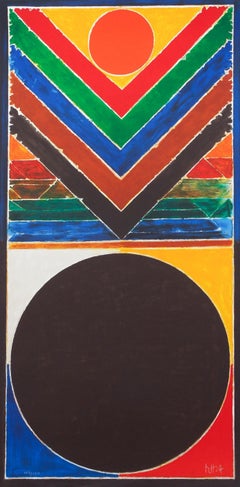
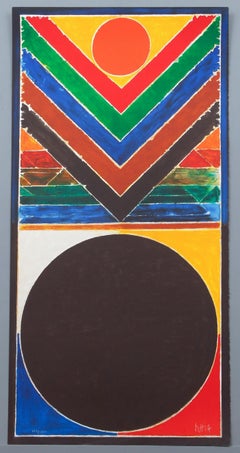
By Sayed Haider Raza
Located in Collonge Bellerive, Geneve, CH
Sayed Haider Raza
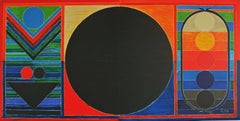
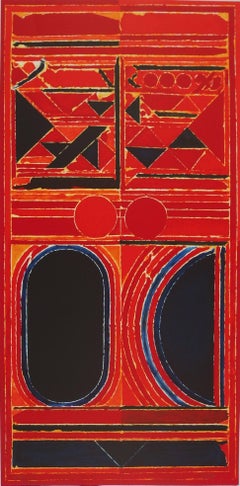
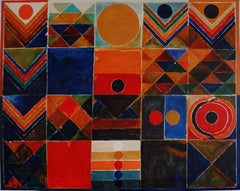
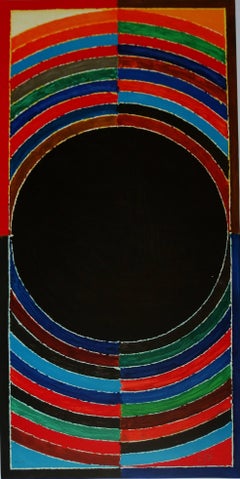
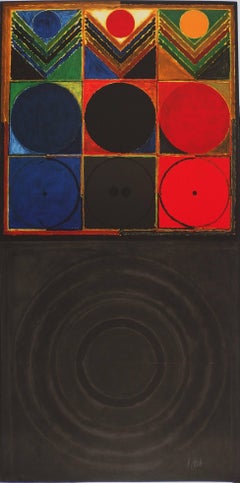
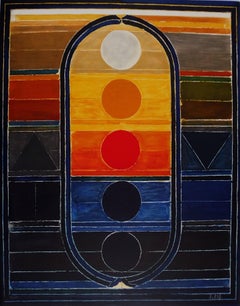
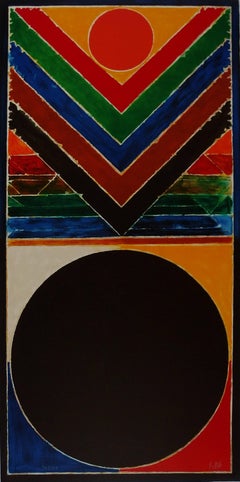
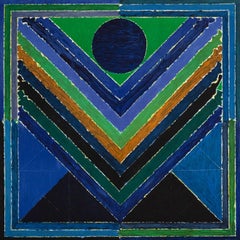
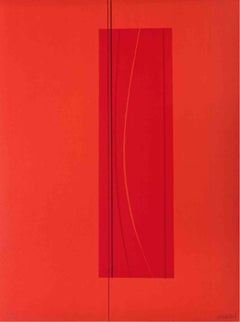
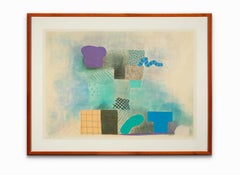
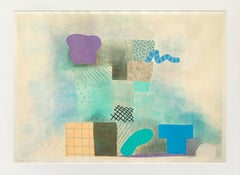
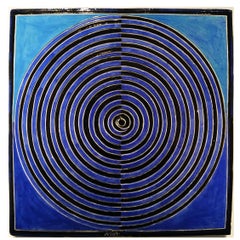
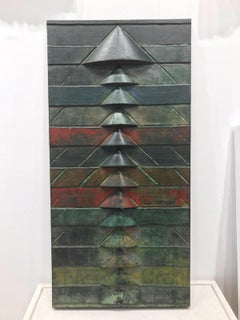
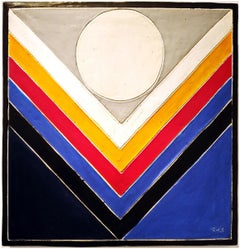
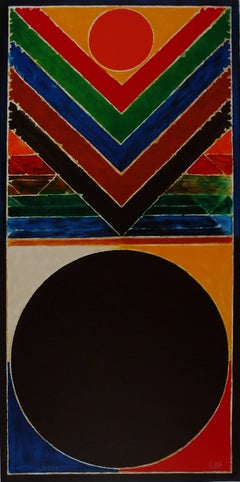
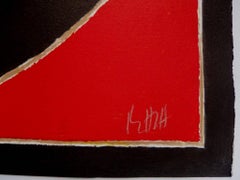
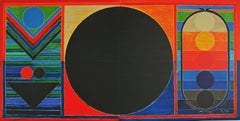
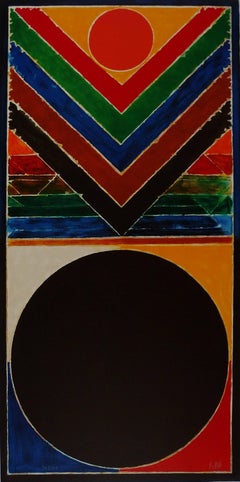
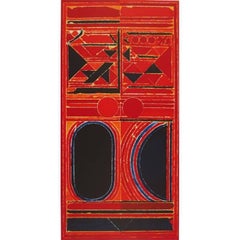
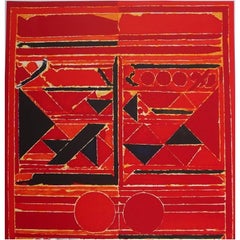
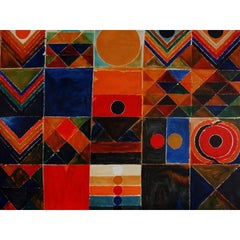
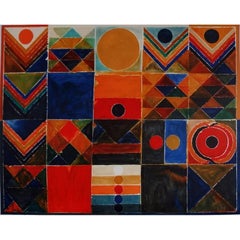
Original Lithograph
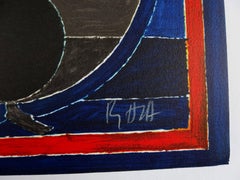
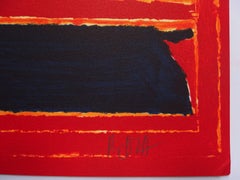
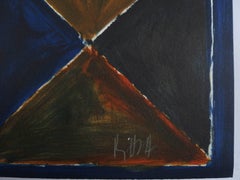
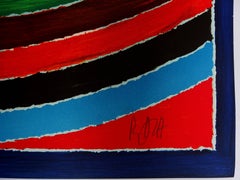
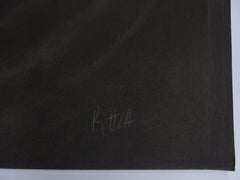
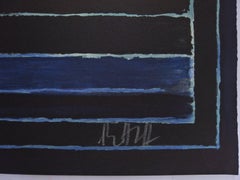
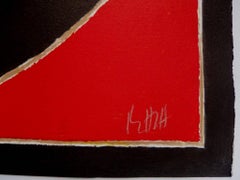
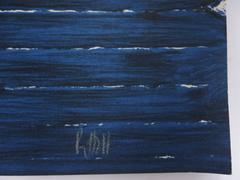
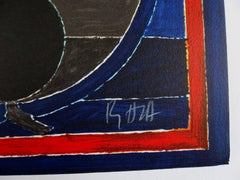
Signed and Numbered in pencil
Title: Morning Raga
Edition: 150
Dimensions: 73 x 92 cm
Sayed Haider Raza
He is one of the most important contemporary Indian artists.
Achievements of S. H. Raza have made him as stable as the pole star. Undoubtedly, he is a star whose light can never be dimmed out.
Sayed Haider Raza is one of India's great icons. Founder of the Bombay Progressives, Raza rose like a meteor in the modernity of Indian art and in the contemporaneity of Indian art he stands as a metaphor for timelessness.
Sayed Haider Raza was born in Babaria, Mandla district, Madhya Pradesh, to Sayed Mohammed Razi, the Deputy Forest Ranger of the district and Tahira Begum, and it was here that he spent his early years and took to drawing at age 12; before moving to Damoh also in Madhya Pradesh at 13, where he completed his school education from Government High School, Damoh.
After his high school, he studied further at the Nagpur School of Art, Nagpur (1939–43), followed by Sir J. J. School of Art, Bombay (1943–47), before moving to France in October 1950 to study at the École nationale supérieure des Beaux-Arts (ENSB-A) in Paris, 1950- 1953 on a Govt. of France scholarship. After his studies, he travelled across Europe, and continued to live and exhibit his work in Paris. He was later awarded the Prix de la critique in Paris in 1956, becoming the first non-French artist to receive the honour.
In December 1978, the Madhya Pradesh Government invited him to his native state for a homage and an exhibition of his works in Bhopal.
He was awarded the Padma Shri by the President of India in 1981 and was elected fellow of the Lalit Kala Academy, New Delhi in 1983.
S.H. Raza has been living in Paris and in Gorbio, A.M. France before recently returning to New Delhi, India where he now lives.
Art career
Early career
Syed Haider Raza, had his first solo show in 1946 at Bombay Art Society Salon, and was awarded the Silver Medal of the society.
His work evolved from painting expressionistic landscapes to abstract ones. From his fluent water colours of landscapes and townscapes executed in the early 40's he moved towards a
more expressive language painting landscapes of the mind.
1947 proved to be a very important year for him, at first his mother died, and this was also the year when he co-founded the revolutionary Bombay Progressive Artists' Group (PAG) (1947–1956) along with K.H. Ara and F.N. Souza (Francis Newton Souza), which set out to break free from the influences of European realism in Indian art and bring Indian inner vision (Antar gyan) into the art, the group had its first show in 1948, the year his father died in Mandla and most of his family of four brothers and a sister migrated to Pakistan, after the partition of India.
Once in France, he continued to experiment with currents of Western Modernism moving from Expressionist modes towards greater abstraction and eventually incorporating elements of Tantrism from Indian scriptures. Whereas his fellow contemporaries dealt with more
figural subjects, Raza chose to focus on landscapes in the 1940s and 50s, inspired in part by a move to the France.
In 1959, he married French artist, Janine Mongillat, and three years later, in 1962, he became a visiting lecturer at the University of California in Berkeley, USA. Raza was initially enamored of the bucolic countryside of rural France. Eglise is part of a series which captures the rolling terrain and quaint village architecture of this region. Showing a tumultuous church engulfed by an inky blue night sky, Raza uses gestural brushstrokes and a heavily impasto-ed application of paint, stylistic devices which hint at his later 1970s abstractions.
His Indian canvases...
Category
1990s Abstract Geometric Sayed Haider Raza Art