By Shusaku Arakawa
Located in Milwaukee, WI
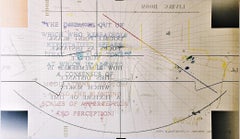
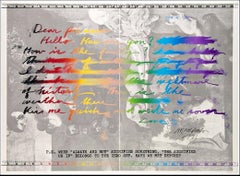
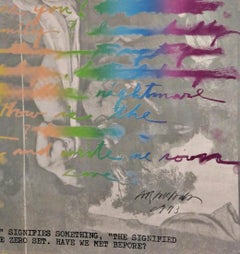
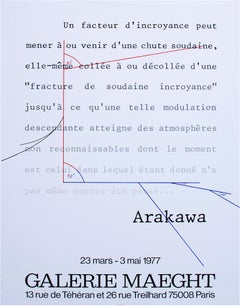
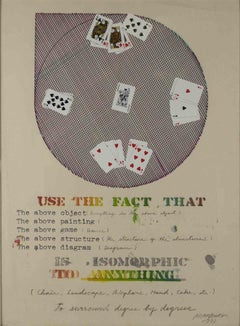
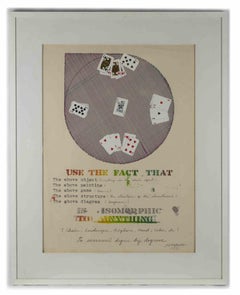
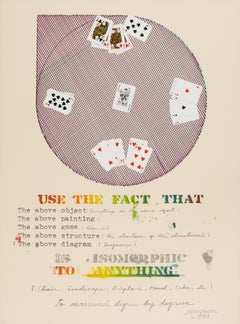
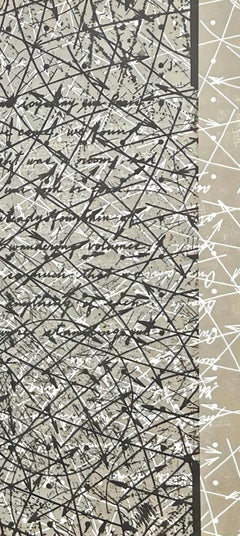
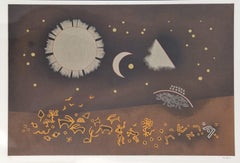
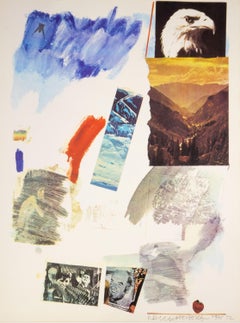
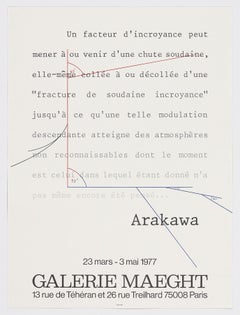
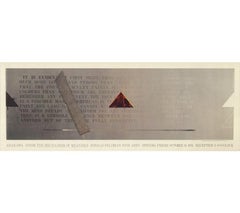
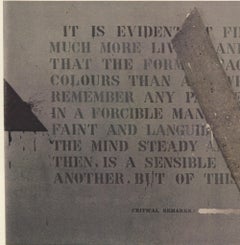
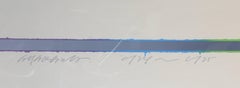
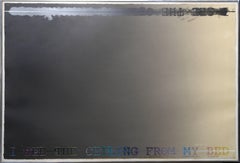
Designed by Shusaku Arakawa, this was a poster for his exhibition at the Galerie Maeght in Paris, 1977.
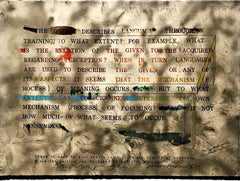
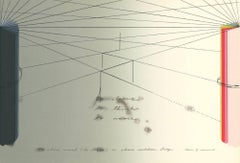
Shusaku Arakawa was a Japanese artist and architect. Shusaku Arakawa, who spoke of himself as an “eternal outsider” and “abstractionist of the distant future,” first studied mathematics and medicine at the University of Tokyo, and art at the Musashino Art University. He was a member of Tokyo’s Neo-Dadaism Organizers, a precursor to The Neo-Dada movement. Arakawa’s early works were first displayed in the infamous Yomiuri Independent Exhibition, a watershed event for postwar Japanese avant-garde art. Arakawa arrived in New York in 1961 with fourteen dollars in his pocket and a telephone number for Marcel Duchamp, whom he phoned from the airport and with whom he eventually formed a close friendship. He started using diagrams within his paintings as philosophical propositions. Jean-Francois Lyotard said of Arakawa’s work that it “makes us think through the eyes,” and Hans-Georg Gadamer described it as transforming “the usual constancies of orientation into a strange, enticing game—a game of continually thinking out.” Quoting Paul Celan, Gadamer also wrote of the work: "There are songs to sing beyond the human." Charles Bernstein and Susan Bee observe, "Arakawa deals with the visual field as discourse, modal systems that constitute the world rather than being constituted by it." Arthur Danto found Arakawa to be “the most philosophical of contemporary artists." For his part, Arakawa declared: “Painting is only an exercise, never more than that.” Beginning in 1963, he collaborated with fellow artist, architect and poet Madeline Gins...
Category
Late 20th Century Shusaku Arakawa Art