Sigismund Blumann Art

American, 1872-1956

Sigismund Blumann was a prominent tastemaker in Californian photography during the 1920s and 1930s. Based in the San Francisco Bay Area for his entire career, he edited magazines, wrote books, and made creative photographs. Between 1923 and 1932, his pictures were accepted at photographic salons in Amsterdam, Toronto, Rochester, Seattle, and Los Angeles. In 1927, a one-person exhibition of his bromoil prints traveled to camera clubs in Chicago, Akron, Cincinnati, and New York. In addition to bromoil, a process that yields pointillistic images, Blumann utilized such unusual processes as kallitype (Vandyke brown), lithobrome, and pastelograph (the latter two were probably his inventions) to create original photographs using chemical processes he invented.

From 1924–33, Blumann edited Camera Craft, the leading West Coast photographic monthly. Subsequently, he established his periodical, Photo Art Monthly, which he published until 1940. In these two magazines — for over 15 years — Blumann found a large audience of mainstream pictorial photographers. Besides, he wrote five instructional books on photography, providing a substantial amount of technical information for committed picture makers. During the 1920s, Blumann also made accomplished pictorial photographs of his own, concentrating on landscape work. In August 1924, Blumann was appointed editor of San Francisco’s Camera Craft (begun in 1900) and, at 52 years of age, began working in photography full time. He continued most of its regular columns, covering professional photographers, camera clubs, technique, and amateur troubles. Blumann was the magazine’s most prolific author during his nine-year tenure, writing nearly 130 signed articles and, presumably, most of the unsigned ones. The magazine included his monthly editorials, reviews of books and exhibitions, and feature articles on the laws of art, different processes, the difficulty of nude subjects, and pictorialists such as Léonard Misonne and William Mortensen. Blumann paid attention to professional photographers by running profiles on them, covering activities of their national and regional organizations, and addressing specific topics like advertising photography. And he consistently maintained a populist and positive attitude, running monthly competitions and including many of his poems. Blumann edited his last issue of Camera Craft in August 1933, but within a few months had started up his periodical, Photo-Art Monthly. With the help of only one assistant, he ran this magazine for the next seven years, carrying a very heavy load of writing and editing. The most notable changes were more attention to "artistic" photography (as suggested by the title), less coverage of professional photography, and increased anti-modernist attitudes.

In 1937, Blumann opened a gallery in the magazine’s offices, providing an exhibition venue unique in the country, where both group and solo shows of about 100 photographs were presented. Somehow Blumann found the time while he was an editor to write five manuals on photographic technique. Camera Craft published the first one in 1927—his Photographic Workroom Handbook, which went into four editions and sold over 60,000 copies. In the 1930s, he self-published a reworking of this title plus books on enlarging, toning and photographic greeting cards. Claiming that his calling was as a critic, Blumann downplayed his ability as a photographer, yet he achieved modest success as a pictorialist. He enjoyed being outdoors with his camera and turned it primarily on the natural environs of Oakland and California’s state parks and national forests. Reproductions of his work appeared in Camera Craft (both before and during his editorship), Photo-Art Monthly, and the American Annual of Photography 1927. In 1933, he was a charter member of the Photographic Society of America and received fellowship status from the Royal Photographic Society (FRPS). Sigismund Blumann’s last known photographic appearance was in the December 1943 issue of Popular Science, for which he wrote an illustrated article on toning black-and-white prints.

to
4
4
Overall Width
to
Overall Height
to
4
4
3
2
2
1
1
1
1
1
1
1
1
4

Use search to find more

4
11,946
2,896
2,541
1,646

Use search to find more

Artist: Sigismund Blumann
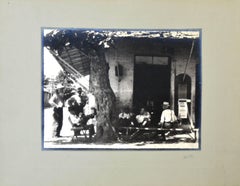
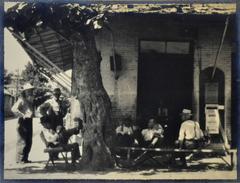
Early 20th Century Photograph -- Sidewalk Club of the Motherlode

Early 20th Century Photograph -- Sidewalk Club of the Motherlode

By Sigismund Blumann

Located in Soquel, CA

"Sidewalk Club of the Motherlode" a Lithobrome photograh by Sigismund Blumann (American, 1872-1956). Signed "Sigismund Blumann" lower right. Titled "Sidewalk Club of the Motherlode" on verso. Image size, 11.25"H x 13.25"W. Between 1923 and 1932, his pictures were accepted at photographic salons in Amsterdam, Toronto, Rochester, Seattle, and Los Angeles. In 1927, a one-person exhibition of his bromoil prints traveled to camera clubs in Chicago, Akron, Cincinnati, and New York. In addition to bromoil, a process that yields pointillistic images, Blumann utilized such unusual processes as kallitype (Vandyke brown), lithobrome, and pastelograph (the latter two probably his own inventions) to create original photographs using chemical processes he invented. Sigismund Blumann (1872–1956) (figure 1) was a prominent tastemaker in Californian photography during the 1920s and 1930s. Based in the San Francisco Bay Area for his entire career, he edited magazines, wrote books, and made creative photographs. From 1924 to 1933 Blumann edited Camera Craft, the leading West Coast photographic monthly. Subsequently he established his own periodical, Photo Art Monthly, which he published until 1940. In these two magazines — for over fifteen years — Blumann found a large audience of mainstream pictorial photographers. In addition, he wrote five instructional books on photography...

Category

1920s Realist Sigismund Blumann Art

Materials

Photographic Paper, Silver Gelatin

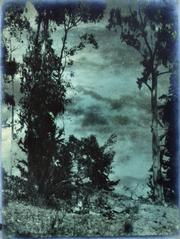
Early 20th Century Photograph Landscape --Looking Through The Sky

Early 20th Century Photograph Landscape --Looking Through The Sky

By Sigismund Blumann

Located in Soquel, CA

Early 20th Century Photograph Landscape --Looking Through The Sky "Looking Through", a lithobrome photograph by Sigismund Blumann (American, 1872-1956). Signed "Sigismund Blumann" lower right. Unframed. Titled "Looking Through" on verso. Image size, 13.25"H x 11.5"W. Sigismund Blumann (1872–1956) was a prominent tastemaker in Californian photography during the 1920s and 1930s. Based in the San Francisco Bay Area for his entire career, he edited magazines, wrote books, and made creative photographs. From 1924 to 1933 Blumann edited Camera Craft, the leading West Coast photographic monthly. Subsequently he established his own periodical, Photo Art Monthly, which he published until 1940. In these two magazines — for over fifteen years — Blumann found a large audience of mainstream pictorial photographers. In addition, he wrote five instructional books on photography...

Category

1920s Realist Sigismund Blumann Art

Materials

Photographic Paper, Silver Gelatin

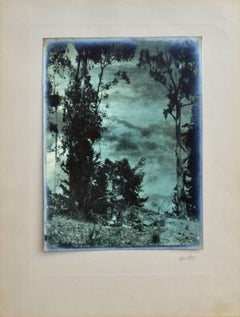
"A Dance in the Moonlight" - Landscape Lithobrome Photograph

"A Dance in the Moonlight" - Landscape Lithobrome Photograph

By Sigismund Blumann

Located in Soquel, CA

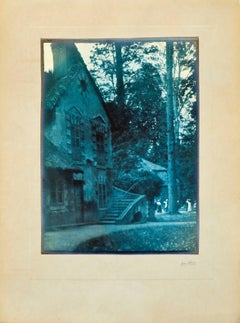
"A Dance in the Moonlight" a Lithobrome photograph by Sigismund Blumann (American, 1872-1956). Signed "Sigismund Blumann" lower right. The blue color is the artist's own invention using a copper sulphate toning process. Unframed. Titled "A Dance in the Moonlight" on verso. Image size, 13.25"H x 10.5"W. Sigismund Blumann (1872–1956) was a prominent tastemaker in Californian photography during the 1920s and 1930s. Based in the San Francisco Bay Area for his entire career, he edited magazines, wrote books, and made creative photographs. From 1924 to 1933 Blumann edited Camera Craft, the leading West Coast photographic monthly. Subsequently he established his own periodical, Photo Art Monthly, which he published until 1940. In these two magazines — for over fifteen years — Blumann found a large audience of mainstream pictorial photographers. In addition, he wrote five instructional books on photography...

Category

1920s Realist Sigismund Blumann Art

Materials

Photographic Paper, Silver Gelatin

Early 20th Century Photograph -- "Impressions of the High Sierras"

Early 20th Century Photograph -- "Impressions of the High Sierras"

By Sigismund Blumann

Located in Soquel, CA

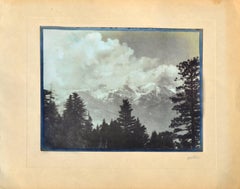
"Impressions of the High Sierras", a Lithobrome Photograph by Sigismund Blumann (American, 1872-1956). Signed "Sigismund Blumann" lower right. Titled "Impressions of the High Sierras" and signed "Sigismund Blumann" on verso. Unframed. Photo size, 10.25"H x 13.25"W. Board size: 16"H x 20"W Sigismund Blumann (1872–1956) (figure 1) was a prominent tastemaker in Californian photography during the 1920s and 1930s. Based in the San Francisco Bay Area for his entire career, he edited magazines, wrote books, and made creative photographs. From 1924 to 1933 Blumann edited Camera Craft, the leading West Coast photographic monthly. Subsequently he established his own periodical, Photo Art Monthly, which he published until 1940. In these two magazines — for over fifteen years — Blumann found a large audience of mainstream pictorial photographers. In addition, he wrote five instructional books on photography...

Category

1920s Realist Sigismund Blumann Art

Materials

Photographic Paper, Silver Gelatin

Related Items
Marilyn Quiet Moment 1955 (Framed)

Marilyn Quiet Moment 1955 (Framed)

By Ed Feingersh

Located in London, GB

Marylin Monroe relaxes on a couch in her hotel room at the Ambassador Hotel in New York City. TITLE: MARYLIN QUIET MOMENT 1955 PHOTO: ED FEINGERSH PAPER: SILVER GELATIN RESIN PRINT...

Category

1950s Sigismund Blumann Art

Materials

Photographic Paper, Silver Gelatin

Untitled Portrait
Untitled Portrait

Untitled Portrait

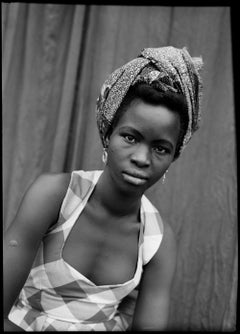
By Seydou Keïta

Located in New York, NY

Listing includes framing with UV Plexi ($900 value), free shipping, and a 14-day return policy. Seydou Keïta Untitled Portrait, 1952 - 1955 (02158) 23...

Category

1950s Sigismund Blumann Art

Materials

Photographic Film, Photographic Paper, Silver Gelatin

Grace Jones for After Dark

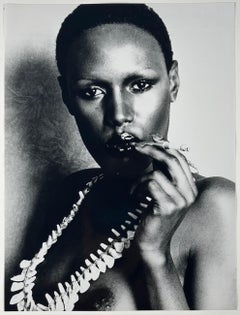
Victor ArimondiGrace Jones for After Dark, 1975

$3,500Sale Price|41% Off

H 13 in W 10 in D 1 in

Grace Jones for After Dark

By Victor Arimondi

Located in Wilton Manors, FL

Victor Arimondi (1942-2001). Portrait of Grace Jones, 1975. Period print measures 8.5 x 11.25 inches; 10 x 13 inches framed. Artist studio stamp on ver...

Category

1970s Realist Sigismund Blumann Art

Materials

Photographic Paper

Alfred Hitchcock and Ina, Hollywood, Harper's Bazaar

Alfred Hitchcock and Ina, Hollywood, Harper's Bazaar

By Jeanloup Sieff

Located in New York, NY

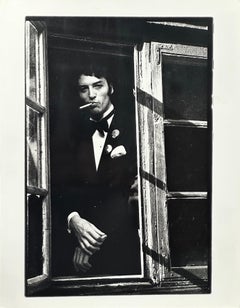
Alfred Hitchcock and Ina, Hollywood, Harper's Bazaar, 1962 Gelatin Silver Print image size: 12 x 8 inches print size: 13 x 9 1/2 inches signed in pen recto on lower right; photog...

Category

1960s Realist Sigismund Blumann Art

Materials

Silver Gelatin

Portrait of Male Model Ingolf, Copenhagen Denmark

Portrait of Male Model Ingolf, Copenhagen Denmark

By Victor Arimondi

Located in Wilton Manors, FL

Victor Arimondi (1942-2001). Portrait of male model Ingolf wearing Torben Hardernberg, ca. 1975. Period print measures 9 x 11 inches. Artist studio stamp on verso. Victor Arimondi ...

Category

1970s Realist Sigismund Blumann Art

Materials

Photographic Paper

Eric Clapton (Framed) hand signed lifetime print

Eric Clapton (Framed) hand signed lifetime print

By Terry O'Neill

Located in London, GB

Eric Clapton photographed in Surrey, 1993. TITLE: Eric Clapton PHOTO: Terry O’Neill SIGNED LIMITED LIFETIME EDITION 20/50
 PAPER: SILVER GELATIN FIBRE PRINT FULLY FRAMED: 26.8 x 27....

Category

1990s Sigismund Blumann Art

Materials

Photographic Paper, Silver Gelatin

Untitled, Senegalese model

Victor ArimondiUntitled, Senegalese model, Ca. 1975

$1,200Sale Price|33% Off

H 17 in W 20 in D 1 in

Untitled, Senegalese model

By Victor Arimondi

Located in Wilton Manors, FL

Victor Arimondi (1942-2001). Portrait of Senegalese Model, ca. 1975. Period print measures 8.5 x 11.5 inches; 17 x 20 inches frames. Artist studio stam...

Category

1970s Realist Sigismund Blumann Art

Materials

Photographic Paper

Portriat of Tom Petchlsig

Victor ArimondiPortriat of Tom Petchlsig, Ca. 1975

$540Sale Price|40% Off

H 16 in W 20 in D 0.75 in

Portriat of Tom Petchlsig

By Victor Arimondi

Located in Wilton Manors, FL

Victor Arimondi (1942-2001). Portrait of Tom Petchlsig, ca. 1975. Period print measures 8 x 10 inches; 16 x 20 inches frames. Artist studio stamp on ve...

Category

1970s Realist Sigismund Blumann Art

Materials

Photographic Paper

Original Photography by Cyrille Druart

Original Photography by Cyrille Druart

By Cyrille Druart

Located in Collonge Bellerive, Geneve, CH

Black and white original photography by Cyrille Druart. Edition: I/V Dimensions: 90 x 120 cm Cyrille Druart is a French photograph and architect, a book about his new series w...

Category

2010s Realist Sigismund Blumann Art

Materials

Photographic Paper

Cuba 4, Vintage Car, Travel, Gold, Cityscape, Architecture, Cuba, Color Photo

Cuba 4, Vintage Car, Travel, Gold, Cityscape, Architecture, Cuba, Color Photo

By John Conn

Located in Riverdale, NY

Limited Edition 20x30 photograph taken in Cuba in 2016. It is printed on 24x36 archival paper. Signed and Numbered. This is currently framed. Edition of 15. John Conn got his start as a Marine Combat photographer, and later earned his BFA at the School of Visual Arts in New York. As a freelance photographer and writer, he has captured a range of subjects photojournalism delving into political and social issues, nature and landscapes, architecture, and underwater images. His work has appeared in: New York Times Sunday Magazine; Time/Life Books; IMAX Films; Village Voice; Human Rights Magazine; Shutterbug Magazine; Hasseleblad Magazine; American Photographer; RangeFinder Magazine; LensWork Magazine; Ocean Realm; Dive Travel Magazine; Picture Magazine; Discover Diving Magazine; Picture Magazine; Popular Photography; Nikon World; Black & White Photography; B&W Magazine; Studio Photography, to name a few. Starting in 1970, John travelled to South Africa capturing images of the people and social divide of Aparteid. His iconic Subway series shot between 1970 and 1982 in New York City is part of the permanent collection of the Museum of the City of New York, The New York Historical Society and Hoboken Historical Museum. In 2010, John Conn spent 45 days in Antarctica and Patagonia, traveling and hiking to capture the land and seascapes. He spent over 20 days journeying over 3,200 nautical miles in Antarctica before heading to Patagonia for the second part of his expedition. In 2014 John began a series of treks across the US photographing Americans, similar to what Robert Frank did in the late 1950’s. In 2015/16, he spent a month in Cuba photographing...

Category

2010s Realist Sigismund Blumann Art

Materials

Photographic Paper

Portrait

Victor ArimondiPortrait, ca. 1975

$600Sale Price|25% Off

H 11 in W 14 in

Portrait

By Victor Arimondi

Located in Wilton Manors, FL

Victor Arimondi (1942-2001). Portrait, ca. 1975. Period print measures 11 x 14 inches. Artist studio stamp on verso. Victor Arimondi (November 8, 1942 – July 24, 2001) was an Italian American photographer and model who lived and worked in Europe before moving to the United States in the late 1970s. His early fashion photography, his portraits of Grace Jones and other artists, and his male nudes photographed in New York and San Francisco captured the pre-AIDS culture of the 1970s and early 1980s. Arimondi's nudes were collected in several books, including David Leddick's award-winning[1] The Male Nude, (New York: Taschen 1998, 2005 and 2015). The photographer's later work documented homeless individuals in San Francisco's Tenderloin neighborhood and the toll of the AIDS epidemic on the city. His photographs, featured in several posthumous exhibitions, also are in the collections of Sweden's museum of modern art, Moderna Museet, and San Francisco's GLBT Historical Society. Biography Arimondi was born Vittorio Maria Tevitti to his unwed mother, Alessandra Calligaris, in Bologna, Italy on November 8, 1942. His mother struggled financially, which left an impression on her only child. In 1948, she temporarily left him at a children's boarding school and orphanage in Italy to move to Sweden for a job. There she met and married Bruno Arimondi, who adopted her son. The family returned to Naples, Italy in 1952 where Victor graduated from high school.[1] In 1960, Arimondi returned to Sweden to study at the University College of Arts, Crafts and Design in Stockholm, although he did not graduate. Meanwhile, he worked at several blue collar jobs, including as a mailman, before he gave up on traditional full-time work to pursue what he considered more essential— a life of creative expression. He created costume-like clothing for himself and friends and at age 19 became a fashion model. Even as a teenager, the Italian born photographer who spent his 20s and 30s primarily based in Sweden, noted that he preferred fantasy to the trials of real life.[1] That conflict, and his passion for beauty as well as his sexual energy, were major factors in his life and his work.[2] From 1965 through 1972 Arimondi worked as model in London, Milan, Germany, New York and Stockholm, appearing in catalogs and fashion magazines including Vogue , Harper's Bazaar and Esquire and on the runway in several Valentino fashion shows. In 1972 he decided to try working on the other side of the lens as a photographer to better express his creativity.[2] Arimondi moved to New York in 1979 and continued to build his photography portfolio. Portrait of Bearded Man, New York City, 1979 Two years later, in 1981, he moved to San Francisco where he lived and worked for twenty years until his death of AIDS at age 58 on July 24, 2001. The year he moved to San Francisco, Arimondi opened a photo gallery in the Haight-Ashbury neighborhood for a short time. When he struggled financially, he gave up on trying to earn a living through commercial fashion photography and closed the gallery.[3] Arimondi returned to modeling for the financial benefits, though he did so on less of an international scale than in his early years. He continued to create photographic portraits of the denizens of the San Francisco gay and arts cultures, to shoot male nudes and publish his work in magazines, and he began to compose and photograph evocative still lifes using his own photographic images. Many of them touched on the death of dozens of his former photography models from AIDS. Arimondi was in the midst of a new photography project that brought together his background as a fashion photographer and his more recent social documentary work when he died several months after he learned he was HIV-positive.[4] The project featured his former colleague, haute couture cover model Ivy Nicholson,[5] who he found living homeless in San Francisco. Several of the haunting portraits he took of her were later included in a noted group exhibit at SF Camerawork. Art Arimondi's early photography in the 1970s in Stockholm included portraits of the stars of Sweden's fashion, theater and dance worlds. His first two photography exhibits were in Stockholm and met with mixed reviews. But as he matured as a photographer and tapped into his fashion world contacts, Arimondi landed a number of commercial fashion jobs, including shooting for the Italian designer Salvatore Ferragamo S.p.A.'s I.Magnin department store ad that ran in Vogue. Marlboro Man Nude, New York City,1980. He also shot other artists and models for his own portfolio, including Grace Jones, the Norwegian actress, Liv Ullmann, and the American writer, Norman Mailer. Arimondi's aesthetic vision was focused on fantasy and drama, and he prided himself on pushing limits.[6] Although less well-known than his San Francisco contemporary...

Category

1970s Realist Sigismund Blumann Art

Materials

Photographic Paper
Portrait of Man in Denim

Portrait of Man in Denim

By Victor Arimondi

Located in Wilton Manors, FL

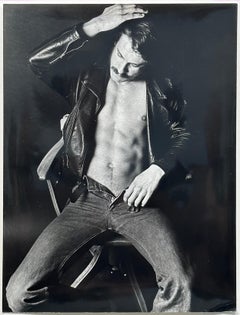
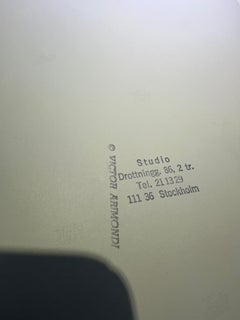
Victor Arimondi (1942-2001). Portrait, ca. 1975. Period print measures 9 x 12 inches. Artist studio stamp on verso. Victor Arimondi (November 8, 1942 – July 24, 2001) was an Italian American photographer and model who lived and worked in Europe before moving to the United States in the late 1970s. His early fashion photography, his portraits of Grace Jones and other artists, and his male nudes photographed in New York and San Francisco captured the pre-AIDS culture of the 1970s and early 1980s. Arimondi's nudes were collected in several books, including David Leddick's award-winning[1] The Male Nude, (New York: Taschen 1998, 2005 and 2015). The photographer's later work documented homeless individuals in San Francisco's Tenderloin neighborhood and the toll of the AIDS epidemic on the city. His photographs, featured in several posthumous exhibitions, also are in the collections of Sweden's museum of modern art, Moderna Museet, and San Francisco's GLBT Historical Society. Biography Arimondi was born Vittorio Maria Tevitti to his unwed mother, Alessandra Calligaris, in Bologna, Italy on November 8, 1942. His mother struggled financially, which left an impression on her only child. In 1948, she temporarily left him at a children's boarding school and orphanage in Italy to move to Sweden for a job. There she met and married Bruno Arimondi, who adopted her son. The family returned to Naples, Italy in 1952 where Victor graduated from high school.[1] In 1960, Arimondi returned to Sweden to study at the University College of Arts, Crafts and Design in Stockholm, although he did not graduate. Meanwhile, he worked at several blue collar jobs, including as a mailman, before he gave up on traditional full-time work to pursue what he considered more essential— a life of creative expression. He created costume-like clothing for himself and friends and at age 19 became a fashion model. Even as a teenager, the Italian born photographer who spent his 20s and 30s primarily based in Sweden, noted that he preferred fantasy to the trials of real life.[1] That conflict, and his passion for beauty as well as his sexual energy, were major factors in his life and his work.[2] From 1965 through 1972 Arimondi worked as model in London, Milan, Germany, New York and Stockholm, appearing in catalogs and fashion magazines including Vogue , Harper's Bazaar and Esquire and on the runway in several Valentino fashion shows. In 1972 he decided to try working on the other side of the lens as a photographer to better express his creativity.[2] Arimondi moved to New York in 1979 and continued to build his photography portfolio. Portrait of Bearded Man, New York City, 1979 Two years later, in 1981, he moved to San Francisco where he lived and worked for twenty years until his death of AIDS at age 58 on July 24, 2001. The year he moved to San Francisco, Arimondi opened a photo gallery in the Haight-Ashbury neighborhood for a short time. When he struggled financially, he gave up on trying to earn a living through commercial fashion photography and closed the gallery.[3] Arimondi returned to modeling for the financial benefits, though he did so on less of an international scale than in his early years. He continued to create photographic portraits of the denizens of the San Francisco gay and arts cultures, to shoot male nudes and publish his work in magazines, and he began to compose and photograph evocative still lifes using his own photographic images. Many of them touched on the death of dozens of his former photography models from AIDS. Arimondi was in the midst of a new photography project that brought together his background as a fashion photographer and his more recent social documentary work when he died several months after he learned he was HIV-positive.[4] The project featured his former colleague, haute couture cover model Ivy Nicholson,[5] who he found living homeless in San Francisco. Several of the haunting portraits he took of her were later included in a noted group exhibit at SF Camerawork. Art Arimondi's early photography in the 1970s in Stockholm included portraits of the stars of Sweden's fashion, theater and dance worlds. His first two photography exhibits were in Stockholm and met with mixed reviews. But as he matured as a photographer and tapped into his fashion world contacts, Arimondi landed a number of commercial fashion jobs, including shooting for the Italian designer Salvatore Ferragamo S.p.A.'s I.Magnin department store ad that ran in Vogue. Marlboro Man Nude, New York City,1980. He also shot other artists and models for his own portfolio, including Grace Jones, the Norwegian actress, Liv Ullmann, and the American writer, Norman Mailer. Arimondi's aesthetic vision was focused on fantasy and drama, and he prided himself on pushing limits.[6] Although less well-known than his San Francisco contemporary...

Category

1970s Realist Sigismund Blumann Art

Materials

Photographic Paper
Untitled (Brown Horse) Animals, 2006 - Black and White Equine Photography

Untitled (Brown Horse) Animals, 2006 - Black and White Equine Photography

By Giacomo Brunelli

Located in Brighton, GB

Untitled (Brown Horse) from the series Animals is a black and white Silver Gelatin print by Giacomo Brunelli, in this size of 10" x 8" in a limited edition of 10. This is a limited ...

Category

Early 2000s Modern Sigismund Blumann Art

Materials

Photographic Paper, Silver Gelatin, Black and White

Portrait of Nude Man

Portrait of Nude Man

By Victor Arimondi

Located in Wilton Manors, FL

Victor Arimondi (1942-2001). Portrait, ca. 1975. Period print measures 11 x 14 inches. Artist studio stamp on verso. Victor Arimondi (November 8, 1942 – July 24, 2001) was an Italian American photographer and model who lived and worked in Europe before moving to the United States in the late 1970s. His early fashion photography, his portraits of Grace Jones and other artists, and his male nudes photographed in New York and San Francisco captured the pre-AIDS culture of the 1970s and early 1980s. Arimondi's nudes were collected in several books, including David Leddick's award-winning[1] The Male Nude, (New York: Taschen 1998, 2005 and 2015). The photographer's later work documented homeless individuals in San Francisco's Tenderloin neighborhood and the toll of the AIDS epidemic on the city. His photographs, featured in several posthumous exhibitions, also are in the collections of Sweden's museum of modern art, Moderna Museet, and San Francisco's GLBT Historical Society. Biography Arimondi was born Vittorio Maria Tevitti to his unwed mother, Alessandra Calligaris, in Bologna, Italy on November 8, 1942. His mother struggled financially, which left an impression on her only child. In 1948, she temporarily left him at a children's boarding school and orphanage in Italy to move to Sweden for a job. There she met and married Bruno Arimondi, who adopted her son. The family returned to Naples, Italy in 1952 where Victor graduated from high school.[1] In 1960, Arimondi returned to Sweden to study at the University College of Arts, Crafts and Design in Stockholm, although he did not graduate. Meanwhile, he worked at several blue collar jobs, including as a mailman, before he gave up on traditional full-time work to pursue what he considered more essential— a life of creative expression. He created costume-like clothing for himself and friends and at age 19 became a fashion model. Even as a teenager, the Italian born photographer who spent his 20s and 30s primarily based in Sweden, noted that he preferred fantasy to the trials of real life.[1] That conflict, and his passion for beauty as well as his sexual energy, were major factors in his life and his work.[2] From 1965 through 1972 Arimondi worked as model in London, Milan, Germany, New York and Stockholm, appearing in catalogs and fashion magazines including Vogue , Harper's Bazaar and Esquire and on the runway in several Valentino fashion shows. In 1972 he decided to try working on the other side of the lens as a photographer to better express his creativity.[2] Arimondi moved to New York in 1979 and continued to build his photography portfolio. Portrait of Bearded Man, New York City, 1979 Two years later, in 1981, he moved to San Francisco where he lived and worked for twenty years until his death of AIDS at age 58 on July 24, 2001. The year he moved to San Francisco, Arimondi opened a photo gallery in the Haight-Ashbury neighborhood for a short time. When he struggled financially, he gave up on trying to earn a living through commercial fashion photography and closed the gallery.[3] Arimondi returned to modeling for the financial benefits, though he did so on less of an international scale than in his early years. He continued to create photographic portraits of the denizens of the San Francisco gay and arts cultures, to shoot male nudes and publish his work in magazines, and he began to compose and photograph evocative still lifes using his own photographic images. Many of them touched on the death of dozens of his former photography models from AIDS. Arimondi was in the midst of a new photography project that brought together his background as a fashion photographer and his more recent social documentary work when he died several months after he learned he was HIV-positive.[4] The project featured his former colleague, haute couture cover model Ivy Nicholson,[5] who he found living homeless in San Francisco. Several of the haunting portraits he took of her were later included in a noted group exhibit at SF Camerawork. Art Arimondi's early photography in the 1970s in Stockholm included portraits of the stars of Sweden's fashion, theater and dance worlds. His first two photography exhibits were in Stockholm and met with mixed reviews. But as he matured as a photographer and tapped into his fashion world contacts, Arimondi landed a number of commercial fashion jobs, including shooting for the Italian designer Salvatore Ferragamo S.p.A.'s I.Magnin department store ad that ran in Vogue. Marlboro Man Nude, New York City,1980. He also shot other artists and models for his own portfolio, including Grace Jones, the Norwegian actress, Liv Ullmann, and the American writer, Norman Mailer. Arimondi's aesthetic vision was focused on fantasy and drama, and he prided himself on pushing limits.[6] Although less well-known than his San Francisco contemporary...

Category

1970s Realist Sigismund Blumann Art

Materials

Photographic Paper

Realm (Kings Road) - b&w solarization gelatin silver portrait photography

Realm (Kings Road) - b&w solarization gelatin silver portrait photography

By Mona Kuhn

Located in San Francisco, CA

Unique black & white solarized photograph from Mona Kuhn's architecture inspired series Kings Road (2022). In this series Mona Kuhn lyrically reconsiders the realms of time and space within the midcentury architectural elements of the iconic Schindler House in Los Angeles. Built by Austrian architect Rudolph M. Schindler in 1922, the house was both a social and design experiment and an avant-garde hub for intellectuals and artists in the 1920s and ’30s. The body of works incorporates chromogenic color prints, reflecting vignettes and materials of the building's emotional architecture, juxtaposition with unique solarized gelatin silver prints capturing traces of an ethereal human presence. Update: We are excited to announce that 12 solarized photographs from Mona Kuhn’s Kings Road series (2021) have been acquired by the J. Paul Getty Museum. This in-depth acquisition, facilitated by Manfred Heiting, expands the museum’s holdings of Kuhn’s work, joining Portrait 37 from her Bordeaux Series (2011). Realm (2022) Kings Road: A Rudolph Schindler House 30" x 40" / 76cm x 102cm /edition of 12 15" x 20" / 38cm x 56cm / edition of 12 true size solarized gelatin silver print printed at artist darkroom in Los Angeles (10 days handling time) original photograph accompanied by signed artist certificate: artist signature label (8x10") signed/editioned/dated/titled by the artist + stamped for authenticity label is placed centered on verso of the mounted print __________________ About the artist Acclaimed for her contemporary depictions, Kuhn is considered a leading artist in the world of figurative discourse. Throughout a career spanning more than twenty years, the underlying theme of her work is her reflection on humanity’s longing for spiritual connection and solidarity. As she solidified her photographic style, Kuhn created a notable approach to the nude by developing friendships with her subjects, and employing a range of playful visual strategies that use natural light and minimalist settings to evoke a sublime sense of comfort between the human figure and its environment. Her work is natural, restful, and a reinterpretation of the nude in the canon of contemporary art. For the past two decades, the Los-Angeles based artist's works have been shown steadily, revealing an astonishing consistency in technique, of subject and of purpose. In 2001, Kuhn’s photographs were first seen by an influential audience during the exhibition at Charles Cowles Gallery in Chelsea, New York. Kuhn’s distinct aesthetic has propelled her as one of the most collectible contemporary art photographers—her work is in private and public collections worldwide and she is represented by galleries across the United States, Europe and Asia. Kuhn was born in São Paulo, Brazil, in 1969, of German descent. In 1989, Kuhn moved to the US and earned her BA from The Ohio State University, before furthering her studies at the San Francisco Art Institute. She is currently an independent scholar at The Getty Research Institute in Los Angeles. Occasionally, Mona teaches at UCLA and the Art Center College of Design in Pasadena. Kuhn’s first monograph, Photographs, was debuted by Steidl in 2004; followed by Evidence (2007), Native (2010), Bordeaux Series (2011), Private (2014), and She Disappeared into Complete Silence (2018/19). In addition, Stanley/Barker Editions published Kuhn's Bushes & Succulents in 2018. In 2021, Thames & Hudson published a career retrospective titled Works. Kuhn's most recent publication Kings Road (2022) with Steidl accompanies a multi-dimensional museum traveling exhibition shown in Europe and the US. Mona Kuhn’s work is in private and public collections worldwide, including The J. Paul Getty Museum, Los Angeles County Museum of Art, The Hammer Museum, Perez Art Museum Miami, Museum of Fine Arts, Houston, and the Kiyosato Museum in Japan. Kuhn's work has been exhibited at The Louvre Museum and Le Bal in Paris; The Whitechapel Gallery and Royal Academy of Arts in London; Musée de l’Elysée in Switzerland; Leopold Museum in Vienna Austria, The Polygon Gallery in Vancouver Canada, Taipei Fine Arts Museum in Taiwan and Australian Centre for Photography...

Category

21st Century and Contemporary Contemporary Sigismund Blumann Art

Materials

Photographic Film, Photographic Paper, Silver Gelatin

Sigismund Blumann art for sale on 1stDibs.

Find a wide variety of authentic Sigismund Blumann art available for sale on 1stDibs. You can also browse by medium to find art by Sigismund Blumann in paper, photographic paper, silver gelatin print and more. Not every interior allows for large Sigismund Blumann art, so small editions measuring 16 inches across are available. Customers who are interested in this artist might also find the work of Jed Fielding, Christiane Klisch, and Eugene Atget. Sigismund Blumann art prices can differ depending upon medium, time period and other attributes. On 1stDibs, the price for these items starts at $374 and tops out at $460, while the average work can sell for $443.

Artists Similar to Sigismund Blumann