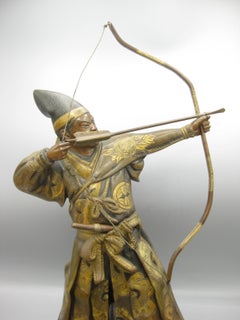
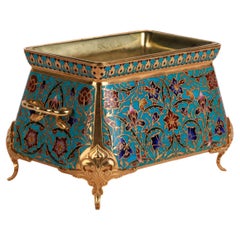
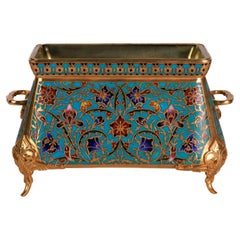
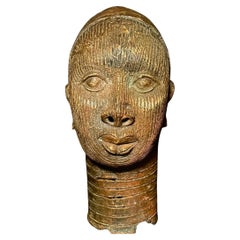
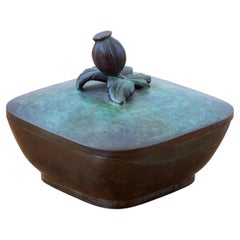
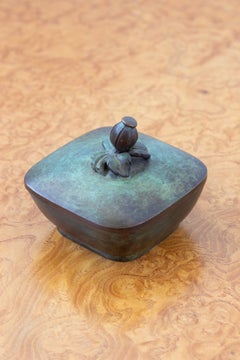
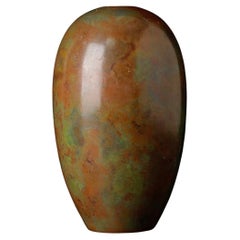
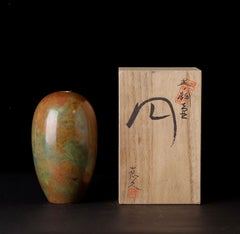
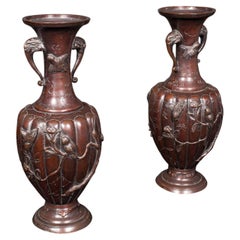
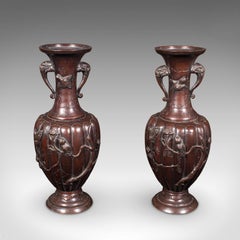
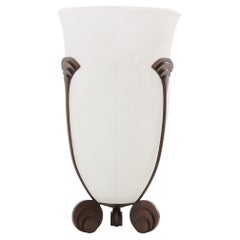
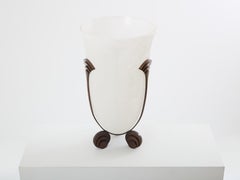
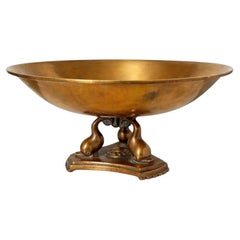
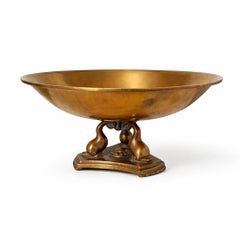
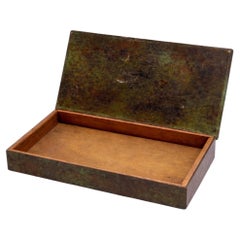
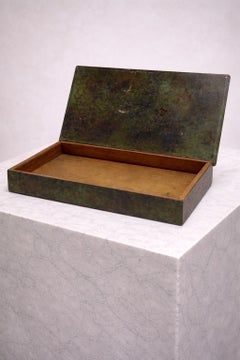
A bronze vase by Just Andersen
Located in Long Island City, NY
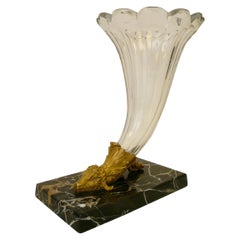
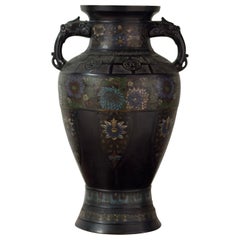
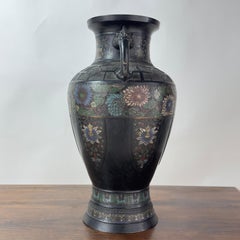
A patinated bronze vase by Just Andersen, Denmark, circa 1920th. Stamped and numbered.
1920s Danish Scandinavian Modern Vintage Bronze Decorative Objects
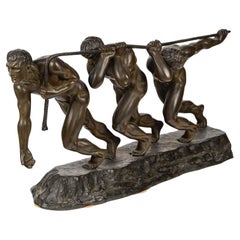
Bronze
A bronze vase by Just Andersen
Located in Long Island City, NY
A patinated bronze vase by Just Andersen, Denmark, circa 1920th. Stamped and numbered.
Bronze
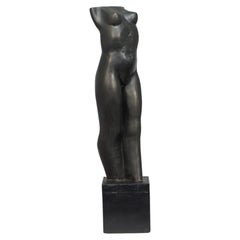
Vintage MCM “Shadow of the Evening / Thin Figure” Bronze: "Woman with Hat"
By Alberto and Diego Giacometti
Located in Philadelphia, PA
Vintage mcm Bronze "Woman with Hat" signed on side of foot: L. Seidler Bronze Figure of a Mid-Century Female Figure With Hat on a granite base "nice color and patina, in as found v...
Granite, Bronze
A Pair of Imari Porcelain Vases with Gilt Bronze Mounts, 19th Century.
Located in Saint-Ouen, FR
A pair of 19th century Napoleon III period Imari porcelain vases with gilt bronze mounts. Dimensions : H: 25.5cm, D: 11cm Please contact us before ordering to confirm availability.
Bronze
Rare and important painted bronze Crucifix after a model by Michelangelo
By Michelangelo Buonarroti
Located in Leesburg, VA
A rare and very fine bronze corpus of Christ after a model by Michelangelo, cast ca. 1597-1600 by Juan Bautista Franconio and painted in 1600 by Francisco Pacheco in Seville, Spain. The present corpus reproduces a model attributed to Michelangelo. The best known example, lesser in quality, is one on display at the Metropolitan Museum of Art (MET). The association of this corpus with Michelangelo was first brought to light by Manuel Gomez-Moreno (1930-33) who studied the wider circulated casts identified throughout Spain. The attribution to Michelangelo was subsequently followed by John Goldsmith-Phillips (1937) of the MET and again by Michelangelo expert, Charles de Tolnay (1960). While Michelangelo is best known for his monumental works, there are four documented crucifixes he made. The best known example is the large-scale wooden crucifix for the Church of Santa Maria del Santo Spirito in Florence, made in 1492 as a gift for the Prior, Giovanni di Lap Bicchiellini, for allowing him to study the anatomy of corpses at the hospital there. In 1562, Michelangelo wrote two letters to his nephew, Lionardo, indicating his intention to carve a wooden crucifix for him. In 1563 a letter between Lionardo and the Italian sculptor Tiberio Calcagni, mentions this same crucifix (a sketch of a corpus on the verso of a sheet depicting Michelangelo’s designs for St. Peter’s Basillica [Palais des Beaux-Arts in Lille] may reproduce this). That Michelangelo was working on small corpora in the last years of his life is further evidenced by the small (26.5 cm) unfinished wooden crucifix located at the Casa Buonarroti, considered his last known sculptural undertaking. Michelangelo’s contemporary biographer, Giorgio Vasari additionally cites that Michelangelo, in his later years, made a small crucifix for his friend, Menighella, as a gift. Surviving sketches also indicate Michelangelo’s study of this subject throughout his career, most notably during the end of his life but also during the 1530s-40s as he deepened his spiritual roots. The occasional cameo of crucified Christ’s throughout his sketched oeuvre have made it challenging for scholars to link such sketches to any documented commissions of importance. All the while, in consideration that such objects were made as gifts, it is unlikely they should be linked with commissions. Nonetheless, a number of theories concerning Michelangelo’s sketches of Christ crucified have been proposed and some may regard the origin of the present sculpture. It has been suggested that the corpus could have its impetus with Michelangelo’s work on the Medici Chapel, whose exclusive design was given to the master. It is sensible smaller details, like an altar cross, could have fallen under his responsibility (see for example British Museum, Inv. 1859,0625.552). Others have noted the possibility of an unrealized large marble Crucifixion group which never came to fruition but whose marble blocks had been measured according to a sheet at the Casa Buonarroti. A unique suggestion is that Michelangelo could have made the crucifix for Vittoria Colonna, of whom he was exceedingly fond and with whom he exchanged gifts along with mutual spiritual proclivities. In particular, Vittoria had an interest in the life of St. Bridget, whose vision of Christ closely resembles our sculpture, most notably with Christ’s proper-left leg and foot crossed over his right, an iconography that is incredibly scarce for crucifixes. The suggestion could add sense to Benedetto Varchi’s comment that Michelangelo made a sculpted “nude Christ…he gave to the most divine Marchesa of Pescara (Vittoria Colonna).” Of that same period, two sketches can be visually linked to our sculpture. Tolnay relates it to a sketch of a Crucified Christ at the Teylers Museum (Inv. A034) of which Paul Joannides comments on its quality as suggestive of preparations for a sculptural work. Joannides also calls attention to a related drawing attributed to Raffaello da Montelupo copying what is believed to be a lost sketch by Michelangelo. Its relationship with our sculpture is apparent. Montelupo, a pupil of Michelangelo’s, returned to Rome to serve him in 1541, assisting with the continued work on the tomb of Pope Julius II, suggesting again an origin for the corpus ca. 1540. The earliest firm date that can be given to the present corpus is 1574 where it appears as a rather crudely conceived Crucifixion panel, flanked by two mourners in low-relief and integrally cast for use as the bronze tabernacle door to a ciborium now located at the Church of San Lorenzo in Padula. Etched in wax residue on the back of the door is the date, 27 January 1574, indicating the corpus would have at least been available as a model by late 1573. The Padula tabernacle was completed by Michelangelo’s assistant, Jacopo del Duca and likely has its origins with Michelangelo’s uncompleted tabernacle for the Basilica of St. Mary of the Angels in Rome. The impetus for the Padula tabernacle’s Crucifixion panel begins with a series of late Crucifixion sketches by Michelangelo, depicting a scene of Christ crucified and flanked by two mourners (see British Museum Inv. 1895.0915.510; Ashmolean Museum Inv. 1846.89, KP II 343 recto; Windsor Castle RCIN 912761 recto; and Louvre Inv. 700). A faintly traced block possibly intended for sculpting the sketch of the crucified Christ on its recto was discovered by Tolnay on a version of the composition at Windsor Castle. The Windsor sketch and those related to it appear to have served as preparatory designs for what was probably intended to become the Basilica of St. Mary’s tabernacle door. Vasari documents that the project was to be designed by Michelangelo and cast by his assistant, Jacopo del Duca. Michelangelo died before the commission was complete, though on 15 March 1565, Jacopo writes to Michelangelo’s nephew stating, “I have started making the bronze tabernacle, depending on the model of his that was in Rome, already almost half complete.” Various circumstances interrupted the completion of the tabernacle, though its concept is later revitalized by Jacopo during preparations to sell a tabernacle, after Michelangelo’s designs, to Spain for Madrid’s El Escorial almost a decade later. The El Escorial tabernacle likewise encountered problems and was aborted but Jacopo successfully sold it shortly thereafter to the Carthusians of Padula. An etched date, 30 May 1572, along the base of the Padula tabernacle indicates its framework was already cast by then. A 1573 summary of the tabernacle also describes the original format for the door and relief panels, intended to be square in dimension. However, a last minute decision to heighten them was abruptly made during Jacopo’s negotiations to sell the tabernacle to King Phillip II of Spain. Shortly thereafter the commission was aborted. Philippe Malgouyres notes that the Padula tabernacle’s final state is a mixed product of the original design intended for Spain’s El Escorial, recycling various parts that had already been cast and adding new quickly finished elements for its sale to Padula, explaining its unusually discordant quality, particularly as concerns the crudeness of the door and relief panels which were clearly made later (by January 1574). Apart from his own admission in letters to Spain, it is apparent, however, that Jacopo relied upon his deceased master’s designs while hastily realizing the Padula panels. If Michelangelo had already earlier conceived a crucifix model, and Jacopo had access to that model, its logical he could have hastily employed it for incorporation on the door panel to the tabernacle. It is worth noting some modifications he made to the model, extending Christ’s arms further up in order to fit them into the scale of the panel and further lowering his chin to his chest in order to instill physiognomic congruence. A crude panel of the Deposition also follows after Michelangelo’s late sketches and is likewise known by examples thought to be modifications by Jacopo based upon Michelangelo’s initial sculptural conception (see Malgouyres: La Deposition du Christ de Jacopo del Duca, chef-d’oeuvre posthume de Michel-Ange). Jacopo’s appropriation of an original model by Michelangelo for more than one relief on the Padula tabernacle adds further indication that the crucifix was not an object unique to Jacopo’s hand, as few scholars have posited, but rather belongs to Michelangelo’s original...
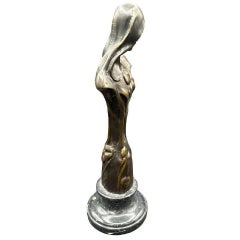
Bronze
Rare Top Quality Expressive Bronze Capricorn, Ibex Sculpture Statue Early 1900s
Located in Lisse, NL
Artistic quality bronze sculpture with overdone features. There must be collectors out there who immediately know the name of the artist who created this wonderful and rare style wo...
Bronze, Iron
Gorilla Kong Sculpture in Solid Bronze Orlinski
Located in Paris, FR
Sculpture Gorilla Kong all in solid bronze. Limited edition of 8 pieces, numerated 8/8. By Richard Orlinski. Exceptional piece.
Bronze
Pair of 1920s Art Déco Polished Silvered Bronze 4-Arms Candelabras, France
Located in North Miami, FL
Pair of 1920s Art Déco polished silvered bronze 4-Arms candelabras, France By: unknown Material: bronze, copper, tin, metal Technique: cast, molded, polished, metalwork, silvered Di...
Metal, Bronze, Copper, Tin
French Art Deco Bronze Crucifix, 1920
By Peter Hartmann
Located in Saint-Amans-des-Cots, FR
French Art Deco Bronze Crucifix by Peter Hartmann, Switzerland, 1920s. Elegant and rare French Art Deco bronze crucifix by Swiss sculptor Peter Ha...
Bronze
Tiffany Studios New York Bronze Doré Desk Box or Humidor
Located in South Bend, IN
A gorgeous antique Arts & Crafts or Art Deco period gilt bronze desk box or humidor By Tiffany Studios (signed to the underside) New York, USA, Early 20th Century Measures: 6"W x ...
Bronze
Antique Continental Belle Époque Silvered Bronze Gold Lion Sword Letter Opener
Located in Greven, DE
Antique Continental Belle Époque Silvered Bronze Gold Lion Sword Letter Opener Continental Bronze c. 1900 Dimensions: Length 24cm The de...
Bronze
Pair of Danish Art Deco Candlesticks by Just Andersen, Disko Metal, 1930's
Located in Stockholm, SE
A refined pair of Danish Art Deco candlesticks by Just Andersen, crafted in his signature Disko metal, Denmark, 1930s. Model D.54, the design features a strong architectural form wit...
Bronze
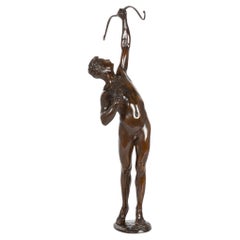
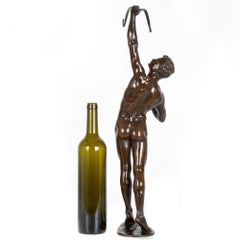
"The Aviator", Classic Art Deco Bronze Sculpture w/ Nude Male, after Focht
By Frederic Focht
Located in Philadelphia, PA
This dramatic, highly streamlined bronze with a nude male figure angled toward the sky illustrates a genre of Art Deco sculpture that was pioneered by Frederic Focht (this example is...
Bronze
Michelin 1910 Slim-Skinny Bibendum Bronze Car Mascot Hood Ornament
By Michelin Man
Located in Buenos Aires, Olivos
An early 'Bibendum Protégé' Car mascot - Hood Ornament, French, circa 1910, Nickel-plated bronze figure of a 'slim' Mr. Bibendum, mounted on wooden black base. Perfect for any Classi...
Bronze
$3,366Sale Price / set|20% Off
Pair of Louis XVI gilt bronze - ormolu candlesticks - 19th century - 11" 3/4
Located in GRENOBLE, FR
Antique French pair of candlesticks, beautiful finely chiseled ormolu (solid bronze gilt with fine gold) Louis XVI style pattern. Our model is richly ornamented with pearls, gadroons...
Bronze, Ormolu
Cambodian Bronze Goddess Lakshmi Figure
Located in Chicago, IL
Sculpted in the manner of Khmer statuary, this cast bronze devotional figure depicts a standing Buddhist deity, most likely the beloved goddess Lakshmi. A central figure in Hindu myt...
Bronze
French Antique Bronze Sculpture “Panther of Tunisia” by Antoine-Louis Barye
Located in Shippensburg, PA
ANTOINE-LOUIS BARYE French, 1796-1875 Panther of Tunisia [smaller version] Sand-cast patinated bronze Signed in cast BARYE Cast executed last quarter of the 19th century 3 1/2" H ...
Bronze
$2,240Sale Price|20% Off
French Louis XVI Gilt Bronze Ormolu & Green Guilloche Enamel Picture Frame
Located in Atlanta, GA
A finely executed Continental miniature portrait, likely French or Austrian, dating to the late 19th century, depicting an 18th-century noblewoman in powdered coiffure and court atti...
Bronze, Enamel
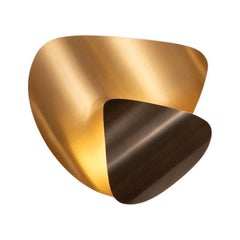
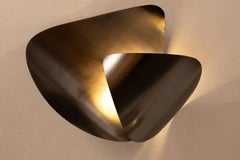
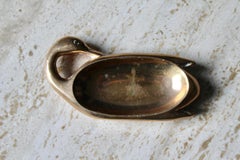
Bronze Vide-Poche By Monique Gerber circa 1970, France.
Located in Brussels, BE
Beautiful bronze Monique Gerber vide-poche, circa 1970, France. Polished bronze on top and non polished bronze underneath. Dimensions: 20 cm W, 15,5 cm D, 5 cm H. Good condition. All...
Bronze
Pair Japanese Heron and Turtle Form Silvered Bronze Rock Crystal Ball Stands
Located in New York, NY
Pair of antique 19th century Meiji period Japanese stands depicting herons (or storks) standing on turtles supporting rock crystal (quartz) spheres. Each 10 inches tall, 9 in wide ...
Rock Crystal, Quartz, Bronze
Tiffany Studios Large Grapevine Pattern Picture Frame, ca. 1905
Located in Petaluma, CA
This Large and beautiful picture frame is the the work of Tiffany Studios. This is the grapevine pattern with a gilt finish- The top border of the frame monogrammed (A.S.B.). Rich Ti...
Bronze
Early Bronze Fang Hu Ritual Wine Vessel Han Dynasty
Located in Hopewell, NJ
Very early, 206 BC to 220 AD, square shaped bronze fang hu bronze vessel would have functioned as a ritual container for the storage and transportation of sump...
Bronze
Pair of Vintage Gilded Bronze Stands with Inlay, circa 1940
Located in San Francisco, CA
Pair of vintage gilded bronze stands with inlay, circa 1940 Gorgeous pair of cast bronze stands with inlay We are unsure of the material used for the inlay. The inlay is hand paint...
Bronze
17th Century Thai Bronze Bust Of The Buddha
Located in Stamford, CT
A Thai bronze head of the Buddha. Sukothai period, late 16th-early 17th century. His face with serene expression, arched eyebrows above incised eyes a...
Bronze
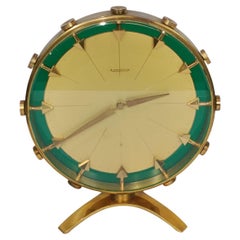
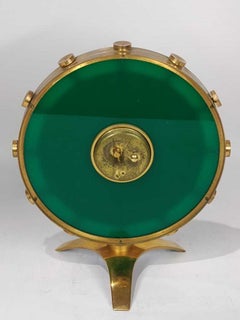
Art Deco Table Clock Jaeger LeCoultre
Located in Buenos Aires, Argentina
Art Deco Table Clock Jaeger LeCoultre Origin: Switzerland Materials: Gilt bronze and acrylic 8-day winding (mechanism) Excellent condition – Working Mid-Century Dimensions: 21 x 18 x 18 cm Jaeger-LeCoultre is one of the most prestigious and renowned Swiss watch manufacturers in the world, founded in 1833 in Le Sentier, Switzerland. Renowned for its technical innovation and craftsmanship, the brand has developed more than 1,200 calibers and boasts inventions such as the atmospheric clock and the famous Reverso model. Jaeger-LeCoultre Art Deco...
Bronze
Art Deco Vase in Patinated Bronze by Bdr. Grage Denmark
Located in Esbjerg, DK
A Japanese inspired vase in heavy stock solid bronze. Beautiful brown patina with dark green hues. A very tactile piece reminiscent of Just Andersens best bronze pieces. This however...
Bronze
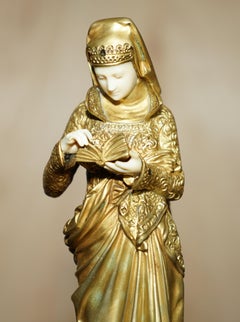
Art Deco Sculpture "Amies Toujours (Friends Forever)" by Demetre Chiparus
Located in Los Angeles, CA
An elegant and highly collectible Art Deco chryselephantine sculpture "Amies Toujours (Friends Forever)" by Demetre Chiparus, depicting a refined female figure flanked symmetrically ...
Marble, Bronze
Art Noveau Bronze vase by Hugo Elmqvist, Sweden, ca 1900
Located in Östermalm, Stockholms län
Beautiful Art Noveau by Hugo Elmqvist, made from bronze in a tall form. Decor of embossed birch leaves with seeds and dragonflies around the rim.
Bronze
Seth Thomas Louis XIV Style Gilt Bronze Open Escapement Mantle Clock c1900
Located in Big Flats, NY
An antique Seth Thomas mantle clock, crafted circa 1900 in the opulent Louis XIV style. This timepiece is a fine example of American clockmaking from the turn of the 20th century, co...
Bronze
19th Century Antique French Empire Neoclassical Ormolu Bronze Figural Jardinear
Located in New York, NY
A superb Large French Empire neoclassical ormolu bronze figural jardinière, dating to 19th century, distinguished by its refined neoclassical ornament and sculptural presence. Cast i...
Bronze, Ormolu
Remarkable Mid-Century Sculptured Silvered Bronze and Alabaster Chandelier, 1970
Located in Lisse, NL
Large and remarkable, nine light chandelier. This large and rare nine-light chandelier is a true masterpiece of mid-century design and craftsmanship. Its sculptural form, elegant sy...
Alabaster, Metal, Bronze
Antique Franz Bergman Bruno Zach Cold Painted Bronze Peacock with Fanned Train
Located in Cincinnati, OH
This fabulous bronze peacock was made at Franz Bergman's Vienna foundry and bears the name of sculptor Bruno Zach. The highly detailed sculpture is beautifully cast and features cold painted polychrome decoration. The peacock's crested head is turned slightly to the left and its magnificent fanned tail feathers - also known as a train - are realistically rendered and arch forward as they rise. The train has splayed feathers at both ends that rest flat on the display surface, preventing instability. The feathers have been finished with white shafts and greenish-gold vanes while the ornamental black eyespots are accented with metallic rose and copper colored paint. It should be noted that the back of the bird's train is also highly detailed lending visual interest if viewed from the front or the rear. The peacock's head and body are painted in a silvery color while the painted decoration on the head includes large white masks and black eyes that are ringed in orange. The bird's angled beak is finished in yellow and has well defined upper and lower sections. The peacock's wings are positioned parallel to its body and extend back beyond the train. The outside of each wing is accented in mottled copper and black paint while the rear portions bear a series of painted copper and black stripes. The bird's thin legs are finished in gray and have black spurs at the back. Its long toes terminate in sharp black talons. The peacock is in very good condition with no replacements or repairs. As an antique, the piece shows signs of age including minor areas of paint loss that are noted for accuracy. It stands 8" at the tallest point of the train and is 11.5" as measured across the widest points of the train. The piece is 3.25" at its deepest point. The back of the train bears a partially legible Bergman amphora-shaped foundry mark with a B at the center. It is also signed 'Zach' in cast at the underside of one section of tail feathers for sculptor Bruno Zach who had a history of collaborating with Bergman to edit and cast some of his works. The peacock weighs 3lbs 2oz. This lovely antique Vienna Bronze peacock sculpture...
Bronze
Grand Tour Bronze Casket Athena Greek Processional Friezes, Attrib. Henri Picard
By Henri Picard
Located in West Palm Beach, FL
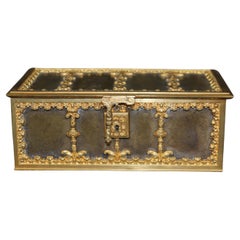
Grand Tour Archaeological Revival Bronze Casket with Athena and Greek Processional Friezes, Attributed to Henri Picard, Paris, circa 1865–1885 A finely cast gilt and patinated bronze casket executed in the Grand Tour archaeological revival taste, attributed to the Paris bronzier Henri Picard and dating to the late 19th century. The object reflects the fascination with ancient Greek antiquity...
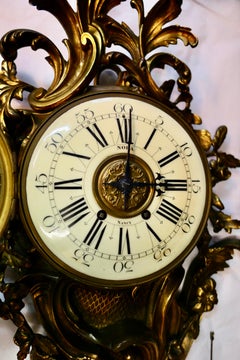
Bronze
“Duo” Artist Proof Bronze Sculpture by Victor Salmones, Mexico, 1983
Located in Los Angeles, CA
Large bronze sculpture titled “Duo” by celebrated Mexican sculptor Victor Salmones (1937–1989). This striking example of Salmones’ work was acquired directly from the Victor Salmones...
Bronze
Impressively Large 19th Century Bronze Buddha Head
Located in Hopewell, NJ
Incredible large scale bronze Buddha head having impressive detail in its decoration. RR
Bronze
Bronze Mouflon Sculpture, Italy Late 19th Century
Located in Sacile, PN
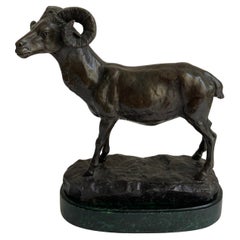
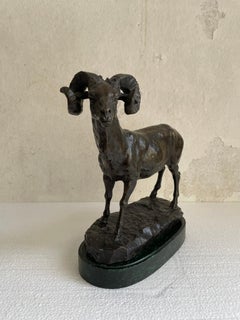
The statue is made of bronze, with a dark and glossy finish. The mouflon is depicted in a standing pose, with all four legs positioned on a base that resembles a rocky surface. The b...
Marble, Bronze
Maitland Smith Jockeys on Horse Bronze Equestrian Racing Statue 18"
Located in Dayton, OH
Vintage Maitland Smith bronze two jockeys on horses equestrian racing statue featuring leather wrapped base. Dimensions: 17.5" x 9.5" x 15" h
Bronze
Late 20th Century Italy Bronze Abstract Sculpture by Eli Riva Sole Luna Sun Moon
Located in Brescia, IT
This intense abstract bronze sculpture was created by the Italian artist Eli Riva in the Late 20th Century. The artwork is a multiple numbered and signed of 5...
Bronze
Wonderful French Faceted Cut Crystal Bronze Ormolu-Mounted Casket Jewelry Box
Located in Roslyn, NY
A wonderful French faceted cut crystal casket with engraved scroll bronze ormolu mountings with wreath draped keyhole. Measures: 5.25&quo...
Crystal, Bronze
New Haven Clock Co. Art Nouveau Style Table Clock
Located in Guaynabo, PR
This is an Art Nouveau Style Table Clock. It depicts a small balloon shape clock mounted in copper color metal. A standing young nymph is adorning the front of the case while holding its face. The white enamel round dial of the clock has Arabic numbers and is also decorated with a garland of roses and leaves around the center. The gold color metal hours and minutes hands are made of scrolls of leaves. At the bottom of the dial face is hallmarked New Haven Clock...
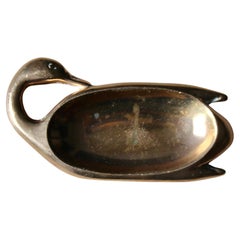
Bronze
Otterburn Chess Table — Solid Patinated Brass and Walnut — by NOVOCASTRIAN
By Novocastrian
Located in Washington, GB
Commissioned by a special client as the perfect stage for their chess battles, this table is a showcase of NOVOCASTRIAN’s creative ability, of almost 10 years of experimentation, ref...
Stone, Limestone, Marble, Carrara Marble, Slate, Brass, Bronze, Copper, ...
32-Inch Tall Bronze Brutalist Candle Holder, Mid-20th Century
Located in Oklahoma City, OK
A sculptural and commanding Brutalist candle holder, standing at an impressive 32 inches in height. Crafted in solid bronze with a raw, hand-forged texture, this piece embodies the b...
Bronze
Elegant Gilded Age Gilt Bronze Standing Mirror signed Tiffany & Co
Located in New York, NY
A magnificent Aesthetic Movement gilt bronze standing mirror , crafted and signed by the iconic Tiffany & Co., American, circa 1910. This exquisite piece embodies the elegance and re...
Bronze
White Parrot Sculpture in Hand-Painted Porcelain and Bronze
Located in Paris, FR
Sculpture white parrot all handcrafted in porcelain. Hand-painted and with details in solid bronze.
Bronze
19th Century Napoleon III Wood Marquetry Teacaddy
Located in Casteren, Noord-Brabant
A refined antique French tea caddy from the end of Napoleon III. The box is beautifully inlaid with different types of wood and brass, outside around ...
Brass, Bronze
$400Sale Price / set|20% Off
A Pair of 18/1900s French Campana Style Brass Urn Pots, Patina
Located in Skien, NO
**Pair of French Campana-Style / George IV-Style Brass Urns, 19th to Early 20th Century, Small** Add a touch of timeless elegance to your space with this exquisite pair of French ...
Brass, Bronze
Knud Andersen Lidded Jar for Royal Copenhagen, 1933, Burnt Orange Crackle Glaze
By Royal Copenhagen, Knud Andersen
Located in Kastrup, DK
Decorative lidded jar by Knud Andersen (1892–1966) for Royal Copenhagen, 1933. The jar is executed in porcelain with a beautiful burnt orange crackle glaze and an elegantly fluted b...
Bronze
Greyhound Bronze by Christophe Fratin (1801–1864)
Located in Greding, DE
Small bronze sculpture of a greyhound with a green patina. The dog is depicted in a calm, attentive pose, with finely rendered, anatomical detail. Signed Fratin on the base. A charac...
Bronze
French, Antique Bronze Sculpture of Aberdeen Angus Bull by Isidore Bonheur
Located in Shippensburg, PA
ISIDORE JULES BONHEUR French, 1827-1901 Taureau Aberdeen-Angus" (Standing Aberdeen-Angus Bull) Patinated sand-cast bronze Signed to base "I. BONHEUR" Item # 211HDB17Z An exquisite and very rare casting of an Aberdeen-Angus bull, an unusual and distinctive breed of cattle from Scotland, this sculpture by Isidore Jules Bonheur is almost without a doubt cast by the foundry of his brother-in-law Hippolyte Peyrol and a rather early model as well in light of the distinctive construction method. In her text on the selection of 46 animal bronzes in the collection of the Georgia Museum of Art, Eleanor Luciano notes regarding this model that "Bonheur is never recorded to have been to Scotland, where he would have seen this unusual breed. Rosa Bonheur painted in Scotland, and its seems likely that Isidore would have drawn the idea for this bull either from one of her sketches or from an agricultural show in France. The animal's rich mane and strong modeling make this one of the most successful." Notable is the very fine surface patination which exhibits a glassy finish with a complex range of colors presenting in the body of the bull, overall being medium brown but augmented with an underlying reddish hue against auburn highlights. The base is signed "I. BONHEUR" in the typical manner. Museum Collections: * National Gallery of Art, Washington DC, acc. no. 2006.128.3 * Georgia Museum of Art, University of Georgia...
Bronze
Mid Century Bronze Zodiac Sculptures by Fred Press, Complete Set, Museum Quality
By Fred Press
Located in Bedford Hills, NY
Very rare, possible the only complete set in existence, all 12 Astrological sign cast bronze brutalist sculptures by Fred Press. Each zodiac sign represented, beautiful age and patin...
Bronze
Elegant Abstract Gilt Bronze by Tim Orr, circa 1970
By Tim Orr
Located in Neuilly-en- sancerre, FR
Elegant and rare gilt bronze by Tim Orr. Really precious abstract bronze represanting 2 abstract bodies, circa 1970 Signed under the base Dimensions : 12x24x10cm
Bronze
French 19th/20th Century Louis XV Style Christofle & Cie Figural Centerpiece
By Christofle
Located in Los Angeles, CA
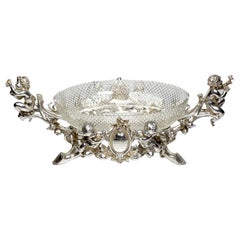
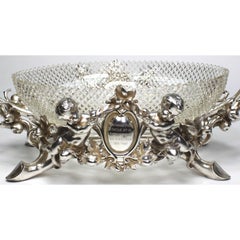
A very fine and palatial French 19th/20th century Christofle & Cie Louis XV style silvered figural centerpiece, fitted with an oval diamond-cut-glass center-dish, attributed to B...
Crystal, Silver Plate, Bronze
Pair of Silvered Bronze Photophores, 20th Century
Located in Spencertown, NY
This model of Regence style hurricane lamps evolved in the early 18th century. It is a type of candlestick designed to shield candle flames from wind. They were used to illuminate te...
Bronze
Tiffany Studios New York Bronze Doré Plate or Shallow Bowl
Located in South Bend, IN
A gorgeous Arts & Crafts or Art Deco period gilt bronze plate or shallow bowl By Tiffany Studios (signed to the underside) New York, USA, Early 20th Century Measures: 9"W x 9"D x ...
Bronze
Demétre Chiparus "Footsteps" Art Deco Bronze Female Dancer Figurative Sculpture
Located in Reading, Berkshire
Demétre Chiparus "Footsteps" Art Deco Bronze Female Dancer Figurative Sculpture Bronze with polychrome patina and ivory. Demétre Haralamb Chiparus (16 September 1886 – 22 January 1...
Bronze
French Crystal and Bronze Dresser Box with Cherubs
Located in Land O' Lakes, FL
An exquisite French crystal and bronze dresser box featuring a detached lid topped with a large, cut crystal finial. The box is supported by four charming bronze cherubs. Beautiful b...
Crystal, Bronze
French Bronze Greyhound Sculpture on Carrara Marble Base, Early 20th Century
Located in Knivsta, SE
French Bronze Greyhound Sculpture on Carrara Marble Base, Early 20th Century A refined and elegant bronze sculpture of a greyhound, mounted on a polished Carrara marble base. Exec...
Carrara Marble, Bronze
A Small French 19 Century Bronze Bust of Napoleon in Uniform
Located in Vancouver, British Columbia
A small 19 Century French patinated bronze bust of Emperor Napoleon Bonaparte wearing his trademark bicorn hat and his favorite uniform of Colonel of Chasseurs Cheval de la Garde. ...
Marble, Bronze
Vintage Bronze Yoga Meditation Singing Bowl with Striker, 1960s
Located in Esbjerg, DK
Asian Buddhist singing bowl in spun polished bronze. The bowl was made in India or Nepal circa 1950-70. It is accompanied by a wooden striker. Measurement: D: 20 cm, H: 11 cm. Th...
Bronze
19th Century French Empire Gilt Bronze Three-Light Sconce, Wall Candelabra
Located in Frankfurt am Main, DE
French Empire gilt bronze three-arm wall candleholder finely ornate with foliate, acorn motifs and three female faces, circa 1850-1870. This wall candelabra can easily be converted ...
Bronze
A pair of branches of Mediterranean red coral (Corallium Rubrum), Sicily 1790
Located in Milan, IT
Pair of large branches of Mediterranean red coral (Corallium Rubrum). Gilt bronze bases with phytomorphic calyx stem. Connection with an oval element in Lapis Lazuli and two spirals ...
Lapis Lazuli, Bronze
The French sculptor shaped dense blocks into tactile forms meant to be used and held.
After synthetic dyes changed fashion, home goods and printed matter, it was only a matter of time till glass caught up.
The brilliantly simple design turns a modest bouquet into a major statement.
The Greek tragedian is said to have been handsome in his day.
Even for those who don’t indulge, elegant smoking accessories and audacious art portraying cigar enthusiasts hold a nostalgic allure.
It’s an excellent example of the sought-after ceramics coming out of South Africa’s KwaZulu-Natal province.
Thanks to its new leadership, the Spanish maker of figurines, busts and lighting is on a mission to update the art of porcelain for the 21st century.
The free-form stoneware piece is inspired by the magnolia tree and its associations with home.