Stoneware Decorative Objects

to
395
3,482
1,111
190
40
148
3,294
1,301
198
2,347
673
19
14
55
114
194
413
518
297
86
28
1,307
1,181
422
202
78
30
27
16
14
9
6
4
3
1
1
1
8,644
56,468
43,403
25,902
20,501
3,116
1,451
3,662
2,258
1,543
682
669
Height
to
Width
to
4,783
4,047
4,327
461
332
267
180
157
Material: Stoneware
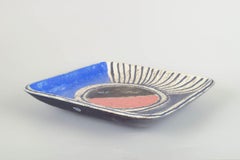
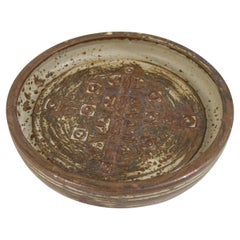
Bjørn Wiinblad for The Blue House, own studio. Large ceramic bowl.

Bjørn Wiinblad for The Blue House, own studio. Large ceramic bowl.

Located in København, Copenhagen

Bjørn Wiinblad (1918-2006), Det Blå Hus (The Blue House), own studio. Large ceramic bowl. Hand-painted in blue. Motif of a bridal couple. Early and rare bowl. Signed and dated 1955. ...

Category

1950s Danish Scandinavian Modern Vintage Stoneware Decorative Objects

Materials

Stoneware
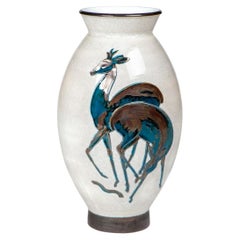
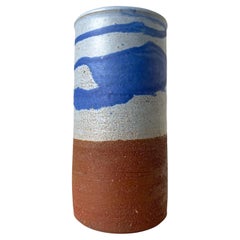
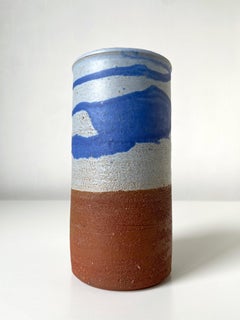
Lauritz Hjorth, Vase, Stoneware, Denmark, 1960s

Lauritz Hjorth, Vase, Stoneware, Denmark, 1960s

Located in High Point, NC

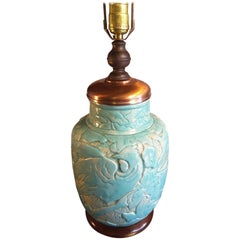
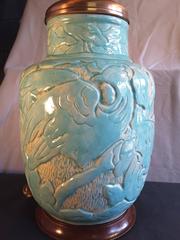
A blue-glazed stoneware vase designed and produced by Lauritz Hjorth, Denmark, c. 1960s.

Category

1960s Danish Scandinavian Modern Vintage Stoneware Decorative Objects

Materials

Stoneware
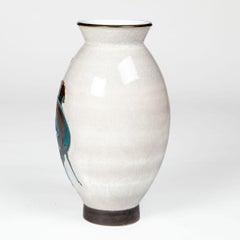
Stoneware Platter by Berndt Friberg, Gustavsberg, Sweden, 1960

Stoneware Platter by Berndt Friberg, Gustavsberg, Sweden, 1960

By Gustavsberg, Berndt Friberg

Located in Östermalm, Stockholms län

Striking, oversized stoneware platter by Berndt Friberg. Weighty. Beautiful blue hare’s fur glaze, rusty brown in the center. Berndt Friberg was a Swedish ceramicist, renowned for...

Category

1960s Swedish Scandinavian Modern Vintage Stoneware Decorative Objects

Materials

Stoneware
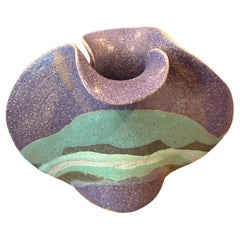
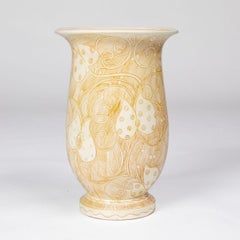
Ceramic Vase by Gertrud Lönegren, Rörstrand, Sweden, 1930s. Cream / Off-white

Ceramic Vase by Gertrud Lönegren, Rörstrand, Sweden, 1930s. Cream / Off-white

Beautiful vase with Cream / Off-white glaze. Made by Gertrud Lönegren at Rorstrand in Sweden between 1936-41. Great condition. Impressed 'Rörstrand', 'LÖNEGREN' and 'HANDDREJAD'. ...

Category

Mid-20th Century Swedish Scandinavian Modern Stoneware Decorative Objects

Materials

Ceramic, Stoneware

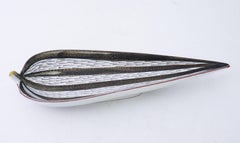
Stoneware Leaf by Tyra Lundgren. Manufacture nationale de Sèvres, 1930s.

Stoneware Leaf by Tyra Lundgren. Manufacture nationale de Sèvres, 1930s.

A beautiful stoneware bowl with amazing glaze. Made by Tyra Lundgren. Executed during the artist's time spent at Sèvres, between 1934-1939. Excellent condition. Impressed with artist's name and maker's marks. Tyra Lundgren (1897-1979) was one of the most multifaceted artists and modernists of the twentieth century. She was a painter, drawer, sculptor, ceramist, glass- and textile designer, as well as an author and an art critic. She was the first woman who designed glass for Paolo Venini at Murano in Venice and she also served as the artistic leader at Arabia in Helsinki at a time when men tended to hold those kinds of positions. Tyra Lundgren grew up in Djursholm, near Stockholm. Her parents were John Petter Lundgren, professor at Veterinärinstitutet (institute of veterinary sciences) in Stockholm, and Edith Lundgren née Åberg, who was a housewife and raised their six children. The bourgeois home also comprised a nanny and a female cook. The family were very socially active, travelled often, and enjoyed the outdoor lifestyle. Tyra Lundgren’s schooling began at Djursholm coeducational school, where her teachers included Natanael and Elsa Beskow and Alice Tegnér. Her school friends included Greta Knutson-Tzara, Stellan Mörner, and Ingrid Rydbeck-Zuhr. Tyra Lundgren knew from the time she was five years old that she wanted to be an artist. She first became aware of the profession through Axel Fahlcrantz, who rented a studio on the plot of land where she lived with her family. In 1913 she began to attend Högre konstindustriella skolan (HKS, now known as Konstfack, college of arts, crafts and design) where she studied decorative art as well as handicrafts in various forms until 1917. One of her fellow students and friends there was Estrid Ericson, who later founded Svenskt Tenn AB in 1924. Whilst attending HKS Tyra Lundgren also took painting lessons at the Althin school of painting. In 1917 she was accepted as a candidate at the Royal Swedish Academy of Fine Arts where, apart from breaks during which she undertook studies abroad, she remained until 1922. She spent a couple of months taking lessons from Anton Hanak in Vienna and from 1920–1923 she was a student of André Lhote in Paris. Tyra Lundgren was primarily active in four countries: Sweden, Finland, France, and Italy. She spent much of her professional life travelling and considered herself to be a European. Greece and Mexico also formed important centres in her artistic life, as did the USA. She had an extensive social network which included focal individuals within twentieth century-European and American artistic and cultural circles. Tyra Lundgren’s main artistic motifs were birds, fish, and people which she depicted through different techniques and materials. Her artistic expression involved a variety of different directions and styles. She was a pioneer of the 1920s Swedish Grace style, the name of which had been coined by the art critic Morton Shand at the Stockholm Exhibition of 1930. This was a Swedish Art Deco style, characterised by elegance and traditional art which contrasted with the current artistic ideals of functionalism. Tyra Lundgren made her debut at a group exhibition held at Kungliga Akademien för de fria konsterna in 1921. She went on to show her work at various exhibitions throughout the 1920s. After that period she only very rarely exhibited her paintings. Tyra Lundgren’s painted output can be divided into different periods or stylistic directions. The first of these, and the most extensive, was her post-Cubist period which began in 1920 on her arrival in Paris. Her paintings from this time and right up to the mid-1930s typically comprise portraits, self-portraits, live-model painting, still-lifes, interiors, and landscapes in the Cubist style. Many of the great number of self-portraits she painted were produced in the New Objective style, displaying broad variation in terms of clothes, poses and techniques. Two of these – Huvud med vit duk and Självporträtt both from 1921 – can be seen at Moderna Museet in Stockholm, although the majority of these works are at Gotlands Museum. Tyra Lundgren’s second artistic period comprises the years of 1927 to 1929 and is characterised by the New Objective style inspired by medieval techniques and materials (Giotto, Piero della Francesca). Her motifs were still-lifes and landscapes. At this point she was living in Rome and was close to the circle involved in the Valori plastici: rivista d’arte art journal. This period saw a breakthrough in her development as a painter. From the 1950s through the 1970s her work can almost be described as belonging to the Concrete style. Using light pastel colours her paintings sought light in a sometimes non-figurative expression, but often depicting abstract bird-shapes or other nature-inspired imagery. Her paintings from this period are outsized and display powerful colours, in yellows, reds, and blues. Tyra Lundgren maintained a constant production of drawings, both in terms of individual artworks and sketches for patterns and designs. She also produced the illustrations for her book Fagert i Fide. Årstiderna på en gammal gotlandsgård, published in 1961. During her early years she also produced advertising illustrations. She spent the final years of her life primarily working with lithographs which were printed at Galleri Prisma and depicted images of doves, swallows, magpies and crows. Tyra Lundgren is meanwhile best known for her work as a ceramist and in this sphere she was one of Sweden’s leading exponents. She worked in the porcelain industry as a designer and as an artisan and ceramic sculptor. Her first job was at St Eriks Lervarufabrik in Uppsala from 1922–1924, she then worked at Arabia from 1924–1937, and at Rörstrand and Lidköping Porslinsfabrik. She was the artistic leader at Arabia ahead of the 1930 Stockholm Exhibition and she exhibited her work at the World’s Fairs. During the 1934–1938 period she was connected to the Manufacture nationale de Sèvres porcelain factory in Paris. Tyra Lundgren was a pioneer when it came to giving ceramic art a public space in Sweden. She produced around 20 outsized reliefs in stoneware, so-called monumental reliefs. One of these is Märkeskvinnor, from 1947, for the former girls’ school at Bohusgatan in Stockholm. From the 1940s onwards Tyra Lundgren produced sculptural objects in Chamotte clay and stoneware, with various glazings. Her small birds are well-known and popular with many. When her ceramic efforts became too much for her during the 1970s she then produced models for sculptures in bronze. There are six of these in various places around the globe, including Solfågel in Almedalen, Visby. Tyra Lundgren began to work as a glassware designer at Moser in Karlsbad in 1922 where she designed new table services and modernised older ones. She also worked freelance for Riihimäki factory in Finland during the 1924–1929 period. From 1934 to 1938 she was employed by Kosta glass factory where she mainly designed thick-walled bowls and vases, engraved with classical motifs. She was introduced to the glassmaker Paolo Venini at Murano during the Triennale di Milano of 1936 and they began a collaboration that lasted into the 1950s. As part of this collaboration Tyra Lundgren became the first woman to design glassware and, in conjunction with the glassblower Arturo Biasutto, she developed new techniques of glass production. Her motifs at this point were birds, fish, snail-shaped designs and leaf-patterned bowls using traditional techniques as well as in new designs. It was during this time that she created the so-called tissue-shaped bowls and it remains unclear as to who specifically came up with the design but Tyra Lundgren claimed it was of her making. Tyra Lundgren was active as textile designer for Licium (now HV Licium), the sacred textiles...

Category

Mid-20th Century French Scandinavian Modern Stoneware Decorative Objects

Materials

Ceramic, Stoneware

Pair of Roger Capron Ceramic Tree of Life Paperweights

Pair of Roger Capron Ceramic Tree of Life Paperweights

By Roger Capron

Located in Los Angeles, CA

Roger Capron tree of life stoneware paperweights France, circa 1950’s Beautifully preserved Handmade, intricately etched trees Organic matte finish Marked identification Can be used...

Category

1950s French Vintage Stoneware Decorative Objects

Materials

Stoneware
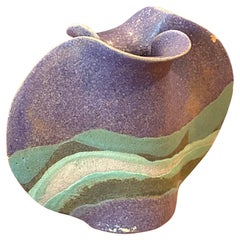
Large Vessel in Stoneware, Slip, Oxydes & Ashes by Robin Kerr

Large Vessel in Stoneware, Slip, Oxydes & Ashes by Robin Kerr

Located in Geneve, CH

Large Vessel in Stoneware, Slip, Oxydes & Ashes by Robin Kerr Dimensions: D 38 x W 38 x H 16 cm. Materials: Stoneware, slip, ashes, and oxides. Robin Kerr is a Swiss ceramic artist ...

Category

2010s French Post-Modern Stoneware Decorative Objects

Materials

Other

Glazed Modernist Studio Pottery Vase in Green and Blue

Glazed Modernist Studio Pottery Vase in Green and Blue

Located in Meer, VAN

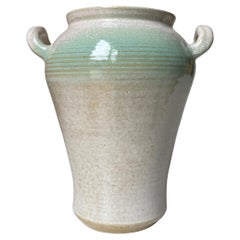
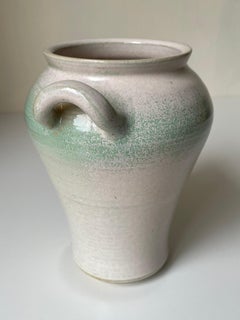
Glazed Studio Pottery vase in green and blue. Early to mid 20th century. This is a beautiful metallic glazed studio pottery vase with a distinct shape. Great simple but strong li...

Category

Mid-20th Century Unknown Mid-Century Modern Stoneware Decorative Objects

Materials

Pottery, Stoneware

Sture G. Ohlsson, Vase, Stoneware, Sweden, 1960s

Sture G. Ohlsson, Vase, Stoneware, Sweden, 1960s

Located in High Point, NC

A semi-glazed grey and incised stoneware vase, designed by Sture G. Ohlsson and produced by Tallhöjdens Stengods, Simlångsdalen, Sweden, c. 1960s.

Category

1960s Swedish Mid-Century Modern Vintage Stoneware Decorative Objects

Materials

Stoneware
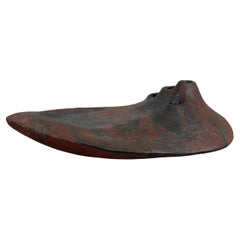
Large and Unique Stoneware Rooster by Tyra Lundgren. Sweden, 1955.

Large and Unique Stoneware Rooster by Tyra Lundgren. Sweden, 1955.

By Tyra Lundgren Carolina

Located in Malmö, SE

A stunning and unique stoneware rooster sculpture with amazing glaze. Made by Tyra Lundgren. Executed in her own studio in Sweden, 1955. Great condition, but with a couple of chips to the base (pictured). Signed by the artist in two places, and dated 1955-06-20. Provenance: bought from the estate of the artist in 1979. Tyra Lundgren (1897-1979) was one of the most multifaceted artists and modernists of the twentieth century. She was a painter, drawer, sculptor, ceramist, glass- and textile designer, as well as an author and an art critic. She was the first woman who designed glass for Paolo Venini at Murano in Venice and she also served as the artistic leader at Arabia in Helsinki at a time when men tended to hold those kinds of positions. Tyra Lundgren grew up in Djursholm, near Stockholm. Her parents were John Petter Lundgren, professor at Veterinärinstitutet (institute of veterinary sciences) in Stockholm, and Edith Lundgren née Åberg, who was a housewife and raised their six children. The bourgeois home also comprised a nanny and a female cook. The family were very socially active, travelled often, and enjoyed the outdoor lifestyle. Tyra Lundgren’s schooling began at Djursholm coeducational school, where her teachers included Natanael and Elsa Beskow and Alice Tegnér. Her school friends included Greta Knutson-Tzara, Stellan Mörner, and Ingrid Rydbeck-Zuhr. Tyra Lundgren knew from the time she was five years old that she wanted to be an artist. She first became aware of the profession through Axel Fahlcrantz, who rented a studio on the plot of land where she lived with her family. In 1913 she began to attend Högre konstindustriella skolan (HKS, now known as Konstfack, college of arts, crafts and design) where she studied decorative art as well as handicrafts in various forms until 1917. One of her fellow students and friends there was Estrid Ericson, who later founded Svenskt Tenn AB in 1924. Whilst attending HKS Tyra Lundgren also took painting lessons at the Althin school of painting. In 1917 she was accepted as a candidate at the Royal Swedish Academy of Fine Arts where, apart from breaks during which she undertook studies abroad, she remained until 1922. She spent a couple of months taking lessons from Anton Hanak in Vienna and from 1920–1923 she was a student of André Lhote in Paris. Tyra Lundgren was primarily active in four countries: Sweden, Finland, France, and Italy. She spent much of her professional life travelling and considered herself to be a European. Greece and Mexico also formed important centres in her artistic life, as did the USA. She had an extensive social network which included focal individuals within twentieth century-European and American artistic and cultural circles. Tyra Lundgren’s main artistic motifs were birds, fish, and people which she depicted through different techniques and materials. Her artistic expression involved a variety of different directions and styles. She was a pioneer of the 1920s Swedish Grace style, the name of which had been coined by the art critic Morton Shand at the Stockholm Exhibition of 1930. This was a Swedish Art Deco style, characterised by elegance and traditional art which contrasted with the current artistic ideals of functionalism. Tyra Lundgren made her debut at a group exhibition held at Kungliga Akademien för de fria konsterna in 1921. She went on to show her work at various exhibitions throughout the 1920s. After that period she only very rarely exhibited her paintings. Tyra Lundgren’s painted output can be divided into different periods or stylistic directions. The first of these, and the most extensive, was her post-Cubist period which began in 1920 on her arrival in Paris. Her paintings from this time and right up to the mid-1930s typically comprise portraits, self-portraits, live-model painting, still-lifes, interiors, and landscapes in the Cubist style. Many of the great number of self-portraits she painted were produced in the New Objective style, displaying broad variation in terms of clothes, poses and techniques. Two of these – Huvud med vit duk and Självporträtt both from 1921 – can be seen at Moderna Museet in Stockholm, although the majority of these works are at Gotlands Museum. Tyra Lundgren’s second artistic period comprises the years of 1927 to 1929 and is characterised by the New Objective style inspired by medieval techniques and materials (Giotto, Piero della Francesca). Her motifs were still-lifes and landscapes. At this point she was living in Rome and was close to the circle involved in the Valori plastici: rivista d’arte art journal. This period saw a breakthrough in her development as a painter. From the 1950s through the 1970s her work can almost be described as belonging to the Concrete style. Using light pastel colours her paintings sought light in a sometimes non-figurative expression, but often depicting abstract bird-shapes or other nature-inspired imagery. Her paintings from this period are outsized and display powerful colours, in yellows, reds, and blues. Tyra Lundgren maintained a constant production of drawings, both in terms of individual artworks and sketches for patterns and designs. She also produced the illustrations for her book Fagert i Fide. Årstiderna på en gammal gotlandsgård, published in 1961. During her early years she also produced advertising illustrations. She spent the final years of her life primarily working with lithographs which were printed at Galleri Prisma and depicted images of doves, swallows, magpies and crows. Tyra Lundgren is meanwhile best known for her work as a ceramist and in this sphere she was one of Sweden’s leading exponents. She worked in the porcelain industry as a designer and as an artisan and ceramic sculptor. Her first job was at St Eriks Lervarufabrik in Uppsala from 1922–1924, she then worked at Arabia from 1924–1937, and at Rörstrand and Lidköping Porslinsfabrik. She was the artistic leader at Arabia ahead of the 1930 Stockholm Exhibition and she exhibited her work at the World’s Fairs. During the 1934–1938 period she was connected to the Manufacture nationale de Sèvres porcelain factory in Paris. Tyra Lundgren was a pioneer when it came to giving ceramic art a public space in Sweden. She produced around 20 outsized reliefs in stoneware, so-called monumental reliefs. One of these is Märkeskvinnor, from 1947, for the former girls’ school at Bohusgatan in Stockholm. From the 1940s onwards Tyra Lundgren produced sculptural objects in Chamotte clay and stoneware, with various glazings. Her small birds are well-known and popular with many. When her ceramic efforts became too much for her during the 1970s she then produced models for sculptures in bronze. There are six of these in various places around the globe, including Solfågel in Almedalen, Visby. Tyra Lundgren began to work as a glassware designer at Moser in Karlsbad in 1922 where she designed new table services and modernised older ones. She also worked freelance for Riihimäki factory in Finland during the 1924–1929 period. From 1934 to 1938 she was employed by Kosta glass factory where she mainly designed thick-walled bowls and vases, engraved with classical motifs. She was introduced to the glassmaker Paolo Venini at Murano during the Triennale di Milano of 1936 and they began a collaboration that lasted into the 1950s. As part of this collaboration Tyra Lundgren became the first woman to design glassware and, in conjunction with the glassblower Arturo Biasutto, she developed new techniques of glass production. Her motifs at this point were birds, fish, snail-shaped designs and leaf-patterned bowls using traditional techniques as well as in new designs. It was during this time that she created the so-called tissue-shaped bowls and it remains unclear as to who specifically came up with the design but Tyra Lundgren claimed it was of her making. Tyra Lundgren was active as textile designer for Licium (now HV Licium), the sacred textiles...

Category

Mid-20th Century Swedish Scandinavian Modern Stoneware Decorative Objects

Materials

Ceramic, Stoneware

Gunnar Andersson, Vase, Stoneware, Sweden, 1970s

Gunnar Andersson, Vase, Stoneware, Sweden, 1970s

By Höganäs Keramik

Located in High Point, NC

A brown and beige and green-glazed stoneware vase designed by Gunnar Andersson and produced by Höganäs Keramik, Sweden, c. 1970s.

Category

1970s Swedish Post-Modern Vintage Stoneware Decorative Objects

Materials

Stoneware
Ejvind Nielsen, Vase, Stoneware, Denmark, 1960s

Ejvind Nielsen, Vase, Stoneware, Denmark, 1960s

By Ejvind Nielsen

Located in High Point, NC

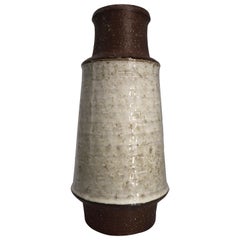
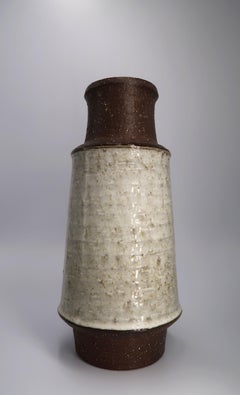
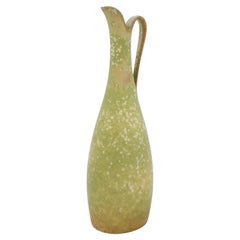
An off-white glazed vase designed and produced by Ejvind Nielsen, Denmark, c. 1960s.

Category

1960s Vintage Stoneware Decorative Objects

Materials

Stoneware
Gertrud Lönegren, Vase, Stoneware, Sweden, 1940s

Gertrud Lönegren, Vase, Stoneware, Sweden, 1940s

By Rörstrand, Gertrud Lönegren

Located in High Point, NC

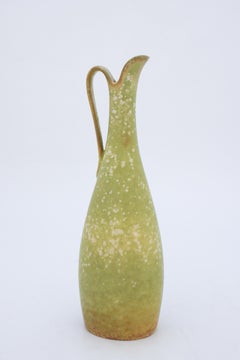
A white-glazed stoneware vase designed by Gertrud Lönegren and produced by Rörstrand, Sweden, c. 1940s.

Category

1940s Swedish Scandinavian Modern Vintage Stoneware Decorative Objects

Materials

Stoneware
White VÅGA Sculptural Vase by Wilhelm Kage for Gustavsberg, Sweden, 1940s

White VÅGA Sculptural Vase by Wilhelm Kage for Gustavsberg, Sweden, 1940s

By Gustavsberg, Wilhelm Kage

Located in Bromma, SE

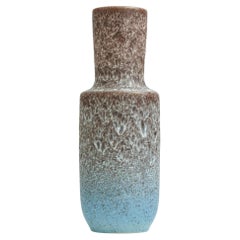
Wilhelm Kåge Creamy Vase "Våga" by Gustavsberg. Sculptural Organic formed vase with two openings with the characteristic wavy “Våga” decor around the rims. 1950s. White Stoneware Vas...

Category

1950s Swedish Mid-Century Modern Vintage Stoneware Decorative Objects

Materials

Ceramic, Stoneware

Isak Isaksson - Brown / Yellow vase

Isak Isaksson - Brown / Yellow vase

By Isak Isaksson

Located in MAASTRICHT, LI

Product Description: Isak Isakkson, the maker of this beautiful vase, is a master in the art of creating glazings that truly blow you away. The artist is still active, has his own in...

Category

2010s Swedish Stoneware Decorative Objects

Materials

Stoneware
Set of Decorative Stoneware "Owl" Candle Lamps made at Søholm, Denmark, 1960s

Set of Decorative Stoneware "Owl" Candle Lamps made at Søholm, Denmark, 1960s

By Søholm Stentøj, Joseph Simon

Located in Odense, DK

Wonderful pair of hand made candle lamps by Joseph Simon made at Søholm Pottery in Denmark in the 1960s. The lamps are made from hand decorated glazed stoneware. They can be used standing or hung at the wall. Joseph Simon worked at Søholm for a short period in the late 1960s and is known for his whimsical animal figures. This set of candle holders are probably one of a kind. The Søholm Pottery on the small island of Bornholm in Denmark was established in 1836 and closed in 1996. They were one of Denmarks finest ceramics workshops. With traditional names such as "Søholm", "Michael Andersen" and "Hjorth's Keramik", Bornholm has managed to place itself heavily on the Danish map within ceramics and handicrafts. Just like Japanese ceramics, Bornholm ceramics...

Category

1960s Danish Scandinavian Modern Vintage Stoneware Decorative Objects

Materials

Stoneware
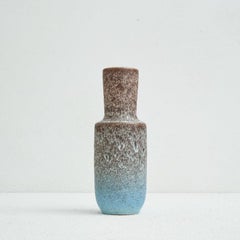
Vintage stoneware vase by W. Biron, Belgium

Vintage stoneware vase by W. Biron, Belgium

By Biron

Located in AIGNAN, FR

Stoneware vase designed by Willy Biron, Belgium, in the 1950s. With its modern shape and its raw mineral color, this ceramic will be perfect in a natural, refined and delicate decor...

Category

Mid-20th Century Belgian Stoneware Decorative Objects

Materials

Ceramic, Stoneware

Saxbo Stoneware Pitcher with Rich Brown Glaze by Erik Rahr, Denmark

Saxbo Stoneware Pitcher with Rich Brown Glaze by Erik Rahr, Denmark

Located in Kastrup, DK

Elegant stoneware pitcher with a rich brown glaze, designed by Danish ceramist Erik Rahr (1908–1982) for Saxbo. A fine example of modernist Danish ceramic design, marked on the base...

Category

Mid-20th Century Danish Modern Stoneware Decorative Objects

Materials

Stoneware
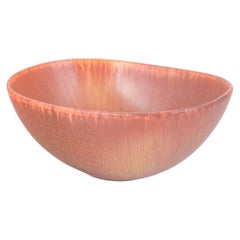
Bruno Karlsson, Vases, Stoneware, Sweden, 1960s

Bruno Karlsson, Vases, Stoneware, Sweden, 1960s

By Bruno Karlsson

Located in High Point, NC

A pair of brown and beige-glazed stoneware vases designed by Bruno Karlsson and produced by Ego Stengods, Sweden, 1960s.

Category

1960s Swedish Scandinavian Modern Vintage Stoneware Decorative Objects

Materials

Stoneware
Andersson & Johansson, Vase, Stoneware, Sweden, 1940s

Andersson & Johansson, Vase, Stoneware, Sweden, 1940s

By Andersson & Johansson

Located in High Point, NC

An orange and grey-glazed stoneware vase designed and produced by Andersson & Johansson, Sweden, c. 1940s.

Category

1940s Swedish Scandinavian Modern Vintage Stoneware Decorative Objects

Materials

Stoneware
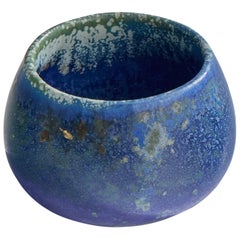
Abstract Ceramic Studio Pottery Vase by Gerhard Liebenthron, Germany, 1980s

Abstract Ceramic Studio Pottery Vase by Gerhard Liebenthron, Germany, 1980s

By Gerhard Liebenthron

Located in Kirchlengern, DE

Article: Ceramic stoneware object Designer and producer: Gerhard Liebenthron Information: Gerhard Liebenthron, Bremen 1925 †2005 Decade: 1970s This original vintage Studio...

Category

Late 20th Century German Mid-Century Modern Stoneware Decorative Objects

Materials

Ceramic, Pottery, Stoneware

Jytte Trebbien, Vase, Stoneware, Denmark, 1960s

Jytte Trebbien, Vase, Stoneware, Denmark, 1960s

Located in High Point, NC

A semi-glazed and incised blue and brown stoneware vase, designed and produced by Jytte Trebbien, Denmark, c. 1960s.

Category

1960s Danish Mid-Century Modern Vintage Stoneware Decorative Objects

Materials

Stoneware
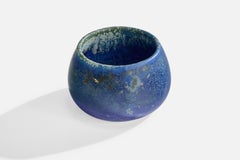
Bruno Karlsson, Vase, Stoneware, Sweden, 1960s

Bruno Karlsson, Vase, Stoneware, Sweden, 1960s

By Bruno Karlsson, Ego Stengods

Located in High Point, NC

A beige brown-glazed stoneware vase designed by Bruno Karlsson and produced by Ego Stengods, Sweden, c. 1960s.

Category

1960s Swedish Mid-Century Modern Vintage Stoneware Decorative Objects

Materials

Stoneware

New Medium Rina Menardi Mint Cup Shape Bowl

New Medium Rina Menardi Mint Cup Shape Bowl

By Rina Menardi

Located in Troy, MI

New and hand made in Italy by Rina Menardi, this cup-form bowl or vase stands just under 11” tall and has a dark teal green glaze. Streamlined shape with thin, glazed porcelain walls...

Category

2010s Italian Mid-Century Modern Stoneware Decorative Objects

Materials

Stoneware

Blue and White Stoneware Vase by Hertha Bengtson. Rorstrand, Sweden, 1950s.

Blue and White Stoneware Vase by Hertha Bengtson. Rorstrand, Sweden, 1950s.

A beautiful stoneware vase with amazing hand-painted decor. Made by Hertha Bengtson for Rörstrand, Sweden, 1950s. Excellent condition. Signed 'Bengtson' and 'R' för Rörstrand. Hertha Bengtson (1917-1993) is one of the well-known representatives of the illustrious Swedish ceramic design of the 20th century. She was one of the leading designers for the Rörstrand factory in the 1950s. Bengtson is represented at the Swedish National Museum of Art and Design. Hertha Bengtson was born in Ysane in Blekinge and grew up on a farm with her four brothers. Her parents were Henning and Asta Bengtson. Her father was a jack-of-all-trades and ran both a mink farm and a shop alongside his farm, which was the least of his interests. Her mother, to whom Hertha Bengtson was very close, was a skilled weaver. Hertha Bengtson's interest in textiles and handicrafts came from her mother. From her grandmother she inherited Scanian country textile knowledge and from her grandmother’s neighbour she learned to tat the Scanian way, without patterns. Upon completing her education at a girls’ school, Hertha Bengtson wanted to become a drawing teacher. However, there was no money to continue her formal education. Hertha Bengtson achieved top marks in drawing and handicrafts and therefore gained a place as a handicrafts teacher at one of the region’s elementary schools. During her time at the girls’ school, she had also taken evening classes in porcelain painting. In 1937 she applied to Hackefors’ porcelain factory in Linköping where she became employed as a pattern designer. Hertha Bengtson was interested in all aspects of the factory and when the men were called up for military service at the outbreak of the Second World War, she became head of her department at age 22. Hertha Bengtson wanted to create her own porcelain. She applied to and became employed at Rörstrand’s porcelain factory in 1941, where she started as a pattern designer but quickly became a master designer. Hertha Bengtson’s ability to combine beauty with function was fundamental to her success as a designer. Her breakthrough came with the innovative blue-and-white tableware...

Category

Mid-20th Century Swedish Scandinavian Modern Stoneware Decorative Objects

Materials

Ceramic, Stoneware

Gunnar Nylund, Vase, Stoneware, Sweden, 1940s

Gunnar Nylund, Vase, Stoneware, Sweden, 1940s

By Gunnar Nylund, Rörstrand

Located in High Point, NC

A beige, brown and grey-glazed stoneware vase designed by Gunnar Nylund and produced by Rörstrand, Sweden, 1940s.

Category

1940s Swedish Mid-Century Modern Vintage Stoneware Decorative Objects

Materials

Stoneware

Pair of Stoneware Bowls by Gunnar Nylund, Rörstrand, 1950s

Pair of Stoneware Bowls by Gunnar Nylund, Rörstrand, 1950s

By Rörstrand, Gunnar Nylund

Located in Östermalm, Stockholms län

Pair of stoneware bowls by Gunnar Nylund, of the appealing “ARO” model. Streamlined, oval form with plunging sides. One with rich brown glaze and the other with eggshell and blue glaze.

Category

1950s Scandinavian Modern Vintage Stoneware Decorative Objects

Materials

Stoneware

Fat Lava Ceramic Pottery Vase Heinz Siery Carstens Tönnieshof, Germany, 1970s

Fat Lava Ceramic Pottery Vase Heinz Siery Carstens Tönnieshof, Germany, 1970s

By Heinz Siery, Carstens Tönnieshof

Located in Kirchlengern, DE

Article: Ceramic pottery vase Origin: Germany Designer: Heinz Siery Producer: Carstens Tönnieshof, Germany Decade: 1970s This original vintage...

Category

Late 20th Century German Mid-Century Modern Stoneware Decorative Objects

Materials

Ceramic, Pottery, Stoneware

Munk Keramik, Vase, Stoneware, Sweden, 1960s

Munk Keramik, Vase, Stoneware, Sweden, 1960s

Located in High Point, NC

A brown-glazed stoneware vase designed and produced by Munk Keramik, Enköping, Sweden, 1960s. “Munk” signature on bottom

Category

1960s Swedish Mid-Century Modern Vintage Stoneware Decorative Objects

Materials

Stoneware

Erik Granquist, Vase, Stoneware, Sweden, 1960s

Erik Granquist, Vase, Stoneware, Sweden, 1960s

Located in High Point, NC

A blue semi-glazed stoneware vase designed and produced by Erik Granquist, Sweden, 1960s.

Category

1960s Swedish Mid-Century Modern Vintage Stoneware Decorative Objects

Materials

Stoneware

White Art Deco Stoneware Globe Vase by Gunnar Nylund. ALP Rörstrand Sweden 1930s

White Art Deco Stoneware Globe Vase by Gunnar Nylund. ALP Rörstrand Sweden 1930s

A stoneware art deco vase with off-white glaze and hand-painted gold details. Designed by Gunnar Nylund for Rörstrand ALP (Lidköpings Porslinsfabrik), Sweden, 1930s. Great conditio...

Category

Mid-20th Century Swedish Art Deco Stoneware Decorative Objects

Materials

Ceramic, Stoneware

Small Yellow Stoneware Vase by Gertrud Lönegren, Rörstrand, Sweden, 1930s.

Small Yellow Stoneware Vase by Gertrud Lönegren, Rörstrand, Sweden, 1930s.

By Gertrud Lönegren, Rörstrand, Gunnar Nylund

Located in Malmö, SE

Beautiful Swedish Grace stoneware vase with amazing glaze. Made by Gertrud Lönegren at Rorstrand in Sweden between 1936-41. Great condition. Impressed 'Lönegren', 'Rörstrand' and ...

Category

Mid-20th Century Swedish Scandinavian Modern Stoneware Decorative Objects

Materials

Ceramic, Stoneware

Mari Simmulson, Upsala-Ekeby. Stoneware vase with flowing yellow and brown glaze

Mari Simmulson, Upsala-Ekeby. Stoneware vase with flowing yellow and brown glaze

Located in København, Copenhagen

Mari Simmulson for Upsala-Ekeby Stoneware Vase, model 4011, 1960s. Cylindrical vase in stoneware with flowing glaze in yellow and brown shades, featuring soft transitions between ma...

Category

1960s Swedish Scandinavian Modern Vintage Stoneware Decorative Objects

Materials

Stoneware

"Igneous" Stoneware sculpture by Eric Serritella

"Igneous" Stoneware sculpture by Eric Serritella

By Eric Serritella

Located in Palm Beach, FL

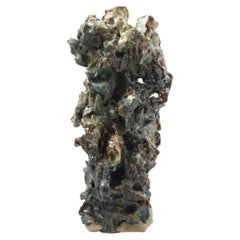
Note: We highly recommend shipping through 1stDibs for its cost effectiveness, full insurance coverage, and reliable handling. While standard parcel services are an option, the defau...

Category

21st Century and Contemporary American Other Stoneware Decorative Objects

Materials

Stoneware

Stoneware sculpture by Vicke Lindstrand for Upsala-Ekeby, Sweden, 1950s

Stoneware sculpture by Vicke Lindstrand for Upsala-Ekeby, Sweden, 1950s

By Upsala Ekeby, Vicke Lindstrand

Located in Eskilstuna, SE

Sculpture model 81 designed by Vicke Lindstrand for Upsala-Ekeby in Sweden in 1947-48. A striking, large-scale ceramic figure of a seated woman with a dark body and vividly glazed pa...

Category

Mid-20th Century Swedish Scandinavian Modern Stoneware Decorative Objects

Materials

Stoneware

Stig Lindberg, "Vitrin" Vase, Stoneware, Sweden, 1956

Stig Lindberg, "Vitrin" Vase, Stoneware, Sweden, 1956

Located in High Point, NC

A small off-white-glazed stoneware "Vitrin" vase designed by Stig Lindberg and produced by Gustavsberg, Sweden, 1956.

Category

1950s Swedish Scandinavian Modern Vintage Stoneware Decorative Objects

Materials

Stoneware

Agne Aronsson, Vase, Stoneware, Sweden, 1970s

Agne Aronsson, Vase, Stoneware, Sweden, 1970s

Located in High Point, NC

A grey and green-glazed stoneware vase designed and produced by Agne Aronsson, Sweden, c. 1970s.

Category

1970s Swedish Mid-Century Modern Vintage Stoneware Decorative Objects

Materials

Stoneware

Marianne Starck, Vase, Stoneware, Denmark, 1960s

Marianne Starck, Vase, Stoneware, Denmark, 1960s

By Marianne Starck, Michael Andersen & Son

Located in High Point, NC

A semi-glazed blue stoneware vase, designed by Marianne Starck, and produced by Michael Andersen, Bornholm, Denmark, c. 1960s. With signature and stamps to top edge. Vase can be re...

Category

1960s Danish Mid-Century Modern Vintage Stoneware Decorative Objects

Materials

Stoneware
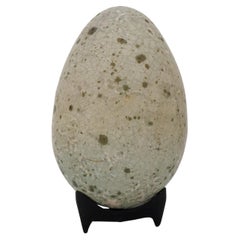
Brita Heilimo, Vase, Stoneware, Finland, 1950s

Brita Heilimo, Vase, Stoneware, Finland, 1950s

By Brita Heilimo, Arabia 1

Located in High Point, NC

A brown, beige and green-glazed stoneware vase designed by Brita Heilimo and produced by Arabia, Finland, c. 1950s.

Category

1950s American Mid-Century Modern Vintage Stoneware Decorative Objects

Materials

Stoneware
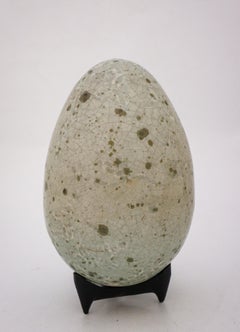
Blue Postmodern Stoneware Bowl by Vibeke Fischer, Denmark, 1980s.

Blue Postmodern Stoneware Bowl by Vibeke Fischer, Denmark, 1980s.

By Bente Hansen

Located in Malmö, SE

A beautiful stoneware bowl with blue glaze and geometric pattern. Made by renowned Danish ceramist Vibeke Fischer, Denmark, 1980s. Excellent condition. Signed underneath. Vibeke Fi...

Category

1980s Danish Post-Modern Vintage Stoneware Decorative Objects

Materials

Ceramic, Stoneware

Unique Stoneware vase by Carl-Harry Stålhane, Rörstrand, Sweden, 1950s

Unique Stoneware vase by Carl-Harry Stålhane, Rörstrand, Sweden, 1950s

By Rörstrand, Carl-Harry Stålhane

Located in Östermalm, Stockholms län

Elegant, unique stoneware vase by Carl-Harry Stålhane, in a smooth, tapering form with a wide brim. Eggshell white glaze with “Mimosa” pattern. Carl-Harry Stålhane was one of the st...

Category

1950s Swedish Scandinavian Modern Vintage Stoneware Decorative Objects

Materials

Stoneware
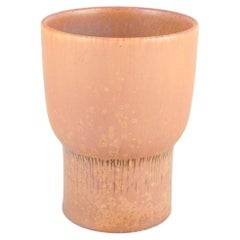
Valérie Courtet, Otter in chamotte and glazed stoneware. Contemporary work

Valérie Courtet, Otter in chamotte and glazed stoneware. Contemporary work

Located in Saint-Ouen, FR

Valérie Courtet Standing otter, front paws together, in grog-glazed stoneware in sienna and black (see photos), original stamped sculpture. Contemporary French work Dimensions : H...

Category

21st Century and Contemporary French Stoneware Decorative Objects

Materials

Stoneware
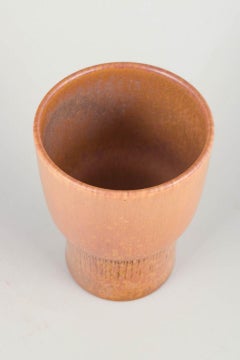
Carl-Harry Stålhane, Vase, Stoneware, Rörstrand, Sweden, 1960s

Carl-Harry Stålhane, Vase, Stoneware, Rörstrand, Sweden, 1960s

By Carl-Harry Stålhane, Rörstrand

Located in High Point, NC

A beige-glazed stoneware vase designed by Carl-Harry Stålhane and produced by Rörstrand in Sweden, 1960s. Overall Dimensions (inches): 4.25"H x 2.25"W x 2.25"D All items ship from ...

Category

1960s Swedish Mid-Century Modern Vintage Stoneware Decorative Objects

Materials

Stoneware
Blue & Green Double Walled Stoneware Vase by Kaj Fogelberg, Sweden, 1990s

Blue & Green Double Walled Stoneware Vase by Kaj Fogelberg, Sweden, 1990s

By Gunnar Nylund, Kaj Fogelberg, Hans Hedberg

Located in Malmö, SE

A beautiful double walled stoneware vase with amazing glaze. Made by renowned Swedish ceramist Kaj Fogelberg in his studio in Skåne, Sweden, 1990s. Excellent condition. Signed 'Foge...

Category

1990s Swedish Mid-Century Modern Stoneware Decorative Objects

Materials

Ceramic, Stoneware

Vintage Handmade Glazed Ceramic Studio Pottery Stoneware Bowl

Vintage Handmade Glazed Ceramic Studio Pottery Stoneware Bowl

By Herman A. Kahler Keramik

Located in Chicago, IL

Medium-size glazed ceramic studio pottery bowl with heavy glaze depicting a repeating circular abstracted flower. Heavy and interesting. Exterior body glaze exhibits a mottled "oil-s...

Category

Mid-20th Century Mid-Century Modern Stoneware Decorative Objects

Materials

Ceramic, Clay, Stoneware

Pair Antique Victorian Candlesticks Made in England Circa 1850

Pair Antique Victorian Candlesticks Made in England Circa 1850

Located in Katonah, NY

Made circa 1850, this pair of antique English pottery candlesticks is painted with delicate floral garlands set against a warm beige ground. The surface is finished with fine bands o...

Category

Mid-19th Century English Victorian Antique Stoneware Decorative Objects

Materials

Stoneware
Carl-Harry Stalhane / SYA 28 VASE / Rorstrand / 1950s

Carl-Harry Stalhane / SYA 28 VASE / Rorstrand / 1950s

By Carl-Harry Stålhane, Rörstrand

Located in Shibuya-Ku, JP

A work by Carl-Harry Stalhåne, who led Rorstrand's golden age in the 1950s alongside Gunnar Nylund and worked as a designer and art director. After his first exhibition in 1948, he s...

Category

1950s Swedish Scandinavian Modern Vintage Stoneware Decorative Objects

Materials

Stoneware
Vintage Studio Pottery Ceramic Vase No 09 by Ilse Ludwig-Korbel Germany 1986

Vintage Studio Pottery Ceramic Vase No 09 by Ilse Ludwig-Korbel Germany 1986

By Beate Kuhn, Helmut Friedrich Schäffenacker

Located in München, BY

Rare, elegant and highly decorative studio pottery ceramic vase. No 09. Designed and made by famous German studio ceramic artist Ilse Ludwig-Korbel, Tittmoning, Germany, 1980s. Date...

Category

1980s German Mid-Century Modern Vintage Stoneware Decorative Objects

Materials

Ceramic, Pottery, Stoneware

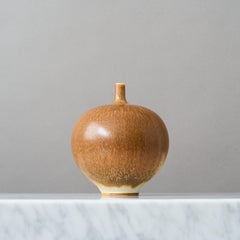
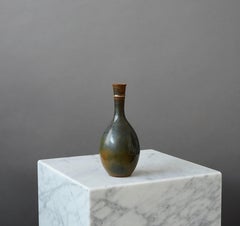
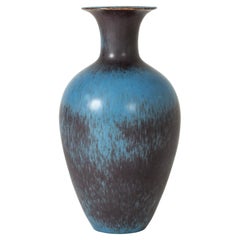
Blue Stoneware Miniature Vase by Berndt Friberg. Gustavsberg Studio, Sweden 1968

Blue Stoneware Miniature Vase by Berndt Friberg. Gustavsberg Studio, Sweden 1968

A beautiful miniature stoneware vase with amazing dark blue hare’s fur glaze. Made by master thrower Berndt Friberg, in the artist's studio at Gustavsberg, Sweden, 1968. Great condi...

Category

Mid-20th Century Swedish Scandinavian Modern Stoneware Decorative Objects

Materials

Ceramic, Stoneware

Marianne Starck, Vase, Stoneware, Denmark, 1960s

Marianne Starck, Vase, Stoneware, Denmark, 1960s

By Marianne Starck

Located in High Point, NC

A grey and brown-glazed stoneware vase designed by Marianne Starck and produced by Michael Andersen, Bornholm, Denmark, 1960s.

Category

1960s Danish Vintage Stoneware Decorative Objects

Materials

Stoneware
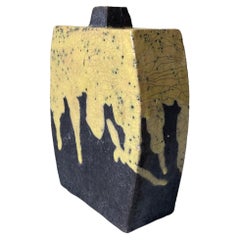
Abstract Ceramic Studio Pottery Vase Object Horst Kerstan, Kandern Germany 1980s

Abstract Ceramic Studio Pottery Vase Object Horst Kerstan, Kandern Germany 1980s

By Horst Kerstan

Located in Kirchlengern, DE

Article: Ceramic stoneware object Designer and producer: Horst Kerstan, Kandern in Germany Information: Horst Kerstan (born March 29, 1941 in Frankfurt, † March 21, 2005 in Kandern) was a German ceramist, craftsman and internationally recognized artist. Founder of Group 83. Decade: 1980s This original vintage Studio Stoneware Object was designed by Horst Kerstan and produced in his own Studio in the 1980s in Kandern in Germany. It is made of solid stoneware pottery and has a very unique red brown beige coloration and structure. the bottom is marked with typical Kerstan Producer signature K and signed with Keratin and date 21.9.1980. a very collectible and very rare item of the Kerstan Collection. the object has a very sculptural form and in its size of 17x18cm, it is very impressive. straighforward and minimalistic design of the 1980s design era. This item is a wonderful addition to every modern home. Dimensions: Height 17cm Length 17cm Depth 18cm. Condition: This item is in a very good vintage condition with patina. VITA Horst Kerstan: Horst Kerstan grew up in Frankfurt am Main, where he became acquainted with the manufacture of ceramic products through his father Walter Kerstan, who headed the "Ceramic Colors" department of Farbwerke Hoechst AG. After a porcelain painter apprenticeship, he worked from 1956 to 1957 as a porcelain painter in the porcelain manufactory of Hoechst AG, then from 1957 to 1959 in the ceramics department of the Werkkunstschule Offenbach (today: Hochschule für Gestaltung Offenbach am Main) with Lore Kramer-Koehn, the wife of Frankfurt architect Ferdinand Kramer, the pottery to learn and incidentally at the College of Fine Arts, Frankfurt, the drawing. After Kerstan met the ceramist and painter Richard Bampi...
Category

Late 20th Century German Mid-Century Modern Stoneware Decorative Objects
Materials

Ceramic, Pottery, Stoneware