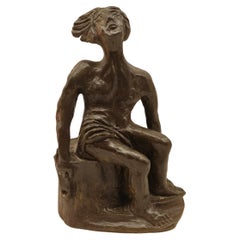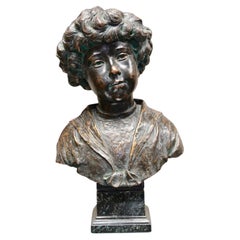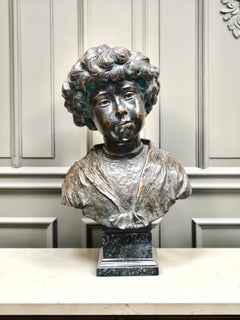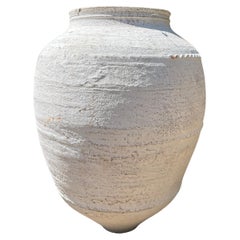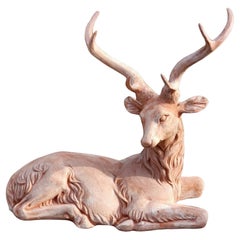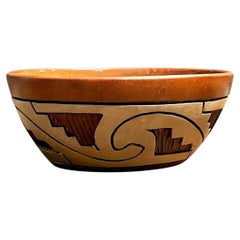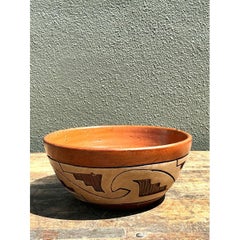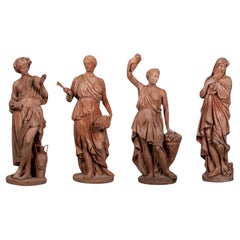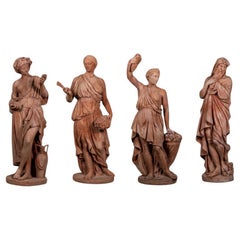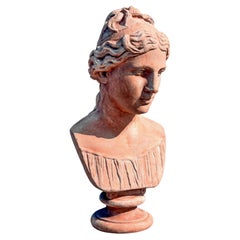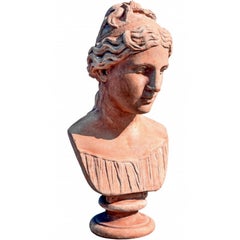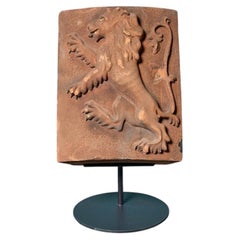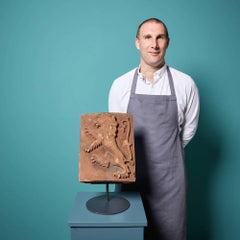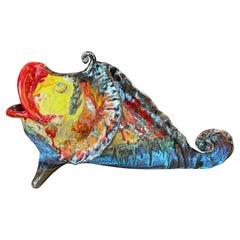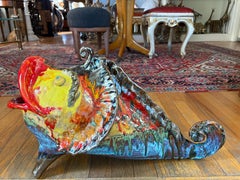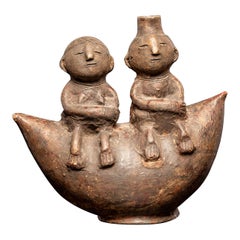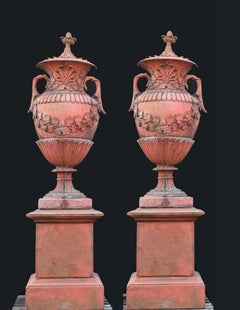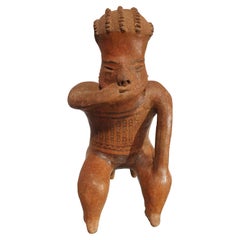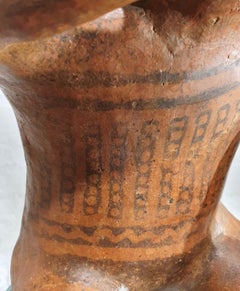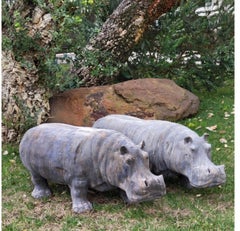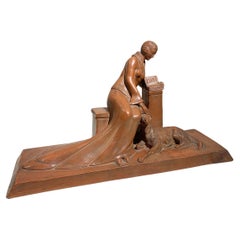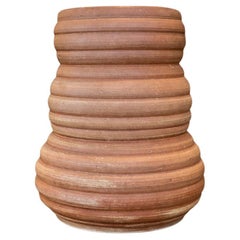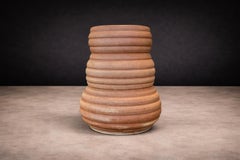
Stanley Stangren, Abduction of Europa, Modernist Terracotta Sculpture, ca. 1950
By Stanley R. Stangren
Located in New York, NY
Dimensions
Total height: 12.5 inches
Width: 19 inches
Depth: 7.5 inches
Base height: 1.5 inches
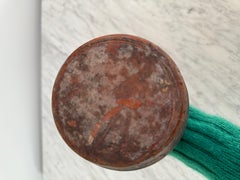
DETAILS Unsigned, original wood base.
CONDITION Excellent vintage condition, wear consistent with age and use.
Stanley R. Stangren (American, 1928–2014) was an outstanding American jeweler, artist, sculptor and ceramist, residing in New York City. He worked in different styles and in different materials, including oils, watercolor, ceramic and stone sculptures; and fine jewelry. Stangren’s painting styles varied tremendously – from complete abstract works to Holocaust themes in the style of Georges Rouault and Hieronymus Bosch to portraits in the style of Moses and Raphael Soyer. He was also a passionate lover of the performing arts, and, as a young man, spent time studying dance at both the School of American Ballet and with Martha Graham.
Although he worked with dance pioneers like Ms. Graham, Anna Sokolow and Charles Weidman, an injury prevented him from pursuing dance as a career. But he found other outlets for his artistic pursuits. In his youth, Stangrem attended the Brooklyn Museum School of Art, and graduated from the High School of Music and Art in New York City. He later studied at the Boston Museum of Fine Arts, the Art Students League, Bard Colledge and in Europe.
Stangren studied jewelry design in Europe, attending Staatlische Kunst Werkschule in Pforzheim, Germany and Kunstgewerbeschule der Stadt in Zurich, Switzerland. His jewelry and designs were received with great success. His combination of precious and semi-precious stones, high-karat gold and sterling silver, and exotic materials executed with outstanding workmanship in the abstract modernist style gave a unique aspect to his designs, the metalwork usually electroformed, cast, or fused in varying textures. After returning to New York in the later 1950’s, Stangren opened and maintained a ceramic business in Trenton, New Jersey.
Very few pieces of his work remain from this period. When he retired from the ceramics business, he spent much of his time enjoying the arts. He frequently attended Juilliard performances, including most of the opera and drama presentations at the School, and was especially fond of the dance concerts. The last 40 years of his life, he taught painting in the New York area and worked with Metropolitan Museum of Arts in developing annuities, for future acquisitions.
In addition, Stangren left annuities for MoMa in support of educational programs and left, in his will or through his executors, art supplies for the Harlem School of Art and benefits for the Urban Assembly organization. Mr. Stangren's love for the arts and for the performances he was seeing at Juilliard inspired him to take his participation a step further and to establish charitable gift annuities with the School. "I realized what Juilliard offered me, being a passionate music lover, and I decided to give something back" he said.
"What Juilliard achieves is remarkable. When I think of the prominent actors, dancers and musicians that have been educated there, I am always staggered. It is deeply financially satisfying to be able to give back to the School, while benefitting from it at the same time." The Juilliard School is not the only organization that Stanley Stangren...
Category
1950s American Mid-Century Modern Vintage Terracotta Decorative Objects