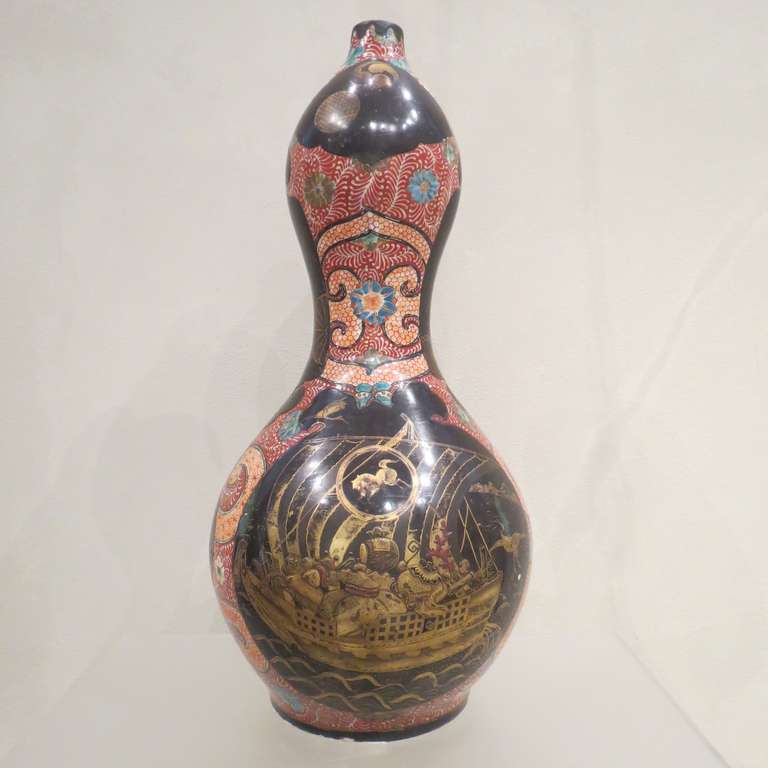
Japanese Decorative Objects

to
757
2,793
459
59
194
1,138
1,461
518
514
400
232
59
25
40
43
9
58
65
48
81
18
215
91
49
20
18
15
13
11
10
9
3
2
2
1
1
1,727
1,228
1,143
391
384
1,577
1,046
14,241
98,845
27,619
24,973
16,524
Height
to
Width
to
3,311
3,262
3,271
40
21
20
20
17
Place of Origin: Japanese
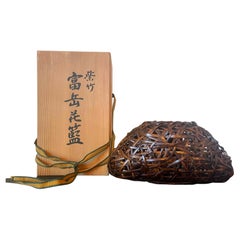
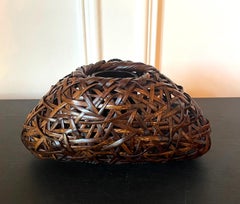
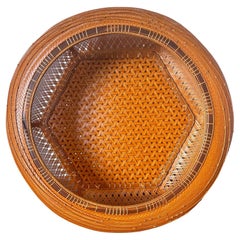
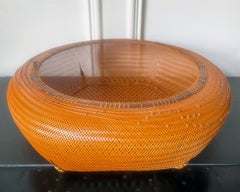
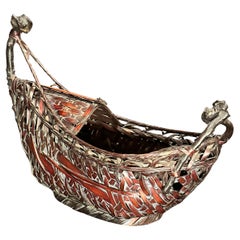
Japanese Woven Bamboo Ikebana Basket
Located in Atlanta, GA
A Japanese woven bamboo basket with handle from early 20th century, circa end of Meiji to Taisho period. The basket was constructed in the form o...
Category

Early 20th Century Japonisme Japanese Decorative Objects

Materials

Bamboo

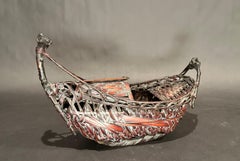
Japanese Ikebana 'Flower Arranging Basket' by Teijo Sai
Located in Hudson, NY
Japanese Ikebana (Flower Arranging Basket), Signed by Teijo Sai (the artist) on the bottom. Meiji Period (1868-1912) ikebana made of smoked bamboo, polished with ash. Very nice weav...
Category

Early 1900s Meiji Antique Japanese Decorative Objects

Materials

Bamboo

Large Japanese Meiji Period Imari Vase, 19th Century
Located in San Francisco, CA
A large and impressive fine quality 19th century Imari vase, with hand painted classical floral motif and inset panels painting of playful Foo Dogs. Japan, Meiji period, late 19th c...
Category

Late 19th Century Meiji Antique Japanese Decorative Objects

Materials

Porcelain
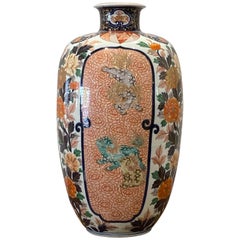
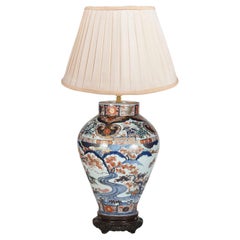
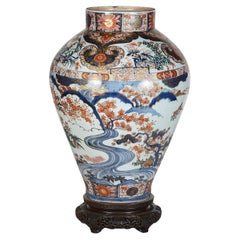
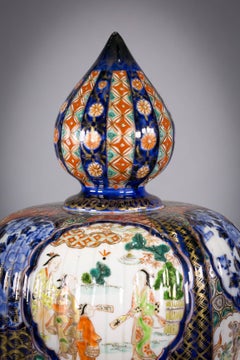
Fluted Japanese Imari Vase, 19th Century
Located in Savannah, GA
Fluted Japanese Imari Vase, 19th Century. Wood Stand is included. Base is 4" diameter
Category

19th Century Antique Japanese Decorative Objects

Materials

Porcelain
1950s Yellow Bullseye Ashtray Dish La Gardo Tackett Los Angeles Japan Architect
By La Gardo Tackett
Located in Hyattsville, MD
Porcelain ashtray designed by La Gardo Tackett (1911-1992). Best known as the head designer for Architectural Pottery, in Los Angeles, California. Diameter of 7 5/16 inches. Two a...
Category

1950s Mid-Century Modern Vintage Japanese Decorative Objects

Materials

Ceramic

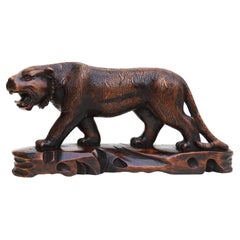
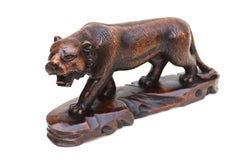
Antique Japanese Meiji period carved hardwood okimono of a prowling tiger C 1900
Located in Central England, GB
This most pleasing hand carved hardwood Japanese Meiji period okimono depicts a muscular prowling tiger. Its body is slightly lowered in a stalking position with its mouth open showi...
Category

Early 20th Century Meiji Japanese Decorative Objects

Materials

Hardwood

Japanese Shigaraki Jar for Ikebana by Shiho Kanzaki
By Shiho Kanzaki
Located in Atlanta, GA
A Shigaraki stoneware jar by Japanese potter Shino Kanzaki (1942-2018). Kanzaki is a world renowned potter in Shigaraki who based his modern work on the ancient tradition of Shigaraki and Iga ware...
Category

20th Century Modern Japanese Decorative Objects

Materials

Ceramic

Early Porcelain Underglaze Dragon Ewer by Makuzu Kozan Meiji Period
By Makuzu Kozan
Located in Atlanta, GA
A porcelain ewer with fine underglaze iron red, brown and blue decoration made by the legendary Japanese imperial potter Makuzu Kozan (1842-1916), this relatively rare piece is dated to circa Meiji 23rd to 26th year (1890-1893) based on the mark used on the base. This is the starting period when the artists departed from his high-relief and gold gilt period and started focusing on making porcelain pieces with underglaze paint and experimented new colors. The ewer form is also relatively rare in the artist's survived repertoire compared to other forms. The piece takes its shape from the prototype Chinese...
Category

1890s Meiji Antique Japanese Decorative Objects

Materials

Ceramic

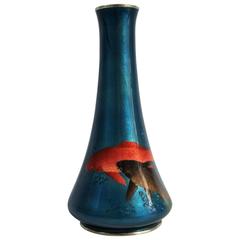
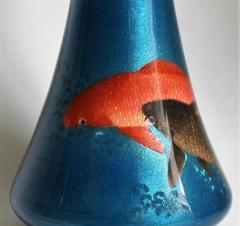
large pair of antique Japanese bronze vases with carp fish, Meiji period
Located in Buenos Aires, Olivos
A large pair of antique Japanese bronze vases with carp fishes, Meiji period. The bottle vases have carp in swirls of water, with some ver...
Category

Early 20th Century Meiji Japanese Decorative Objects

Materials

Bronze

Japanese Edo Period Carved Seated Fasting Buddha, 18th C./Early 19th C.
Located in New York, NY
Japanese Edo Period Carved Seated Fasting Buddha, 18th C./Early 19th C. DIMENSIONS Height: 9.5 inches (24 cm) Width: 7 inches (18 cm) Depth: 5 inches (12.8 cm) ABOUT This early Edo...
Category

Late 18th Century Japonisme Antique Japanese Decorative Objects

Materials

Wood

Japanese Lacquered Natsume 'Tea Box'
Located in PARIS, FR
Natsume in dark red lacquer, decorated with autumn leaves and cherry blossoms in hiramaki-e and nashiji. Interior in black lacquer. Maple leaves (Momiji) are celebrated in literatur...
Category

Mid-20th Century Japanese Decorative Objects

Materials

Lacquer

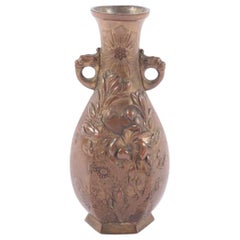
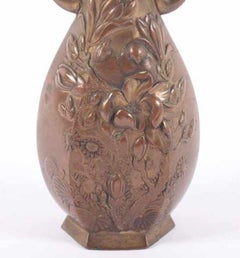
Japanese Art Nouveau Bronze Lobed Vase with Silver Overlay
Located in Austin, TX
An attractive Japanese Art Nouveau silver overlaid bronze vase, late Meiji period, early 20th century, Japan. A tall and elegant bronze vase of q...
Category

1910s Art Nouveau Vintage Japanese Decorative Objects

Materials

Silver, Bronze

Japanese Porcelain Studio Vase, circa 1900
Located in New York, NY
Molded with fruit. Signed on the bottom.
Category

Early 1900s Antique Japanese Decorative Objects

Materials

Porcelain
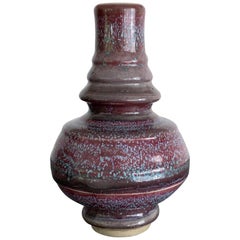
Fine Trumpet Satsuma Vase by Taizan Yohei
Located in Atlanta, GA
A tall ceramic satsuma ware vase in a rare slender trumpet form with very fine surface decoration by Japanese potter Taizan Yohei IX (1864-1922). The vase was dated to late Meiji period circa 1890-1900s. The main motif and the focal point of the vase is the continuous panel that circumvents the entire mid-body, apparently a rendition of the Boy's Festival, known as "Tango no Sekku" in Japanese. The traditional festival is celebrated on May 5th of each year. Originated in Nara Period...
Category

1880s Meiji Antique Japanese Decorative Objects

Materials

Ceramic

Japanese Shigaraki Grain Storage Jar
Located in Hudson, NY
Shigaraki is one of the six ancient kilns of Japan. Early 17th century full formed vessel with refined neck and green glaze on front shoulder. Very similar to two pieces in "Shigerak...
Category

Early 18th Century Antique Japanese Decorative Objects

Materials

Pottery

Pair of 18th Century Japanese Imari Lidded Vases
Located in Brighton, Sussex
A very good quality pair of late 18th century Japanese lidded Imari vases. Each with Dog of foo gilded finials. Blue ground scrolling decoration, with i...
Category

Late 18th Century Antique Japanese Decorative Objects

Materials

Porcelain
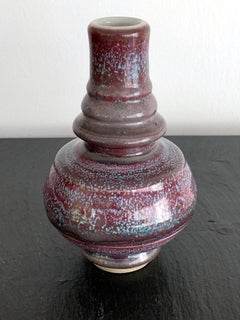
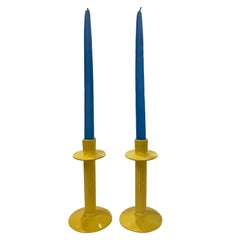
Pair of Mid Century Porcelain Candlesticks
Located in New York, NY
A pair of circa 1950s yellow-glazed Japanese porcelain candlesticks. Measurements: Height: 8.75? Diameter of base: 4?
Category

1950s Vintage Japanese Decorative Objects

Materials

Porcelain
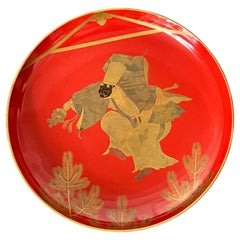
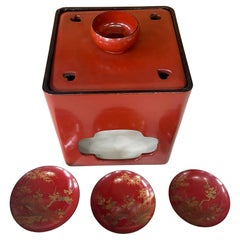
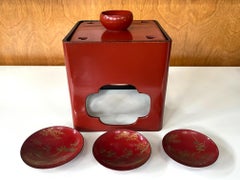
Lacquer Potpourri
Located in Stamford, CT
Lacquer Potpourri box and cover with ormolu mountings from 18th century Directoire Japan/ France.
Category

18th Century Antique Japanese Decorative Objects

Materials

Lacquer

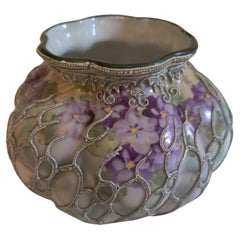
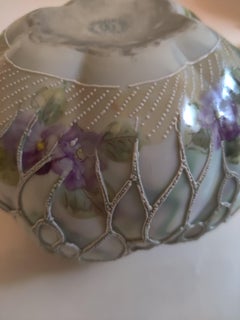
Pair of Japanese Kutani Vases, 19th Century
Located in Southall, GB
A pair of delightful 19th century antique vases, with globular body opening into ruffled rim with various flower heads inside the rim. The sm...
Category

19th Century Anglo-Japanese Antique Japanese Decorative Objects

Materials

Porcelain
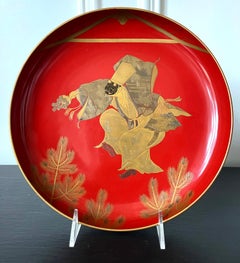
Japanese Porcelain Blue and Turquoise Striped Deep Bowl by Atsushi Miyanishi
By Miyanishi Atsushi
Located in Prahran, Victoria
Exceptionally fine Japanese porcelain blue and turquoise striped Studio Vase by Atsushi Miyanishi. This stunning contemporary bowl is a statemen...
Category

20th Century Japanese Decorative Objects

Materials

Porcelain
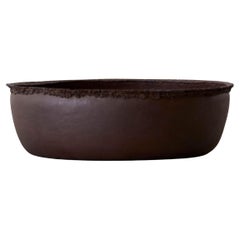
Japan, porcelain vase with crab by Hara Kosei, born in 1934
Located in PARIS, FR
This vase with a basketwork decoration topped with a crab is by Hara Kosei, born on September 28, 1934 in Arita-cho, Saga Prefecture. From childhood, Hara grew up surrounded by ceram...
Category

1980s Vintage Japanese Decorative Objects

Materials

Porcelain
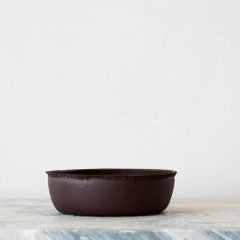
Imari Japanese Chamber Stick or Candlestick, 20th Century
Located in Savannah, GA
Imari Japanese Chamber Stick or Candlestick, 20th Century
Category

20th Century Japanese Decorative Objects

Materials

Porcelain
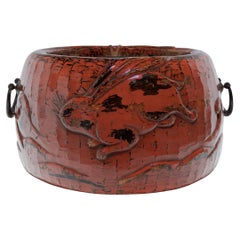
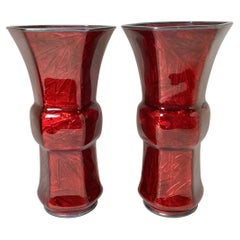
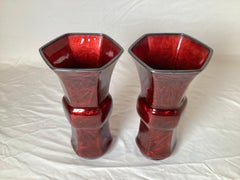
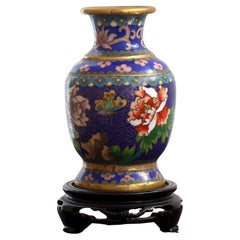
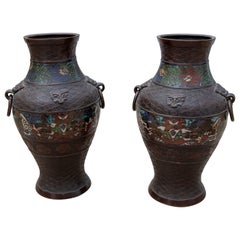
Pair of Gilt and Cloisonné Enamel Vases
Located in Lambertville, NJ
This pair of cloisonné enameled vases was created in Japan, mid-20th century. Each vase with elegant form features a gilt brass bottom ring, two gilt brass rings around the neck and ...
Category

Mid-20th Century Japanese Decorative Objects

Materials

Metal

Japanese bronze elephant figure
Located in Autonomous City Buenos Aires, CABA
Japanese Bronze Elephant Figurine This Japanese bronze elephant figurine strikes a dynamic pose with its trunk raised in an upward gesture. The dark patina of the bronze highlights t...
Category

20th Century Art Deco Japanese Decorative Objects

Materials

Bronze

Japanese Kazaribako Glass Box Kyohei Fujita
By Kyohei Fujita
Located in Atlanta, GA
A Kazaribako "Ornamented Box" made of glass by Japanese artist Kyohei Fujita (1921-2004) circa 1980s. The hand-blown glass box with fitting lid is of an oval shape, slightly irregula...
Category

1980s Modern Vintage Japanese Decorative Objects

Materials

Silver

Mikasa Japan Ceramic Black and White Vases Wave Mid-Century Modern, Set of 2
By Mikasa
Located in Miami, FL
Set of 2 Mikasa Japan ceramic black and white vases with wave design Mid-Century Modern. Original label at the base. A-794-335
Category

Late 20th Century Mid-Century Modern Japanese Decorative Objects

Materials

Ceramic

Multi Color Origami Hexagonal Matchbox with Fitted Color Matches
Located in Ferndale, MI
Geometric design match box with individual color panels of construction paper. Inside fitted with color head matches. Marked Japan on underside.
Category

Mid-20th Century Mid-Century Modern Japanese Decorative Objects

Materials

Paper

Japanese Vase
Located in Hudson, NY
signature reads: Nishiura (opening: 4 7/8" diameter). About the artist: Nishiura Takeshi was born in Fukui prefecture in 1941, and graduated the Tokyo University Law Department in 19...
Category

20th Century Japanese Decorative Objects

Materials

Ceramic

Japanese Ceramic Vase with Delicate Carvings by Makuzu Kozan Meiji Period
By Makuzu Kozan
Located in Atlanta, GA
A delicate and rare Japanese ceramic vase by the important Meiji imperial potter Makuzu Kozan (1842-1916) circa 1887-1910. Dated to his underglaze phase post 1887 after he successful...
Category

1890s Japonisme Antique Japanese Decorative Objects

Materials

Ceramic

Antique Brass Engraved Persian, Japanese & Egyptian Pen Case Ink Well Group Lot
Located in Hamilton, Ontario
Dating from the early 18th century, this grouping of brass pen cases have their origins in Persia, Egypt and Japan respectively. Each case is intricately engraved with a patterned sc...
Category

18th Century Anglo-Indian Antique Japanese Decorative Objects

Materials

Brass

Japanese Shino Ware Mizusashi 'Water Container'
Located in Hudson, NY
Late Taisho/Early Showa Period. Artist signature and seal read: Seiun. Comes with original wooden box.
Category

Early 20th Century Taisho Japanese Decorative Objects

Materials

Ceramic

Japanese Echizen Ceramic Tsubo Fujita Jurouemon VIII
Located in Atlanta, GA
A Japanese storage jar (tsubo) made in the ancient Echizen ware tradition by Fujita Jurouemon VIII. Echizen is one of the six ancient kilns in Japan, directly influenced by the Sue ware...
Category

20th Century Modern Japanese Decorative Objects

Materials

Ceramic

Japanese Late Meiji Period Satsuma Three-Footed Vase, Ca. 1900
Located in New York, NY
Japanese Late Meiji Period Satsuma Three-Footed Vase, Ca. 1900 Late Meiji Period (1868-1912) DIMENSIONS: Height: 10.25 inches Di...
Category

Early 1900s Japonisme Antique Japanese Decorative Objects

Materials

Porcelain
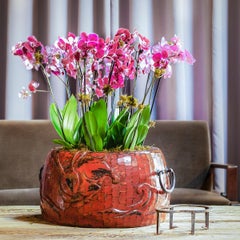
Elegant Japanese Lacquered Ikebana Bamboo Basket
Located in Atlanta, GA
A vintage Japanese ikebana made from lacquered bamboo basketry circa first half of the 20th century. This piece of bamboo art displays an very light and delicate classic tapered squa...
Category

Early 20th Century Japonisme Japanese Decorative Objects

Materials

Bamboo, Rattan

Japanese Kyoto Fuzan Satsuma Ware Double-Handled Vase, Meiji Period, ca. 1900
Located in New York, NY
This beautiful end of Meiji Period Japanese Kyoto Fuzan Satsuma Ware double-handled vase has a gold plated intricate infinite circular relief pattern design and two images of goddess...
Category

Early 1900s Taisho Antique Japanese Decorative Objects

Materials

Porcelain
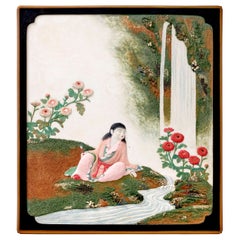
Japanese Green Art Glass Vase By Kuniaki Kuroki Heisei Period
Located in Norwich, GB
A beautiful Japanese green art glass vase by Kuniaki Kuroki. Signed by the artist on the base. Heisei period. 1990's. One of Japan’s leading glass artists and pioneers. Kuroki is th...
Category

1990s Japanese Decorative Objects

Materials

Gold Leaf

Early 20th c Large signed Bamboo Basket by Seiseisai
Located in Fukuoka, JP
Stunning signed Ikebana Bamboo Basket. Bamboo with natural patination.  Signed Seiseisai . Age: early 20th century Good conditionwith some abrasions and patination. Size : 51.5/...
Category

20th Century Showa Japanese Decorative Objects

Materials

Bamboo

Japanese Polychrome Standing Shō Kannon Figure, circa 1900
Located in Chicago, IL
This late 19th century standing figure depicts the sacred form of the bodhisattva Guanyin, known in Japanese Buddhism as Sho Kannon, or Guze Kannon. ...
Category

Late 19th Century Edo Antique Japanese Decorative Objects

Materials

Wood

Bonsai Blue 1980, Glass and Ceramic
Located in Ciudad Autónoma Buenos Aires, C
We have specialized in the sale of Art Deco and Art Nouveau and Vintage styles since 1982. If you have any questions we are at your disposal. Pushing the button that reads 'View All From Seller'. And you can see more objects to the style for sale. Why are there so many antiques in Argentina? In the 1880 – 1940 there was a grate wave of immigration encouraged by the periods of war that were taking place. 1st World War took place between 1914 and 1918 2nd World War took place between 1939 and 1945 The immigrants options were New York or Buenos Aires. Tickets were cheap and in Buenos Aires they were welcomed with open arms, as it was a country where everything was still to be done. Argentina was the country of new opportunities, labour was needed and religious freedom was assured, in many cases the of the family travel first until they were settled and then the rest of the family members join them. In the immigrant museum “Ellis Island Immigrant Building” in New York you can se the promotional posters of the boats that would take them to a new life. Between the years 1895 and 1896, Argentina had the highest DGP (gross domestic product) per capita in the world according to the Maddison Historical Statistics index, this situation arose due to the large amount of food being exported to European countries, which were at war. The Argentinean ships left the port of Buenos Aires with food, but they returned with furniture, clothes and construction elements, (it´s common to see this the old buildings of the historic neighbourhood of San Telmo, the beams with the inscription “Made in England)”, as well as many markets that were built in Buenos Aires, such us the San Telmo Market, whose structure was brought by ship and afterwards assembled in 900 Defensa Street. With the great influence of European immigrants living in the country, the children of the upper classes travelled to study in France, resulting in the inauguration of “La Maison Argentinienne”, on 27th of June 1928, in the international city of Paris, which hosted many Argentinians that were studying in Frace. It´s the fourth house to be built after France, Canada and Belgium, being the first Spanish-speaking one. Still in place today (17 Bd Jourdan, 75014, Paris, France). Many of the children of these wealthy families who attended international art exhibitions, museums and art courses abroad, took a keen interest in the European style. This is why Buenos Aires was at the time referred as “The Paris of South America”. Between the years 1890 and 1920 more than a hundred Palaces were built on Alvear Avenue the most exclusive avenue in Buenos Aires. Today some of these palaces have been transformed into museums, hotels and embassies. In the year 1936, the Kavanagh building was inaugurated, it was the tallest reinforced concrete building in South America. During 1994 the American Society of Civil Engineers distinguished it as an “international engineering milestone”, and it´s now considered a World Heritage of Modern Architecture. At the time was common to hire foreign architects such as Le Corbusier, who visited Buenos Aires/Argentina in 1929 and in 1948 he drew up the blueprints for a house built in La Plata City (which was declared a World Heritage Site). In 1947, the Hungarian architect Marcelo Breuer designed “Parador Ariston” in the seaside city of Mar del Plata. After an Argentinean student at Harvard University convinced him to come to Argentina. He worked on an urban development project in the Casa Amarilla, area of La Boca. The Ukrainian architect, Vladimiro Acosta, arrives in Argentina in 1928 and worked as an architect until que moved to Brazil. Antonio Bonet, a Spanish architect who worked with Le Corbusier in Paris, arrives in Argentina in 1937, where he carried out several architectural works and in 1938 designs the well-known BFK chair. Andres Kálnay, of Hungarian origin, made around 120 architectural masterpieces, among which the former Munich brewery stands out, he even made the furniture’s design. The German architect, Walter Gropius, director of the Bauhaus, lived in Argentina, where he wrote articles for “Sur” magazine and founded in Buenos Aires, an architectural firm with Franz Möller, who was also an architect, where he built two houses. At the same time several famous designers decided to immigrate to Argentina, among them we can find the well-known French designer, Jean-Michel Frank, who arrived in the country in 1940 and also worked for the Rockefeller family. Special pieces were made, which were sold exclusively in the country, such as the well-known German company “WMF”, who sold their products by catalogue, which were chosen by the ladies of High Society in the list of wedding gifts, as well as the pieces designed by Christofle. The Swiss sculptor Alberto Giacometti, made special pieces for Argentinean mansions. In 1904 the first Jansen branch outside Paris was established in Buenos Aires, as the Argentinean clientele demanded a large amount of furniture, from the end of the 19th Century to the mid-20th Century. In 1970, the brand Rigolleau Argentina made pieces authorised by Lalique. The brands Maple and Thompson also set up shop in the country. The French plastic artist, Marcel Duchamp moved to Argentina in 1918-1919. Glass signed Gallé, Charder, Leverre, Schneider, Muller and other French firms. They were bought in flower shops and were given to ladies with beautiful floral arrangements. Some furniture manufacturers travelled to international fairs and bough the patterns to produce the furniture in Argentina, such as the furniture firm Englander and Bonta, who bought the patterns ins Italy. It is worth mentioning that in Argentina we have the largest Community of Italians outside...
Category

1980s Mid-Century Modern Vintage Japanese Decorative Objects

Materials

Art Glass, Ceramic

Early 20th Century Japanese Hand-Carved Bamboo Vessel
Located in Germantown, MD
An Early 20th century Japanese hand carved Bamboo Vessel in great vintage condition.
Category

Early 20th Century Anglo-Japanese Japanese Decorative Objects

Materials

Bamboo

Fine Japanese Enameled Satsuma Vase by Kinkozan Meiji Period
By Kinkozan
Located in Atlanta, GA
A ceramic satsuma ware vase with very fine surface decoration made by Kinkozan circa 1880-1900s of late Meiji Period. The vase is of an elegant and relatively rare form with a trumpet shape body and the so-called garlic neck and opening. The surface is exquisitely decorated in a floral scheme with gilt and a light jewel-tone enamel. The top part showcases large bundles of wisteria blossom in white and purple, cascading down from a gilt wood trellis...
Category

1880s Meiji Antique Japanese Decorative Objects

Materials

Ceramic

Japanese Emperor Shōwa Period Kiyomizu-Ware Vase, 18th Century
Located in New York, NY
Japanese Emperor Shōwa Period Kiyomizu-Ware Vase, 18th Century Emperor Shōwa Period - from 1926 to 1989/1990 DIMENSIONS Height: 9 inches diame...
Category

1770s Japonisme Antique Japanese Decorative Objects

Materials

Ceramic

Pair of Early Japanese Plique-a-Jour Bowls from Nagoya
By Ando Jubei
Located in Atlanta, GA
A pair of small but exquisite Plique-a-jour cloisonné bowls with nearly identical design from Nagoya area in Japan circa 1900-20s. Maker's unknown but possibly by Ando company. The t...
Category

Early 20th Century Japonisme Japanese Decorative Objects

Materials

Metal, Enamel

Pot and Wood4 Abstract Sculpture Contemporary Zen Japonism Style
By Norihiko Terayama
Located in Shibuya-ku, Tokyo
This series of ceramics are unique work by Norihiko Terayama. This is one of series of practicing relationships with function and decoration. Artis...
Category

2010s Japonisme Japanese Decorative Objects

Materials

Ceramic

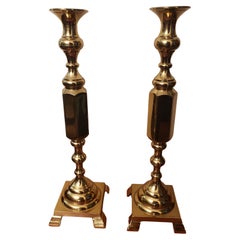
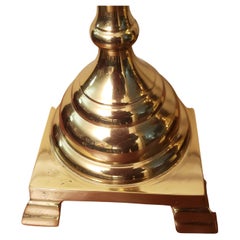
Antique Solid Polished Brass Antit arnish Treated Candleholders, Circa 1930s
Located in Germantown, MD
Pair of extra tall antique brass candlesticks with a lovely shaped column rising from a shaped stepped base, each still retaining their...
Category

Early 20th Century Neoclassical Japanese Decorative Objects

Materials

Brass

Japanese Emperor Shōwa Period Tamba-Ware Textured Glazed Vase, Ca. 1970
Located in New York, NY
Japanese Emperor Shōwa Period Tamba-Ware Textured Glazed Vase, Ca. 1970 Emperor Shōwa Period - from 1926 to 1989/1990 Signed. DIMENSIONS Width: 8 inches Height: 5.5 inches ABOUT ...
Category

1970s Japonisme Vintage Japanese Decorative Objects

Materials

Ceramic

19th Century Japanese Bronze Duck 14.5"
Located in Pasadena, TX
Japanese Bronze standing duck. Standing neck raised and mouth open with detailed feathers. 14.5 high.
Category

Late 18th Century Japonisme Antique Japanese Decorative Objects

Materials

Bronze

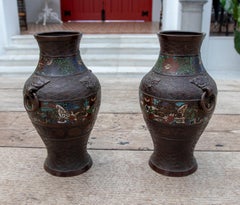
Pair of Japanese Bronze Vases Finely Cast with High Relief Dragon Figures
Located in Palm Desert, CA
A pair of matching Japanese bronze vases from the 20th century finely cast with dragon figures. A high relief cast decoration of a three-clawed dragon is wrapped around the body of e...
Category

20th Century Japanese Decorative Objects

Materials

Bronze

Tsuda Eiju Showa Period Bronze Vase
Located in Norwich, GB
Japanese bronze vase by Tsuda Eiju (1915-2001) Showa period - Circa 1960. The vase having a tall cylindrical body and four horizontal ribs, the base cast w...
Category

Mid-20th Century Showa Japanese Decorative Objects

Materials

Bronze

Antique Japanese Koma-Inu Head - Sculpture, 19th Century / Mingei sculpture
Located in Edogawa-ku Tokyo, JP
This expressive carved wooden head represents a Koma-Inu — the mythical lion-dog guardians traditionally placed at the entrances of Shinto shrines to ward off evil spirits. Whether ...
Category

Late 19th Century Antique Japanese Decorative Objects

Materials

Wood

Japanese Gilt Seated Kannon Figure, circa 1850
Located in Chicago, IL
Intricately carved and finished with gilt black lacquer, this seated figure depicts the bodhisattva Guanyin, known in Japanese Buddhism as Kannon. Described as the "Buddha of Infinite Compassion," Kannon is the embodiment of mercy and makes himself available to all who call upon him with all their mind. Kannon is depicted here seated in diamond position upon a double lotus plinth, set above a stepped base. He is dressed in gracefully draped robes and wears a tall crown bearing a minuscule figure of Amida, the Buddha of Infinite Light. He has a serene expression of calm and holds his right hand in the abhaya mudra, a gesture of comfort, blessing, and protection. Backed by a magnificent leaf-form nimbus, this Kannon figure...
Category

Mid-19th Century Edo Antique Japanese Decorative Objects

Materials

Wood, Lacquer

Japanese Usubata Ikebana Vessel, c. 1900
Located in Chicago, IL
This early 20th century iron vessel is a Meiji-era vase designed especially for ikebana, the Japanese art of floral arrangement. The two-piece vase was cast in the classical usubata (thin rim) form, with a broad, flat top with an upturned lip. Usubata vessels are typically cast of bronze and have been used in ikebana arrangements since the 16th century. The broad rim of this usubata vase...
Category

Early 20th Century Meiji Japanese Decorative Objects

Materials

Iron

Palatial 19th Century Japanese Imari Vases with French Gilt Bronze Mounts, Pair
Located in Vancouver, British Columbia
An impressive pair of late 19th century Japanese Imari porcelain vases decorated with colourful peacocks, other birds, flowers, chrysanthemums, manufactured for export to France wher...
Category

Late 19th Century Other Antique Japanese Decorative Objects

Materials

Porcelain
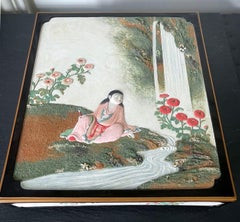
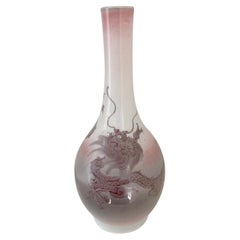
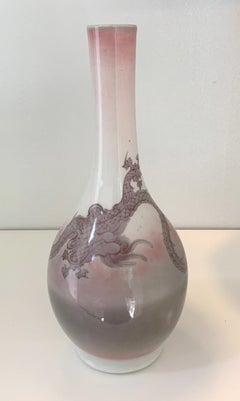
Japanese Porcelain Glazed Vase with Dragon Design Mazuku Kozan
By Makuzu Kozan
Located in Atlanta, GA
A porcelain vase with dragon design by Japanese imperial potter Makuzu Kozan (1842-1916), circa 1900s. The vase is made in what is considered early phase of his underglaze period during late Meiji era. In a classic baluster form, the surface of the vase was decorated with a slithering dragon in underglaze iron red circulating the exterior among pink clouds. The animated rendering of the dragon is fine and detailed, with five claws, scales, long tails and highlighted eyes. The pink cloud is misty and called Morotai or the hazy style, created with a unique technique developed in Kozan's studio called fuki-e by blowing the pigment powders onto the surface. Kozan Studio experimented with newly available colors from the west starting in the 1880s, which resulted in the expansion of the palette and style that bridged the east and west aesthetic tradition. Marked in underglaze blue on the base. Known also as Miyagawa Kozan...
Category

Early 1900s Japonisme Antique Japanese Decorative Objects

Materials

Porcelain
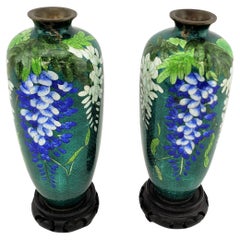
Ancient Meiji Ceremony Vase, Japan, Late 19th Century
Located in Roma, IT
This Meiji ceremony vase is a browned bronze plate vase, realized in Japan under the Meiji Empire (1867-1912). Beautifully decorated with a relied decor representing a Japanese re...
Category

Late 19th Century Meiji Antique Japanese Decorative Objects

Materials

Metal

Early 18th Century Japanese Imari Vase
Located in Worpswede / Bremen, DE
A rare Japanese late 17th-early 18th century Imari vase of beaker-type, porcelain of elongated ovoid shape with flaring neck, painted in the Im...
Category

Early 18th Century Baroque Antique Japanese Decorative Objects

Materials

Porcelain
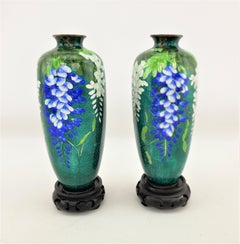
Japanese Lacquered and Gilt Wood Buddhism Statue from Edo Period
Located in Atlanta, GA
An exceptional and wood statue of Buddhism Guardian Seitaka Doji from Japan circa Edo period (1603-1868), likely the earlier part of 17th century. One of two chief attendants of Fudou Myouou (the other being Kongara Doji), the name of Seitaka Doji is a transliteration of Sanskrit "Cetaka", meaning servant, slave, and he is said to personify expedient action. He is most commonly found on the right side of Fudou, together with Kongara Doji on the left, forming the Immovable triad, Fudou Sanzon, the terror of evil doers. Seitaka largely adheres to the iconography of a wrathful youth with fleshy body and face, skin in the color of a red lotus, has his hair tied in five knots, and holds a vajra in his left hand and a vajra-club in his right hand, but the actual artistic representations of him in Japan do...
Category

17th Century Japonisme Antique Japanese Decorative Objects

Materials

Metal

Japanese Modernist Beige Studio Ceramic Flower Vase, Circa 1950s
Located in New York, NY
Japanese Modernist Beige Studio Ceramic Flower Vase, Circa 1950s DIMENSIONS: Height: 11 inches Diameter: 4 inches ABOUT JAPANESE MODERNIST BEIGE STUDIO CERAMICS Japanese Modernist...
Category

1950s Japonisme Vintage Japanese Decorative Objects

Materials

Ceramic

Japanese Blue Pink White Porcelain Vase by Master Artist, 2
Located in Takarazuka, JP
Exceptional Japanese contemporary decorative porcelain vase, intricately hand painted on a stunning body in blue underglaze, and soft pink and blue, set against an intricate dotted ...
Category

21st Century and Contemporary Meiji Japanese Decorative Objects

Materials

Porcelain
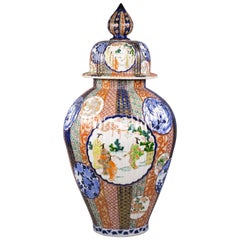
Meiji period Satsuma vase.
By Satsuma
Located in Brighton, Sussex
A good quality 19th Century Japanese Satsuma vase, having imperial influences with a dark blue ground, blossom tree decoration to the flared neck, circul...
Category

Late 19th Century Antique Japanese Decorative Objects

Materials

Porcelain
Still Thinking About These?

All Recently Viewed