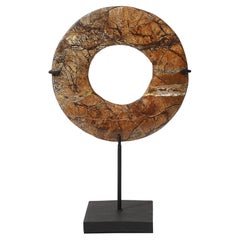
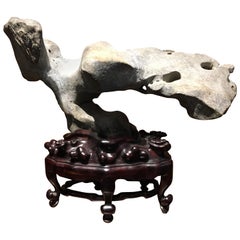
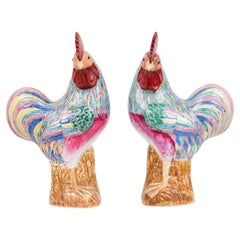
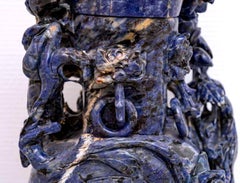
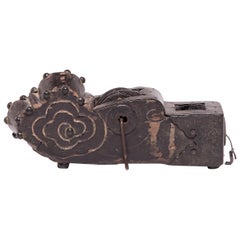
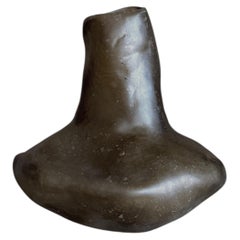
A very fine piece of natural stone, Sodalite, made in China.
Finely chiselled, this large statue depicts a scene of life in which several ancient symbols stand side by side, such as the Phoenix, swallows, a horse, earthly abundance with its luxuriant vegetation, fruit, but also food from the ocean and its generous fish, a man, a woman and a child.
First discovered in Greenland in 1806, Sodalite was analysed by a Scottish chemist 5 years later (1811), Mr Thomas Thomson.
Several long years went by without it achieving any real success.
It was not until 1891 that the stone was recognised as an ornamental stone.
It was during a diplomatic trip to Canada in 1901 that Mary de Teck (wife of King George V) discovered Sodalite and fell under the spell of this natural stone.
The princess ordered a large quantity of Sodalite to decorate her London flats. Sodalite quickly became fashionable.
Period: Late 19th century - Napoleon III
Dimensions: Total height with base: 92cm x Width: 31.5cm x Depth: 27cm
Dimensions of wooden base: Height: 7cm x Length: 25cm x Width: 23cm
But what do these symbols mean?
The phoenix, a mythological bird, symbolises purification and rebirth, as it is said to rise from its own ashes.
This magnificent bird is also synonymous with good fortune, opportunity and luck in Asian cultures.
In feng shui, the phoenix is also one of the four celestial animals (sometimes also known as the red bird or red raven). The red phoenix...
Category
19th Century Other Antique Chinese Abstract Sculptures