Japonisme Vases and Vessels

JAPONISME STYLE

In the late 19th and early 20th century, France developed an enduring passion for Japanese aesthetics and craftsmanship. Not only did this interpretation of Japanese culture — which became known as Japonisme — infuse fresh energy into French art and design, but it also radically transformed how Europeans, and subsequently the world, would come to understand visual culture. 

Until 1853, Japan had been closely guarded against foreign visitors for over two centuries. However, American Commodore Matthew C. Perry sailed into Japan that year and initiated the first of its treaties with the United States and Europe, thereby opening its borders and giving the West its first-ever look at Japanese design. 

For the next few decades, taken with Japonisme, sophisticated collectors in Paris, New York and elsewhere gorged themselves on lacquered screens, celadon ceramics and netsuke ornaments, along with artworks depicting various aspects of Japanese life. The East Asian country’s influence on Europe, particularly France, contributed to one of the most creatively prosperous periods in history, leaving an imprint on the Impressionist, Art Nouveau and Art Deco movements, and inspiring artists like Edgar Degas, Mary Cassatt, Vincent van Gogh as well as luxury houses such as Louis Vuitton and Hermès. Japonisme emerged at the time when the ornate Renaissance Revival style was the most prominent mode of decorating in Europe, and Japanese aesthetics seemed strikingly modern and elegant in comparison. 

In addition to everyday practical objects from Japan, such as vases, tableware and decorative boxes, Japanese art, especially Japanese woodblock prints by masters of the ukiyo-e school, caught the eye of many artists — particularly those in the Art Nouveau poster community in 1880s Paris. The luscious organic colors associated with traditional Japanese design, motifs like cherry blossoms and carp and the vivid patterns found in woodblock prints, silks and more were adopted and appropriated by painters as well as ceramicists and those working in other fields of the decorative arts. Today, demand for Japanese lacquerware — furniture, trays, writing boxes, screens, incense burners — from the Edo period (1615–1868) and the late 19th century continues to be very strong among collectors.

Find a collection of antique Japonisme furniture and decorative objects on 1stDibs.

to
31
169
8
5
5
81
83
13
45
16
10
13
4
4
3
2
2
4
1
10,863
5,709
3,344
3,073
1,966
635
619
467
407
212
193
182
153
133
128
109
104
63
115
67
55
39
21
101
57
108
107
105
60
43
Height
to
Width
to
182
182
182
12
7
4
3
3
Style: Japonisme
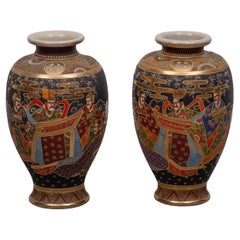
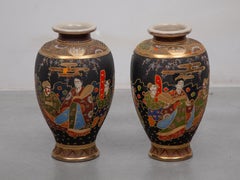
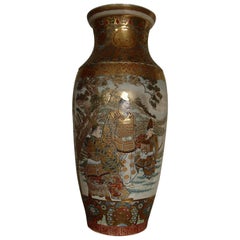
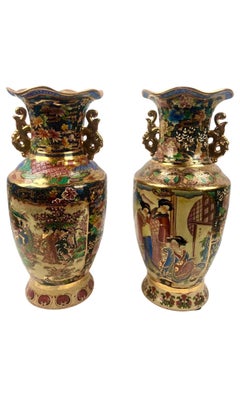
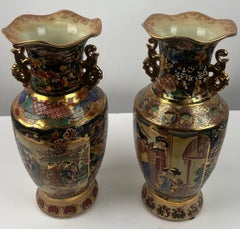
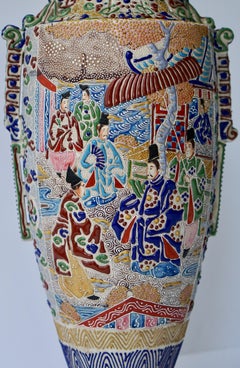
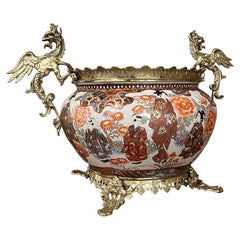
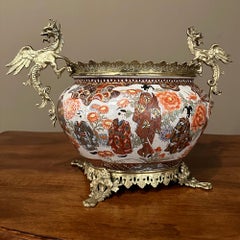
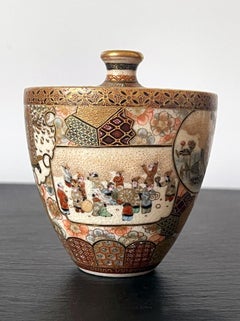
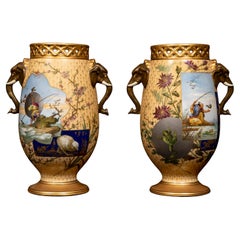
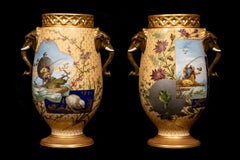
Set of Two Satsuma Vases, Japan, 1920

Set of Two Satsuma Vases, Japan, 1920

By Satsuma

Located in Antwerp, BE

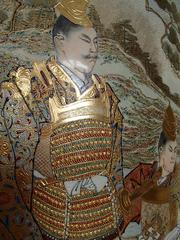
Set of two beautiful Satsuma designed in Japan vases from the beginning of the 20th century , 1920s. Meiji-period. Hand-painted ceramic vases depicting men surrounding a geisha, fram...

Category

1920s Japanese Vintage Japonisme Vases and Vessels

Materials

Ceramic

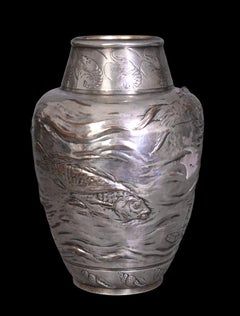
E.Rousseau & E.Léveillé, Japonisme Vase “Épinoches” Collection G.Cappa c.1878

E.Rousseau & E.Léveillé, Japonisme Vase “Épinoches” Collection G.Cappa c.1878

By Ernest Baptiste Leveille

Located in Saint-Ouen, FR

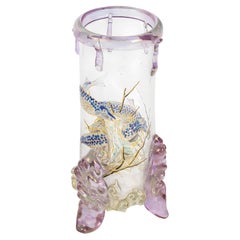
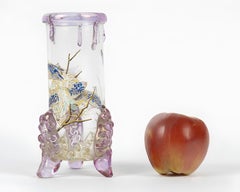
Eugène Rousseau (1827-1890) & Ernest-Baptiste Leveillé (1841-1913) Japonisme tripod Vase “Épinoches” Unique Piece Collection Giuseppe Cappa France, circa 1878-1880 “Stickleback Fi...

Category

1870s French Antique Japonisme Vases and Vessels

Materials

Art Glass

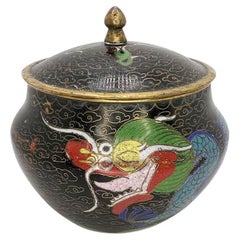
Colorful Black Cloisonné Dragon Ware Jar with Lid - Late Qing Dynasty

Colorful Black Cloisonné Dragon Ware Jar with Lid - Late Qing Dynasty

Located in Oklahoma City, OK

A petite dragon motif cloisonné jar in black with a matching lid. The small chinoiserie jar is made from brass or copper, and encrusted with a cloisonné dragon design. Cloisonné piec...

Category

20th Century Chinese Japonisme Vases and Vessels

Materials

Metal, Enamel

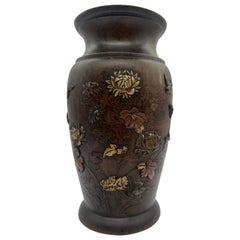
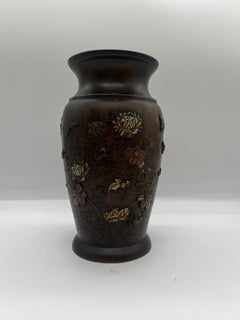
Japanese Bronze Vase Early 20th Century

Japanese Bronze Vase Early 20th Century

Located in Meer, VAN

Tall Bronze Vase, Japan, Early 20th Century. This is a very beautiful eared vase / urn in bronze from Japan. Probably early 20th century. From a hig...

Category

Early 20th Century Japanese Japonisme Vases and Vessels

Materials

Bronze

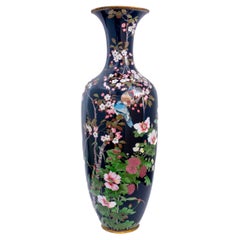
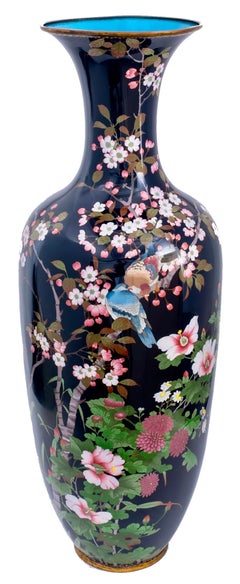
Japanese Large Cloisonné Vase, Ca. 1900/1910

Japanese Large Cloisonné Vase, Ca. 1900/1910

Located in New York, NY

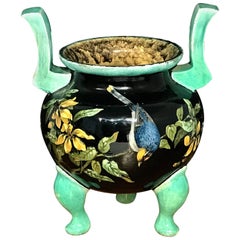
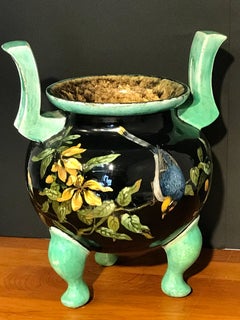
Japanese Large Cloisonné Vase in Midnight Blue w/ Flowers and Birds, Ca. 1900/1910 DIMENSIONS: Height: 46 inches Diameter: 51.5 inches ABOUT This exquisite vase is a remarkable te...

Category

Early 1900s Japanese Antique Japonisme Vases and Vessels

Materials

Metal

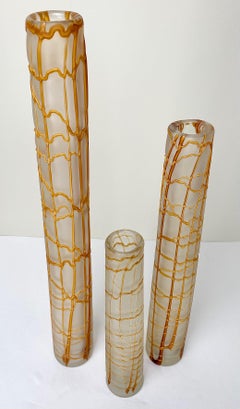
Modern Kintsugi Style Frosted Glass Vase, a Set of 3

Modern Kintsugi Style Frosted Glass Vase, a Set of 3

Located in Plainview, NY

A trio of Modern Kintsugi-style skinny vases, each a unique embodiment of artistry and contemporary design. Crafted in three dimensions—tall, medium, and s...

Category

Late 20th Century Japonisme Vases and Vessels

Materials

Glass

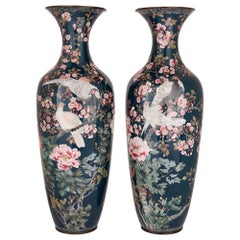
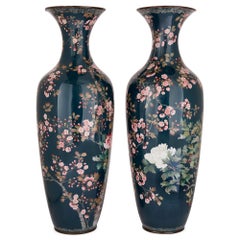
Large Antique Meiji Cloisonné Enamel Vases Japanese 19th Century Birds Flowers

Large Antique Meiji Cloisonné Enamel Vases Japanese 19th Century Birds Flowers

Located in London, GB

Large Antique Meiji Cloisonné Enamel Vases Japanese 19th Century Birds Flowers Japanese, Late 19th Century Height 152cm, diameter 54cm This remarkable pair of monumental Meiji peri...

Category

Late 19th Century Japanese Antique Japonisme Vases and Vessels

Materials

Metal, Enamel

Exceptional Dominic & Haff Japonisme Sterling Cabinet Vase Dragonfly & Cobwebs

Exceptional Dominic & Haff Japonisme Sterling Cabinet Vase Dragonfly & Cobwebs

By Dominick & Haff

Located in West Palm Beach, FL

Exceptional Dominic & Haff Japonisme Sterling Cabinet Vase—Dragonfly & Cobwebs This exquisite Dominic & Haff sterling silver cabinet vase is a rare and finely detailed example of Ja...

Category

19th Century American Antique Japonisme Vases and Vessels

Materials

Sterling Silver

Rare Porcelain Bowl with Plique-a-Jour Design by Makuzu Kozan

Rare Porcelain Bowl with Plique-a-Jour Design by Makuzu Kozan

By Makuzu Kozan

Located in Atlanta, GA

An extremely fine and delicate porcelain bowl from the studio of Japanese Potter Makuzu Kozan, also known as Miyagawa Kozan (1842–1916), one of the most established and collected cer...

Category

Early 1900s Japanese Antique Japonisme Vases and Vessels

Materials

Porcelain

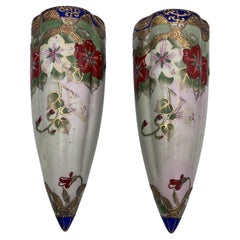
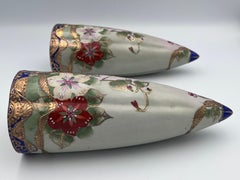
Elegant Pair of Japanese Hand Painted Floral Porcelain Wall Pockets 1910- 1920

Elegant Pair of Japanese Hand Painted Floral Porcelain Wall Pockets 1910- 1920

Located in Red Lion, PA

This exceptional pair of Japanese hand-painted porcelain wall pockets dates to the early 20th century, circa 1910–1920, a period defined by the international fascination with refined...

Category

1910s Japanese Vintage Japonisme Vases and Vessels

Materials

Porcelain

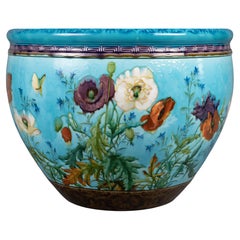
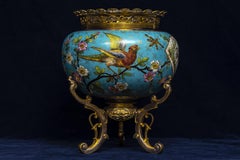
Théodore Deck (1823-1891), A 19th French Japonisme Cache-Pot, circa 1875

Théodore Deck (1823-1891), A 19th French Japonisme Cache-Pot, circa 1875

By Theodore Deck

Located in Saint-Ouen, FR

Théodore Deck (1823-1891) A 19th French Japonisme Cache-Pot, circa 1875 A Polychrome Enameled Faience Round-Shaped Cachepot and Jardinière Hand-painted design in the Japonisme Aesthe...

Category

1870s French Antique Japonisme Vases and Vessels

Materials

Faience

French Majolica Aesthetic /Japonisme Vase, Attributed to Theodore Deck

French Majolica Aesthetic /Japonisme Vase, Attributed to Theodore Deck

By Theodore Deck

Located in West Palm Beach, FL

French Majolica Japonisme vase, attributed to Theodore Deck  France, Late 19th Century  This exquisite late 19th-century French Majolica vase, attributed to the renowned ceramist Th...

Category

Late 19th Century French Antique Japonisme Vases and Vessels

Materials

Majolica

Pair of "Cloisonne" Enamel Vases, Attr. to l'Escalier de Cristal, France, C.1870

Pair of "Cloisonne" Enamel Vases, Attr. to l'Escalier de Cristal, France, C.1870

By L'Escalier de Cristal

Located in PARIS, FR

Pair of Japanese-style roll-shaped vases, made in “cloisonné” enamel and gilded bronze. The cylindrical body is decorated with polychrom floral branches, flowers and butterflies on a...

Category

1870s French Antique Japonisme Vases and Vessels

Materials

Bronze, Enamel

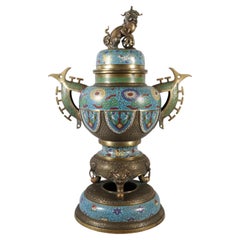
Antique Japanese Champleve Bronze Flower Vase Urn Pegasus Butterfly Cloisonné

Antique Japanese Champleve Bronze Flower Vase Urn Pegasus Butterfly Cloisonné

Located in Dayton, OH

Early 20th century Japanese Bronze Champleve Flower Vase or Urn. Features a colorful champleve design of Pegasus's and butterflies between engraved bronze motifs. Marked Made in Japa...

Category

Early 20th Century Japonisme Vases and Vessels

Materials

Bronze, Enamel

Japanese Style Planter Attributed to l'Escalier de Cristal, France, circa 1880

Japanese Style Planter Attributed to l'Escalier de Cristal, France, circa 1880

By Edouard Lievre, L'Escalier de Cristal

Located in PARIS, FR

Large planter decorated on the belly with a rotating decoration of polychrome flowers and geometric patterns in cloisonné enamel on a red background. It is inserted in an important p...

Category

1880s French Antique Japonisme Vases and Vessels

Materials

Enamel, Bronze

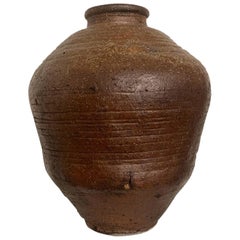
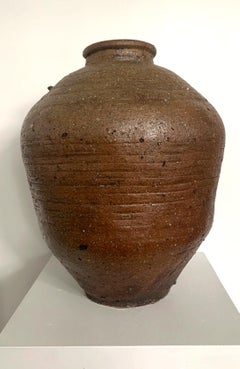
Large Japanese Antique Shigaraki Tsubo Jar

Large Japanese Antique Shigaraki Tsubo Jar

Located in Atlanta, GA

An antique Japanese stoneware storage jar, known as tsubo from Shigaraki kiln, circa 17th-18th century (early Edo possibly Momoyama period)....

Category

17th Century Japanese Antique Japonisme Vases and Vessels

Materials

Ceramic

PAIR OF JAPANESE VASE Japanese, Meiji period (1868-1912)

PAIR OF JAPANESE VASE Japanese, Meiji period (1868-1912)

Located in Madrid, ES

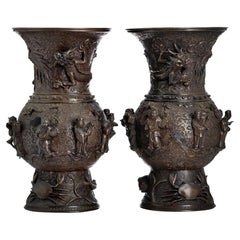
PAIR OF JAPANESE VASE Japanese, Meiji period (1868-1912), in bronze with relief decoration of dragons, everyday figures and fish. Dimensions: Height: 45 cm

Category

19th Century Japanese Antique Japonisme Vases and Vessels

Materials

Bronze

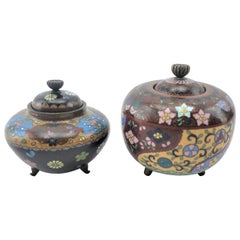
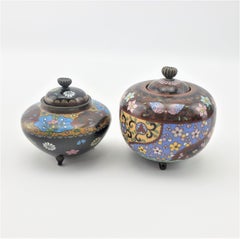
Pair of Antique Japanese Cloisonne Covered Jars with Floral Motif Decoration

Pair of Antique Japanese Cloisonne Covered Jars with Floral Motif Decoration

Located in Hamilton, Ontario

This pair of antique cloisonne covered jars or urns are unsigned, but originate from Japan from approximately 1900 in a Japanese export style. The pair is done in muted tones and are...

Category

Early 20th Century Japanese Japonisme Vases and Vessels

Materials

Metal

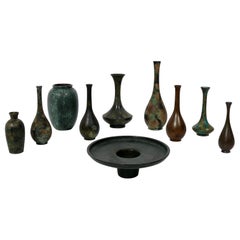
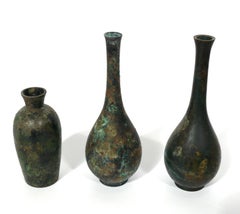
Collection of Japanese Bronze Vases

Collection of Japanese Bronze Vases

Located in Atlanta, GA

Collection of ten Japanese bronze vases, Japan, 20th century. They all exhibit sculptural forms and have a wide range of patinas from deep browns to warty verdigris greens. The large...

Category

1950s Japanese Vintage Japonisme Vases and Vessels

Materials

Metal, Bronze

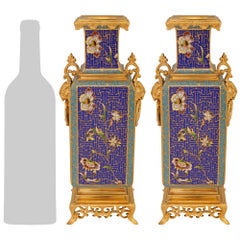
pair of French 19th century Japonisme st. Cloisonné and Ormolu vases

pair of French 19th century Japonisme st. Cloisonné and Ormolu vases

Located in West Palm Beach, FL

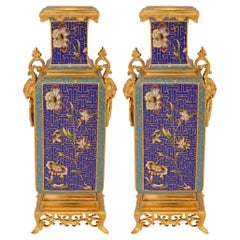
A charming and high quality pair of French 19th century Japonisme st. Cloisonné and Ormolu vases. Each stunning vase is raised by a square pierced Ormolu base supporting the sumptuou...

Category

19th Century French Antique Japonisme Vases and Vessels

Materials

Enamel, Ormolu

A 19th Century French Japonisme Cherry Blossom Vase By Jules Vieillard et Cie

A 19th Century French Japonisme Cherry Blossom Vase By Jules Vieillard et Cie

Located in England, GB

A 19th century Japonisme vase created in Bordeaux, France by Jules Vieillard et Cie. Dating from circa 1880–1895, this richly detailed large vase features a bulbous cylindrical form,...

Category

Late 19th Century French Antique Japonisme Vases and Vessels

Materials

Ceramic

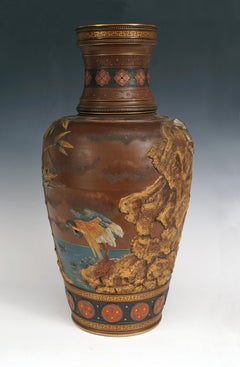
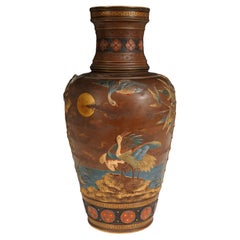
Vase with Cranes by the Villeroy&Boch Manufacture, Mettlach Germany, Circa 1900

Vase with Cranes by the Villeroy&Boch Manufacture, Mettlach Germany, Circa 1900

By Villeroy & Boch

Located in PARIS, FR

Model n° 1567 Beautiful Japanese inspired baluster-shaped vase in tinted stoneware. The rich polychrome rotating decoration illustrates cranes in the moonlight, near a lake lined wi...

Category

Early 1900s German Antique Japonisme Vases and Vessels

Materials

Stoneware

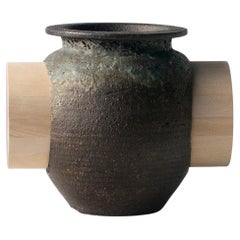
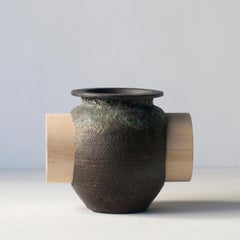
Wabi-Sabi Styled Studio Ceramic

Wabi-Sabi Styled Studio Ceramic

Located in Medina, OH

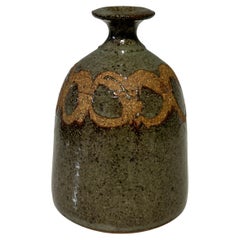
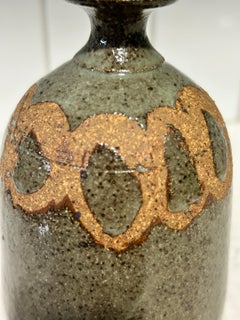
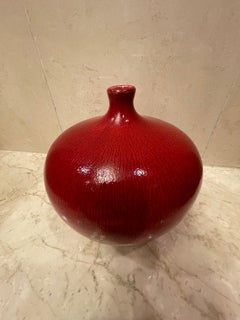
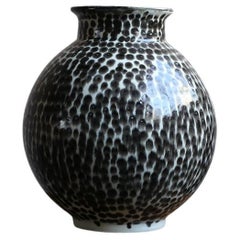
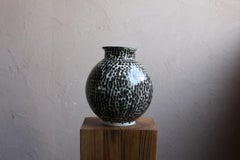
Handcrafted vintage pottery ceramic vase with a rounded body and a narrow neck. This piece seems to have been influenced by the Japanese wabi-sabi style pottery featuring simplicity...

Category

Mid-20th Century Unknown Japonisme Vases and Vessels

Materials

Ceramic

19th Century Japanese Pair of Bronze Urn Vases

19th Century Japanese Pair of Bronze Urn Vases

Located in Guaynabo, PR

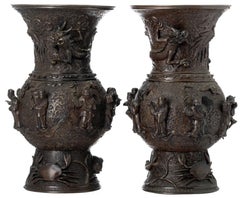
This is a 19th century pair of Japanese Bronze Vases. These are an urn shaped vases that their bodies depicts a high relief scene of some Phoenix birds around some foliage together w...

Category

19th Century Japanese Antique Japonisme Vases and Vessels

Materials

Bronze

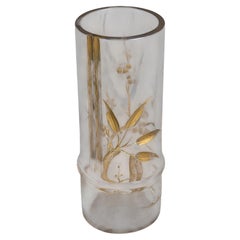
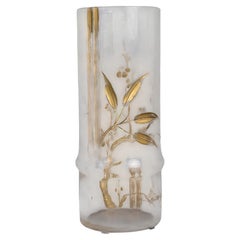
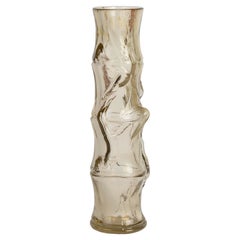
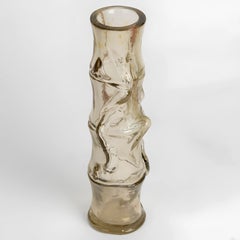
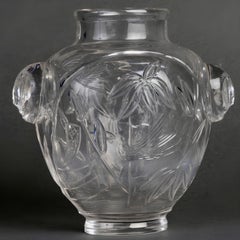
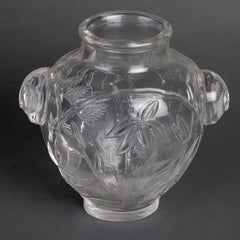
Japonisme Art Nouveau Bamboo Vase, E. Léveillé Paris, c.1900, Collection G.Cappa

Japonisme Art Nouveau Bamboo Vase, E. Léveillé Paris, c.1900, Collection G.Cappa

By Ernest Baptiste Leveille

Located in Saint-Ouen, FR

Rare Japonisme Art Nouveau Smoked Glass Bamboo Vase, Signed E. Léveillé Paris, circa 1900 An exceptional Japonisme Art Nouveau smoked glass vase modeled in a naturalistic bamboo for...

Category

Early 1900s French Antique Japonisme Vases and Vessels

Materials

Art Glass

Large Raku Fired Vessel by Fernande Beland

Large Raku Fired Vessel by Fernande Beland

Located in Denton, TX

Raku fired Large Vessel by Fernande Beland of Canada Mutiple colors of gold, green, amber, charcoal. The iridescence of the glaze is breath taking as the colors change with differen...

Category

20th Century Canadian Japonisme Vases and Vessels

Materials

Clay

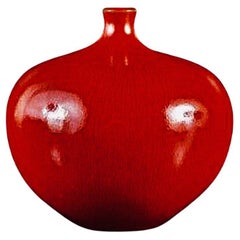
Japanese Emperor Shōwa Period, Fine Ceramic Red Vase, Signed, Ca. 1980

Japanese Emperor Shōwa Period, Fine Ceramic Red Vase, Signed, Ca. 1980

Located in New York, NY

Japanese Emperor Shōwa Period, Fine Ceramic Red Vase, Signed, Ca. 1980 Emperor Shōwa Period - from 1926 to 1990 ABOUT In the classic Japanese shape, this exquisite vase has a dram...

Category

1980s Japanese Vintage Japonisme Vases and Vessels

Materials

Ceramic

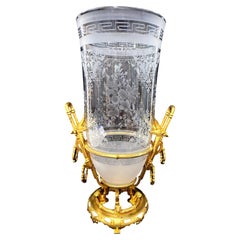
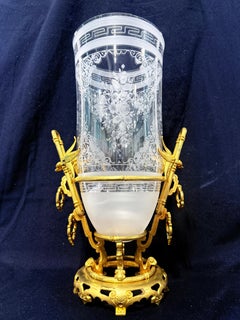
19th Century, French Belle Époque Bronze & Etched Glass Japonesque Vase

19th Century, French Belle Époque Bronze & Etched Glass Japonesque Vase

By Baccarat

Located in Atlanta, GA

Strikingly theatrical in silhouette and surface, this Belle Époque decorative vase is constructed around a tall, cylindrical crystal body enriched with multiple zones of decoration, ...

Category

Late 19th Century French Antique Japonisme Vases and Vessels

Materials

Bronze

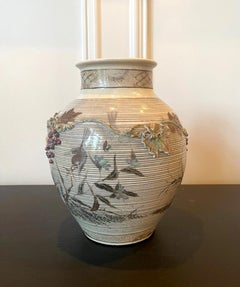
Japanese Ceramic Vase by Ito Tozan I Meiji Period

Japanese Ceramic Vase by Ito Tozan I Meiji Period

By Ito Tozan I

Located in Atlanta, GA

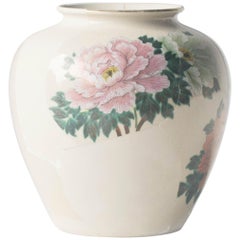
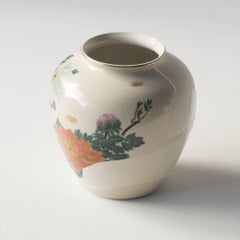
This stoneware vase of a jar form was finely decorated with low relief carving and delicate colored glazes depicting bundles of peony flowers. It was made by Ito Tozan I (1846-1920) circa 1890-1900s in the late Meiji Period. The color pallet was both bold and subtle, with dark green and rusty leaves with golden outlines and white and light yellow peony petals covering much of the surface. Impressed with potter's mark on the base. Examples of two pieces by Ito Tozan I were in the collection of MNAAG (Guimet) Paris. Inventory no. MG 13790 an 13792. A vase with similar shape and decoration techniques is featured as Lot 1340 Fine Japanese Art, 13 Sep 2017 Bonhams New York Tozan Ito I established his ceramic business in Kyoto 1867. His studio made both porcelain and stoneware in a style some considered Satsuma while they retained a sophistication of Kyoto ware...

Category

1890s Japanese Antique Japonisme Vases and Vessels

Materials

Ceramic

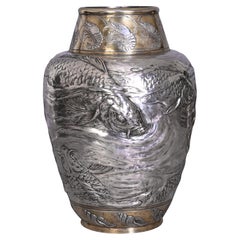
Ernest CARRIÈRE for CHRISTOFLE – Japonist Ovoid Vase “Seaweed and Fish

Ernest CARRIÈRE for CHRISTOFLE – Japonist Ovoid Vase “Seaweed and Fish

By Christofle, Ernest Carrière

Located in SAINT-OUEN-SUR-SEINE, FR

This Japanese-inspired ovoid vase, designed by the ceramist Ernest Carrière, was produced by the renowned silversmith Christofle. The base is adorned with a frieze of seashells, and ...

Category

Late 19th Century French Antique Japonisme Vases and Vessels

Materials

Silver

Fine and Rare Miniature Satsuma Vase by Taizan Yohei

Fine and Rare Miniature Satsuma Vase by Taizan Yohei

Located in Atlanta, GA

A very fine miniature ceramic vase in satsuma ware by Taizan Yohei IX (1864-1922) circa 1880-1890s of late Meiji period. The vase with a broad flat should...

Category

1880s Japanese Antique Japonisme Vases and Vessels

Materials

Ceramic

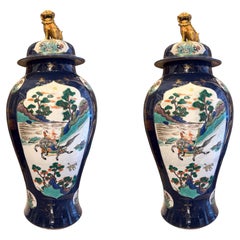
Pair of Large Powder-Blue Gilt-Decorated Jars, Japon 1840 .

Pair of Large Powder-Blue Gilt-Decorated Jars, Japon 1840 .

Located in Rome, IT

Pair of Large 19' century powder-blue gilt-decorated jars. Each gold painted with a composite floral patterns, all against a powder blue ground enriched in gilt with scattered flower...

Category

Late 18th Century Japanese Antique Japonisme Vases and Vessels

Materials

Porcelain

Escalier de Cristal x E. Leveille & E. Rousseau, Chrysanthemums Pot-Pourri Vase

Escalier de Cristal x E. Leveille & E. Rousseau, Chrysanthemums Pot-Pourri Vase

By Ernest Baptiste Leveille, Frères Pannier, L'Escalier de Cristal

Located in PARIS, FR

A magnificent collaboration between renowned glassmakers Ernest-Baptiste Leveillé and François-Eugène Rousseau, this exquisite pot-pourri urn is a testament to the Japonism period st...

Category

1880s French Antique Japonisme Vases and Vessels

Materials

Crystal, Bronze

Aritaware Porcelain Vase, Fukagawa, Japan, 20th Century

Aritaware Porcelain Vase, Fukagawa, Japan, 20th Century

By Fukagawa

Located in Chappaqua, NY

Aritaware porcelain vase, Fukagawa, Japan, 20th century. Octagonal shaped vase. Graphic wrapped tassel design in gold and deep red on white ground.

Category

Late 20th Century Japanese Japonisme Vases and Vessels

Materials

Porcelain

Glass Wearing Ceramic Vase 03 Contemporary Zen Japonism Style

Glass Wearing Ceramic Vase 03 Contemporary Zen Japonism Style

By Norihiko Terayama

Located in Shibuya-ku, Tokyo

Antique broken ceramic Japanese sake bup repaired with glass. Broken chips are welded by glass. This work is study for relationship between object and decoration. Subject is Destru...

Category

2010s Japanese Japonisme Vases and Vessels

Materials

Ceramic, Glass

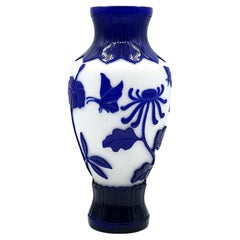
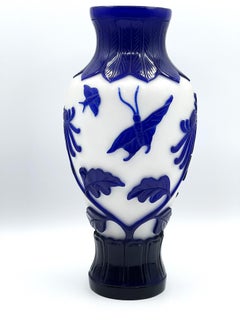
Chinese Peking Cut Blue & White Cameo Glass Vase, Ca. ca. 1900-1920

Chinese Peking Cut Blue & White Cameo Glass Vase, Ca. ca. 1900-1920

Located in New York, NY

Chinese Peking Cut Blue & White Cameo Glass Vase, Ca. ca.1900-1920 DIMENSIONS: Height: 12.5 inches Diameter: 5.5 inches ABOUT CHINESE PEKING GLASS Peking cut blue ...

Category

1910s Japanese Vintage Japonisme Vases and Vessels

Materials

Glass

Japanese Ceramic Vase with Delicate Carvings by Makuzu Kozan Meiji Period

Japanese Ceramic Vase with Delicate Carvings by Makuzu Kozan Meiji Period

By Makuzu Kozan

Located in Atlanta, GA

A delicate and rare Japanese ceramic vase by the important Meiji imperial potter Makuzu Kozan (1842-1916) circa 1890s. Dated to his underglaze phase post 1887 after he successfully m...

Category

1890s Japanese Antique Japonisme Vases and Vessels

Materials

Ceramic

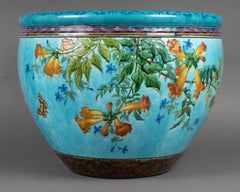
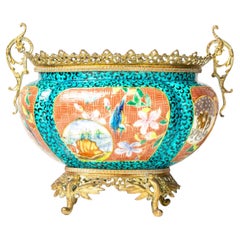
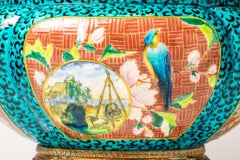
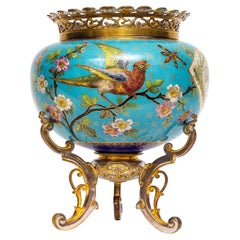
A 19th Century Japonisme Turquoise Jardinière By Jules Vieillard & Cie.

A 19th Century Japonisme Turquoise Jardinière By Jules Vieillard & Cie.

Located in England, GB

An impressive and very rare 19th century French 'Japonisme' brass mounted turquoise fine earthenware jardinière by French ceramic artist Jules Vieillard & Co, dated between 1880-...

Category

Late 19th Century French Antique Japonisme Vases and Vessels

Materials

Ceramic

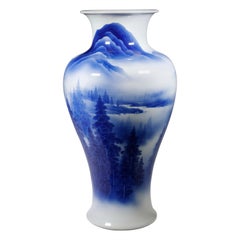
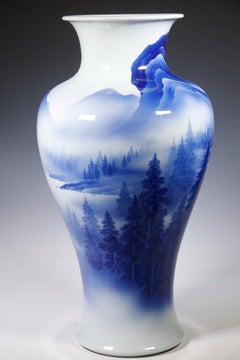
Rare and Large Japanese Porcelain Vase Makuzu Kozan

Rare and Large Japanese Porcelain Vase Makuzu Kozan

By Makuzu Kozan

Located in Atlanta, GA

A striking blue and white vase from the studio of Japanese Potter Makuzu Kozan, also known as Miyagawa Kozan (1842–1916), one of the most established and collected ceramist from Meiji Period. Born as Miyagawa Toranosuke, Kozan established his pottery studio in Yokohama around 1870s and later became one of the appointed artist to the Japanese Imperial household. His work was exhibited in many international fairs that the Meiji government participated at the turn of the century and won many grand prizes. With an impressively large size, this vase was likely made and reserved as a presentation piece for one of the many expositions the studio participated in the early 20th century. It was decorated with underglaze cobalt blue using the novel technique developed by Kozan called Fuki-e (the blow painting), in order to achieve the striking dimensional literary landscape known as "Mountain and Water". Being one of the most creative ceramists, Kozan started experimenting with new chemical colors from the West in the format of his porcelain glaze around 1880s. New colors allowed him to create underglaze designs that appeared bright, smooth and glossy. He even invented his own receipt of cobalt blue to achieve a much brighter yet softer shade, as evident on this vase. To create landscape that is realistic and dimensional, more common in the western paintings, he was inspired by the native Japanese ink painting technique developed around 1900 by Yokoyama Taikan...

Category

Early 20th Century Japanese Japonisme Vases and Vessels

Materials

Porcelain

Rare Pair of Early Period Makuzu Kozan Takauki High-Relief Vases

Rare Pair of Early Period Makuzu Kozan Takauki High-Relief Vases

By Makuzu Kozan

Located in Atlanta, GA

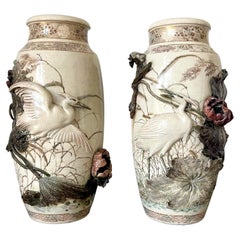
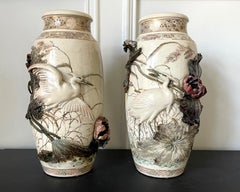
A stunning pair of ceramic vases with gilt, paint and high-relief decoration by imperial artist Makuzu Kozan (1842-1916, also known as Miyagawa Kozan) circa 1876-81 (late Meiji period). These vases belong to early period (1876-1881) of Kozan's repertoire, during which time the high relief sculpturing (known as Takauki ware) was used as a distinguished technique on top of the traditional gilt and paint ornaments of satsuma ware. Due to the relatively limited production and the fragile nature of these wares, not a large quantity of the examples remained in the first place, not mentioning a fine matching signed pair in such impressive sizes. Not only a rarity, this pair of vases is also superb in workmanship, thus the fine example of the work from that short and unique period of the artist's career before he switched to the underglaze period. In a conceptually mirrored fashion, the surface is richly decorated with flying cranes among large lotus leaves and flower, like an idyllic aqua scenery of pure poetry on a circular scroll. The high-relief appliques were rendered and composed in realistic fashion but with a dramatic touch. They are literally about to break the surface free, alive and in motion. The dark colors of the glaze were used to set a moody tone. The approach to create this type of ornamentations is more akin to sculpturing an ink painting in three-dimension than ceramic making. It is not hard to imagine the demand of both the artistry and the technique. Both vases were signed as "Makuzu Kozan Kiln" and each further with another name and seal, which are most likely the individual artist involved in the making process. Similar signatures can be seen in the reference book below. For similarly Takauki vases, see Miyagawa Kozan Makuzu...

Category

1870s Japanese Antique Japonisme Vases and Vessels

Materials

Ceramic

Pair of Bronze Meji Style Vases Depicting Dragons & Bats

Pair of Bronze Meji Style Vases Depicting Dragons & Bats

Located in Chonburi, TH

We are delighted to offer for sale this lovely pair of vintage Meji Style Bronze Vases depicting Bats and Dragons. A good looking and decorative pair, these are export pieces so mad...

Category

Early 20th Century Japanese Japonisme Vases and Vessels

Materials

Bronze

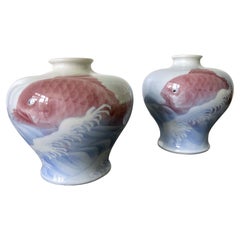
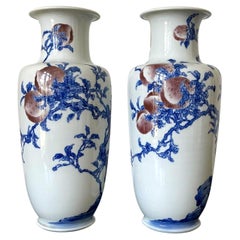
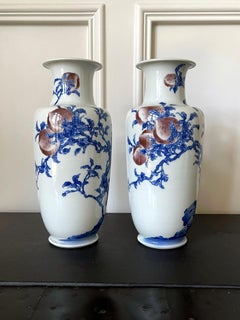
Pair of Rare Porcelain Commemorative Vases by Makuzu Kozan Meiji Period

Pair of Rare Porcelain Commemorative Vases by Makuzu Kozan Meiji Period

By Makuzu Kozan

Located in Atlanta, GA

A pair of porcelain vases in classic form, decorated with underglaze blue and copper red painting by Imperial potter Makuzu Kozan. Also known as Miyagawa Kozan (1842–1916), Makuzu was one of the most established and collected ceramist known to the west from Meiji Period. The vases are in a classic Chinese form called "Bang Chu Ping" (grain-mallet vase...

Category

1910s Japanese Vintage Japonisme Vases and Vessels

Materials

Ceramic

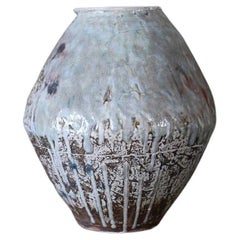
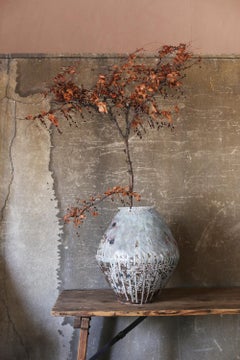
Bicone Vase by U-Turn Ushiro

Bicone Vase by U-Turn Ushiro

Located in Sammu-shi, Chiba

Bicone vase by U-Turn Ushiro. It is baked for several days in an anagama (a kiln that burns firewood). It is shaped vertically symmetrically. The copper contained in the clay blows out on the surface, and reddish-black spots can be seen partially. It is a work where you can see various reactions of various ingredients. U-Turn Ushiro While working at the fire station...

Category

2010s Japanese Japonisme Vases and Vessels

Materials

Pottery

19th Century French Bronze Vase Mounted On A Dish In The Japanese Style

19th Century French Bronze Vase Mounted On A Dish In The Japanese Style

Located in Bridgeport, CT

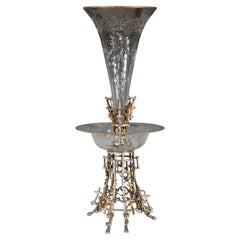
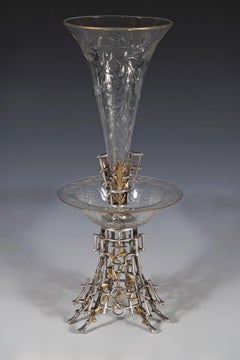
19th century French bronze vase patinated and decorated with cherry blossoms along with branch form handles. The baluster form vase with a quad form pierced base surmounted on a roun...

Category

19th Century French Antique Japonisme Vases and Vessels

Materials

Bronze

Chinese Art Deco Famille-Rose Vase with Flower and Dragon Motif, Ca. 1920

Chinese Art Deco Famille-Rose Vase with Flower and Dragon Motif, Ca. 1920

Located in New York, NY

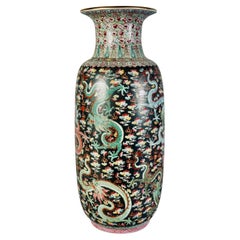
Chinese Art Deco Famille-Rose Vase with Flower and Dragon Motif, Ca. 1920 DIMENSIONS Height: 24 inches Diameter: 10 inches

Category

1920s Chinese Vintage Japonisme Vases and Vessels

Materials

Porcelain

Small Round Vase with dot painting by Scarlet Pottery

Small Round Vase with dot painting by Scarlet Pottery

Located in Sammu-shi, Chiba

This is a vase made by the Japanese ceramic artist unit "Scarlet Pottery." It is a piece of pottery made using Amakusa pottery stone. Amakusa pottery stone is famous as the raw mater...

Category

2010s Japanese Japonisme Vases and Vessels

Materials

Porcelain

Tiffany Japonesque Sterling Silver Vase with Early Union Square Mark

Tiffany Japonesque Sterling Silver Vase with Early Union Square Mark

By Tiffany & Co.

Located in New York, NY

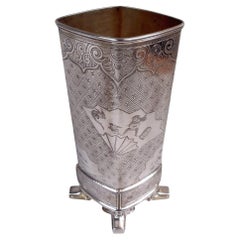
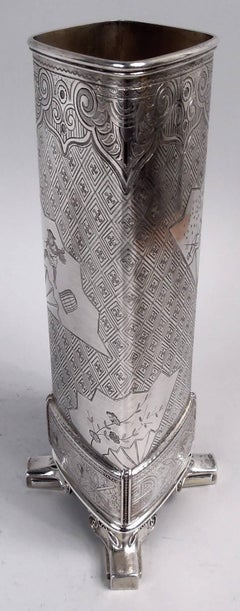
Japonesque sterling silver vase. Made by Tiffany & Co. in Union Square, New York. Lozenge pillar bowl on 4 scroll-mounted rectilinear volute-scroll supports. Engraved ornament: Flowe...

Category

1870s American Antique Japonisme Vases and Vessels

Materials

Sterling Silver

Japanese Porcelain Vase with Relief Surface Makuzu Kozan

Japanese Porcelain Vase with Relief Surface Makuzu Kozan

By Makuzu Kozan

Located in Atlanta, GA

A rare porcelain vase by Makuzu Kozan (1842-1916) circa 1870-81 (late Meiji period). The vase is dated to the earlier work from Kozan's studio during his early period (Takauki-ware p...

Category

Late 19th Century Japanese Antique Japonisme Vases and Vessels

Materials

Ceramic

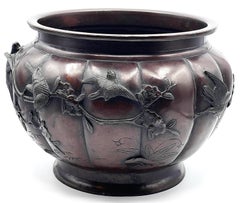
Japanese Edo Period Bronze Jardinière w/ Birds & Cherry Blossom Tree, 19th C.

Japanese Edo Period Bronze Jardinière w/ Birds & Cherry Blossom Tree, 19th C.

Located in New York, NY

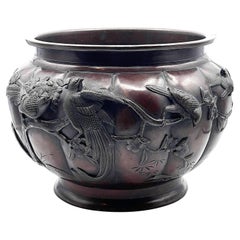
#350 Japanese Edo Period Bronze Jardinière w/ Birds & Cherry Blossom Tree, 19th C. DIMENSIONS: Height: 9 inches Diameter: 12 inches DETAILS Edo Period (1603-1868) Meiji Period (...

Category

Mid-19th Century Japanese Antique Japonisme Vases and Vessels

Materials

Bronze

Pair of Small Japanese Cloisonne Enamel Copper Flower Posy Vases Art Deco 1940s

Pair of Small Japanese Cloisonne Enamel Copper Flower Posy Vases Art Deco 1940s

Located in Sherborne, Dorset

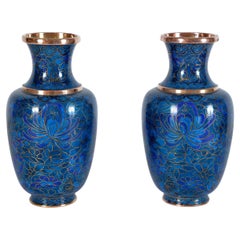
A captivating matched pair of small Japanese cloisonné posy vases from the Art Deco period, each one a miniature showcase of the extraordinary craftsmanship that defines the finest w...

Category

Mid-20th Century Japanese Japonisme Vases and Vessels

Materials

Copper, Enamel

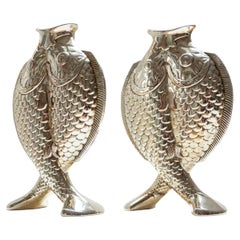
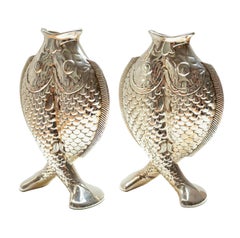
Baccarat fish-shaped planter from the Universal Exhibition, Paris, 1878

Baccarat fish-shaped planter from the Universal Exhibition, Paris, 1878

By Baccarat

Located in Charmes, FR

Planter presented at the Universal Exhibition, Paris, 1878, along with several other works on this theme, an extremely rare piece. An identical model is held in the Baccarat Museum's...

Category

Late 19th Century French Antique Japonisme Vases and Vessels

Materials

Crystal

Pair 19th Century Japanese Imari Porcelain & Gilt-Bronze Torchere Candelabra

Pair 19th Century Japanese Imari Porcelain & Gilt-Bronze Torchere Candelabra

By Imari Porcelain

Located in Los Angeles, CA

A fine Pair of 19th century Japanese Imari Porcelain and French Gilt-Bronze Mounted Thirteen-Light Celadon Torchere Candelabra. The bottle-shaped Japonisme vases with a Royal red background, decorated with parcel-gilt and black soaring eagles in the hunt within a forestall scene. Each Vase fitted and surmounted with a French 19th century Louis XV Style 13-Light scrolled candelabrum and all raised on a circular pierced gilt-bronze plinth. circa: 1880. Imari Porcelain (????) is the name for Japanese porcelain wares made in the town of Arita, in the former Hizen Province, northwestern Kyushu. They were exported to Europe extensively from the port of Imari, Saga, between the second half of the 17th century and the first half of the 18th century. The Japanese as well as Europeans called them Imari. In Japanese, these porcelains are also known as Arita-yaki (???). Imari or Arita porcelain has been continously produced up through the present day. Characteristics Though there are many types of Imari, Westerners' conception of Imari in the popular sense is associated only with a type of Imari produced and exported in large quantity in mid-17th century. This type is called Kinrande. Kinrande Imari is colored porcelain with cobalt blue underglaze and red and gold overglaze. The color combination was not seen in China at that time. Traditional Ming dynasty color porcelain used dominantly red and green, probably due to scarcity of gold in China, whereas gold was abundant in Japan in those days. The subject matter of Imari is diverse, ranging from foliage and flowers to people, scenery and abstractions. Some Imari design structures such as kraak style were adopted from China, but most designs were uniquely Japanese owing to the rich Japanese tradition of paintings and costume design. The porcelain has a gritty texture on the bases, where it is not covered by glaze. There is also blue and white Imari. Kakiemon style Imari is another type of Imari, but it tends to be categorized separately in Europe. History "Imari" was simply the trans-shipment port for Arita wares. It was the kilns at Arita which formed the heart of the Japanese porcelain industry. Arita's kilns were set up in the 17th century, when kaolin was discovered in 1616 by the immigrant Korean potter, Yi Sam-pyeong (1579–1655). (He may also be known by the name, "Kanage Sambei".) Yi Sam-Pyeong, along with his extended family of 180 persons, left Korea on the offer of a privileged position in Japan. This decision was made after the occurrence of certain Japanese invasions of Korea. After Yi Sam-Pyeong's discovery, his kilns began to produce revised Korean-style blue and white porcelains, known as "Shoki-Imari". In the mid-17th century there were also a lot of Chinese refugees in Northern Kyushu due to the turmoil on Chinese continent, and it is said one of them brought coloring technique to Arita. Thus Shoki-Imari developed into Ko-KutaniImari. Ko-Kutani was produced around 1650 for both export and domestic market. Blue and white porcelain continued to be produced and they are called Ai-Kutani. Ko-Kutani Imari for the export market usually adopted Chinese design structure such as kraak style, whereas Ai-Kutani for the domestic market were highly unique in design and are accordingly valued very much among collectors. Ko-Kutani style evolved into Kakiemon style Imari, which was produced for about 50 years around 1700. Imari achieved its technical and aesthetic peak in Kakiemon style, and it dominated European market. Blue and white Kakiemon is called Ai-Kakiemon. Kakiemon style transformed into Kinrande in the 18th century. Kinrande used blue underglaze and red and gold overglaze, and later some other colors. Imari began to be exported to Europe because the Chinese kilns at Ching-te-Chen were damaged in the political chaos and the new Qing dynasty government stopped trade in 1656–1684. Exports to Europe were made through the Dutch East India Company, but the designation "Imari Porcelain" in Europe connotes Arita wares of mostly Kinrande Imari. Export of Imari to Europe stopped in mid-18th century when China began export to Europe again, since Imari was not able to compete against China due to high labor cost. By that time, however, both Imari and Kakiemon style were already so popular among Europeans, Chinese export porcelain copied both Imari and Kakiemon style, which is called Chinese Imari. At the same time, European kilns, such as Meisen also tried to copy Imari and Kakiemon. Export of Imari surged again in late 19th century (Meiji era) when Japonism flourished in Europe. Thus in western world today, two kinds of Imari can...
Category

19th Century Japanese Antique Japonisme Vases and Vessels

Materials

Bronze, Ormolu

Japonisme vases and vessels for sale on 1stDibs.

Find a broad range of unique Japonisme vases and vessels for sale on 1stDibs. Many of these items were first offered in the 21st Century and Contemporary, but contemporary artisans have continued to produce works inspired by this style. If you’re looking to add vintage vases and vessels created in this style to your space, the works available on 1stDibs include decorative objects, asian art and furniture, serveware, ceramics, silver and glass and other home furnishings, frequently crafted with ceramic, metal and other materials. If you’re shopping for used Japonisme vases and vessels made in a specific country, there are Asia, East Asia, and Japan pieces for sale on 1stDibs. While there are many designers and brands associated with original vases and vessels, popular names associated with this style include Makuzu Kozan, Norihiko Terayama, Satsuma, and Ando Jubei. It’s true that these talented designers have at times inspired knockoffs, but our experienced specialists have partnered with only top vetted sellers to offer authentic pieces that come with a buyer protection guarantee. Prices for vases and vessels differ depending upon multiple factors, including designer, materials, construction methods, condition and provenance. On 1stDibs, the price for these items starts at $100 and tops out at $185,360 while the average work can sell for $3,000.