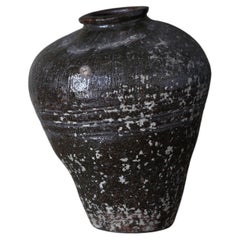
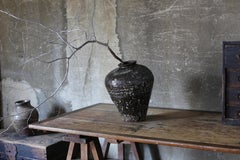
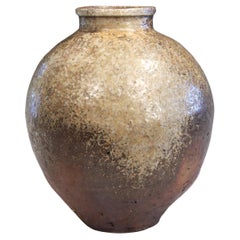
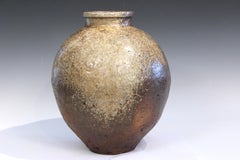
Edo Urns

EDO STYLE

Edo furniture was created during a flourishing time for the decorative arts owing to the stability of the Tokugawa shogunate rule in Japan. Spanning from 1603 to 1867, this era of peace and economic growth supported artistic advancements in lacquer, woodblock printing, porcelain and other artisanal trades. Because the country was largely isolated, there was little outside influence, leading to centuries of exceptional attention to the design of its furnishings and the quality of its traditional arts.

Unlike during the Meiji period that followed, with an increase in domestic and international markets, furniture during the Edo period was predominately commissioned by the ruling class, although people from across social groups benefited from the burgeoning metropolitan hubs for artisanal trades. For instance, Kyoto became a major center for lacquer art. Most furniture pieces were made from wood such as cedar or ash, including the era’s sashimono cabinets, which involved fine joinery and were rooted in the Heian period.

Sashimono cabinets, which were built by master craftsmen in a range of different wood types owing to the various trees that populate Japan, occasionally featured a stack of slender drawers as well as sliding doors. They were popular with everyone from samurai to kabuki actors. Tansu storage chests crafted from wood with metal fittings were also common in Edo-period homes. Some were designed to be easily portable while others were made to double as staircases.

Painted folding screens, called byōbu, were also fashionable, with Japanese artists inspired by nature, literature and scenes of history and daily life to create vivid works. In Buddhist temples and the palatial homes of the aristocratic class, fusuma, or large sliding panels, would sometimes be adorned with gold or silver leaf. These dividers allowed interiors to change throughout the day, closing in small spaces for personal use or reflecting candlelight to illuminate communal spaces after dark.

Find a collection of Edo tables, lighting, decorative objects, wall decorations and more furniture on 1stDibs.

to
1
3
1
1
1
1
201
169
169
142
67
63
50
36
32
31
31
30
24
23
18
16
7
6
2
1
1
1
1
2
1
3
3
3
Height
to
Width
to
3
3
3
1
Style: Edo
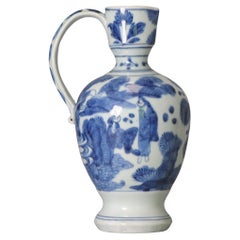
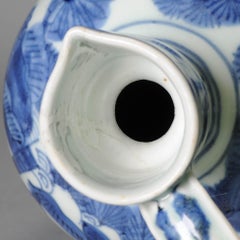
Antique Japanese Porcelain Blue White Edo Period Arita Jug Ewer Figural, 17th C

Antique Japanese Porcelain Blue White Edo Period Arita Jug Ewer Figural, 17th C

Located in Amsterdam, Noord Holland

Rare & Beautiful Arita Japanese Porcelain Jug . Scene with figures and birds in a landscape. This 17th Century Japanese Export Porcelain Jug or Ewer, Arita Kilns c.1670-1690 is pain...

Category

17th Century Japanese Antique Edo Urns

Materials

Porcelain

Related Items
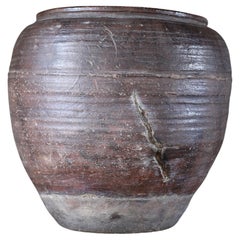
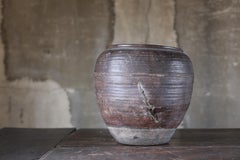
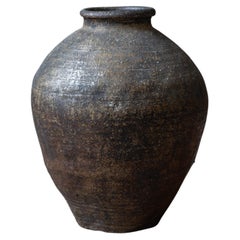
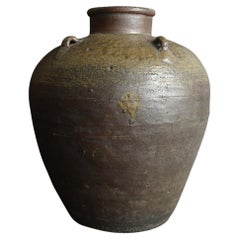
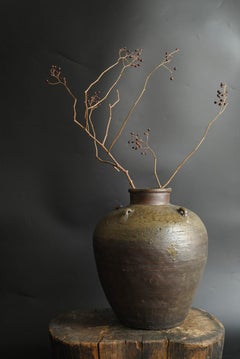
Japanese Primitive Stoneware Jar  / Edo period, circa 17th–18th century

Japanese Primitive Stoneware Jar / Edo period, circa 17th–18th century

Located in Sammu-shi, Chiba

Japanese Primitive Stoneware Jar Japan, Edo period, circa 17th–18th century A beautifully weathered Japanese stoneware storage jar, likely originating from one of Japan's historic ...

Category

18th Century Japanese Antique Edo Urns

Materials

Pottery

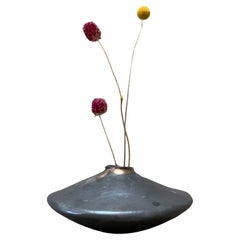
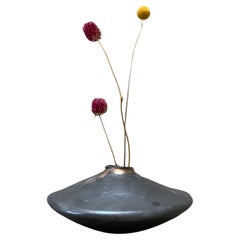
Metallic Bronze Handbuilt Wabi-Sabi Ceramic Vase Large

Metallic Bronze Handbuilt Wabi-Sabi Ceramic Vase Large

By MONDAYS

Located in Brooklyn, NY

Hand-built shallow vase. Wabi Sabi and minimalist yet striking, perfect for a single dramatic stem or a small bouquet. Available in Golden bronze or matte white on dark clay. Approxi...

Category

2010s American Edo Urns

Materials

Ceramic

Japanese Antique Pottery with Beautiful Ripped in the Edo Period/Tsubo Wabisabi

Japanese Antique Pottery with Beautiful Ripped in the Edo Period/Tsubo Wabisabi

Located in Sammu-shi, Chiba

It is an old jar baked in Japan. It seems to be in the Edo period (1700s-1800s). The unique distorted shape is beautiful. The color and balance of the gla...

Category

Early 19th Century Japanese Antique Edo Urns

Materials

Pottery

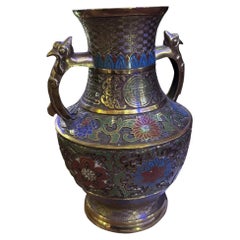
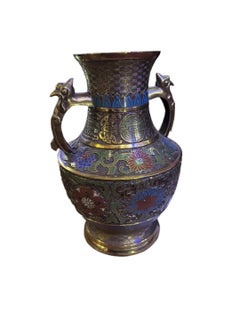
Antique Japanese Bronze Cloisonné/Champleve Vase Urn

Antique Japanese Bronze Cloisonné/Champleve Vase Urn

Located in Chicago, IL

Antique Japanese Bronze Cloisonné/Champleve Vase Urn This Antique Japanese Bronze Cloisonné/Champleve Vase Urn showcases the timeless artistry of traditional Japanese craftsmanship...

Category

Early 20th Century Unknown Edo Urns

Materials

Enamel

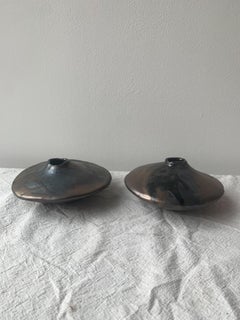
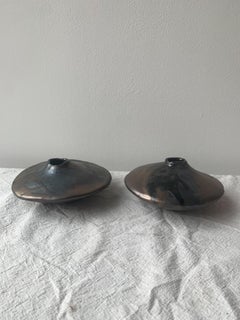
Metallic Bronze Handbuilt Wabi-Sabi Ceramic Vase

Metallic Bronze Handbuilt Wabi-Sabi Ceramic Vase

By MONDAYS

Located in Brooklyn, NY

Hand-built shallow vase. Wabi Sabi and minimalist yet striking, perfect for a single dramatic stem or a small bouquet. Available in Golden bronze or matte white on dark clay. Due to the nature of handmade ceramics...

Category

2010s American Edo Urns

Materials

Ceramic

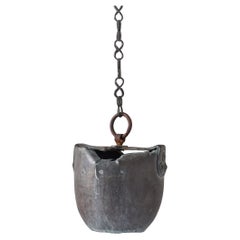
Japanese Antique Copper Tub 1800s-1860s / Flower Vase Wabi Sabi

Japanese Antique Copper Tub 1800s-1860s / Flower Vase Wabi Sabi

$640Sale Price|20% Off

H 8.67 in W 8.86 in D 8.27 in

Japanese Antique Copper Tub 1800s-1860s / Flower Vase Wabi Sabi

Located in Chōsei District Nagara, JP

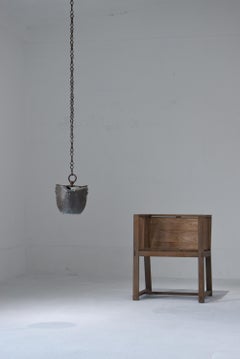
This is an old copper tub made in Japan. It was made during the Edo period (1800s-1860s) and used as a tool to draw water from a well. This tool is one of the tools of daily life tha...

Category

Late 19th Century Japanese Antique Edo Urns

Materials

Copper, Iron

Large Ceremic Shigaraki Tsubo by Nagaoka Masami

Large Ceremic Shigaraki Tsubo by Nagaoka Masami

Located in Atlanta, GA

An impressive Shigaraki Tsubo (jar normally for storage) in an archaic form with a bulbous and robust body that opens with a small lipped mouth. Heavil...

Category

21st Century and Contemporary Japanese Edo Urns

Materials

Ceramic

Japanese Antique Huge “Yabure Tsubo” Ceramic Vessel 13th Century / Wabi-Sabi

Japanese Antique Huge “Yabure Tsubo” Ceramic Vessel 13th Century / Wabi-Sabi

By Axel Vervoordt

Located in Chōsei District Nagara, JP

This is an old, monumental Tokoname ware “Yabure Tsubo” (broken-form jar) made in Japan. A yabure tsubo refers to a large jar that has sustained natural breakage and weathering over ...

Category

15th Century and Earlier Japanese Antique Edo Urns

Materials

Ceramic

Japanese antique Bizen ware vase / 15th-16th century / Wabi-sabi vase/Tsubo

Japanese antique Bizen ware vase / 15th-16th century / Wabi-sabi vase/Tsubo

Located in Sammu-shi, Chiba

This Bizen ware jar was fired in the Bizen region of Okayama Prefecture. Bizen ware is one of Japan's Six Ancient Kilns and is known as one of the oldest pottery styles in Japan. Its...

Category

16th Century Japanese Antique Edo Urns

Materials

Pottery

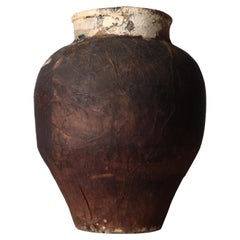
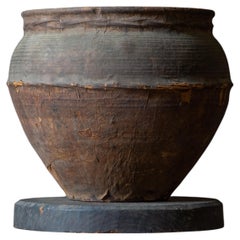
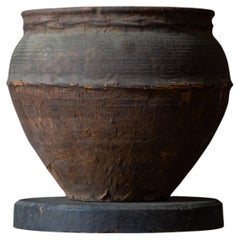
Edo Japanese Antique Paper-covered Bizen Ware Wide-Mouth Vessel, 17th C

Edo Japanese Antique Paper-covered Bizen Ware Wide-Mouth Vessel, 17th C

Located in 常陸大宮市, JP

This wide-mouthed storage jar is attributed to Bizen ware, estimated to date from early Edo period, 17th century. The jar is originally made as a utilitarian vessel for storage, wh...

Category

17th Century Japanese Antique Edo Urns

Materials

Pottery, Wood, Bamboo, Paper

Japanese Antique Pottery Jar 17th-18th Century/ Wabi-Sabi /Tokoname

Japanese Antique Pottery Jar 17th-18th Century/ Wabi-Sabi /Tokoname

Located in Sammu-shi, Chiba

Tokoname is a region in Aichi Prefecture, Japan, renowned as one of the country's oldest pottery centers, with a history dating back to the 12th century. This jar, despite cracking ...

Category

Late 17th Century Japanese Antique Edo Urns

Materials

Pottery

Previously Available Items
Echizen Ware Edo Period Jar Tsubo Vase Pottery Japanese Wabi Sabi Ash Glaze

Echizen Ware Edo Period Jar Tsubo Vase Pottery Japanese Wabi Sabi Ash Glaze

Located in Wilton, CT

Antique Edo period Echizen kilns tsubo jar, circa 17th/18th century. Coil built with reddish iron oxide clay and buff colored ash glaze. Large Echizen jars were famous in their time ...

Category

18th Century Japanese Antique Edo Urns

Materials

Stoneware

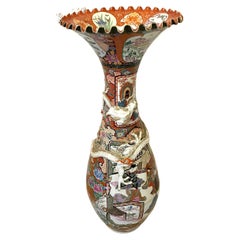
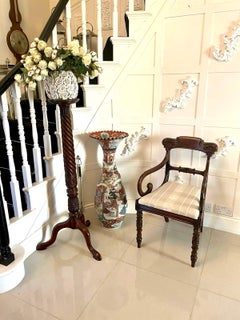
Large Antique Quality Japanese Imari Floor Standing Vase

Large Antique Quality Japanese Imari Floor Standing Vase

Located in Suffolk, GB

Large antique quality Japanese Imari floor standing vase having a splendid trumpet shaped scalloped edge top, fantastic hand painted panels with Ja...

Category

Early 1900s Unknown Antique Edo Urns

Materials

Ceramic

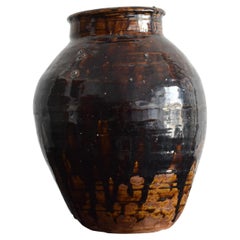
Japanese Old Edo Period Jar / "Seto ware" Black Glaze Vase / Antique Jar

Japanese Old Edo Period Jar / "Seto ware" Black Glaze Vase / Antique Jar

Located in Sammu-shi, Chiba

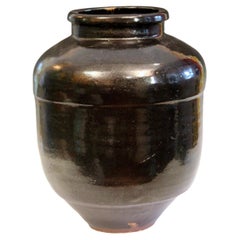
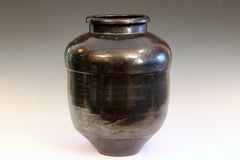
It is "Seto ware". Seto is a historic kiln located in Aichi prefecture, Japan. It is said to have originated around the 13th century. This is a jar around 1700-1800 in the Edo p...

Category

18th Century Japanese Antique Edo Urns

Materials

Pottery

Edo urns for sale on 1stDibs.

Find a broad range of unique Edo urns for sale on 1stDibs. Many of these items were first offered in the Mid-20th Century, but contemporary artisans have continued to produce works inspired by this style. If you’re looking to add vintage urns created in this style to your space, the works available on 1stDibs include decorative objects and other home furnishings, frequently crafted with ceramic, stoneware and other materials. If you’re shopping for used Edo urns made in a specific country, there are Asia, East Asia, and Japan pieces for sale on 1stDibs. While there are many designers and brands associated with original urns, popular names associated with this style include and Shigaraki Valley Potters. It’s true that these talented designers have at times inspired knockoffs, but our experienced specialists have partnered with only top vetted sellers to offer authentic pieces that come with a buyer protection guarantee. Prices for urns differ depending upon multiple factors, including designer, materials, construction methods, condition and provenance. On 1stDibs, the price for these items starts at $1,400 and tops out at $3,370 while the average work can sell for $1,495.