Earthenware Ceramics

843 Results
to
82
699
142
3
101
280
318
145
89
151
39
33
5
24
22
10
32
27
18
11
4
75
71
44
31
29
21
19
13
13
11
9
8
3
2
1
9,134
1,188
881
545
471
353
725
214
111
90
66
844
790
831
28
24
23
21
19
Material: Earthenware
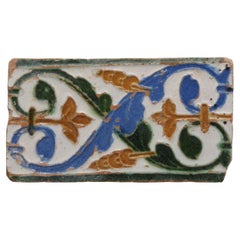
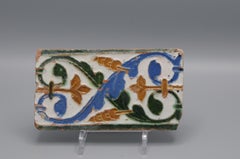
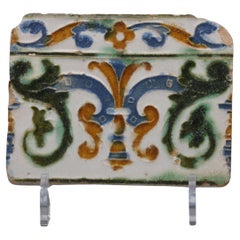
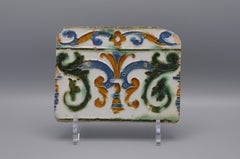
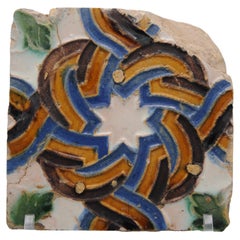
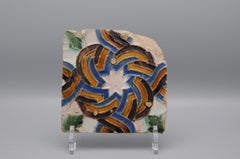
Spanish Azulejo Tile Arista y Cuenca - Toledo 16th century

Spanish Azulejo Tile Arista y Cuenca - Toledo 16th century

By Estadio of Spain

Located in DELFT, NL

Early Arista y cuenca tile made in Toledo. Tile decorated in renaissance with stylized flowers was probably made between 1550 and 1575.

Category

16th Century Spanish Renaissance Antique Earthenware Ceramics

Materials

Earthenware

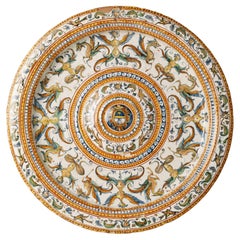
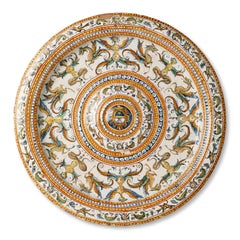
Italian Renaissance Plate, Patanazzi Workshop, Urbino, Circa 1580

Italian Renaissance Plate, Patanazzi Workshop, Urbino, Circa 1580

By Patanazzi Workshop

Located in Milano, IT

Acquareccia plate Patanazzi workshop Urbino, last quarter of the 16th century It measures diameter 17.12 in; foot diameter 11.53 in; height 1.88 in (43.5 cm; 29.3 cm; 4.8 cm). Weight State of conservation: wear and a few small minimal detachments of enamel, chipping on the raised areas, peeling of enamel at the brim on the back. This large, shallow basin is equipped with a wide and convex well. It is umbonate with a contoured center. The brim, short and flat, is enclosed in a double rounded and barely raised edge. The basin has a flat base without rims; it has a slightly concave center in correspondence to the well. The shape takes inspiration from the basins associated with the metal forged amphora pourers that traditionally adorned the credenza. These were used from the Middle Ages to wash hands during banquets. Two or three people washed their hands in the same basin and it was considered an honor to wash one’s hands with an illustrious person. The decoration is arranged in concentric bands with, in the center of the umbo, an unidentified shield on a blue background: an oval banded in gold with a blue head, a gold star and a field with a burning pitcher. Rings of faux pods separate the center from a series of grotesque motifs of small birds and masks. These go around the basin and are, in fact, faithfully repeated on the brim. The main decoration develops inside the flounce of the basin, which sees alternating symmetrical figures of winged harpies and chimeras. The ornamentation, outlined in orange, green and blue, stands out against the white enamel background. This decorative style, defined since the Renaissance as “grottesche” or “raffaellesche”, refers to the decorations introduced after the discovery of the paintings of the Domus Aurea towards the end of the fifteenth century. The discovery of Nero's palace, buried inside Colle Oppio by damnatio memoriae, occurred by chance when a young Roman, in 1480, fell into a large crack which had opened in the ground on the hill, thus finding himself in a cave with walls covered with painted figures. The great artists present in the papal city, including Pinturicchio, Ghirlandaio, Raffaello, immediately visited these caves. The decorations found there soon became a decorative subject of immense success: the term grotesque , with the meaning of “unusual,” “caricatured,” or “monstrous,” was later commented by Vasari in 1550 as “una spezie di pittura licenziose e ridicole molto”( “a very licentious and ridiculous kind of painting”). The decorations “a grottesche” also widely circulated in ceramic factories, through the use of engravings, variously interpreted according to the creativity of the artists or the requests of the client. Our basin is reflected in similar artifacts produced at the end of the sixteenth century by the factories of the Urbino district. See the series of basins preserved in the main French museums, among which the closest in morphology is that of the Campana collection of the Louvre (Inv. OA1496); this however has a more complex figure decoration, while the decoration of our specimen is sober and with a watercolor style. The style, sure in its execution, approaches decorative results still close to the works produced around the middle of the sixteenth century by the Fontana workshop. The decoration is closely linked to their taste, which later finds its natural outlet, through the work of Antonio, also in the Patanazzi workshop. Studies show the contiguity between the two workshops due to the kinship and collaboration between the masters Orazio Fontana and Antonio Patanazzi, both trained in the workshop of Guido Fontana il Durantino. It is therefore almost natural that their works, often created according to similar typologies and under the aegis of the same commissions, are not always easily distinguishable, so much so that the presence of historiated or “grottesche” works by Orazio is documented and preserved in Antonio Patanazzi's workshop. Given that the studies have always emphasized the collaboration between several hands in the context of the shops, it is known that the most ancient “grottesche” works thus far known, can be dated from 1560, when the Fontana shop created the so-called Servizio Spagnolo (Spanish Service) and how, from that moment on, this ornamentation became one of the most requested by high-ranking clients. We remember the works created for the Granduchi di Toscana, when Flaminio Fontana along with his uncle Orazio supplied ceramics to Florence, and, later, other commissions of considerable importance: those for the service of the Duchi d’Este or for the Messina Farmacia of Roccavaldina, associated with the Patanazzi workshop when, now after 1580, Antonio Patanazzi began to sign his own work. Thus, in our basin, the presence of masks hanging from garlands, a theme of more ancient memory, is associated in the work with more advanced stylistic motifs, such as the hatching of the chimeras and harpies. These are found here on the front with the wings painted in two ornate ways. In addition, the theme of the birds on the edge completes the decoration along the thin brim and can be seen as representing an early style typical of the Urbino district during a period of activity and collaboration between the two workshops. Later, a more “doll-like” decorative choice, typical of the end of the century and the beginning of the seventeenth century, characterized the period of the Patanazzi workshop under the direction of Francesco. Bibliography: Philippe Morel, Il funzionamento simbolico e la critica delle grottesche nella seconda metà del Cinquecento, in: Marcello Fagiolo, (a cura di), Roma e...

Category

16th Century Italian Renaissance Antique Earthenware Ceramics
Materials

Maiolica

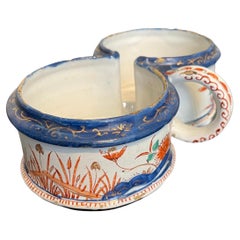
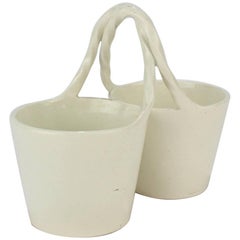
18th Century Polychrome Delft Oil and Vinegar Stand

18th Century Polychrome Delft Oil and Vinegar Stand

Located in Haddonfield, NJ

18th Century polychrome Delft oil and vinegar stand in Imari flower decorations.

Category

Mid-18th Century Dutch Baroque Antique Earthenware Ceramics

Materials

Delft

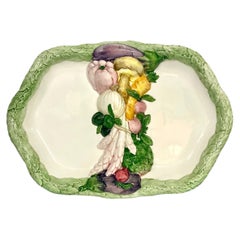
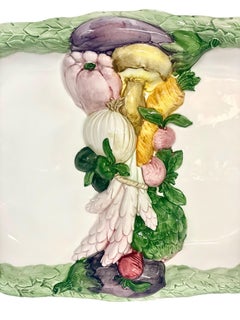
French Hand-Painted Majolica Vegetable Platter, 20th Century Design

French Hand-Painted Majolica Vegetable Platter, 20th Century Design

Located in LA CIOTAT, FR

An attractive and unusual vintage serving platter, embellished with a central divider of beautifully crafted and hand-painted garden vegetables. A raised, embossed and painted green ...

Category

20th Century French Earthenware Ceramics

Materials

Ceramic, Majolica

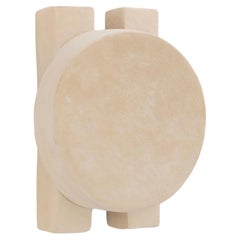
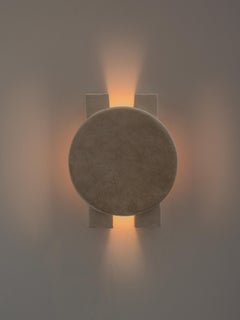
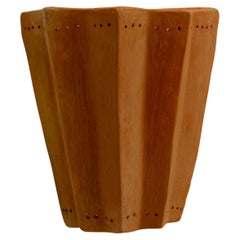
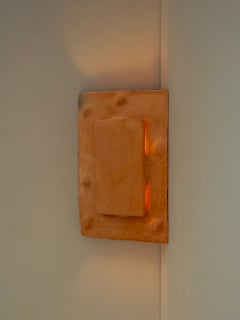
Contemporary Organic Modern Moroccan Handmade White Ceramic Wall Lamp

Contemporary Organic Modern Moroccan Handmade White Ceramic Wall Lamp

Located in Marseille, FR

- Handbuilt terracotta ceramic wall light - made of clay collected from the potter's surroundings. - made in the Moroccan Rif mountains by the potter Houda. - co-created by the potte...

Category

2010s Moroccan Organic Modern Earthenware Ceramics

Materials

Clay, Earthenware

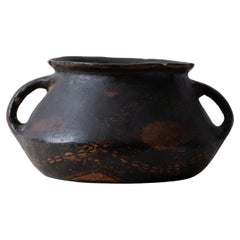
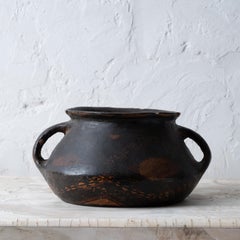
Chinese Neolithic Yangshao Pot

Chinese Neolithic Yangshao Pot

Located in Savannah, GA

A Chinese earthenware painted pot, Neolithic period, Yangshao culture, circa 3000 BC. Unique all black with cowrie decoration. 11 ¼ inches wide by 9 ...

Category

15th Century and Earlier Chinese Other Antique Earthenware Ceramics

Materials

Earthenware

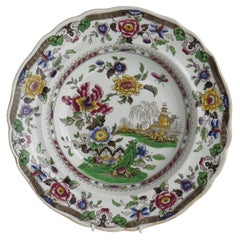
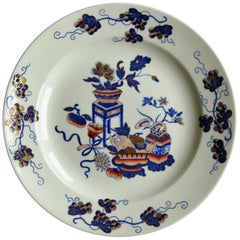
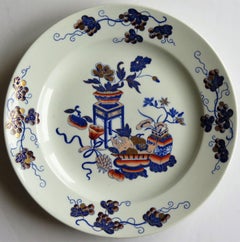
Georgian Spode Plate, Bow Pot Pattern, Pearl-Ware, Gilded, Circa 1820

Georgian Spode Plate, Bow Pot Pattern, Pearl-Ware, Gilded, Circa 1820

By Josiah Spode

Located in Lincoln, Lincolnshire

This is a beautiful plate in the Bow Pot pattern, produced by the Spode factory and made of a type of earthenware pottery called Pearl-ware, in the early 19th century, circa 1820. ...

Category

Early 19th Century English Chinoiserie Antique Earthenware Ceramics

Materials

Pearlware

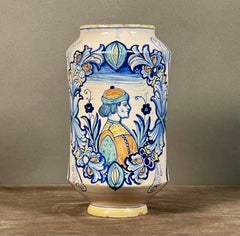
18th Century Antique Savona Majolica Albarello Vase, Louis XIV Style

18th Century Antique Savona Majolica Albarello Vase, Louis XIV Style

Located in Roma, IT

Antique Savona Ceramic Albarello, 18th Century Beautiful polychrome painted majolica tree, cylindrical body with rounded shoulders from which rises a sma...

Category

Late 18th Century Italian Louis XIV Antique Earthenware Ceramics

Materials

Majolica

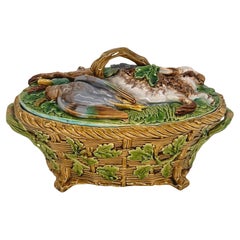
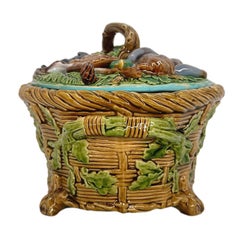
A Minton Majolica Dead Game Pie Tureen, Cover, and Liner, English, Dated 1859

A Minton Majolica Dead Game Pie Tureen, Cover, and Liner, English, Dated 1859

By Minton

Located in Banner Elk, NC

A Minton Majolica Game Pie Tureen, Cover, and Liner, the base molded as a wicker basket with green glazed oak leaves and banded branch handles on raised feet, the cover with high rel...

Category

19th Century English Victorian Antique Earthenware Ceramics

Materials

Majolica

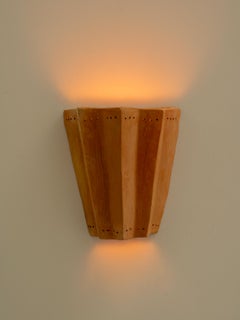
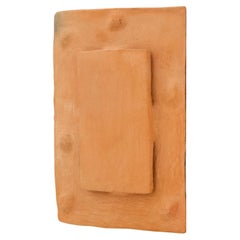
Contemporary Organic Modern Moroccan Handmade Terracotta Ceramic Wall Lamp

Contemporary Organic Modern Moroccan Handmade Terracotta Ceramic Wall Lamp

Located in Marseille, FR

- Handbuilt terracotta ceramic wall light - made of clay collected from the potter's surroundings. - made in the Moroccan Rif mountains by the potter Houda. - co-created by the potte...

Category

2010s Moroccan Organic Modern Earthenware Ceramics

Materials

Clay, Earthenware

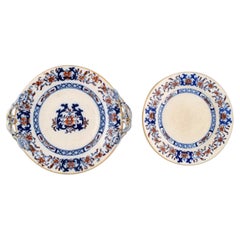
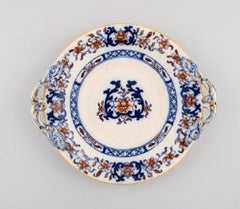
Mintons, England, Two Antique Plates in Hand-Painted Faience, Chinese Style

Mintons, England, Two Antique Plates in Hand-Painted Faience, Chinese Style

Located in København, Copenhagen

Mintons, England. Two antique plates in hand-painted faience. Chinese style, early 20th century. Largest measures: 23.5 x 20.5 cm. In excellent condi...

Category

Early 20th Century English Chinoiserie Earthenware Ceramics

Materials

Faience

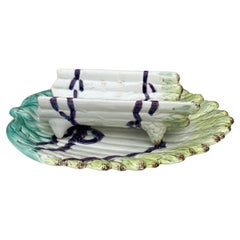
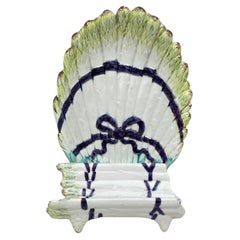
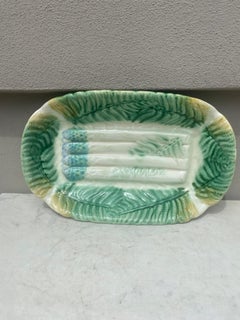
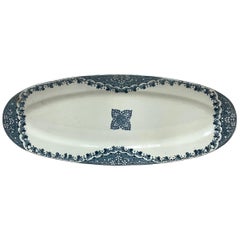
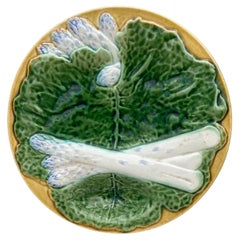
German Majolica Asparagus Platter circa 1900

German Majolica Asparagus Platter circa 1900

Located in Austin, TX

German Majolica Asparagus Platter circa 1890. Craddle 8" by 4.5" , platter 12.3" by 9.7"

Category

Early 1900s German Country Antique Earthenware Ceramics

Materials

Ceramic, Faience

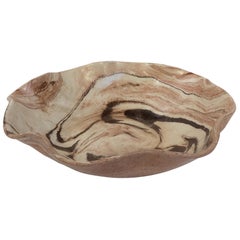
Decorative Free Form Catch All Bowl or Large Mixed Earths Vide Poche

Decorative Free Form Catch All Bowl or Large Mixed Earths Vide Poche

Located in Miami, FL

Beautiful free form, mid century handcrafted catch all bowl or large vide poche from Apt, France with prominent beige and brown colors in an art brut form. The technique is known as "terre melee...

Category

Mid-20th Century French Mid-Century Modern Earthenware Ceramics

Materials

Creamware

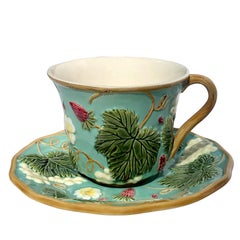
Flowery Tea Cups for 2 "George Sand", blue color

Flowery Tea Cups for 2 "George Sand", blue color

By Aude Clément

Located in Paris, FR

Beautiful set of 2 earthenware tea cups in the "George Sand" collection. These tea cups feature an elegant and detailed design, adorned with a raised pattern of strawberry leaves, ...

Category

2010s French Earthenware Ceramics

Materials

Earthenware

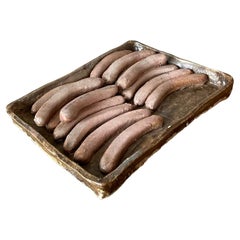
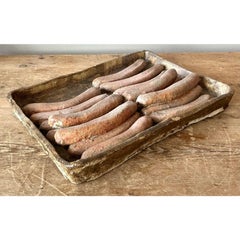
Vintage Boho Majolica Ceramic Tray of Sausages

Vintage Boho Majolica Ceramic Tray of Sausages

Located in West Palm Beach, FL

A wonderfully surreal and conversation-starting piece of trompe l'oeil ceramic art, this vintage tray of sausages is a testament to playful, artisanal craftsmanship. Meticulously han...

Category

Mid-20th Century Italian Folk Art Earthenware Ceramics

Materials

Earthenware

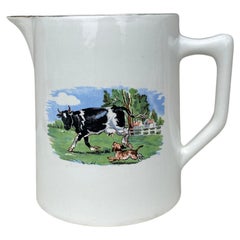
French Faience Pitcher Cow Sarreguemines Circa 1930

French Faience Pitcher Cow Sarreguemines Circa 1930

By Sarreguemines

Located in Austin, TX

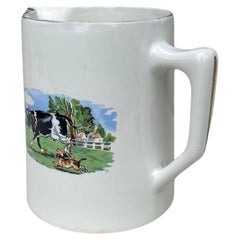
French Faience Pitcher Cow signed Digoin Sarreguemines Circa 1930.The scene represent a cow playing with a dog in a field.

Category

1930s French Rustic Vintage Earthenware Ceramics

Materials

Ceramic, Faience

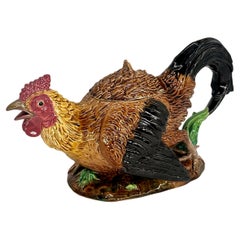
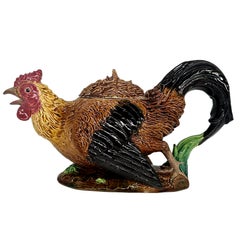
A George Jones Majolica Rooster Teapot, English, ca. 1872

A George Jones Majolica Rooster Teapot, English, ca. 1872

By George Jones

Located in Banner Elk, NC

A George Jones Majolica Rooster (Cockerel) teapot, English, ca. 1872, naturalistically modeled as a running cockerel, the tail feathers forming the handle, the open beak forming the ...

Category

1870s English Victorian Antique Earthenware Ceramics

Materials

Majolica

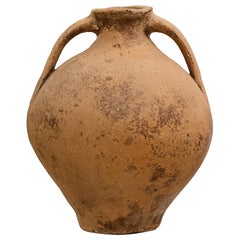
18th Century Organic Terracotta Vessel from Calanda, Spain, 1760-80

18th Century Organic Terracotta Vessel from Calanda, Spain, 1760-80

Located in London, England

Beautifully organic shaped terracotta vessel from the historic town of Calanda in the Aargon region. Original dry weathered surface, with some remnants of the original reddish brow...

Category

18th Century Spanish Antique Earthenware Ceramics

Materials

Earthenware, Terracotta

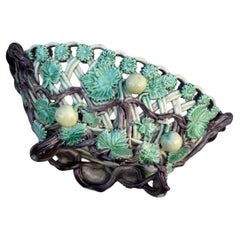
Small French Majolica Reticulated Jardiniere Circa 1890

Small French Majolica Reticulated Jardiniere Circa 1890

Located in Austin, TX

Small French Majolica Reticulated handled Jardiniere Circa 1890. Leaves and berries. W / 8 by 4.8 inches. H / 3.4 inches.

Category

1890s French Rustic Antique Earthenware Ceramics

Materials

Faience, Pottery

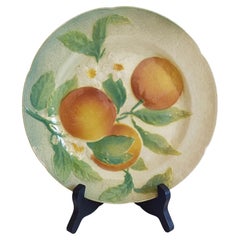
Majolica Oranges Plate by Keller & Guerin Saint Clement, France 1900s

Majolica Oranges Plate by Keller & Guerin Saint Clement, France 1900s

By Saint-Clément

Located in Valencia, VC

Majolica plate by Keller et Guerin Saint-Clément featuring the oranges decor. Hand produced in France circa the 1900s. In beautiful condition. Very pretty. We specialized in 20th...

Category

Early 1900s French French Provincial Antique Earthenware Ceramics

Materials

Ceramic, Earthenware, Majolica, Porcelain

Ancient Maiolica Tiles, Ambrogette, Rampini Manufactory, Pavia, 1693-1704

Ancient Maiolica Tiles, Ambrogette, Rampini Manufactory, Pavia, 1693-1704

By Siro Antonio Africa

Located in Milano, IT

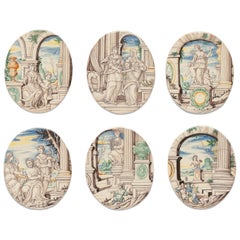
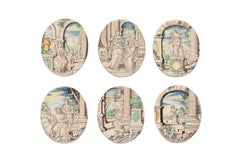
Six maiolica “ambrogette” (tiles) Rampini manufactory, painter probably Siro Antonio Africa Pavia, 1693-1704 a) 6.88 x 5.51 in (17.5 x 14 cm); 0.55 lb (252 g) b) 7.08 x 5.70 in (18 x 14.5 cm); 0.51 lb (233 g) c) 6.88 x 5.70 in (17.5 x 14.5 cm); 0.54 lb (245 g) d) 6.81 x 5.51 in (17.3 x 14 cm); 0.50 lb (230 g) e) 6.88 x 5.51 in (17.5 x 14 cm); 0.50 lb (229 g) f) 7.08 x 5.70 in (18 x 14.5 cm); 0.51 lb (233 g) State of conservation: intact. These six ”maiolica fina” small “ambrogette” belong to a family of ceramic works considered among the finest produced between the 17th and 18th centuries. For a long time, this type of maiolica was attributed to the Venetian village of Angarano, but later it was definitively attributed to the pottery factories in Pavia. A fundamental study ascribed this production specifically to Pavia through an analysis of Lombard collections and a comparison with archaeological remains found near the two main manufacturing sites in the city. (E. Pelizzoni - M. Forni - S. Nepoti, La maiolica di Pavia tra Seicento e Settecento, Milano 1997). The six small oval tiles have rounded edges and are decorated with a historiated motif. They were created using high-fired polychrome technique, with a predominance of cool tones and a dominance of gray and blue, interspersed with manganese, citrine yellow, orange-yellow, and green. The six small “ambrogette” are characterized by the same stylistic features, with a similar decorative design. The first tile (a) depicts a female figure, holding a stiletto and sitting near a pedestal supporting a relief-decorated baluster vase. Behind her, a child is holding a chalice, while through the arches of a portico, a glimpse of a mountainous landscape can be seen in the background. The female figure could possibly be Lucretia, an example of virtue in ancient Roman culture. In the second “ambrogetta” b), the Biblical episode of Judith and Holofernes is depicted through canonical iconography: the decapitated body of Holofernes lies on the bed in the background, while the protagonist, Judith, is seen placing his head into a sack held by a maidservant. Through an archway a shining slice of the moon gives the perception of nighttime. Surprisingly, within the narrative, there is the presence of a basin in the shape of a large shell, closely resembling the products of Pavia's factories. The third small plaque (c) depicts a female figure standing on a plinth and framed by an architectural arch with a vast mountainous landscape in the background. The woman, with her breasts exposed, is accompanied by two children: one approaching her as if wanting to be picked up, and the other seated with an apple in his hand. The protagonist lends herself to different interpretations: perhaps she represents Rea Silvia with the two twin founders of Rome, or perhaps she is an allegory for the Pietà, a common theme depicted on maiolica. In the fourth tile (d), three characters are depicted near a column. The main figure is an old man with a sad expression, holding a cup, while a woman, wearing a turban on her head, also holds a cup in her right hand and a pitcher in her left. A second woman with her hair bound holds another pitcher behind the old man: at his feet a traveller's bag can be seen, along with some apples and a slice of cheese on a rectangular base. It is likely the sad Biblical episode of Lot and his daughters...

Category

Early 1700s Italian Baroque Antique Earthenware Ceramics

Materials

Maiolica

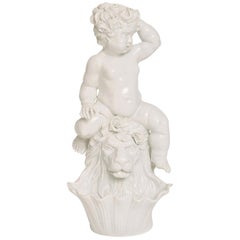
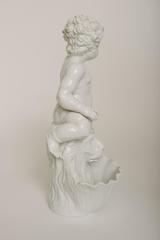
White Ceramic Putti Lion Fountain Bowl

White Ceramic Putti Lion Fountain Bowl

Located in Houston, TX

A vintage Italian Blanc De Chine fountain of a beautiful putti sitting atop a lion's bust bowl. This piece is a wonderful decorative centerpiece on its own.

Category

20th Century Italian Renaissance Revival Earthenware Ceramics

Materials

Ceramic, Earthenware

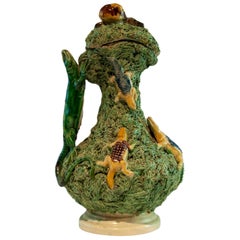
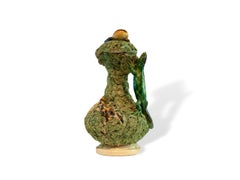
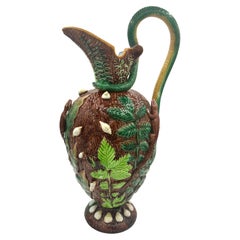
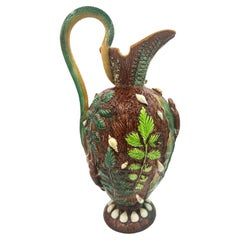
Palissy Ware Majolica Ewer, Portuguese, Manuel Mafra, Caldas da Rainha

Palissy Ware Majolica Ewer, Portuguese, Manuel Mafra, Caldas da Rainha

By Manuel Mafra 1

Located in Banner Elk, NC

Palissy Ware Majolica Ewer, Portuguese, circa 1880 by Manuel Mafra, Caldas da Rainha. For over 28 years we have been among the Nation’s preeminent specialists in Fine antique Majolica. Book Reference: Marshall P. Katz, Portuguese Palissy Ware...

Category

1880s Portuguese Victorian Antique Earthenware Ceramics

Materials

Majolica

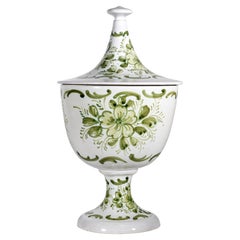
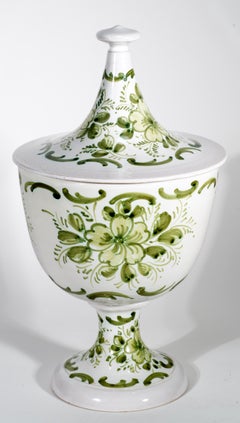
Majolica Hand-painted Footed Urn Vase with Lid, Italy 1950s-1960s

Majolica Hand-painted Footed Urn Vase with Lid, Italy 1950s-1960s

Located in Clifton Springs, NY

Vintage Majolica tall lidded footed urn vase features abstract floral and geometric decor in shades of green on white background. The vase stands on a rounded pedestal foot and is co...

Category

Mid-20th Century Italian Mid-Century Modern Earthenware Ceramics

Materials

Ceramic, Majolica, Pottery

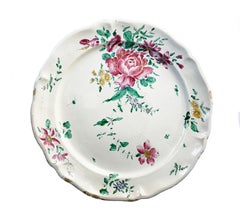
Spanish Azulejo Tile Arista y Cuenca - Toledo 16th century

Spanish Azulejo Tile Arista y Cuenca - Toledo 16th century

By Estadio of Spain

Located in DELFT, NL

Early Arista y cuenca tile made in Toledo. Tile decorated in renaissance with stylized flowers was probably made between 1550 and 1575.

Category

16th Century Spanish Renaissance Antique Earthenware Ceramics
Materials

Earthenware

Spanish Azulejo Geometric Tile Arista y Cuenca - Sevilla 16th century

Spanish Azulejo Geometric Tile Arista y Cuenca - Sevilla 16th century

By Estadio of Spain

Located in DELFT, NL

Rare early 16th century Mudejar tile of the so-called ‘Aristo’ or 'cuerda secca' technique Geometric design with a central intertwining cords. Very ornate decoration. This type of...

Category

16th Century Spanish Renaissance Antique Earthenware Ceramics
Materials

Earthenware, Maiolica

Large 18-19th Century Spanish Glazed Earthenware Bowl

Large 18-19th Century Spanish Glazed Earthenware Bowl

Located in Buisson, FR

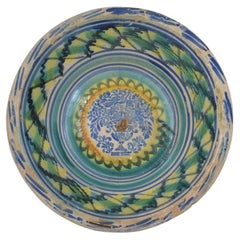
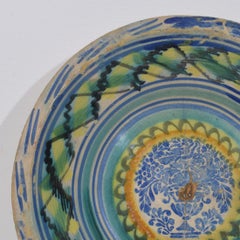
Very rare and beautiful Spanish earthenware bowl. Wonderful decoration with a bird sitting on a vase of flowers Sevilla, Spain, circa 1750-1850 Weathered and amazing antique repair ...

Category

18th Century Spanish Rustic Antique Earthenware Ceramics

Materials

Earthenware

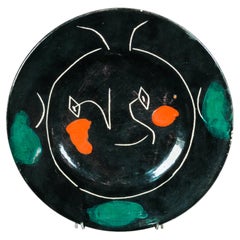
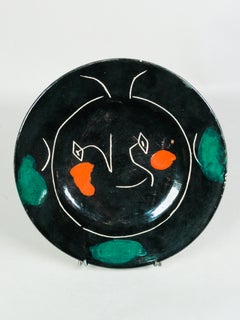
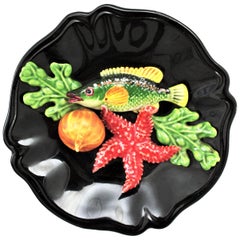
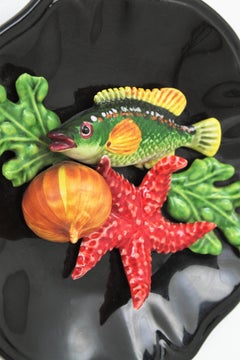
Visage Noir Black Face B Service Plate in colored and glazed white earthenware

Visage Noir Black Face B Service Plate in colored and glazed white earthenware

Located in Madrid, España

Visage Noir Black Face B Service Plate in colored and glazed white earthenware, Pablo Picasso, 1948 Edition of 100, with the Ramié monogram and Madoura Plein Feu print on the revers...

Category

1940s Vintage Earthenware Ceramics

Materials

Earthenware

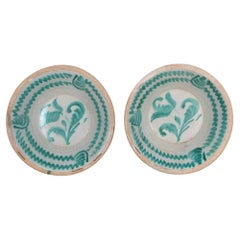
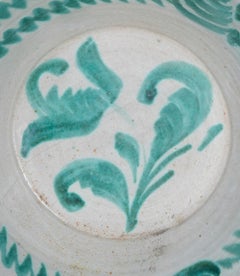
Pair of Large 19th Century Spanish Fajalauza Lebrillo Bowls

Pair of Large 19th Century Spanish Fajalauza Lebrillo Bowls

Located in Gloucestershire, GB

Superb pair of large traditional 19th Century Spanish lGranada Fajalauza Lebrillo earthenware bowls. With green and white hand painted glaze decoration. Both bowls have old metal ri...

Category

19th Century Spanish Antique Earthenware Ceramics

Materials

Earthenware

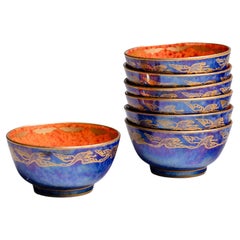
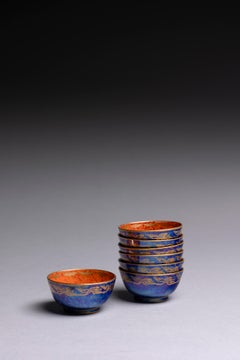
Set of 7 Miniature Wedgwood Lustre Bowls by Daisy Makeig-Jones

Set of 7 Miniature Wedgwood Lustre Bowls by Daisy Makeig-Jones

By Wedgwood Fairyland Lustre, Wedgwood, Daisy Makeig-Jones

Located in Fort Lauderdale, FL

A set of 7 miniature blue and orange lustre bowl designed by Daisy Makeig-Jones for Wedgwood ca. 1920 and decorated with the 'Hummingbirds' pattern. Daisy Makeig-Jones’s lustreware ...

Category

1920s English Art Nouveau Vintage Earthenware Ceramics

Materials

Ceramic, Luster, Porcelain

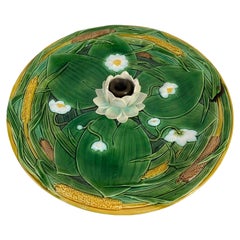
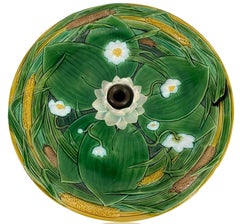
Minton Majolica Centerpiece Tray 15-in, Lotus Flower on Green Ground, Dated 1863

Minton Majolica Centerpiece Tray 15-in, Lotus Flower on Green Ground, Dated 1863

By Minton

Located in Banner Elk, NC

Minton Majolica centerpiece, naturalistically modeled as a pond bed with simulated water glazed in cyan blue, with green glazed lily pads and flowering pond lilies (lotus), and reeds glazed in various shades of green, with brown and ochre-glazed cattails molded in high relief to form the border, with a central lotus flower glazed in white and blue, concealing a solid brass original fitting for a candle, doubling as a receptacle for an (optional) additional tier which would have screwed into the fitting; the fitting is removable. Impressed marks to reverse: 'MINTON' and Minton date cypher for 1863; an impressed 'A' possibly for the designer, Thomas Allen...

Category

Mid-19th Century English Victorian Antique Earthenware Ceramics

Materials

Majolica

Contemporary Organic Modern Moroccan Handmade Terracotta Ceramic Corner Lamp

Contemporary Organic Modern Moroccan Handmade Terracotta Ceramic Corner Lamp

Located in Marseille, FR

- Handbuilt terracotta ceramic corner wall light - made of clay collected from the potter's surroundings. - made in the Moroccan Rif mountains by the potter Houda. - co-created by th...

Category

2010s Moroccan Organic Modern Earthenware Ceramics

Materials

Clay, Earthenware

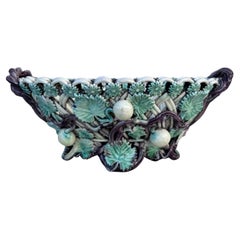
19th Century Majolica Palissy Wicker Boat with a Fish

19th Century Majolica Palissy Wicker Boat with a Fish

By Thomas Victor Sergent

Located in Austin, TX

Small 19th century Majolica Palissy wicker boat with a fish, very fine quality, the boat is decorated with leaves and moss.

Category

1880s French Victorian Antique Earthenware Ceramics

Materials

Ceramic, Majolica

Square Majolica Leaves Handled Comport Choisy le Roi, circa 1890

Square Majolica Leaves Handled Comport Choisy le Roi, circa 1890

By Choisy-le-Roi

Located in Austin, TX

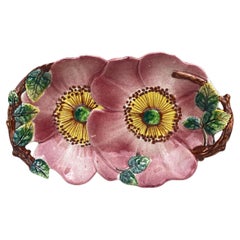
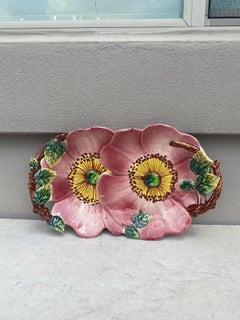
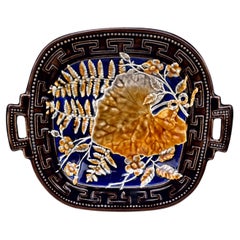
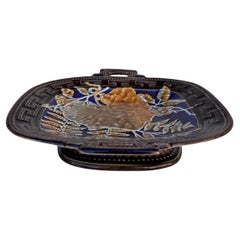
French oval Majolica cake stand or comport with leaves, ferns, and pink flowers, circa 1880-1890, signed Choisy le Roi. 9.8 by 8.2 inches. H / 2 inches.

Category

1890s French Victorian Antique Earthenware Ceramics

Materials

Ceramic, Faience

Early 20th Century French Hand-Painted Faience Terrine from Rouen

Early 20th Century French Hand-Painted Faience Terrine from Rouen

By Rouen

Located in Verviers, BE

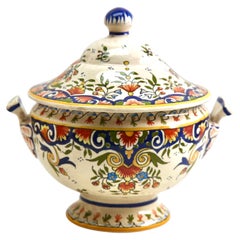
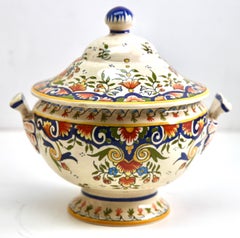
The designs on this French faience group is typical of pottery made in Rouen. Early 20th century French hand-painted Faience Terrine from Rouen. Marking on the bottom: "Rouen Fait...

Category

Early 20th Century French Earthenware Ceramics

Materials

Faience

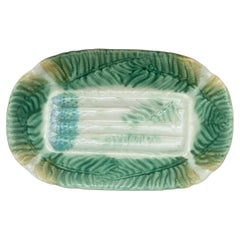
Majolica Asparagus Platter Salins with Ferns, circa 1880

Majolica Asparagus Platter Salins with Ferns, circa 1880

By Salins

Located in Austin, TX

French Majolica asparagus platter Salins, circa 1880. Decorated with ferns.

Category

1880s French Country Antique Earthenware Ceramics

Materials

Ceramic, Faience

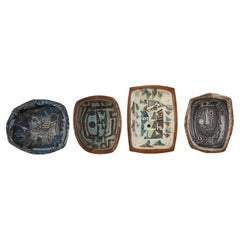
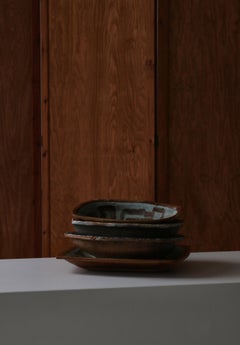
Danish Modern Group of Glazed Ceramics Bowls by Jeppe Hagedorn-Olsen, 1960s

Danish Modern Group of Glazed Ceramics Bowls by Jeppe Hagedorn-Olsen, 1960s

By Jeppe Hagedorn-Olsen

Located in Odense, DK

Wonderful set of 4 unique pictured earthenware bowls made by Danish artist Jeppe Hagedorn-Olsen in his own studio in the 1960s. These rare pieces have a rectangular shape and are dat...

Category

1960s Danish Scandinavian Modern Vintage Earthenware Ceramics

Materials

Earthenware

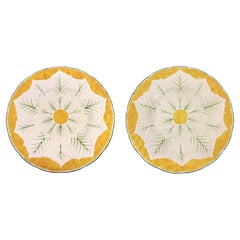
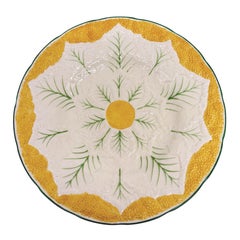
Pair of Wedgwood Majolica Cauliflower Pattern Plates, English 1920.

Pair of Wedgwood Majolica Cauliflower Pattern Plates, English 1920.

By Wedgwood

Located in Banner Elk, NC

Pair of stunning Majolica plates by Wedgwood in cauliflower patterned texture on outer rim. Stamped on back with "Wedgwood", "Made in England" and pattern number "5697". In great con...

Category

1920s English Vintage Earthenware Ceramics

Materials

Majolica

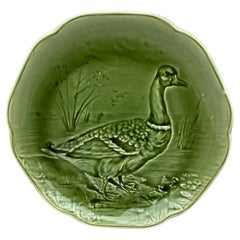
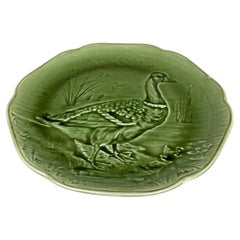
19th Century Green Majolica Mallard Duck Plate Choisy Le Roi

19th Century Green Majolica Mallard Duck Plate Choisy Le Roi

By Choisy-le-Roi

Located in Austin, TX

19th Century Green Majolica Mallard Duck Plate Hippolyte Boulenger Choisy le Roi, circa 1890. The manufacture of Choisy le Roi was one of the most important manufacture at the end of...

Category

1890s French Country Antique Earthenware Ceramics

Materials

Majolica, Ceramic

Mid 20th Century Italy Faenza Production Ceramic Vase, Signed

Mid 20th Century Italy Faenza Production Ceramic Vase, Signed

By Ceramiche Artistiche Faenza

Located in Casale Monferrato, IT

We present this stunning large vase, made in Faenza, Italy, dating back to the 1950s. The vase is crafted from polychrome glazed ceramic. The eye-catching, classically painted decora...

Category

Mid-20th Century Italian Earthenware Ceramics

Materials

Maiolica

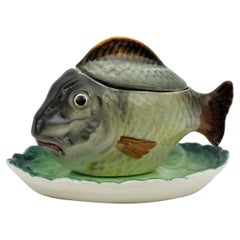
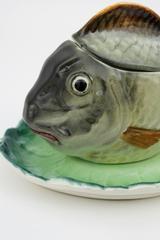
Fish Shaped Ceramic Sauce Tureen by Hispania CH Lladró

Fish Shaped Ceramic Sauce Tureen by Hispania CH Lladró

By Lladro, Hispania CH

Located in Barcelona, ES

A lovely and colorful Manises ceramic sauce boat with a fish figure on a plant leaf saucer manufactured by Hispania CH-Lladró. This piece is in great condition and it is full of expr...

Category

1960s Spanish Mid-Century Modern Vintage Earthenware Ceramics

Materials

Majolica, Ceramic

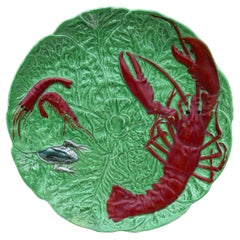
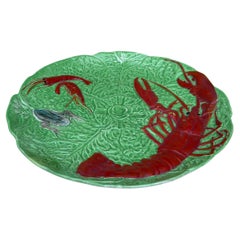
French Majolica Lobster Platter Choisy Le Roi Circa 1930

French Majolica Lobster Platter Choisy Le Roi Circa 1930

By Choisy-le-Roi

Located in Austin, TX

French Majolica Lobster ,Shrimp and frog Platter HB Choisy Le Roi Circa 1930. The manufacture of Choisy le Roi was one of the most important manufacture at the end of 19th century, t...

Category

1930s French Country Vintage Earthenware Ceramics

Materials

Ceramic, Majolica

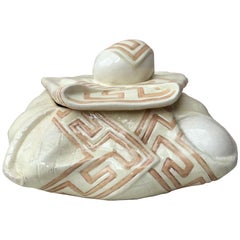
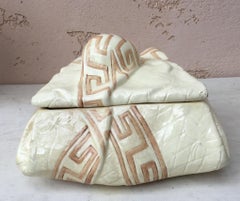
Majolica Trompe L'oeil Napkin Egg Basket Box Sarreguemines

Majolica Trompe L'oeil Napkin Egg Basket Box Sarreguemines

By Sarreguemines

Located in Austin, TX

19th Century Majolica napkin Trompe l'oeil box or basket/tureen with an egg on the handle signed Sarreguemines.      

Category

1890s French Country Antique Earthenware Ceramics

Materials

Ceramic, Faience

Pair of Majolica Kingfisher and Lilies Vases Fives Lille, circa 1880

Pair of Majolica Kingfisher and Lilies Vases Fives Lille, circa 1880

By Fives-Lille

Located in Austin, TX

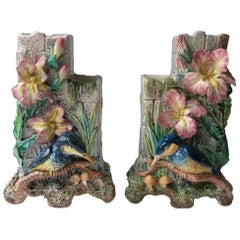
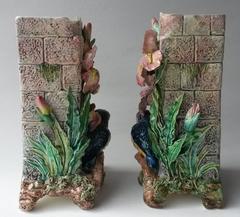
Elegant 19th century French Majolica pair of vases attributed to Fives Lille. The vases are shaped like walls decorated on the front with kingfishers on branches, on the base mushro...

Category

1880s French Aesthetic Movement Antique Earthenware Ceramics

Materials

Faience, Ceramic, Majolica

Majolica Bull Pitcher Country Style Italy White and Blue Retro Signed

Majolica Bull Pitcher Country Style Italy White and Blue Retro Signed

Located in Clifton Springs, NY

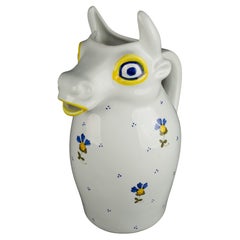
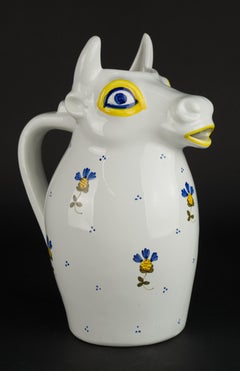
Unusual and playful majolica pitcher has its top part shaped in form of a bull's head with bull's mouth forming the spout. It is decorated with hand painted traditional Italian flow...

Category

Late 20th Century Italian Country Earthenware Ceramics

Materials

Ceramic, Majolica, Pottery

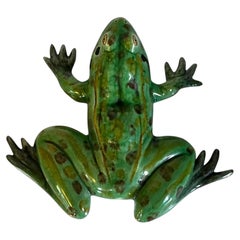
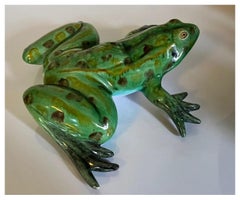
French Tin Glaze Faience Pottery Model of a Bull Frog

French Tin Glaze Faience Pottery Model of a Bull Frog

Located in Litchfield, CT

Antique early 20th century whimsical French tin glaze faience model of a bull frog. Naturalistically molded and hand painted. Measures 9 1/8" x 7 5/8" x 3" tall. Good condition. Make...

Category

Early 19th Century French Belle Époque Antique Earthenware Ceramics
Materials

Faience

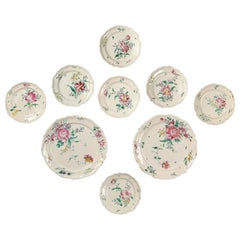
Antique Maiolica Dish Set, Lombard Manufacture, Floral Decor, 1770

Antique Maiolica Dish Set, Lombard Manufacture, Floral Decor, 1770

Located in Milano, IT

Assortment of dishes Lombard manufacture 1770 – 1780 Circa Maiolica polychrome decorated “a piccolo fuoco” (third fire). Two large dishes: diameter 14.76 in (37.5 cm); weight 4.5...

Category

1770s Italian Rococo Antique Earthenware Ceramics
Materials
Maiolica