Gesso Furniture

to
131
736
423
1,064
121
21
99
77
63
55
51
48
45
38
37
33
31
19
12
10
8
7
1
1
199
488
377
142
123
129
55
25
2
25
10
21
29
15
10
16
10
2,106
361,038
298,678
228,310
151,305
850
306
248
169
158
1,206
1,185
1,187
10
9
9
6
4
Material: Gesso
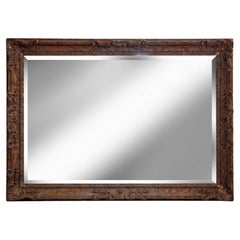
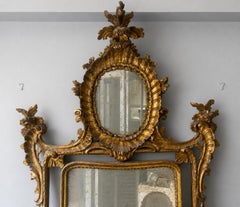
Ornate Gothic Style Gilded Mirror with Cherub and Masks
Located in Hopewell, NJ
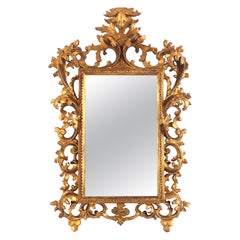
Dramatic Gothic style aged mirror having central cherub at the top, ornate frame and two mask like faces on each side. Mirror has natural spiderwebs and mercury with fabulous moody ...
Category

1930s American Gothic Vintage Gesso Furniture

Materials

Gesso, Wood

Antique French Gothic Revival Church Tabernacle Cabinet Cathedral Altar Shrine
Located in Forney, TX
A magnificent French Gothic parcel gilt paint decorated church tabernacle. circa 1810 France, early 19th century, executed in period Gothic Revival ...
Category

Early 19th Century French Gothic Revival Antique Gesso Furniture

Materials

Gold Leaf

Pair Antique Bronze Patinated Putti Angel Sconces
Located in New York, NY
Pair antique bronze patinated angel putti sconces. Italian late 17th century bronze putti with exceptional modeling seated on scrolled arms each ex...
Category

17th Century Italian Baroque Antique Gesso Furniture

Materials

Bronze

Early 18th Century Flemish Painting - Oil on Copper - The Immaculate Conception
Located in Casteren, Noord-Brabant
A fine 17th century Flemish oil painting on copper depicting the Virgin Mary in a radiant vision of the Immaculate Conception, surrounded by a lavish garland of flowers including tul...
Category

Early 18th Century Belgian Baroque Antique Gesso Furniture

Materials

Copper

Italian Garibaldi Mirror, 19th Century
Located in London, GB
19th Century Italian Garibaldi mirror Charming 19th century Italian Garibaldi mirror with etched and punched acanthus leaf decoration at each corne...
Category

19th Century Italian Antique Gesso Furniture

Materials

Gesso, Giltwood

Regency Giltwood Circular Convex Mirror
Located in Bedfordshire, GB
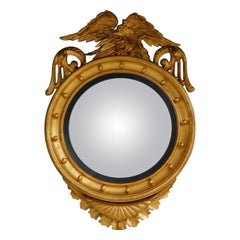
A Charming Regency Period Circular Giltwood And Gesso Convex Mirror Of Good Bold Proportions, Having Superbly Carved Eagle Surmounted To Frame, With Original Gilded Surface And Appli...
Category

Early 19th Century English Regency Antique Gesso Furniture

Materials

Gesso, Giltwood

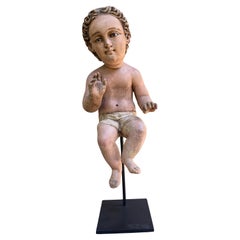
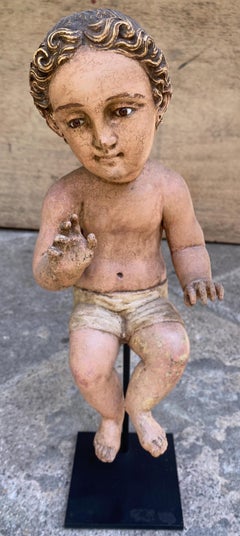
Antique Guatemalan Nino
Located in Los Angeles, CA
Polychrome Santo Niño Figure 19th century, Guatemala. Carved and polychromed wood figure of the Christ Child, depicted with delicate features and a naturali...
Category

19th Century Antique Gesso Furniture

Materials

Gesso, Glass, Paint

Victorian Rectangle Mirror with Flowers on Grid
Located in Malibu, CA
Pretty little framed mirror with new backing & wire. Aesthetic movement frame with a geometric background with overlaid pattern of flower blossom and leaves hand painted in 2 ton...
Category

19th Century Victorian Antique Gesso Furniture

Materials

Gesso, Mirror, Pine

antique 19th century French Alsace Louis Philippe gold gilt mirror with crest
Located in Casteren, NL
This stunning antique French mirror, crafted around 1850 in the Alsace region, is a remarkable example of the Louis Philippe style. The mirror is richly decorated and showcases exqui...
Category

Mid-19th Century French Louis Philippe Antique Gesso Furniture

Materials

Gold Leaf, Silver Leaf

Pair of English Gothic Architectural Giltwood Mirrors ~9 feet tall
Located in Hanover, MA
Truly extraordinary pair of English 19th century Gothic Revival architectural mirrors, nearly 9 feet tall. In the manner of Augustus Welby Northmore Pugin (aka God's Architect). I bought these for myself to use in my London flat...
Category

19th Century British Gothic Revival Antique Gesso Furniture

Materials

Gesso, Wood, Mirror

Fine Antique 19th Century French Rococo Gilded 8 Day Clock Sevres Porcelain 1830
Located in Portland, OR
A fine antique French eight day mantle clock, gilded and fitted with Sevres porcelain plaques, circa 1830. An early French silk suspension clock, with an eight day time and strike movement, gently sounding the hours and half hour on a bell. The clock is housed in an extravagant gilded gesso Rococo style case and standing on an integral plinth. The clock with a silvered dial having a cuff of engine turned decoration around the center and black Roman numerals to the outside of the dial and the retailer's name "Carl Muller in Berlin" to the center. The base of the clock is fitted with a round hand-painted floral 'Sevres' porcelain plaque, the clock plinth is fitted with a rectangular 'Sevres' plaque, hand-painted with a pastoral scene with a young courting couple and grazing sheep & goats. The clock has just been professionally overhauled and cleaned, it runs and keeps good time, the gilded case and silvered dial and porcelain plaques are in remarkable condition, a very fine clock...
Category

1830s French Rococo Antique Gesso Furniture

Materials

Gold Leaf

Antique French Baroque Style Wall Bracket, a Pair
Located in Plainview, NY
A pair of French Baroque style hand carved gesso and wood floral scroll design wall brackets featuring a scalloped gild painted shelving. This elegant...
Category

Early 20th Century French Baroque Gesso Furniture

Materials

Wood, Paint, Gesso

Antique 19th Century French Gilt Wall Mirror
Located in Stamford, CT
A wonderful late 19th century antique French gilt wall mirror. This mirror has a very elaborate gesso frame that is simple amazing. Overall in good condition but does need some repai...
Category

Late 19th Century French Antique Gesso Furniture

Materials

Gesso, Mirror, Wood

Italian antique mechanical tellurium in brass and cast iron, mid 1800s
Located in MIlano, IT
Italian antique mechanical tellurium in brass and cast iron, mid 1800s Mechanical tellurium made of brass and cast iron. This scientific instrument ...
Category

Mid-19th Century Italian Antique Gesso Furniture

Materials

Brass

Late 19th Century Fruit Still Life Oil Painting by Van Arendonk
Located in Casteren, Noord-Brabant
An antique still life oil painting with fruit, pear, apple, grapes and peeled mandarin. In the background a wine bottle. The painting is signe...
Category

Late 19th Century Belgian Belle Époque Antique Gesso Furniture

Materials

Gesso, Canvas, Pine

Whimsical French 19th-20th Century Belle Époque Gilt-Wood Triptych Putti Mirrors
Located in Los Angeles, CA
A Charming Whimsical French 19th-20th Century 'Belle Époque' Gilt-Wood and Gesso Carved Triptych Figural Pier Mirrors. The scrolled Rococo floral, acan...
Category

Early 1900s French Belle Époque Antique Gesso Furniture

Materials

Gesso, Giltwood, Mirror

Ochre Yellow Mixed Media on Board c1970 Signed by Latvian Australian Artist
Located in Melbourne, AU
An intriguing landscape study in textured medium and Ochre colours. Offered here is a particularly good example of Brutalist decorative art from the 1970s. In addition, the work is f...
Category

1970s Australian Brutalist Vintage Gesso Furniture

Materials

Gesso, Acrylic, Cedar, Masonite

French Gilt Carved Wood & Gesso Foliage Cartouche Wall Mirror, Circa 1800
Located in Charleston, SC
French gilt carved wood and gesso foliage cartouche wall mirror with an egg and dart exterior border, flanking acanthus carved corners, and interior bead work. Early 19th century. Mi...
Category

Early 1800s French Louis XVI Antique Gesso Furniture

Materials

Giltwood, Mirror, Gesso

Pair French Griffin Lion Architectural Giltwood Boiserie Panels
Located in Palm Springs, CA
Spectacular pair of Griffin (lion) motif French architectural 23k giltwood Boiserie relief mirrored panels. Each panel is expertly detailed with carved griffins flanking a floral urn...
Category

1850s French Antique Gesso Furniture

Materials

Gesso, Mirror, Giltwood

1940s Spanish Baroque Giltwood Sunburst Mirror with Convex Glass
Located in Barcelona, ES
Convex Sunburst Mirror, Giltwood, Gold Leaf ___________________________________________________________ Mini sized carved giltwood convex sunburst mirror, Spain, 1940s This lovely p...
Category

Mid-20th Century Spanish Baroque Gesso Furniture

Materials

Gold Leaf

Antique French Neoclassical Gold Figural Gesso Large 76x54 Trumeau Floor Mirror
Located in Philadelphia, PA
Antique French Neoclassical Gold Figural Gesso Large 76x54 Trumeau Floor Mirror. Item features a large impressive size, gold gilt gesso figural details, maiden faces, urns and wreath...
Category

Early 20th Century Unknown Renaissance Gesso Furniture

Materials

Gesso, Glass

Large Antique Carved, Gessoed And Heavily Gilt Baroque Mirror
Located in Bridgeport, CT
The large mirror with a wide openwork leafy scrolled surround. The pediment shaped crest with a leaf with scrolled top and bell flower applique over an open palmette. Matching palmet...
Category

Late 19th Century Baroque Antique Gesso Furniture

Materials

Gesso, Mirror, Wood

French Empire Revival 19th Century Giltwood Carved Figural Console and Mirror
Located in Los Angeles, CA
A fine French Empire Revival 19th century giltwood and Gesso carved figural console table with matching mirror. The "D" shaped top console raised by a pair of seated winged sphinxes ...
Category

Late 19th Century French Empire Revival Antique Gesso Furniture

Materials

Marble

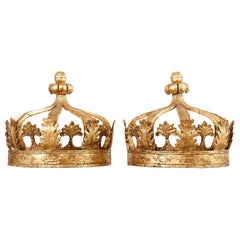
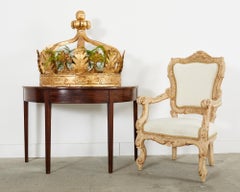
19th Century Pair of Italian Baroque Style Giltwood Bed Coronas
Located in Rio Vista, CA
Dramatic pair of large 19th century Italian bed coronas or crowns made in the Baroque taste. The coronas feature demi-lune shaped frames embe...
Category

19th Century Italian Baroque Antique Gesso Furniture

Materials

Gold Leaf

Large Oil on Canvas "Beggar Boys Playing Dice" After Bartolomé Esteban Murrillo
Located in Los Angeles, CA
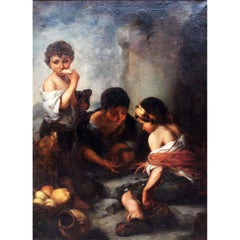
A fine and large 19th century oil on canvas after Bartolomé Esteban Murrillo's (Spanish, 1617-1682) "Beggar Boys Playing Dice" (The original work by Murillo was painted in 1675). The impressive artwork depicts two young boys playing dice while another eats a piece of fruit as his dog watches on., within an ornate gildwood and gesso frame bearing a label from the faming company Bigelow & Jordan. The original work by Murillo is currently at the Alte Pinakothek Museum in Munich, Germany. The present work is signed: L. Rüber. Circa: Munich, Late 19th Century. Bartolomé Esteban Murillo (born late December 1617, baptized January 1, 1618 – April 3, 1682) was a Spanish Baroque painter. Although he is best known for his religious works, Murillo also produced a considerable number of paintings of contemporary women and children. These lively, realist portraits of flower girls, street urchins, and beggars constitute an extensive and appealing record of the everyday life of his times. Murillo was born to Gaspar Esteban and María Pérez Murillo. He may have been born in Seville or in Pilas, a smaller Andalusian town. It is clear that he was baptized in Seville in 1618, the youngest son in a family of fourteen. His father was a barber and surgeon. His parents died when Murillo was still very young, and the artist was largely brought up by his aunt and uncle. Murillo began his art studies under Juan del Castillo in Seville. There he became familiar with Flemish painting and the "Treatise on Sacred Images" of Molanus (Ian van der Meulen or Molano). The great commercial importance of Seville at the time ensured that he was subject to influences from other regions. His first works were influenced by Zurbarán, Jusepe de Ribera and Alonzo Cano, and he shared their strongly realist approach. As his painting developed, his more important works evolved towards the polished style that suited the bourgeois and aristocratic tastes of the time, demonstrated especially in his Roman Catholic religious works. In 1642, at the age of 26, he moved to Madrid, where he most likely became familiar with the work of Velázquez, and would have seen the work of Venetian and Flemish masters in the royal collections; the rich colors and softly modeled forms of his subsequent work suggest these influences. In 1645 he returned to Seville and married Beatriz Cabrera y Villalobos, with whom he eventually had eleven children. In that year, he painted eleven canvases for the convent of St. Francisco el Grande in Seville. These works depicting the miracles of Franciscan saints vary between the Zurbaránesque tenebrism of the Ecstasy of St Francis and a softly luminous style (as in Death of St Clare...
Category

Late 19th Century German Baroque Antique Gesso Furniture

Materials

Gesso, Canvas, Wood
Gustavian Style Painted Console-Pair Available if Needed
Located in Los Angeles, CA
This painted console table exudes rustic elegance with its distressed finish and classical lines. The wood surface shows layers of worn white paint, exposing hints of the natural woo...
Category

20th Century Neoclassical Gesso Furniture

Materials

Gesso, Wood, Paint

French Empire Style 19th Century Napoleon III Giltwood Mirror with Sphinxes
Located in Los Angeles, CA
A very fine French Empire style 19th century Napoleon III giltwood and gesso carved figural mirror frame, flanked by a pair of sitting winged sphinxes, with carved scrolls, garlands ...
Category

19th Century French Empire Revival Antique Gesso Furniture

Materials

Gesso, Mirror, Wood

Antique Large French Giltwood Wall Mirror 18th Century
Located in London, GB
This is a large impressive antique French Louis XIV carved giltwood and gesso wall mirror, Circa 1760 in date. The frame is surmounted with an elaborate carved and pierced giltwood ...
Category

Late 18th Century French Louis XIV Antique Gesso Furniture

Materials

Giltwood, Gesso

Tall French 19th-20th Century Giltwood and Gesso Carved Grand-Hall Cherub Mirror
Located in Los Angeles, CA
A tall and impressive French 19th-20th century Belle Époque giltwood and gesso carved grand hall figural mirror. The imposing slender frame crowned with an allegorical group centered...
Category

Early 1900s French Belle Époque Antique Gesso Furniture

Materials

Gesso, Wood, Giltwood

Sunburst Giltwood Oval Mirror by Francisco Hurtado, 1950s
Located in Barcelona, ES
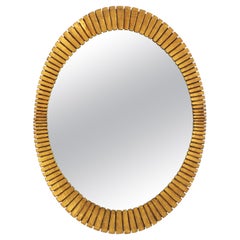
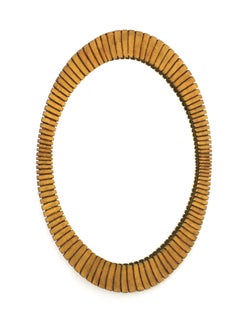
Giltwood Scalloped Wall Mirror / Sunburst Mirror Outstanding Hollywood Regency style scalloped giltwood mirror finely carved and gold leaf gilded. Manufactured by Francisco Hurtado,Spain, 1950s. One of a kind finely carved oval large mirror with an exquisite hand carved scalloped motif frame. This mirror was handcrafted at the Mid-Century Modern period in the Hollywood Regency style. The oval frame is comprised by an scalloped parting starting at the top and decreasing in Size to the bottom.It has been carefully restored to preserve its original patina in gold leaf finishing. Labeled with the Francisco Hurtado's workshop label at the back. This wall mirror will be a gorgeous addition to a powder room, entry hall or bedroom. It will add a Hollywood Regency glamourous taste wherever you place it. Overall measures: 84 cm H x 77 cm W x 6 cm D // 33,07 in H x 30,31 in W x 2,36 in D Glass diameter: 64 cm // 25,19 in diameter Oval Carved Mirror // Giltwood Carved Mirror // Giltwood Wall Mirror // Giltwood Console Mirror // Francisco Hurtado Mirror.
Category

Mid-20th Century Spanish Mid-Century Modern Gesso Furniture

Materials

Gold Leaf

18th Century Northern Italy Polychrome Lacca Povera Wood Antique Table Cabinet
Located in Forney, TX
A scarce antique Italian hand painted lacca povera tabletop cabinet. circa 1775 Northern Italy, 18th century, likely used in a wealthy merchant or noble's country villa as a vargueñ...
Category

18th Century Italian Baroque Antique Gesso Furniture

Materials

Gesso, Wood, Pine, Paint

Chinese Carved Wood Bodhisattva Guanyin, Late Ming Dynasty, 17th Century
Located in Austin, TX
An attractive carved wood figure of the Bodhisattva Avalokiteshvara, known as Guanyin in China, late Ming Dynasty, early 17th century, China. Guanyi...
Category

Early 17th Century Chinese Ming Antique Gesso Furniture

Materials

Gesso, Wood

Louis Philippe Rectangular Wall Mirror in Giltwood with Ribbed Carving Frame
Located in Barcelona, ES
Amazing Louis Philippe period mirror with a finely ribbed carving frame and gold leaf finish. France circa 1860. Elegant, strong and soung, this mirror has a gorgeous original aged ...
Category

19th Century French Louis Philippe Antique Gesso Furniture

Materials

Gold Leaf

American Federal Gilt Wood Convex Mirror with Perched Eagle to Flee, Circa 1820
Located in Charleston, SC
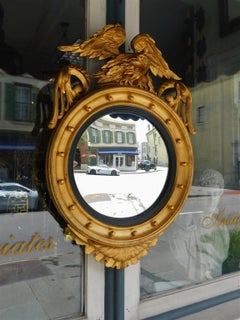
American Federal gilt carved wood and gesso convex mirror with perched eagle to flee, flanking acanthus scrolled foliage, interior circular spheres, ebonized reeded ring, and termina...
Category

1820s American Federal Antique Gesso Furniture

Materials

Gesso, Mirror, Wood, Giltwood, Ebony

American Gilt Carved Wood and Gesso Perched Eagle, Circa 1830
Located in Charleston, SC
American gilt carved wood and gesso Eagle with extended wings perched on decorative acanthus floral motif, Early 19th century.  
Category

1830s American American Empire Antique Gesso Furniture

Materials

Gold Leaf

Pair of Pagoda Pier Mirrors
Located in Sturminster Marshall, Dorset
A design attributed to John Linnell. Each arched divided plate within shaped outer slips entwined with foliate branches and leaf scrolls. Each mirror is s...
Category

21st Century and Contemporary English Georgian Gesso Furniture

Materials

Gesso, Wood, Paint

French Louis Phillipe Gilt Wood and Gesso Floral Etched Wall Mirror, Circa 1820
Located in Charleston, SC
French Louis Phillipe gilt carved wood and gesso wall mirror with flanking rounded corners, floral etching, and interior single row of beading. Mirror retains the original silvered g...
Category

1820s French Louis Philippe Antique Gesso Furniture

Materials

Gesso, Mirror, Giltwood

English Chippendale Painted & Gilt Stenciling Marriage Bed with Orig. Silk, 1770
Located in Charleston, SC
English Chippendale hand painted and gilded marriage bed with original silk and bell flower coverings, central gilt carved shell cornice, flanking gilt ca...
Category

1770s English Chippendale Antique Gesso Furniture

Materials

Gesso, Silk, Wood, Giltwood, Paint

Roman Relief Plaque, owned by legendary Iris Apfel
Located in Scottsdale, AZ
Neoclassical Roman plaque depicting a man of honor, possibly a Senator, 19th/20th century, wood, gesso, and terracotta paint with giltwood elements, mark...
Category

20th Century Neoclassical Gesso Furniture

Materials

Gesso, Wood

Louis Philippe French Gilded Mirror 55" x 30"
Located in Winter Park, FL
A Louis Philippe French gilded mirror with curved top corners, ribbed pattern and flowers in the corners. Tall elongated proportions. Bright gilt finish is in good condition with min...
Category

Early 20th Century French Louis Philippe Gesso Furniture

Materials

Gesso, Giltwood

American Oil on Canvas Ship Captain with Spyglass in Orig, Gilt Frame, C. 1840
Located in Charleston, SC
American portrait oil on canvas of a young ship captain holding a spyglass with a sailing ship, crew in rowboat, and gulls in lower background mounted in the original decorative gilt...
Category

1840s American American Empire Antique Gesso Furniture

Materials

Gesso, Canvas, Wood, Giltwood, Paint

White Kidney Shaped Desk, Gesso, Antique Mirror Top
Located in Miami, FL
White kidney shaped desk with Gesso finish. The top is antiqued mirror glass. Ready for a new home.
Category

Early 2000s American Modern Gesso Furniture

Materials

Gesso, Mirror, Wood

Pair of Louis XV Style Paint-Decorated Lingerie Chests - Iris Apfel Collection
Located in Morristown, NJ
Pair of Louis XV Style Paint-Decorated Lingerie Chests, First Half of the 20th Century. Each tall, narrow chest features a serpentine faux-painted marble top above five drawers, hand...
Category

1940s Italian Louis XV Vintage Gesso Furniture

Materials

Metal

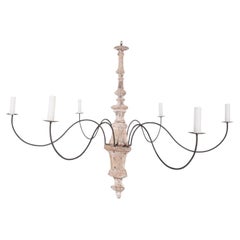
Vintage Boho Italian Gesso Over Wood Lantern
Located in West Palm Beach, FL
This imposing vintage hanging lantern pendant is an exemplary piece of traditional Italian design, offering striking architectural presence and aged elegance. Crafted from hand-carve...
Category

Late 19th Century Italian Baroque Antique Gesso Furniture

Materials

Metal

Pair of Gilt Rococo Style Oval Italian Mirrors from The Carlyle Hotel NYC
Located in Atlanta, GA
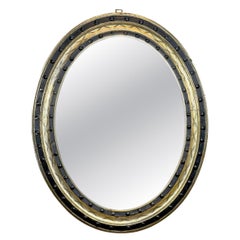
Pair of Gilt Rococo Style Oval Italian Mirrors, Italian, circa 1940s. They have been recently removed from The Carlyle Hotel in NYC. They are priced at $1800 each or $3300 for the pa...
Category

1950s Italian Hollywood Regency Vintage Gesso Furniture

Materials

Gesso, Mirror, Wood

Hollywood Regency Style Sculptural Carved Wood Swan Console Table Base
Located in Miami, FL
Hollywood Regency style Sculptural Carved Wood Mirror Image Swan Console Table Base. This Console was made in the 1980 and comes from Italy. Restored in Gesso Finish and would look g...
Category

1980s Italian Hollywood Regency Vintage Gesso Furniture

Materials

Gesso, Wood

Antique 19th Century French Grain Painted Mahogany Louis Philippe Mirror
Located in Casteren, NL
This beautiful Louis Philippe mirror was made in Northern France in the late 1800s. The mirror has a solid pine frame that was smoothened with gesso. The mirror frame is painted to ...
Category

Late 19th Century French Louis Philippe Antique Gesso Furniture

Materials

Gesso, Pine, Paint

Giltwood Federal Eagle Bullseye Mirror with Convex Glass, Mid-Century
Located in Portsmouth, VA
A substantial American Colonial Revival Federal eagle “bullseye” mirror in gilt wood, dating to the mid-20th century. The shaped crest depicts an American eagle above scrolling acant...
Category

Mid-20th Century American Gesso Furniture

Materials

Gesso, Giltwood

Antique English Barbola Dressing Table Mirror, circa 1920
Located in Pearland, TX
A fine antique English barbola dressing table or vanity oval mirror with easel, circa 1920. This beautiful mirror has beveled glass and is crowned with a gesso floral swag. It would ...
Category

1920s English Vintage Gesso Furniture

Materials

Gesso, Mirror

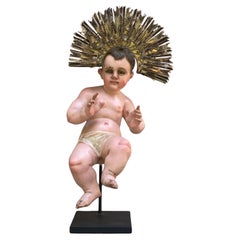
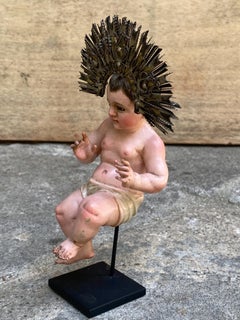
Spanish Colonial Polychrome Nino
Located in Los Angeles, CA
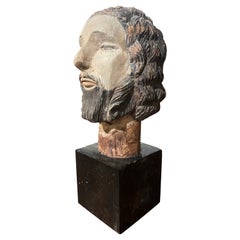
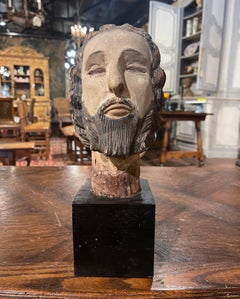
El Niño Jesús (Baby Jesus) Guatemala, Spanish Colonial Period (17th–18th century) Wood, gesso, polychrome, and glass eyes This expressive sculpture of the Christ Child was crafted i...
Category

19th Century Guatemalan Spanish Colonial Antique Gesso Furniture

Materials

Gesso, Glass, Wood
Stunning Swedish Gustavian Provincial Mirror ca 1770-1810
Located in Farsta, SE
tunning Swedish Gustavian Provincial Mirror ca 1770-1810 The gold has almost completely worn away after centuries of dusting and cleaning, revealing its true age and character. Fea...
Category

Late 18th Century Swedish Scandinavian Modern Antique Gesso Furniture

Materials

Gesso, Pine

Spanish Rococo Giltwood Mirror with Foliage Carving Frame
Located in Barcelona, ES
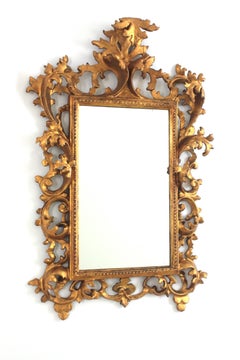
Rococo Finely Carved Giltwood Mirror with Crest, Spain, 1930s Outstanding wall mirror with richly carved frame and gilt patina. This fine rococo mirror has a foliage design showing d...
Category

Early 20th Century Spanish Rococo Revival Gesso Furniture

Materials

Gesso, Mirror, Wood
Bay Bridge, San Francisco a Large Printed Glass Illuminated Back Lit Picture
Located in London, GB
Bay Bridge, San Francisco. An unusual original back lit picture printed on glass that has an electric light in a specially made Victorian style frame...
Category

1980s American Vintage Gesso Furniture

Materials

Gesso, Glass

Antica specchiera francese dorata a foglia d'oro epoca Napoleone Terzo, 1870
Located in Traversetolo, IT
Antica specchiera francese epoca Napoleone Terzo dorata a foglia d'oro. Molto elegante il disegno della cornice che si ispira al periodo Luigi XVI, e splendida la cimasa intagliata n...
Category

1870s French Napoleon III Antique Gesso Furniture

Materials

Gold Leaf

Large French Rectangular Gilt Wall or Dressing Room Mirror (H 59 3/8 x W 32 1/4)
Located in Austin, TX
A fine large French rectangular hall or over-mantel mirror from the 19th century, featuring a moulded surround with a beautiful patinated gold-leaf - perfect for use as a free standi...
Category

19th Century French Antique Gesso Furniture

Materials

Gesso, Glass, Mirror, Wood, Giltwood
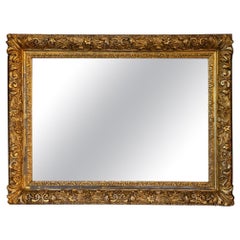
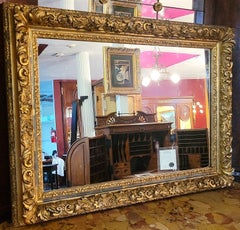
Incredible Horizontal Ornate French Style Fancy Mantel Mirror
Located in Hopewell, NJ
Impressive large horizontal mantel mirror having gesso gold leaf fancy French style.
Category

Early 2000s French Louis XVI Gesso Furniture

Materials

Gesso, Mirror

1830s Louis Philippe Wall Giltwood Mirror
Located in LA CIOTAT, FR
This elegant Louis-Philippe period mirror dates to the 19th century and is a fine example of French craftsmanship from the period. The frame features the classic rounded top typical ...
Category

1830s French Antique Gesso Furniture

Materials

Mirror, Giltwood, Gesso

Very Large Antique Overmantel Mirror, Classical, circa 1850
Located in Hele, Devon, GB
This is a very large antique overmantel mirror. A 230cm (7'5") x 189.5cm (6'2") English, giltwood and gesso wall mirror in the classical tast...
Category

Mid-19th Century English High Victorian Antique Gesso Furniture

Materials

Gesso, Glass, Giltwood
Fredrik Deuker Abstract Modernist Color Block Painting Acrylic on Gesso 1950s
Located in Troy, MI
Incredible mixed media composition by Fredrik Deuker "Crescendo" circa 1950's Acrylic polymer on gesso coated masonite 49.25 x 37.25 inches framed Geometric abstraction built from ...
Category

1950s American Mid-Century Modern Vintage Gesso Furniture

Materials

Gesso, Acrylic, Wood, Masonite

After Raffaello Sanzio 1483-1520 Raphael La Madonna della Seggiola Oil on Canvas
Located in Los Angeles, CA
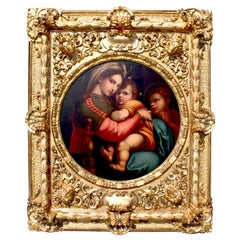
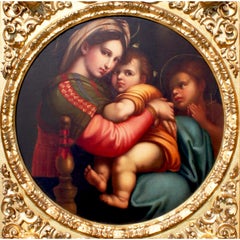
A fine Italian 19th century oil painting on canvas "La Madonna della Seggiola" after Raphael (Raffaello Sanzio da Urbino 1483-1520) The circular canvas depicting a seated Madonna holding an infant Jesus Christ next to a child Saint John the Baptist, all within a massive carved gilt wood and gesso frame (all high quality gilt is original) which is identical to the frame on Raphael's original artwork. This painting is a 19th Century copy of Raphael's Madonna della Seggiola painted in 1514 and currently exhibited and part of the permanent collection at the Palazzo Pitti, Galleria Palatina, Florence, Italy. The bodies of the Virgin, Christ, and the boy Baptist fill the whole picture. The tender, natural looking embrace of the Mother and Child, and the harmonious grouping of the figures in the round, have made this one of Raphael's most popular Madonnas. The isolated chair leg is reminiscent of papal furniture, which has led to the assumption that Leo X himself commissioned the painting, circa 1890-1900. Subject: Religious painting Measures: Canvas height: 29 1/4 inches (74.3 cm) Canvas width: 29 1/4 inches (74.3 cm) Painting diameter: 28 1/4 inches (71.8 cm) Frame height: 57 7/8 inches (147 cm) Frame width: 45 1/2 inches (115.6 cm) Frame depth: 5 1/8 inches (13 cm).   Raffaello Sanzio da Urbino (Italian, March 28 or April 6, 1483 - April 6, 1520), known as Raphael, was an Italian painter and architect of the High Renaissance. His work is admired for its clarity of form, ease of composition, and visual achievement of the Neoplatonic ideal of human grandeur. Together with Michelangelo and Leonardo da Vinci, he forms the traditional trinity of great masters of that period. Raphael was enormously productive, running an unusually large workshop and, despite his death at 37, leaving a large body of work. Many of his works are found in the Vatican Palace, where the frescoed Raphael Rooms were the central, and the largest, work of his career. The best known work is The School of Athens in the Vatican Stanza della Segnatura. After his early years in Rome much of his work was executed by his workshop from his drawings, with considerable loss of quality. He was extremely influential in his lifetime, though outside Rome his work was mostly known from his collaborative printmaking. After his death, the influence of his great rival Michelangelo was more widespread until the 18th and 19th centuries, when Raphael's more serene and harmonious qualities were again regarded as the highest models. His career falls naturally into three phases and three styles, first described by Giorgio Vasari: his early years in Umbria, then a period of about four years (1504–1508) absorbing the artistic traditions of Florence, followed by his last hectic and triumphant twelve years in Rome, working for two Popes and their close associates. Raphael was born in the small but artistically significant central Italian city of Urbino in the Marche region, where his father Giovanni Santi was court painter to the Duke. The reputation of the court had been established by Federico III da Montefeltro, a highly successful condottiere who had been created Duke of Urbino by the Pope - Urbino formed part of the Papal States - and who died the year before Raphael was born. The emphasis of Federico's court was rather more literary than artistic, but Giovanni Santi was a poet of sorts as well as a painter, and had written a rhymed chronicle of the life of Federico, and both wrote the texts and produced the decor for masque-like court entertainments. His poem to Federico shows him as keen to show awareness of the most advanced North Italian painters, and Early Netherlandish artists as well. In the very small court of Urbino he was probably more integrated into the central circle of the ruling family than most court painters. Federico was succeeded by his son Guidobaldo da Montefeltro, who married Elisabetta Gonzaga, daughter of the ruler of Mantua, the most brilliant of the smaller Italian courts for both music and the visual arts. Under them, the court continued as a centre for literary culture. Growing up in the circle of this small court gave Raphael the excellent manners and social skills stressed by Vasari. Court life in Urbino at just after this period was to become set as the model of the virtues of the Italian humanist court through Baldassare Castiglione's depiction of it in his classic work The Book of the Courtier, published in 1528. Castiglione moved to Urbino in 1504, when Raphael was no longer based there but frequently visited, and they became good friends. He became close to other regular visitors to the court: Pietro Bibbiena and Pietro Bembo, both later cardinals, were already becoming well known as writers, and would be in Rome during Raphael's period there. Raphael mixed easily in the highest circles throughout his life, one of the factors that tended to give a misleading impression of effortlessness to his career. He did not receive a full humanistic education however; it is unclear how easily he read Latin. Early Life and Works His mother Màgia died in 1491 when Raphael was eight, followed on August 1, 1494 by his father, who had already remarried. Raphael was thus orphaned at eleven; his formal guardian became his only paternal uncle Bartolomeo, a priest, who subsequently engaged in litigation with his stepmother. He probably continued to live with his stepmother when not staying as an apprentice with a master. He had already shown talent, according to Vasari, who says that Raphael had been "a great help to his father". A self-portrait drawing from his teenage years shows his precocity. His father's workshop continued and, probably together with his stepmother, Raphael evidently played a part in managing it from a very early age. In Urbino, he came into contact with the works of Paolo Uccello, previously the court painter (d. 1475), and Luca Signorelli, who until 1498 was based in nearby Città di Castello. According to Vasari, his father placed him in the workshop of the Umbrian master Pietro Perugino as an apprentice "despite the tears of his mother". The evidence of an apprenticeship comes only from Vasari and another source, and has been disputed—eight was very early for an apprenticeship to begin. An alternative theory is that he received at least some training from Timoteo Viti, who acted as court painter in Urbino from 1495.Most modern historians agree that Raphael at least worked as an assistant to Perugino from around 1500; the influence of Perugino on Raphael's early work is very clear: "probably no other pupil of genius has ever absorbed so much of his master's teaching as Raphael did", according to Wölfflin. Vasari wrote that it was impossible to distinguish between their hands at this period, but many modern art historians claim to do better and detect his hand in specific areas of works by Perugino or his workshop. Apart from stylistic closeness, their techniques are very similar as well, for example having paint applied thickly, using an oil varnish medium, in shadows and darker garments, but very thinly on flesh areas. An excess of resin in the varnish often causes cracking of areas of paint in the works of both masters. The Perugino workshop was active in both Perugia and Florence, perhaps maintaining two permanent branches. Raphael is described as a "master", that is to say fully trained, in December 1500. His first documented work was the Baronci altarpiece for the church of Saint Nicholas of Tolentino in Città di Castello, a town halfway between Perugia and Urbino. Evangelista da Pian di Meleto, who had worked for his father, was also named in the commission. It was commissioned in 1500 and finished in 1501; now only some cut sections and a preparatory drawing remain. In the following years he painted works for other churches there, including the Mond Crucifixion (about 1503) and the Brera Wedding of the Virgin (1504), and for Perugia, such as the Oddi Altarpiece. He very probably also visited Florence in this period. These are large works, some in fresco, where Raphael confidently marshals his compositions in the somewhat static style of Perugino. He also painted many small and exquisite cabinet paintings in these years, probably mostly for the connoisseurs in the Urbino court, like the Three Graces and St. Michael, and he began to paint Madonnas and portraits. In 1502 he went to Siena at the invitation of another pupil of Perugino, Pinturicchio, "being a friend of Raphael and knowing him to be a draughtsman of the highest quality" to help with the cartoons, and very likely the designs, for a fresco series in the Piccolomini Library in Siena Cathedral. He was evidently already much in demand even at this early stage in his career. Influence of Florence Raphael led a "nomadic" life, working in various centres in Northern Italy, but spent a good deal of time in Florence, perhaps from about 1504. Although there is traditional reference to a "Florentine period...
Category

19th Century Italian Baroque Antique Gesso Furniture

Materials

Gesso, Canvas, Wood