Gesso Furniture

to
175
742
437
1,074
136
23
99
78
63
59
53
49
48
37
36
34
32
19
13
13
10
8
1
1
192
501
381
159
131
132
56
24
3
25
10
22
29
15
10
16
11
2,107
354,663
294,843
224,503
150,269
878
305
248
186
166
1,233
1,198
1,202
10
9
9
6
4
Material: Gesso
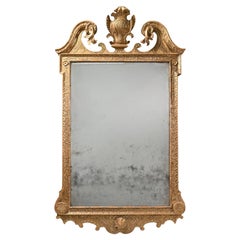
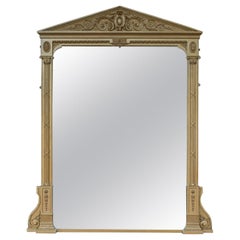
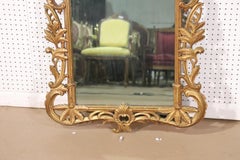
Magnificent George II Stone-Painted Pier Glass
Located in London, GB
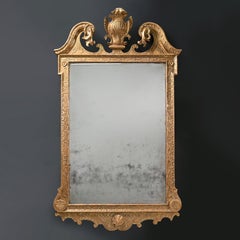
A MAGNIFICENT GEORGE II STONE-PAINTED PIER GLASS IN THE MANNER OF WILLIAM KENT, CIRCA 1730. Carved in lime wood and Baltic pine. The eared Greek-key frame surmounted by a frieze wit...
Category

18th Century Antique Gesso Furniture

Materials

Gesso, Mirror, Pine

Fox Consoles in the manner of Benjamin Goodison
By Benjamin Goodison
Located in Sturminster Marshall, Dorset
A pair of polished limestone tops supported by seated stylised foxes to each corner flanking scrolling acanthus and oak-leaf swags centered by female masks above scallop shells. These impressive console tables are an example by Benjamin Goodison...
Category

21st Century and Contemporary English George II Gesso Furniture

Materials

Marble

Sculptural Relief with a 17th Century Florence Fragment by Elena Rousseau
Located in Dublin, Dalkey
Sculptural canvas relief with a 17th century Italian Florence fragment by Elena Rousseau. The sculpted canvas is molded together with fresco plaster, g...
Category

17th Century American Rococo Antique Gesso Furniture

Materials

Paste, Gesso, Canvas, Wood, Ash, Paint

Francesco Peluso (Italian, 1836-1916) An Oil on Canvas "The Village Celebration"
Located in Los Angeles, CA
Francesco Peluso (Italian, 1836-1916) a fine Italian 19th-20th century oil on canvas "The Village Celebration" depicting a young couple of villagers dressed for Spring festivities and walking through a dirt road while playing musical instruments. The girl playing a tambourine and the boy a wooden noise maker...
Category

Late 19th Century Italian Country Antique Gesso Furniture

Materials

Gesso, Canvas, Wood

Mid 19th Century Oil Painting Dogs by Joseph Stevens
By Joseph Stevens
Located in Casteren, Noord-Brabant
An oil painting of two rustic dogs fighting over a piece of food. It is painted on an oak panel. Signed top left. The signature is a bit faded, it's a monogram J.S. by Joseph Stevens. He often signed with a monogram. In a gilded frame frame with gesso moldings. Dimensions frame: 41 x 47 cm Dimensions painting: 17 x 23 cm. Joseph Stevens is the older brother of the very well-known artist Alfred Stevens. In the book 'The Belgian Art Book' by J. de Geest, it is written that Joseph Stevens has given a new dimension to painting animals. Joseph Stevens is an early representative of realism and social art. While Eugene Verboeckhoven has royal dogs pose on a beautifully embroidered cushion, Joseph Stevens already has an eye for the dark side of animal existence: exploitation by man, who in turn is a victim of society. His first successful painting, Brussels in the morning, shows how miserable dogs and poor people suffer the same fate. In the Sandman, Stevens shows a joint effort of man and dog, in which the viewer cannot ignore the social conditions: exhausting labor at dawn in some suburb. The gray sky and monochromy of the suburb add to the sinister atmosphere. Joseph Stevens was one of the first artists to take the urban proletariat as his subject. Stevens enjoys a very high reputation in his Parisian years. His brother Alfred writes: 'I am of this time, but you, Joseph, you are of the race, and thus you are of all times.' French critics agree. Stevens' works are a source of inspiration for the literature of the time. For example, Beaudelaire writes a poem about Stevens' dogs. Joseph Edouard STEVENS. Belgium, 1819-1892 Stevens was a painter, etcher and engraver. Brother of the gifted painter Afred Stevens. Education at the Academy in Brussels (1834-1835). Debuted at the Salon in Brussels in 1842. Continued his career in Paris in 1852. He was primarily the painter of canvases depicting domestic animals (dogs, monkeys, horses), sometimes in curious, even idiosyncratic situations, and far from romanticism. This realism, of which he was one of the pioneers, earned him the interest of critics and intellectuals. His approach was defined by this contemporary realism that eschewed idealized depictions of animals as heroic emblems of nobility. Rather, Stevens emphasized the ordinary animals of everyday life, with a particular focus on working dogs, stray dogs and all of the mutts that wandered the streets of Brussels. Museums and public collections, including' Royal Museum of Fine Arts Brussels, Ghent, Hamburg, Paris, Musée du Louvre, Rouen, Musee des Beaux-Arts. Stuttgart, State Gallery. King Leopold...
Category

1850s Belgian Beaux Arts Antique Gesso Furniture

Materials

Gesso, Oak, Pine, Paint

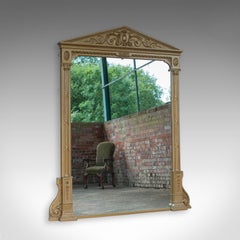
A Large English Victorian Giltwood Overmantle Mirror H170cm
Located in High Peak, GB
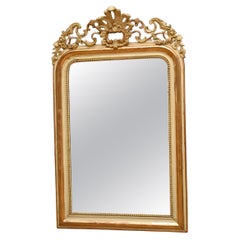
K0618 A Large Victorian Overmantel giltwood mirror or arched form, having original glass with some foxing and desirable sparkle in gilded frame with moulded can finely carved cornice...
Category

19th Century English Victorian Antique Gesso Furniture

Materials

Gesso, Birch, Giltwood

Turquoise Venetian Mirror Circa 1920
Located in Hastings, GB
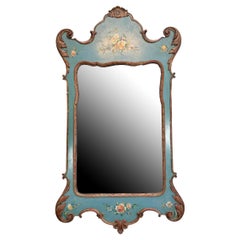
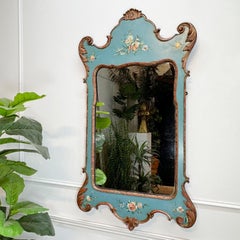
A striking Venetian style mirror, circa 1920. Carved wood with applied gesso decoration and polychrome painted with floral motifs in reds, white, yellow and greens over a bright turq...
Category

Early 20th Century Italian Rococo Gesso Furniture

Materials

Pine, Gesso

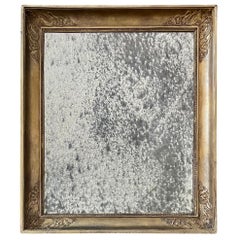
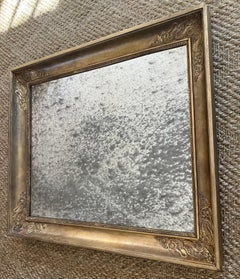
Ornate 19th Century Gilt Mirror with Wonderful Patina 37"
Located in Atlanta, GA
Glamorous 19th Century Gilt Mirror, likely Italian or French, circa early 19th Century. It measures an impressive 37.5" height x 36.75" width. It retains its warm overall patina to b...
Category

Early 19th Century Italian Rococo Antique Gesso Furniture

Materials

Gesso, Mirror, Wood

Important Antique Scottish History Print, after James Gillray, 1786
Located in St Annes, Lancashire
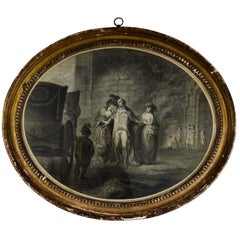
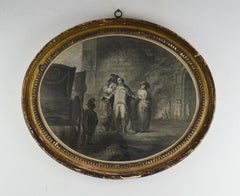
Wonderful oval stipple engraving after James Gillray Showing the meeting of Colonel Gardiner with his daughters before the Battle of Prestonpans. Set against the background of sterl...
Category

1780s English Georgian Antique Gesso Furniture

Materials

Gesso, Paper

Louis XVI Style Trumeau Original from Paris
Located in New York, NY
Early 20th century LXVI style Trumeau original purchased in Paris. Gesso and painted white with original mirror installed. Overall size: 73 3/4" x W 51 1/2".
Category

17th Century American French Provincial Antique Gesso Furniture

Materials

Gesso

Florentine Neoclassical Fluted Gilt and Cream Painted Pedestal, Italy, 1940
Located in Doylestown, PA
Neoclassical style parcel gilt and Gesso Venetian cream painted columnar pedestal stand, Italy, c. 1940. It features a square top over a fluted column on a square plinth to a stepped...
Category

1940s Italian Neoclassical Vintage Gesso Furniture

Materials

Wood, Giltwood, Paint, Gesso

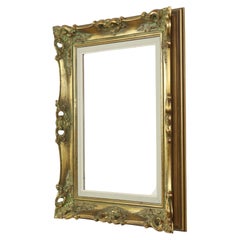
Antique English Barbola Dressing Table Mirror, circa 1920
Located in Pearland, TX
A fine antique English barbola dressing table or vanity oval mirror with easel, circa 1920. This beautiful mirror has beveled glass and is crowned with a gesso floral swag. It would ...
Category

1920s English Vintage Gesso Furniture

Materials

Gesso, Mirror

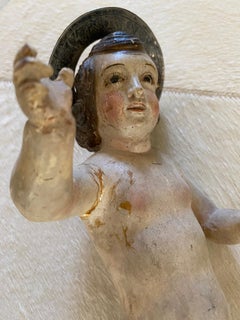
19th Century Polychrome Jesus of Gethsemane
Located in Los Angeles, CA
This evocative devotional sculpture portrays Jesus in a moment of deep reflection before His capture in Gethsemane. Shown seated with one hand resting against His cheek, He contempla...
Category

19th Century Guatemalan Rustic Antique Gesso Furniture

Materials

Wood, Paint, Gesso

Empire Style High Sided Bench with Gilt Details and Mohair Velvet Upholstery
Located in Troy, MI
Circa 1920s French Empire style wooden stool has an antique white painted frame with gilded details and new gray mohair velvet upholstery. Two stools available at the time of posting...
Category

Early 20th Century French Empire Gesso Furniture

Materials

Gesso, Upholstery, Wood

Tete De Négre Chinoiserie Tv and Media Cabinet/Armoire
Located in Los Angeles, CA
Introducing an exquisite Tete De Négre Chinoiserie TV and Media Cabinet/Armoire, a stunning piece of furniture that combines modern functionality with classic style. Hand-crafted fro...
Category

20th Century American Chinoiserie Gesso Furniture

Materials

Bronze, Gold Leaf

Louis XV Style Corner Cabinet Made by La Maison London with Carrara Marble Top
Located in London, Park Royal
A Louis XV style corner cabinet hand carved in solid wood and hand painted. Fine carving all around with flowers and foliage executed in the style of master cabinet makers from the ...
Category

2010s French Louis XV Gesso Furniture

Materials

Gesso, Wood

Spanish Colonial Gilt Carved Wood Mirror with Mosaic Mirror Inlays
Located in Barcelona, ES
Gorgeous Gilltwood Mirror, Spanish Colonial, Scalloped Frame and Mosaic Mirror Inlays. Spain, 1940s-1950s. The gilt frame was richly carved from solid woo...
Category

Mid-20th Century Spanish Spanish Colonial Gesso Furniture

Materials

Gold Leaf

Antique Napoleonic French Empire Parcel-Gilt Mahogany Wine Cabinet Armoire 1810
Located in Portland, OR
A very fine quality French Empire Napoleonic period Mahogany & parcel gilt wine cabinet/armoire, circa 1810. Made of the finest mahogany this cabinet has the shape of a secretaire ab...
Category

1810s French Empire Antique Gesso Furniture

Materials

Bronze

A George I Gesso Table with Breche de Vendome Marble Top
Located in London, GB
A George I Gesso Table with Breche de Vendome Marble Top The frieze with acanthus leaf carving, with carved cabriole legs on pad feet. Width: 105 cm...
Category

Early 18th Century English George I Antique Gesso Furniture

Materials

Breccia Marble

Carnival of Venice Four Vintage Hanging Tiles
Located in Delray Beach, FL
Set of four hand made and painted tiles professionally framed it wood frame , depicting caricatures from The Carnival of Venice. Which is annual festival held in Venice, Italy. The festival is world-famous for its elaborate masks. The celebration takes place over ten days in which people dress up and take part in organized parades or simple processions on the street. The costumes are seventeenth-century Venetian dresses.
Category

20th Century Italian Gesso Furniture

Materials

Composition

Large French 19th Century Antique Giltwood Wall Mirror H158cm
Located in High Peak, GB
P0290 Outstanding French 19th century gilded wall mirror / over mantel mirror of versatile form, can be positioned either way, having replacement glass in moulded gold leaf frame wit...
Category

1710s French Louis Philippe Antique Gesso Furniture

Materials

Gold Leaf

18th Century English Chinoiserie Demi-lune Console / Games Table
Located in San Francisco, CA
Late 18th Century George II Period Games Table / Demi-Lune Console Table. Lacquer with hand painted detailed chinoiserie raised gesso village scene with figures fishing, the piece fo...
Category

Late 18th Century English Chinoiserie Antique Gesso Furniture

Materials

Gesso, Wood, Lacquer

Antique South American Spanish Colonial Folk Art Santos Figural Group
Located in London, GB
Antique South American Spanish Colonial Poly chrome Folk Art Santos figure The finely sculptured hard wood figure standing with a cross and bible on a pedestal base, painted in p...
Category

18th Century Peruvian Antique Gesso Furniture

Materials

Gesso, Wood

Sunburst Convex Mirror in Small Scale, Baroque Style
Located in Barcelona, ES
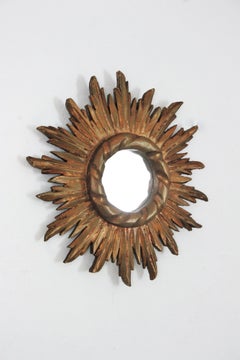
Early 20th century carved giltwood mini sized sunburst mirror in Baroque style. Beautiful carved giltwood sunburst mirror with convex glass in this unusual mini size. Carved wood ...
Category

Early 20th Century Spanish Baroque Gesso Furniture

Materials

Gold Leaf

English Chippendale Mahogany and Gilt Wood Eagle Foliage Wall Mirror, Circa 1770
Located in Charleston, SC
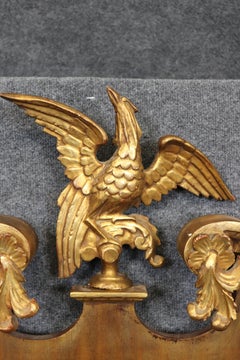
English Chippendale mahogany wall mirror with a broken arched foliage medallion cornice, central perched gilt wood eagle, upper gilt wood shell with Ivy vines, flanking gilt wood fol...
Category

1770s English Chippendale Antique Gesso Furniture

Materials

Mirror, Mahogany, Giltwood, Gesso

Incredible Horizontal Ornate French Style Fancy Mantel Mirror
Located in Hopewell, NJ
Impressive large horizontal mantel mirror having gesso gold leaf fancy French style.
Category

Early 2000s French Louis XVI Gesso Furniture

Materials

Gesso, Mirror

Gothic Revival Side Chairs
By Michelle Nussbaumer Studio
Located in Dallas, TX
Custom designed by Michelle Nussbaumer Studio. Gothic Revival inspired with hand finished layered finish. Gold leaf applied over hand-painted and hand-carved frames. Antique nail...
Category

2010s American Gothic Revival Gesso Furniture

Materials

Gold Leaf

Small Vintage Gilded Frame Baroque Style Red Velvet 39x33cm
Located in Poperinge, BE
Small gilded vintage pine frame with red velvet frame on the inside, completely in classic baroque style, decorated with acanthus leaves and a ribbon pattern all around, first half o...
Category

Early 20th Century Belgian Baroque Gesso Furniture

Materials

Gesso, Velvet, Wood

19th Century Italian Painting by Leopoldina Zanetti Borzino (Italian 1826-1902)
Located in Chicago, IL
Leopoldina Zanetti Borzino (Italian 1826-1902). Born in Venice, Leopoldina was the niece of Daniel Manin, a hero statesman, who would become the President of San Marco, a revolutiona...
Category

Mid-19th Century Italian Other Antique Gesso Furniture

Materials

Gesso, Wood, Canvas

Extraordinary Pair of Italian Carved Giltwood Mirrors with Shell and Coral Motif
Located in West Palm Beach, FL
Extraordinary Pair of Italian Carved Giltwood Mirrors with Shell and Coral Motifs, 20th Century Baroque Revival Meets Sculptural Coastal Design in the Manner of Tony Duquette A str...
Category

20th Century Italian Gesso Furniture

Materials

Gesso, Mirror, Giltwood

18th Century French Carved Gilded Mirror
Located in Gloucestershire, GB
An 18th Century French gilded mirror with carved doves and foliage. Retaining its original faded gilding.
Category

18th Century French Louis XIV Antique Gesso Furniture

Materials

Gesso, Mirror, Giltwood

Narrow Golden Baroque Frame Painting Classic 70x60cm
Located in Poperinge, BE
Narrow gold-colored pine frame with a beautiful patina of age, entirely in classic Baroque style, decorated with elegant acanthus leaves, tendrils, and patterns. This vintage piece d...
Category

Early 20th Century European Baroque Gesso Furniture

Materials

Gesso, Wood

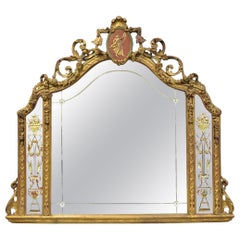
19th Century Giltwood and Gesso Triptych Overmantle Mirror & Bevelled Edge Glass
Located in Reading, Berkshire
Beautiful Antique 19th century Neoclassical giltwood and gesso triptych overmantle mirror, with bevelled edge glass, classical chariot scene relief and Corinthian column pilasters.
Category

Early 19th Century French Neoclassical Revival Antique Gesso Furniture

Materials

Gesso, Glass, Giltwood

English Gilt Arched Top Overmantle Mirror
Located in Swadlincote, GB
A very good English egg and dart arched top overmantle mirror, with original mercury mirror and panelled back, in very good overall condition. 54" high 44.5" wide 2.5" depth FREE D...
Category

19th Century English High Victorian Antique Gesso Furniture

Materials

Gesso, Pine

Vintage Boho 1970s French Plaster Credenza
Located in West Palm Beach, FL
Channel the avant-garde spirit of 1970s French design with this extraordinary sculptural credenza. This piece is a masterwork of texture and form, featuring hand-carved abstract and ...
Category

1970s French Brutalist Vintage Gesso Furniture

Materials

Gesso, Plaster, Wood

Pair French Belle Epoqué Louis XV Style Giltwood & Gesso Carved Trumeau Mirrors
Located in Los Angeles, CA
A Pair of French Belle Epoqué Louis XV Style Giltwood and Gesso Carved Trumeau Mirrors. The slender carved framed each crowned with a rosette flaked by floral bouquets and scrolled a...
Category

Early 20th Century French Belle Époque Gesso Furniture

Materials

Giltwood, Wood, Mirror, Gesso

Table lamp Led Catellani & Smith Nike
Located in Alcamo, IT
The Nike, part of the Timeless Objects collection by Catellani & Smith, embodies the classic soul of the brand. This collection gathers all the creations, past and future, by Enzo Ca...
Category

2010s Italian Gesso Furniture

Materials

Nickel

Antique Italian Venetian Rococo Carved Painted Gilt Wood 3-Light Hall Lantern
Located in Forney, TX
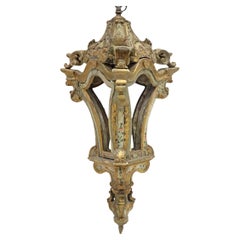
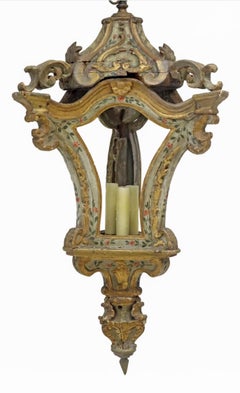
A most impressive antique Italian Venetian Rococo carved painted parcel gilt wooden hall lantern. Hand carved in the Veneto region (Venice) of Northeast Italy in the 18th / possibly early 19th century, exceptionally executed in the highly ornate, whimsy, light, airy, dramatic splendor that is period late Baroque Rococo style, lavishly ornamented and elaborately sculpted, featuring a large triangular sculptural form enclosing later electrified three faux candle lights, showcasing the original pale pastel green ground adorned with whimsy hand painted polychrome flower motif and ornate giltwood carvings, with beautifully aged patina over the whole. circa 1740-1810 This very large lantern probably graced a sweeping hall or palatial entry of a Venetian aristocratic palazzo decorated with frescoed walls and ceilings, marble floors, surrounded by opulent artwork. Importance / History: For many centuries, the control of artificial light was an important status symbol for people living in most cultures and was an instantly understood sign of wealth and power. Beginning in the early 17th century, grand lanterns such as this were first created and hung in the entrance halls, foyers and/or vestibules of important mansions and manor houses of the aristocratic and affluent classes of Italy, France and Spain. Up until the early 20th century, the entrance hall was considered to be one of the most important spaces in any house. The main reason was that was the most public space in a house, and prior to phones or email, the space into which guests were admitted. Many, such as business people or important tradesmen, seldom went any further into the house. Therefore, that important entryway was designed and decorated with the intent of making the best impression on anyone who might enter it and to ensure they had the highest opinion of the residents of that house. Dimensions: (approx) 32" Tall, 16.75" Wide, 16.75" Deep Condition: Very good antique condition with highly desirable original warm rustic distressed chippy paint patina. Modern lighting and wiring. Lots of antique character and old world European charm, wear consistent with age and use, including scattered minor nicks, losses and exposed gesso adding to the sophisticated whimsical elegance, warmth, and rich antique opulence! Similar to a chandelier / hanging ceiling lamp / monumental pendant light...
Category

18th Century Italian Rococo Antique Gesso Furniture

Materials

Gesso, Wood, Giltwood, Paint
After Raffaello Sanzio 1483-1520 Raphael La Madonna della Seggiola Oil on Canvas
Located in Los Angeles, CA
A fine Italian 19th century oil painting on canvas "La Madonna della Seggiola" after Raphael (Raffaello Sanzio da Urbino 1483-1520) The circular canvas depicting a seated Madonna holding an infant Jesus Christ next to a child Saint John the Baptist, all within a massive carved gilt wood and gesso frame (all high quality gilt is original) which is identical to the frame on Raphael's original artwork. This painting is a 19th Century copy of Raphael's Madonna della Seggiola painted in 1514 and currently exhibited and part of the permanent collection at the Palazzo Pitti, Galleria Palatina, Florence, Italy. The bodies of the Virgin, Christ, and the boy Baptist fill the whole picture. The tender, natural looking embrace of the Mother and Child, and the harmonious grouping of the figures in the round, have made this one of Raphael's most popular Madonnas. The isolated chair leg is reminiscent of papal furniture, which has led to the assumption that Leo X himself commissioned the painting, circa 1890-1900. Subject: Religious painting Measures: Canvas height: 29 1/4 inches (74.3 cm) Canvas width: 29 1/4 inches (74.3 cm) Painting diameter: 28 1/4 inches (71.8 cm) Frame height: 57 7/8 inches (147 cm) Frame width: 45 1/2 inches (115.6 cm) Frame depth: 5 1/8 inches (13 cm).   Raffaello Sanzio da Urbino (Italian, March 28 or April 6, 1483 - April 6, 1520), known as Raphael, was an Italian painter and architect of the High Renaissance. His work is admired for its clarity of form, ease of composition, and visual achievement of the Neoplatonic ideal of human grandeur. Together with Michelangelo and Leonardo da Vinci, he forms the traditional trinity of great masters of that period. Raphael was enormously productive, running an unusually large workshop and, despite his death at 37, leaving a large body of work. Many of his works are found in the Vatican Palace, where the frescoed Raphael Rooms were the central, and the largest, work of his career. The best known work is The School of Athens in the Vatican Stanza della Segnatura. After his early years in Rome much of his work was executed by his workshop from his drawings, with considerable loss of quality. He was extremely influential in his lifetime, though outside Rome his work was mostly known from his collaborative printmaking. After his death, the influence of his great rival Michelangelo was more widespread until the 18th and 19th centuries, when Raphael's more serene and harmonious qualities were again regarded as the highest models. His career falls naturally into three phases and three styles, first described by Giorgio Vasari: his early years in Umbria, then a period of about four years (1504–1508) absorbing the artistic traditions of Florence, followed by his last hectic and triumphant twelve years in Rome, working for two Popes and their close associates. Raphael was born in the small but artistically significant central Italian city of Urbino in the Marche region, where his father Giovanni Santi was court painter to the Duke. The reputation of the court had been established by Federico III da Montefeltro, a highly successful condottiere who had been created Duke of Urbino by the Pope - Urbino formed part of the Papal States - and who died the year before Raphael was born. The emphasis of Federico's court was rather more literary than artistic, but Giovanni Santi was a poet of sorts as well as a painter, and had written a rhymed chronicle of the life of Federico, and both wrote the texts and produced the decor for masque-like court entertainments. His poem to Federico shows him as keen to show awareness of the most advanced North Italian painters, and Early Netherlandish artists as well. In the very small court of Urbino he was probably more integrated into the central circle of the ruling family than most court painters. Federico was succeeded by his son Guidobaldo da Montefeltro, who married Elisabetta Gonzaga, daughter of the ruler of Mantua, the most brilliant of the smaller Italian courts for both music and the visual arts. Under them, the court continued as a centre for literary culture. Growing up in the circle of this small court gave Raphael the excellent manners and social skills stressed by Vasari. Court life in Urbino at just after this period was to become set as the model of the virtues of the Italian humanist court through Baldassare Castiglione's depiction of it in his classic work The Book of the Courtier, published in 1528. Castiglione moved to Urbino in 1504, when Raphael was no longer based there but frequently visited, and they became good friends. He became close to other regular visitors to the court: Pietro Bibbiena and Pietro Bembo, both later cardinals, were already becoming well known as writers, and would be in Rome during Raphael's period there. Raphael mixed easily in the highest circles throughout his life, one of the factors that tended to give a misleading impression of effortlessness to his career. He did not receive a full humanistic education however; it is unclear how easily he read Latin. Early Life and Works His mother Màgia died in 1491 when Raphael was eight, followed on August 1, 1494 by his father, who had already remarried. Raphael was thus orphaned at eleven; his formal guardian became his only paternal uncle Bartolomeo, a priest, who subsequently engaged in litigation with his stepmother. He probably continued to live with his stepmother when not staying as an apprentice with a master. He had already shown talent, according to Vasari, who says that Raphael had been "a great help to his father". A self-portrait drawing from his teenage years shows his precocity. His father's workshop continued and, probably together with his stepmother, Raphael evidently played a part in managing it from a very early age. In Urbino, he came into contact with the works of Paolo Uccello, previously the court painter (d. 1475), and Luca Signorelli, who until 1498 was based in nearby Città di Castello. According to Vasari, his father placed him in the workshop of the Umbrian master Pietro Perugino as an apprentice "despite the tears of his mother". The evidence of an apprenticeship comes only from Vasari and another source, and has been disputed—eight was very early for an apprenticeship to begin. An alternative theory is that he received at least some training from Timoteo Viti, who acted as court painter in Urbino from 1495.Most modern historians agree that Raphael at least worked as an assistant to Perugino from around 1500; the influence of Perugino on Raphael's early work is very clear: "probably no other pupil of genius has ever absorbed so much of his master's teaching as Raphael did", according to Wölfflin. Vasari wrote that it was impossible to distinguish between their hands at this period, but many modern art historians claim to do better and detect his hand in specific areas of works by Perugino or his workshop. Apart from stylistic closeness, their techniques are very similar as well, for example having paint applied thickly, using an oil varnish medium, in shadows and darker garments, but very thinly on flesh areas. An excess of resin in the varnish often causes cracking of areas of paint in the works of both masters. The Perugino workshop was active in both Perugia and Florence, perhaps maintaining two permanent branches. Raphael is described as a "master", that is to say fully trained, in December 1500. His first documented work was the Baronci altarpiece for the church of Saint Nicholas of Tolentino in Città di Castello, a town halfway between Perugia and Urbino. Evangelista da Pian di Meleto, who had worked for his father, was also named in the commission. It was commissioned in 1500 and finished in 1501; now only some cut sections and a preparatory drawing remain. In the following years he painted works for other churches there, including the Mond Crucifixion (about 1503) and the Brera Wedding of the Virgin (1504), and for Perugia, such as the Oddi Altarpiece. He very probably also visited Florence in this period. These are large works, some in fresco, where Raphael confidently marshals his compositions in the somewhat static style of Perugino. He also painted many small and exquisite cabinet paintings in these years, probably mostly for the connoisseurs in the Urbino court, like the Three Graces and St. Michael, and he began to paint Madonnas and portraits. In 1502 he went to Siena at the invitation of another pupil of Perugino, Pinturicchio, "being a friend of Raphael and knowing him to be a draughtsman of the highest quality" to help with the cartoons, and very likely the designs, for a fresco series in the Piccolomini Library in Siena Cathedral. He was evidently already much in demand even at this early stage in his career. Influence of Florence Raphael led a "nomadic" life, working in various centres in Northern Italy, but spent a good deal of time in Florence, perhaps from about 1504. Although there is traditional reference to a "Florentine period...
Category

19th Century Italian Baroque Antique Gesso Furniture

Materials

Gesso, Canvas, Wood

18th Century Italian Wood and Gesso Altar Vase in Rose Silver
Located in Hastings, GB
A hand-crafted wood and applied gesso altar vase, late 18th century with gilt rose silver finish. Small areas of loss to the gesso and wear to the paint commensurate with the age of...
Category

Late 18th Century Italian Baroque Antique Gesso Furniture

Materials

Gesso, Wood

Antique English Barbola Dressing Mirror
Located in Pearland, TX
A fine antique English barbola dressing table or vanity oval mirror with easel, circa 1920. This beautiful mirror has beveled glass and is crowned with a gesso floral swag. It would ...
Category

1920s English Vintage Gesso Furniture

Materials

Gesso, Mirror

French, Modern Neoclassical Plaster Chandelier in the Style of Diego Giacometti
By Alberto and Diego Giacometti
Located in New York, NY
Elegant and iconic French Modern Neoclassical chandelier in the style of Alberto and Diego Giacometti. The form is sublime. It is composed of a cylindrical iron base from which 8 tor...
Category

Mid-20th Century French Mid-Century Modern Gesso Furniture

Materials

Iron

Hall Table in the manner of George I
Located in Sturminster Marshall, Dorset
A George I design marble topped carved and painted hall table, with scrolled moulded frieze and square cabriole legs. This item is made to order. ...
Category

21st Century and Contemporary English George I Gesso Furniture

Materials

Gesso, Wood, Paint
Original Egyptian Cartonnage Mask – Ptolemaic Period
Located in Madrid, ES
An important Egyptian sarcophagus mask from the Ptolemaic Period (711–332 B.C.), crafted with remarkable artistry and historical significance. Material: Made from stuccoed linen tex...
Category

15th Century and Earlier Antique Gesso Furniture

Materials

Gesso

Large Golden Baroque Frame XL Frame Painting Classic 117x67cm
Located in Poperinge, BE
Large golden pine frame with a beautiful age patina, XL size, entirely in classic Baroque style, decorated with elegant acanthus leaves and patterns, XL size, vintage object from cir...
Category

1920s Belgian Baroque Vintage Gesso Furniture

Materials

Gesso, Wood

Four-Panel Red Lacquer Folding Screen with Hand-Painted Floral Scrollwork
Located in Yonkers, NY
This vintage four-panel screen features a striking crimson red ground embellished with intricate hand-painted scrollwork in a classical floral motif. Each panel is framed by vertical...
Category

Late 20th Century Chinese Gesso Furniture

Materials

Gesso, Wood

Monumental 19th Century Italian Baroque Style Giltwood Mirror 6 Ft.
Located in Rio Vista, CA
Imposing 19th century Italian carved floor mirror made on a grand monumental scale measuring over 6 feet tall. The mirror features a hand-beveled period thick glass plate mounted in ...
Category

19th Century European Baroque Antique Gesso Furniture

Materials

Gesso, Glass, Giltwood

Set Eight Dessin Fournir Gilt Faux Bois Twig Dining Chairs
Located in Rio Vista, CA
Sublime set of eight rare dining chairs featuring hand-carved faux bois gilt twig wood frames designed by Erika Brunson for Dessin Fournir. Crafted in the old world style from beech ...
Category

20th Century American Napoleon III Gesso Furniture

Materials

Gold

Antique French Baroque Giltwood Mirror with Putti or Cherubs in Crest
Located in Casteren, NL
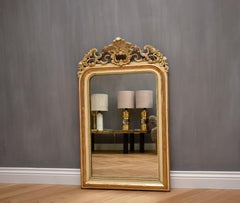
This beautiful Baroque golden mirror is made in France, circa 1850. The frame has an arched top and is enriched with intricate decorations. The mirror has an ornate crest with a ce...
Category

Mid-19th Century French Baroque Antique Gesso Furniture

Materials

Gold Leaf

Pair of French Antique early 18th-century Carved Wooden Gilded Corner Consoles
Located in Casteren, NL
On offer here is a stunning pair of 100% original gold leaf gilt and polished corner consoles, meticulously hand-carved from solid linden wood. Made in southern France around 1710, t...
Category

Early 18th Century French Baroque Antique Gesso Furniture

Materials

Gold Leaf

Pair Italian Neoclassical Craved and Gilt Wood Mythical Beasts, mid 19th century
Located in Austin, TX
A powerful and dramatic pair of Italian neoclassical carved and gilt wood mythical animal figures on faux painted bases, mid 19th century or earlier, Italy. The fantastic beasts are well carved, with dramatic wings that follow the sensuous curve of the neck, and a sinuous body ends in an eel-like tail gracefully curled in upon itself. The bearded heads feature a flattened snout with sharp teeth and a lolling tongue, and pointed horse ears and mane. The long forelegs stretched out in front of them and ending in pawed and clawed feet. The beasts have characteristics of several different mythical animals, making them hard to positively identify. The most likely candidates would be dragons, hippocampi, or chimeras. The beasts are unfinished to the back, indicating they were originally part of a relief decoration, possibly from a mirror. They have now been mounted to wooden bases faux painted to imitate porphyry. They would make perfect bookends or mantle sculptures.
Category

Mid-19th Century Italian Neoclassical Antique Gesso Furniture

Materials

Gesso, Softwood, Giltwood

Antique Petrified Wood Tree Stump Drinks Table or Stool Covered in Gesso
Located in Yonkers, NY
Rich in texture and geological history, this antique petrified wood stump table serves as both a sculptural accent and a functional surface. Naturally fossilized over millennia, the ...
Category

20th Century Asian Rustic Gesso Furniture

Materials

Petrified Wood, Gesso

Antique Victorian Style Painted Timber Fireplace Mantel
Located in Wormelow, Herefordshire
This fire surround was salvaged from a house in South East London. Additional dimensions: Opening height 104 cm Opening width 117.5 cm.
Category

Late 19th Century Antique Gesso Furniture

Materials

Gesso, Walnut

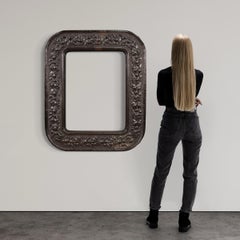
Late Victorian Dark Bronze Gessoed Wood Wall Mirror
Located in Malibu, CA
A timeless piece. Original aged bronze finish on this handcrafted hardwood & dark gesso finished accent mirror.
Category

Early 20th Century American Arts and Crafts Gesso Furniture

Materials

Gesso, Hardwood

Irish Lion Mask Console Tables
Located in Sturminster Marshall, Dorset
A monumental pair of Irish Baroque carved mahogany country house serving tables with marble top and strong Romanic influence. Finished in aged Gesso and with antiqued marble tops. W...
Category

21st Century and Contemporary Northern Irish Baroque Gesso Furniture

Materials

Marble

Olive Green Chinoiserie George III Hanging Corner Cupboard
Located in Houston, TX
Olive green Chinoiserie George III hanging corner cupboard dating to the late 18th century. In excellent condition. Original dark, olive green painted finish embellished with painted...
Category

Late 18th Century English Chinoiserie Antique Gesso Furniture

Materials

Brass, Gold Leaf

Empire Style Rectangular Mirror in Beige and Giltwood
Located in Barcelona, ES
Empire Style mirror, France, 1930s. Beautiful Empire style rectangular mirror in beige patina with neoclassical relief foliage and floral ornament...
Category

Early 20th Century French Empire Gesso Furniture

Materials

Gold Leaf

Greige Round Gessoed Wood Mirror Accented in Gold
Located in Malibu, CA
A stunning Art Deco-style mirror featuring the original glass. The swirl motif frame is hand painted in a natural greige/euro linen paint accented in gold then waxed. There are aged ...
Category

Early 20th Century American Art Deco Gesso Furniture
Materials

Gesso, Mirror, Wood

Raoul Morren, Assembled Fragments Mixed-Media Wall Art
Located in High Point, NC
Raoul Morren, a self-taught artist and curator, explores a spectrum of artistic mediums, including collage, painting, photography, sculpture and video. Drawing profound inspiration f...
Category

21st Century and Contemporary Gesso Furniture

Materials

Gesso, Acrylic, Plaster

19th C Ebonized Charivari Napoleon III Chairs in Crushed Velvet, a pair
Located in Malibu, CA
Original Napoleon lll ebonized charivari chairs. Made in France, circa 1850's. Reupholstered in a warm rich taupe crushed velvet. Seat height: 17.75 in (45 cm) One of the pair is sl...
Category

19th Century French Napoleon III Antique Gesso Furniture

Materials

Gesso, Velvet, Hardwood

Recently Viewed

View All