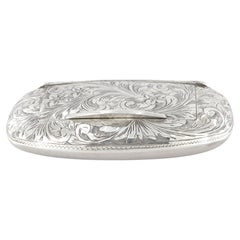
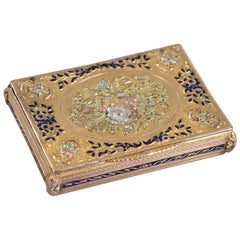
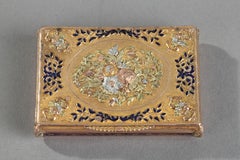
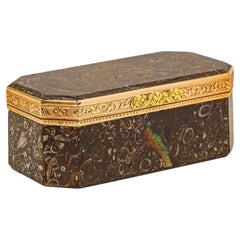
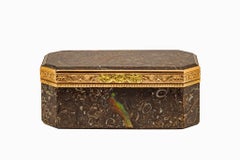
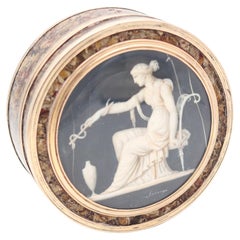
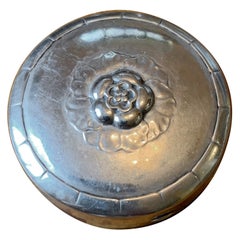
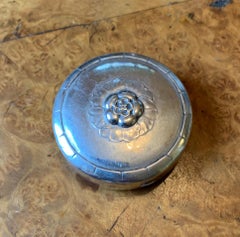
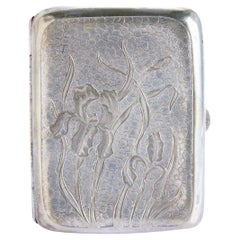
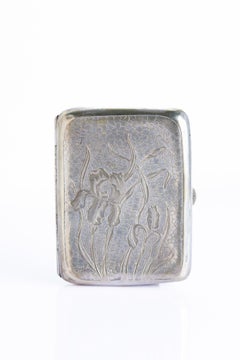
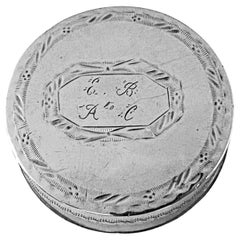
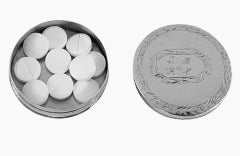
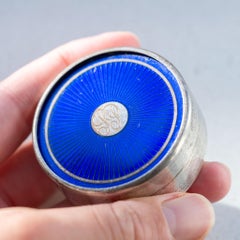
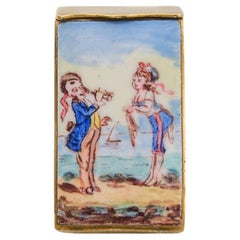
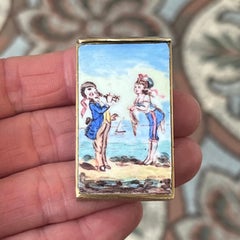
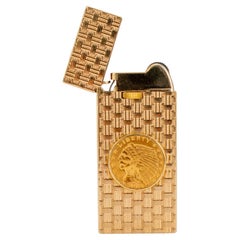
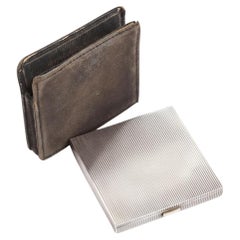
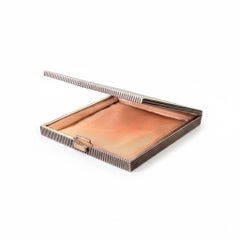
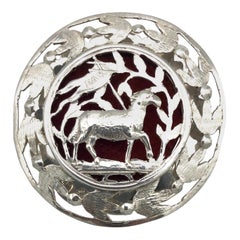
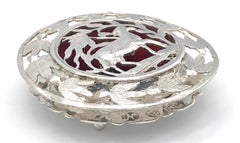
A French neo-classic box designed by Piat-Joseph Sauvage (1744-1818).
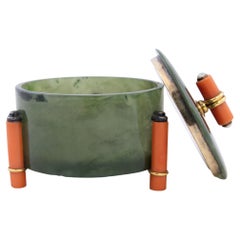
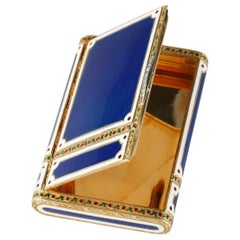
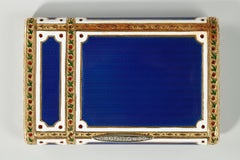
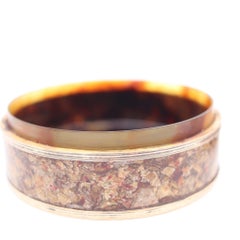
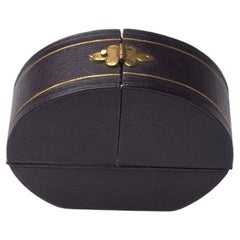
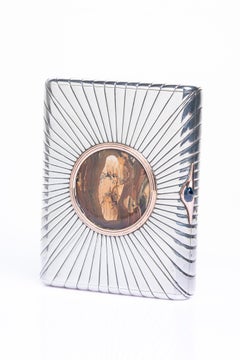
This is an exceptional beautiful presentation round box created in Paris France by Piat-Joseph Sauvage during the late 18th century, circa 1780-90. The box is most probably a snuff box, designed in the style of Louis XVI, during the French neo-classical period. The main mountings have been carefully crafted with parts made up in solid yellow gold of 18-19 karats decorated with classic motifs. These mountings are holdings the carvings of tortoise-shells and the lacquered chinois panels. The main in grisaille painted round panel on top is the allegorical representation of the medicine, performed by a draped seated muse holding a caduceus. Grisaille is a painting executed entirely in shades of grey or of another neutral greyish colour, it is particularly used in large decorative schemes in imitation of sculpture.
Piat-Joseph Sauvage
He was a painter, sculptor, printmaker and academic lecturer from the Southern Netherlands. He was known for his decorative paintings of interiors, grisailles and miniatures using trompe l'oeil effects as well as his small-scale portrait carvings. He often used precious materials such as marble, porcelain and ivory as the support for his paintings. He was a court painter to the governor of the Southern Netherlands, the Prince de Condé and the French king Louis XVI and a member of the Académie royale de peinture et de sculpture. Sauvage was born in Tournai as the son of Antoine, a glass cutter. He worked in his father's factory until the age of 17, while completing his study at the school of drawing in Tournai. He went on to improve his artistic education at the Antwerp Academy under the direction of Martin Joseph Geeraerts, an expert in grisaille and history paintings. He worked for a time in Brussels in the service of the governor general of the Southern Netherlands. He then left for France where he joined the Académie de Saint-Luc in Paris. In 1774 he made nine paintings including grisaille bas-reliefs representing The Death of Germanicus. Sauvage was accepted into the Académie royale de peinture et de sculpture after he produced a trompe l'oeil painting of a round table with an embroidered cloth on which are placed a statue of a child, a helmet, books, a violin, and other items. This canvas is at the Palace of Fontainebleau which also has other over the door decorative works by Sauvage. As his fame grew, he was appointed the court painter of the Prince de Condé, and later of the French king Louis XVI and the Royal Family. During this period, he painted Marie-Antoinette and produced paintings for the chapel of Saint-Cloud. His appointment as royal artist did not keep him from joining the popular side of the French Revolution. His painting surprisingly did not slow down during this period of political upheaval. From 1804 to 1807, he painted porcelain figurines for the famous Sèvres porcelain factory. In 1808 he returned to Tournai to become the director of the local Academy of Drawing. During his tenure, artists such as Antoine Payen studied there. He also painted the Seven Sacraments in the choir of Tournai cathedral which replaced tapestries stolen by the French during the French occupation of the Southern Netherlands.
Country: Paris, France.
Period: Neo-Classical, 1780-1790.
Materials: Yellow gold, carved tortoise, lacquer chinois, glass and paint.
Weight: 73.70 Grams, (47.25 Dwt).
Measurements: Diameter 82.55 mm by Height 38 mm, (3.25 x 1.50 Inches).
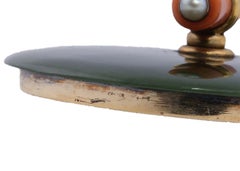
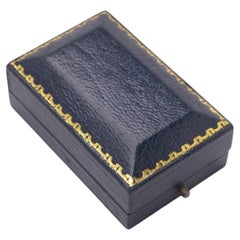
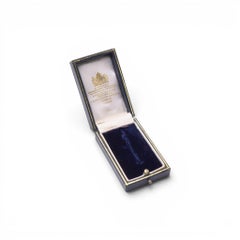
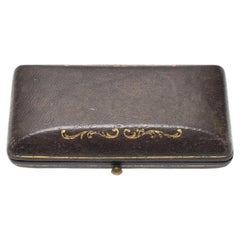
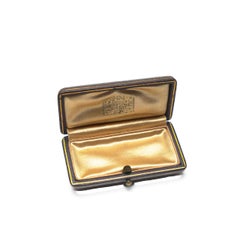
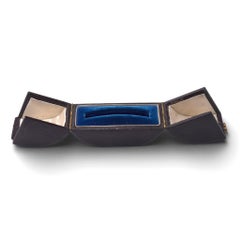
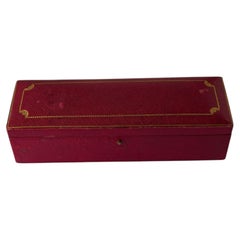
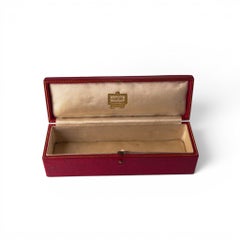
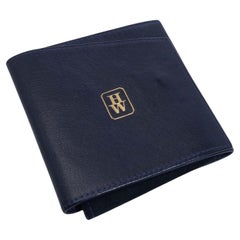
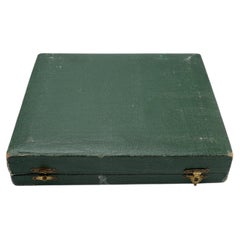
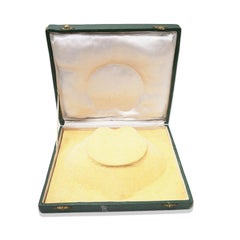
Hallmarks: The gold mountings are stamped with French marks, the maker's mark for the gold parts, twice with the head of the eagle for the assay and warranty of the 18kt gold and signed as follows, The painted panel, "SAUVAGE", The label "COLLECTION S. BULGARI ROME FRANCESE 1780-1790, OR, JOSEPH SAUVAGE"; The fitted leather box "BVLARI ROMA".
Provenance: From the private collection of Sotirio Bvlgari...
Category
1780s French Neoclassical Antique Boxes and Cases
MaterialsGold, Yellow Gold, 18k Gold