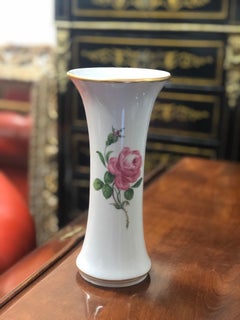
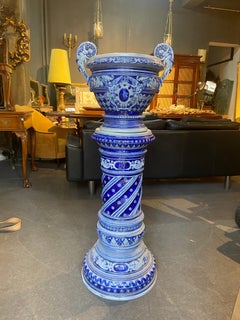
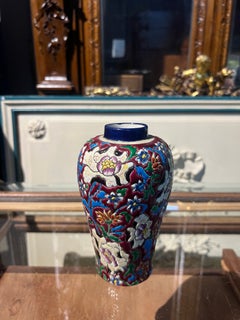
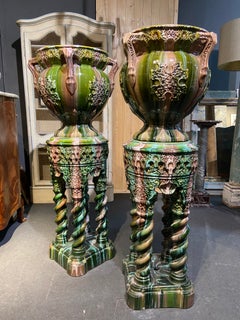
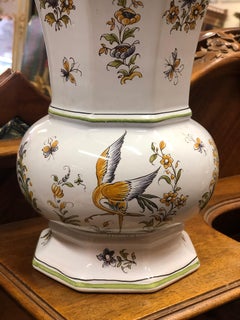
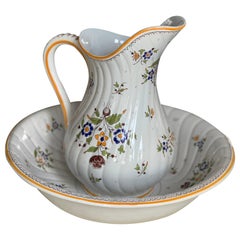
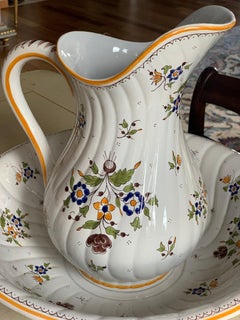
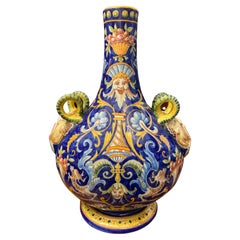
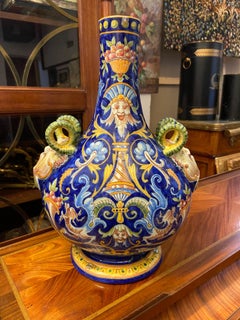
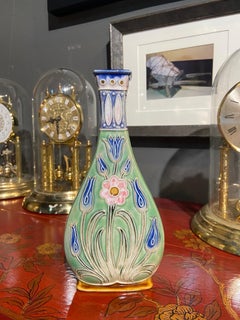
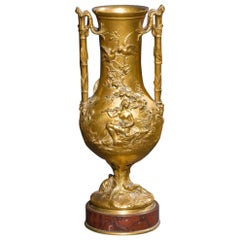
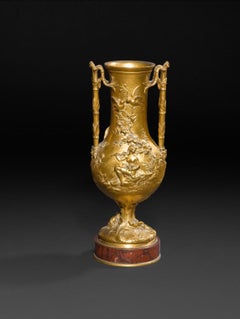
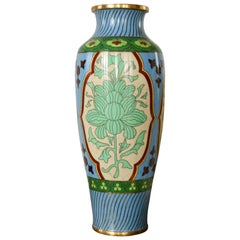
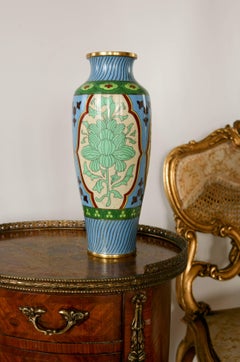
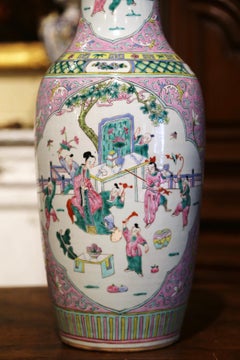
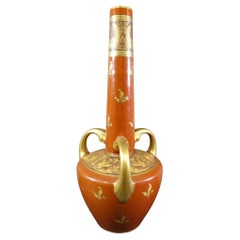
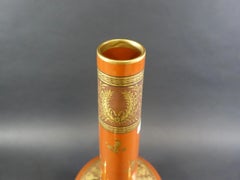
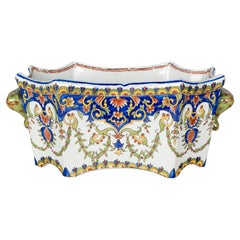
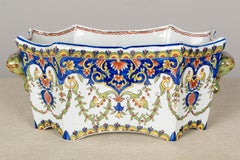
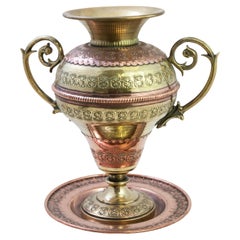
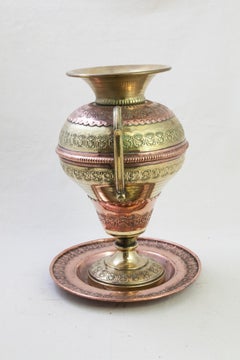
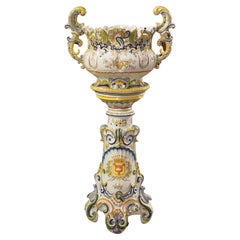
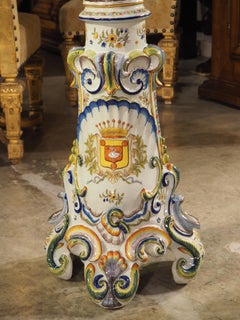
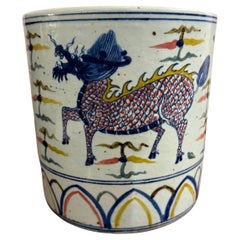
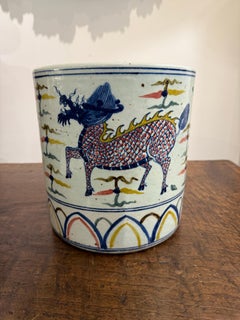
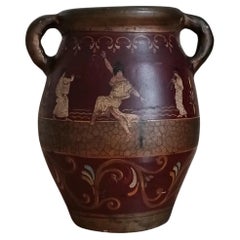
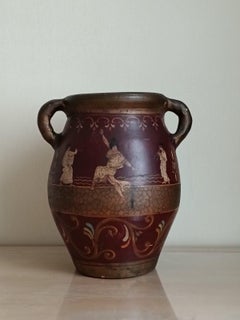
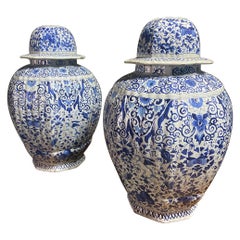
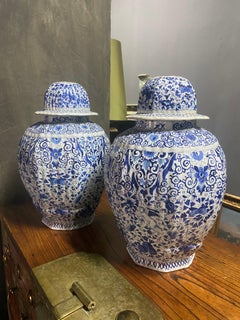
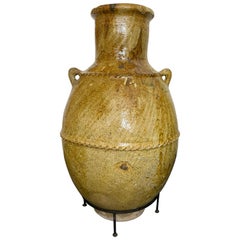
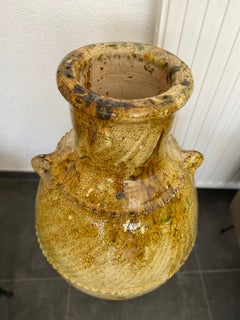
The Kingdom of Morocco is renown for its pottery, covered with complex geometric, arabesque and beautiful, rich patterns. Moroccan art has been influenced by a diversity of cultures due to being occupied by Romans, Vandals, Visigoths, Byzantine Greeks (278 AD-429 AD) and the conquering Arabs who introduced their Islamic civilization in the late 7th century. The indigenous Berber tribes were generally converted to Islam around this time. The intricate hand painted ceramics of Morocco usually reveal designs that have been influenced by Islamic culture. Some tribes in Morocco have been painting the same design for over 200 years.
Their pottery tended to be hand painted with fine details, deep colors, and a variety of hand spun designs. The Muslim Arab invasion and settlement of Morocco and Spain in the 7th–9th century led to an upheaval in the ceramic production of utilitarian & decorative vessels and architectural features. Over 8,000 artisans from Andalusia in Spain were brought into Fez and spread their techniques and styles of Islamic designs using tin oxide, lead fritted, opaque low fire glazes. The infusion of Islamic thought into every aspect of daily life became a prominent influence, where even common utilitarian vessels became the carrier of either a pattern that could be related back to the Infinity of God, or to the Word of God. Islamic patterns based on Muslim principles of a balance between the male (geometric or containing design) and female principle (arabesque, vegetal or foliage decoration) were used. The other common style of Moroccan pottery was of Berber orientation which featured hand built, clay slip decorated tribal pottery, characteristically using signs and symbols to repel evil spirits and insure protection for the owner and potter. The Berbers considered their work more “masculine” than the other more decorative, colorful and “feminine” urban Moroccan pottery.
As the “wild west” of the Islamic world, Morocco quickly became a haven for many dissidents, rebels and refugees from the eastern caliphate. Among these was Idris ibn Abdallah, who with the help of the local Awraba Berbers, founded the Idrisid Dynasty in 788. His son Idris II erected a splendid new capital at Fez and launched Morocco as a centre of learning and a major power. The Imperial city of Fez is one of the kingdom’s most beautiful places. It offers uniquely designed and colored Moroccan ceramics with an Islamic influence viewed in the intricate pattern, colors, design and production. For over six centuries Fez has proudly created the finest Moroccan pottery. Its beauty comes from the complex knowledge of geometry passed on from father to son. Fez is renowned for the choice of cobalt oxide that permits to obtain every shade of blue. Polychrome enameled ware is more respected in Morocco.
In 1660, Morocco came under the control of the Alawite dynasty. It is a sherif dynasty—descended from the prophet Muhammad...
Category
1960s Swiss Mid-Century Modern Vintage Sofia - Vases and Vessels