Texas - Art

to
688
2,261
2,117
1,111
944
1,346
Overall Width
to
Overall Height
to
32
177
3,408
4,165
52
46
87
128
112
228
369
346
304
406
17
1,737
1,276
721
651
433
193
134
46
34
23
23
21
19
4
3,434
3,013
856
2,809
1,438
1,049
839
747
596
583
487
431
410
390
386
311
304
272
270
221
198
166
161
3,927
2,060
1,642
1,464
1,386
83
72
69
65
59
1,951
1,358
231,422
156,398
Item Ships From: Texas
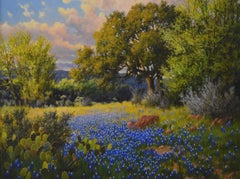
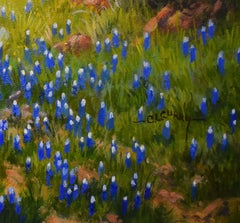
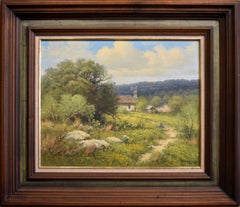
"SEA OF BLUE" BLUEBONNETS TEXAS HILL COUNTRY TEXAS WILDFLOWERS

"SEA OF BLUE" BLUEBONNETS TEXAS HILL COUNTRY TEXAS WILDFLOWERS

By Robert Harrison

Located in San Antonio, TX

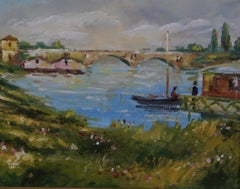
Robert Harrison (Born 1949) San Antonio Artist Image Size: 18 x 24 Frame Size: 24 x 30 Medium: Oil on Canvas Signed "Sea of Blue" Bluebonnets Biography Robert Harrison (Born 1949) Ro...

Category

1990s Impressionist Texas - Art
Materials

Oil

Red Hot Chili Peppers by Ebet Roberts

Red Hot Chili Peppers by Ebet Roberts

By Ebet Roberts

Located in Austin, TX

A classic, stunning shot of the Red Hot Chili Peppers in 1985 by celebrated photographer, Ebet Roberts. Signed limited edition, hand printed silver gelatin print. Ebet Roberts bega...

Category

Late 20th Century Photorealist Texas - Art

Materials

Silver Gelatin

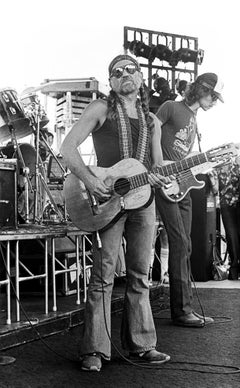
Willie Nelson at the 4th July Picnic 1979

Willie Nelson at the 4th July Picnic 1979

Located in Austin, TX

Willie Nelson, taken at the 4th July Picnic in 1979 in Austin Texas by photographer Scott Newton Signed limited edition print, printed on heavyweight cotton photo rag with a matte f...

Category

21st Century and Contemporary Photorealist Texas - Art

Materials

Archival Pigment

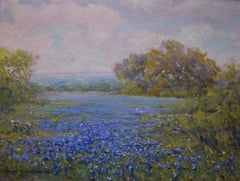
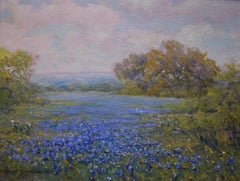
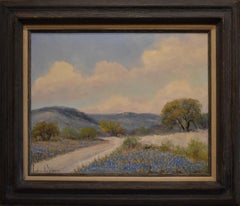
Early Texas Impressionist Country Landscape Painting of Bluebonnet Flowers

Early Texas Impressionist Country Landscape Painting of Bluebonnet Flowers

By Porfirio Salinas

Located in Houston, TX

Early Texas Impressionist country landscape painting by Porfirio Salinas. The work features a field of bluebonnets in full bloom accented by a few trees. Signed and dated in the fron...

Category

1920s American Impressionist Texas - Art

Materials

Canvas, Oil

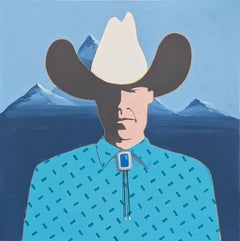
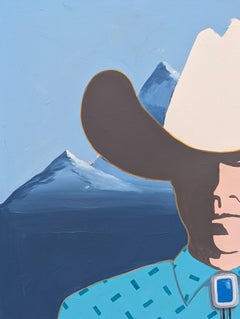
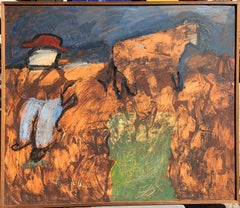
"Erik" Contemporary Abstract Blue Toned Western Cowboy Portrait Painting

"Erik" Contemporary Abstract Blue Toned Western Cowboy Portrait Painting

Located in Houston, TX

Colorful abstract cowboy portrait painting by contemporary artist Ian Francis. The work features a western inspired figure with a shadowed face dressed in a blue shirt and cowboy hat...

Category

2010s Contemporary Texas - Art

Materials

Canvas, Acrylic

Night Shadows
Night Shadows

Edward HopperNight Shadows, 1921

$48,000Sale Price|20% Off

Night Shadows

By Edward Hopper

Located in Plano, TX

Night Shadows. 1921. Etching. Levin 82. 7 x 8 3/8 (sheet 10 x 13 7 1/16).s Series: Six American Etchings: The New Republic Portfolio, 1924. Edition approximately 500-600. Illustrate...

Category

1920s American Modern Texas - Art

Materials

Etching

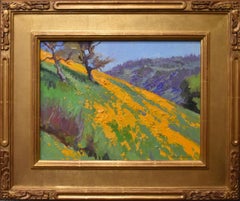
TEXAS BLUEBONNETS TEXAS HILL COUNTRY TEXAS WILDFLOWERS

TEXAS BLUEBONNETS TEXAS HILL COUNTRY TEXAS WILDFLOWERS

By Robert Harrison

Located in San Antonio, TX

Robert Harrison (Born 1949) San Antonio Artist Image Size: 11 x 14 Frame Size: 16 x 20 Medium: Oil on Canvas "Bluebonnets" Biography Robert Harrison (Born 1949) Robert Harrison was b...

Category

1990s Impressionist Texas - Art

Materials

Oil

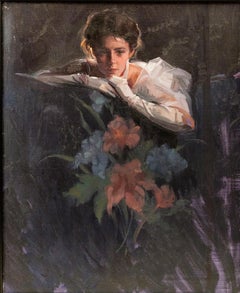
Floral Still Life Oil Painting, Realist Style, 20th Century, Framed

Floral Still Life Oil Painting, Realist Style, 20th Century, Framed

Located in Plano, TX

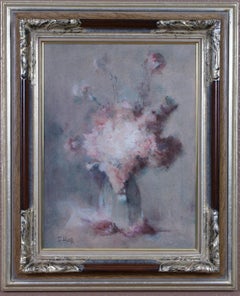
Oil painting measures 12 x 9; frame dimensions measure 19 3/8 x 16 3/8 x 3. Housed in an elegant gold-tone frame with decorative edges. Illegible signature, lower right. Support patc...

Category

20th Century Realist Texas - Art

Materials

Oil

Modern Abstract Painting

Modern Abstract Painting

Located in Houston, TX

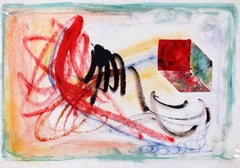
Lively abstract painting with primary tones of yellows, reds and greens with accents of blue and black on white background, 1952. Signed lower right. Original artwork on paper dis...

Category

1950s Texas - Art

Materials

Acrylic

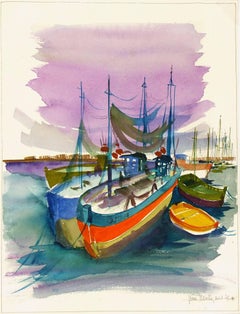
French Watercolor - Fishing Boats

French Watercolor - Fishing Boats

Located in Houston, TX

French watercolor of brightly-colored fishing boats at dusk, 1979. Signed lower right. Original artwork on paper displayed on a white mat with a gold b...

Category

1970s Texas - Art

Materials

Watercolor

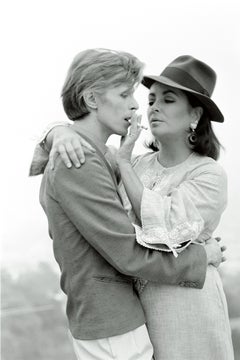
David Bowie by Terry O'Neill - signed lifetime edition print

David Bowie by Terry O'Neill - signed lifetime edition print

By Terry O'Neill

Located in Austin, TX

Profile image of David Bowie from the ‘Yellow Mustard Suit’ series, in Los Angeles, 1974, taken by Terry O'Neill Signed limited edition, hand printed silver gelatin print. Paper s...

Category

Late 20th Century Texas - Art

Materials

Silver Gelatin

Vintage Architectural Drawing

Vintage Architectural Drawing

Located in Houston, TX

Modern pencil drawing of a contemporary architectural design, circa 1970. Original artwork on paper displayed on a white mat with a gold border. Mat fits a standard-size frame. A...

Category

1970s Texas - Art

Materials

Paper, Pencil

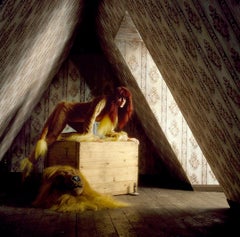
Reclined Female Nude

Reclined Female Nude

By Esther Meyer

Located in Houston, TX

Striking female nude in reclined back seated position on red blanket in ink and watercolor by English artist Esther Meyer, circa 1950. Original artwork on paper displayed on a whit...

Category

1950s Texas - Art

Materials

Ink, Watercolor

"Lilly Pads on the Water" Contemporary Acrylic Painting In the Style of Monet

"Lilly Pads on the Water" Contemporary Acrylic Painting In the Style of Monet

By Robert Gregory Phillips

Located in New York, NY

An abstract expressionist acrylic painting on canvas with wonderful color combinations of soft, pinks, yellow and effortless lines and shapes. Inspired by Claude Monet's Lilly Pads, ...

Category

21st Century and Contemporary Contemporary Texas - Art

Materials

Canvas, Acrylic

Don't Hurt Me

Don't Hurt Me

By Valton Tyler

Located in Dallas, TX

In The New York Times Arts in America column, Edward M. Gomez writes of Valton Tyler, "visionary seems the right word for describing his vivid, unusual and technically refined painti...

Category

1970s Surrealist Texas - Art

Materials

Oil, Linen

Terre d’Argile - Abstract Art in Vintage Frame from France

Terre d’Argile - Abstract Art in Vintage Frame from France

By Amanda Carol Collection

Located in Tomball, TX

Overall Size: 21.75” W × 25-3/8” H Original mixed media on board Plaster, Acrylic, Ink Presented in a vintage Gilt frame sourced in France, circa 1940. This original, hand c...

Category

20th Century Abstract Texas - Art

Materials

Plaster, Ink, Acrylic

"Bluebonnets Texas Hill Country"

"Bluebonnets Texas Hill Country"

Located in San Antonio, TX

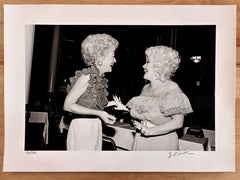
Robert Wood (G. Day) (1889 -1979) San Antonio Artist Image Size: 20 x 24 Frame Size: 29 x 33 Medium: Oil Signed Lower left "Bluebonnet" Biography Robert Wood (G. Day) (1889 -1979) A painter of realistic landscapes reflecting a vanishing wilderness in America, Robert Wood (not to be confused with Robert E. Wood) is reportedly one of the most mass-produced artists in the United States. His painting became so popular he was unable to meet all of the demands, and many of his works were reproduced in lithographs and mass distributed as prints, place mats, and wall murals by companies including Sears, Roebuck. He was born in Sandgate, Kent on the south coast of England near Dover, the son of W.L. Wood, a famous home and church painter who recognized and supported his son's talent. In fact, he forced his son to paint by keeping him inside to paint rather than playing with his friends. At age 12, Wood entered the South Kensington School of Art. As a youth, he came to the United States in 1910, having served in the Royal Army, and he never returned to England. He traveled extensively all over the United States, especially in the West, often in freight cars, and also painted in Mexico and Canada. His itinerant existence took him to Illinois where he worked as a farmhand, to Pensacola, Florida where he married, briefly in Ohio, Seattle, Washington, and Portland, Oregon. In 1912, he was in Los Angeles, and in the late 1920s and early 1930s, in San Antonio, Texas, where he lived and in 1928 exhibited in the "Texas Wildflower Competition." From San Antonio, he gained a national reputation for his strong colored, dramatic paintings. Some of that prestige has been credited to his association with Jose Arpa, prominent Texas artist. Wood also gave art lessons, and one of his students was Porfirio Salinas. During this period, Wood sometimes signed his paintings G. Day or Trebor, which is Robert spelled backwards. In 1941 he went to California and painted numerous desert and mountain landscapes and coastal scenes. He lived in Carmel for seven years, and then moved to Woodstock, New York, but he soon returned to California, settling first in Laguna Beach, then San Diego, and finally in the High Sierras, where he and his wife built a home and studio near Bishop and lived until his death in 1979. Robert Wood was born March 4, 1889, in Sandgate, England, a small town on the Kentish coast not far from the white cliffs of Dover. His father, W. J. Wood, was a successful painter who recognized Robert's unusual talent. At the age of twelve, his father enrolled Wood in art school in the small town of Folkstone. He then attended the South Kensington School of Art. While attending art school, Wood won four first awards and three second awards, one each year, a record. In 1910 after service in the Royal Army, nineteen-year-old Wood and his friend, Claude Waters, immigrated to America. Initially, he settled in Illinois and worked as a hired hand on a farm belonging to Water's uncle. He would then strike out on his own, living the life of an itinerant painter. Wood traveled as a hobo, hopping freight trains and selling or bartering small paintings to support him along the way. When times were hard, he worked at whatever job was available. In this manner, he saw most of the United States and fell in love with rural America. By 1912, Wood visited Los Angeles for the first time, arriving on the day of the Titanic tragedy. Later that year, he had met, courted and married young Eyssel Del Wagoner in Florida. The couple moved to Ohio where a daughter, Florence, was born. During World War I, the family moved to Seattle where a son, John Robert Wood, was born in 1919. In the early 1920's, the young Wood family was almost constantly on the move. They stayed for short periods in Kansas, Missouri, California and for a longer time in Portland, Oregon, where Wood's friend Claude Waters had settled. Wood's seemingly endless wanderings disrupted his family life and delayed his development as a painter. However, through his travels he developed an appreciation for the American landscape that would inspire him for the rest of his career. Although aware of the current movement away from traditional realism in American art, he elected to travel that solitary path and remain true to his own vision of American’s grandeur and beauty poetically translated through his landscape and seascape paintings. In 1923, the Wood family discovered the beautiful city of San Antonio, Texas and it was there that he and his family would finally settle. He studied briefly at the San Antonio Art School with Spanish colorist Jose Arpa y Perea (1860-1952), who had arrived in San Antonio that same year. In the latter part of the 1920’s, Jose Arpa’s influence quickly became evident. Wood after several years of experimentation was becoming fine easel painter, capable of great subtlety with a new mature original style. Like Texas painters Robert Onderdonk (1853-1917) and his son Julian Onderdonk (1882-1922), Robert Wood concentrated on the distinctive Texas landscape with its Red Oak trees and wildflowers that covered the hill country landscape. He developed a reputation for his scenes of Blue Bluebonnets, the state flower. In the spring, the Texas prairie is covered with wildflowers, especially in the hill country surrounding San Antonio and Austin. Wood incorporated native stone barns and rough wood farmhouses that added authenticity and romance to his compositions. In 1925, Wood was divorced from his wife. In 1932, he moved to the famous scenic loop on San Antonio's outskirts. While still living in Texas, he took extensive western sketching trips that brought him to California. It is evident that his 1930’s California...

Category

1950s Impressionist Texas - Art
Materials

Oil

School

School

By John Hartell

Located in Dallas, TX

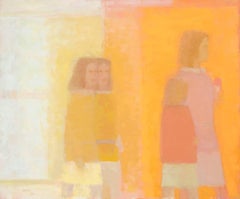
Valley House Gallery is honored to present a selection of paintings from the estate of American artist, John Hartell (1902-1995). John Hartell taught two disciplines at Cornell University in Ithaca, New York: freshman architecture and graduate painting. He was a much-loved professor there from 1930 until his retirement in 1967; one of his most illustrious students is the architect Richard Meier. As an artist, Hartell's first solo exhibition was in 1937 at Kleeman Gallery in New York. He exhibited at Kraushaar Galleries in New York for four decades, beginning in 1943. The Hartell Gallery at Cornell University, under the Sibley Dome, is named for him. In describing John Hartell, the artist Michael Boyd...

Category

Late 20th Century American Modern Texas - Art

Materials

Canvas, Oil

American Abstract Painting

American Abstract Painting

By Kismine Varner

Located in Houston, TX

Eye catching abstract mixed media painting blending vivid jewel tone colors by American artist Kismine Varner, 1990. Signed and dated lower right. Original artwork on paper displa...

Category

1990s Abstract Texas - Art

Materials

Acrylic, Paper

"BLOWIN' IN" WESTERN G. HARVEY PAINTING 28 X 38 FRAME SIZE DATED 1974

"BLOWIN' IN" WESTERN G. HARVEY PAINTING 28 X 38 FRAME SIZE DATED 1974

By G. Harvey

Located in San Antonio, TX

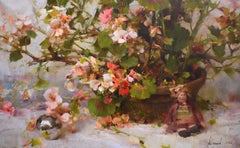
G. Harvey (Gerald Harvey Jones) (1933-2017) San Antonio, Austin, and Fredericksburg Artist Image Size: 20 x 30 Frame Size: 28 x 38 Medium: Oil on Canvas Dated 1974 "Blowin' In" Sign...

Category

1970s Impressionist Texas - Art
Materials

Oil

Tiers
Tiers

Tiers

By David Collins

Located in Dallas, TX

David Collins was raised in Dallas, received a BFA from the Rhode Island School of Design, and currently lives and works in New York City. Collins has had numerous solo exhibitions i...

Category

21st Century and Contemporary Contemporary Texas - Art

Materials

Acrylic, Linen

Willie Nelson Texas 1979 by Charlyn Zlotnik

Willie Nelson Texas 1979 by Charlyn Zlotnik

By Charlyn Zlotnik

Located in Austin, TX

Signed limited edition fine art print of Willie Nelson by Charlyn Zlotnik, taken in Texas, 1979 Charlyn Zlotnik's prints are available in four sizes 11” x 14” - Open edition 17” x ...

Category

Late 20th Century Texas - Art

Materials

Archival Pigment

EDWARD BOHLIN 1920s-1930s SILVER ART PARADE SADDLE HOLLYWOOD WESTERN ARTIST VAIL

EDWARD BOHLIN 1920s-1930s SILVER ART PARADE SADDLE HOLLYWOOD WESTERN ARTIST VAIL

By Edward H. Bohlin

Located in San Antonio, TX

Circa Late 1920s - Early 1930s. It is all Bohlin made and marked to include the saddle, the headstall and the breast collar. All made in Hollywood California. The only non-Bohlin item is the bit which appears to also be early California. There is some interesting provenance of the fine saddle. It was commissioned by Charles R. Bell, married to Margaret Vail Bell who was the daughter of Walter Vail. On the Bolin nameplate it has engraved, Vail Ranch as well as made for Charles Bell. Charles Bell Died in 1939. The Vail Ranch has some great Western History which I will go into a little detail. You see, not only am I selling Saddles, but I’m also selling History. If you want to skip the history lesson you can just scroll down past the following info to images of the saddle. It’s no secret that ranching runs in the family blood. There is no greater example of that than California Rangeland Trust CEO Nita Vail. On April 14, 2018 Nita had the opportunity to witness her great-grandfather Walter L. Vail’s induction into the Hall of Great Westerners at the National Cowboy & Western Heritage Museum. This high honor is bestowed by the Museum to “exceptional individuals who have made an indelible impact upon the history of the great West.” A pivotal figure in early California and Arizona ranching, Walter Vail joins just over only 200 individuals who have been inducted into this esteemed hall. The Vail legacy of advocacy and ranching lives on strongly through his descendants, including Nita. All these years later, Nita carries the mantle of advocacy for ranchers in her own work at the California Rangeland Trust. Reflecting on her great-grandfather’s induction ceremony in Oklahoma, Nita says, “Witnessing my great-grandfather’s induction with family and friends was an incredible experience and a reminder of why I do what I do. Ranching plays an integral role in the culture, economy, and quality of life in California. Generations later, I get to honor Walter L. Vail’s legacy in my work with the California Rangeland Trust every day, preserving those open spaces for new generations and partnering with ranchers to continue to sustain life on the range in California.” Walter Vail History A native of Liverpool, Nova Scotia, Walter Vail purchased the 160-acre Empire Ranch southeast of Tucson, Arizona in 1876, along with an Englishman named Herbert Hislop. In 1882, the Empire Land & Cattle Company was formed with Walter L. Vail as principal shareholder. Over the years Vail, along with various partners, expanded the original land holdings to include over one million acres. The year after Walter purchased the Empire Ranch, the Southern Pacific Railroad built a railroad line, which was great news for the Vail family as it provided a means for them to ship their cattle. Edward L. Vail, George Scholefield and Bird at the mouth of Rosemont Canyon ca. 1896-1898 Standing Up for Ranchers In the fall of 1889, the Southern Pacific Railroad announced they would raise cattle freight rates by 25 percent. They ignored loud protests from ranchers who had already been hit hard by depressed cattle prices. In response, the Vails made a plan to drive the cattle overland themselves without the railroad. They knew that, if they were successful, they could break the railroad’s monopoly on the ranchers and force prices down. Walter’s brother Edward Vail and foreman Tom Turner volunteered to drive the almost 1,000 steers on the 300-mile trip to the Warner Ranch in San Diego. The journey ahead would be grueling. Most of their trip was through desert with water sources 15 to 30 miles apart. The ranchers would face a slew of obstacles—a stampede, a chaotic Colorado River crossing, an encounter with a group of horse thieves. In spite of all the dangers and challenges, they reached their destination. Just 71 days after leaving Arizona, the Empire cowboys arrived at the Warner Ranch. They had only lost 30 steers. The historic Empire Ranch Trail Drive of 1890 inspired other Arizona ranchers to make similar drives as a stand against the railroad. That fall, a group of Arizona cattlemen met and agreed to fund improvements to establish a safe cattle trail from Tucson to California. In response to the united stand of the ranchers, sparked by the Vails, the railroad finally agreed to restore the old freight rate—on the condition that the cattlemen would make no more cattle drives. Walter Vail led by example, but he was also an active representative of ranching interests in the legislature. He served in the 10th Arizona Territorial Legislature in 1878 and in 1884 on the Pima County Board of Supervisors. He introduced two significant bills: One proposing the creation of Apache County in the northeastern corner or Arizona Territory, and the other calling for the repeal and replacement of a Pima County fencing ordinance. Elected to the Arizona Stock Growers Association in 1884, Walter L. Vail advocated for levying fines on outfits that brought diseased cattle into the Territory, proposed a system of recording brands and earmarks, and requested the establishment of the livestock sanitary commission to oversee quarantines on infectious diseases, and tighter trespass laws. Moving to California In the late 1880s when a long drought hit Arizona, the Vails began leasing California pastures and shipping increased numbers of their cattle there to fatten. This marked the beginning of Walter’s efforts to purchase land in Temecula Valley. Vaqueros (Mexican cowboys) at the Empire Ranch in Arizona In 1890, with growing corporate holdings in California, Walter Vail established his headquarters in downtown Los Angeles and moved his family there. By this time, he had pieced together four Mexican land grants—Pauba Rancho, Santa Rosa Rancho, Temecula Rancho and Little Temecula Rancho—to form the Pauba Ranch. Eventually, the Vails would own more than 87,500 acres surrounding the little town of Temecula. In 1892 they leased Catalina Island and in 1901-1902 in partnership with J. V. Vickers, they purchased most of the interests in Santa Rosa from the estate of A.P. More. In March of 1894, Vail and Gates joined Vickers in setting up a third cattle company, the Panhandle Pasture Company, with the hopes of expanding new markets in the east. The Panhandle Pasture Company bought seven thousand acres of grassland in Sherman County, Texas, and an equal amount across the line in Beaver County, Indian Territory (later Oklahoma). Walter Vail was tragically killed in a Los Angeles streetcar accident in 1906. After his death, the Empire Land & Cattle Company (later renamed the Vail Company) assumed control of all his ranches and other real estate holdings. Walter had five sons and they would all have a hand in running the various ranches and the Vail Company as whole throughout their lives. The Empire Ranch in Arizona was sold in 1928. The Temecula area ranches continued to operate until it was sold in 1965. Santa Rosa Island, the last of Walter Vail’s holdings, was sold to the National Park Service in 1986, and ranching operations shut down there in 1998. Walter Lennox Vail (May 13, 1852 - December 2, 1906) was an American businessman, cattle dealer, and politician. He is known for his Empire Land & Cattle Company (later the Vail Company), which spanned over one million acres throughout five states.[1] Vail has been called "a pivotal figure in early California and Arizona ranching." Early life Vail was born in Liverpool, Nova Scotia on May 13, 1852, to Mahlon Vail, Sr. and Eliza Vail. Career Empire Ranch The headquarters of the Empire Ranch in the modern day Vail left his family's Plainfield, New Jersey house in the middle of 1875 to pursue riches in the West. He worked for a few months in Virginia City, Nevada as a mine's timekeeper, but in November he wrote of his intention to get involved in Arizona's sheep business. He, along with an Englishman named Herbert R. Hislop, then purchased the Empire Ranch along with its 612 cattle on August 22, 1876. The purchase from Edward Nye Fish and Simon Silverberg cost $1,174 at the time and was only 0.25 square miles (0.65 km2). Vail had met Hislop for the first time in August of that year, at the Lick House in San Francisco. Vail also became the main shareholder of the Empire Land & Cattle Company, which was formed in 1882. Politics Vail additionally served in the House of Representatives on the 10th Arizona Territorial Legislature for two years, starting in 1879. He was one of five representatives from Pima County. There, he proposed the creation of Apache County in the northeast. In 1884, Vail was elected to the Arizona Stock Growers Association, where he introduced many laws relating to cattle farming. California Vail moved his main operations to California in the late 1880s due to a long drought in Arizona. He started leasing Californian land mainly in Temecula Valley, but established his headquarters in downtown Los Angeles. By this time, he had already bought four ranches: the northern half of Rancho Little Temecula, Rancho Pauba, Rancho Santa Rosa, and Rancho Temecula. Later, Vail would own over 135 square miles (350 km2) surrounding the city of Temecula. He also leased Santa Catalina Island and Purchased Santa Rosa Island in 1892 and 1901, respectively. Vail, along with Carroll W. Gates and J.V. Vickers, set up the Panhandle Pasture Company, which bought about 22 square miles (57 km2) in Sherman County, Texas and Beaver County, Oklahoma. Personal life Vail married Margaret "Maggie"[a] Newhall in 1881, with them having five children: Nathan Russel, Mahlon, Mary, Walter Lennox Jr., and William Banning (who used his middle name) together. In 1890, a Gila monster bit Vail on his middle finger, and for years thereafter he experienced bleeding and swelling in his throat, which was thought to be caused by the venom from the bite. Death Vail died at 54 on December 2, 1906, due to complications from a tram (Trolley Car) accident in Los Angeles. He was cremated, then buried at the Hollywood Forever Cemetery on December 6. Legacy Vail's sons took over the company after his death, renaming it to the Vail Company. The Empire Ranch was sold in 1928, and the Temecula ranches were bought by a syndicate of companies, including Kaiser Aluminum, Kaiser Industries, and Macco Realties in 1965. Santa Rosa Island was acquired by the National Park Service in 1986, and ranching ceased in 1998. Vail was inducted into the Hall of Great Westerners at the National Cowboy & Western Heritage Museum in 2018.[2] Various properties have been named after the Vail family including: Vail Headquarters, an outdoor shopping mall, Vail Lake, and Vail, Arizona. In 1867, German immigrant, Louis Wolf, and his Chumash wife, Ramona, built a small adobe trading post next to Temecula Creek. Their Wolf Store helped launch the Temecula community, serving as a saloon, livery stable, legal services, hotel, general store, stagecoach stop, post office, school and employment agency. After Louis and Ramona’s deaths, their land and other Ranchos were purchased by Arizona cattle baron Walter Vail. By 1905, the 87,000-acre Vail Ranch became one of the largest cattle operations in California, stretching from Camp Pendleton to Vail Lake to Murrieta. It operated through the late 1970’s when it was sold to build Temecula’s housing. Some of the ranch’s oldest buildings survived in a cluster around the long-vacant Wolf Store. Together they would wait more than 40 years to be restored and once again become a center for community life in the Temecula Valley. ​ In 1905 after his death, Wolf’s Temecula was purchased by Arizona cattle baron Walter Vail, along with three other Ranchos totaling 87,500 acres. The sprawling Vail Ranch spread from South of Highway 79 to South of Clinton Keith Road, East to Vail Lake Resort and West to Camp Pendleton and continued operations through the late 1970’s when it was sold for housing subdivisions. The remaining buildings that comprised the Vail Ranch Headquarters, several having been demolished, have sat mostly vacant since then awaiting their restoration and re-use. John N. Harvey, Edward L. Vail, Walter L. Vail, 1879 Ned Joins the Partnership - May 1879 In May of 1879 Walter’s older brother, Edward Lang Vail, known as Ned, joined the Empire Ranch partnership. He had no ranching experience but quickly learned. The Empire Ranch herds were finally sufficiently developed for sale, and the Empire Ranch found a ready market in the town of Tombstone and its nearby mines. Walter finally had sufficient funds to begin to pay off some of the loans from his Uncle Nathan and Aunt Anna. North end of the original four rooms of the Empire Ranch House. Empire Ranch Census Records - 1880 The 1880 U.S. Census documents that eight men were living full time at the Empire: the partners, Walter Vail, John Harvey and Ned Vail; John Randolph Vail, Uncle Nathan and Aunt Anna’s son; John Milton Requa, nephew of Isaac Requa who hired Walter in Virginia City; John Dillon, who was instrumental in locating the Total Wreck Mine; Tomás Lopez, a herder; and Mon Ta, the cook. Section of Official Map of Pima County by Roskruge 1893. The Southern Pacific Railroad Arrives in Pantano - April 1880 In 1880 the Southern Pacific Railroad finally reached Tucson and by April it was extended to Pantano, north of the Empire Ranch. The availability of rail transportation was a major boom to the Empire Ranch as it was now possible to sell cattle and beef to markets beyond Southern Arizona. The railroad also increased the availability of goods in Tucson and allowed for much quicker and safer transportation to California and the East. Empire Ranch land acquisitions are highlighted in red. Courtesy of Dave Tuggle Land Holdings Expand-1881-1882 Starting in 1881 the land holdings of the Empire Ranch expanded considerably. They acquired Charles and Agnes Paige’s Happy Valley Ranch near the Rincon Mountains in 1881. 1882 saw the addition of Don Alonzo Sanford’s Stock Valley Ranch totaling over twenty-eight square miles of grassland between the Whetstone and Empire Mountains. Charles Bell Bohlin Saddle. All of the leather has been professionally cleaned and conditioned. All of the sterling has been professionally polished as are all of my saddles. THE BOHLIN BRAND IS AS ICONIC AS THE FAMED WESTERN STARS that wore it. The late actor Richard Farnsworth sported a recognizable gold steer-head Bohlin buckle...

Category

1930s Realist Texas - Art

Materials

Silver

David Bowie The Archer

David Bowie The Archer

Located in Austin, TX

This iconic image of David Bowie as The Thin White Duke was taken by renowned Rock photographer, John Rowlands, on February 26th, 1976, at Maple Leaf Gar...

Category

Late 20th Century Photorealist Texas - Art

Materials

Archival Pigment

Abstract Drawing
Abstract Drawing

Abstract Drawing

By Jorge Miton

Located in Houston, TX

Abstract ink drawing by Spanish artist Jorge Miton, 2005. Signed lower right. Original artwork on paper displayed on a white mat with a gold border. Archival plastic sleeve and Ce...

Category

Early 2000s Texas - Art

Materials

Ink

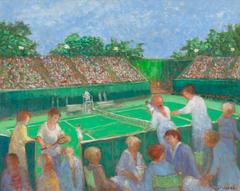
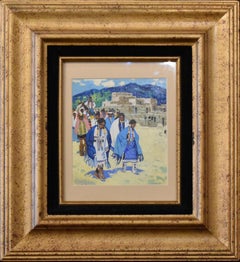
American Impressionist Painting of Women Standing in an Open Field Landscape

American Impressionist Painting of Women Standing in an Open Field Landscape

By André Gisson

Located in Houston, TX

Early American Impressionist oil on canvas painting by New York born artist André Gisson. The work features a group of three women standing in an open field. The loose brushwork give...

Category

Mid-20th Century American Impressionist Texas - Art

Materials

Oil, Canvas

Anthony Bourdain Eating a Hot Dog by Jake Chessum

Anthony Bourdain Eating a Hot Dog by Jake Chessum

By Jake Chessum

Located in Austin, TX

Anthony Bourdain was famous for traveling the globe and exploring the local cuisine in No Reservations and Parts Unknown. As soon as he returned home t...

Category

21st Century and Contemporary Contemporary Texas - Art

Materials

C Print

"THE BRAVE" NATIVE AMERICAN INDIAN PORTRAIT

"THE BRAVE" NATIVE AMERICAN INDIAN PORTRAIT

Located in San Antonio, TX

E. Salazar Texas Artist Image Size: 23.75 x 17.75 Frame Size: 29.5 x 23.5 Medium: Oil "The Brave"

Category

20th Century Impressionist Texas - Art

Materials

Oil

"Bluebonnet Creek"  Texas Hill Country 1957 39 x 49 Framed!!!

"Bluebonnet Creek" Texas Hill Country 1957 39 x 49 Framed!!!

By Porfirio Salinas

Located in San Antonio, TX

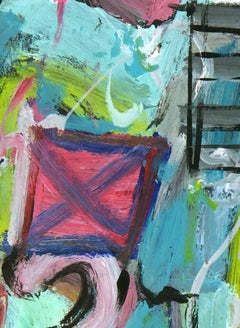
Porfirio Salinas (1910-1973) San Antonio Artist Image Size: 30 x 40 Frame Size: 39 x 49 Medium: Oil on Canvas Dated 1957 "Bluebonnet Creek" Texas Hill Country Biography Porfirio Salinas (1910-1973) Porfirio Salinas was a self-taught artist who painted landscapes of Central Texas with an emphasis on the vast bluebonnet fields that grow there in the springtime. Born in 1910 in Bastrop, Texas, he attended public schools in San Antonio. He also observed works in progress by the director of the San Antonio Art School, Jose Arpa, as well as landscape painter, Robert Wood. Wood is said to have paid Salinas five dollars a picture to paint bluebonnets because "he hated to paint bluebonnets". Salinas served in the military from 1943 to 1945. Although he was assigned to Fort Sam Houston, he was allowed to live at home. At the fort, Colonel Telesphor Gottchalk assigned him to paint murals for the officer's lounge and various other projects, and Salinas continued to be able to paint during his entire conscripted period. Even before he achieved notoriety among galleries, dealers, and museums, Salinas was widely followed and appreciated by many Texans, including former President Lyndon B. Johnson, who may be considered responsible for launching Salinas popularity beyond the boundaries of Texas. In 1973, Texas capital, Austin, honored Salinas for having "done much to bring the culture of Mexico and Texas closer together with his paintings". Salinas died in April 1973 in San Antonio, Texas. From the years of the Great Depression through President Lyndon Johnson's Great Society of the 1960s, Texan Porfirio Salinas (1910-1973) remained one of the Lone Star State's most popular artists. Today, his works remain popular with Texas collectors and those who love landscapes of the beautiful "Hill Country" that lies in the center of the state. One of the first Mexican American painters to become widely recognized for his art, Salinas was a favorite of President Lyndon Johnson and his wife, Lady Bird Johnson, as well as of Sam Rayburn, the longest-serving Speaker of the House of Representatives, and Texas Governor John Connelly. In fact, President Johnson was so enamored with his Salinas paintings that the artist will forever be associated with America's first Texas-born President. Works by Porfirio Salinas are in a number of museum collections, grace the halls of the Texas State Capitol and the Governor's Mansion in Austin, and are included in virtually every major private collection of Early Texas Art. Porfirio Salinas was born on November 6, 1910, near the small town of Bastrop, Texas, about thirty miles from Austin. His father, Porfirio G. Salinas (1881-1967), and his mother, Clara G. Chavez, struggled to make a hardscrabble living as tenant farmers, but eventually were forced to give up farming. The family moved to San Antonio, where Salinas' father was able to get a job working as a laborer for the railroad, but the scenic area around Bastrop, with its pine trees and the wide expanse of the Rio Grande River, would forever remain a touchstone for the artist. For the rest of his life, Salinas and his brothers went back frequently to visit their grandmother in her little farmhouse. When in Bastrop, Porfirio painted on the banks of the Rio Grande or in the groves of pine trees. The Salinas family was close-knit and Porfirio was the middle child of five children, so he had an older brother and sister as well as a younger brother and sister. His mother was a native of Mexico, so throughout his childhood the family made the long drive to Mexico to visit Clara Salinas' family. As a child growing up in the bi-lingual section of San Antonio, Salinas drew and painted incessantly and by the time he was ten, he was already producing work that was mature enough to sell to his schoolteachers. Many years later in an article in the New York Times he was described as a "boy whose textbooks were seldom opened and whose sketchbook was never closed." Instead of studying, the young artist spent his spare time watching artists paint in and around San Antonio. As an aspiring painter, Salinas was fortunate to grow up in the historic city, which had the most active art scene in Texas. It was his exposure to older, professional painters that encouraged the precocious young painter to leave school early in order to help his family and pursue a career as a professional artist, despite his father's inability to see art as a career with any future for his son. When Salinas was about fifteen he came to know the artist Robert W. Wood (1889-1979). He met Wood while he was employed in an art supply store and he soon began to work as an assistant to the English-born painter, who had moved from Portland to San Antonio in 1924. Although the diminutive Englishman was already an established professional artist, he did not have a great deal of formal art training and so he was then studying with the academically trained Spanish painter Jose Arpa (1858-1952) in order to augment his knowledge and give his work a more polished look. Salinas was an eager young man, and while working in Wood's downtown San Antonio studio he learned to stretch canvases, frame paintings and to sketch in larger compositions from small plein-air studies for the English artist. He began to accompany Wood and Arpa to the hills outside San Antonio, where they painted small Plein-air studies of fields of blue lupin - the state flower, the famous "Bluebonnets" of Texas - in the springtime and scenes of the gnarled Red Oaks as they changed color in the fall. He was soon assisting Wood in the tedious work of painting the tiny blue flowers that collectors wanted to see in the landscapes they purchased of central Texas. According to a 1972 newspaper story, "Legend has it that one day in the 1920s artist Robert Wood decided he could not bear to paint another bluebonnet in one of his landscapes. He hired young Porfirio Salinas to paint them in for him at five dollars a painting." Whether this story is accurate or apocryphal isn't clear, but the ambitious and independent young Salinas wasn't destined to be anyone's assistant for very long. The formative event of Porfirio Salinas' teenage years was the Texas Wildflower Competitive Exhibitions, a Roaring-Twenties dream of the eccentric oilman Edgar B. Davis (1873-1951). These competitive shows of paintings of wildflowers and Texas life were mounted in San Antonio from 1927 to 1929. Held at the newly opened Witte Museum each spring, the exhibition featured large cash prizes donated by the philanthropic Davis, which were an inducement for artists to travel from all over the United States to paint in the Hill Country of Texas. The "Davis Competitions," as they were known, helped to cement San Antonio's reputation as an art center, a legacy that remains with the "River City" today. The shows generated a great deal of excitement in the area, helping to make celebrities of the some of the artists who had already settled there and encouraging others to make San Antonio their home. Over the three years that the wildflower competitions were held, more than 300 paintings were exhibited, and many thousands of viewers saw the paintings at the Witte Museum and on tours throughout the state and in New York. Each year Davis would generously purchase the winning paintings and then donate them to the San Antonio Art League. Young Porfirio Salinas would have been able to not only watch his two mentors - Robert W. Wood and Jose Arpa - paint the works that they entered in the Davis Competitions, he would have been able to see Arpa take several of the major prizes, receiving the judge's accolades for "Verbena," "Cactus Flower" and "Picking Cotton," works that are still on view at the San Antonio Art League Museum today. Unfortunately, Davis eventually put his donations to work in other charitable endeavors, bringing to an end the wildflower events, but only after they inspired Salinas and other young painters and had helped to make wildflower paintings the most sought-after subject for traditionalist Texas collectors. In 1930, when he was only twenty, Salinas hung out a shingle and began to paint professionally, augmenting the sales of his easel paintings with what little business he could garner by painting signs for local concerns. It was a struggle for the young artist to make a living, as the effects of the Great Depression were settling in. His early works are very similar to those of Robert Wood's, both in subject matter and treatment. Salinas did small paintings of Bluebonnets for the tourists who visited San Antonio to see the famous Alamo as well as paintings of the Texas missions...

Category

1950s Impressionist Texas - Art
Materials

Oil

David Bowie "Watch That Man IV" by Sukita

David Bowie "Watch That Man IV" by Sukita

By Masayoshi Sukita

Located in Austin, TX

16" x 20", signed limited edition print of David Bowie by Masayoshi Sukita. Taken at RCA Studios, New York, 1973. As featured in the new movie, Moonage Daydream. This print is also ...

Category

Late 20th Century Photorealist Texas - Art

Materials

C Print

"Mountain Road" Contemporary Realistic Colorado Aspen Tree Landscape Painting

"Mountain Road" Contemporary Realistic Colorado Aspen Tree Landscape Painting

Located in Houston, TX

Contemporary realistic Colorado landscape nature painting by Houston based artist Jerry Greenberg. The work features sunlight streaming onto a rock path lined with aspen trees. Signed in the front lower right corner as well as titled on the reverse. Currently hung in a gold frame. Dimensions Without Frame: H 24 in. x W 24 in. Artist Biography: I have a deep appreciation for nature. In my work I seek to convey the landscape as I experience it emotionally as well as visually. I travel frequently throughout the United States and Europe in search of new landscapes. Some of my favorite subjects include rivers and creeks in the Texas hill country; aspen trees in the Rocky Mountains; ponds in New England; and lush rolling hills in the English countryside. My influences include French and Russian Impressionists and early California landscape...

Category

2010s Naturalistic Texas - Art

Materials

Oil

Untitled (Interior)

Untitled (Interior)

By Allison Gildersleeve

Located in Dallas, TX

"Behind my canvases, collages, and drawings lies a singular proposition: places are not inert; they are repositories for all that passes through them. My work is an inquiry into the ...

Category

2010s Contemporary Texas - Art

Materials

Paper, Ink, Acrylic

"FLOWERS" STILL LIFE OIL ON CANVAS APPLIED BY PALETTE KNIFE DATED 2001

"FLOWERS" STILL LIFE OIL ON CANVAS APPLIED BY PALETTE KNIFE DATED 2001

By Jose Vives-Atsara

Located in San Antonio, TX

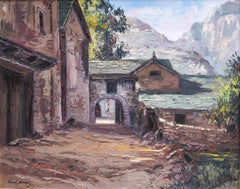
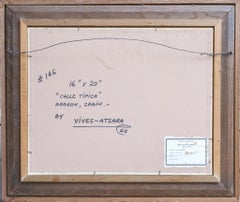
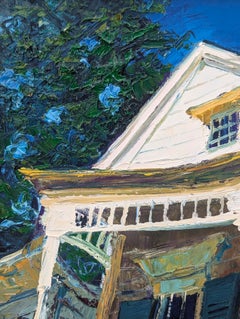
Jose Vives-Atsara (1919-2004) San Antonio Artist Image Size: 30 x 24 Frame Size: 38.75 x 32.75 Medium: Oil on Canvas Applied by Palette Knife Dated 2001 "Flowers" Biography Jose Vives-Atsara (1919-2004) His list of Pallbearers says it all. They were not just buyers of his art they were some of his closest friends. Pallbearers: E. Glenn Biggs, James M. Cavender, III, Tom C. Frost, Jr., James W. Gorman, Jr., George B. Irish, Joseph R. Krier, Robert L. Mooney and H. Bartell Zachry, Jr. Jose Vives-Atsara was born April 13, 1919, in Villafranca del Penedes near Barcelona, Spain. A native Spaniard, he developed a love of painting at an early age, and by age 11 had committed himself to becoming an artist. He studied at Colegio de San Ramon and had his first one-person show at age 14. The Spanish Civil interrupted his idyllic young life as he was forced to serve in the Communist Army, and then was imprisoned, suffering many hardships. Soon after the war he married Emilia Hill Domenech, and in 1947 set out to move with his wife and child aboard a tramp steamer to the United States. Unfortunately, immigration quotas did not allow them to move directly to the United States, and it was eight years before they achieved that goal. During this interim before obtaining temporary visas, he and his family lived first, in Caracas, Venezuela and then in Mexico City, Mexico. The family settled in San Antonio, Texas, where he had made friends on a previous visit. He and his wife and children gained citizenship in time for their first Christmas in the United States. He became such an exemplary immigrant citizen that officials of the U.S. District Court for the Western District Court regularly invited him to share his thoughts and advice for living in America with newly naturalized citizens Vives-Atsara also developed a close relationship with the Incarnate Word College, becoming, over the years, both a professor of art, and Artist in Residence. As a painter, he depicted many local scenes including San Antonio missions and the San Antonio River. For special guests such as Pope John Paul II, heads of state, and royalty from foreign countries, he was commissioned to provide paintings as gifts. His paintings were also commissioned for Frost Bank and the San Antonio Chamber of Commerce. For his vibrant oil paintings, he used only nine colors, mixed in a variety of ways. They have been described as both realistic and impressionistic. "Vives-Atsara believed that art is a reflection of the artist's soul, if this is true; his paintings reflect a beautiful, bright spirit." (Richardson) Jose Vives-Atsara died in San Antonio on January 13, 2004 and is buried there in Sunset Memorial Park Mausoleum. Jose Vives-Atsara was born in Vilafranca del Panades in the Catalonian region of Spain on April 30, 1919. As a small boy he loved to sketch with pencil and paper. He began painting at the age of eleven. His first one-man show came at the ripe old age of fourteen. From that time on, painting has been his love and his way of life. Jose studied art at Saint Raymond College and School of Fine Arts in Barcelona. He is quick to admit that his most inspirational teacher has been nature itself. Mr. Vives-Atsara came to San Antonio in 1956 where he has established his art career. His use of a palette knife in painting allows him to blend rich pure pigments to achieve his goal of creating a powerful statement of color directly on the canvas. This style is intended to produce works that are distinctively 'Vives-Atsara'. Vives-Atsara is represented in public collections including the Museum of Modern Art, Spain; Fort Worth Art Museum, Texas; His Royal Highness Juan Carlos...

Category

Early 2000s Impressionist Texas - Art
Materials

Oil

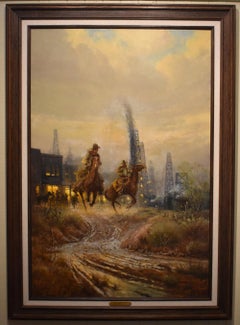
MARTIN GRELLE "Night Stop",  WESTERN HORSES SHACK NOCTURNAL 24 x 36 CANVAS

MARTIN GRELLE "Night Stop", WESTERN HORSES SHACK NOCTURNAL 24 x 36 CANVAS

By Martin Grelle

Located in San Antonio, TX

Martin Grelle (Born 1954) Clifton Texas Artist Image Size: 24 x 36 Frame Size: 33 x 45 Medium: Oil on Canvas 1978 "Night Stop" Nocturnal Western painting Signed lower left Biography Martin Grelle (Born 1954) Martin Grelle, b. 1954, Clifton, Texas, (United States) Born and raised in Clifton, Texas, Martin Grelle still lives on a small ranch a few miles from town. His studio sits in the picturesque Meridian Creek Valley, surrounded by the oak & cedar-covered hills of Bosque County, just a short distance from his home, but also within a few miles of the family and friends who are so important in his life. He has two sons, Josh & Jordan, who have left home to pursue their own dreams, but who stay in touch frequently. Martin's parents, Ervin & Ella, have both passed from this life, but he still has his brothers, Carl & Marvin, living nearby, as well as his sister, Mary, who lives in Ft. Worth. Martin began drawing and painting when he was very young, and was fortunate to have James Boren and Melvin Warren, two professional artists and members of the Cowboy Artists of America, move to the area when he was still in high school, and it has had a lasting impact on his direction and career. Mentored by Boren, he had his first one-man show at a local gallery within a year of graduating from high school in 1973. In the nearly 40 years since that time, he has produced some 30 one-man exhibitions, including annual shows in Scottsdale, Arizona since 1989, and has won awards of both regional and national importance at shows around the country. He was invited into membership with the Cowboy Artists of America in 1995, fulfilling a dream begun in the early 70's when he first met Boren and Warren. That same year he was invited to participate in the first Prix de West Invitational at the National Cowboy and Western Heritage Museum in Oklahoma City. Since that time, he has won the Prix de West Purchase Award, twice (one of only seven artists to do so), the Nona Jean Hulsey Rumsey Buyers' Choice Award, twice, the CA People's Choice Award in 2002, the CA Ray Swanson Award in 2008, the CA Buyers' Choice Award in 2011 and 2012, and the Silver Award for Water Solubles in 2012. He was awarded the Legacy Award by The Briscoe Museum in 2012, for his impact on western art. Other major invitational exhibitions and sales Martin has participated in include The Masters at the Autry Museum in Los Angeles, and the inaugural Quest for the West at the Eiteljorg Museum in Indianapolis, the Coeur d'Alene Auction, and the Jackson Hole Art Auction. Martin has also been featured in a number of publications throughout his career, including multiple appearances in the following magazines: Art of the West, Western Art Collector, Southwest Art, Western Art and Architecture, Persimmon Hill, American Cowboy, Western Horseman, Informant, Wild West, and True West's magazine's 2011 Best of the West Source Book. He was honored with a retrospective showing of his work, along with fellow CA artist, Herb Mignery, for the Gilcrease Museum's Rendezvous Show 2013. Martin has a real sense of responsibility to his collectors, which fills his heart every morning when he walks into the studio, believing that what he does is a gift entrusted to him from God, and must not be left unused or taken for granted, but developed and improved upon. His parents and Jim and Mary Ellen Boren, all set that example for him - an example of not only striving to be the best artist he can be, but the best man he can be as well. Beyond his studio, Martin strives to pass on what others have passed to him. He has given multiple demonstrations around the country, teaches an annual weekend workshop along with his good friend, and fellow CA, Bruce Greene - which they have done for 22 years straight - and mentors other aspiring artists by critiquing their work. He has donated work to a large number of organizations to aid in their progress, including The Bosque Arts Center in Clifton, Texas. He has twice served on the board of directors for the CA organization and is currently serving as President. He is also involved with The Joe Beeler Foundation, founded by the Cowboy Artists of America to coincide with their mentoring program, which provides scholarship opportunities for artists seeking to improve their skills, and has served as President of the Foundation for the past year as well. Education Self-taught; mentored by James Boren Cowboy Artists of America Museum, Kerrville, TX, Workshop, Harvey Johnson/Melvin Warren, 1983 Bosque Conservatory, Clifton, TX, Workshop, Bettina Steinke...

Category

1970s Impressionist Texas - Art
Materials

Oil

Rembrandt van Rijn - Christ Between His Parents, Returning from the Temple -1820

Rembrandt van Rijn - Christ Between His Parents, Returning from the Temple -1820

By Rembrandt van Rijn

Located in Dallas, TX

Offered here is a compelling later impression of one of Rembrandt’s most intimate biblical subjects, Christ Between His Parents, Returning from the Temple. Executed originally in 1654, the composition captures the youthful Christ walking between Mary and Joseph following the episode in Jerusalem, rendered with remarkable psychological nuance and economy of line. This impression was printed in the early nineteenth century from Rembrandt’s original copperplate and is accompanied by a historical letter attesting to its authenticity and dating. The letter states in part: “In my opinion and to the best of my knowledge, the etching presented to me by Antonio’s Collection and entitled Rembrandt E van RIJM is an authentic Rembrandt etching made from the plates owned by the Museum of Amsterdam. It is probably an etching third state and would date approximately 1820.” The reference to plates held by the Rijksmuseum situates this impression within the long tradition of posthumous printings drawn from Rembrandt’s original matrices—objects that have been preserved, studied, and occasionally re-inked for carefully supervised editions. With its rich burr, velvety shadows, and expressive linear handling, this impression remains faithful to the master’s conception while offering collectors the opportunity to acquire an authentic Rembrandt etching from a later, historically significant printing. Like many of Rembrandt’s etched works, Christ Between His Parents, Returning from the Temple exists in several states, meaning the copperplate was altered over time as the artist reworked details, added lines, or strengthened passages of shadow. First State (1654) The earliest impressions are prized for their freshness and painterly light effects, with delicate burr and subtle modeling in the figures’ garments and faces. These are rare and typically reside in museum collections. Subsequent States Later states reflect adjustments to shading, contours, and background architecture—often deepening contrasts or clarifying forms as Rembrandt refined the narrative focus of the scene. Third State (circa 1820) By the early nineteenth century, impressions were occasionally pulled from the preserved original plates, producing prints that retain the fully developed image while often showing slightly firmer lines and less burr than seventeenth-century impressions. Such examples are historically important, documenting the continued reverence for Rembrandt’s graphic work and the custodial role of European institutions in safeguarding his plates. The accompanying letter provides valuable documentary support, linking this impression to early twentieth-century scholarship and reinforcing its status as an authentic pull from Rembrandt’s plate...

Category

19th Century Old Masters Texas - Art

Materials

Paper

"THE BANKS" PREMEIR BLACK FOLK ARTIST JOHNNY BANKS DIED 1988

"THE BANKS" PREMEIR BLACK FOLK ARTIST JOHNNY BANKS DIED 1988

By Johnny Banks

Located in San Antonio, TX

Johnny Banks (1912-1988) San Antonio Artist Image Size: 13.5 x 11.75 Frame Size: 19.5 x 17.75 Medium: Mixed Media Dated 1986 "The Banks" Biography Johnny Banks (1912-1988) In my opin...

Category

20th Century Folk Art Texas - Art
Materials

Color Pencil, Mixed Media