By Roy Lichtenstein
Located in New York, NY
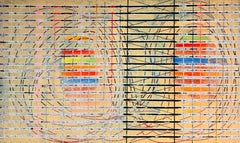
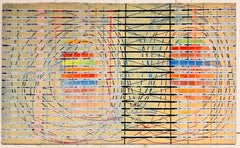
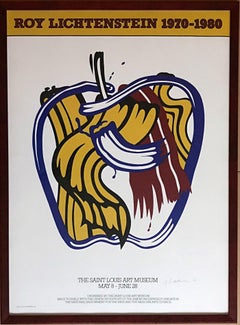
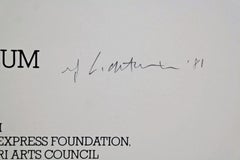
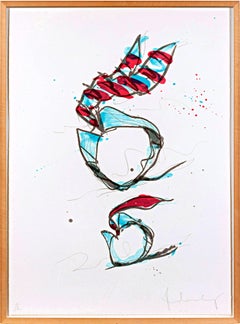
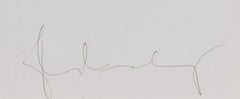
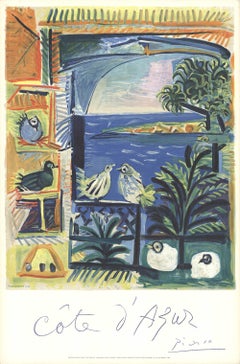
Roy Lichtenstein 1970-1980 (Hand Signed and dated by Roy Lichtenstein), 1981
Offset lithograph. Hand signed and dated in ink
Hand-signed by artist, Hand signed and dated in ink on the front.
One of only 100 the artist signed in 1981 for the St. Louis Art Museum. with Artist's copyright (unnumbered)
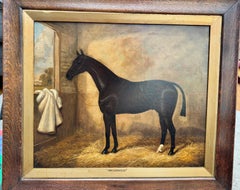
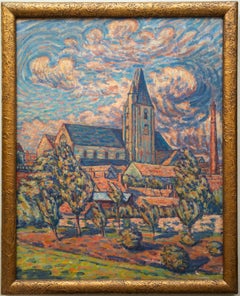
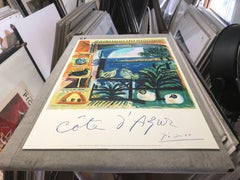
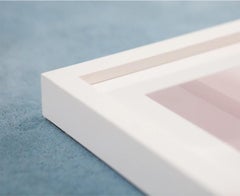
Frame included (vintage frame)
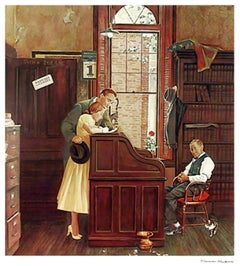
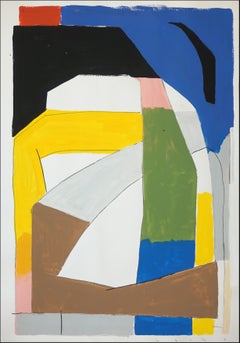
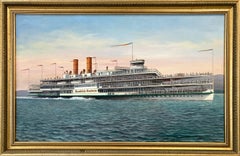
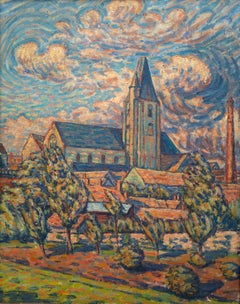
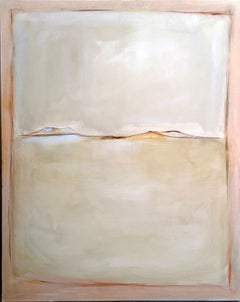
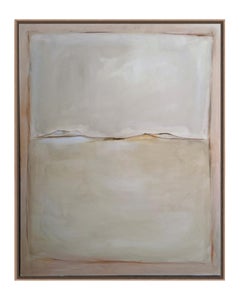
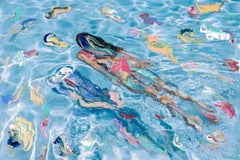
This rare 1981 offset lithograph poster depicting Roy Lichtenstein's "Apple" is one of only 100 prints the artist signed for the Saint Louis Art Museum on the occasion of this 1981 ten year survey. It is extremely rare. It is held in the original vintage wood frame to preserve provenance. The gallery reserves the right to remove the glass for safe shipping.
Measurements:
Framed:
37 inches x 27 inches
Sheet alone:
34.25 inches x 25 inches
Roy Lichtenstein:
A key figure in the Pop art movement and beyond, Roy Lichtenstein grounded his profoundly inventive career in imitation—beginning by borrowing images from comic books and advertisements in the early 1960s, and eventually encompassing those of everyday objects, artistic styles, and art history itself. Referring to Lichtenstein’s equalizing treatment of the subjects he chose for his art, Richard Hamilton, a fellow Pop artist, wrote in 1968: “Parthenon, Picasso or Polynesian maiden are reduced to the same kind of cliché by the syntax of the print: reproducing a Lichtenstein is like throwing a fish back into water.”1
Lichtenstein later recalled that 1961, the year he completed Girl with Ball, marked a break with both his own abstract style and “prevailing taste” in the art world. “Although almost anything seemed to be fair subject matter for art,” he recalled, “commercial art and particularly cartooning were not considered to be among those possibilities.”2 The figure from Girl with Ball came from a printed advertisement for the Mount Airy Lodge, in Pennsylvania’s Pocono Mountains, and he based another painting, Drowning Girl, on a comic book cover. In these two paintings and throughout his other work, Lichtenstein would copy the source image by hand, adjusting its composition to suit his narrative or formal aims, and then trace this altered sketch onto the canvas, aided by a projector.
In this rigorously manual process, he used perforated templates to replicate and often exaggerate the dot patterning commonly used in printing imagery. Known as Ben-Day dots, this patterning became a signature element of his style, which incorporated the look of mechanical reproduction into the fine-art world of painting. His transformations of the source image typically included reducing the color palette to saturated primaries, eliminating incidental details, heightening contrasts, and “emphasizing the pictorial clichés and graphic codes of commercially printed imagery.”3 In Drowning Girl, for example, Lichtenstein cropped out much of the original scene and modified the statement in the text bubble, amplifying this image of a damsel in distress.
Lichtenstein soon turned his attention from the clichés of commercial print culture to the aesthetic clichés of high art.4 With bold, graphic simulations of brushstrokes in prints like Brushstroke and Brushstrokes, for example, he parodied the autographic mark-making of Abstract Expressionism. Yet where Jackson Pollock had been seen to imbue his skeins of paint with a bravura energy and force, Lichtenstein turned that device into something clichéd, commercial, and reproducible. “Visible brushstrokes in a painting convey a sense of grand gesture; but in my hands, the brushstroke becomes a depiction of a grand gesture,” he later said.5
Art history proved an enduringly rich field for Lichtenstein’s transformations. Concurrent with his Brushstrokes series were explorations of the landscape genre and, in 1969, two volleys at Claude Monet. Monet had also worked serially, devoting multiple canvases to a sustained study of the changing sun as it moved across the facade of the Rouen Cathedral or haystacks in a field. With his Cathedral Series and Haystack Series, Lichtenstein reprised those motifs in his signature Ben-Day dots, making Impressionism, in his words, “industrial.”6 In Artist's Studio “The Dance”, Henri Matisse’s Dance...
Category
1980s Pop Art Abstract Prints
MaterialsInk, Pencil, Graphite, Lithograph, Offset