1910s Landscape Paintings

359 Results
to
79
77
80
93
71
39
Overall Width
to
Overall Height
to
549
3,135
18,270
29,043
400
592
701
735
952
983
1,111
1,023
923
317
158
68
18
3
2
1
1
284
74
2
116
63
49
38
33
21
19
18
17
17
16
11
11
11
10
10
8
8
8
7
351
332
190
183
53
4
3
3
3
3
302
12
208
150
Period: 1910s
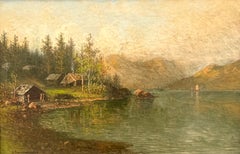
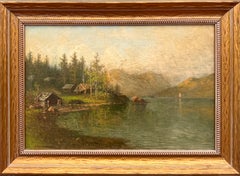
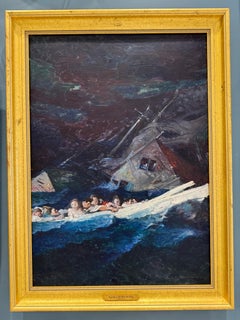
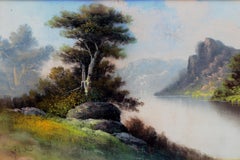
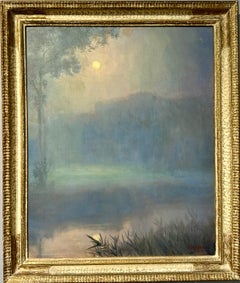
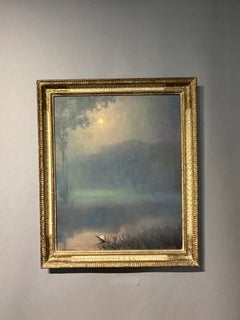
Aurora Over a Northern Lake, Expressionist Oil on Canvas, Framed, 1916

Aurora Over a Northern Lake, Expressionist Oil on Canvas, Framed, 1916

Located in Stockholm, Stockholm

Aurora over a Northern Lake, signed and dated “G Claeson 1916”, oil on canvas. This evocative landscape, executed in an expressionist manner, and on the same time almost modern, cap...

Category

Expressionist 1910s Landscape Paintings

Materials

Canvas, Oil

Giverny, American Impressionist, Karl Albert Buehr, Expatriot, c. 1910

Giverny, American Impressionist, Karl Albert Buehr, Expatriot, c. 1910

By Karl Albert Buehr

Located in Fairlawn, OH

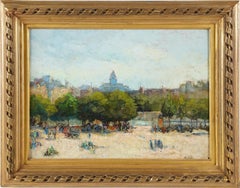
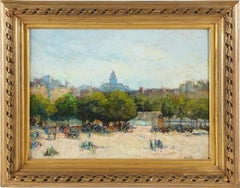
Karl Albert Buehr (1866-1952) Strolling in the Park Oil on canvas, relined, c. 1910 Unsigned Provenance: Gift of the Artist to his wife, Mary Hess Beuhr The artist's niece, daughter of Will Hess David Saltzman Robert Henry Adams Fine Art, Chicago, exhibited 1994 Karl Albert Buehr at Robert Henry Adams Fine Art, Chicago Exhibition dates The exhibition was held in 1994 at Robert Henry Adams Fine Art, 715 North Franklin Street, Chicago. Surviving provenance records describe it as the gallery’s first exhibition at its North Franklin Street location. Works documented as included include Woman on a Patio, Rocky Inlet (France), and apparently other paintings and studies acquired through David Saltzman from the family of Buehr’s wife, Mary Hess Buehr. The 1994 Karl Albert Buehr exhibition at Robert Henry Adams Fine Art represented an important act of historical recovery. Although Buehr enjoyed considerable recognition during his lifetime—as an exhibiting painter, prizewinner, and influential teacher at the School of the Art Institute of Chicago—his reputation had become less visible in the decades following his death. By bringing together paintings and works on paper that had descended through the artist’s family, the Adams exhibition helped restore Buehr to his proper position among the leading exponents of American Impressionism and the most important Chicago-trained painters working in France before the First World War. Giverny was crucial to Buehr’s mature development. American painters had been drawn to the Norman village since the late 1880s, attracted both by Monet’s presence and by the region’s gardens, river valleys, cultivated fields, and distinctive northern light. Buehr did not simply imitate Monet. His figure compositions remained grounded in the academic training he received in Chicago and Paris, but he enlivened that structure with broken brushwork, heightened complementary color, and an increasingly luminous palette. His characteristic compositions place elegantly dressed young women on terraces, beside windows, or within flowering gardens. These figures are neither conventional society portraits nor anonymous decorative accessories. They occupy a carefully balanced space between individual presence and pictorial harmony. Faces and gestures are often quietly observed, while dresses, parasols, flowers, foliage, and shifting sunlight become vehicles for color. Lavender shadows, rose and coral fabrics, emerald foliage, and brilliant passages of yellow or blue transform the garden into a chromatic environment surrounding the sitter. Works associated with the Adams exhibition illuminate the breadth of Buehr’s French production. The pastel Woman on a Patio, circa 1915, demonstrates his ability to translate Impressionist color into the immediacy of a dry medium. Pastel allowed him to place one hue directly beside another without losing intensity. The resulting surface possesses a soft atmospheric unity while retaining the energy of individual strokes. The work’s history—gifted by Buehr to Mary Hess Buehr and subsequently descending through her family—also gives it a particularly intimate character. Rocky Inlet (France) presents another aspect of Buehr’s practice. In place of the cultivated garden and poised female figure, the artist confronts a rugged coastal landscape. Yet his essential concern remains light acting upon color. Rock, water, and vegetation are constructed through abbreviated touches rather than continuous modeling. The small scale suggests direct observation, possibly an outdoor study made during Buehr’s travels in Normandy. Its provenance likewise begins with Mary Hess Buehr and passes through the family before reaching David Saltzman and Robert Henry Adams Fine Art. This family provenance was central to the significance of the 1994 exhibition. The works had not merely circulated anonymously through the market; many retained a direct association with the artist’s household. Such a group could include informal studies, experimental compositions, and personal gifts that Buehr elected to keep rather than send to public exhibitions. Together they offered a more private and exploratory view of his career. Condition: relined canvas and cleaned Image/Canvas size: 10 x 9 inches Frame: 16-3/4 x 15-3/4 x 1-3/4 inches Karl Albert Buehr (1866–1952): France and the Giverny Years Karl Albert Buehr—whose surname is sometimes misspelled “Beuhr”—was a German-born American painter and influential teacher associated with the second generation of American Impressionists working at Giverny. Although his artistic identity was rooted in Chicago, the years he spent in France transformed his palette, subject matter, and approach to painting. Born on February 14, 1866, in Feuerbach, near Stuttgart, Buehr immigrated with his family to Chicago, probably in 1881. After working briefly for a commercial lithographer, he enrolled at the School of the Art Institute of Chicago in 1888. He studied with John H. Vanderpoel and graduated with honors in 1894, after which the school invited him to teach. He also served in the Illinois cavalry during the Spanish-American War and married Mary Guion Hess, one of his students and an accomplished artist in her own right. Early study in Europe Buehr’s European education unfolded in several stages. Around 1900 he settled in Paris and studied at the Académie Julian, principally under the French painter Raphaël Collin. Collin was known for idealized female figures placed in luminous outdoor settings, a combination of academic draftsmanship and Impressionist light that anticipated Buehr’s mature work. Buehr reportedly received a gold medal at the Académie in 1901. His early European paintings included portraits, landscapes, and scenes of rural labor. Visits to Holland exposed him to the restrained tonalism of the Hague School, while his travels in Italy—particularly Taormina, Sicily, during 1906 and 1907—encouraged a brighter response to Mediterranean sunlight. He also studied in London, where his contacts with Frank Brangwyn and the decorative currents of British painting strengthened his interest in broad design, rhythmic composition, and large arrangements of figures. A decisive factor in this extended European residence was the patronage of Chicago philanthropist Lydia Coonley Ward. From approximately 1906 until 1913, Ward provided Buehr with a monthly stipend, enabling the artist, his wife, and their children to remain abroad and pursue their work without the immediate pressures of the American market. Buehr at Giverny Buehr entered the Anglo-American artistic community at Giverny around 1909, probably through his friendship with Henry Salem Hubbell, another American figure painter supported by Lydia Coonley Ward. From approximately 1909 through 1912, Buehr generally spent winters in Paris and the warmer months at Giverny. In 1912 and the summer of 1913, the family reportedly lived at Sainte-Geneviève-lès-Gasny, close to Giverny. By this date Giverny was no longer merely the village in which Claude Monet lived. It had become an international artists’ colony, particularly attractive to American painters who admired Impressionist color but wished to retain firm drawing and carefully organized figure compositions. Buehr’s associates included Frederick Carl Frieseke, Richard Edward Miller, Guy Rose, Lawton Parker, Louis Ritman, Edmund Greacen, Karl Anderson, and Theodore Earl Butler. Buehr was especially close to the circle of Frieseke and Miller. These artists specialized in decorative paintings of fashionably dressed women reading, sewing, taking tea, or resting in sunlit gardens. Their figures were surrounded by flowers, patterned fabrics, parasols, and flickering passages of colored light. Buehr adopted this repertoire, but his paintings usually retained a stronger structural organization and a more assertive contrast between complementary colors. During his first months at Giverny, Buehr worked on a large decorative panel of dancing figures. The composition received an honorable mention at the Paris Salon of 1910, an important professional recognition. That summer, however, he increasingly turned toward intimate garden scenes and outdoor figure studies. The influence of Richard Miller can be detected in the decorative arrangement of the figures, while Frieseke’s example encouraged Buehr s use of brilliant sunlight, patterned surfaces, and saturated hues. Relationship with Claude Monet Claude Monet was Buehr’s artistic hero, but the extent of their personal relationship should not be overstated. Buehr’s children played with the children of Theodore Butler, Monet’s son-in-law, and they visited the Monet household. Buehr’s daughter Kathleen later recalled that Monet was gracious to the children. Nevertheless, the best available scholarship suggests that no close personal association between Buehr and Monet has been documented. Monet’s importance to Buehr was therefore primarily artistic. At Giverny, Buehr learned to regard colored light as a central subject rather than merely a means of describing objects. Shadows became violet, blue, or green; white dresses reflected the surrounding garden; and faces and arms were modeled through small strokes of warm and cool color. The enclosed garden also became a kind of outdoor studio in which human figures, flowers, fabrics, and sunlight could be orchestrated into a unified decorative design. The Giverny style Buehr became best known for paintings of young women seated or standing in gardens, often accompanied by colorful parasols. Works such as Springtime in Giverny, Under the Parasol, and related pictures of women reading or conversing exemplify his mature style. Although inspired by French Impressionism, these paintings are not spontaneous transcriptions of fleeting visual experience in the strict Monet tradition. They are carefully staged figure compositions. Buehr himself explained that the outdoor figure painter should concentrate upon the ensemble—grouping, arrangement, and color—rather than laboriously describing every feature. This principle helps distinguish his Giverny paintings...

Category

American Impressionist 1910s Landscape Paintings
Materials

Oil

Antique French Impressionist Sunlit Landscape Framed Original Early Oil Painting

Antique French Impressionist Sunlit Landscape Framed Original Early Oil Painting

Located in Buffalo, NY

Antique French landscape oil painting. Sun dappled forest path. Oil on canvas. Framed. Measuring: 18 by 21 inches overall, and 13 by 16 painting alone. Excellent condition, ready to...

Category

Impressionist 1910s Landscape Paintings

Materials

Canvas, Oil

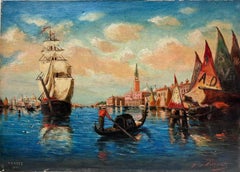
The Grand Canal Venice Antique 1910 Signed Oil Painting on Canvas Many Boats

The Grand Canal Venice Antique 1910 Signed Oil Painting on Canvas Many Boats

Located in Cirencester, Gloucestershire

Shipping on the Grand Canal, Venice signed & dated 1910 oil on canvas, unframed canvas: 13 x 18 inches provenance: private collection, Europe condition: basic good condition though w...

Category

Victorian 1910s Landscape Paintings

Materials

Oil, Canvas

“Norwegian Lakeside Landscape”

“Norwegian Lakeside Landscape”

Located in Southampton, NY

Original oil on canvas painting of a lakeside Norwegian landscape complete with several rustic cabins and snow covered mountains in the background. The artist of the painting is Joh...

Category

Academic 1910s Landscape Paintings

Materials

Canvas, Oil

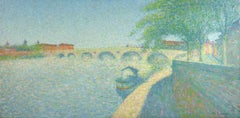
The Bridge Over the Sauceron at Nesles la Vallée (Val d'Oise) Maurice de Lambert

The Bridge Over the Sauceron at Nesles la Vallée (Val d'Oise) Maurice de Lambert

Located in SANTA FE, NM

"The Bridge upon the Sauceron at Nesles la Vallée (Val d'Oise), 1918" Maurice Walter Edmond de Lambert (French, 1873-1952) Oil on cardboard Signed and dated lower right 10 3/4 x 8 3/...

Category

Post-Impressionist 1910s Landscape Paintings

Materials

Oil, Cardboard

Red Sky
Red Sky

Red Sky

By Warren W. Sheppard

Located in Greenville, DE

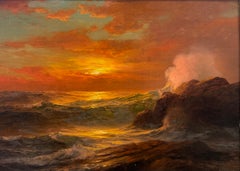
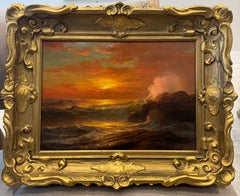
Spectacular example of Warren Sheppard's work, from what most consider his best period. Sunset (possibly, sunrise) executed with strong orange/red palette, and rock formations, maki...

Category

American Realist 1910s Landscape Paintings

Materials

Canvas, Oil

The Blue Pool - Cassis - Impressionist Landscape Oil Painting by Dorothea Sharp

The Blue Pool - Cassis - Impressionist Landscape Oil Painting by Dorothea Sharp

By Dorothea Sharp

Located in Marlow, Buckinghamshire

Signed oil on panel landscape circa 1913 by English impressionist painter Dorothea Sharp. This incredible piece depicts a view of the Blue Pool in Cassis, capturing the vivid, sun-da...

Category

Impressionist 1910s Landscape Paintings

Materials

Oil, Panel

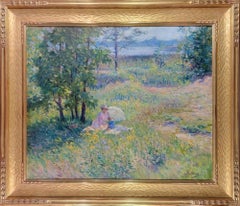
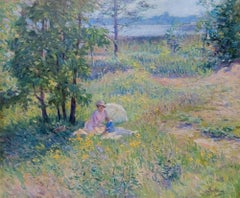
Giverny Landscape, Karl Albert Buehr, c. 1912, American Impressionism, Expatriot

Giverny Landscape, Karl Albert Buehr, c. 1912, American Impressionism, Expatriot

By Karl Albert Buehr

Located in Fairlawn, OH

Karl Albert Beuhr (1866-1952) Giverny Landscape Oil on relined canvas, c. 1912 Signed lower right: K A Buehr Condition: Canvas relined for support Image size: 13 1/4 x 15 3/8 inches Frame size: 19 5/8 x 21 7/8 inches Provenance: Gift of the artist to his wife, Mary Hess Beuhr The artist's niece, daughter of Will Hess Buehr David Saltzman Robert Henry Adams Thomas French Fine Art Mr. and Mrs. Thomas Horner, Canton, Ohio Exhibited: Canton Museum of Art, Impressionism: An American View, 1983, label on verso Karl Albert Buehr at Robert Henry Adams Fine Art, Chicago Exhibition dates The exhibition was held in 1994 at Robert Henry Adams Fine Art, 715 North Franklin Street, Chicago. Surviving provenance records describe it as the gallery’s first exhibition at its North Franklin Street location. Works documented as included include Woman on a Patio, Rocky Inlet (France), and apparently other paintings and studies acquired through David Saltzman from the family of Buehr’s wife, Mary Hess Buehr. The 1994 Karl Albert Buehr exhibition at Robert Henry Adams Fine Art represented an important act of historical recovery. Although Buehr enjoyed considerable recognition during his lifetime—as an exhibiting painter, prizewinner, and influential teacher at the School of the Art Institute of Chicago—his reputation had become less visible in the decades following his death. By bringing together paintings and works on paper that had descended through the artist’s family, the Adams exhibition helped restore Buehr to his proper position among the leading exponents of American Impressionism and the most important Chicago-trained painters working in France before the First World War. Giverny was crucial to Buehr’s mature development. American painters had been drawn to the Norman village since the late 1880s, attracted both by Monet’s presence and by the region’s gardens, river valleys, cultivated fields, and distinctive northern light. Buehr did not simply imitate Monet. His figure compositions remained grounded in the academic training he received in Chicago and Paris, but he enlivened that structure with broken brushwork, heightened complementary color, and an increasingly luminous palette. His characteristic compositions place elegantly dressed young women on terraces, beside windows, or within flowering gardens. These figures are neither conventional society portraits nor anonymous decorative accessories. They occupy a carefully balanced space between individual presence and pictorial harmony. Faces and gestures are often quietly observed, while dresses, parasols, flowers, foliage, and shifting sunlight become vehicles for color. Lavender shadows, rose and coral fabrics, emerald foliage, and brilliant passages of yellow or blue transform the garden into a chromatic environment surrounding the sitter. Works associated with the Adams exhibition illuminate the breadth of Buehr’s French production. The pastel Woman on a Patio, circa 1915, demonstrates his ability to translate Impressionist color into the immediacy of a dry medium. Pastel allowed him to place one hue directly beside another without losing intensity. The resulting surface possesses a soft atmospheric unity while retaining the energy of individual strokes. The work’s history—gifted by Buehr to Mary Hess Buehr and subsequently descending through her family—also gives it a particularly intimate character. Rocky Inlet (France) presents another aspect of Buehr’s practice. In place of the cultivated garden and poised female figure, the artist confronts a rugged coastal landscape. Yet his essential concern remains light acting upon color. Rock, water, and vegetation are constructed through abbreviated touches rather than continuous modeling. The small scale suggests direct observation, possibly an outdoor study made during Buehr’s travels in Normandy. Its provenance likewise begins with Mary Hess Buehr and passes through the family before reaching David Saltzman and Robert Henry Adams Fine Art. This family provenance was central to the significance of the 1994 exhibition. The works had not merely circulated anonymously through the market; many retained a direct association with the artist’s household. Such a group could include informal studies, experimental compositions, and personal gifts that Buehr elected to keep rather than send to public exhibitions. Together they offered a more private and exploratory view of his career. Karl Albert Buehr (1866–1952): France and the Giverny Years Karl Albert Buehr—whose surname is sometimes misspelled “Beuhr”—was a German-born American painter and influential teacher associated with the second generation of American Impressionists working at Giverny. Although his artistic identity was rooted in Chicago, the years he spent in France transformed his palette, subject matter, and approach to painting. Born on February 14, 1866, in Feuerbach, near Stuttgart, Buehr immigrated with his family to Chicago, probably in 1881. After working briefly for a commercial lithographer, he enrolled at the School of the Art Institute of Chicago in 1888. He studied with John H. Vanderpoel and graduated with honors in 1894, after which the school invited him to teach. He also served in the Illinois cavalry during the Spanish-American War and married Mary Guion Hess, one of his students and an accomplished artist in her own right. Early study in Europe Buehr’s European education unfolded in several stages. Around 1900 he settled in Paris and studied at the Académie Julian, principally under the French painter Raphaël Collin. Collin was known for idealized female figures placed in luminous outdoor settings, a combination of academic draftsmanship and Impressionist light that anticipated Buehr’s mature work. Buehr reportedly received a gold medal at the Académie in 1901. His early European paintings included portraits, landscapes, and scenes of rural labor. Visits to Holland exposed him to the restrained tonalism of the Hague School, while his travels in Italy—particularly Taormina, Sicily, during 1906 and 1907—encouraged a brighter response to Mediterranean sunlight. He also studied in London, where his contacts with Frank Brangwyn and the decorative currents of British painting strengthened his interest in broad design, rhythmic composition, and large arrangements of figures. A decisive factor in this extended European residence was the patronage of Chicago philanthropist Lydia Coonley Ward. From approximately 1906 until 1913, Ward provided Buehr with a monthly stipend, enabling the artist, his wife, and their children to remain abroad and pursue their work without the immediate pressures of the American market. Buehr at Giverny Buehr entered the Anglo-American artistic community at Giverny around 1909, probably through his friendship with Henry Salem Hubbell, another American figure painter supported by Lydia Coonley Ward. From approximately 1909 through 1912, Buehr generally spent winters in Paris and the warmer months at Giverny. In 1912 and the summer of 1913, the family reportedly lived at Sainte-Geneviève-lès-Gasny, close to Giverny. By this date Giverny was no longer merely the village in which Claude Monet lived. It had become an international artists’ colony, particularly attractive to American painters who admired Impressionist color but wished to retain firm drawing and carefully organized figure compositions. Buehr’s associates included Frederick Carl Frieseke, Richard Edward Miller, Guy Rose, Lawton Parker, Louis Ritman, Edmund Greacen, Karl Anderson, and Theodore Earl Butler. Buehr was especially close to the circle of Frieseke and Miller. These artists specialized in decorative paintings of fashionably dressed women reading, sewing, taking tea, or resting in sunlit gardens. Their figures were surrounded by flowers, patterned fabrics, parasols, and flickering passages of colored light. Buehr adopted this repertoire, but his paintings usually retained a stronger structural organization and a more assertive contrast between complementary colors. During his first months at Giverny, Buehr worked on a large decorative panel of dancing figures. The composition received an honorable mention at the Paris Salon of 1910, an important professional recognition. That summer, however, he increasingly turned toward intimate garden scenes and outdoor figure studies. The influence of Richard Miller can be detected in the decorative arrangement of the figures, while Frieseke’s example encouraged Buehr s use of brilliant sunlight, patterned surfaces, and saturated hues. Relationship with Claude Monet Claude Monet was Buehr’s artistic hero, but the extent of their personal relationship should not be overstated. Buehr’s children played with the children of Theodore Butler, Monet’s son-in-law, and they visited the Monet household. Buehr’s daughter Kathleen later recalled that Monet was gracious to the children. Nevertheless, the best available scholarship suggests that no close personal association between Buehr and Monet has been documented. Monet’s importance to Buehr was therefore primarily artistic. At Giverny, Buehr learned to regard colored light as a central subject rather than merely a means of describing objects. Shadows became violet, blue, or green; white dresses reflected the surrounding garden; and faces and arms were modeled through small strokes of warm and cool color. The enclosed garden also became a kind of outdoor studio in which human figures, flowers, fabrics, and sunlight could be orchestrated into a unified decorative design. The Giverny style Buehr became best known for paintings of young women seated or standing in gardens, often accompanied by colorful parasols. Works such as Springtime in Giverny, Under the Parasol, and related pictures of women reading or conversing exemplify his mature style. Although inspired by French Impressionism, these paintings are not spontaneous transcriptions of fleeting visual experience in the strict Monet tradition. They are carefully staged figure compositions. Buehr himself explained that the outdoor figure painter should concentrate upon the ensemble—grouping, arrangement, and color—rather than laboriously describing every feature. This principle helps distinguish his Giverny paintings...

Category

American Impressionist 1910s Landscape Paintings
Materials

Oil

Vue de Provence - Pointillist Landscape Oil by Lucie Cousturier

Vue de Provence - Pointillist Landscape Oil by Lucie Cousturier

Located in Marlow, Buckinghamshire

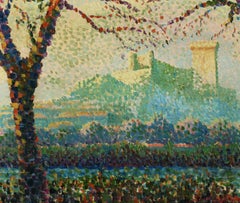
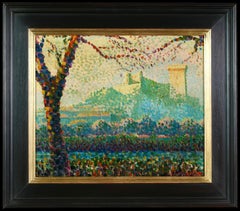
Signed oil on board pointillist landscape circa 1910 by French post impressionist painter Lucie Cousturier. The work depicts a castle on a hilltop in Provence, in the south of France...

Category

Pointillist 1910s Landscape Paintings

Materials

Oil, Board

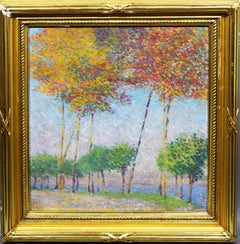
Antique American School Pointillist Fall Landscape Lake View Oil Painting

Antique American School Pointillist Fall Landscape Lake View Oil Painting

Located in Buffalo, NY

Antique American school pointillist landscape painting. Oil on board, circa 1920. Unsigned. Displayed in a period impressionist frame. Image size, 14"L x 16"H.

Category

Pointillist 1910s Landscape Paintings

Materials

Canvas, Oil

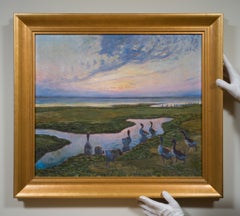
Geese in the Marshland, Falsterbo, 1918

Geese in the Marshland, Falsterbo, 1918

By William Gislander

Located in Stockholm, SE

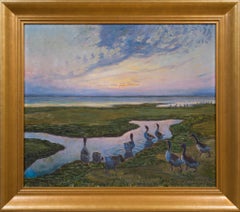
This luminous oil painting by William Gislander captures a tranquil evening scene in the coastal wetlands of Falsterbo, southern Sweden. A group of geese gathers at the edge of a mea...

Category

Romantic 1910s Landscape Paintings

Materials

Canvas, Oil

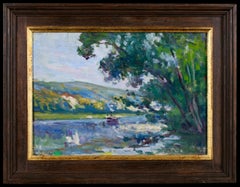
'Rivière de Mon Paix', A Pair of French Impressionist Landscapes, Musée d'Orsay

'Rivière de Mon Paix', A Pair of French Impressionist Landscapes, Musée d'Orsay

By Raoul André Ulmann

Located in Santa Cruz, CA

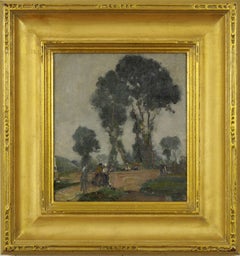
'Rivière de Mon Paix' by Raoul André Ulmann. Pair of Fine French Impressionist Oils, Musée d'Orsay, Luxembourg Museum. Sold as a pair. --- Raoul André Ulmann (French, 1867-1941) Ea...

Category

Impressionist 1910s Landscape Paintings
Materials

Oil, Panel

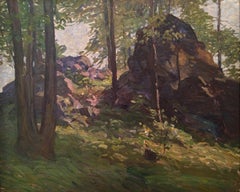
Boulders
Boulders

Boulders

By Newell Convers Wyeth

Located in Greenville, DE

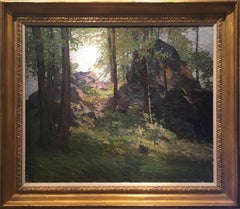
Original landscape oil on canvas by American illustrator N.C. Wyeth. Painted in his hometown of Chadds Ford, PA c. 1911-12. The work is unsigned but is included in the artist's catal...

Category

Academic 1910s Landscape Paintings

Materials

Canvas, Oil

'Winter Sunset' AIC, ASL, NAD, PAFA, New York, Boston, New England, Connecticut

'Winter Sunset' AIC, ASL, NAD, PAFA, New York, Boston, New England, Connecticut

By Robert Emmett Owen

Located in Santa Cruz, CA

Signed lower right, 'R. Emmett Owen' for Robert Emmett Owen (American, 1878-1957) and painted circa 1915. Displayed in a substantial, carved, giltwood frame Framed dimensions: 30 x 1...

Category

Impressionist 1910s Landscape Paintings
Materials

Oil, Board

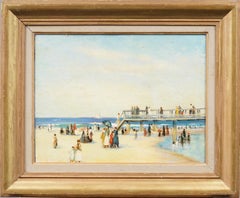
Antique American Impressionist Framed Good Harbor Beach Boston Area Oil Painting

Antique American Impressionist Framed Good Harbor Beach Boston Area Oil Painting

Located in Buffalo, NY

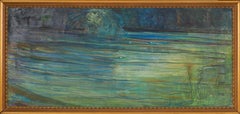
Amazing early 1900s impressionist beach scene of Good Harbor Beach in Massachusetts. Very finely pained with great color and lots of detail and figures. Located on verso. Nicely f...

Category

Impressionist 1910s Landscape Paintings
Materials

Canvas, Oil

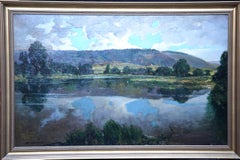
Evening on the Lake - Scottish Edwardian Impressionist landscape oil painting

Evening on the Lake - Scottish Edwardian Impressionist landscape oil painting

By Alexander Jamieson

Located in Hagley, England

This absolutely stunning large Scottish Edwardian Impressionist landscape oil painting is by noted artist Alexander Jamieson. Painted circa 1910 and entitled evening on the lake. Th...

Category

Impressionist 1910s Landscape Paintings
Materials

Oil

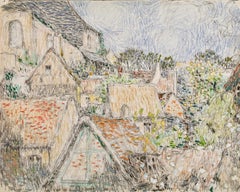
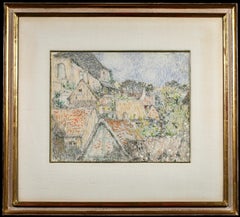
Les Toits - Gerberoy - Post Impressionist Landscape by Henri Le Sidaner

Les Toits - Gerberoy - Post Impressionist Landscape by Henri Le Sidaner

By Henri Le Sidaner

Located in Marlow, Buckinghamshire

Signed divisionist oil, ink and coloured pencils on paper landscape by French post impressionist painter Henri le Sidaner. This stunning piece depicts a view of the roofs of the buil...

Category

Pointillist 1910s Landscape Paintings

Materials

Oil, Color Pencil, Ink, Paper

'Rivière de Mon Paix', Pair of Fine French Impressionist Oils, Musée d'Orsay

'Rivière de Mon Paix', Pair of Fine French Impressionist Oils, Musée d'Orsay

By Raoul André Ulmann

Located in Santa Cruz, CA

'Rivière de Mon Paix' by Raoul André Ulmann. Pair of Fine French Impressionist Oils, Musée d'Orsay, Luxembourg Museum. Sold as a pair. --- Raoul André Ulmann (French, 1867-1941) E...

Category

Impressionist 1910s Landscape Paintings
Materials

Oil, Panel

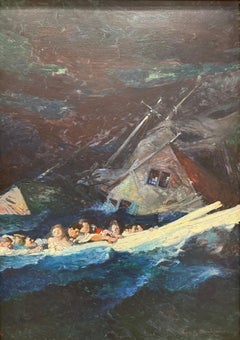
After the Storm, Naturalistic Oil Painting on Canvas, Signed, 1917

After the Storm, Naturalistic Oil Painting on Canvas, Signed, 1917

Located in Stockholm, Stockholm

"After the Storm" is the title of this oil painting on canvas by the Swedish artist Hjalmar Berghcrantz (1889–1961). Signed and dated 1917. The artwork depicts a rugged landscape whe...

Category

Naturalistic 1910s Landscape Paintings

Materials

Canvas, Oil

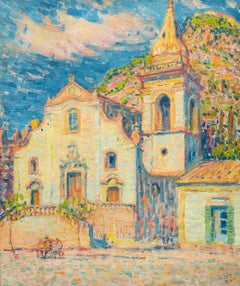
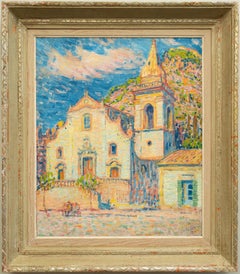
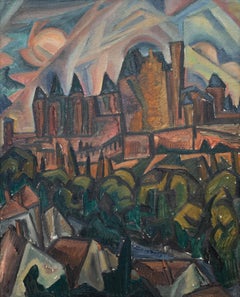
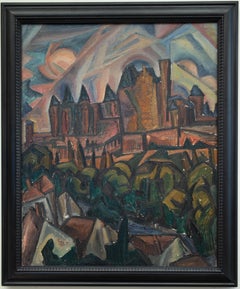
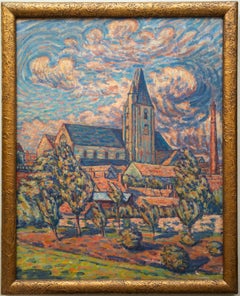
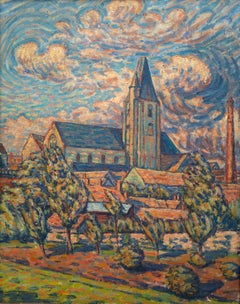
Post-Impressionist Painting The Church in Taormina, Sicily, 1914

Post-Impressionist Painting The Church in Taormina, Sicily, 1914

By Dick Beer

Located in Stockholm, SE

Dick Beer (b. London 1893 - d. Stockholm 1938) The Church in Taormina, Sicily (Kyrkan i Taormina) oil on canvas canvas dimensions 54 x 47 cm signed and dated Dick Beer 1914 painted 1914 Exhibited: Varias Konstsalong, Stockholm, 1916; Millesgården – Dick Beer – Impressionist & Kubist, 2012 Provenance: Within the family Beer until today Dick Beer (1893-1938) Dick Beer was born in London in 1893. His father, John Beer (1853-1906), was a Swedish painter from Stockholm who had a career mainly as a watercolour painter with motifs of horses from racetracks and fox hunts from the countryside. Barely fifteen years old, Dick Beer became an orphan and came to Sweden in 1907. Already in 1908-1909, he started at Althin's painting school in Stockholm. And later, at the Royal Academy of Arts from 1910-1912. His teachers were, among others, Gustaf Cederström, Oscar Björk and Alfred Bergström...

Category

Post-Impressionist 1910s Landscape Paintings
Materials

Canvas, Oil

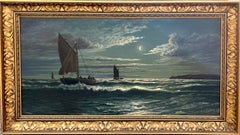
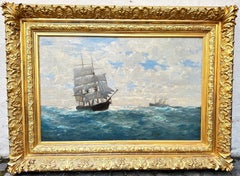
German Marine Painting of Sailing Ship, Oil on Canvas, 1918, signed

German Marine Painting of Sailing Ship, Oil on Canvas, 1918, signed

Located in Eltville am Rhein, DE

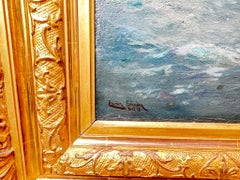
Erwin Günther Hamburg 1864 - 1927 Düsseldorf Marine Painting Sailing Ship and Passenger Ship on the High Seas 1918 Oil on canvas Signed and dated lower left Painting: 64.5 x 100 cm F...

Category

Impressionist 1910s Landscape Paintings
Materials

Oil

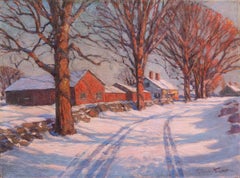
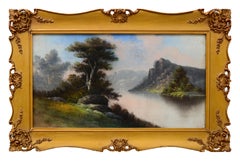
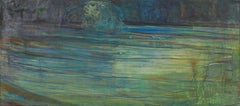
Early 20th Century Tonalist Pastel Landscape, Signed, Framed, 22x12

Early 20th Century Tonalist Pastel Landscape, Signed, Framed, 22x12

By William Henry Chandler

Located in Soquel, CA

Early 20th Century Tonalist Pastel Landscape Beautiful tonal landscape, c.1915, by pastel artist William Henry Chandler (American, 1854-1928). The viewer looks out over a serene riv...

Category

Tonalist 1910s Landscape Paintings

Materials

Paper, Pastel

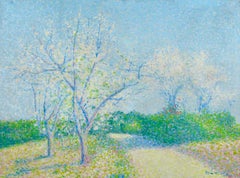
Arbres en fleurs
Arbres en fleurs

Arbres en fleurs

By Achille Laugé

Located in Marlow, Buckinghamshire

Fruit trees in blossom against a pale blue spring sky, two in the foreground and others receding to the right above a green hedge, with a sandy path running through the middle distan...

Category

Pointillist 1910s Landscape Paintings

Materials

Oil

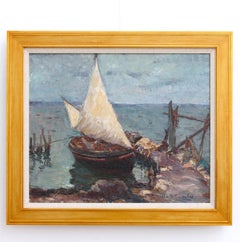
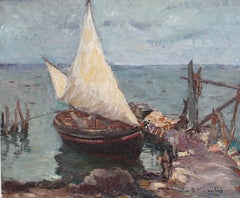
The Boat in Martigues, Impressionist Oil on Canvas, Circa 1910, Framed

The Boat in Martigues, Impressionist Oil on Canvas, Circa 1910, Framed

By Marie-Anne Nivoulies de Pierrefort

Located in London, GB

'The Boat in Martigues', oil on canvas, by Marie de Nivouliès de Pierrefort (circa 1910). Martigues is a small port town just northwest of Marseille in the South of France. Its nickname is the Provençal Venice. Further eastward down the coast is the town of Toulon where the artist was born in 1879. Nivouliès depicts a charming sailboat tied to the small pier yet with an unfurled sail. It looks to be a wondrous day along the Mediterranean, the kind we can always dream about. The painting is over one hundred years old and is in fair condition, yet recently brought back to life by an art restoration professional. Elegantly framed, it is stabilised now for decades into the future. Signed by the artist on the lower right corner. Please enjoy the many photos accompanying the listing. Upon request, a video may be provided of the artwork. About the Artist: Although she was a direct descendant of the counts of de Pierrefort, Marie de Nivouliès de Pierrefort's (1879-1968) family was very poor. In spite of the poverty, Pierrefort attended a Catholic school run by nuns, obtaining a scholarship from the School of Fine Arts of Paris. While still a student, she attended workshops of great Impressionist masters such as Pierre Auguste Renoir (1841-1919) and Pierre Bonnard (1867-1947). In 1910 she won a travel award from the school and traveled to Tunisia where she painted several Mediterranean landscapes. In 1938 the painter moved to Rio de Janeiro, Brazil, where she painted the beautiful landscapes seen from her window. In Rio, Pierrefort had two individual exhibitions, both at the National Museum of Fine Arts, in the years 1946 and 1956. Although widowed in 1944, Pierrefort decided not to return to France until 1950. She remained there until 1959 when she definitively returned to Brazil. Her atelier in the neighbourhood of Glória was frequented by many emerging artists who learned the techniques of impressionism from her. Afterwards, Pierrefort painted for almost a decade in Brazil until she passed away in 1968 in Rio. After her death, many canvases were found in her studio but had been damaged or destroyed by humidity and by the intervention of her many cats. The painter Sergio Telles...

Category

Impressionist 1910s Landscape Paintings
Materials

Canvas, Oil

Early Tonalist Landscape -- California Coastal Live Oaks William Schneider 1915

Early Tonalist Landscape -- California Coastal Live Oaks William Schneider 1915

Located in Soquel, CA

Early Tonalist Landscape -- California Coastal Live Oaks William Schneider 1915 Beautiful early 20th Century tonalist landscape of California by New York artist William G. Schneider...

Category

Tonalist 1910s Landscape Paintings
Materials

Linen, Oil, Stretcher Bars

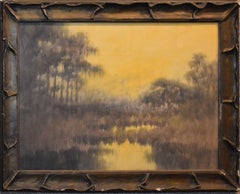
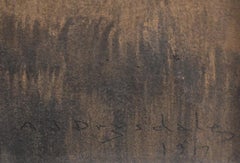
"Misty Bayou"  HAZE.  ONE OF HIS BEST Dated 1917 Alexander Drysdale (1870-1934)

"Misty Bayou" HAZE. ONE OF HIS BEST Dated 1917 Alexander Drysdale (1870-1934)

By Alexander John Drysdale

Located in San Antonio, TX

Alexander John Drysdale (1870-1934) New Orleans Louisiana / New York Artist Size: 20 x 30 Frame: 26 x 36 Medium: Oil Wash? Watercolor? Dated: 1917 "Misty Bayou" Housed in the original magnificent frame. Alexander John Drysdale (1870-1934) New Orleans Louisiana / New York Artist Alexander John (A.J.) Drysdale was an early 20th century Louisiana artist who specialized in landscapes using the technique of oil wash, that gave his works a characteristic of a hazy look. Drysdale made use of this technique by diluting the oil paint with kerosene and applying it with cotton balls. Alexander John Drysdale, born in Marietta, Georgia on March 2, 1870, came to New Orleans at the age of fifteen with his parents. His father, Reverend Alexander J. Drysdale, became the rector of Christ Church Cathedral. Alex received private tutoring from a Professor Mehado and art lessons from Ida Hackell at the Southern Art Union. Later in New Orleans (1887) he studied art under Paul Poincy (1833-1909). The exact date of Drysdale's arrival in New York is unknown, but he enrolled in the Art Students League where he received instruction from Charles C. Curran and Frank Vincent DuMond. Apparently, he remained in New York for about five years and did not go to Europe for further study. After some time, Drysdale began specializing in landscapes, executed in a tonalist manner. Back in New Orleans, Drysdale was inspired by local subjects, especially swamp or bayou areas and other desolate wetlands. Over a period of many years Drysdale's landscapes evolved to a unique stylistic maturity. In 1909 he received a gold medal from the New Orleans Art Association. It is easy to see the influence of two artists that he admired: Corot and Inness. Working equally well in oil and watercolor (he also did scenes in charcoal), Drysdale usually divided his scene into halves or thirds, typically, a foreground consisting of tall swamp grasses achieved with broad vertical strokes; a middle ground consisting of a backdrop row of trees at the horizon line executed with staccato, jabbing strokes resulting in textural contrast; and a background devoted totally to a tonalist-like moisture-laden sky often hazy with no clouds or only a slight indication of them. This formulaic compositional format rendered with an economy of technique resulted in imagery with repetitious forms and shapes diffused in a nebulous space. In this regard, Drysdale's works are impressionistic; he also tended to use the violets and blues of the impressionist palette. Yet he lacked a specific interest in color and light. Although his expression of the Louisiana scenery is very personal, even mystical, the artist appears to have been very limited in subject matter. One of his last works was a mural for the Shushan (New York) Airport administration building, and shortly before his death he was employed as an artist by the Civil Works Administration. Drysdale was a member of the Arts and Crafts Club of New Orleans, and his work was in the permanent collection of the Delgado Museum for many years. The artist worked at his studio at 320 Exchange Place in the picturesque Vieux Carré until his death at the age of sixty-three. Stewart (in Painting in the South, 1983), describes how Drysdale was a shrewd businessman. He would solicit new homeowners who might need a canvas to decorate a wall, or a cotton broker who recently made the headlines. Drysdale died in New Orleans, on February 9, 1934. Sources: Louisiana Artists from the Collection of Dr. and Mrs. James W. Nelson. Baton Rouge, LA: Louisiana State University, 1968; Wiesendanger, Martin and Margaret Wiesendanger, Nineteenth Century Louisiana Painters and Paintings from the Collection of W. E. Groves. New Orleans: W. E. Groves Gallery, 1971, pp. 44-45; Painting in the South: 1584-1980, Exh. cat. Richmond, VA: Virginia Museum, 1983, pp. 106-107, 114, 276; Chambers, Bruce W., Art and Artists of the South: The Robert P. Coggins Collection of American Paintings. Exh. cat. Rochester, NY: Memorial Art Gallery of the University of Rochester, 1984, p. 88; Zellman, Michael David, 300 Years of American Art. Seacacus, NJ: Wellfleet Press, 1987, p. 634; Gerdts, William H., Art across America: Two Centuries of Regional Painting, 1710-1920. New York: Abbeville Press, 1990, vol. 2, pp. 110-111. Submitted by Richard H. Love and Michael Preston Worley, Ph.D. Biography from The Johnson Collection ALEXANDER JOHN DRYSDALE (1870–1934) Born in Marietta, Georgia, Alexander John Drysdale was the only son of an ordained Episcopal priest whose ministry required frequent moves to parishes in Georgia, Alabama, and Tennessee. In 1883, he accepted the call to become dean of Christ Church Cathedral, New Orleans, and was later elected a bishop. Alexander, thirteen years old when the family settled in New Orleans, began his art studies under the instruction of Ida C. Haskell, a California-born artist who was on the faculty of the recently established Southern Art Union. The local academy had been founded by several leading artists, including Andres Molinary, William Henry Buck...

Category

Impressionist 1910s Landscape Paintings
Materials

Mixed Media

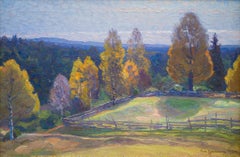
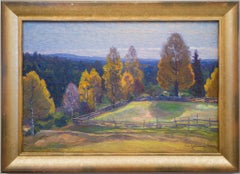
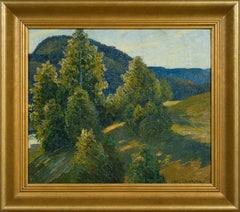
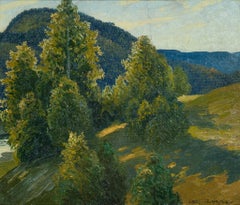
Sunlit Forest and Distant Blue Mountains – A Northern Swedish Landscape by Lycke

Sunlit Forest and Distant Blue Mountains – A Northern Swedish Landscape by Lycke

By Oscar Lycke

Located in Stockholm, SE

This luminous landscape painting by Oscar Lycke captures the rolling hills and deep forests of northern Sweden, likely from the Sundsvall region. The foreground is dominated by lush ...

Category

Post-Impressionist 1910s Landscape Paintings
Materials

Oil, Board

'Winter', ASL, Paris, Société des Artistes Français, South Bend, Indiana, AIC

'Winter', ASL, Paris, Société des Artistes Français, South Bend, Indiana, AIC

By George Ames Aldrich

Located in Santa Cruz, CA

'Winter' by George Ames Aldrich. ASL, Paris, Société des Artistes Français, South Bend, Indiana, AIC ----- Signed lower left, 'G. Ames Aldrich' for George Ames Aldrich (American, 18...

Category

Other Art Style 1910s Landscape Paintings
Materials

Canvas, Oil

Winter Street Scene
Winter Street Scene

Winter Street Scene

Located in Houston, TX

Antal Berkes (1874-1938) Antal Berkes (1874–1938) was a Hungarian painter, born in Budapest, Hungary. He lived in Paris for some time and produced cityscapes there as well as simi...

Category

Other Art Style 1910s Landscape Paintings
Materials

Oil

Maine Harbor, Winter

Maine Harbor, Winter

Located in North Clarendon, VT

Wonderful oil on board of a winter harbor scene, likely Maine. American/Canadian artist Charles E. Duncan Rodick. 10" x 14", signed lower right, in a period frame. Mr. Rodick was a ...

Category

American Impressionist 1910s Landscape Paintings
Materials

Oil

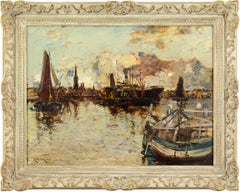
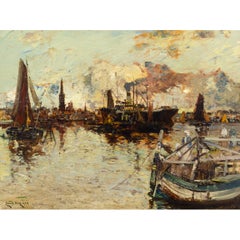
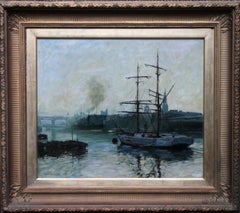
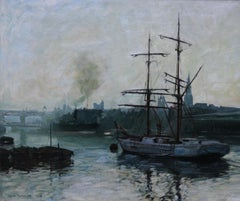
The Port of Newcastle Upon Tyne - British 1914 marine art oil painting

The Port of Newcastle Upon Tyne - British 1914 marine art oil painting

By Joseph Henry Kirsop

Located in Hagley, England

This lovely historically interesting British marine oil painting is by Newcastle artist Joseph Henry Kirsop. Painted in 1914, the location of the painting is the port of Newcastle up...

Category

Realist 1910s Landscape Paintings
Materials

Oil

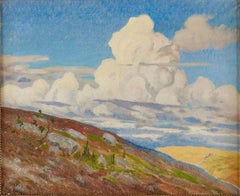
A Rare Winter Landscape With Clouds by Sam Uhrdin (1910)

A Rare Winter Landscape With Clouds by Sam Uhrdin (1910)

By Sam Uhrdin

Located in Stockholm, SE

This atmospheric landscape from 1910 offers a rare glimpse into a lesser-known side of Sam Uhrdin’s work. Painted before his formal art education, the canvas reveals an emerging arti...

Category

Post-Impressionist 1910s Landscape Paintings
Materials

Canvas, Oil

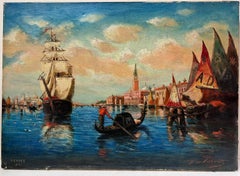
Stirling River Landscape Scotland - Scottish Impressionist 1910 art oil painting

Stirling River Landscape Scotland - Scottish Impressionist 1910 art oil painting

By Joseph Morris Henderson

Located in Hagley, England

This lovely Scottish Stirlingshire Impressionist landscape is by noted artist Joseph Morris Henderson. Painted circa 1910 the composition is a river landscape with the river in the foreground and cows in the fields beyond. In the distance one can see some dwellings and hills beyond those, all beneath a summers sky. The impressionistic brushwork and colouring are just lovely. This is an excellent large example of Henderson's work and of Scottish landscape art...

Category

Impressionist 1910s Landscape Paintings
Materials

Oil

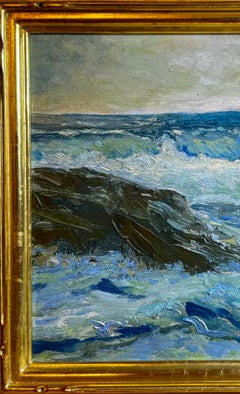
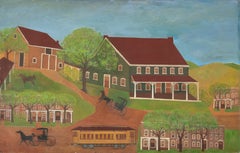
Crashing Surf
Crashing Surf

Crashing Surf

Located in North Clarendon, VT

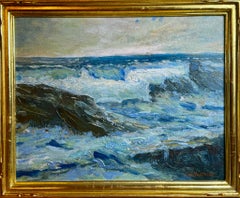
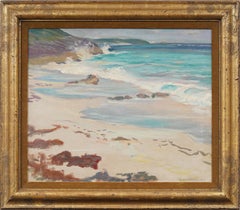
Beautiful seascape by the talented William H. Partridge. 8" x 10" oil on board , signed lower right. Housed in a carved guilded 15" x 17" frame. William Henry Partridge (1858–1938...

Category

American Impressionist 1910s Landscape Paintings
Materials

Oil

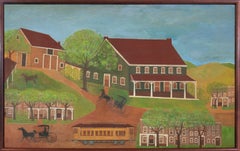
A house in the country, probably near Morristown NJ

A house in the country, probably near Morristown NJ

By Frank Waller

Located in Philadelphia, PA

Frank Waller (American, 1842-1923) House in the Country Oil on canvas, 10 1/2 x 20 1/4 inches FRAMED: 16 x 26 inches (approx.) Signed and dated at lower left: "Frank Waller Study 19...

Category

Realist 1910s Landscape Paintings
Materials

Canvas, Oil

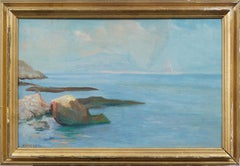
Antique American Panoramic Cloudscape Cows Grazing Bucolic Landscape Painting

Antique American Panoramic Cloudscape Cows Grazing Bucolic Landscape Painting

Located in Buffalo, NY

Antique impressionist landscape oil painting. Oil on canvas. Framed. Signed. In excellent original condition. Handsomely framed in a giltwood molding. Excellent condition, ready...

Category

Impressionist 1910s Landscape Paintings
Materials
Oil, Canvas