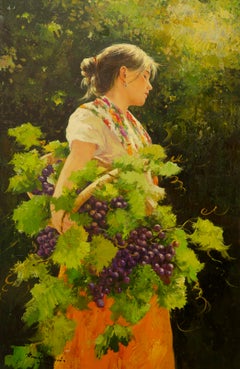
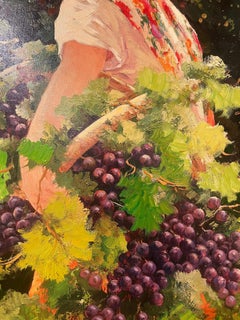
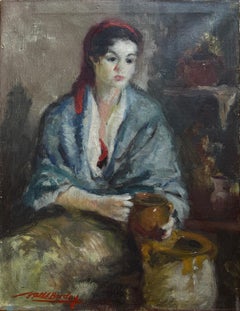
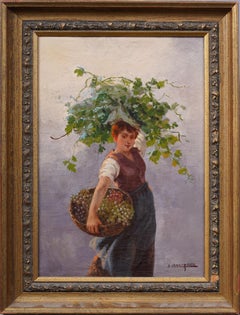
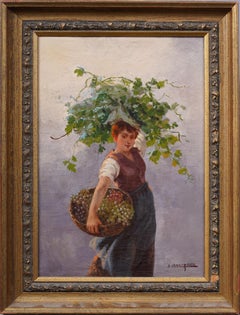
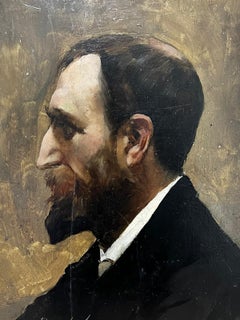
Located in Hagley, England
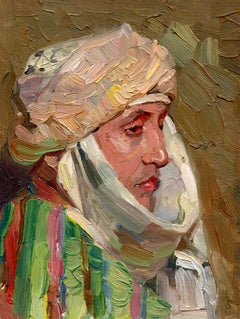
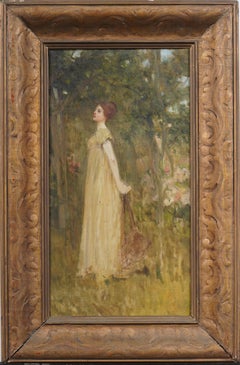
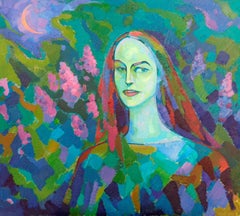
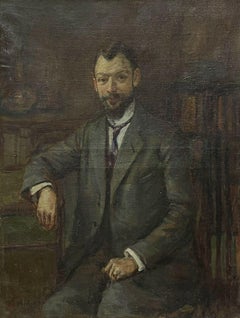
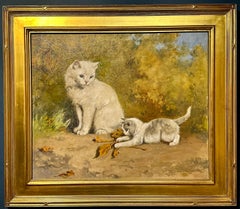
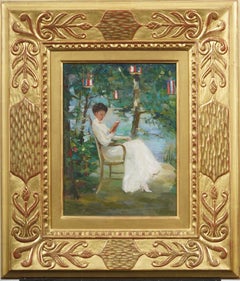
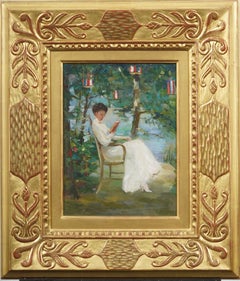
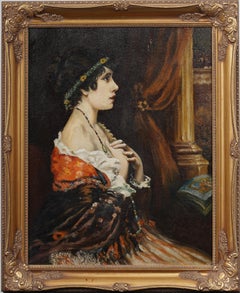
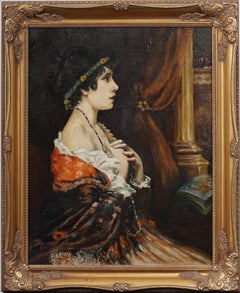
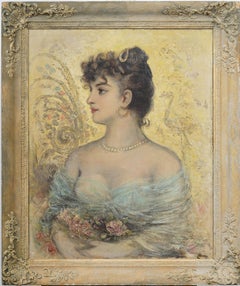
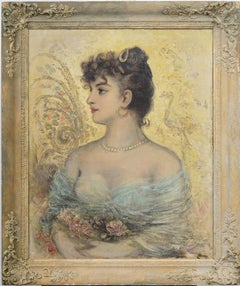
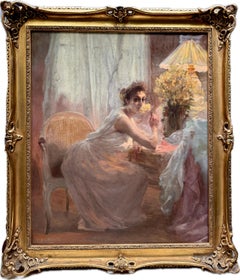
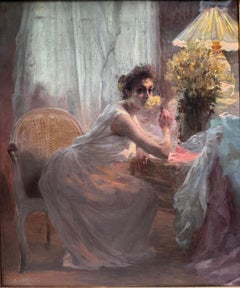
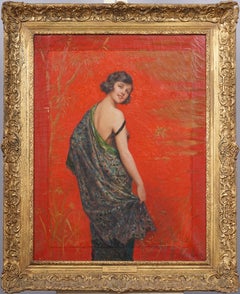
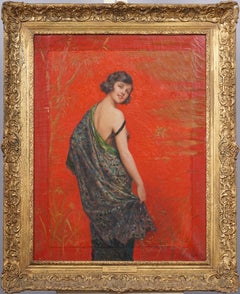
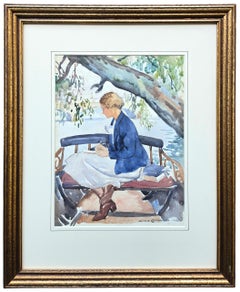
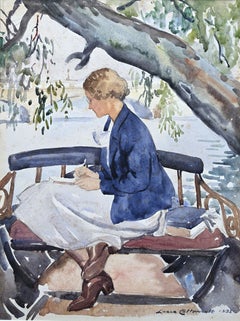
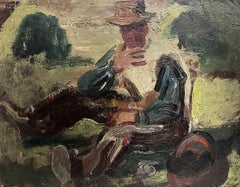
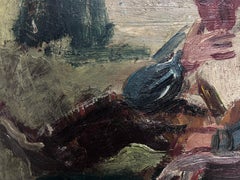
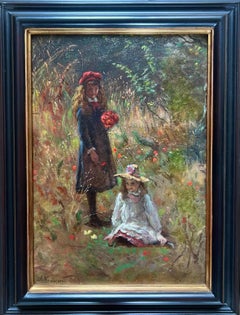
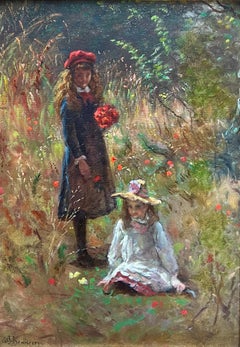
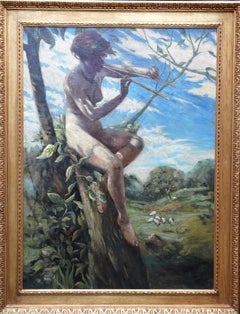
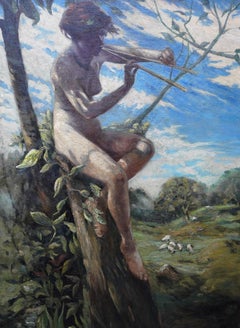
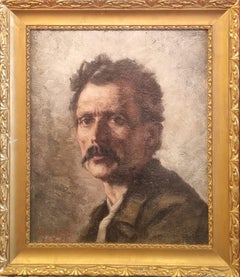
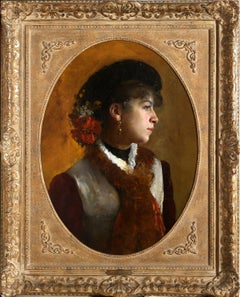
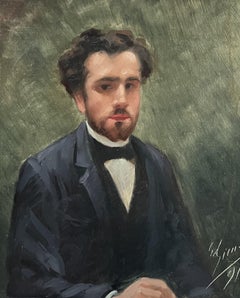
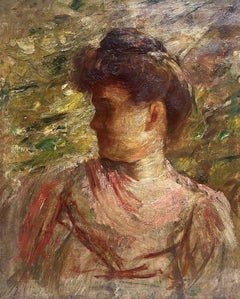
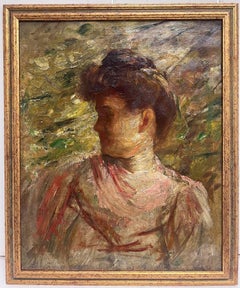
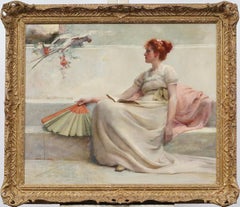
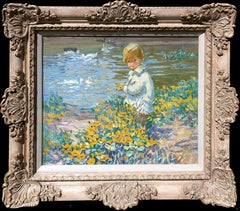
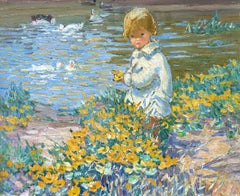
This gorgeous large American Impressionist oil painting is attributed to Lillian M. Genth. She was a favourite pupil of Whistlers whilst at an art school in Paris. She is best known for depicting female forms or nymphs in landscapes such as this, up until about 1928 when she focused on other topics. She had an estate in Connecticutt and would often paint models in the woods there. Although not initially accepted by Victorian Society, In 1908 her painting, The Lark, won her the Shaw Memorial Prize at the 83rd Annual Exhibition of the National Academy of Design. The Lark depicts a full female nude strolling through the woods with her head turned looking toward the sky as if she just heard a lark, as the title suggests. This painting successfully demonstrates Whistler’s influence on Genth through the integration of the nude form and the landscape. Our lovely painting's composition is of a nymph seated in a tree playing pipes with a blue sky as background, while sheep graze beyond her in a landscape. The dappled sunlight on her skin and hair are beautiful. This is a superb example of work by a female American Impressionist in the 1920's and visually stunning.
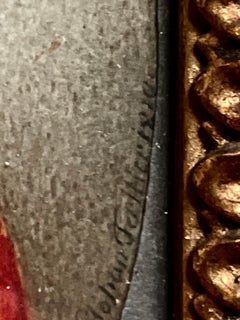
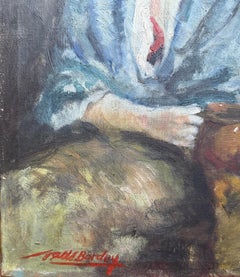
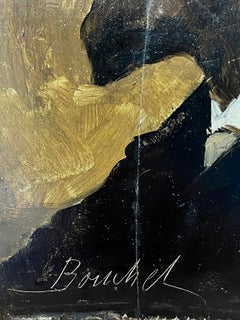
Unsigned.
Provenance: Berkshire estate.
Christies London
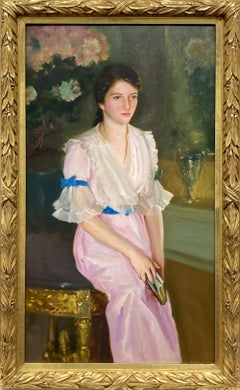
Condition. Oil on canvas, image size is 50 inches by 37 inches and in good condition.
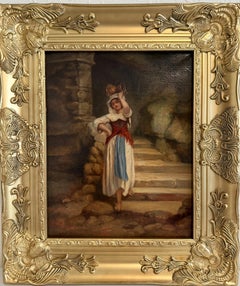
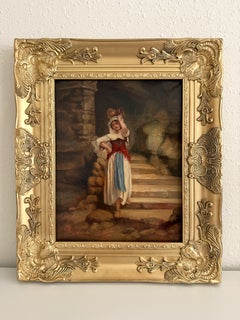
Frame. House an ornate gilt frame. Framed size is 57 inches by 44 inches and in good condition.
Lillian Mathilde Genth (1876 – March 28, 1953) was an American impressionist artist. She is best known for her depiction of female nudes in landscape settings. However, in the middle of her career she swore off painting female nudes and began painting more conservative paintings inspired by her travels. In about 30 years Genth appeared in 233 exhibitions, and while well renowned for her paintings while alive, her story and artwork have been lost in the retelling of American art history. Lillian Mathilde Genth was born in Philadelphia, Pennsylvania, the daughter of Matilda Caroline Rebscher and Samuel Adam. Genth began her art career by attending the Philadelphia School of Design for Women in Pennsylvania on scholarship. During her schooling years she worked to help support herself as a dress designer. At the Philadelphia School of Design for Women her primary teacher was Elliott Daingerfield. Daingerfield greatly influenced her style, which can be seen in the similar tonalist and coloristic qualities of her landscape scenes. Genth graduated from Philadelphia School of Design for Women in 1900. She received the William L. Elkins European fellowship for attainment in art from the Philadelphia School of Design, which sponsored her to paint in Europe for a year. During her time in Europe, Genth first settled in Paris, France in October 1900 where she enrolled in art classes at the Académie Carmen, an art school run by James McNeill Whistler. Whistler became a large influence on Genth’s work and she was known to be a favorite pupil of his. During one of Whistler’s visits to the school in 1900, he was so impressed by Genth’s work that he gave her a paint palette; an honor that she used and treasured for the rest of her career. This was an incredible compliment from Whistler, who rarely accepted women painters. Genth’s style is typically attributed to Whistler because of her paintings' tonalist qualities and because he taught her to see her paintings as a whole instead of in individual parts. After the Academie Carmen closed in 1901, Genth stayed in Europe for three more years. During this time she worked on painting landscapes, genre scenes, and waterfronts; her nudes would not begin for a few more years. In 1904 Genth returned to the United States and was living in New York City. It was at this point that her career began to flourish. In 1904 Genth showed at three exhibitions: the National Academy of Design, Art Club of Philadelphia, and Worcester Museum. In October of that same year she appeared in her first individual show at the Pennsylvania Academy of Fine Arts. Also in 1904 Genth received the Mary Shaw...
Category
1920s Impressionist Portrait Paintings