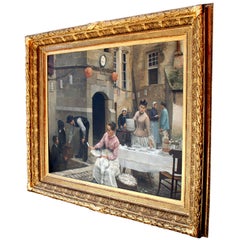
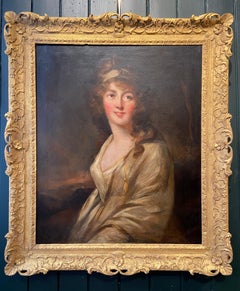
Academic Paintings

741 Results
ACADEMIC STYLE

During the Renaissance, the first European fine art academies were established in Italy and would guide the style and standards of visual culture in the following centuries. Academic art became dominant across the continent in the 17th century, with artists coming together to offer instruction in this style of painting and sculpture. 

The academic art period represented a significant change from the previous era when painters, sculptors and other artists were part of guilds and seen more as artisans than purveyors of culture. While patronage from the elite and the church remained pivotal, young artists were able to support themselves for the first time through academic exhibitions and an independent marketplace. The leading academies included the French Académie Royale de Peinture et de Sculpture founded in Paris in 1648 (which became the Académie des Beaux-Arts after the French Revolution) and the London Royal Academy of Arts formed in 1768 under the inaugural leadership of painter Joshua Reynolds. 

Academy students sketched drawings based on prints, sculptures and, finally, live models. Movements including neoclassicism and romanticism were particularly popular in these art schools and institutions where the influence of Raphael and Nicolas Poussin was prominent. Beaux Arts architecture and furniture design drew on these movements, too, and, as they also originated at the Académie des Beaux-Arts, the disciplines share common ground with academic painting and sculpture.

Although academic art was a major shift for artistic status when it began, by the middle of the 19th century it was viewed as stodgy and resistant to new ideas, with the subject matter of artists such as William-Adolphe Bouguereau and Jean-Léon Gérôme generally limited to allegorical or mythological themes. Impressionism, realism and the other movements that engaged with contemporary issues that followed were direct reactions to the academic tradition, although it continued to inform the avant-garde as artists like Gustav Klimt and Pablo Picasso started their practices as academic realists.  

Find a collection of academic paintings, sculptures, prints and more art on 1stDibs. 

to
197
173
177
154
116
156
Overall Width
to
Overall Height
to
10
324
210
232
23
14
19
18
12
11
7
7
5
9
6
41,955
38,529
23,977
8,538
4,930
3,647
3,208
2,793
1,200
1,170
920
857
428
269
426
322
25
486
249
132
118
115
101
92
71
64
52
47
43
43
43
39
36
35
35
31
31
733
662
391
385
62
62
36
9
6
4
461
60
433
332
Style: Academic
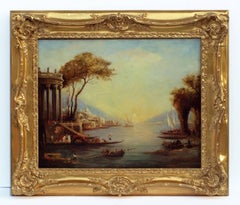
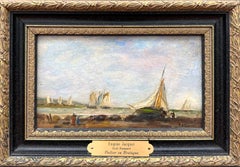
“Voilier en Bretagne”

“Voilier en Bretagne”

Located in Southampton, NY

“Voilier en Bretagne” or “Sailboat in Brittany” is an oil painting on a wooden panel by the French artist, Eugene Jacquet. Signed by the artist lower right. Circa 1880. Condition i...

Category

1880s Academic Paintings

Materials

Oil, Board

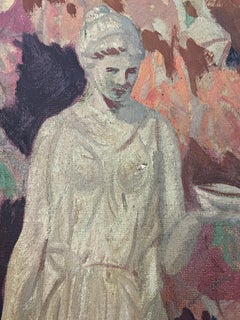
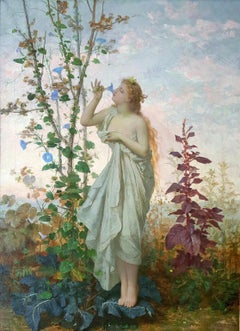
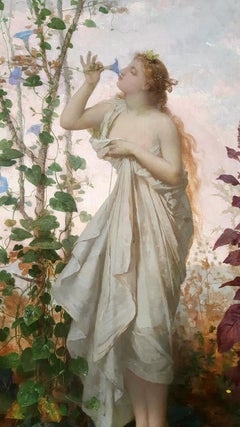
Goddess of Dawn Mythology scene Artwork Aurora in white toga smelling a flower.

Goddess of Dawn Mythology scene Artwork Aurora in white toga smelling a flower.

By Jean Louis Hamon

Located in Miami, FL

Jean Louis Hamon artfully presents the mythological subject: Aurora the Goddess of Dawn. She is dressed in a flowing toga, standing on a large leaf and smelling the sweetness of a flower in bloom. Surrounded by lush plants in an idyllic setting of pinks and blues, one would not think that this peaceful and beautiful work was painted in 1864 at the time of the American Civil War. Hamon meticulously renders the scene with the academic precision of Bouguereau. The closer you get, the more detail you discover. Two butterflies sit atop Aurora's head. Droplets of water gracefully roll down her hair. There was a hand colored steel plate...

Category

1860s Academic Paintings

Materials

Oil

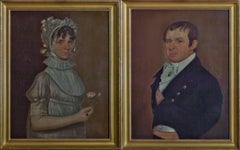
18th century diptych portraits man and woman American formal dress flower

18th century diptych portraits man and woman American formal dress flower

By William Jennys

Located in Milwaukee, WI

The present pair of portraits would make an exceptional addition to any collection of early American art not only because they were painted by the notable William Jennys, but also because the sitters are members of notable and influential New England families. In addition, these pendants have impeccable provenance: they have never left ownership of the decedents of the Kimball family and this is the first time they have been available for purchase. David Kimball (1766-1848) and Nancy Stacy Kimball (1774-1844) were members of historic Massachusetts families. David Kimball is a sixth-generation decedent of Richard Kimball (d. 1675) and Ursula Scott (d. 1659), who emigrated from Rattlasden, Suffolk County, England to Watertown MA around 1634. The family then relocated in 1637 to Ipswich, the city with which the family is now most strongly identified, when Richard was appointed to be a wheelwright.[1] Nancy likewise had early New England ancestry, descended from Simon Stacy and Elizabeth Clark, who were married in London in 1620.[2] Nancy Stacy was the second wife of David Kimball, and the two were married in 1799. Given this, the present pendant portraits were likely completed shortly after the marriage. David had two children by his first wife Mary Morse, who died in September of 1798. David and Nancy would have nine additional children between 1801 and 1815.[3] Most notably, the couple were parents of the Boston politician and showman Moses Kimball (1809-1895).[2][3] Moses would found the Boston Museum, an early for-profit museum and theater opened in 1841 that resembled European curiosity cabinets: the museum displayed paintings of Thomas Scully and Charles Peale alongside Chinese artwork, stuffed animals, dwarves and mermaids. Alongside these exhibits, visitors could attend the theater which held performances by gymnasts and contortionists, followed by performances of Shakespeare and Dickens.[4] This museum set the model for the Museum of Fine Arts, Boston, which when founded in 1870 held a similarly diverse collection and appealed to the interests of a diverse set of visitors.[5] Moreover, some Greek antiquities from Moses Kimball's museum were eventually given to the MFA and Moses donated approximately $5,000 to the MFA's endowment upon his death.[6][7] William Jennys (1774–1859), also known as J. William Jennys, is an important American primitive portrait...

Category

1790s Academic Paintings

Materials

Oil, Canvas

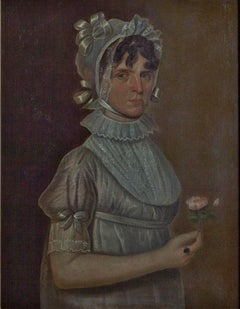
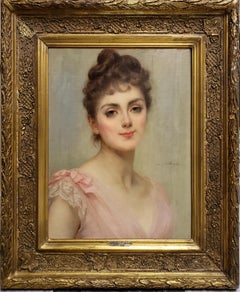
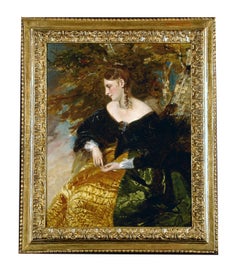
Portrait of a Lady
Portrait of a Lady

Portrait of a Lady

By Alexandre-François Caminade

Located in Saint-Ouen, FR

Alexandre François CAMINADE (1789-1862) Portrait of a Lady Oil on wood signed low right Old frame gilded with leaves Wood size : 22 X 15 cm Frame size : 40 X 30 cm Alexandre-Françoi...

Category

1850s Academic Paintings

Materials

Oil

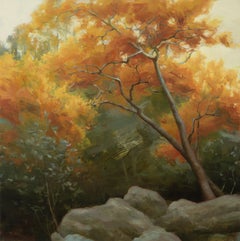
November, Oil Painting

November, Oil Painting

By Elizabeth Zanzinger

Located in Denver, CO

Elizabeth Zanzinger's (US based) "November" is an oil painting that depicts trees in autumn with a rock foreground. Elizabeth Zanzinger is an award-winning painter with an enthusiastic international following. She developed her artistic voice through her studies at the Aristides Atelier and Gage Academy of Fine Art in Seattle. Elizabeth finished her education with a fellowship award (Grand Prize, 2nd Annual Utrecht Art Competition) at the Grand Central Academy, New York City, in 2012. Since then she has completed a number of commissioned portraits of accomplished individuals, including former Chief Justice...

Category

2010s Academic Paintings

Materials

Oil, Panel

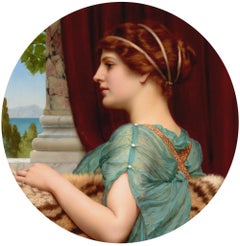
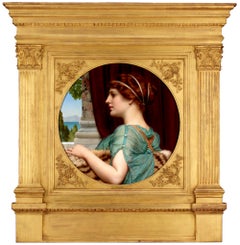
A Pompeian Lady
A Pompeian Lady

A Pompeian Lady

By John William Godward

Located in New Orleans, LA

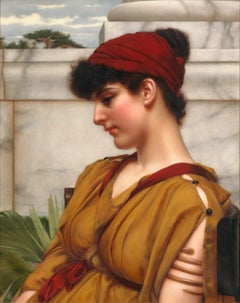
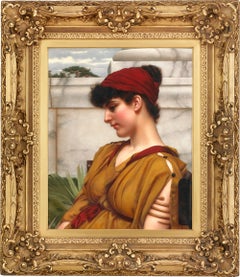
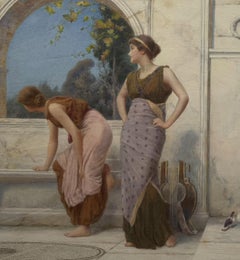
John William Godward 1861-1922 British A Pompeian Lady Signed and dated "J.W. Godward 1904" (lower right, partially covered by frame) Oil on canvas One of the last and greatest Victorian neoclassical painters, John William Godward is celebrated for his flawlessly executed images of graceful women posed in idealized ancient settings. In this work, entitled A Pompeian Lady, a classical beauty is caught idling in a moment of quiet, solitary reflection. Godward's elegant subjects are depicted with a degree of technical mastery that remains unsurpassed, and the work's dramatic palette, luxurious fabrics and classical vision are all characteristics of his unique take on the neoclassical style. Godward was unmatched in terms of his technical skill and attention to detail. A master of contrasting textures, he paints a diaphanous gown draping against the model’s smooth, milky white skin, which sits against the painstakingly rendered individual hairs of a tiger’s pel. Scintillating color permeates the canvas as well, energizing the otherwise static scene. Each element is given careful attention, and the overall effect is one of both immaculate technique and sensual tactility. Along with his contemporary and mentor, Sir Lawrence Alma-Tadema, Godward set the tone for the Victorian neoclassicist movement. He built his career upon creating images of idealized feminine beauty infused with a Greco-Roman-inspired style. Though greatly influenced by Alma-Tadema, Godward distinguished himself through his predilection for the solitary female figure. His fame rose dramatically in the first few years of the 20th century, when the present work was completed, due to the burgeoning strength of the British Empire and the Victorian society’s preoccupation with ancient Rome. To many of the newly affluent, Roman society was, as Iain Gale writes, “a flawless mirror of their own immaculate world.” The sensuality and mystery of Godward’s maidens, combined with his impressive antique backdrops...

Category

Early 20th Century Academic Paintings

Materials

Canvas, Oil

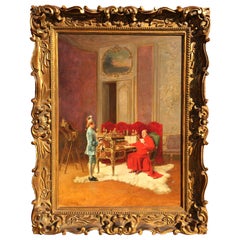
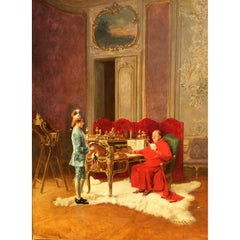
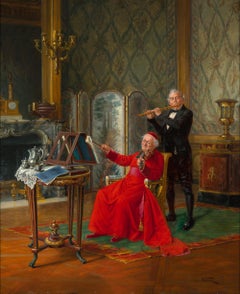
A Very Fine Oil on Canvas Interior Palatial Scene Titled "Game for the Cardinal"

A Very Fine Oil on Canvas Interior Palatial Scene Titled "Game for the Cardinal"

By Charles Edouard Edmond Delort

Located in LA, CA

Charles Edouard Edmond Delort (French, 1841-1895) oil on canvas "Game for the Cardinal", depicting a seated cardinal behind an ornate French Louis XV roll-top Bureau du Roi, after th...

Category

19th Century Academic Paintings

Materials

Oil

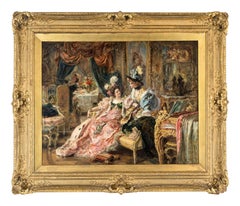
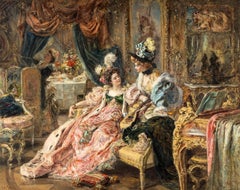
"A Surprising Visit"  19th Century Antique European  Oil Painting on Canvas

"A Surprising Visit" 19th Century Antique European Oil Painting on Canvas

By Eduardo Leon Garrido

Located in Jacksonville, FL

A Surprising Visit" by Eduardo León Garrido (Spanish, 1856-1949) invites viewers into a sumptuous journey through 19th-century European luxury. Eduardo León Garrido, a distinguished Spanish artist born in 1856 and leaving an artistic legacy until 1949, displayed a remarkable ability to capture the essence of his time through his brushstrokes. This antique masterpiece, rendered in oil on panel and measuring 22 1/2 x 29 3/4 inches, unveils a world of opulence within a Royal European...

Category

19th Century Academic Paintings

Materials

Canvas, Oil

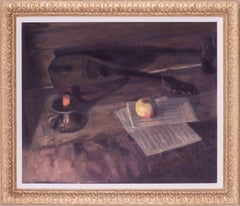
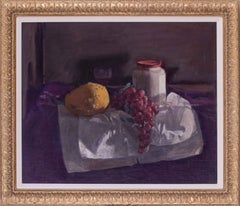
1974 oil painting still life of a mandolin and apple by British George Weissbort

1974 oil painting still life of a mandolin and apple by British George Weissbort

By George Weissbort

Located in Petworth, West Sussex

George Weissbort (Belgian / British, 1928 – 2013) A MANDOLIN AND AN APPLE Oil on canvasboard 18.1/8 x 22 in. (46 x 55.7 cm.) George Weissbort was born in Brussels in 1928. Seven ...

Category

Mid-20th Century Academic Paintings

Materials

Oil, Board

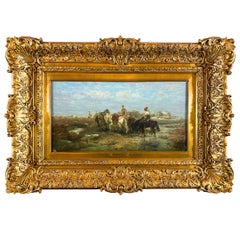
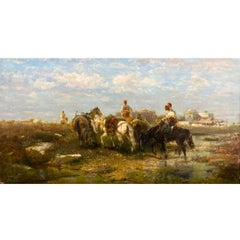
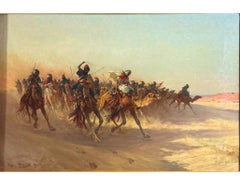
Arab Horsemen 19th Century Antique Landscape orientalist Oil Painting on Canvas

Arab Horsemen 19th Century Antique Landscape orientalist Oil Painting on Canvas

By Adolf Schreyer

Located in Jacksonville, FL

Notes: This painting was reviewed via digital photographs by Max and Dr. Christoph Andreas who confirmed it authenticity. They commented that the painting would benefit from removal of the discolored varnish. Provenance: Provenance: Christie's New York, 19th Century European Paintings, Drawings, Watercolors, and Sculpture, February 23, 1989, Lot 125. Private Collection, Boston MA, Skinner Auction, Nov 2021 Arab Horsemen" by Adolf Schreyer captures the grace and power of Arab horsemen in a vibrant Middle Eastern setting. Schreyer, a renowned artist of the 19th century, adeptly portrays equestrian scenes with exceptional skill and detail. The painting showcases a group of horsemen galloping through a desert landscape, evoking a sense of freedom and adventure. Schreyer's meticulous attention to detail brings the scene to life, with sunlight reflecting off the horses' coats and dust rising beneath their hooves. Beyond its visual appeal, the artwork holds cultural significance, bridging the gap between cultures and inviting appreciation of Arabian heritage. Schreyer's experiences in North Africa, Turkey, and Syria inform his captivating depictions. "Arab Horsemen" is highly regarded in both America and France, where Schreyer's works found admiration among collectors and his association with the Barbizon School solidified his reputation. Owning this artwork not only adds beauty but also connects to a pivotal period in art history, showcasing Schreyer's artistic brilliance and cross-cultural appreciation. Experience the timeless allure of "Arab Horsemen" and embrace the spirit of the Middle East. Frame Size: Width: 36″ x Hight: 24.75″ Frame Thickness: 6.50″ Picture Size: Width: 24″ x 12.75″ Description: Introducing “Arab Horsemen” by Adolf Schreyer: A Captivating Blend of Artistry and Cultural Significance Capture the essence of the vibrant Middle Eastern culture with “Arab Horsemen,” a masterpiece by the renowned artist Adolf Schreyer. This captivating painting takes you on a journey through time, allowing you to witness the grace, power, and elegance of Arab horsemen in their natural element. Adolf Schreyer, a celebrated artist of the 19th century, gained immense popularity and admiration for his exceptional ability to depict equestrian scenes with unparalleled skill and detail. Born in Frankfurt, Germany in 1828, Schreyer developed a profound fascination for the Orientalist movement, which celebrated the exoticism and allure of the Middle East. “Arab Horsemen” exemplifies Schreyer’s signature style, highlighting his mastery of capturing the energy and spirit of his subjects. The painting portrays a group of Arab horsemen galloping across a vast desert landscape, their silhouettes evoking a sense of freedom and adventure. Schreyer’s meticulous attention to detail is evident in every brushstroke, as he adeptly captures the shimmering sunlight bouncing off the horses’ coats and the billowing dust beneath their hooves. What sets Schreyer apart is his ability to transcend mere representation and infuse his artworks with a profound cultural significance. His depictions of Arab horsemen are not only visually stunning but also serve as a bridge between cultures, inviting viewers to explore and appreciate the richness of Arabian heritage. The artist’s fascination with the Middle East stems from his experiences traveling through North Africa, Turkey, and Syria, immersing himself in the sights, sounds, and traditions of these enchanting lands. “Arab Horsemen” holds a special place in the hearts of art enthusiasts in both America and France. Schreyer’s works found great admiration and recognition in these countries during his lifetime and continue to captivate audiences to this day. In America, his paintings were sought after by collectors who were drawn to the romanticism and exoticism of the Orient. In France, Schreyer’s association with the Barbizon School, a group of artists who favored realistic depictions of rural life, further solidified his reputation as a respected painter. Owning a piece by Adolf Schreyer, especially “Arab Horsemen,” is not merely acquiring a beautiful artwork but also an opportunity to possess a tangible link to a pivotal period in art history. Schreyer’s ability to seamlessly blend artistic brilliance with cross-cultural appreciation makes this painting an invaluable addition to any collection. Experience the timeless allure of “Arab Horsemen” and let the spirit of the Middle East gallop into your life. Collections holding paintings by Adolf Schreyer include the Collections: Schwerin Gallery Count Mensdorff-Pouilly Collection Raven Gallery, Berlin Rockefeller Family Collection Vanderbilt Family Collection John Jacob Astor Collection William Backhouse Astor, Sr. Collection August Belmont Collection William Walters Collection...

Category

19th Century Academic Paintings

Materials

Canvas, Oil

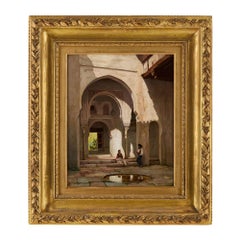
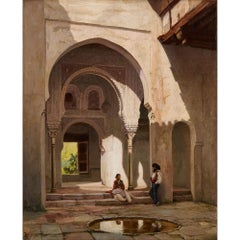
Antique British Oil Painting of the Alhambra by Thompson

Antique British Oil Painting of the Alhambra by Thompson

Located in London, GB

Antique British oil painting of the Alhambra by Thompson British, 1876 Canvas: Height 45cm, width 35.5cm Frame: Height 69cm, width 61cm, depth 6cm This serene Orientalist oil painti...

Category

1870s Academic Paintings

Materials

Canvas, Oil

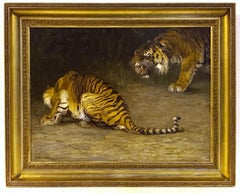
Tigers of Bengal
Tigers of Bengal

Tigers of Bengal

Located in Saint-Ouen, FR

Ferdinand SCHEBEK (1875 - 1949) Oil on canvas signed low left - Tigers of Bengal - Old coppery frame - Dim canvas : 60 X 81 cm - Dim Frame : 95 X ...

Category

Early 20th Century Academic Paintings

Materials

Oil

Portrait of Lady
Portrait of Lady

Portrait of Lady

Located in London, GB

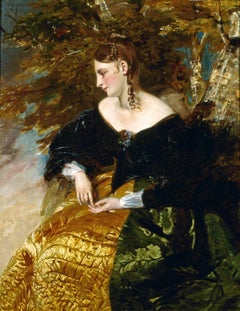
John Westbrooke Chandler 1763- 1807 Oil on canvas Image size: 30 x 25 inches (76 x 63.5 cm) Original gilt swept frame This portrait is marked by its loose brushwork, which creates a...

Category

Late 18th Century Academic Paintings

Materials

Canvas, Oil

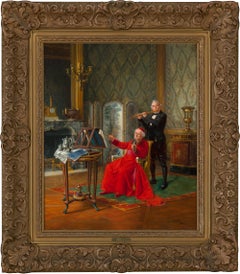
The Musician
The Musician

The Musician

Located in New Orleans, LA

Alfred Weber 1859-1922 I Swiss The Musician Signed “Alfred Weber” (lower left) Oil on panel This work by Swiss ecclesiastical genre painter Alfred Weber, best known for his humorous and meticulously detailed paintings, features a cardinal enjoying his leisure time. Weber's talent for rendering opulent interiors and his keen sense of comic narrative are evident in this painting. The cardinal, looking blissfully content, sits in his lavish living space playing the violin, accompanied by a flutist. Alfred Charles Weber...

Category

Late 19th Century Academic Paintings

Materials

Oil, Panel

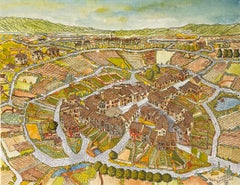
French Contemporary Art by Pascal Plazanet - Provencale No. 11

French Contemporary Art by Pascal Plazanet - Provencale No. 11

By Pascal Plazanet

Located in Paris, IDF

Rapidography & acrylic on paper + white frame Pascal Plazanet is a French artist born in 1963 who lives and works in Paris, France. For more 30 years, he constantly uses rapidograph pens in his artworks on paper or onto canvas. The rapidograph is a special pen with a capillary tubular tip in which flows a black pigment, an ancient drawing tool...

Category

1990s Academic Paintings

Materials

Paper, Acrylic

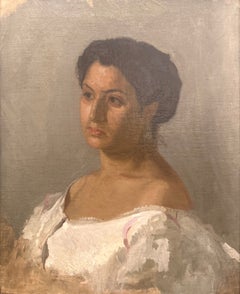
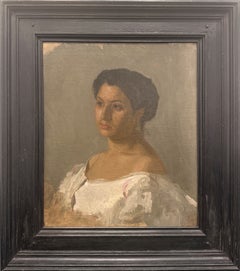
"A Spanish Woman (Dolores)" Thomas Eakins, American, Female Portrait

"A Spanish Woman (Dolores)" Thomas Eakins, American, Female Portrait

By Thomas Eakins

Located in New York, NY

Thomas Eakins A Spanish Woman (Dolores), 1870 Oil on canvas 22 x 18 1/4 inches Provenance The artist Mrs. Thomas Eakins, Philadelphia (acquired in 1929) Walter Pach, New York (acquired by 1933) Parke-Bernet Galleries, Inc., New York, January 6, 1949, Lot 66 Salander-O'Reilly Gallery, New York The Tanenbaum Family Collection, New York (acquired from the above) Born in Philadelphia, Thomas Eakins was a portrait and genre painter whom many regard as the father of modern realism in American Art. Embodying many of the ideals of advances in science, industry, and technology of his time, he was an avid student of science and anatomy, resulting in collisions with the moral boundaries of the Victorian era. In his quest for anatomical accuracy in his work, Eakins was a pioneer in his use of photography in art making, and established a tradition of portraiture that was distinctly American, his knowledge of the human body allowing him to create a sense of naturalism in his artwork. After graduating from the local Central High School in Philadelphia with honors in mathematics, science, and French, he applied for a position as Professor of Drawing at his alma mater, but was rejected. He then registered at the Pennsylvania Academy of Fine Arts, where he studied drawing from antique casts. He rebelled at the outdated methods of these classes and ultimately changed his focus to anatomy studies given by Dr. A.R Thomas...

Category

1870s Academic Paintings

Materials

Canvas, Oil

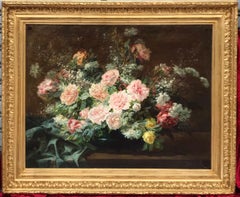
Flowers Still-Life
Flowers Still-Life

Flowers Still-Life

Located in Saint-Ouen, FR

BIVA Paul (1851 – 1900) Flowers Still-Life Oil on canvas signed low right Old frame gilded with leaves Dim canvas : 90 X 117 cm - Dim frame : 117 X 145 cm BIVA Paul (1851 – 1900) Fr...

Category

1880s Academic Paintings

Materials

Oil

Greek / Roman Naturalistic Allegory Painting

Greek / Roman Naturalistic Allegory Painting

Located in Houston, TX

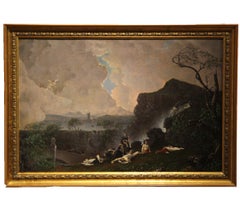
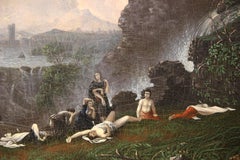
Stormy landscape scene in which a Cupid-like figure seen in the clouds appearing to have shot a number of wounded and dying men in the foreground. The men have a number of women and ...

Category

19th Century Academic Paintings

Materials

Oil

The Charge 19th-century Realism Antique Oil Painting on Canvas, Signed

The Charge 19th-century Realism Antique Oil Painting on Canvas, Signed

By Eugene Alexis Girardet

Located in Jacksonville, FL

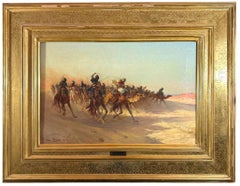
The painting is signed and dated 1894 Description: Eugene Alexis Girardet (1853-1907) was a prominent Swiss painter known for his remarkable attention to detail and his ability to capture vivid and dynamic scenes. Born in Paris, France, Girardet came from a family of artists and received early artistic training from his father, Paul Girardet, and his uncle, Jules Girardet, both respected engravers. He later studied at the prestigious École des Beaux-Arts in Paris, where he honed his skills and developed a deep appreciation for historical and orientalist subjects. He was interred at the Père-Lachaise Cemetery. In addition to several museums in France, his works may be seen at the Dahesh Museum of Art and the National Museum of Fine Arts of Algiers, as well as at museums in Switzerland and New York City. Girardet’s artwork often depicted historical and exotic scenes, particularly focusing on Middle Eastern and North African themes. His meticulous attention to detail and his ability to convey a sense of movement and drama made his works highly sought after. One of his most renowned paintings, “The Charge,” exemplifies his exceptional talent and his ability to create a captivating and immersive experience for viewers. In “The Charge,” Girardet presents an army of Arab camel...

Category

19th Century Academic Paintings

Materials

Canvas, Oil

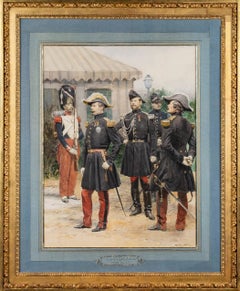
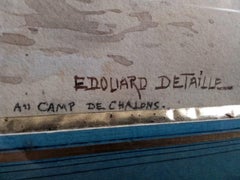
Napoleon III Review Painting, Tempera on carton, Signed, 19th Century

Napoleon III Review Painting, Tempera on carton, Signed, 19th Century

By Jean Baptiste Édouard Detaille

Located in PARIS, FR

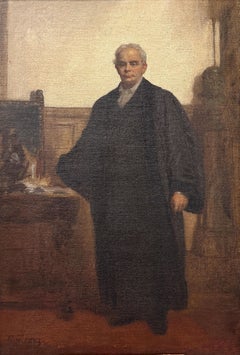
Conditions: Very good condition. In its original frame and glass. A similar composition, but less accomplished, is currently part of the collections of the Musée des Invalides. Signed at the bottom and dated. Complementary shipping worlwide by DHL, FEDEX. Description: This work of art, framed by a majestic golden frame, accurately depicts a group of soldiers in 19th-century uniforms. Every detail, from the golden buttons to the epaulettes, finely illustrates the military equipment of the time. Behind them stands a sober architectural structure, evoking a barracks or a guard post. The color palette, dominated by earthy tones and dark shades of blue, gives a solemn and dignified atmosphere to the scene. The disposition of the soldiers, turned towards the artist, with an attitude both alert and relaxed, captures a moment of daily military life. This painting, with its attention to detail and harmonious composition, transports the viewer into a bygone era, inviting reflection on history and military traditions. EDOUARD DETAILLE The emperor is accompanied by his aide-de-camp, Colonel Castelnau, and Marshal Canrobert. In a gilded wooden frame, under a Marie Louise blue background. Life and time Born in 1848 into a close-knit bourgeois family, Édouard Detaille, the eldest of eight children, displayed early talent in drawing. “He was a prodigy,” notes François Robichon. By the age of thirteen, he exhibited an astonishing surety of hand and a phenomenal sense of composition. His father, connected to Horace Vernet, encouraged him. At seventeen, after passing his baccalaureate, he entered Meissonier’s studio. This relationship, which developed into mutual affection, spared Detaille the academic detour through the École des Beaux-Arts. Rather than dictating an official art style, Meissonier, at the peak of his fame, traveled with his students, introducing them to the nuances of Titian, Rembrandt, and Rubens in Brussels and Lille. In 1867, the Paris of “free trade” dominated the world through the technological revolutions of the Universal Exhibition, and the amiable young man, striking in appearance, discovered the salon of Princess Mathilde and the theater of Dumas fils. He even approached the Empress, noting in his journals, “Not bad, the Empress.” This observation encapsulated Detaille: he had no doubts about his talent, cultivated panache, enjoyed the company of beautiful women, and aimed to conquer the circles of power without sacrificing his freedom. From childhood, he listened to his calling: “Before I could read, I could guess the subjects of battles, the names of famous generals, the weapons of officers and soldiers from the images I admired in the books of Norvins and Laurent de l'Ardèche.” He mingled with collectors and regularly attended military reviews on the Champs-Élysées. His first painting exhibited at the Salon in 1868, “La Halte de tambours,” was praised by critics who immediately recognized “a remarkable truth of observation and simplicity of effect.” The purchase of this work by Princess Mathilde, cousin of Emperor Louis-Napoleon, made Detaille, at twenty, an envied celebrity known to Sainte-Beuve, Théophile Gautier, the Goncourt brothers, and Flaubert. The young artist’s humanistic vision contrasted with the compositions of his predecessors, depicting soldiers in maneuvers, contemplative and resigned as war loomed. **The Combatant’s Vision** The Siege of Paris, where he nearly lost his life in 1870, and the deaths of two brothers in that defeat darkened his outlook. From 1871 onward, Detaille no longer concealed the cruelties of war: German riflemen mowed down by machine gun fire, cavalrymen and panicked horses caught in ambushes, fields plowed by shells strewn with dead animals. The unvarnished tragedy: “It is an absolute fact that no painter has ever rendered a battlefield covered with corpses as it is,” commented Jules Claretie. The fallen bodies still bear the appearance of life in their frozen rigidity. Detaille’s testimony of the devastating defeat and the catastrophic effects of the first total war in history was not a celebration of heroism but a lament, a “lesson in darkness.” “From war, once considered the supreme effort of human genius, we now see only melancholy and horrors,” judged one writer in response to his canvases. “Detaille experienced the reality of combat at a young age during a war that foreshadowed the two world conflicts of the 20th century,” explains François Robichon. With great realism, Detaille painted war from the perspective of the combatant. He introduced a humanity and a critical lucidity regarding the evolution of warfare. His works intensely captured the violence and firepower of new weapons like machine guns. Before he turned thirty, Detaille had become a chronicler of these painful years. He exhibited, as a critic noted, a “striking portrait of modern war” that both French civilians and soldiers had experienced firsthand. He embodied a youth humiliated and eager for revenge. Yet this scrupulous artist also remembered, in his expansive landscapes—from the chalky plateaus of Île-de-France to the Russian plains—the lessons of Corot and Courbet. Manet was not far off. “I wouldn’t want my art to be reduced to mere patriotic art,” he asserted. “A system I often employ and love is to first execute the landscape, very effective, very tight, based on nature…” Echoing Meissonier’s advice: “Always nature, always nature!” Detaille remained close to this father figure, constructing a grand townhouse next to his mentor’s studio at 129 boulevard Malesherbes at the age of 26, having purchased 425 m² of land from the Pereire brothers. He even chose the same architect as Meissonier: Paul Boesvilwald. A bachelor and incorrigible seducer, the painter welcomed his conquests, including Valtesse de la Bigne, amidst his collections, having built his studio in the courtyard. Diplomatic Actor As Detaille’s fame grew, his Malesherbes townhouse quickly became a gathering place for foreign princes, politicians, and heads of state, where Juliette Adam, Léon Gambetta’s muse, offered him valuable advice. The Prince of Wales, the future Edward VII, developed a genuine friendship with the painter. “This fervent patriot, friend of Déroulède, was extraordinarily open to the world,” recounts François Robichon. In just a few years, he gained considerable social, cultural, and international stature. Received at Windsor, at the English court, he was close to Tsar Alexander III and a great friend of Félix Faure. In this capacity, Detaille played a decisive role in the Entente Cordiale, signed in 1904 between England and France, and in the Franco-Russian alliance of 1894, thereby contributing to the Triple Entente among the three powers. An engaged witness of his time—associated with the birth of the “Ligue des Patriotes” alongside Alphonse de Neuville...

Category

Late 19th Century Academic Paintings
Materials

Gouache, Oil

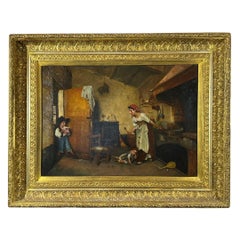
” La Maschera ” 19th Century Antique Realistic Oil Painting On Canvas

” La Maschera ” 19th Century Antique Realistic Oil Painting On Canvas

Located in Jacksonville, FL

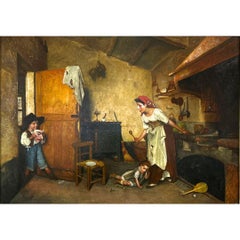
“Mom and Her Kids,” an exquisite oil painting on canvas by Gaetano Chierici, also known as La Maschera, captures a timeless domestic scene with remarkable attention to detail and emo...

Category

19th Century Academic Paintings

Materials

Oil

The Morning News Early 19th-century Realism: Antique Oil Painting on Wood Panel

The Morning News Early 19th-century Realism: Antique Oil Painting on Wood Panel

By William Wallace Gilchrist

Located in Jacksonville, FL

Provenance: Exhibited at Pennsylvania Academy of Fine Arts, 1911 #229 Description: William Wallace Gilchrist (1879-1926) was an American painter known for his captivating depictions of everyday life scenes and his ability to capture the ambiance and aesthetic of the late 19th century. Born in Philadelphia, Gilchrist showed an early passion for art and pursued his artistic education at the Pennsylvania Academy of the Fine Arts Gilchrist’s artwork often revolved around intimate domestic settings, where he skillfully portrayed the beauty and tranquility of ordinary moments. His painting “The Morning News...

Category

Early 19th Century Academic Paintings

Materials

Oil, Wood Panel

View of Venice
View of Venice

View of Venice

Located in Saint-Ouen, FR

AUGUSTE BOUVARD 1882-1956 Pseudo : Mard ALDINE View of Venice with characters Oil on canvas signed low right "Aldine" Framed by Gault (Paris Fbg St-Honoré) Dim canvas : 50 X 65 cm D...

Category

1930s Academic Paintings

Materials

Oil

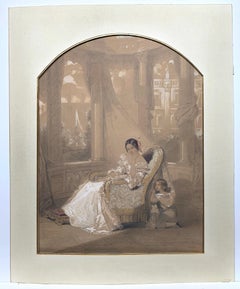
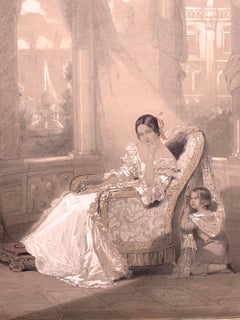
Mother and Child
Mother and Child

Mother and Child

Located in Wilton Manors, FL

Beautiful original painting by French artist, Alexandre de Valentini (1787-1887). Pencil and gouache on paper, 14 x 18.5 inches; 19 x 23.5 inches matted. Signed and dated with Paris...

Category

Mid-19th Century Academic Paintings

Materials

Gouache, Pencil

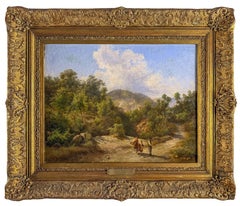
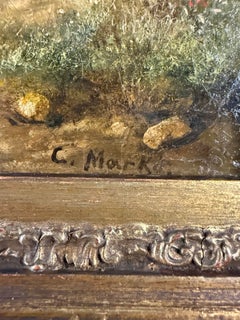
19th Century Hungarian Forest Landscape with Figures by Károly Markó the Younger

19th Century Hungarian Forest Landscape with Figures by Károly Markó the Younger

Located in New York, NY

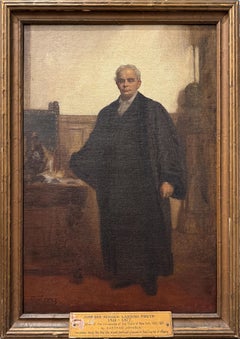
19th-century oil on canvas landscape painting by Hungarian artist Károly Markó the Younger. The painting depicts a dirt path with three figures in a wooded valley under a cloudy blue...

Category

Late 19th Century Academic Paintings
Materials

Canvas, Oil

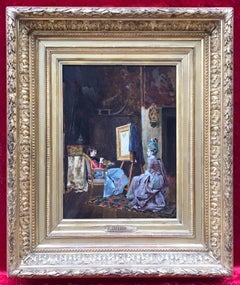
Portrait at the Painter's workshop

Portrait at the Painter's workshop

Located in Saint-Ouen, FR

Francesco Brunery (1849–1926) Portrait at the Artist's Workshop Oil on wood panel Old frame gilded with leaves Dim panel : 30 X 24 cm Dim frame : 54 X 46 cm Francesco Brunery (1849...

Category

1890s Academic Paintings

Materials

Oil

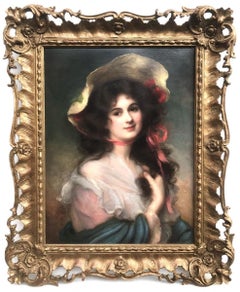
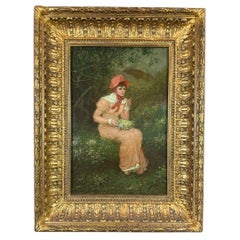
Portrait of a Lady in a Straw Hat

Portrait of a Lady in a Straw Hat

Located in Naples, Florida

Ethel Porter Bailey was a British portrait painter active in the early twentieth century. She exhibited regularly between 1908 and 1927, including eleven works at the Royal Academy a...

Category

1910s Academic Paintings

Materials

Canvas, Oil

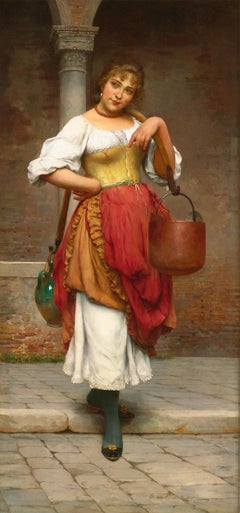
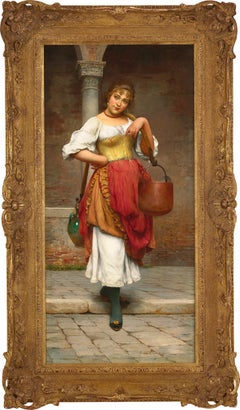
The Water Carrier by Eugen von Blaas

The Water Carrier by Eugen von Blaas

Located in New Orleans, LA

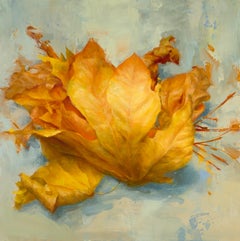
Eugen von Blaas Italian I 1843-1932 The Water Carrier Signed and dated "E. von Blaas 1891" (lower right) Oil on canvas Eugen von Blaas’ unparalleled skill for genre painting is on...

Category

Late 19th Century Academic Paintings
Materials

Canvas, Oil

A Fine and Charming 19th Century Oil Canvas "Children Walking the Baby Goat"

A Fine and Charming 19th Century Oil Canvas "Children Walking the Baby Goat"

Located in LA, CA

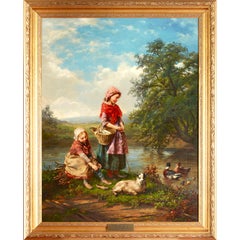
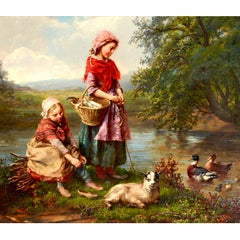
Henry Joseph Campotosto (Belgium, 1833-1910) A Very Fine Oil on Canvas "Walking the Baby Goat", depicting two young dutch girls by the grassy shore of a river bank, one standing holding a wicker basket and a leash to a resting baby goat, the youngest sitting next to her on a pile of branches tucking her pants, a pair of ducks and ducklings swimming by the tree lined river; within a later giltwood carved frame. Signed (l/r): Campotosto Henry. Circa: Brussels, 1870. Note: The artist is also known as Henri Campotosto Henry or Henri Campotosto was born in Brussels in 1833. He studied in Brussels at the Royal Academy des Beaux-Arts and painted some artworks with Eugène Verboeckhoven (Belgium, 1798-1881). He received a 1st Class Medal at the Academy of Brussels and an honorable mention at the Paris Exhibition of 1860. In 1871 he moved to London with his family and remained there for life. He exhibited his work at the Royal Academy Exhibition until 1874 and at the Suffolk Street Gallery from 1878. In 1880 he took part in the Berlin Academy Exhibition. His daughter Octavia also became a painter, visited Italy, and showed her paintings at the Royal Academy from 1871 to 1874. Henri Campotosto died in London in 1910. High Sales: Christie's New York - Property from an American Collection, "The Bird's Nest" - Lot 247 on October 22, 2008, Sold for $37,500 Bonhams London - 19th Century European, Victorian and British Impressionist Art on 28 September 2016 - Lot 33 "Gathering flowers" Sold for £25,000 ($33,750 USD) Museums: The British Museum - Print of two girls and a lamb and print of two girls by a river bank Literature • E. Benezit Dictionnaire des Peintres, Sculpteurs, Dessinateurs, et Graveurs by Librairie Gründ - 1976 Edition - Volume 2, Page 488. • Maurice W...

Category

19th Century Academic Paintings
Materials

Oil

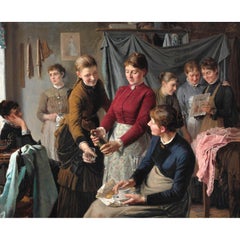
The Fair Student
The Fair Student

The Fair Student

By Henry Wyatt

Located in Mc Lean, VA

Signed and dated '1835' center right

Category

1830s Academic Paintings

Materials

Canvas, Oil

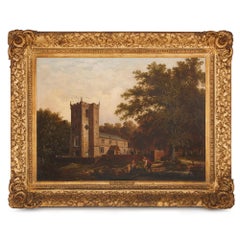
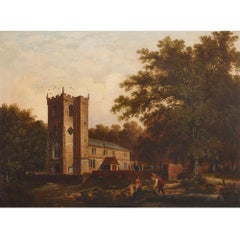
'Chapel in the Woods', Oil on Canvas Painting by English School

'Chapel in the Woods', Oil on Canvas Painting by English School

Located in London, GB

'Chapel in the Woods', oil on canvas painting by English School English, 1847 Canvas: Height 56cm, width 77cm, depth 2.5cm Frame: Height 78cm, width 97cm, depth 9cm This beautiful ...

Category

19th Century Academic Paintings
Materials

Canvas, Oil

"Meeting in the Woods" 19th Century Antique Oil Painting on Canvas

"Meeting in the Woods" 19th Century Antique Oil Painting on Canvas

By George Henry

Located in Jacksonville, FL

The painting is signed. Description: George Henry Boughton: A Master of Narrative and Natural Beauty George Henry Boughton, a distinguished Anglo-American artist of the 19th centur...

Category

18th Century Academic Paintings
Materials

Oil, Canvas

Academic paintings for sale on 1stDibs.
Find a wide variety of authentic Academic paintings available for sale on 1stDibs. Works in this style were very popular during the 21st Century and Contemporary, but contemporary artists have continued to produce works inspired by this movement. If you’re looking to add paintings created in this style to introduce contrast in an otherwise neutral space in your home, the works available on 1stDibs include elements of blue, purple, pink, red and other colors. Many Pop art paintings were created by popular artists on 1stDibs, including Karen Darbinyan, Mark Beard, Kyna de Schouël, and Elizabeth Zanzinger. Frequently made by artists working with Paint, and Oil Paint and other materials, all of these pieces for sale are unique and have attracted attention over the years. Not every interior allows for large Academic paintings, so small editions measuring 4.14 inches across are also available. Prices for paintings made by famous or emerging artists can differ depending on medium, time period and other attributes. On 1stDibs, the price for these items starts at $140 and tops out at $700,000, while the average work sells for $4,850.