1810s Art

to
14
515
30
34
7
4
Overall Width
to
Overall Height
to
7,758
21,937
164,660
231,507
2,033
2,304
4,982
6,544
5,881
15,042
20,687
25,999
18,756
14,133
5,538
278
151
1
1
334
242
11
492
222
217
211
198
125
104
98
75
53
51
32
20
14
12
12
11
11
11
11
509
90
49
30
21
308
15
15
6
3
39
491
178
38
Period: 1810s
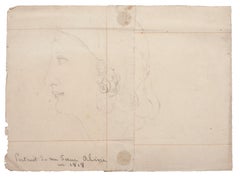
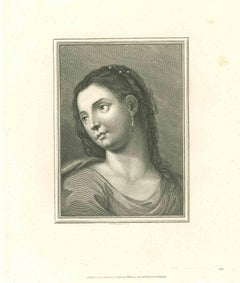
Profile of Woman - Original Pencil Drawing - 1818

Profile of Woman - Original Pencil Drawing - 1818

Located in Roma, IT

Profile of a Woman is original drawing realized by unknown artist of the early 19th Century. Dated on the lower 1818 and with description in pencil on the lower left. Pencil drawin...

Category

Modern 1810s Art

Materials

Paper, Pencil

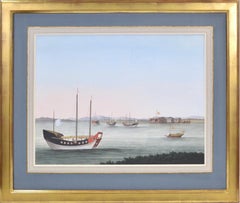
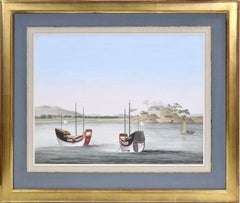
Chinese Craft on the Pearl River.

Chinese Craft on the Pearl River.

Located in London, London

[CHINESE SCHOOL]. Chinese Craft on the Pearl River. Canton, circa 1810. Pencil, water colour and body colour drawings of craft, heightened with white on paper watermarked ‘J Whatm...

Category

Naturalistic 1810s Art

Materials

Watercolor

Chinese Craft on the Pearl River.

Chinese Craft on the Pearl River.

Located in London, London

[CHINESE SCHOOL]. Chinese Craft on the Pearl River. Canton, circa 1810. A pencil, water colour and body colour drawing of craft, heightened with white on paper watermarked ‘J Whatm...

Category

Other Art Style 1810s Art

Materials

Watercolor

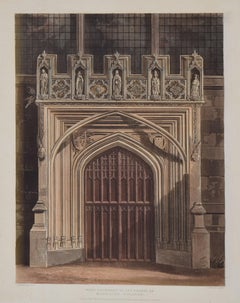
St. Alban's Abbey Church, High Altar screen /// Robert Clutterbuck Hertford Art

St. Alban's Abbey Church, High Altar screen /// Robert Clutterbuck Hertford Art

Located in Saint Augustine, FL

Artist: Robert Clutterbuck (English, 1772-1831) Title: "St. Alban's Abbey Church, High Altar screen" (Vol. 1, Plate 65) Portfolio: The History and Antiquities of the County of Hertford Year: 1815-1827 (First edition) Medium: Original Engraving on wove paper Limited edition: Unknown Printer: Nichols, Son, and Bentley, London, UK Publisher: Nichols, Son, and Bentley, London, UK Sheet size: 17.63" x 11.38" Image size: 11.57" x 8.57" Reference: Brunet II, No. 112; Lowndes No. 483; BAL RIBA No. 666; Upcott I, page 623 Condition: Scattered foxing throughout sheet; it doesn't show much within the image. Creasing to upper left and right corners. Has been professionally stored away for decades. It is otherwise a strong impression in good condition Notes: Provenance: private collection - Aspen, CO. Engraved by English artist John Henry Le Keux (1812-1896) after a drawing by English artist Frederick Nash (1782-1856). Comes from Clutterbuck's three volume "The History and Antiquities of the County of Hertford", (1815-1827) (First edition), which consists of 54 engravings. Printed from one copper plate on one color: black. "Vol. I. p. 65" printed upper right in margin. "Proof" printed lower right in margin. St Albans Cathedral, officially the Cathedral and Abbey Church of St Alban, also known as "the Abbey", is a Church of England cathedral...

Category

Old Masters 1810s Art

Materials

Engraving, Intaglio

Émile Bernard (French, 1868-1941) Self Portrait

Émile Bernard (French, 1868-1941) Self Portrait

By Émile Bernard

Located in Dallas, TX

Émile Bernard (French, 1868-1941) Autoportrait Self Portrait executed circa 1915 Oil on canvas Signed Emile Bernard (lower right) 20 x 18 1/2 in. (50.8 x 47cm) Frame: 28.5 x 26.5 x ...

Category

Expressionist 1810s Art

Materials

Canvas, Oil

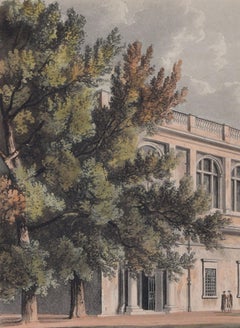
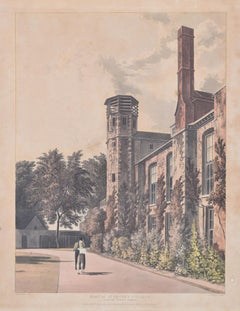
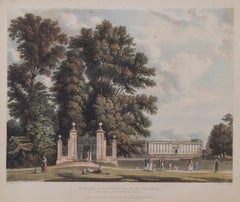
Queens' College, Cambridge engraving by Bluck for Ackermann

Queens' College, Cambridge engraving by Bluck for Ackermann

Located in London, GB

To see our other Oxford and Cambridge pictures, including an extensive collection of works by Ackermann, scroll down to "More from this Seller" and below it click on "See all from th...

Category

Realist 1810s Art

Materials

Aquatint

St Albans Cathedral (1810), engraving by James Basire

St Albans Cathedral (1810), engraving by James Basire

Located in London, GB

James Basire & John Carter Floor plan of St Albans Cathedral Engraving 61 x 95 cm This engraving was originally published by the Society of Antiquaries of London, an organisation ...

Category

Realist 1810s Art

Materials

Engraving

St Albans Cathedral (1810), engraving by James Basire

St Albans Cathedral (1810), engraving by James Basire

Located in London, GB

James Basire & John Carter St Albans Cathedral Engraving 62 x 46 cm This engraving was originally published by the Society of Antiquaries of London, an organisation dedicated to ...

Category

Realist 1810s Art

Materials

Engraving

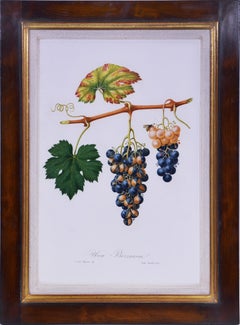
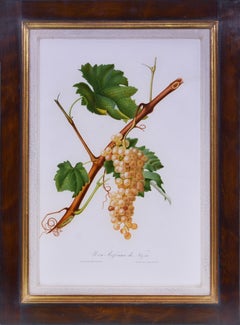
GALLESIO. A Group of Six Grapes.

GALLESIO. A Group of Six Grapes.

Located in London, London

Six hand-coloured plates of Grapes, printed in colour and finished by hand. Framed and glazed, overall size: 42.5 by 57.5cm. Pomona Italiana Ossia Trattato Degli Alberi Fruttiferi...

Category

Naturalistic 1810s Art

Materials

Handmade Paper, Engraving

University of Cambridge Nobleman engraving by John Agar

University of Cambridge Nobleman engraving by John Agar

Located in London, GB

To see our other Oxford and Cambridge pictures, including an extensive collection of works by Ackermann, scroll down to "More from this Seller" and below it click on "See all from this Seller" - or send us a message if you cannot find the view you want. John Samuel Agar (1773 - 1858) after John Uwins (1782 - 1857) Nobleman, Cambridge (1815) Aquatint with original hand colouring 30 x 25 cm Published by Rudolph Ackermann (1764 - 1834). An engraving of a nobleman studying at Cambridge, from Ackermann's 'A History of the University of Cambridge, Its Colleges, Halls and Public Buildings'. Thomas Uwins RA RWS was a British painter in watercolour and oil, and a book illustrator. He became a full member of the Old Watercolour Society and a Royal Academician, and held a number of high-profile art appointments including the librarian of the Royal Academy, Surveyor of Pictures to Queen Victoria and the Keeper of the National Gallery. In the late 1790s he began producing work for Ackermann's collections. John Samuel Agar was an English portrait painter and engraver, who exhibited his works at the Royal Academy from 1796 to 1806 and at the British Institution until 1811. He was at one time president of the Society of Engravers. Rudolph Ackermann published many of his engravings. Ackermann was an Anglo-German bookseller, inventor, lithographer, publisher and businessman. He attended the Latin school in Stollberg, but his wish to study at the university was made impossible by lack of financial means, and he therefore became a saddler like his father. He worked as a saddler and coach-builder in different German cities, moved from Dresden to Basel and Paris, and then, 23 years old, settled in London. He established himself in Long Acre, the centre of coach-making in London and close to the market at Covent Garden. Ackermann then moved to Little Russell Street where he published Imitations of Drawings of Fashionable Carriages (1791) to promote his coach-making. Other publications followed. In 1795 he established a print-shop and drawing-school at 96 Strand. Here Ackermann set up a lithographic press and began a trade in prints. He later began to manufacture colours and thick carton paper for landscape and miniature painters. Within three years the premises had become too small and he moved to 101 Strand, in his own words "four doors nearer to Somerset House", the seat of the Royal Academy of Arts. Between 1797 and 1800 Ackermann rapidly developed his print and book publishing business, encompassing many different genres including topography, caricature, portraits, transparencies and decorative prints. During the Napoleonic wars, Ackermann was an energetic supporter of the Allied cause and made significant contributions to British propaganda through his publication of anti-Napoleonic prints...

Category

1810s Art
Materials

Aquatint

St John's College, Cambridge Library engraving by the Havells for Ackermann

St John's College, Cambridge Library engraving by the Havells for Ackermann

Located in London, GB

To see our other Oxford and Cambridge pictures, including an extensive collection of works by Ackermann, scroll down to "More from this Seller" and below it click on "See all from this Seller" - or send us a message if you cannot find the view you want. D Havell (1785 - 1822) after William Westall (1781 - 1850) The Library of St John's College, Cambridge (1815) Hand-coloured aquatint 24 x 29.5 cm Published by Rudolph Ackermann...

Category

Realist 1810s Art

Materials

Aquatint

Doctors of Divinity, University of Cambridge 19th century engraving by John Agar

Doctors of Divinity, University of Cambridge 19th century engraving by John Agar

Located in London, GB

To see our other Oxford and Cambridge pictures, including an extensive collection of works by Ackermann, scroll down to "More from this Seller" and below it click on "See all from this Seller" - or send us a message if you cannot find the view you want. John Samuel Agar (1773 - 1858) after John Uwins (1782 - 1857) Doctors in Divinity, Esquire Beadle, and Yeoman Beadle (1815) Hand-coloured aquatint 25 x 30 cm Published by Rudolph Ackermann (1764 - 1834). An engraving of two Doctors in Divinity and two beadles (administrative assistants to the Chancellor and Proctors of the University) from Ackermann's 'A History of the University of Cambridge, Its Colleges, Halls and Public Buildings'. The four figures walk forward with ceremonial accoutrements, likely to a graduation ceremony. Thomas Uwins RA RWS was a British painter in watercolour and oil, and a book illustrator. He became a full member of the Old Watercolour Society and a Royal Academician, and held a number of high-profile art appointments including the librarian of the Royal Academy, Surveyor of Pictures to Queen Victoria and the Keeper of the National Gallery. In the late 1790s he began producing work for Ackermann's collections. John Samuel Agar was an English portrait painter and engraver, who exhibited his works at the Royal Academy from 1796 to 1806 and at the British Institution until 1811. He was at one time president of the Society of Engravers. Rudolph Ackermann published many of his engravings. Ackermann was an Anglo-German bookseller, inventor, lithographer, publisher and businessman. He attended the Latin school in Stollberg, but his wish to study at the university was made impossible by lack of financial means, and he therefore became a saddler like his father. He worked as a saddler and coach-builder in different German cities, moved from Dresden to Basel and Paris, and then, 23 years old, settled in London. He established himself in Long Acre, the centre of coach-making in London and close to the market at Covent Garden. Ackermann then moved to Little Russell Street where he published Imitations of Drawings of Fashionable Carriages (1791) to promote his coach-making. Other publications followed. In 1795 he established a print-shop and drawing-school at 96 Strand. Here Ackermann set up a lithographic press and began a trade in prints. He later began to manufacture colours and thick carton paper for landscape and miniature painters. Within three years the premises had become too small and he moved to 101 Strand, in his own words "four doors nearer to Somerset House", the seat of the Royal Academy of Arts. Between 1797 and 1800 Ackermann rapidly developed his print and book publishing business, encompassing many different genres including topography, caricature, portraits, transparencies and decorative prints. During the Napoleonic wars, Ackermann was an energetic supporter of the Allied cause and made significant contributions to British propaganda through his publication of anti-Napoleonic prints...

Category

1810s Art
Materials

Aquatint

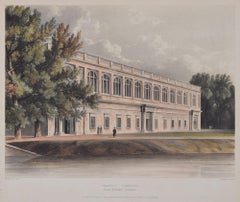
Trinity College, Cambridge library colonnade engraving by Stadler after Westall

Trinity College, Cambridge library colonnade engraving by Stadler after Westall

Located in London, GB

To see our other Oxford and Cambridge pictures, including an extensive collection of works by Ackermann, scroll down to "More from this Seller" and below it click on "See all from this Seller" - or send us a message if you cannot find the view you want. Joseph Constantine Stadler (1755 - 1828) after William Westall (1781 - 1850) Colonnade under Trinity Library...

Category

Realist 1810s Art

Materials

Engraving, Aquatint

University of Oxford Bachelor engraving by Agar after Uwins for Ackermann

University of Oxford Bachelor engraving by Agar after Uwins for Ackermann

Located in London, GB

To see our other Oxford and Cambridge pictures, including an extensive collection of works by Ackermann, scroll down to "More from this Seller" and below it click on "See all from this Seller" - or send us a message if you cannot find the view you want. John Samuel Agar (1773 - 1858) after John Uwins (1782 - 1857) Servitor, Bachelor of Divinity, Collector (1814) Aquatint with original hand colouring 24 x 29 cm Published by Rudolph Ackermann (1764 - 1834). A Servitor; Bachelor of Divinity; and Collector of the University of Oxford. Thomas Uwins RA RWS was a British painter in watercolour and oil, and a book illustrator. He became a full member of the Old Watercolour Society and a Royal Academician, and held a number of high-profile art appointments including the librarian of the Royal Academy, Surveyor of Pictures to Queen Victoria and the Keeper of the National Gallery. In the late 1790s he began producing work for Ackermann's collections. John Samuel Agar was an English portrait painter and engraver, who exhibited his works at the Royal Academy from 1796 to 1806 and at the British Institution until 1811. He was at one time president of the Society of Engravers. Rudolph Ackermann published many of his engravings. Ackermann was an Anglo-German bookseller, inventor, lithographer, publisher and businessman. He attended the Latin school in Stollberg, but his wish to study at the university was made impossible by lack of financial means, and he therefore became a saddler like his father. He worked as a saddler and coach-builder in different German cities, moved from Dresden to Basel and Paris, and then, 23 years old, settled in London. He established himself in Long Acre, the centre of coach-making in London and close to the market at Covent Garden. Ackermann then moved to Little Russell Street where he published Imitations of Drawings of Fashionable Carriages (1791) to promote his coach-making. Other publications followed. In 1795 he established a print-shop and drawing-school at 96 Strand. Here Ackermann set up a lithographic press and began a trade in prints. He later began to manufacture colours and thick carton paper for landscape and miniature painters. Within three years the premises had become too small and he moved to 101 Strand, in his own words "four doors nearer to Somerset House", the seat of the Royal Academy of Arts. Between 1797 and 1800 Ackermann rapidly developed his print and book publishing business, encompassing many different genres including topography, caricature, portraits, transparencies and decorative prints. During the Napoleonic wars, Ackermann was an energetic supporter of the Allied cause and made significant contributions to British propaganda through his publication of anti-Napoleonic prints...

Category

1810s Art
Materials

Aquatint

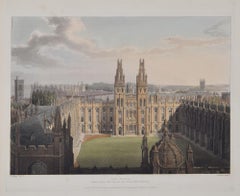
All Souls College, Oxford engraving by Bluck after Pugin for Ackermann

All Souls College, Oxford engraving by Bluck after Pugin for Ackermann

Located in London, GB

To see our other Oxford and Cambridge pictures, including an extensive collection of works by Ackermann, scroll down to "More from this Seller" and below it click on "See all from this Seller" - or send us a message if you cannot find the view you want. John Bluck (early 19th century) after Augustus Charles Pugin (1762 - 1832) All Souls...

Category

1810s Art

Materials

Aquatint

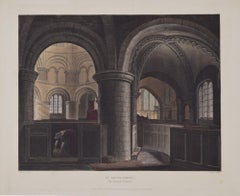
Westminster Abbey St Erasmus' Chapel 1812 print by John Bluck for Ackermann

Westminster Abbey St Erasmus' Chapel 1812 print by John Bluck for Ackermann

Located in London, GB

To see our other Oxford and Cambridge pictures, including an extensive collection of works by Ackermann, scroll down to "More from this Seller" and below it click on "See all from this Seller" - or send us a message if you cannot find the view you want. John Bluck after Frederick Mackenzie (1788 - 1854) East Side of St Erasmus' Chapel, Westminster Abbey (1812) Hand-coloured aquatint 28 x 19 cm Published by Rudolph Ackermann...

Category

Realist 1810s Art

Materials

Aquatint

St Sepulchre, The Round Church, Cambridge exterior after Pugin for Ackermann

St Sepulchre, The Round Church, Cambridge exterior after Pugin for Ackermann

Located in London, GB

To see our other Oxford and Cambridge pictures, including an extensive collection of works by Ackermann, scroll down to "More from this Seller" and below it click on "See all from this Seller" - or send us a message if you cannot find the view you want. John Hill (1770 - 1850) after Augustus Charles Pugin (1762 - 1832) St Sepulchre's - The Round Church (1814) Aquatint with original hand colouring 24 x 29 cm Published by Rudolph Ackermann (1764 - 1834). An engraving of the Church of the Holy Sepulchre, Cambridge, the round shape of which is inspired by the rotunda in the church of the Holy Sepulchre, Jerusalem. John Hill was born in London in 1770, and was an engraver's apprentice. He worked in aquatint and largely produced book illustration aquatints. He went to America in 1816 and produced the notable Picturesque Views of American Scenery amongst other books of prints. Augustus Charles Pugin was an Anglo-French artist and architectural draughtsman. Pugin produced views of London, jointly creating the illustrations for the 'Microcosm of London' published by Rudolph Ackermann in 1811, followed by plates for Ackermann's books about Westminster Abbey, Oxford and Cambridge universities, and Winchester College. His later works included illustrations for Specimens of Gothic Architecture (1821–1823), The Royal Pavilion at Brighton (1826), Architectural Antiquities of Great Britain (1826), Specimens of the Architectural Antiquities of Normandy (1827), Illustrations of the Public Buildings of London (1825 to 1828), Paris and its Environs (1829 to 1831), and Examples of Gothic Architecture (1831). He also produced a book of furniture designs called Gothic Furniture, and assisted architects with detailing for their gothic designs. He ran a drawing school at his house in Bloomsbury. Ackermann was an Anglo-German bookseller, inventor, lithographer, publisher and businessman. He attended the Latin school in Stollberg, but his wish to study at the university was made impossible by lack of financial means, and he therefore became a saddler like his father. He worked as a saddler and coach-builder in different German cities, moved from Dresden to Basel and Paris, and then, 23 years old, settled in London. He established himself in Long Acre, the centre of coach-making in London and close to the market at Covent Garden. Ackermann then moved to Little Russell Street where he published Imitations of Drawings of Fashionable Carriages (1791) to promote his coach-making. Other publications followed. In 1795 he established a print-shop and drawing-school at 96 Strand. Here Ackermann set up a lithographic press and began a trade in prints. He later began to manufacture colours and thick carton paper for landscape and miniature painters. Within three years the premises had become too small and he moved to 101 Strand, in his own words "four doors nearer to Somerset House", the seat of the Royal Academy of Arts. Between 1797 and 1800 Ackermann rapidly developed his print and book publishing business, encompassing many different genres including topography, caricature, portraits, transparencies and decorative prints. During the Napoleonic wars, Ackermann was an energetic supporter of the Allied cause and made significant contributions to British propaganda through his publication of anti-Napoleonic prints...

Category

1810s Art
Materials

Aquatint

MA Masters of Arts and Trinity College, Cambridge member engraving by John Agar

MA Masters of Arts and Trinity College, Cambridge member engraving by John Agar

Located in London, GB

To see our other Oxford and Cambridge pictures, including an extensive collection of works by Ackermann, scroll down to "More from this Seller" and below it click on "See all from this Seller" - or send us a message if you cannot find the view you want. John Samuel Agar (1773 - 1858) after John Uwins (1782 - 1857) Pensioner of Trinity College, Cambridge, Masters of Arts, and Sizer (1815) Hand-coloured aquatint 25 x 30 cm Published by Rudolph Ackermann (1764 - 1834). An engraving of a pensioner of Trinity College, Masters of Arts, and a sizer (that is, an undergraduate who received some form of assistance such as meals, lower fees or lodging during his period of study, in some cases in return for doing a defined job) from Ackermann's 'A History of the University of Cambridge, Its Colleges, Halls and Public Buildings'. The four figures walk forward with ceremonial accoutrements, possibly to a graduation ceremony. At Cambridge, a sizar was originally an undergraduate student who financed his studies by undertaking more or less menial tasks within his college but, as time went on, was increasingly likely to receive small grants from the college. Certain colleges, including St John's and Trinity, distinguished between two categories of sizar: there were specific endowments for specific numbers of sizars who were called "proper sizars"; those who were not so endowed, but who were maintained by fellow-commoners and fellows were called subsizars. Isaac Newton matriculated as subsizar at Trinity College. Richard S. Westfall noted that sizars were considerably more successful in gaining degrees than the gentlemen who entered Cambridge in the seventeenth century. Pensioners, on the other hand, paid a fixed annual fee in order to study. Thomas Uwins RA RWS was a British painter in watercolour and oil, and a book illustrator. He became a full member of the Old Watercolour Society and a Royal Academician, and held a number of high-profile art appointments including the librarian of the Royal Academy, Surveyor of Pictures to Queen Victoria and the Keeper of the National Gallery. In the late 1790s he began producing work for Ackermann's collections. John Samuel Agar was an English portrait painter and engraver, who exhibited his works at the Royal Academy from 1796 to 1806 and at the British Institution until 1811. He was at one time president of the Society of Engravers. Rudolph Ackermann published many of his engravings. Ackermann was an Anglo-German bookseller, inventor, lithographer, publisher and businessman. He attended the Latin school in Stollberg, but his wish to study at the university was made impossible by lack of financial means, and he therefore became a saddler like his father. He worked as a saddler and coach-builder in different German cities, moved from Dresden to Basel and Paris, and then, 23 years old, settled in London. He established himself in Long Acre, the centre of coach-making in London and close to the market at Covent Garden. Ackermann then moved to Little Russell Street where he published Imitations of Drawings of Fashionable Carriages (1791) to promote his coach-making. Other publications followed. In 1795 he established a print-shop and drawing-school at 96 Strand. Here Ackermann set up a lithographic press and began a trade in prints. He later began to manufacture colours and thick carton paper for landscape and miniature painters. Within three years the premises had become too small and he moved to 101 Strand, in his own words "four doors nearer to Somerset House", the seat of the Royal Academy of Arts. Between 1797 and 1800 Ackermann rapidly developed his print and book publishing business, encompassing many different genres including topography, caricature, portraits, transparencies and decorative prints. During the Napoleonic wars, Ackermann was an energetic supporter of the Allied cause and made significant contributions to British propaganda through his publication of anti-Napoleonic prints...

Category

1810s Art
Materials

Aquatint

Downing College, Cambridge engraving by Samuel Sparrow after Henry Barker

Downing College, Cambridge engraving by Samuel Sparrow after Henry Barker

Located in London, GB

To see our other original maps, scroll down to "More from this Seller" and below it click on "See all from this Seller" - or send us a message if you cannot find the poster you want. Samuel Sparrow (active 1770 - 1806) after Henry Barker (1774 - 1856) Downing College...

Category

1810s Art
Materials

Engraving

Westminster Abbey South Aisle engraving by John Bluck for Ackermann

Westminster Abbey South Aisle engraving by John Bluck for Ackermann

Located in London, GB

To see our other Oxford and Cambridge pictures, including an extensive collection of works by Ackermann, scroll down to "More from this Seller" and below it click on "See all from this Seller" - or send us a message if you cannot find the view you want. John Bluck (early 19th century) after Frederick Mackenzie (1788 - 1854) East End of South Aisle, Westminster Abbey (1812) Hand-coloured aquatint 31 x 24 cm Published by Rudolph Ackermann...

Category

Realist 1810s Art
Materials

Aquatint