1810s Art

to
16
506
30
34
8
4
Overall Width
to
Overall Height
to
7,544
21,337
164,269
236,559
2,110
2,321
4,660
6,399
5,823
15,259
20,872
26,209
19,121
14,149
5,351
273
153
1
1
328
240
11
485
216
215
207
194
125
103
96
75
52
51
32
20
14
13
12
11
11
11
10
500
90
50
30
22
301
15
14
6
40
483
546
36
Period: 1810s
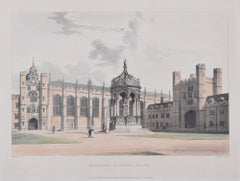
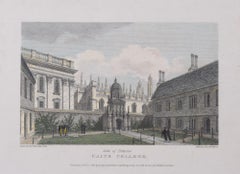
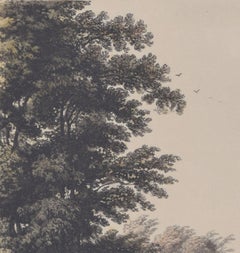
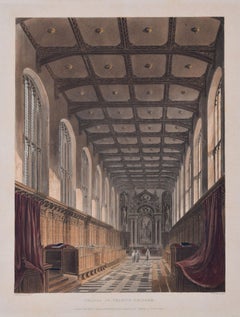
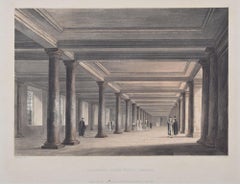
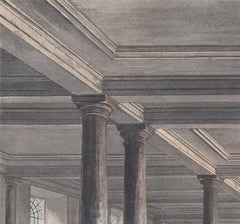
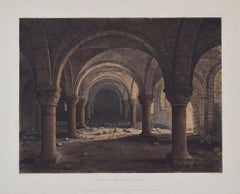
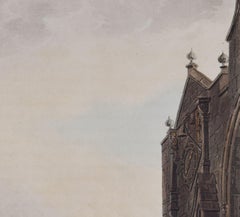
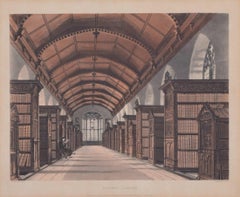
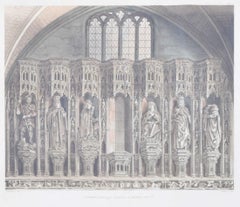
Trinity College, Cambridge library colonnade engraving by Stadler after Westall

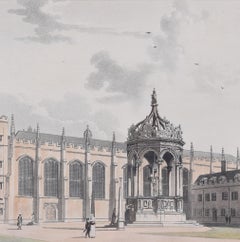
Trinity College, Cambridge library colonnade engraving by Stadler after Westall

By Joseph Constantine Stadler

Located in London, GB

To see our other Oxford and Cambridge pictures, including an extensive collection of works by Ackermann, scroll down to "More from this Seller" and below it click on "See all from this Seller" - or send us a message if you cannot find the view you want. Joseph Constantine Stadler (1755 - 1828) after William Westall (1781 - 1850) Colonnade under Trinity Library...

Category

Realist 1810s Art

Materials

Engraving, Aquatint

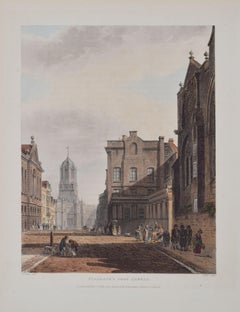
Tom Tower, Christ Church, St Aldate's, Oxford by Hill after Pugin for Ackermann

Tom Tower, Christ Church, St Aldate's, Oxford by Hill after Pugin for Ackermann

By Rudolph Ackermann

Located in London, GB

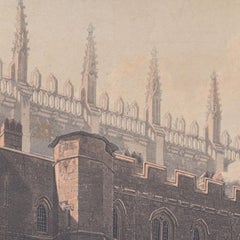
To see our other Oxford and Cambridge pictures, including an extensive collection of works by Ackermann, scroll down to "More from this Seller" and below it click on "See all from this Seller" - or send us a message if you cannot find the view you want. John Hill (1770 - 1850) after Augustus Charles Pugin (1762 - 1832) St Aldate's From Carfax (1813) Aquatint with original hand colouring 27 x 21 cm Published by Rudolph Ackermann (1764 - 1834). An engraving of St Aldate's, overlooked by Christ Church's pale and magnificent Tom Tower. John Hill was born in London in 1770, and was an engraver's apprentice. He worked in aquatint and largely produced book illustration aquatints. He went to America in 1816 and produced the notable Picturesque Views of American Scenery amongst other books of prints. Augustus Charles Pugin was an Anglo-French artist and architectural draughtsman. Pugin produced views of London, jointly creating the illustrations for the 'Microcosm of London' published by Rudolph Ackermann in 1811, followed by plates for Ackermann's books about Westminster Abbey, Oxford and Cambridge universities, and Winchester College. His later works included illustrations for Specimens of Gothic Architecture (1821–1823), The Royal Pavilion at Brighton (1826), Architectural Antiquities of Great Britain (1826), Specimens of the Architectural Antiquities of Normandy (1827), Illustrations of the Public Buildings of London (1825 to 1828), Paris and its Environs (1829 to 1831), and Examples of Gothic Architecture (1831). He also produced a book of furniture designs called Gothic Furniture, and assisted architects with detailing for their gothic designs. He ran a drawing school at his house in Bloomsbury. Ackermann was an Anglo-German bookseller, inventor, lithographer, publisher and businessman. He attended the Latin school in Stollberg, but his wish to study at the university was made impossible by lack of financial means, and he therefore became a saddler like his father. He worked as a saddler and coach-builder in different German cities, moved from Dresden to Basel and Paris, and then, 23 years old, settled in London. He established himself in Long Acre, the centre of coach-making in London and close to the market at Covent Garden. Ackermann then moved to Little Russell Street where he published Imitations of Drawings of Fashionable Carriages (1791) to promote his coach-making. Other publications followed. In 1795 he established a print-shop and drawing-school at 96 Strand. Here Ackermann set up a lithographic press and began a trade in prints. He later began to manufacture colours and thick carton paper for landscape and miniature painters. Within three years the premises had become too small and he moved to 101 Strand, in his own words "four doors nearer to Somerset House", the seat of the Royal Academy of Arts. Between 1797 and 1800 Ackermann rapidly developed his print and book publishing business, encompassing many different genres including topography, caricature, portraits, transparencies and decorative prints. During the Napoleonic wars, Ackermann was an energetic supporter of the Allied cause and made significant contributions to British propaganda through his publication of anti-Napoleonic prints...

Category

1810s Art

Materials

Aquatint

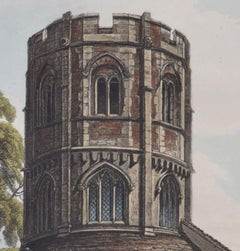
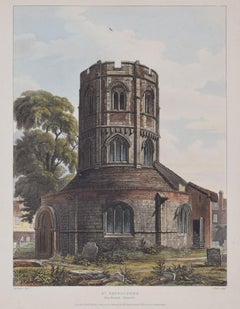
St Sepulchre, The Round Church, Cambridge exterior after Pugin for Ackermann

St Sepulchre, The Round Church, Cambridge exterior after Pugin for Ackermann

By Rudolph Ackermann

Located in London, GB

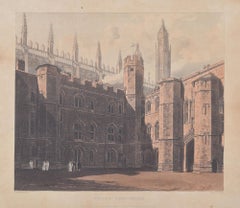
To see our other Oxford and Cambridge pictures, including an extensive collection of works by Ackermann, scroll down to "More from this Seller" and below it click on "See all from this Seller" - or send us a message if you cannot find the view you want. John Hill (1770 - 1850) after Augustus Charles Pugin (1762 - 1832) St Sepulchre's - The Round Church (1814) Aquatint with original hand colouring 24 x 29 cm Published by Rudolph Ackermann (1764 - 1834). An engraving of the Church of the Holy Sepulchre, Cambridge, the round shape of which is inspired by the rotunda in the church of the Holy Sepulchre, Jerusalem. John Hill was born in London in 1770, and was an engraver's apprentice. He worked in aquatint and largely produced book illustration aquatints. He went to America in 1816 and produced the notable Picturesque Views of American Scenery amongst other books of prints. Augustus Charles Pugin was an Anglo-French artist and architectural draughtsman. Pugin produced views of London, jointly creating the illustrations for the 'Microcosm of London' published by Rudolph Ackermann in 1811, followed by plates for Ackermann's books about Westminster Abbey, Oxford and Cambridge universities, and Winchester College. His later works included illustrations for Specimens of Gothic Architecture (1821–1823), The Royal Pavilion at Brighton (1826), Architectural Antiquities of Great Britain (1826), Specimens of the Architectural Antiquities of Normandy (1827), Illustrations of the Public Buildings of London (1825 to 1828), Paris and its Environs (1829 to 1831), and Examples of Gothic Architecture (1831). He also produced a book of furniture designs called Gothic Furniture, and assisted architects with detailing for their gothic designs. He ran a drawing school at his house in Bloomsbury. Ackermann was an Anglo-German bookseller, inventor, lithographer, publisher and businessman. He attended the Latin school in Stollberg, but his wish to study at the university was made impossible by lack of financial means, and he therefore became a saddler like his father. He worked as a saddler and coach-builder in different German cities, moved from Dresden to Basel and Paris, and then, 23 years old, settled in London. He established himself in Long Acre, the centre of coach-making in London and close to the market at Covent Garden. Ackermann then moved to Little Russell Street where he published Imitations of Drawings of Fashionable Carriages (1791) to promote his coach-making. Other publications followed. In 1795 he established a print-shop and drawing-school at 96 Strand. Here Ackermann set up a lithographic press and began a trade in prints. He later began to manufacture colours and thick carton paper for landscape and miniature painters. Within three years the premises had become too small and he moved to 101 Strand, in his own words "four doors nearer to Somerset House", the seat of the Royal Academy of Arts. Between 1797 and 1800 Ackermann rapidly developed his print and book publishing business, encompassing many different genres including topography, caricature, portraits, transparencies and decorative prints. During the Napoleonic wars, Ackermann was an energetic supporter of the Allied cause and made significant contributions to British propaganda through his publication of anti-Napoleonic prints...

Category

1810s Art
Materials

Aquatint

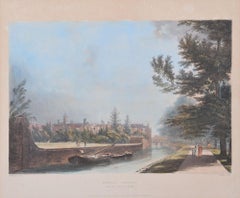
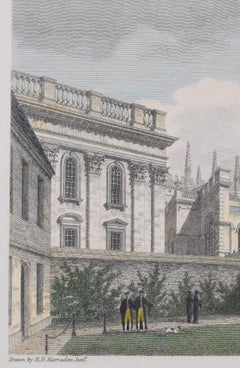
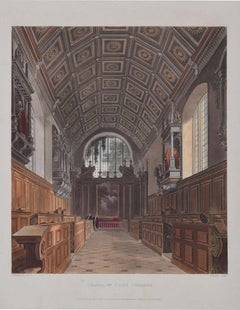
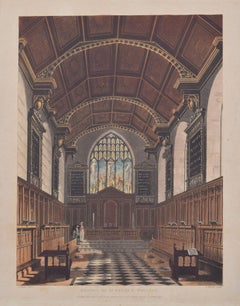
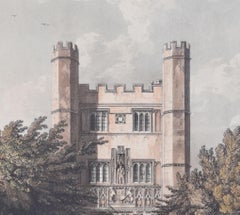
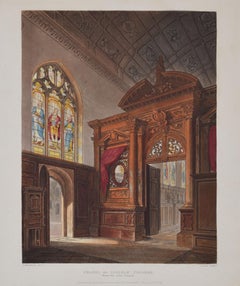
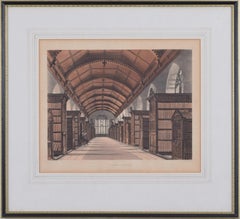
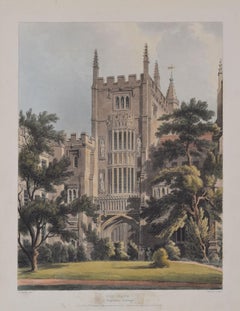
St John's College, Cambridge Library engraving by the Havells for Ackermann

St John's College, Cambridge Library engraving by the Havells for Ackermann

By Rudolph Ackermann

Located in London, GB

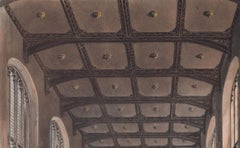
To see our other Oxford and Cambridge pictures, including an extensive collection of works by Ackermann, scroll down to "More from this Seller" and below it click on "See all from this Seller" - or send us a message if you cannot find the view you want. D Havell (1785 - 1822) after William Westall (1781 - 1850) The Library of St John's College, Cambridge (1815) Hand-coloured aquatint 24 x 29.5 cm Published by Rudolph Ackermann...

Category

Realist 1810s Art

Materials

Aquatint

Westminster Abbey St Erasmus' Chapel 1812 print by John Bluck for Ackermann

Westminster Abbey St Erasmus' Chapel 1812 print by John Bluck for Ackermann

By Rudolph Ackermann

Located in London, GB

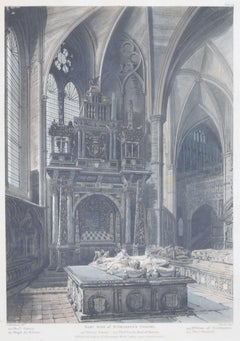
To see our other Oxford and Cambridge pictures, including an extensive collection of works by Ackermann, scroll down to "More from this Seller" and below it click on "See all from this Seller" - or send us a message if you cannot find the view you want. John Bluck after Frederick Mackenzie (1788 - 1854) East Side of St Erasmus' Chapel, Westminster Abbey (1812) Hand-coloured aquatint 28 x 19 cm Published by Rudolph Ackermann...

Category

Realist 1810s Art
Materials

Aquatint

Westminster Abbey Chantry Chapel Screen engraving by John Bluck for Ackermann

Westminster Abbey Chantry Chapel Screen engraving by John Bluck for Ackermann

By Rudolph Ackermann

Located in London, GB

To see our other Oxford and Cambridge pictures, including an extensive collection of works by Ackermann, scroll down to "More from this Seller" and below it click on "See all from this Seller" - or send us a message if you cannot find the view you want. John Bluck (early 19th century) after Frederick Mackenzie (1788 - 1854) Screen Over the Chantry of Henry V, Westminster Abbey (1812) Hand-coloured aquatint 26 x 31 cm Published by Rudolph Ackermann...

Category

Realist 1810s Art
Materials

Aquatint

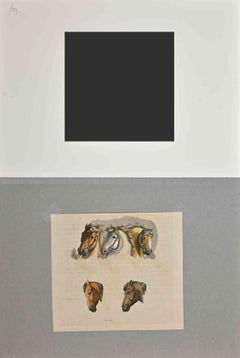
Horses Etching by Thomas Holloway, Modern Style, Circa 1810, Unframed

Horses Etching by Thomas Holloway, Modern Style, Circa 1810, Unframed

By Thomas Holloway

Located in Roma, IT

Horses is an etching realized by Thomas Holloway for Johann Caspar Lavater's "Essays on Physiognomy, Designed to Promote the Knowledge and the Love of Mankind", London, Bensley, 1810. Good conditions. Johann Caspar Lavater was a swiss theologian and philosopher known throughout Europe for his studies on physiognomy. Following the physiognomy tradition of Della Porta and of many Renaissance and Baroque philosophers, he believed that the character of a person could be elucidated through examining their “lines of countenance" i.e. tracing a profile outline portrait. Being able to "read outside" was the key to "know the inside". Lavater's thought largely influenced Art in the late 18th and early 19th century, as in the case of Johann Fuseli and William Blake (who realized two etchings for Lavater's English edition of his Essay). Lavater was convinced that he could show his theories by analyzing the portraits of some of the main historical figures of the past, in some cases taken from paintings or (mainly for antiquity...

Category

Modern 1810s Art
Materials

Etching

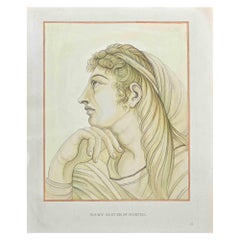
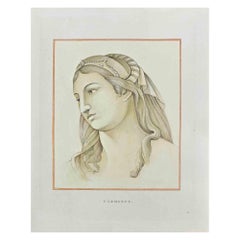
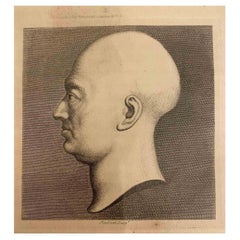
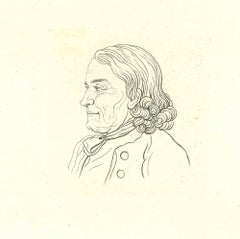
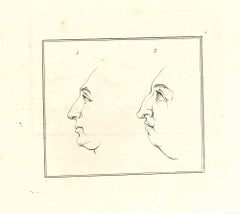
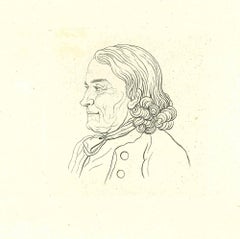
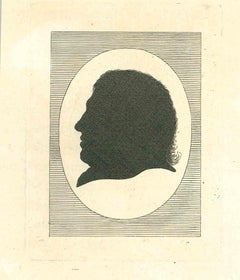
Profile - Etching by Philip Audinet - 1810

Profile - Etching by Philip Audinet - 1810

By Philip Audinet

Located in Roma, IT

Profile is an original etching artwork realized by Philip Audinet for Johann Caspar Lavater's "Essays on Physiognomy, Designed to Promote the Knowledge and the Love of Mankind", Lond...

Category

Modern 1810s Art
Materials

Etching

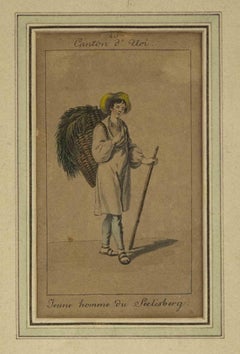
Young Boy of Salzburg - Etching - 19th Century

Young Boy of Salzburg - Etching - 19th Century

Located in Roma, IT

Young boy of Salzburg is an original artwork realized by Anonymous artist in 19th century. Mixed colored etching hand-watercolored by tha artist. Includes frame 20 x 14 cm Good co...

Category

Modern 1810s Art
Materials

Etching

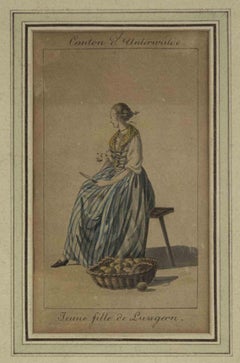
Young Woman from Lucerne - Etching - 19th Century

Young Woman from Lucerne - Etching - 19th Century

Located in Roma, IT

Young woman of Lucerne is an original artwork realized by Anonymous artist in 19th Century. Mixed colored etching hand-watercolored by the artist. Includes frame 20 x 14 cm Good c...

Category

Modern 1810s Art
Materials

Etching

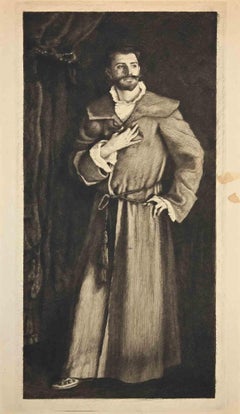
Portrait of Man - Etching - 19th Century

Portrait of Man - Etching - 19th Century

Located in Roma, IT

Portrait of Man is an original Etching realized by an unkown artist in late-19th century. Very good condition. No signature.

Category

Modern 1810s Art
Materials

Etching